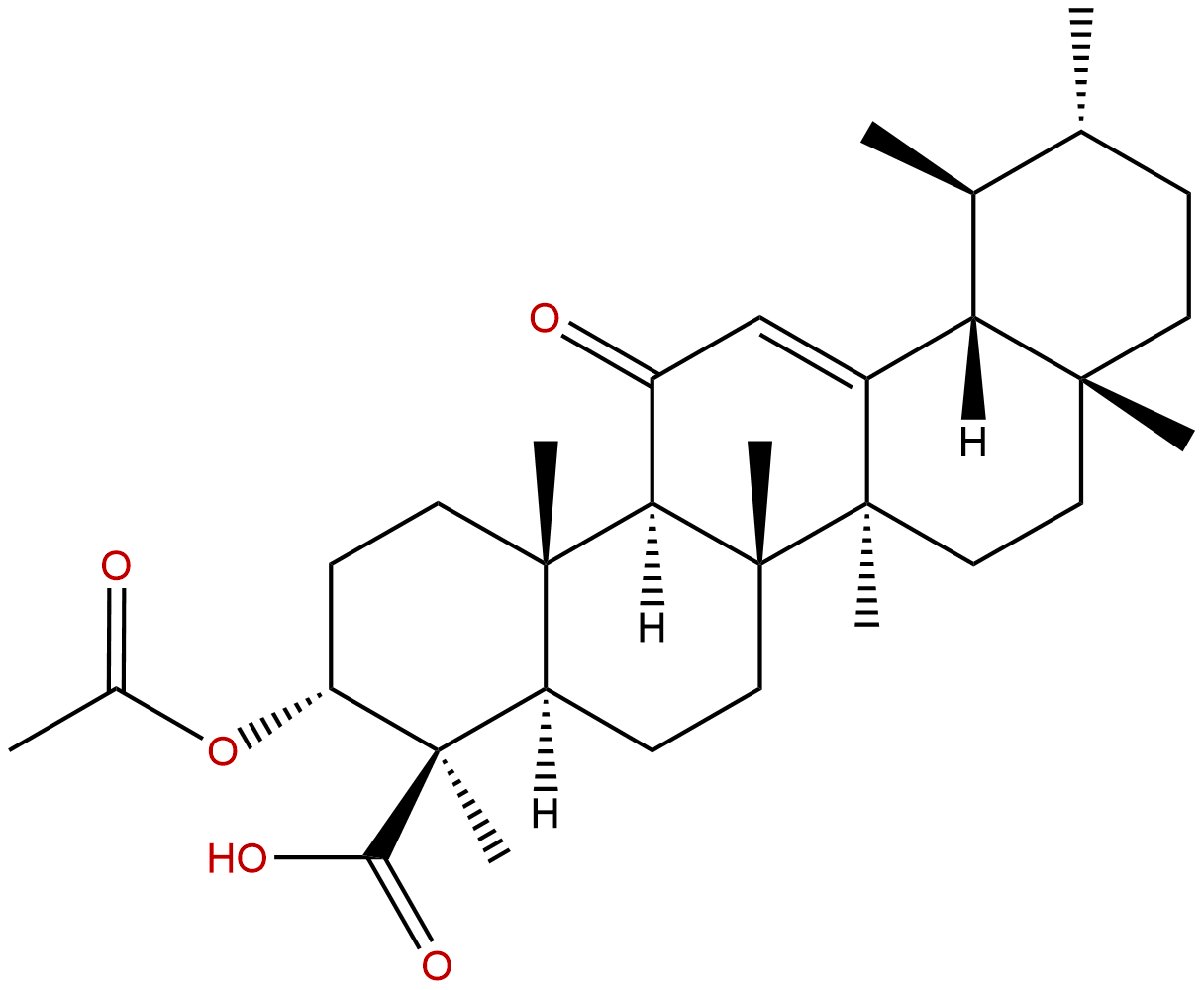


Product name: 3-Acetyl-11-keto-beta-boswellic acid
Synonym name: AKBA; AKBBA
Catalogue No.: BP3057
Cas No.: 67416-61-9
Formula: C32H48O5
Mol Weight: 512.731
Botanical Source:
Physical Description: Powder
Type of Compound: Triterpenoids
Purity: 95%~99%
Analysis Method: HPLC-DAD or/and HPLC-ELSD
Identification Method: Mass, NMR
Packing: Brown vial or HDPE plastic bottle
The product could be supplied from milligrams to grams. Inquire for bulk scale.
We provide solution to improve the water-solubility of compounds, thereby facilitating the variety of activity tests and clinic uses.
For Reference Standard and R&D, Not for Human Use Directly.
Description:
3-O-Acetyl-11-keto-beta-boswellic acid inhibits 5-lipoxygenase product formation with an IC(50) of 1.5 m muM.
References:
Toxicol Mech Methods. 2006;16(4):199-226.
Safety and Toxicological Evaluation of a Novel, Standardized 3-O-Acetyl-11-keto-beta-Boswellic Acid (AKBA)-Enriched Boswellia serrata Extract (5-Loxin(R)).
The novel anti-inflammatory properties of the gum resin derived from Boswellia serrata, also known as Salai guggal in Ayurvedic medicine, are well recognized and highly recommended for human consumption. The active constituents of the gum resin are boswellic acids (BAs). Among the BAs, 3-O-Acetyl-11-keto-beta-boswellic acid potently inhibits 5-lipoxygenase product formation with an IC(50) of 1.5 m muM.
CONCLUSIONS:
We developed a novel Boswellia serrata extract (5-Loxin(R)) enriched with 30% 3-O-Acetyl-11-keto-beta-boswellic acid (US Patent 2004/0073060A1).
Biomed Chromatogr. 2014 Oct;28(10):1402-8.
Comparative pharmacokinetic study of two boswellic acids in normal and arthritic rat plasma after oral administration of Boswellia serrata extract or Huo Luo Xiao Ling Dan by LC-MS.
11-keto-β-boswellic acid and 3-O-Acetyl-11-keto-beta-boswellic acid following oral administration of HLXLD or Boswellia serrata extract alone in normal and arthritic rats.
METHODS AND RESULTS:
An LC-MS method was developed and validated for the determination of 11-keto-β-boswellic acid and 3-O-Acetyl-11-keto-beta-boswellic acid in the comparative pharmacokinetic study. The results showed that there were significant differences in pharmacokinetic parameters between normal and arthritic groups. Interestingly, the absorptions of two boswellic acids were significantly higher in HLXLD than Boswellia serrata extract alone, indicating the synergistic effect of other herbal ingredients in HLXLD.
CONCLUSIONS:
This comparative pharmacokinetic study provided direct evidence supporting the notion that the efficacy of a complex mixture such as HLXLD is better than that of single components in treating human diseases.
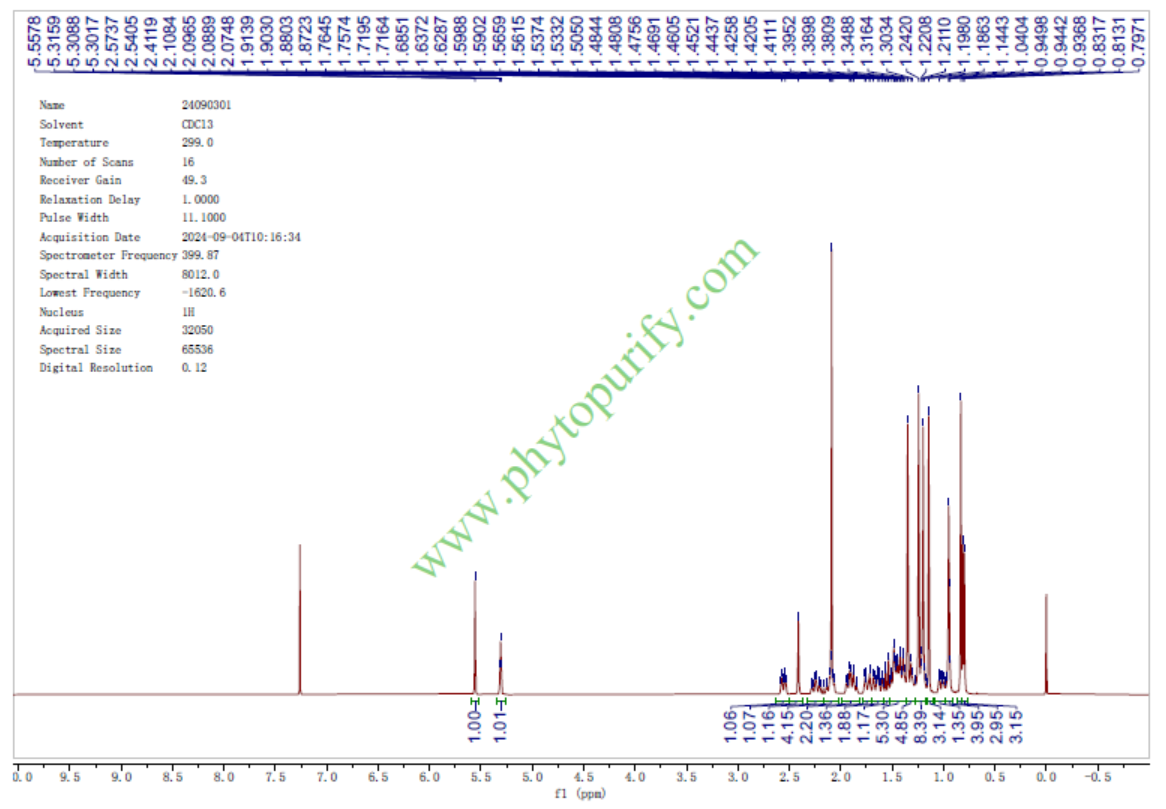
HNMR of 3-Acetyl-11-keto-beta-boswellic acid
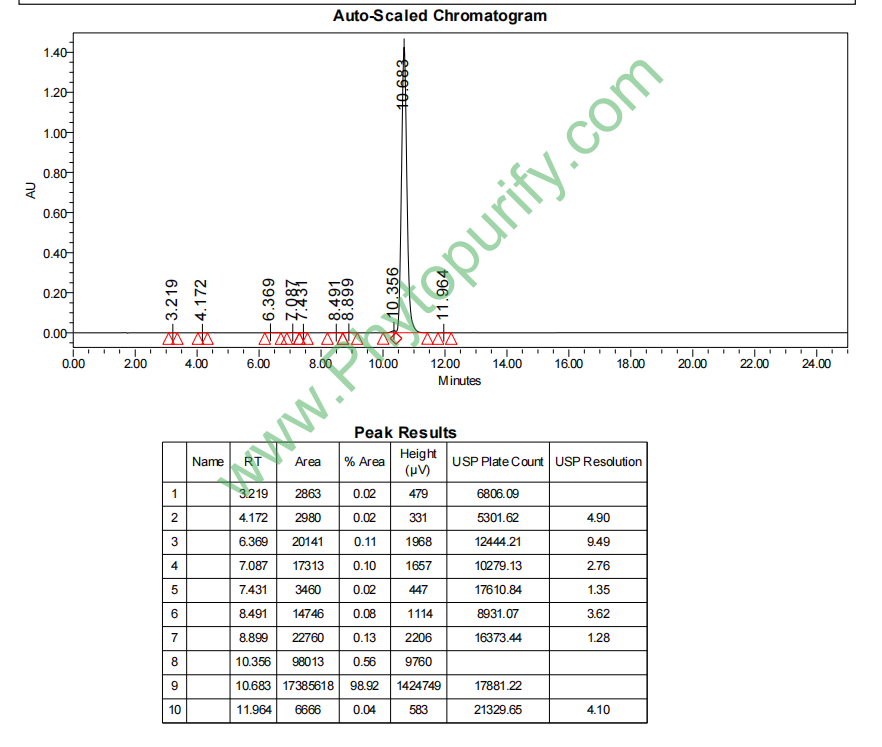
HPLC of 3-Acetyl-11-keto-beta-boswellic Acid
Storage conditions:Short-term storage at 2~8℃, long-term storage at -20 ~ -80℃
80.6700
5.9183
3.6644
.0022
4.4904
6.8137
Low
90.7179
4.9753
No
No
Yes
No
No
No
0.0
No
No
No
No
Natural products, as an important treasure trove for drug discovery and development, play an irreplaceable role in the long history of human fight against diseases. Among them, triterpenoids have always been a hot topic in medicinal chemistry and pharmacology research due to their structural diversity and wide range of biological activities. Frankincense acid compounds are a class of characteristic pentacyclic triterpenoids extracted from the resin of the traditional medicinal plant Boswellia serrata Roxb. ex Colebr. They have a long history of anti-inflammatory applications. 3-acetyl-11-keto-beta-boswellic acid (AKBA, CAS: 67416-61-9), as an important active member of the frankincense acid family, has attracted much attention for its outstanding anti-inflammatory and immunomodulatory activities.
In recent years, with the deepening understanding of the pathological mechanisms of chronic inflammatory diseases, especially rheumatoid arthritis (RA), the multi-target intervention characteristics of AKBA have shown great therapeutic potential. RA is an autoimmune disease characterized by chronic inflammation of the synovium, progressive destruction of articular cartilage and bone. Its onset involves complex cytokine networks, abnormal signaling pathways, and immune cell dysfunction. Although traditional therapeutic drugs are effective, they often come with significant side effects. Therefore, finding efficient and low toxicity new treatment strategies has become an urgent task. AKBA exerts anti RA effects by acting on multiple key targets such as AMPK, TLR4, STAT3, NFE2L2, ALOX5, etc., from inhibiting the production of inflammatory mediators, regulating immune cell function, protecting cartilage and bone, and other aspects, reflecting the advantages of natural product multi-component and multi-target synergistic effects.
This article aims to systematically review the chemical properties, plant sources, pharmacological activities of AKBA, and focus on its mechanism of action and molecular target network in anti rheumatoid arthritis. At the same time, it evaluates its pharmacological properties and looks forward to its clinical application prospects, in order to provide comprehensive scientific references for the in-depth research and development of this compound.
3-acetyl-11-one - β - frankincense acid is a pentacyclic triterpenoid compound with a molecular formula of C32H48O5 and a molecular weight of 512.7310. Its structural skeleton is of the oleanane type, with the core feature being the introduction of an acetoxy group (- OCOCH3) at the C-3 position on the basis of β - Boswellic Acid, and the formation of a ketone carbonyl group (C=O) at the C-11 position. This specific functional group modification has a decisive impact on its biological activity. Acetylation at the C-3 position enhances its lipophilicity, while the ketone group at the C-11 position is the key structural basis for its potent inhibition of 5-lipoxygenase (ALOX5) activity, making its activity significantly stronger than non acetylated or non ketolated frankincense analogues.
From the analysis of physical and chemical properties, AKBA exhibits typical hydrophobic triterpenoid characteristics. Its calculated lipid water partition coefficient (LogP) is 5.9183, indicating its high lipophilicity. The topological polar surface area (TPSA) is 80.67 Å ², which is relatively small. These parameters collectively determine its extremely low water solubility, approximately 0.0022 mg/mL, which poses a major challenge for its formulation development and in vivo bioavailability. AKBA is difficult to penetrate the blood-brain barrier (BBB permeability is low), which limits its direct application in central nervous system diseases, but it may also mean that its peripheral effects have better safety. In early safety screening, AKBA did not show significant hERG potassium channel inhibitory activity (low risk of arrhythmia), and the Ames test result was negative (0.0), indicating that it has no direct genetic toxicity, laying a preliminary safety foundation for its further development.
AKBA mainly comes from the resin of plants in the olive family, especially the Boswellia serrata, which is known as "Salai guggul" in Ayurvedic medicine and is traditionally used to treat diseases such as arthritis, asthma, and intestinal inflammation. Frankincense resin is a complex mixture containing various components such as monoterpenes, sesquiterpenes, diterpenes, and triterpenes, among which triterpenoids (frankincense acids) are its main active components.
Obtaining AKBA from frankincense resin usually requires multiple steps of extraction, separation, and purification. The conventional method begins with organic solvent extraction, and commonly used solvents include methanol, ethanol, ethyl acetate, or mixed solvents of different proportions to maximize the extraction of total triterpenoid components. The crude extract is then purified through a series of chromatographic separation techniques, such as silica gel column chromatography, reverse phase high performance liquid chromatography (RP-HPLC), etc. Due to the relatively low content of AKBA in total frankincense acid (usually 1-3% of the resin) and its structure being very similar to other frankincense acid analogues (such as KBA, ABA, etc.), the preparation of high-purity AKBA requires precise separation conditions. Modern technology has also explored green technologies such as supercritical CO2 extraction to improve extraction efficiency and selectivity. In addition, to meet the needs of research and development, chemical synthesis and semi synthesis pathways are also being explored, aiming to improve their drug properties through structural modification.
Numerous preclinical studies have confirmed that AKBA has a wide range of pharmacological activities, with its core being its powerful anti-inflammatory, immune regulatory, and tissue protective effects.
anti-inflammatory activity AKBA is one of the strongest known inhibitors of non reducing 5-lipoxygenase (ALOX5). ALOX5 is a key enzyme in the arachidonic acid metabolism pathway, catalyzing the production of leukotrienes (LTs), which are potent pro-inflammatory mediators and chemokines. AKBA effectively reduces the production of inflammatory mediators such as LTB4 by specifically inhibiting ALOX5. In addition, it can significantly inhibit the expression and release of pro-inflammatory cytokines such as tumor necrosis factor - α (TNF - α), interleukin-1 β (IL-1 β), and interleukin-6 (IL-6).
Immune regulatory activity AKBA can regulate the functions of various immune cells. It can inhibit the excessive proliferation of T lymphocytes and regulate the balance of Th1/Th2/Th17 cell subsets. AKBA can inhibit macrophage polarization towards pro-inflammatory M1 phenotype and reduce the production of nitric oxide (NO) and prostaglandin E2 (PGE2). The study also showed that AKBA can induce the expression of indoleamine 2,3-dioxygenase 1 (IDO1), which participates in the establishment of immune tolerance by degrading tryptophan.
Anti arthritis and cartilage protective activity AKBA administration can significantly reduce joint swelling, synovitis, and bone erosion in various RA animal models, such as collagen induced arthritis rats. Its mechanism is not limited to anti-inflammatory, but also includes direct inhibition of the activity of matrix metalloproteinases (such as MMP-1, MMP-3, MMP-13), which are the main executors of degrading the extracellular matrix of articular cartilage cells. Meanwhile, AKBA can reduce the differentiation and activity of osteoclasts, thereby inhibiting bone resorption.
Antioxidant and Cellular Protective Activities AKBA is an effective activator of the nuclear factor E2 related factor 2 (NFE2L2/Nrf2) pathway. Nrf2 is the central regulator of cellular antioxidant response. AKBA promotes Nrf2 nuclear translocation, upregulates the expression of phase II detoxifying enzymes and antioxidant proteins such as heme oxygenase-1 (HO-1) and quinone oxidoreductase 1 (NQO1), and enhances cellular resistance to oxidative stress.
Other potential activities The study also suggests that AKBA has potential value in anti-tumor, anti fibrosis (such as liver fibrosis, pulmonary fibrosis), and neuroprotection (indirectly through peripheral anti-inflammatory effects).
The anti rheumatoid arthritis effect of AKBA is not achieved through a single target, but through a complex signaling network, achieving synergistic intervention through multiple pathways. The core molecular targets and mechanisms are as follows:
Inhibiting the classical pro-inflammatory signaling pathway:
Activate protective signaling pathways:
Regulating the activity of key enzymes:
Regulating the immune microenvironment:
In summary, AKBA acts like a versatile agent, simultaneously targeting protective targets such as AMPK and Nrf2, as well as disease driving targets such as TLR4, STAT3, and ALOX5, to construct a three-dimensional anti RA network. This is a significant advantage that distinguishes it from many single target synthetic drugs.
Although AKBA has shown excellent pharmacological activity in vitro and animal models, its pharmacological properties, especially in vivo pharmacokinetics, are the main bottleneck for its clinical drug translation.
Absorption and bioavailability AKBA's extremely high lipophilicity (LogP>5) and extremely low water solubility severely limit its dissolution and absorption in the gastrointestinal tract. After oral administration, its absolute bioavailability is very low (usually<1%). It mainly relies on bile acids to form mixed micelles and is absorbed in small amounts, and is easily affected by the first pass effect in the intestine.
distribution After absorption, AKBA is widely distributed in lipid rich tissues due to its high protein binding rate (mainly binding to plasma albumin) and strong lipophilicity, but it is difficult to enter the water rich central compartment and cross the blood-brain barrier. Its accumulation concentration in target tissues such as inflamed joints may be higher than plasma concentration.
Metabolism and excretion AKBA is mainly metabolized in the liver through the cytochrome P450 enzyme system (especially CYP3A4), undergoing reactions such as hydroxylation and deacetylation, and converting into low or inactive metabolites. Its prototype drug and metabolites are mainly excreted through bile and feces, with very little excretion by the kidneys.
Formulation strategy and structural modification To improve the pharmacological properties of AKBA, researchers have adopted various strategies:
AKBA, as a multi-target and highly active natural triterpenoid compound, has shown broad application prospects in the treatment of chronic inflammatory diseases, especially rheumatoid arthritis.
As a complementary and alternative treatment drug for RA Given its multiple pathways of anti-inflammatory, immune regulatory, and cartilage/bone protective effects, AKBA is expected to be developed as a novel plant or chemical drug for the treatment of RA. It can be used as an adjuvant medication for traditional disease modifying antirheumatic drugs (DMARDs) or biologics to enhance efficacy, reduce the dosage and side effects of the latter, or for patients who are intolerant to existing treatments.
Exploration of the application of other inflammatory diseases Based on its core anti-inflammatory mechanism, AKBA also has potential value in the treatment of diseases such as osteoarthritis, inflammatory bowel disease (Crohn's disease, ulcerative colitis), asthma, psoriasis, etc., and deserves further research.
The potential of combination therapy AKBA may have a synergistic effect with existing anti RA drugs such as methotrexate and TNF - α inhibitors. For example, its AMPK activation and Nrf2 induction may help alleviate metabolic side effects or oxidative damage caused by long-term medication.
Future research directions and challenges:
3-acetyl-11-one - β - frankincense acid (AKBA) is a star triterpenoid compound isolated from the traditional medicinal plant frankincense. It relies on its unique chemical structure to precisely intervene in multiple key targets closely related to the pathological process of rheumatoid arthritis, such as AMPK, TLR4, STAT3, NFE2L2, ALOX5, etc., constructing a powerful multidimensional anti-inflammatory, immune regulatory, and tissue protection network, fully reflecting the wisdom of natural product system intervention in complex diseases. Although its inherent low solubility and low bioavailability pose serious challenges to drug development, modern pharmaceutical and medicinal chemistry technologies such as nanodelivery and prodrug strategies are providing effective solutions for this. With the continuous deepening of basic research and breakthroughs in formulation technology, AKBA is expected to transform from an excellent "candidate molecule" into a true clinical drug, not only bringing new treatment options for rheumatoid arthritis patients, but also providing new ideas for the treatment of other chronic inflammatory diseases. Its research and development process is a vivid example of the deep integration and collaborative innovation of traditional medical wisdom and modern science and technology.
