Introduction/Overview
Pseudoginsenoside F8 (CAS number: 69884-01-1), as an important natural triterpenoid saponin compound, has attracted widespread attention in the field of natural product pharmacology in recent years. It mainly comes from ginseng and related plants, and has diverse biological activities, especially showing significant potential in anti-tumor, anti-inflammatory, and immune regulation. Prostate cancer, as one of the common malignant tumors in men, has a complex pathogenesis involving multiple signaling pathways and molecular targets. The anthropomorphic ginsenoside F8 exhibits inhibitory effects on prostate cancer cells by regulating key proteins such as BCL2, PTPN1, STAT3, ESR2, MAPK1, CYP19A1, AR, PIK3CA, LGALS3, and EGFR, demonstrating promising prospects for drug development. This article will provide a systematic review of the chemical structure, physicochemical properties, plant sources, extraction methods, pharmacological activity, mechanism of action, pharmacological evaluation, and clinical application prospects of ginsenoside F8, aiming to provide a theoretical basis and reference for its further research and drug development.
Chemical structure and physicochemical properties
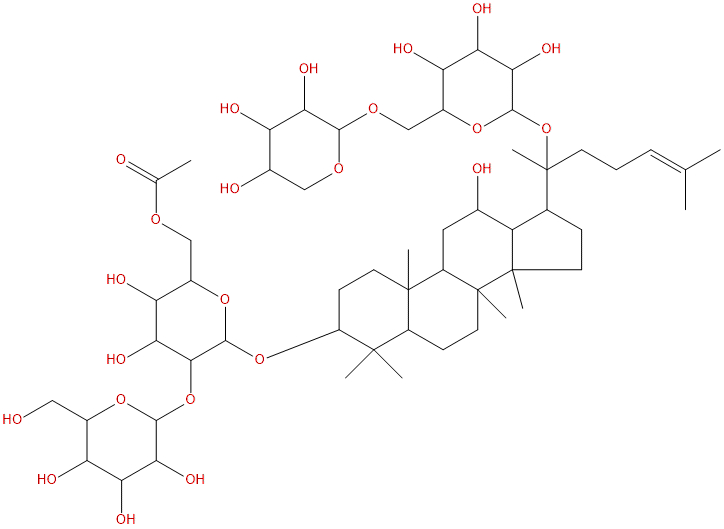
Anthropomorphic ginsenoside F8 belongs to a specific triterpenoid saponin in the ginsenoside family, with a molecular formula of C54H92O23 and a molecular weight of 1121.3180. Its structural core is a pentacyclic triterpenoid skeleton, which connects multiple sugar residues and has high polarity and complex spatial configuration. According to the analysis of physical and chemical properties, the LogP value of anthropomorphic ginsenoside F8 is 2.1442, indicating that it has moderate lipid solubility and is conducive to membrane penetration; The polar surface area (TPSA) is 363.1300, indicating a high molecular polarity that may affect its bioavailability. The water solubility is 0.1853, which belongs to low solubility compounds, indicating that solubility improvement strategies need to be considered in formulation development. The low permeability of the blood-brain barrier indicates limited distribution in the central nervous system. The negative result of hERG channel inhibition experiment indicates a low risk of cardiac toxicity. The Ames mutagenicity test result was 0.0, indicating that the anthropomorphic ginsenoside F8 had no significant mutagenicity and had good safety.
The complexity of its chemical structure makes ginsenoside F8 exhibit unique characteristics in pharmacokinetics and pharmacodynamics. The presence of its polysaccharide chain not only affects molecular stability, but may also participate in specific binding with target proteins, thereby regulating its biological activity.
Plant sources and extraction methods
The anthropomorphic ginsenoside F8 is mainly present in Panax ginseng C.A. Mey. and its related species. Ginseng, as a traditional Chinese medicinal herb, is widely distributed in East Asia, and its roots are rich in various saponin compounds. Although the content of anthropomorphic ginsenoside F8 is not as abundant as mainstream ginsenosides such as Rb1 and Rg1, its unique structure and biological activity make it a research hotspot.
The extraction of ginsenoside F8 is usually carried out using traditional solvent extraction combined with modern separation and purification techniques. Common methods include:
- Solvent extraction Using ethanol or methanol as the main solvent, extract saponins from dried ginseng root powder through reflux extraction or ultrasound assisted extraction.
- Liquid liquid distribution Preliminary separation using the polarity differences of different solvents to remove lipophilic impurities.
- Column chromatography separation Using silica gel, reverse phase C18 or resin column for fractional purification, combined with gradient elution technology, high-purity anthropomorphic ginsenoside F8 was isolated.
- High performance liquid chromatography (HPLC)Used for final purity testing and quantitative analysis to ensure obtaining pure products that meet research and application requirements.
In recent years, the introduction of supercritical fluid extraction and membrane separation technology has further improved the extraction efficiency and purity of ginsenoside F8, reduced production costs, and provided technical support for its large-scale production.
Pharmacological activity research
The pharmacological activity research of anthropomorphic ginsenoside F8 mainly focuses on its anti-tumor, anti-inflammatory, antioxidant, and immune regulatory effects, especially its inhibitory effect on prostate cancer.
Antitumor activity
Multiple in vitro and in vivo studies have shown that ginsenoside F8 can significantly inhibit the proliferation and migration of prostate cancer cells, and induce cell apoptosis. Its mechanism of action involves the regulation of multiple signaling pathways, including inhibiting the STAT3 and PI3K/Akt pathways, reducing the expression of anti apoptotic protein BCL2, and promoting cell cycle arrest. In addition, anthropomorphic ginsenoside F8 can regulate androgen receptor (AR) activity and interfere with hormone dependent growth of tumor cells.
Anti inflammatory and immune regulation
The anthropomorphic ginsenoside F8 has good anti-inflammatory effects and can downregulate the expression of pro-inflammatory cytokines such as TNF - α and IL-6, inhibit the activation of the NF - κ B signaling pathway, and alleviate inflammatory reactions. Its immune regulatory function is manifested by promoting the activity of macrophages and lymphocytes, enhancing the body's immune surveillance ability, and contributing to the improvement of the tumor microenvironment.
Antioxidant effect
By clearing free radicals and enhancing intracellular antioxidant enzyme activity, ginsenoside F8 effectively reduces oxidative stress damage, protects cell function, and delays tissue aging. This characteristic has potential significance in preventing the occurrence of tumors and other chronic diseases.
Mechanism of action and molecular targets
The pharmacological basis of anthropomorphic ginsenoside F8 lies in its regulation of multiple molecular targets, especially in the complex target network of prostate cancer treatment. The main targets and their mechanisms of action are as follows:
- BCL2 As an anti apoptotic protein, downregulation of BCL2 promotes cancer cell apoptosis, and the anthropomorphic ginsenoside F8 enhances cell apoptosis signaling by inhibiting BCL2 expression.
- PTPN1(Protein tyrosine phosphatase 1B): Regulating multiple signaling pathways, ginsenoside F8 affects cell proliferation and metabolism by regulating PTPN1 activity.
- STAT3 Key transcription factors involved in tumor cell growth and immune escape, such as ginsenoside F8, inhibit STAT3 phosphorylation and block its transcriptional activity.
- ESR2(Estrogen receptor beta): Regulating hormone signaling, ginsenoside F8 may participate in endocrine regulation of tumor cells by regulating ESR2.
- MAPK1 Participate in cell proliferation and differentiation, and mimic ginsenoside F8 to affect the MAPK signaling pathway and regulate cell fate.
- CYP19A1(Aromatase): Regulating estrogen synthesis, ginsenoside F8 regulates hormone levels by affecting CYP19A1 expression.
- AR(Androgen receptor): An important driver of prostate cancer, ginsenoside F8 inhibits AR activity and blocks hormone dependent proliferation.
- PIK3CA The catalytic subunit of PI3K, involved in cell survival signaling, inhibits PIK3CA activity with anthropomorphic ginsenoside F8 and blocks the PI3K/Akt pathway.
- LGALS3(Galectin 3): Involved in cell adhesion and signal transduction, human like ginsenoside F8 regulates LGALS3 expression and affects the tumor microenvironment.
- EGFR(Epidermal growth factor receptor): Promotes cell proliferation and migration, inhibits EGFR signaling with ginsenoside F8, and slows down tumor progression.
Overall, the anthropomorphic ginsenoside F8 achieves effective inhibition of prostate cancer cells through multi-target and multi pathway synergistic effects, demonstrating its potential as a multifunctional natural medicine.
Evaluation of drug properties and pharmacokinetics
The pharmacological evaluation of anthropomorphic ginsenoside F8 covers its physicochemical properties, safety, and in vivo behavioral characteristics. The high molecular weight (1121.3180) and polarity (TPSA 363.1300) pose certain challenges to its oral absorption, which may lead to a decrease in bioavailability. Its LogP value is 2.1442, indicating moderate lipid solubility, which is beneficial for cell membrane penetration, but the overall solubility is low (0.1853), and it needs to be optimized through formulation to improve in vivo absorption.
In terms of safety, the anthropomorphic ginsenoside F8 did not exhibit hERG channel inhibitory activity, reducing the risk of cardiac toxicity; The Ames test is negative, indicating no significant genetic toxicity and good safety.
Pharmacokinetic studies have shown that the distribution of ginsenoside F8 in the body is limited, especially with low blood-brain barrier permeability, reducing the risk of central nervous system side effects. Its metabolic pathway is mainly through the liver enzyme system, involving glycoside hydrolysis and triterpenoid skeleton modification. The activity and toxicity of metabolites need further in-depth research.
Overall, the anthropomorphic ginsenoside F8 has good safety and potential pharmacological effects, but there are certain limitations in absorption and metabolism. In the future, strategies such as structural modification and nanocarriers need to be used to improve its pharmacokinetic properties.
Clinical application prospects and prospects
With a deeper understanding of the pharmacological mechanisms of natural products, anthropomorphic ginsenoside F8, as a multi-target regulator, has shown broad application prospects in the treatment of prostate cancer and related diseases. Its multiple activities such as anti-tumor, anti-inflammatory, and immune regulation provide a theoretical basis for the development of new natural medicines.
Future research directions include:
- In depth mechanism research Using genomics, proteomics and other technologies, analyze the molecular network and signaling pathway of the action of ginsenoside F8, clarify its target specificity and synergistic mechanism.
- Pharmacokinetic optimization By chemical modification, nanocarrier encapsulation, and other methods, its bioavailability and in vivo stability are improved, overcoming the absorption barriers of large molecule saponins.
- Preclinical and clinical research Conduct systematic toxicological evaluation and efficacy verification, promote the clinical translation of anthropomorphic ginsenoside F8, and explore its application value in adjuvant therapy for prostate cancer.
- Combination therapy strategy Evaluate the synergistic effect of ginsenoside F8 in combination with existing anticancer drugs, reduce chemotherapy toxicity and side effects, and improve treatment efficacy.
- Development of indications for multiple diseases Given its extensive biological activity, the potential of anthropomorphic ginsenoside F8 in metabolic diseases, neurodegenerative diseases, and other fields is also worth exploring.
In summary, the anthropomorphic ginsenoside F8, as a natural product with unique structure and multi-target effects, has important strategic value and application prospects in the field of drug development in the future.
Conclusion
The anthropomorphic ginsenoside F8 has become an important object of natural product pharmacology research due to its complex triterpenoid saponin structure and diverse biological activities. Its multi-target regulatory role in the treatment of prostate cancer reflects the advantages of natural product multifunctional drugs. Despite the challenges of high molecular weight and low bioavailability in drug development, its excellent safety and unique mechanism of action provide a solid foundation for new drug development. In the future, through interdisciplinary integration, anthropomorphic ginsenoside F8 is expected to achieve the transformation from laboratory research to clinical application, promote the innovative development of natural product drugs, and benefit patients.