| Catalog No | Package | Original Price | Price | Inventory | Quantity | Operating |
|---|---|---|---|---|---|---|
| BP5037-5mg | 5mg | $290.00 | Sign in |
|


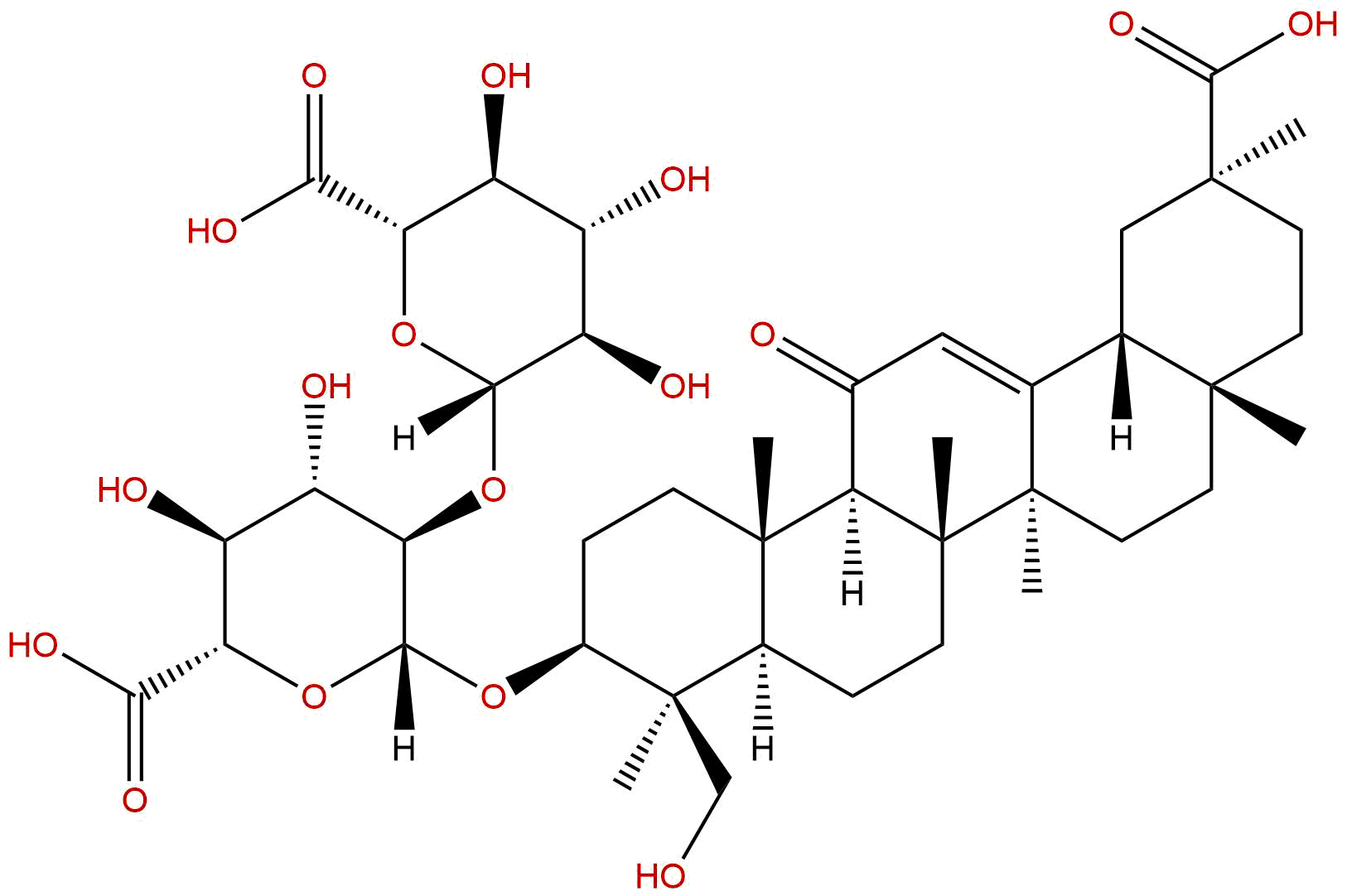
Product name: 24-Hydroxyglycyrrhizic acid
Synonym name: 24-Hydroxyglycyrrhizin; Licoricesaponin G2
Catalogue No.: BP5037
Cas No.: 118441-84-2
Formula: C42H62O17
Mol Weight: 838.941
Botanical Source:
Type of Compound: Triterpenoids
Purity: 95%~99%
Analysis Method: HPLC-DAD or/and HPLC-ELSD
Identification Method: Mass, NMR
Packing: Brown vial or HDPE plastic bottle
Storage: Store in a well closed container, protected from air and light. Put into refrigerate or freeze for long term storage.
Whenever possible, you should prepare and use solutions on the same day. However, if you need to make up stock solutions in advance, we recommend that you store the solution as aliquots in tightly sealed vials at -20℃. Generally, these will be useable for up to two weeks.
The product could be supplied from milligrams to grams
Inquire for bulk scale.
For Reference Standard and R&D, Not for Human Use Directly.
Storage conditions:Short-term storage at 2~8℃, long-term storage at -20 ~ -80℃
287.2700
1.6463
-1.1865
.2416
.4783
.3519
Low
81.3744
6.0380
No
No
Yes
No
Yes
No
0.0
Yes
No
No
No
Natural products, as an important source of drug discovery, play an irreplaceable role in the long history of human struggle against diseases. Licorice(Glycyrrhiza spp.), As a traditional medicinal plant with a long history and wide application, it is known as the "old man of the country" and its medicinal value is highly respected in both Eastern and Western medical systems. The main active ingredients of licorice, glycyrrhizic acid (GA) and its derivatives, have become a research hotspot due to their significant pharmacological activities such as anti-inflammatory, antiviral, hepatoprotective, and immunomodulatory effects. However, as research deepens, scientists have discovered a series of trace triterpenoid saponins with more complex structures and specific activities in licorice. Among them, 24 hydroxyglycyrrhetinic acid, also known as licorice saponin G2, is gradually emerging.
24 hydroxyglycyrrhetinic acid is a natural derivative of glycyrrhetinic acid, characterized by the introduction of a hydroxyl group at the C-24 position of the glycyrrhetinic acid nucleus. This seemingly minor structural modification endows the compound with completely different physicochemical properties and biological activity spectrum from its parent glycyrrhetinic acid. Early research mostly focused on glycyrrhetinic acid, with relatively limited understanding of 24 hydroxyglycyrrhetinic acid. In recent years, with the advancement of separation and purification technology and the application of activity oriented separation strategies, researchers have systematically explored the components with low content but significant activity in licorice, and 24 hydroxyglycyrrhetinic acid has thus entered the research field. Preliminary pharmacological studies have shown that this compound exhibits unique potential in anti-inflammatory, analgesic, and anti allergic effects, and its mechanism of action involves the regulation of multiple key inflammatory signaling pathways and targets.
This review aims to systematically review the research progress of 24 hydroxyglycyrrhetinic acid, starting from its chemical structure, physicochemical properties, plant sources, and extraction methods, to deeply explore its pharmacological activity, molecular mechanism of action, and evaluate it based on its pharmacological parameters. Finally, it looks forward to its application prospects in the field of drug development. By comprehensively analyzing the scientific connotation of this natural product, we aim to provide valuable references for subsequent basic research and clinical application translation.
24-Hydroxyglycyrrhizic acid, also known as (3 β, 20 β) -3-hydroxy-11-oxo-24-hydroxyolen-12-en-29-acid -3-O - β - D-glucuronide - (1 → 2) - β - D-glucuronide, belongs to the pentacyclic triterpenoid saponin class. Its chemical structure consists of three parts: an oleane type pentacyclic triterpenoid glycoside (glycyrrhetinic acid derivative), a disaccharide chain composed of two molecules of glucuronic acid connected by a β -1,2 glycosidic bond, and a key hydroxyl substituent.
Compared with classical glycyrrhizic acid, the most significant structural difference of 24 hydroxyglycyrrhizic acid lies in the C-24 position of the aglycone (i.e., one methyl group on the E ring is oxidized to a hydroxymethyl group). The C-24 position of glycyrrhetinic acid is a methyl group (- CH3), while the C-24 position of 24 hydroxyglycyrrhetinic acid is a hydroxymethyl group (- CH ₂ OH). This structural modification has had a profound impact on the overall properties of the compound. Firstly, the introduction of the C-24 hydroxyl group increases the polarity of the molecule, which is directly reflected in its physicochemical parameters. According to calculations, the molecular weight of 24 hydroxyglycyrrhetinic acid is 838.9410 Da, and the lipid water partition coefficient LogP is 1.6463, indicating that it has a certain hydrophilicity, but overall it still leans towards lipophilicity. Its polar surface area (TPSA) is as high as 287.27 Å ², much higher than many small molecule drugs, mainly due to the numerous hydroxyl and carboxyl groups in its molecules. The water solubility parameter is 0.2416 mg/mL, although not high, its water solubility has been improved compared to the parent glycyrrhetinic acid. In addition, the presence of the C-24 hydroxyl group may affect the formation of intramolecular hydrogen bonds, thereby altering its binding mode with biological targets.
From the perspective of physical and chemical properties, 24 hydroxyglycyrrhetinic acid is a white to off white amorphous powder that is easily soluble in strongly polar organic solvents such as pyridine and dimethyl sulfoxide. It also has a certain solubility in methanol and ethanol, but has lower solubility in water, ether, and chloroform. The two glucuronic acid carboxyl groups and one phenolic hydroxyl group (C-3 hydroxyl group) contained in its structure make it weakly acidic. This compound is relatively stable under acidic conditions, but is prone to hydrolysis or ring opening reactions in strongly alkaline environments. It is worth noting that its high TPSA value and low LogP value indicate poor transmembrane ability, especially difficulty in crossing the blood-brain barrier (BBB), which is consistent with the conclusion of "blood-brain barrier: low" in its pharmacological evaluation. In addition, preliminary computer toxicology predictions show that the compound has no inhibitory activity on hERG potassium channels (hERG inhibition: No), and the Ames test result is negative (0.0), indicating a low risk of mutagenicity and good preliminary safety characteristics.
24 hydroxyglycyrrhetinic acid mainly comes from the Fabaceae genus of licorice(Glycyrrhiza)The roots and rhizomes of plants. At present, this ingredient has been found in various licorices, including but not limited to Ural licorice(Glycyrrhiza uralensis Fisch.)、 Swelling fruit licorice(Glycyrrhiza inflata Bat.)、 Guangguo Licorice(Glycyrrhiza glabra L. And yellow licorice(Glycyrrhiza eurycarpa P. C. Li, etc. However, its content in plants is usually low, much lower than the main component glycyrrhizic acid (content can reach 2-7%), belonging to trace or trace components. This low abundance characteristic is one of the main bottlenecks restricting its in-depth research and development.
For the extraction and separation of 24 hydroxyglycyrrhetinic acid, a multi-step and highly selective method is usually required. The traditional extraction methods are mainly based on solvent extraction and liquid-liquid extraction. Common extraction solvents include water, methanol, ethanol, or their mixed solutions in different proportions. Due to the high polarity of 24 hydroxyglycyrrhetinic acid, a higher proportion of alcohol water system (such as 70% methanol or ethanol) is usually used for reflux extraction or ultrasound assisted extraction to improve extraction efficiency. After concentration, the extract is often extracted with n-butanol to enrich the saponin components into the n-butanol phase.
However, traditional methods alone are far from enough to isolate and purify high-purity 24 hydroxyglycyrrhetinic acid from complex licorice extracts. Modern chromatographic techniques, especially preparative high performance liquid chromatography (HPLC) and high-speed counter current chromatography (HSCCC), have become key means to achieve efficient separation. The activity oriented separation strategy is often adopted: first, the crude extract is preliminarily classified by macroporous adsorption resin column chromatography (such as D101, AB-8, etc.), eluted with a water ethanol gradient, and the saponin rich fraction is collected. Subsequently, further separation was performed using silica gel column chromatography and ODS (octadecylsilane bonded silica gel) reverse phase column chromatography, with gradient elution using solvent systems such as chloroform methanol water or acetonitrile water. Finally, by using preparative HPLC with a C18 reverse phase chromatography column and acetonitrile water (containing a small amount of formic acid or acetic acid) as the mobile phase, isocratic or gradient elution can be performed at specific wavelengths (usually 254 nm or 210 nm) to obtain 24 hydroxyglycyrrhetinic acid monomer with a purity of over 98%. In recent years, high-speed counter current chromatography has been successfully applied to the separation of glycyrrhizic acid saponins due to its advantages of irreversible adsorption and high sample recovery rate, providing a new option for the preparation of 24 hydroxyglycyrrhizic acid.
It is worth noting that due to the extremely low content of 24 hydroxyglycyrrhetinic acid in plants, its separation and purification process is time-consuming, costly, and low in yield. Therefore, developing more efficient and green extraction and separation technologies, such as supercritical fluid extraction, microwave-assisted extraction, molecular imprinting technology, etc., as well as exploring biosynthetic or chemical synthesis pathways, are crucial for ensuring the stable supply of this compound and promoting its in-depth research.
Although the research history of 24 hydroxyglycyrrhetinic acid is relatively short, existing pharmacological activity studies have revealed its multifaceted biological activities, particularly demonstrating significant potential in the fields of anti-inflammatory, analgesic, and anti allergic effects.
1. Anti inflammatory activity
Anti inflammation is one of the core pharmacological activities of 24 hydroxyglycyrrhetinic acid. Numerous in vitro and in vivo experiments have confirmed its powerful anti-inflammatory effect. In cell models, 24 hydroxyglycyrrhetinic acid can significantly inhibit the release of nitric oxide (NO), prostaglandin E2 (PGE2), and various pro-inflammatory cytokines, including tumor necrosis factor - α (TNF - α), interleukin-6 (IL-6), and interleukin-1 β (IL-1 β), induced by lipopolysaccharide (LPS) in macrophages such as RAW264.7 cells. Its strength of action is even better than that of the parent glycyrrhetinic acid in some experiments. In animal models, 24 hydroxyglycyrrhetinic acid has inhibitory effects on various acute and chronic inflammation models. For example, in the carrageenan induced rat paw swelling model, oral or intraperitoneal injection of 24 hydroxyglycyrrhetinic acid can effectively reduce the degree of swelling; In the xylene induced mouse ear swelling model, local administration also showed significant anti-inflammatory effects. In addition, in inflammatory bowel disease (IBD) models that are closer to clinical practice, such as dextran sulfate sodium DSS induced colitis in mice, 24 hydroxyglycyrrhetinic acid can significantly improve disease activity index, alleviate pathological damage to colon tissue, and reduce myeloperoxidase (MPO) activity and pro-inflammatory cytokine levels in colon tissue.
2. Analgesic activity
Inflammation is closely related to pain. Due to its strong anti-inflammatory activity, the analgesic effect of 24 hydroxyglycyrrhetinic acid has also received attention. Research has shown that in classic pain models such as acetic acid writhing method (chemical stimulation) and hot plate method (thermal stimulation), 24 hydroxyglycyrrhetinic acid exhibits dose-dependent analgesic effects. Its analgesic mechanism may be partially derived from its anti-inflammatory effect, which reduces inflammatory pain by inhibiting the production of inflammatory mediators. In addition, studies suggest that it may directly act on pain related targets in the peripheral or central nervous system, such as transient receptor potential vanillic acid subtype 1 (TRPV1) and transient receptor potential anchor protein 1 (TRPA1) channels, and exert analgesic effects by regulating the activity of these channels.
3. Anti allergic activity
Licorice is commonly used in traditional medicine to treat allergic diseases. 24 hydroxyglycyrrhetinic acid, as one of the active ingredients of licorice, also shows anti allergic potential. In the degranulation model of mast cells, 24 hydroxyglycyrrhetinic acid can inhibit antigen induced release of β - hexosaminase and histamine, indicating its stabilizing effect on mast cell membrane and inhibition of allergen release. In a passive skin allergic reaction (PCA) animal model, this compound can also effectively inhibit the increase in vascular permeability and alleviate allergic reactions. Its anti allergic mechanism may be related to the inhibition of phosphorylation of key signaling molecules such as splenic tyrosine kinase (Syk) and phospholipase C γ (PLC γ).
4. Other activities
In addition to the main activities mentioned above, preliminary studies also suggest that 24 hydroxyglycyrrhetinic acid may have hepatoprotective, antiviral (such as inhibiting respiratory syncytial virus RSV), and immunomodulatory effects. For example, in the acute liver injury model induced by carbon tetrachloride (CCl ₄), the compound can reduce serum transaminase levels and alleviate liver cell necrosis. These findings provide preliminary evidence for their multifunctional applications, but the relevant mechanisms still need to be further explored.
The pharmacological activity of 24 hydroxyglycyrrhetinic acid is the result of multi-target and multi pathway synergistic effects. Based on existing research, its anti-inflammatory mechanism is particularly clear, mainly involving the regulation of multiple key inflammatory signaling pathways and targets.
1. Inhibit the NF - κ B signaling pathway
Nuclear factor kappa B (NF - κ B) is the core transcription factor in inflammatory response. 24 hydroxyglycyrrhetinic acid can effectively inhibit the activation of NF - κ B. Specifically, it can inhibit the activity of I κ B kinase beta (IKBKB), prevent the phosphorylation and degradation of I κ B alpha protein, and thus "lock" NF - κ B (usually a p50/p65 heterodimer, where the p65 subunit is encoded by the RELA gene) in the cytoplasm, preventing it from entering the nucleus to initiate transcription of downstream target genes. These target genes include genes encoding pro-inflammatory cytokines and enzymes such as TNF - α, IL-6, IL-1 β, inducible nitric oxide synthase (NOS2), cyclooxygenase-2 (COX-2, encoded by PTGS1/PTGS2 genes). Therefore, by blocking the NF - κ B pathway, 24 hydroxyglycyrrhetinic acid inhibits the production of various inflammatory mediators from the source.
2. Regulating the STAT3 signaling pathway
Signal transducer and activator of transcription factor 3 (STAT3) also plays an important role in inflammation and immune response. Research has found that 24 hydroxyglycyrrhetinic acid can inhibit the phosphorylation and dimerization of STAT3 induced by cytokines such as IL-6, thereby blocking its entry into the nucleus to exert transcriptional activation function. The excessive activation of STAT3 is associated with various inflammatory diseases and cancers, therefore, inhibiting STAT3 signaling is another important mechanism by which 24 hydroxyglycyrrhetinic acid exerts anti-inflammatory and potential anti-tumor activity.
3. Inhibit inflammasome activation
Inflammatory bodies, especially NLRP3 inflammasomes, are key protein complexes that mediate the maturation and secretion of IL-1 β and IL-18. Cysteine aspartate protease 1 (CASP1) is its core effector protein. Research has shown that 24 hydroxyglycyrrhetinic acid can inhibit the assembly and activation of NLRP3 inflammasomes, thereby suppressing the activity of CASP1 and reducing the production and release of IL-1 β. This mechanism is crucial for its protective role in NLRP3 related disease models such as gout and colitis.
4. Regulating transient receptor potential (TRP) channels
TRPV1 and TRPA1 are non selective cation channels expressed on sensory neurons and are key molecules for sensing pain, heat, and chemical stimuli. 24 hydroxyglycyrrhetinic acid has been found to directly or indirectly regulate the activity of these channels. For example, it may exert analgesic and anti itch effects by antagonizing TRPV1 or TRPA1, inhibiting calcium ion influx caused by agonists such as capsaicin or mustard oil. This provides a direct molecular target explanation for its analgesic activity.
5. Inhibit arachidonic acid metabolism
Cyclooxygenase (COX, encoded by PTGS1/PTGS2) is a key enzyme involved in the metabolism of arachidonic acid to produce prostaglandins (such as PGE2). 24 hydroxyglycyrrhetinic acid can inhibit the activity of COX-2, thereby reducing the production of PGE2, which is consistent with its inhibitory effects on inflammation and pain. Meanwhile, it may also affect the lipoxygenase (LOX) pathway and regulate the production of leukotrienes.
In summary, 24 hydroxyglycyrrhetinic acid forms a multi-level anti-inflammatory and analgesic network by simultaneously acting on multiple key targets and signaling pathways such as IKBKB/NF - κ B, IL-6/STAT3, CASP1/inflammasome, TRPV1/TRPA1, PTGS1/Cox, NOS2, etc. This multi-target mode of action is the basis for its strong pharmacological activity and provides a theoretical basis for its application in complex diseases.
The development of natural products into clinical drugs must undergo strict pharmacological evaluation. Based on existing computational predictions and preliminary experimental data, a preliminary evaluation of the pharmacological properties of 24 hydroxyglycyrrhetinic acid can be conducted.
1. Analysis of drug properties
According to the Lipinski Five Rules, 24 hydroxyglycyrrhetinic acid has obvious "violations": its molecular weight (838.94 Da) is much greater than 500, and although LogP (1.65) is within an acceptable range, the number of hydrogen bond donors (11) and hydrogen bond acceptors (16) far exceeds the upper limit of the rules (5 and 10, respectively). Therefore, from the perspective of traditional small molecule drugs, their drug properties are relatively poor. However, this does not mean that it has no development value. Many natural products, especially saponins, have large molecular weights but can still be effective drugs (such as diammonium glycyrrhizinate, ginsenoside Rg3, etc.). These compounds are usually poorly absorbed orally, but can be administered by injection or act as prodrugs.
2. Absorption, distribution, metabolism, and excretion (ADME) characteristics
3. Security assessment
The preliminary toxicological predictions are encouraging. The negative hERG inhibition test indicates a low risk of causing QT interval prolongation and arrhythmia in the heart. The Ames test result is 0.0, indicating no significant mutagenicity. These preliminary data provide positive signals for its safety. However, this is far from sufficient to prove its clinical safety. In the future, systematic studies on acute toxicity, long-term toxicity, reproductive toxicity, genetic toxicity, etc. are needed to comprehensively evaluate their safety window.
4. Challenges and strategies for drug development
Overall, the biggest challenge for the pharmacological development of 24 hydroxyglycyrrhetinic acid lies in its extremely low bioavailability. To address this challenge, the following strategies can be adopted:
- Structural modification Modify its structure through chemical or biological methods, such as preparing prodrugs (such as esterification, salt formation), introducing specific functional groups to improve lipid solubility or membrane permeability.
- New drug delivery system Utilizing novel drug delivery systems such as liposomes, nanoparticles, micelles, phospholipid complexes, microemulsions, etc., to enhance their solubility and oral absorption, or achieve targeted delivery.
- Development of non oral administration routes: Focus on the development of its injections (such as lipid microsphere injection), transdermal drug delivery preparations (such as patches, gel) or inhalation preparations to bypass the oral absorption barrier.
Although the pharmacological properties of 24 hydroxyglycyrrhetinic acid face challenges, its unique pharmacological activity and multi-target mechanism of action indicate broad application prospects.
1. Inflammatory diseases
Given its strong anti-inflammatory activity, the most promising application areas for 24 hydroxyglycyrrhetinic acid are various acute and chronic inflammatory diseases. For example:
- Inflammatory bowel disease (IBD)Such as Crohn's disease and ulcerative colitis. It can effectively alleviate intestinal inflammation by inhibiting NF - κ B, STAT3, and NLRP3 inflammasomes, and may have fewer systemic side effects than existing drugs such as 5-aminosalicylic acid and glucocorticoids. Developing into oral colon targeted preparations or enemas is a feasible direction.
- arthritis Including rheumatoid arthritis and osteoarthritis. By inhibiting synovial inflammation and reducing cartilage damage, it is expected to become a new candidate drug for treating arthritis.
- Dermatitis and Psoriasis Topical preparations can be used to treat eczema, contact dermatitis, and psoriasis by inhibiting local inflammatory reactions and excessive proliferation of keratinocytes in the skin.
2. Pain management
It has the potential to become a non addictive alternative or complementary therapy to opioid drugs in the treatment of chronic pain, such as neuropathic pain and inflammatory pain, by regulating the TRPV1/TRPA1 channel and inhibiting the production of inflammatory mediators through a dual analgesic mechanism. It is a direct strategy to develop topical patches or gel for local analgesia.
3. Allergic diseases
Its ability to stabilize mast cells and inhibit the release of allergic mediators makes it valuable for the treatment of allergic diseases such as allergic rhinitis, asthma, and urticaria. Developing nasal sprays or oral formulations is worth exploring.
4. Liver protection
Based on its preliminary hepatoprotective activity and the successful application of glycyrrhetinic acid drugs in clinical hepatoprotection, 24 hydroxyglycyrrhetinic acid or its derivatives are expected to be developed into a new generation of hepatoprotective drugs for the treatment of viral hepatitis, alcoholic liver disease, non-alcoholic fatty liver disease, etc.
Future research directions:
24 hydroxyglycyrrhetinic acid, as a triterpenoid saponin with low content but significant activity in licorice, is gradually moving from behind the scenes to the forefront. Its unique C-24 hydroxyl modification endows it with physicochemical properties and biological activity spectrum different from the parent glycyrrhetinic acid. This review systematically summarizes the research progress on its chemical structure, plant origin, pharmacological activity, mechanism of action, and medicinal properties. Research has shown that this compound exhibits strong anti-inflammatory, analgesic, and anti allergic activities by regulating multiple key targets and signaling pathways such as NF - κ B, STAT3, NLRP3 inflammasome, TRPV1/TRPA1, and has shown preliminary potential in liver protection and other fields.
However, we must also be aware that the road from natural products to clinical drugs is long and challenging. The biggest bottleneck faced by 24 hydroxyglycyrrhetinic acid is its extremely low bioavailability, which severely restricts its oral application. Future research should focus on structural optimization, development of novel drug delivery systems, and pharmacokinetic and toxicological evaluation of the systems. Despite the numerous challenges ahead, its unique pharmacological effects and preliminary safety data make it an extremely attractive lead compound. With the continuous deepening of research and advances in technology, we have reason to believe that 24 hydroxyglycyrrhetinic acid and its derivatives have the potential to provide new and better options for the treatment of inflammatory diseases, pain, allergies, and other diseases in the future, contributing to the cause of human health. Further exploration of the "leftover pearl" in the licorice family is undoubtedly a promising direction in the field of natural product drug discovery.
Batch can search by a CAS number,one per line
