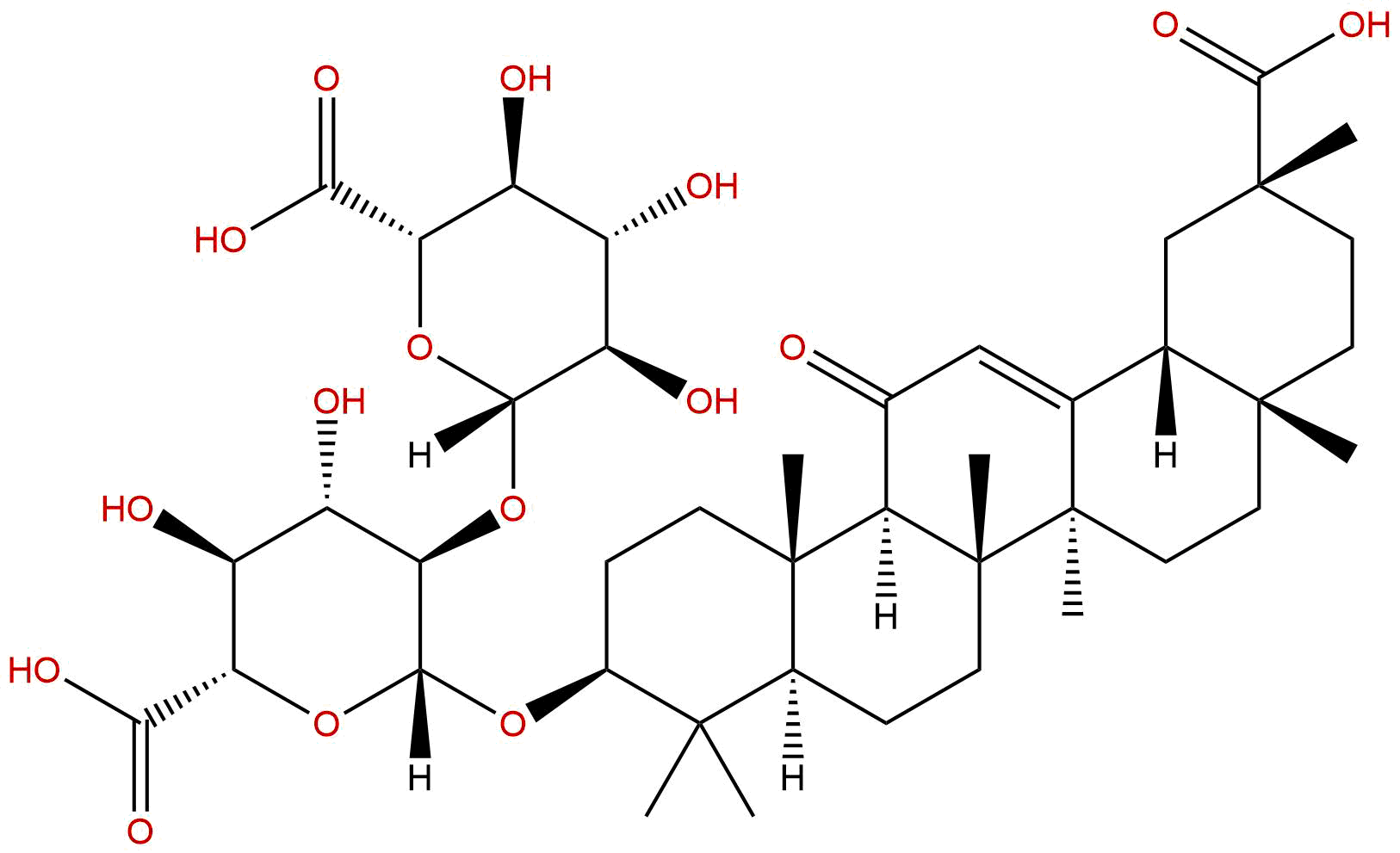


Product name: (18β,20α)-Glycyrrhizic acid
Synonym name: Licoricesaponin H2; Glycyrrhizic Acid Impurity 2
Catalogue No.: BP2052
Cas No.: 118441-85-3
Formula: C42H62O16
Mol Weight: 822.942
Botanical Source: Glycyrrhiza uralensis fisc
Physical Description: 甘草
Type of Compound: Triterpenoids
Purity: 95%~99%
Analysis Method: HPLC-DAD or/and HPLC-ELSD
Identification Method: Mass, NMR
Packing: Brown vial or HDPE plastic bottle
Storage: Store in a well closed container, protected from air and light. Put into refrigerate or freeze for long term storage.
Whenever possible, you should prepare and use solutions on the same day. However, if you need to make up stock solutions in advance, we recommend that you store the solution as aliquots in tightly sealed vials at -20℃. Generally, these will be useable for up to two weeks.
The product could be supplied from milligrams to grams
Inquire for bulk scale.
For Reference Standard and R&D, Not for Human Use Directly.
Storage conditions:Short-term storage at 2~8℃, long-term storage at -20 ~ -80℃
18 β, 20 α - Glycyrrhizic acid (CAS number: 118441-85-3) is an important natural triterpenoid saponin compound mainly found in licorice (Glycyrrhiza spp.). As one of the most representative active ingredients in licorice, 18 β, 20 α - glycyrrhetinic acid has attracted much attention due to its unique chemical structure and diverse biological activities. In recent years, with the development of natural product pharmacology and molecular biology techniques, the mechanisms of action of 18 β, 20 α - glycyrrhetinic acid in various aspects such as anti-inflammatory, antiviral, liver protection, and immune regulation have gradually been revealed, demonstrating broad clinical application potential.
This article aims to systematically review the chemical structure and physicochemical properties, plant sources and extraction methods, pharmacological activity and mechanism of action, pharmacological evaluation and pharmacokinetic characteristics of 18 β, 20 α - glycyrrhetinic acid, and prospects its future application prospects in disease treatment, providing comprehensive and in-depth references for researchers in related fields.
The molecular formula of 18 β, 20 α - glycyrrhetinic acid is C42H62O16, with a molecular weight of 822.9420. Its structure belongs to the triterpenoid saponin class, with the core being the triterpenoid nucleus of glycyrrhetinic acid, which connects two glucose residues to form a double glycosidic structure. The stereoisomers of this compound are 18 β and 20 α, giving it a specific spatial conformation that affects its binding affinity with biological targets.
In terms of physical and chemical properties, the LogP value of 18 β, 20 α - glycyrrhetinic acid is 2.3502, indicating its moderate lipid solubility, which is beneficial for cell membrane penetration but not excessively hydrophobic. The polar surface area (TPSA) is 267.0400, indicating that the molecule has strong polarity and hydrogen bond donor/acceptor ability, which is crucial for its water solubility and interaction with target proteins. The water solubility is 0.1276, indicating its low solubility in water, which may limit its oral bioavailability. The low penetration ability of the blood-brain barrier suggests that it mainly acts on peripheral tissues. The hERG channel inhibition test was negative, indicating a low risk of cardiac toxicity. The Ames mutagenicity test result was 0.0, indicating a low risk of genotoxicity and meeting safety requirements.
18 β, 20 α - glycyrrhetinic acid is mainly present in plants of the licorice genus, especially in the roots and rhizomes of licorice (Glycyrrhiza glabra, Glycyrrhiza uralensis, etc.). Licorice, as a traditional Chinese medicinal herb, has a long history and is widely used in traditional Chinese medicine formulas. Its roots contain abundant glycyrrhetinic acid saponins, among which 18 β, 20 α - glycyrrhetinic acid is one of the important components.
There are various extraction methods, including water extraction and alcohol precipitation, ultrasound assisted extraction, microwave-assisted extraction, and supercritical CO2 extraction. The traditional water extraction and alcohol precipitation method is widely used due to its simple operation and low cost. The specific steps are as follows: after crushing the dried roots of licorice, reflux extraction is carried out with water or 70% ethanol. The filtrate is concentrated and ethanol is added to precipitate impurities. After multiple rounds of recrystallization purification, high-purity 18 β, 20 α - glycyrrhetinic acid is obtained. Ultrasonic and microwave-assisted extraction techniques can improve extraction efficiency and purity, shorten extraction time, and are suitable for industrial production. Supercritical CO2 extraction has gradually gained attention in recent years due to its advantages of green environmental protection and strong selectivity.
During the purification process, column chromatography (such as silica gel column, reverse phase C18 column) and high-performance liquid chromatography (HPLC) techniques are often used for separation and identification to ensure the quality and stability of the product.
18 β, 20 α - glycyrrhetinic acid has various significant pharmacological activities, covering fields such as anti-inflammatory, antiviral, liver protection, immune regulation, antioxidant, and anti-tumor.
Multiple in vitro and in vivo experiments have shown that 18 β, 20 α - glycyrrhetinic acid can significantly inhibit the production of inflammatory mediators, such as tumor necrosis factor alpha (TNF - α), interleukin-1 β (IL-1 β), interleukin-6 (IL-6), etc. It downregulates the nuclear factor kappa B (NF - κ B) signaling pathway, inhibits the transcriptional expression of inflammatory genes, and reduces tissue inflammatory response. In animal models, 18 β, 20 α - glycyrrhetinic acid has shown good relief effects on inflammatory diseases such as arthritis, pneumonia, and enteritis.
18 β, 20 α - glycyrrhizic acid showed inhibitory effects on a variety of viruses, including hepatitis B virus (HBV), hepatitis C virus (HCV), influenza virus and novel coronavirus (SARS-CoV-2). Its mechanism involves blocking the replication cycle of the virus, inhibiting virus protein synthesis, and regulating host immune response. Especially in the treatment of hepatitis B, 18 β, 20 α - glycyrrhizic acid improves the antiviral ability of the body by enhancing the interferon signaling pathway.
As isomers of glycyrrhetinic acid, 18 β, 20 α - glycyrrhetinic acid exhibits significant effects in liver protection. It reduces liver cell damage by antioxidant, anti-inflammatory, and regulating cell apoptosis. Preclinical studies have shown that this compound can improve liver fibrosis, fatty liver, and drug-induced liver injury, promote liver cell regeneration, and has potential adjuvant therapeutic value for liver diseases.
18 β, 20 α - glycyrrhetinic acid can regulate immune cell function, enhance macrophage and lymphocyte activity, and promote cytokine balance. Its bidirectional regulatory effect on the immune system helps maintain immune homeostasis and reduce autoimmune diseases caused by excessive immune reactions.
This compound has the ability to scavenge free radicals, reduce oxidative stress, and protect cells from oxidative damage. In tumor models, 18 β, 20 α - glycyrrhetinic acid exhibits certain anti-tumor activity by inducing apoptosis, inhibiting proliferation and migration of cancer cells, especially in digestive system tumors such as liver cancer and gastric cancer.
The multi-target mechanism of action of 18 β, 20 α - glycyrrhetinic acid is the basis for its broad pharmacological activity. It mainly involves the following signaling pathways and molecular targets:
As the core regulatory factor of inflammatory response, NF - κ B plays a crucial role in various diseases. 18 β, 20 α - glycyrrhetinic acid inhibits the phosphorylation and degradation of I κ B α, blocks the nuclear translocation of NF - κ B, reduces the expression of inflammatory cytokine genes, and achieves anti-inflammatory effects.
This compound can regulate ERK, JNK, and p38 kinases in the mitogen activated protein kinase (MAPK) signaling pathway, affecting cell proliferation, differentiation, and apoptosis processes, and participating in anti-inflammatory and anti-tumor effects.
18 β, 20 α - glycyrrhetinic acid activates the PI3K/Akt signaling pathway, promotes cell survival and anti apoptosis, and protects liver cells from damage. Meanwhile, the regulation of this pathway helps to regulate immune responses and metabolic balance.
This compound affects macrophage surface receptors such as TLR4 (Toll like receptor 4), regulates downstream MyD88 dependent signaling, and regulates inflammation and immune responses. In addition, 18 β, 20 α - glycyrrhetinic acid can regulate the ratio of regulatory T cells (Treg) to effector T cells, maintaining immune homeostasis.
18 β, 20 α - glycyrrhetinic acid blocks viral replication by inhibiting viral RNA dependent RNA polymerase (RdRp) and viral protease activity. It can also enhance the interferon signaling pathway and promote the expression of antiviral proteins.
The molecular weight of 18 β, 20 α - glycyrrhetinic acid is 822.9420, slightly higher than the ideal range of traditional small molecule drugs, which may affect its oral absorption. LogP is 2.3502, indicating moderate lipid solubility and favorable cell membrane penetration. The TPSA is as high as 267.0400, indicating strong polarity, which may limit its passive diffusion. Low water solubility (0.1276) may limit the dissolution rate of oral formulations.
The low permeability of the blood-brain barrier indicates that it mainly acts on peripheral tissues, reducing the risk of central nervous system side effects. The hERG channel inhibition was negative and the Ames test was 0, indicating a low risk of cardiac toxicity and genotoxicity, and good safety.
Existing studies have shown that 18 β, 20 α - glycyrrhetinic acid is slowly absorbed and has limited bioavailability after oral administration, mainly entering the bloodstream through intestinal absorption. It is widely distributed in the body, especially with high concentrations in the liver and kidneys. The metabolic pathways mainly involve liver enzyme mediated hydrolysis and glucosidic bond cleavage, generating glycyrrhetinic acid monosaccharides and triterpenoid parent nucleus derivatives. Excretion is mainly through bile and urine.
Moderate half-life supports its potential as an adjuvant therapy for chronic diseases. To improve its pharmacokinetic performance, researchers have attempted to use strategies such as nanocarriers, liposome encapsulation, and structural modification to enhance its bioavailability and targeting.
18 β, 20 α - glycyrrhetinic acid has shown broad potential in the treatment of various diseases due to its multi-target and multi mechanism pharmacological properties.
As a liver protector, 18 β, 20 α - glycyrrhetinic acid has important value in the adjuvant treatment of hepatitis, liver fibrosis, fatty liver, and drug-induced liver injury. Combining its anti-inflammatory and antioxidant effects, it is expected to be developed as a safe and effective new drug for the treatment of liver disease.
For chronic inflammatory diseases such as rheumatoid arthritis and inflammatory bowel disease, 18 β, 20 α - glycyrrhetinic acid can be used as a natural anti-inflammatory drug to reduce the side effects of long-term use of immunosuppressants.
In the prevention and treatment of hepatitis B, hepatitis C and emerging virus infections (such as COVID-19), the antiviral and immunomodulatory effects of 18 β, 20 α - glycyrrhizic acid provide a theoretical basis for its clinical application. In the future, it can be used in combination with existing antiviral drugs to improve efficacy and reduce the risk of drug resistance.
Although its anti-tumor activity is still in the early stages of research, the synergistic effect of chemotherapy drugs provides new ideas for comprehensive treatment of tumors.
18 β, 20 α - glycyrrhetinic acid, as an important triterpenoid saponin active ingredient in licorice, has become a hot topic in natural product pharmacology research due to its unique chemical structure and diverse pharmacological activities. Its potential in anti-inflammatory, antiviral, liver protection, and immune regulation provides rich theoretical basis and application prospects for the development of natural medicines and disease treatment. In the future, combining modern drug design and formulation technology, 18 β, 20 α - glycyrrhetinic acid is expected to become a new safe and effective therapeutic drug, contributing greater value to human health.
