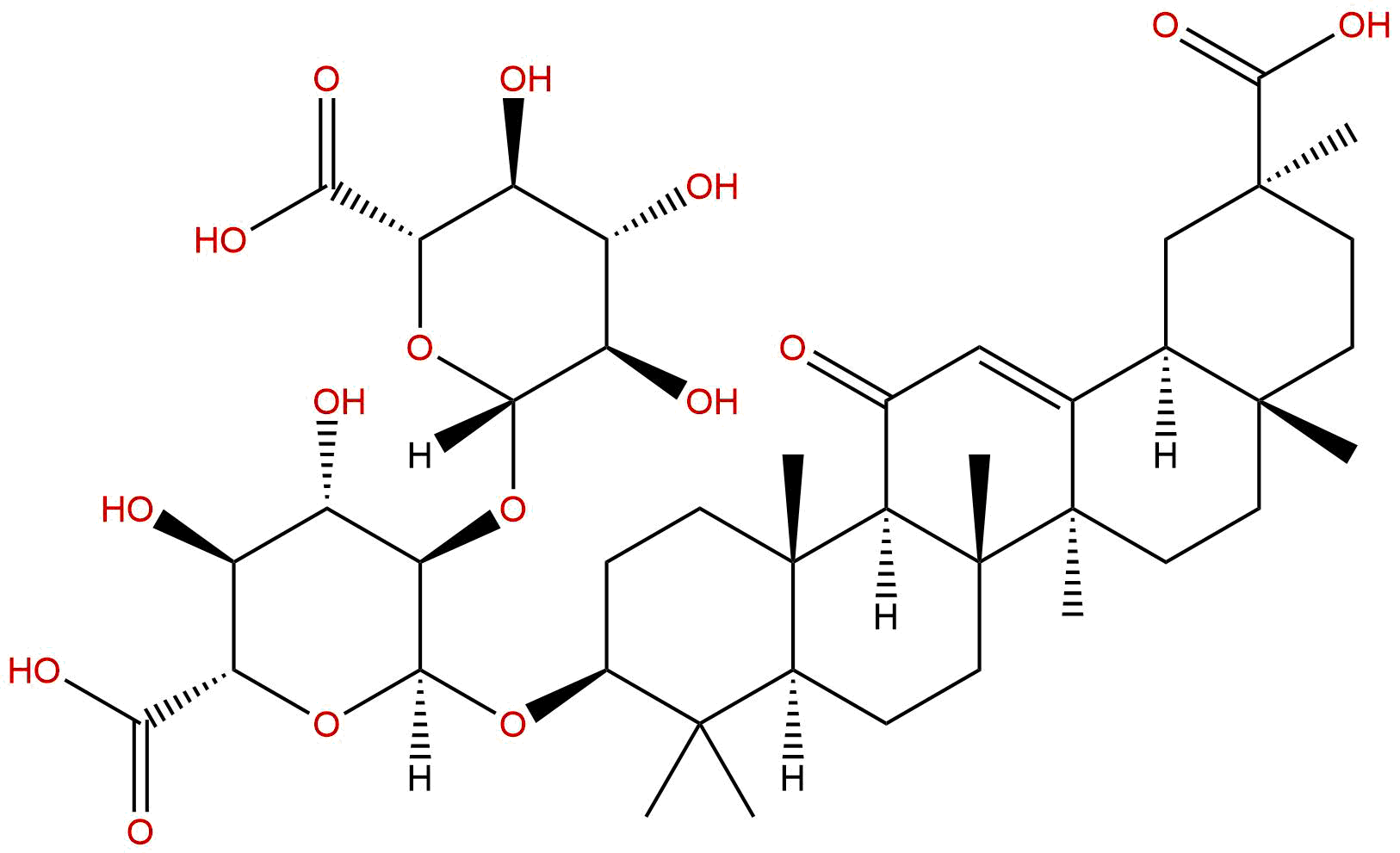


Product name: 18α,20β-Glycyrrhizic acid
Synonym name: 18α-Glycyrrhizin; 18α-Glycyrrhizinic acid; 18αH-Glycyrrhizic acid
Catalogue No.: BP2279
Cas No.: 83896-44-0
Formula: C42H62O16
Mol Weight: 822.942
Botanical Source:
Type of Compound: Triterpenoids
Purity: 95%~99%
Analysis Method: HPLC-DAD or/and HPLC-ELSD
Identification Method: Mass, NMR
Packing: Brown vial or HDPE plastic bottle
Storage: Store in a well closed container, protected from air and light. Put into refrigerate or freeze for long term storage.
Whenever possible, you should prepare and use solutions on the same day. However, if you need to make up stock solutions in advance, we recommend that you store the solution as aliquots in tightly sealed vials at -20℃. Generally, these will be useable for up to two weeks.
The product could be supplied from milligrams to grams
Inquire for bulk scale.
For Reference Standard and R&D, Not for Human Use Directly.
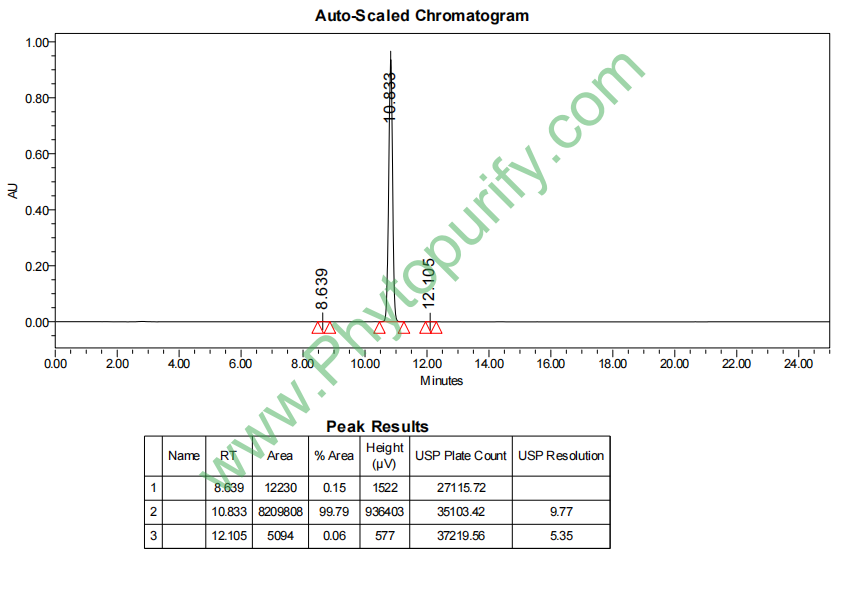
HPLC of 18α,20β-Glycyrrhizic acid
Storage conditions:Short-term storage at 2~8℃, long-term storage at -20 ~ -80℃
18 α - Glycyrrhizic acid (CAS number: 83896-44-0) is a natural triterpenoid saponin derived from licorice (Glycyrrhiza spp.). As one of the isomers of glycyrrhetinic acid, 18 α - glycyrrhetinic acid has a stereoisomeric difference in structure from the more common 18 β - glycyrrhetinic acid, which endows it with unique biological activity and pharmacological properties. In recent years, with the deepening development of natural product pharmacology, 18 α - glycyrrhetinic acid has gradually become a research hotspot in the field of antiviral drug development due to its significant antiviral activity and good safety.
This review will systematically summarize the chemical structure and physicochemical properties, plant sources, and extraction methods of 18 α - glycyrrhetinic acid, with a focus on its pharmacological activity and mechanism of action. Combined with drug evaluation, its pharmacokinetic characteristics will be explored. Finally, its clinical application potential and future research directions will be discussed, aiming to provide comprehensive and authoritative reference materials for researchers in related fields.
The molecular formula of 18 α - glycyrrhetinic acid is C42H62O16, with a molecular weight of 822.9420. The core of its structure is a tricyclic pentacene triterpenoid skeleton, which connects two molecules of glucose to form a typical saponin structure. Compared with 18 β - glycyrrhetinic acid, 18 α - glycyrrhetinic acid has an alpha configuration at position C-18 and a beta configuration at position 20. The difference in configuration affects its binding mode with biological targets and pharmacological activity.
In terms of physicochemical properties, the LogP value of 18 α - glycyrrhetinic acid is 2.3483, indicating that it has moderate lipid solubility and is conducive to cell membrane penetration. The topological polar surface area (TPSA) is as high as 267.0400, reflecting its strong molecular polarity, which may limit its ability to passively penetrate the blood-brain barrier, consistent with its low blood-brain barrier permeability. The water solubility is 0.1287 mg/mL, indicating poor water solubility, but its bioavailability can be improved through appropriate formulation techniques. The hERG channel inhibition experiment showed a negative result, indicating a low risk of cardiac toxicity. The Ames mutagenicity test result is 0.0, indicating that its genotoxicity risk is extremely low and its safety is high.
18 α - glycyrrhetinic acid mainly exists in the roots and rhizomes of licorice, and plants of the licorice genus (such as Glycyrrhiza glabra and Glycyrrhiza uralensis) are its main natural source. Licorice, as a traditional Chinese medicinal herb, is widely distributed in China, Russia, and the Mediterranean region. Its roots contain abundant isomers of glycyrrhetinic acid.
The extraction method usually uses water extraction and alcohol precipitation, combined with column chromatography technology for separation and purification. The specific steps include: crushing the dried licorice roots, reflux extraction with water or 70% -80% ethanol, concentrating the extract and adding ethanol to precipitate impurities, followed by separation using a silica gel column or C18 reverse phase column, monitoring the purity using high performance liquid chromatography (HPLC), and finally obtaining high-purity 18 α - glycyrrhetinic acid. In recent years, the application of ultrasound assisted extraction, microwave-assisted extraction, and membrane separation technologies has significantly improved extraction efficiency and purity, and reduced production costs.
18 α - glycyrrhetinic acid exhibits broad-spectrum antiviral activity, covering both DNA and RNA viruses, particularly exhibiting significant inhibitory effects against herpes virus (HSV), human immunodeficiency virus (HIV), human papillomavirus (HPV), and other viruses. In vitro experiments have shown that 18 α - glycyrrhetinic acid can effectively inhibit the replication of HSV-1 and HSV-2, reduce viral load, and alleviate cell damage caused by the virus.
In the HIV infection model, 18 α - glycyrrhetinic acid exhibits potential antiretroviral activity by interfering with key viral enzymes (such as HIV-1 protease HIV1-PR) and co receptors CCR5 and CXCR4, blocking virus entry and replication processes. In addition, it has a certain inhibitory effect on viral integrase (INT) and various virus specific proteins (UL42, UL54, ICP27, TK, gD), indicating its multi-target antiviral mechanism.
Research has shown that 18 α - glycyrrhetinic acid can regulate host immune response, enhance macrophage activity, promote the balanced secretion of cytokines (such as TNF - α, IL-6), and alleviate the inflammatory response caused by viral infection. Its regulatory effect on myeloperoxidase (MPO) helps to inhibit oxidative stress and tissue damage, further exerting a protective effect.
In addition to antiviral effects, 18 α - glycyrrhetinic acid has also been reported to have anti-tumor, antioxidant, and liver protective properties. It exhibits multiple biological activities by regulating the apoptotic signaling pathway and inhibiting free radical generation, and has the potential to be developed as a multifunctional drug.
The antiviral effect of 18 α - glycyrrhetinic acid involves multi-target and multi pathway mechanisms:
Viral enzyme inhibition Directly bind and inhibit key enzyme activities such as viral DNA polymerase (UL42, UL54), protease (HIV1-PR), kinase (TK), etc., blocking the viral replication cycle.
Functional interference of viral proteins Inhibit the function of virus transcription regulatory protein ICP27 and virus surface glycoprotein gD, hindering virus assembly and release.
Receptor blockade By competitively binding to CCR5 and CXCR4 co receptors, HIV virus invasion into host cells is blocked.
immunomodulation Regulating the activity of host immune cells, inhibiting excessive inflammatory reactions, and reducing tissue damage caused by viral infections.
Molecular docking and dynamic simulation studies further revealed that 18 α - glycyrrhetinic acid has strong binding energy and stable binding sites with various viral target proteins, supporting its multi-target inhibitory properties.
The pharmacological parameters of 18 α - glycyrrhetinic acid show that it has good potential for drug development. LogP is moderate, indicating that it has a certain membrane permeability, but high TPSA and low water solubility limit its oral bioavailability. Low blood-brain barrier permeability reduces the risk of central nervous system toxicity and side effects.
Pharmacokinetic studies have shown that 18 α - glycyrrhetinic acid is slowly absorbed after oral administration, with a long plasma half-life. It is mainly metabolized by the liver and excreted through bile. Its metabolites are mostly glycyrrhetinic acid monosaccharide hydrolysate, which has certain biological activity. The distribution in the body shows that its concentration is relatively high in the liver, lungs, and kidneys, which meets its targeted requirements for antiviral and hepatoprotective effects.
In terms of safety evaluation, 18 α - glycyrrhetinic acid has no significant hERG channel inhibitory effect, and the Ames test is negative, indicating a low risk of cardiac toxicity and genetic toxicity, making it suitable for long-term use.
Given the significant antiviral activity and good safety of 18 α - glycyrrhetinic acid, it has broad application prospects in the field of clinical antiviral therapy. Especially in the adjuvant therapy against HSV, HIV, and emerging viral infections, 18 α - glycyrrhetinic acid, as a naturally derived multi-target antiviral agent, can compensate for the shortcomings of existing single target drugs and reduce the risk of drug resistance.
Future research should focus on:
In addition, combining nanocarriers and targeted delivery technology is expected to break through its pharmacokinetic limitations and achieve precise treatment.
18 α - glycyrrhetinic acid, as a natural triterpenoid saponin with a unique three-dimensional configuration, has shown significant potential as a novel antiviral drug due to its broad-spectrum antiviral activity, multi-target mechanism of action, and good safety. Although current research is mostly focused on in vitro and animal models, in the future, through interdisciplinary collaboration and modern medicinal chemistry and formulation technology, it is expected to promote its clinical application and provide new natural drug candidates for antiviral therapy.
In summary, 18 α - glycyrrhetinic acid not only enriches the pharmacological connotation of glycyrrhetinic acid compounds, but also provides valuable scientific basis and practical path for the development of natural antiviral drugs. Looking forward to more in-depth and systematic research in the future to help realize its clinical value.
