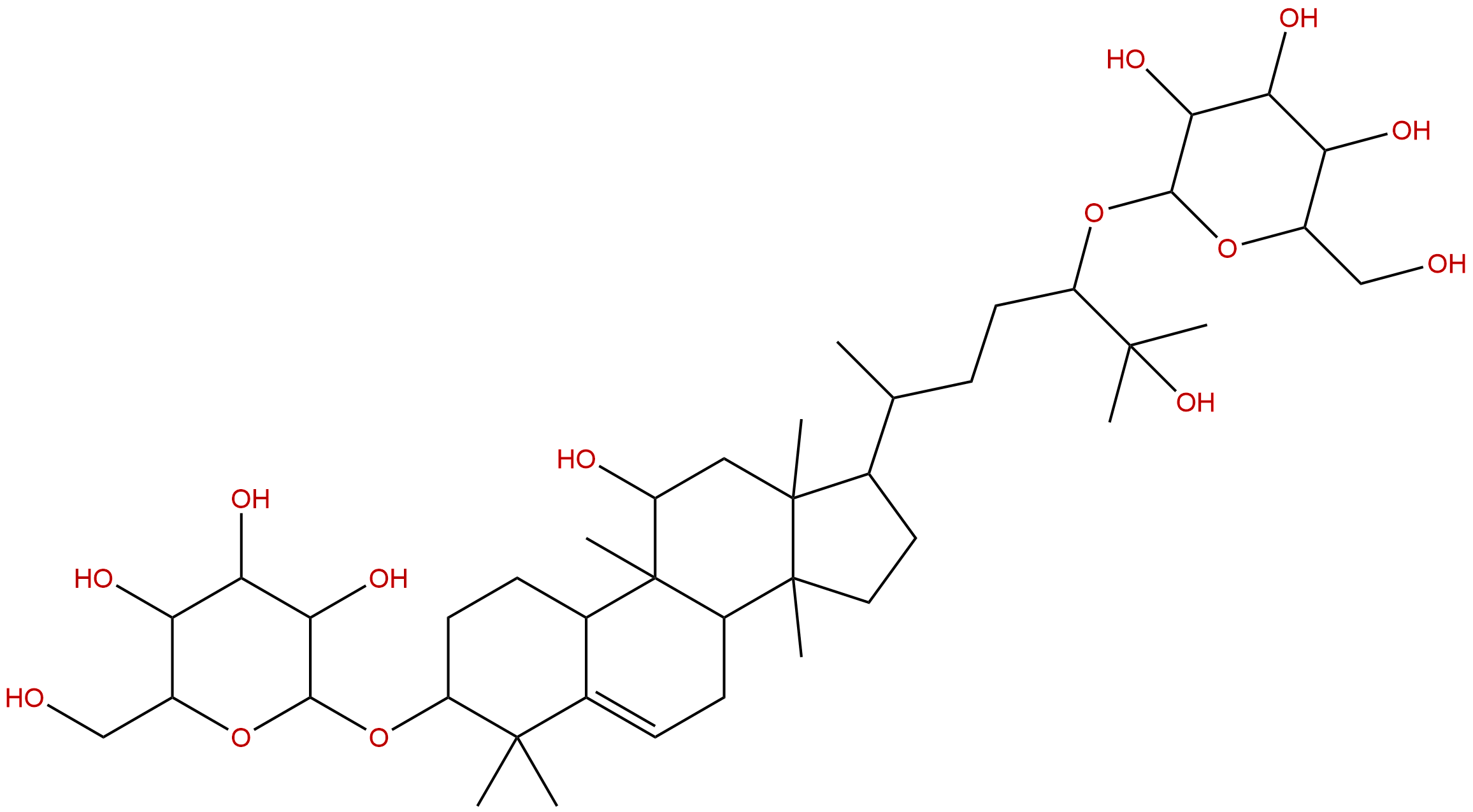


Product name: Mogroside II E
Synonym name:
Catalogue No.: BP3501
Cas No.: 88901-38-6
Formula: C42H72O14
Mol Weight: 801.024
Botanical Source: Momordica grosvenorii and Siraitia siamensis; Luohanguo
Physical Description:
Type of Compound: Triterpenoids
Purity: 95%~99%
Analysis Method: HPLC-DAD or/and HPLC-ELSD
Identification Method: Mass, NMR
Packing: Brown vial or HDPE plastic bottle
The product could be supplied from milligrams to grams. Inquire for bulk scale.
We provide solution to improve the water-solubility of compounds, thereby facilitating the variety of activity tests and clinic uses.
For Reference Standard and R&D, Not for Human Use Directly.
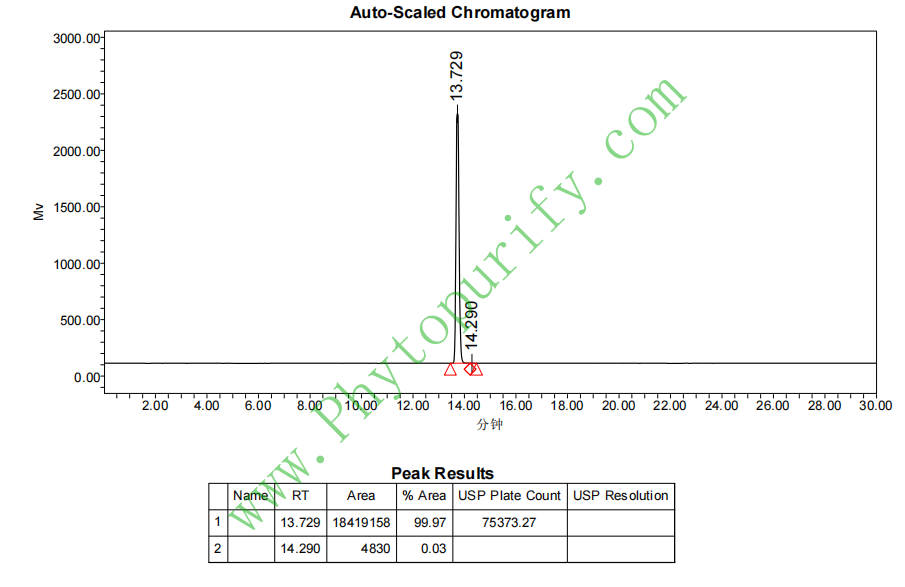
HPLC of Mogroside II E
Storage conditions:Short-term storage at 2~8℃, long-term storage at -20 ~ -80℃
239.2200
2.6565
2.6564
.0550
.5163
.7409
Low
74.4050
6.1150
No
No
No
No
No
No
0.0
Yes
No
No
Yes
Natural products, as an important source of drug discovery, play an irreplaceable role in the history of human health maintenance and disease treatment. In recent years, with the rise of the concept of "returning to nature" and the transformation of lifestyles, the exploration of functional molecules derived from nature and possessing multiple biological activities has become increasingly in-depth. Among many natural products, Momordica grosvenorii comes from cucurbitaceae plant(Siraitia grosvenorii)The Arhat family has attracted much attention due to its unique sweet taste and extensive pharmacological activities. Siraitia grosvenorii, as a traditional food and medicine homologous plant, has hundreds of years of edible and medicinal history in southern China, and is commonly used to treat cough, sore throat and constipation. Its sweet ingredient, Arhat fruit glycoside, is a kind of cucurbitane type triterpene glycoside. Its sweetness can reach hundreds of times of sucrose, and its heat is extremely low, so it is regarded as an ideal natural non nutritive sweetener.
Among many homologues of Arhat fruit glycoside, Arhat fruit glycoside IIe (Mogaside IIe, CAS No. 88901-38-6) is a key intermediate or active ingredient. It is not only an important node in the biosynthesis pathway of sweet ingredients in Siraitia grosvenorii, but also shows its unique biological activity. Compared with the more well-known mogroside V, Arhat IIe has a lower degree of glycosylation, which endows it with different physical and chemical properties and potentially different bioavailability and mechanism of action. Early studies focused on the total glycosides of Siraitia grosvenorii or the highest content of Siraitia grosvenorii V. However, systematic research on low glycosylation components such as Arhat grosvenorii IIe was relatively lagging behind. However, with the progress of separation technology and activity screening methods, the unique pharmacological value of Arhat IIe is gradually revealed.
Existing research shows that Arhat fruit glycoside IIe not only inherits the common antioxidant and anti-inflammatory properties of Arhat fruit glycoside family, but also shows remarkable potential in anti diabetes, anti obesity and potential anti-cancer activities. In particular, its role in regulating energy metabolism, interfering with adipocyte differentiation and influencing key signaling pathways of glucose and lipid metabolism makes it one of the candidate molecules for the treatment of metabolic syndrome (such as obesity and type 2 diabetes). In addition, its clear chemical structure, good pharmacokinetic parameters, and low toxicity risk have laid a solid foundation for further drug development. The purpose of this paper is to systematically review the chemical structure, source, pharmacological activity, mechanism of action, and evaluation of pharmaceutical performance of Arhat fruit glycoside IIe, and explore its development prospects as a new natural drug lead compound, with a view to providing reference for further research in this field.
Arhat IIe belongs to cucurbitane type tetracyclic triterpene glycosides. The core of its chemical structure is mogrol aglycone, which is a cucurbitane skeleton with 30 carbon atoms. The structural characteristics of siranol lie in the condensation mode of its A ring, B ring, C ring and D ring, as well as the existence of multiple hydroxyl groups (- OH) and double bonds. These functional groups provide the structural basis for its derivatives and biological activities. The unique feature of Arhat IIe lies in its glycosylation mode: there are two glucose groups (Glc) connected at the C-3 and C-24 positions of grosvenoril, with the specific structure of 3-O - β - D-glucopyranosyl-24-O - β - D-glucopyranoside. Compared with mogroside V (a glucose group is connected at the C-3 position and a disaccharide chain composed of glucose and rhamnose is connected at the C-24 position), Arhat IIe has a shorter sugar chain and relatively low hydrophilicity, which has an important impact on its biological activity and pharmacokinetics.
From the perspective of physical and chemical properties, the molecular formula of Arhat fruit glycoside IIe is C ₄ ₂ H ₇ ₂ O ₁ ₄, and its molecular weight is 801.0240 Da. Its lipid water partition coefficient LogP is 2.6565, indicating that the compound has a certain lipophilicity, but it is still a moderately polar molecule in general. The topologically polar surface area (TPSA) is as high as 239.2200 Å ², mainly attributed to the large number of hydroxyl and glycosidic bond oxygen atoms in its molecules. A high TPSA value usually indicates poor membrane permeability and lower intestinal absorption rate, but it also means that it is not easily able to penetrate the blood-brain barrier (BBB) and has a lower risk of central nervous system toxicity. Its water solubility is 0.0550 mg/mL, which belongs to the category of slight solubility, which to some extent limits its oral bioavailability. In terms of stability, glycosidic bond hydrolysis may occur in acid or alkaline conditions of Arhat IIe to generate aglycone mogrositol or smaller glycosidic fragments. Under normal storage conditions (avoiding light, dry, low temperature), its chemical properties are relatively stable. In the drug evaluation, hERG inhibition was predicted as' no ', indicating a low risk of causing QT interval prolongation and arrhythmia in the heart; The Ames test result is 0.0, indicating no significant genetic toxicity or mutagenicity. These preliminary pharmaceutical parameters provide a positive signal for the safety of Arhat IIe as a candidate drug.
Arhat IIe is mainly derived from the cucurbitaceae plant Siraitia grosvenorii(Siraitia grosvenorii (Swingle) C. Jeffrey ex A. M. Lu et Z. Y. Zhang)。 Momordica grosvenorii is native to subtropical mountain areas in Guangxi, Guangdong, Hunan and other places in China, among which Yongfu, Lingui and other places in Guangxi are the most famous for their cultivated products. The glycosides of Arhat grosvenorii mainly exist in the fruits, especially in the pulp and peel of mature fruits. In the process of fruit development, the composition and content of Arhat fruit glycoside will change dynamically. Generally, in the green fruit stage, the content of low glycosylated Arhat (such as Arhat IIe, IIIe) is relatively high; As the fruit matures, the activity of glycosyltransferase increases, and these low glycosylation glycosides will gradually transform into high glycosylation siraitin V. Therefore, the content of siraitin V in mature fruit is the highest. However, by selecting a specific harvest time or a specific cultivar, raw materials rich in Arhat IIe can be obtained.
The extraction of Arhat IIe from Siraitia grosvenorii generally follows the classic process of "extraction separation purification". First, the dried Siraitia grosvenorii fruit was crushed and extracted by solvent. Due to the large polarity of Arhat fruit glycosides, the commonly used extraction solvent is water or ethanol of different concentrations (such as 50% -80% ethanol). Heating reflux extraction or ultrasound assisted extraction are commonly used methods to improve extraction efficiency. The crude extract of total glycosides of Momordica grosvenorii was obtained after the extraction solution was filtered and concentrated. In order to obtain high-purity Arhat fruit glycoside IIe, further chromatographic separation technology is needed. Since the polarity of Arhat fruit glycoside IIe is similar to that of Arhat fruit glycoside IIIe, IVe, V and other structural analogs, it is difficult to separate them. Common separation methods include: macroporous adsorption resin column chromatography (such as D101, AB-8 resin), used for preliminary enrichment and decolorization; Normal phase silica gel column chromatography was used to separate different Arhat fruit glycosides based on their different adsorption capacity on silica gel; Reverse phase silica gel column chromatography (such as ODS-C18) utilizes hydrophobic interactions for fine separation. In recent years, high performance countercurrent chromatography (HSCCC) and preparative high performance liquid chromatography (Prep HPLC) have been increasingly applied to the high-purity preparation of Arhat fruit glycoside IIe due to their high separation efficiency and resolution. Through the combination of the above methods, the monomer of Arhat grosvenoride IIe with a purity of more than 98% can be isolated from momordica grosvenorii for subsequent pharmacological activity studies.
In recent years, significant progress has been made in the pharmacological activity of Arhat fruit glycoside IIe, revealing its potential therapeutic value in multiple disease models.
1. Antioxidant activity
Oxidative stress is the common pathological basis of many chronic diseases (including diabetes, obesity and cancer). Arhat fruit glycoside IIe shows clear antioxidant capacity. In vitro chemical experiments showed that Arhat fruit glycoside IIe could effectively scavenge 1,1-diphenyl-2-trinitrophenylhydrazine (DPPH) free radicals, 2,2 '- diazo bis -3-ethylbenzothiazolin-6-sulfonic acid (ABTS) cationic free radicals, and had a certain iron ion reduction ability (FRAP). In the cell model, Arhat fruit glycoside IIe can reduce the level of intracellular reactive oxygen species (ROS) induced by hydrogen peroxide (H ₂ O ₂) or high glucose, and protect cells from oxidative damage. Its antioxidant mechanism may be related to the direct clearance of free radicals by multiple hydroxyl groups in its molecular structure as hydrogen donors, as well as the upregulation of the expression of endogenous antioxidant enzymes in cells, such as superoxide dismutase (SOD) and glutathione peroxidase (GPx).
2. Anti diabetes activity
Arhat fruit glycoside IIe performs well in regulating blood sugar and improving insulin resistance. In the insulin resistant HepG2 hepatocyte or 3T3-L1 adipocyte model, Arhat fruit glycoside IIe treatment can significantly increase glucose uptake and utilization. Its mechanism of action may involve activating the AMP activated protein kinase (AMPK) signaling pathway, which is a key sensor for cellular energy metabolism. Activation of AMPK can promote the translocation of glucose transporter 4 (GLUT4) to the cell membrane, thereby increasing glucose uptake; At the same time, it can also inhibit the expression of key enzymes involved in gluconeogenesis, such as phosphoenolpyruvate carboxykinase PEPCK, and reduce liver glucose output. In addition, Arhat fruit glycoside IIe can also improve the function of pancreatic islet β cells, protect them from apoptosis induced by glycolipid toxicity, and maintain normal insulin secretion. In the streptozotocin (STZ) - induced diabetes mouse model, oral administration of Arhat fruit glycoside IIe can significantly reduce fasting blood glucose levels, improve glucose tolerance, and reduce weight loss and other diabetes complications.
3. Anti obesity activity
The potential of Arhat fruit glycoside IIe in anti obesity is of particular concern. A number of in vitro and in vivo studies have confirmed that Arhat fruit glycoside IIe can effectively inhibit adipogenesis. In 3T3-L1 preadipocyte differentiation model, Arhat fruit glycoside IIe inhibited lipid droplet accumulation and triglyceride (TG) content in a dose-dependent manner. Its mechanism of action is closely related to the key transcription factors and enzymes involved in regulating adipocyte differentiation. Specifically, Arhat fruit glycoside IIe can significantly reduce the mRNA and protein expression levels of peroxisome proliferator activated receptor γ (PPARG), sterol regulatory element binding protein 1 (SREBF1) and fatty acid synthase (FASN). PPARG is the main regulatory factor for adipocyte differentiation, while SREBF1 and FASN are key enzymes for fatty acid synthesis and lipid accumulation. By inhibiting these targets, Arhat fruit glycoside IIe blocked the transformation of preadipocytes into mature adipocytes. In addition, Arhat fruit glycoside IIe can also up regulate the expression of leptin receptor (LEPR) and β 3-adrenergic receptor (ADRB3), and promote the expression of uncoupling protein 1 (UCP1), which may be related to promoting browning of white fat and increasing energy consumption. In diet induced obesity (DIO) mouse model, long-term administration of Arhat fruit glycoside IIe can significantly inhibit weight gain, reduce the weight of white adipose tissue (epididymal fat, perirenal fat), and improve serum lipid mass spectrometry (reduce total cholesterol TC, triglyceride TG, low-density lipoprotein LDL-C, and increase high-density lipoprotein HDL-C). At the same time, it can also reduce serum leptin (LEP) levels, increase adiponectin (ADIPOQ) levels, and affect the expression of hypothalamic melanocortin precursor (POMC), thereby regulating energy balance from both peripheral and central levels.
4. Anti cancer activity
There are relatively few studies on the anticancer activity of Arhat fruit glycoside IIe, but the preliminary results show its potential anti-tumor effect. In vitro experiments of several cancer cell lines (such as HepG2, MCF-7 and HT-29), Arhat fruit glycoside IIe showed certain cytotoxicity and could inhibit cell proliferation and induce apoptosis. The mechanism may be related to activating the caspase cascade, upregulating the pro apoptotic protein Bax, downregulating the anti apoptotic protein Bcl-2, and causing cell cycle arrest (such as G0/G1 phase arrest). In addition, the anti-inflammatory and antioxidant activities of Arhat fruit glycoside IIe may also indirectly play an anti-cancer role, preventing the occurrence and development of tumors by inhibiting the inflammatory microenvironment or reducing DNA oxidative damage. However, these findings are mainly based on in vitro experiments, and their anti-tumor effects and safety in vivo still need to be validated through more in-depth animal models and clinical studies.
The pharmacological activity of Arhat IIe is the result of multiple targets and multiple pathways. Based on existing research, its core mechanism of action can be summarized as follows:
1. Regulating energy metabolism and fat generation pathways
This is the core of the anti obesity and anti diabetes effect of Arhat fruit glycoside IIe. Its main molecular targets include:
- PPARG (Peroxisome proliferator activated receptor gamma)As the "main switch" for adipocyte differentiation, activation of PPARG is necessary for adipogenesis. By inhibiting the expression of PPARG, Arhat fruit glycoside IIe fundamentally blocks the differentiation process from preadipocytes to mature adipocytes.
- SREBF1 (sterol regulatory element binding protein 1)SREBF1 is a key transcription factor that regulates the expression of genes involved in fatty acid and triglyceride synthesis. Arhat fruit glycoside IIe down regulates SREBF1, thereby inhibiting the expression of its downstream target genes, such as FASN, and reducing the de novo synthesis of fatty acids.
- FASN (Fatty Acid Synthase)FASN is a key enzyme that catalyzes the synthesis of fatty acids. Inhibiting FASN activity is a direct means of reducing lipid accumulation.
- UCP1 (uncoupling protein 1)UCP1 is mainly expressed in brown adipose tissue (BAT) and beige adipocytes, and its function is to decouple the mitochondrial respiratory chain from ATP synthesis, dissipating energy in the form of thermal energy. Arhat fruit glycoside IIe up-regulated the expression of UCP1, suggesting that it may increase energy consumption and fight obesity by promoting browning of white fat.
- AMPK (AMP activated protein kinase)AMPK is the core sensor for cellular energy homeostasis. Lohanoside IIe can activate AMPK, phosphorylate and inhibit acetyl coenzyme A carboxylase (ACC), thereby inhibiting fatty acid synthesis and promoting fatty acid oxidation. Meanwhile, AMPK activation can also promote GLUT4 translocation and increase glucose uptake.
2. Regulating factors related to appetite and energy balance
Arhat IIe may regulate appetite and energy balance by influencing peripheral and central signals.
- LEP (leptin) and LEPR (leptin receptor)Leptin is a hormone secreted by adipocytes that acts on the leptin receptor in the hypothalamus, suppressing appetite and promoting energy expenditure. Obese individuals often have leptin resistance. Arhat fruit glycoside IIe can reduce the serum leptin level and up regulate the expression of LEPR, which may help to improve leptin resistance.
- ADIPOQ (Adiponectin)Adiponectin is another hormone secreted by adipocytes, which has the effects of enhancing insulin sensitivity, anti inflammation and anti atherosclerosis. Arhat fruit glycoside IIe can increase the level of serum adiponectin, which is consistent with its role in improving insulin resistance and metabolic disorders.
- POMC (POMC)POMC is an important precursor protein in the arcuate nucleus of the hypothalamus. After enzymatic cleavage, it can produce alpha melanocyte stimulating hormone (α - MSH), which activates the melanocortin receptor (MC4R) to suppress appetite and increase energy expenditure. The effect of Arhat IIe on the expression of POMC suggests that it may have a central appetite regulating effect.
- ADRB3 (β 3-adrenergic receptor)ADRB3 is mainly expressed in adipose tissue, and its activation can promote fat breakdown and thermogenesis. Arhat fruit glycoside IIe upregulates the expression of ADRB3, which helps to promote fat mobilization and energy consumption.
3. Antioxidant and anti-inflammatory signaling pathways
- Nrf2/ARE pathway Nuclear factor E2 related factor 2 (Nrf2) is a key transcription factor in the cellular antioxidant defense system. Arhat fruit glycoside IIe may activate Nrf2 to dissociate it from Keap1 and transfer it into the nucleus, combine with antioxidant response element (ARE), and start the transcription of a series of downstream antioxidant enzymes (such as HO-1, NQO1, SOD), thus enhancing the antioxidant capacity of cells.
- NF - κ B pathway Nuclear factor kappa B (NF - κ B) is the core transcription factor in inflammatory response. Arhat fruit glycoside IIe may prevent the nuclear translocation of NF - κ B by inhibiting the phosphorylation and degradation of I κ B, thus reducing the production of proinflammatory cytokines (such as TNF - α, IL-6, IL-1 β) and playing an anti-inflammatory role.
Based on the calculation prediction and preliminary experimental data, the pharmaceutical properties of Arhat fruit glycoside IIe were evaluated.
1. Lipinski's Rule of Five evaluation
The molecular weight of Arhat IIe (801 Da) exceeded the threshold value of 500 Da; LogP (2.66) meets the requirement of less than 5; The number of hydrogen bond donors (- OH groups) exceeds 5; The number of hydrogen bond acceptors (O atoms) exceeds 10. Therefore, Arhat fruit glycoside IIe violates two of the five drug like principles (molecular weight and number of hydrogen bond donors/receptors). This usually indicates that its oral bioavailability may be poor. However, many natural products (especially glycosides), although violating this rule, can still be absorbed through non classical pathways (such as intestinal transporter mediated uptake) and exhibit good in vivo activity. Therefore, its potential as a drug cannot be denied solely based on this rule.
2. Absorption, distribution, metabolism, and excretion (ADME) characteristics
- absorb: Arhat fruit glycoside IIe has low water solubility (0.055 mg/mL), large molecular weight and high polarity, and its ability to penetrate intestinal epithelial cells through passive diffusion is weak. Its oral absorption may mainly depend on the glucose transporter in the intestine (such as SGLT1) or be absorbed after metabolizing into aglycone siranol through the intestinal flora. Therefore, its oral absolute bioavailability may be low.
- distribution: Due to its high polarity and high TPSA, the blood-brain barrier penetration ability of Arhat IIe is predicted to be "low", which reduces the risk of central nervous system toxicity. Its distribution volume may be small, mainly distributed in extracellular fluid.
- Metabolism: Arhat fruit glycoside IIe may undergo extensive metabolism in vivo. In the intestine, its glycosidic bonds may be hydrolyzed by β - glucosidase of the gut microbiota to produce secondary glycosides or aglycones. In the liver, aglycone siranol may further undergo phase I metabolism (oxidation and reduction) and phase II metabolism (glucuronidation and sulfation). These metabolites may have different biological activities from the original drug.
- excretion Luohangoside IIe and its metabolites are mainly excreted through bile and urine. Due to its large molecular weight, bile excretion may be its main clearance pathway.
3. Safety evaluation
The prediction of hERG inhibition in the drug property parameters is "no", and the Ames test result is 0.0, indicating that the risk of Arhat fruit glycoside IIe in cardiac toxicity and genotoxicity is low. As a component of the medicinal and food homologous plant Siraitia grosvenorii, its long-term edible safety has been historically verified. However, as a high-purity monomeric drug, systematic toxicological studies are still needed, including acute toxicity, chronic toxicity, reproductive toxicity, etc., to comprehensively evaluate its safety.
4. Formulation strategy
In view of the problems of poor water solubility and low oral bioavailability of Arhat fruit glycoside IIe, the development of appropriate preparation technology is the key to improve its drug performance. Possible strategies include solid dispersion technology, nanoliposome or nanoemulsion encapsulation, phospholipid complexes, and prodrug design (such as esterification modification of hydroxyl groups to enhance lipid solubility). In addition, improving ADME properties while retaining activity through structural modification is also an important direction for future pharmaceutical chemistry research.
As a natural triterpene glycoside with multiple pharmacological activities, Arhat fruit glycoside IIe shows broad application prospects in many therapeutic fields.
1. Metabolic diseases: obesity and type 2 diabetes
This is the most potential application direction of Arhat fruit glycoside IIe. Through multiple mechanisms such as inhibiting fat production, promoting energy consumption, improving insulin resistance and regulating appetite, it is expected to be developed into an innovative drug for treating obesity and type 2 diabetes. Compared with existing chemical synthetic drugs (such as orlistat and metformin), Arhat fruit glycoside IIe is derived from natural products and has a good safety basis. Its characteristic as a non sugar sweetener allows it to improve metabolism while also meeting patients' demand for sweetness, making it particularly suitable for development as a functional food or dietary supplement. In the future, more preclinical studies are needed to clarify the optimal route of administration, dosage, and course of treatment, and to evaluate its synergistic effects with existing hypoglycemic and lipid-lowering drugs.
2. Functional food and natural sweetener market
Siraitin V has been widely used in food industry as a natural sweetener. Although the sweetness of Arhat IIe may not be as good as that of mogroside V, its unique biological activity makes it have higher added value. It can be developed as a functional sweetener or food additive with specific health claims (such as "helps control weight", "assists in lowering blood sugar"). For example, adding it to beverages, yogurt, and baked goods not only provides sweetness but also gives the product additional health benefits. This is in line with the current trend of consumers pursuing "clean labels" and "healthiness" in food consumption.
3. Anti cancer adjuvant therapy
Although the direct anti-cancer activity of Arhat fruit glycoside IIe needs further verification, its antioxidant and anti-inflammatory properties make it a potential adjuvant drug for cancer treatment. In the process of radiotherapy and chemotherapy, Arhat fruit glycoside IIe may protect normal tissues from damage by reducing oxidative stress and inflammatory reaction, thus reducing the side effects of treatment. In addition, its combination with chemotherapy drugs may enhance anti-tumor efficacy or reverse tumor resistance through synergistic effects. Research in this area is still in its infancy, but it is worth exploring.
4. Future research directions
- In depth mechanism research: Use gene knockout/knock in mouse models and omics technologies (such as transcriptomics, proteomics, metabolomics) to systematically clarify the molecular targets and action networks of Arhat fruit glycoside IIe, especially its specific roles in the regulation of intestinal flora, white fat browning, and the regulation of the central nervous system.
- Structural modification and structure-activity relationship: Systematically modify the sugar group and aglycone part of Arhat fruit glycoside IIe, synthesize a series of derivatives, study the relationship between its sweetness, pharmacological activity and chemical structure, in order to find candidate compounds with stronger activity and better pharmacokinetic properties.
- Pharmacokinetic and Formulation Studies Conduct comprehensive pharmacokinetic studies in vivo to clarify its absorption, distribution, metabolism, excretion characteristics, and active metabolites. Develop new formulations that can significantly improve their oral bioavailability.
- Toxicology and Safety Evaluation According to the Good Laboratory Practice (GLP) requirements for non clinical drug research, complete a systematic toxicological evaluation to provide data support for clinical trial applications.
- clinical trial: After completing sufficient preclinical research, gradually promote clinical trials to verify its effectiveness and safety in target indications (such as obesity and diabetes).
As an important low glycosylation member of Arhat fruit glycoside family, Arhat fruit glycoside IIe is moving from behind the scenes to in front of the stage. It is not only a key intermediate in the biosynthesis of sweet ingredients of Siraitia grosvenorii, but also an active molecule with independent pharmacological value. This article systematically reviews the research progress on its chemical structure, plant origin, pharmacological activity, mechanism of action, and medicinal properties. The existing evidence strongly shows that Arhat fruit glycoside IIe shows significant potential in anti-oxidation, anti diabetes, especially anti obesity by regulating multiple key targets such as PPARG, SREBF1, AMPK, etc. Its good safety prediction parameters and background derived from medicinal and edible plants have added advantages to its subsequent development.
However, we should also be soberly aware that the study of Arhat fruit glycoside IIe is still in its early stage. The low oral bioavailability and complex metabolism in the body are the key bottlenecks that restrict its development into a drug. Future research needs to focus on elucidating its mechanism of action, optimizing its pharmacokinetic properties, and verifying its therapeutic value through rigorous preclinical and clinical studies. With the deepening of research, Arhat fruit glycoside IIe is expected to transform from a natural sweetener component into an innovative drug precursor for the treatment of metabolic diseases and other chronic diseases, making new contributions to human health. The in-depth exploration of such natural products once again confirms that nature is an inexhaustible treasure trove for drug discovery.
