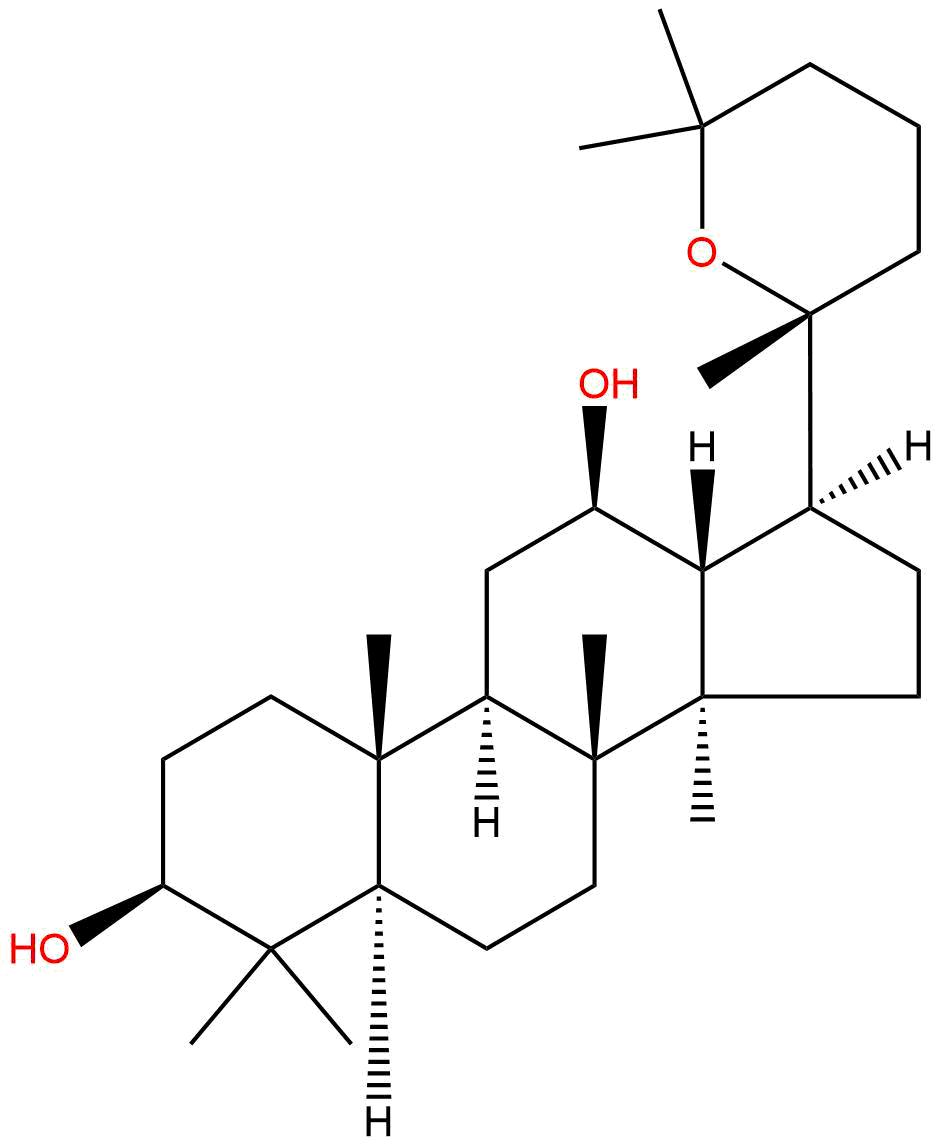


Product name: Panaxadiol
Synonym name: (20R)-Panaxadiol
Catalogue No.: BP1060
Cas No.: 19666-76-3
Formula: C30H52O3
Mol Weight: 460.743
Botanical Source:
Physical Description: White powder
Type of Compound: Triterpenoids
Purity: 95%~99%
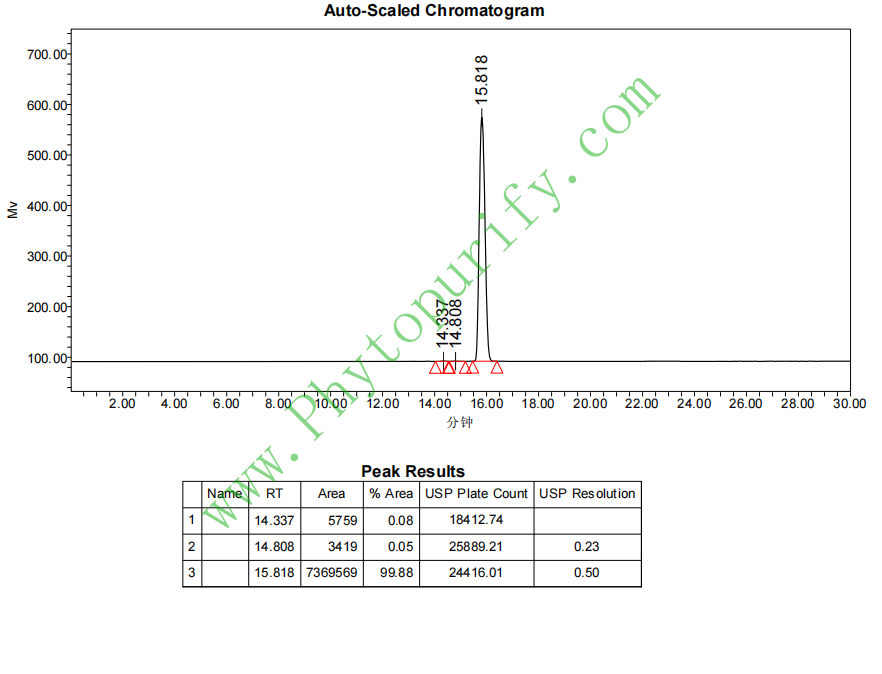
Analysis Method: HPLC-DAD or/and HPLC-ELSD
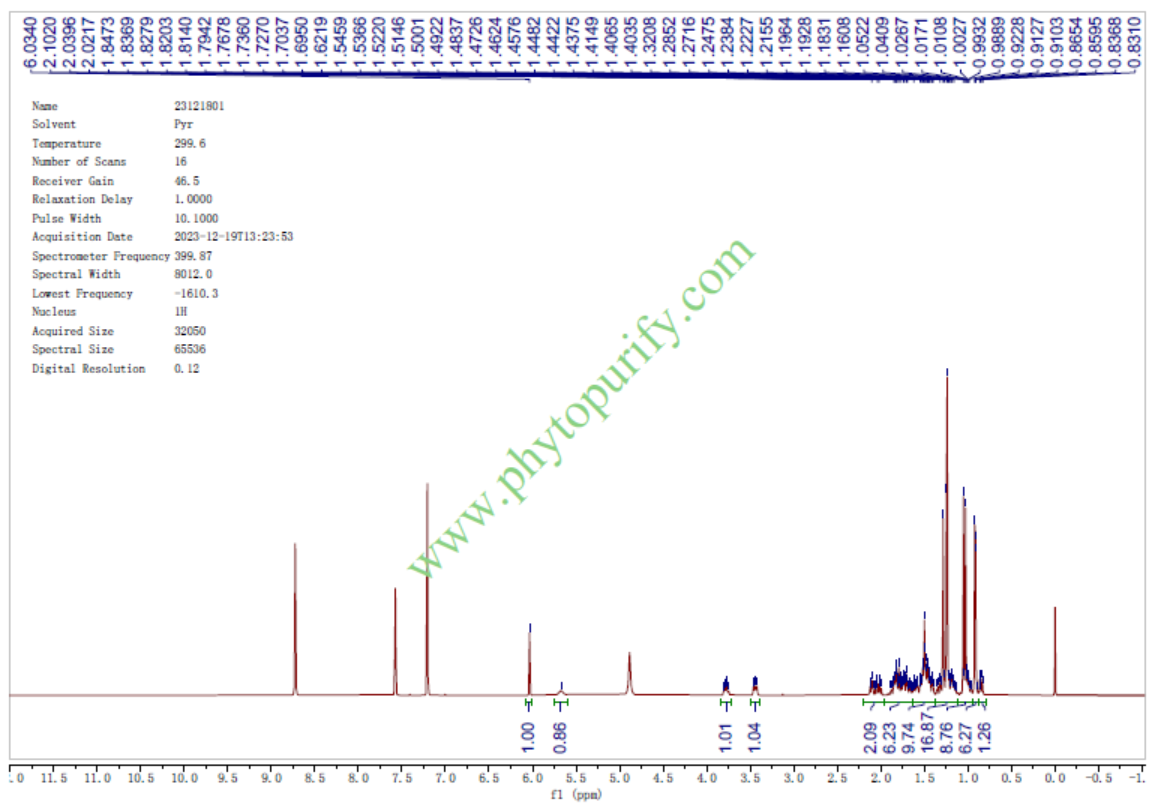
Identification Method: Mass, NMR
Packing: Brown vial or HDPE plastic bottle
Storage: Store in a well closed container, protected from air and light. Put into refrigerate or freeze for long term storage.
Whenever possible, you should prepare and use solutions on the same day. However, if you need to make up stock solutions in advance, we recommend that you store the solution as aliquots in tightly sealed vials at -20℃. Generally, these will be useable for up to two weeks.
The product could be supplied from milligrams to grams, up to kilograms
Inquire for bulk scale.
Descriptions:
Panaxadiol , a ginseng saponin with a dammarane skeleton, selectively interferes with the cell cycle in human cancer cell lines, it inhibits DNA synthesis in a dose-dependent manner with IC50 values ranging from 0.8 to 1.2 μM in SK-HEP-1 cells and HeLa cells, it selectively elevates p21WAF1/CIP1 levels and thereby arrests the cell cycle at G1/S phase by down-regulating Cyclin A–Cdk2 activity.[1]
Panaxadiol, a purified ginseng component, can enhance the anti-cancer effects of 5-fluorouracil in human colorectal cancer cells.[2]
Panaxadiol fraction and its ginsenosides can induce the antioxidant enzymes which are important for maintaining cell viability by lowering the level of oxygen radical generated from intracellular metabolism.[3]
Pretreatment with ginseng total saponin, especially panaxatriol, ameliorates I/R-induced myocardial damage and this protection is caused by reducing oxidative stress.[4]
References:
[1] Ying H J, Choi J S, Shin S, et al. Carcinogenesis, 2003, 24(11):1767-72.
[2] Li X L, Wang C Z, Mehendale S R, et al. Cancer Chemoth Pharm, 2009, 64(6):1097-104.
[3] Chang M S, Lee S G, Rho H M. Phytother Res, 1999, 13(8):641-4.
[4] Kim T H, Lee S M. Food Chem Toxicol , 2010, 48(6):1516-20.
[5] Shi L L, Qin W M, Zhu Z J, et al. Physical Testing & Chemical Analysis, 2010, 46(5):482-4.
HPLC of Panaxadiol
HNMR of Panaxadiol
Storage conditions:Short-term storage at 2~8℃, long-term storage at -20 ~ -80℃
49.6900
6.5077
6.5077
.0003
6.8585
8.6119
High
88.2254
4.8525
No
No
No
No
No
No
0.0
Yes
No
No
No
Ginseng, as a treasure in the treasure trove of traditional Chinese medicine, has been known to the world for thousands of years for its effects of tonifying qi, solidifying qi, promoting intelligence, and calming the mind. Modern pharmacological research reveals that the excellent efficacy of ginseng stems from its complex and diverse active ingredients, among which ginsenosides and their metabolites play a central role. Panaxadiol (PD), chemical name 20 (R) - panaxadiol, CAS number 19666-76-3, is one of the main secondary aglycones produced by ginsenosides after metabolism by gut microbiota in the body. In recent years, with the deepening of research technology, panaxadiol has emerged from numerous sapogenins, demonstrating unique and extensive biological activities beyond its precursor compounds. Early research has mostly focused on its precursor ginsenosides, while PD, as a key molecule that directly exerts its effects, is being re evaluated for its value.
Existing research indicates that panaxadiol is a multifunctional natural small molecule compound with oral activity. Its most notable feature is its ability to effectively inhibit hypoxia inducible factor-1 alpha (HIF-1 alpha) and signal transduction and transcription activator 3 (STAT3), two crucial signaling pathway hubs in tumor development, inflammation, and metabolic diseases. By downregulating these two key transcription factors, PD further inhibits the expression of programmed death ligand 1 (PD-L1), opening a new window for its application in the field of tumor immunotherapy. In addition, its activities in neuroprotection, cardiac protection, antiarrhythmic and antioxidant aspects have also accumulated rich experimental evidence. This article aims to systematically review the chemical properties, pharmacological activities, molecular mechanisms of action, and pharmacological potential of panaxadiol, in order to provide a comprehensive scientific perspective for the deep development and clinical application of this natural product.
The molecular formula of panaxadiol is C30H52O3, with a molecular weight of 460.7430. Its chemical structure belongs to the damaane type tetracyclic triterpenoid compounds, which are the aglycone forms of protopanaxadiol saponins (such as Rb1, Rb2, Rc, Rd, etc.) in the intestine after glycosylation. Its core structure consists of four steroid like rings (A, B, C, D), with one hydroxyl group (- OH) at each C-3 and C-12 position, and an R configuration at C-20 position, which is a necessary stereochemical feature for its biological activity. The combination of this rigid hydrophobic skeleton and polar hydroxyl groups determines its unique physicochemical properties.
From the perspective of pharmacological parameters, panaxadiol exhibits typical lipid solubility characteristics. Its calculated lipid water partition coefficient (LogP) is 6.5077, indicating its high lipophilicity. The topological polar surface area (TPSA) is 49.6900 Å ², which is relatively small. These parameters collectively result in its extremely low water solubility, approximately 0.0003 mg/mL, which to some extent limits its formulation development and typically requires the use of solubilization techniques (such as cyclodextrin inclusion, nano formulations, etc.) to improve bioavailability. However, its high lipid solubility and small TPSA also endow it with excellent transmembrane ability, and its blood-brain barrier (BBB) penetration is predicted to be "high", laying a key pharmacokinetic foundation for its direct action on the central nervous system and neuroprotective effects. The preliminary safety assessment shows that the risk of hERG channel inhibition is "no", indicating a low potential risk of causing QT interval prolongation in the heart; The Ames test result is 0.0, indicating preliminarily that it has no direct genetic toxicity. These characteristics collectively outline a natural product molecule with good central activity potential and preliminary controllable safety.
Ginsenoside diol is not directly present in large quantities in plants of the ginseng genus (such as ginseng) Panax ginseng Western ginseng Panax quinquefolius Sanqi Panax notoginseng)In the rhizome, it exists in a glycosylated form, namely various ginsenosides. Therefore, there are two main ways to obtain PD: one is to extract saponins from plants and hydrolyze them through chemical or biological methods to remove sugar groups; The second is to utilize the transformation effect of gut microbiota to generate it in the body.
In laboratories and industrial production, the first approach is mainly used. Firstly, the dried roots of ginseng are subjected to reflux extraction or ultrasonic extraction using methanol, ethanol, or a mixture of water and alcohol solvents to obtain a crude extract rich in ginsenosides. Subsequently, high-purity protopanaxadiol saponins (such as Rb1) were isolated and purified using methods such as macroporous adsorption resin column chromatography, silica gel column chromatography, and high-performance liquid chromatography (HPLC). Finally, the key step is the preparation of aglycones. Common methods include: 1)Acid hydrolysis Heating and refluxing with dilute hydrochloric acid or sulfuric acid solution under harsh conditions may result in the production of by-products or damage to the glycoside structure; 2)Enzymatic hydrolysis Using specific glycosidases (such as cellulase, pectinase, and β - glucosidase) for hydrolysis under mild conditions results in high selectivity but also high cost; 3)Microbial transformation The use of strains with specific glycosidase activity, such as certain intestinal bacteria, for the fermentation and transformation of saponins is a current research hotspot due to its proximity to in vivo processes and mild conditions.
By optimizing the extraction and transformation process, high-purity panaxadiol monomers can be obtained, providing a material basis for in-depth pharmacological activity research and formulation development. In recent years, there have been advances in chemical synthesis and semi synthesis research, but due to their multiple chiral centers and complex structures, biotransformation remains the most economically feasible main source at present.
A large number of in vitro and in vivo studies have confirmed that panaxadiol has various pharmacological activities, and its application prospects are far beyond the traditional "tonifying" category.
1. Anti cancer activity The anti-cancer effect of PD is currently the most focused area of research. Studies have shown that PD can significantly inhibit the proliferation, invasion and migration of many cancer cell lines (such as lung cancer, liver cancer, colon cancer, breast cancer, gastric cancer, etc.), and induce apoptosis and autophagy. Its function is not limited to directly killing tumor cells, but more importantly, it regulates the tumor microenvironment. As mentioned earlier, PD can effectively downregulate the expression of tumor cell surface immune checkpoint protein PD-L1 by inhibiting HIF-1 α (the core regulatory factor of tumor hypoxia response) and STAT3 (an important pro cancer signaling hub). The downregulation of PD-L1 can relieve its inhibition on T cells, which may restore the body's anti-tumor immune response. This provides a theoretical basis for the combination of PD and traditional immune checkpoint inhibitors.
2. Neuroprotective activity PD has shown clear protective effects in neurological disease models such as Alzheimer's disease, Parkinson's disease, and cerebral ischemia-reperfusion injury. It can improve cognitive impairment and motor deficits in model animals, and alleviate neuronal loss. Its neuroprotective effect is related to multiple mechanisms, including: inhibition of β - amyloid (A β) production related enzyme (BACE1) and tau protein hyperphosphorylation; Activate the cell's own antioxidant defense system (such as through the Nrf2 pathway); Inhibit neuroinflammation; And anti neuronal apoptosis. Its excellent ability to penetrate the blood-brain barrier enables these central effects to be achieved.
3. Cardiac protection and antiarrhythmic activity PD has a protective effect on the cardiovascular system. In animal models such as myocardial ischemia/reperfusion injury and drug-induced cardiomyopathy, PD can alleviate myocardial cell apoptosis and necrosis, reduce infarct size, and improve cardiac function. Its anti arrhythmic effect may be related to regulating ion channels in myocardial cells (such as stabilizing cell membrane potential without hERG inhibition risk), reducing intracellular calcium overload, and antioxidant stress.
4. Antioxidant and anti-inflammatory activities PD itself has the ability to scavenge free radicals and can enhance the overall antioxidant defense ability of cells by upregulating the expression of nuclear factor E2 related factor 2 (Nrf2) and its downstream antioxidant enzymes (such as HO-1, NQO1). At the same time, it can also inhibit pro-inflammatory signaling pathways such as NF - κ B, reduce the production of inflammatory factors such as tumor necrosis factor - α (TNF - α) and interleukin-6 (IL-6), and thus exert anti-inflammatory effects in various chronic inflammatory disease models.
The multiple pharmacological activities of panaxadiol stem from its precise regulation of multiple key signaling pathways within cells. Its mechanism of action is complex and interrelated, and its core can be summarized into the following levels:
1. Inhibit the HIF-1 α/STAT3 signaling axis This is the core mechanism by which PD exerts its anti-cancer and immune regulatory effects. In the hypoxic microenvironment of tumors, HIF-1 α protein is stable and activated, promoting tumor growth, angiogenesis, and metabolic reprogramming. The sustained activation of STAT3 drives cell proliferation, anti apoptosis, and immune escape. PD can interfere with the protein stability or transcriptional activity of HIF-1 α, while inhibiting the phosphorylation activation of STAT3. The synergistic inhibition of both leads to a significant downregulation of downstream target genes, especially the immune checkpoint molecule PD-L1, which may reverse the immunosuppressive state of tumors.
2. Regulating the network of neuroprotective targets The neuroprotective effect of PD involves a precise target group.Anti apoptotic aspect It can regulate the balance of Bcl-2 family proteins (such as inhibiting pro apoptotic protein Bax and upregulating anti apoptotic protein Bcl-2), and inhibit the activation of apoptosis executing proteins such as Caspase-9.Combat the pathology of Alzheimer's disease It may reduce A β production by affecting APP processing enzymes (such as BACE1) and decrease abnormal phosphorylation of tau protein by inhibiting GSK-3 β kinase activity.Antioxidant and cellular defense aspects PD is an effective activator of the Nrf2 pathway, promoting gene expression driven by antioxidant response elements (ARE). Meanwhile, it can also activate the deacetylase SIRT1, which regulates various transcription factors (such as p53, NF - κ B, PGC-1 α) through deacetylation, participating in energy metabolism, stress resistance, and inflammation inhibition.Signal pathway regulation PD can also regulate the MAPK signaling pathway (such as ERK1/2), which is involved in cell survival, differentiation, and stress response.
3. Multi target synergistic effect It is worth noting that the effect of PD is not isolated to a single target. For example, activating SIRT1 may promote the deacetylation of Nrf2 and enhance its activity; Inhibiting GSK-3 β not only benefits tau protein, but may also affect multiple pathways such as β - catenin. The synergistic effect of multiple targets and pathways enables PD to systematically regulate complex disease networks, which may be its advantage in treating multifactorial chronic diseases such as neurodegenerative diseases and cancer, but also poses challenges for elucidating its mechanisms.
Although panaxadiol has significant pharmacological activity, its transition from a lead compound to a drug requires a systematic pharmacological evaluation.
Pharmacokinetic properties Due to PD being a metabolic product of the intestine, the study of its oral administration is of great significance. Animal pharmacokinetic studies have shown that PD is rapidly absorbed after oral administration, but its absolute bioavailability is limited by its low water solubility. It is widely distributed in the body, thanks to its high lipid solubility and good membrane permeability, and can quickly distribute to important organs such as the heart, brain, and liver. Especially, its high BBB permeability is the pharmacokinetic guarantee of its neuroprotective effect. PD undergoes Phase I (such as hydroxylation) and Phase II (such as glucuronidation and sulfation) metabolism in the liver, producing various metabolites, some of which may still be active. Its excretion pathway is mainly through bile and feces. Overall, its pharmacokinetic characteristics are characterized by rapid absorption and distribution, and moderate metabolic rate.
Advantages and challenges of pharmaceutical properties:
* Advantage:
1. Oral activity As a natural metabolite of gut microbiota, its oral administration route has natural rationality.
2. Central accessibility High BBB penetration is a valuable attribute in the development of central nervous system drugs.
3. Multi-target effect Suitable for treating complex diseases.
4. Preliminary safety The absence of hERG inhibition and Ames mutagenicity alerts reduces early risks for subsequent development.
* challenge:
1. Balance of solubility and permeability The extremely high LogP results in extremely low water solubility and belongs to the Biopharmaceutical Classification System (BCS) Class II or IV compounds. Dissolution is the rate limiting step for oral absorption.
2. Preparation difficulty Advanced drug delivery systems such as solid dispersions, liposomes, nanocrystals, cyclodextrin inclusion complexes, etc. need to be developed to improve their solubility and bioavailability.
3. Mechanism complexity Multi target effects not only bring therapeutic advantages, but also make it complex to verify the exact therapeutic targets, evaluate dose-response relationships, and assess potential off target effects.
4. Data gap from preclinical to clinical translation At present, most research is still at the stage of cell and animal models, lacking systematic toxicology, long-term safety, and human pharmacokinetic data.
The diverse pharmacological activities of panaxadiol have demonstrated its broad application prospects in multiple therapeutic fields.
1. In the field of tumor treatment The most promising direction for PD is as an adjuvant drug or sensitizer for tumor immunotherapy. Combined use with PD-1/PD-L1 monoclonal antibodies may solve the problem of primary or secondary resistance to immune checkpoint inhibitors in some patients. In addition, its direct anti-tumor activity (inducing apoptosis, autophagy) and cardiovascular protection make it possible to reduce the cardiac toxicity of chemotherapy drugs (such as doxorubicin) and achieve "reduced toxicity and increased efficacy".
2. In the field of neurodegenerative diseases For fields such as Alzheimer's disease and Parkinson's disease that currently lack effective disease modification therapies, the multi-target neuroprotective mechanisms of PD (anti A β, anti tau, antioxidant, anti-inflammatory) provide new intervention ideas. Its high BBB permeability is a key advantage compared to many candidate drugs. It can explore its potential as an early intervention or adjuvant therapy drug for diseases.
3. In the field of cardiovascular and cerebrovascular diseases In the prevention and treatment of myocardial infarction, heart failure, and arrhythmia, the cardioprotective effect of PD deserves further exploration, especially in the development of specialized drugs for the prevention or treatment of heart dysfunction caused by anti-tumor therapy.
Future research directions and prospects:
1. In depth mechanism research Using chemical biology methods such as affinity fishing and molecular probes to more accurately identify their direct target proteins and draw clearer pharmacological action network diagrams.
2. Formulation innovation Concentrate efforts to overcome its solubility challenges, develop new nano delivery systems or prodrug strategies, optimize its pharmacokinetic properties, and improve targeting and bioavailability.
3. Preclinical development Conduct a Good Laboratory Practice (GLP) toxicology evaluation that complies with regulations, clarify its safe dose window, and provide a complete data package for clinical trial applications.
4. Explore combination therapy Systematically evaluate the synergistic effect of PD with existing standard therapies (chemotherapy, targeted therapy, immunotherapy) and search for the optimal combination therapy.
5. clinical translation On the basis of solid preclinical research, gradually promote Phase I (safety, pharmacokinetics) and Phase II (concept validation, efficacy exploration) clinical trials, especially in tumor immunotherapy and early intervention of neurodegenerative diseases.
Ginsenoside diol, a natural metabolite derived from the traditional medicinal plant ginseng, is attracting widespread attention in the fields of modern pharmacology and drug development due to its rich pharmacological activity and unique multi-target mechanism of action. From inhibiting the HIF-1 α/STAT3 axis to regulate the tumor immune microenvironment, to exerting neuroprotective and cardioprotective effects through multi-target networks such as Nrf2, SIRT1, GSK-3 β, PD has demonstrated the potential to address complex and major diseases such as cancer and neurodegenerative diseases. Its inherent oral activity and high blood-brain barrier permeability are its outstanding pharmaceutical advantages, while low water solubility and other physical and chemical challenges call for innovative breakthroughs in formulation technology. The current research has laid a solid biological foundation for it, and future work should focus on in-depth analysis of its molecular action details, breaking through delivery bottlenecks, completing preclinical evaluation of the system, and ultimately promoting its clinical validation. The research on panaxadiol is not only an in-depth exploration of a natural active molecule, but also a vivid practice that connects traditional medical wisdom with modern precision medicine. It is expected to provide important candidate molecules and research and development ideas for the development of new drugs with Chinese original characteristics.
