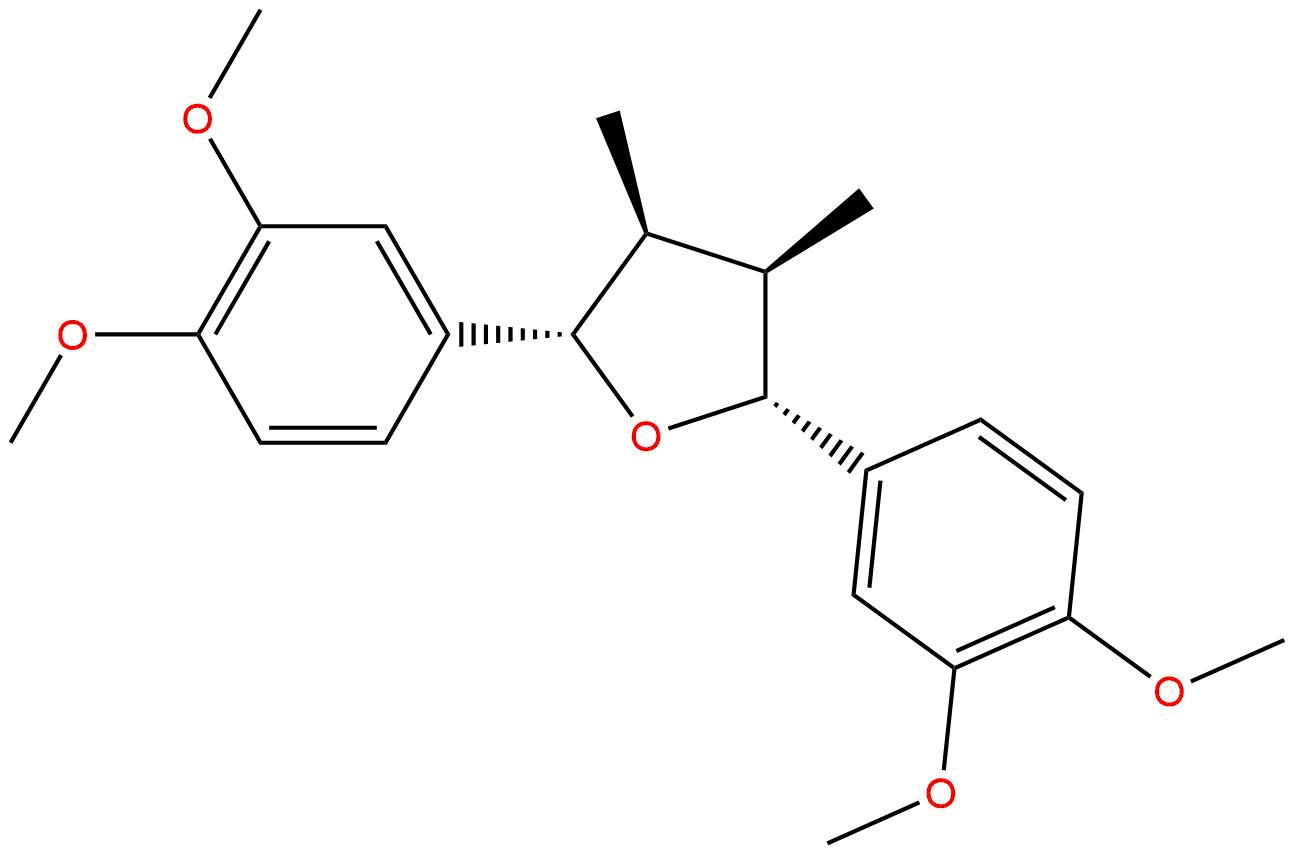


Product name: Galgravin
Synonym name: (±)-Galgravin
Catalogue No.: BP1793
Cas No.: 528-63-2
Formula: C22H28O5
Mol Weight: 372.461
Botanical Source: Flos Magnolia
Physical Description:
Type of Compound: Miscellaneous
Purity: 95%~99%
Analysis Method: HPLC-DAD or/and HPLC-ELSD
Identification Method: Mass, NMR
Packing: Brown vial or HDPE plastic bottle
The product could be supplied from milligrams to grams. Inquire for bulk scale.
We provide solution to improve the water-solubility of compounds, thereby facilitating the variety of activity tests and clinic uses.
For Reference Standard and R&D, Not for Human Use Directly.
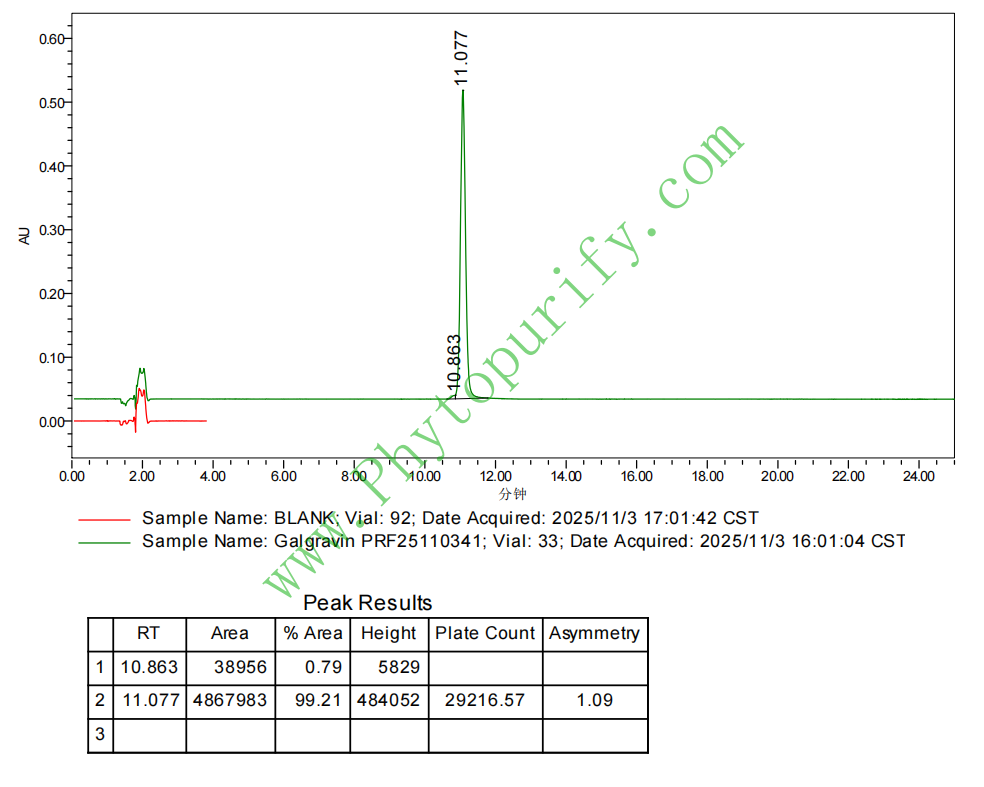
HPLC of Galgravin
Storage conditions:Short-term storage at 2~8℃, long-term storage at -20 ~ -80℃
46.1500
4.4047
4.4044
.0051
7.6732
13.2792
High
91.6376
3.1938
Yes
Yes
No
Yes
No
No
0.0
No
Yes
No
No
Natural products, as an important source of drug discovery, play an irreplaceable role in the long history of human fight against diseases. Among them, lignans have been a hot topic in medicinal chemistry and pharmacology research due to their extensive and significant biological activities, such as anti-inflammatory, antioxidant, anti-tumor, and neuroprotective effects. Galgravin, a lignan with a unique chemical skeleton, was originally derived from plants in the Lauraceae family Nectandra megapotamica Separated and identified. Early research revealed its significant anti-inflammatory properties, while recent studies have extended its activity spectrum to the field of anti-tumor, particularly demonstrating potential in inducing apoptosis of leukemia cells. What is even more remarkable is that, based on its multi-target action characteristics, Gaillarvin has shown new hope in the treatment of refractory tumors such as melanoma. This article aims to systematically review the chemical properties, plant sources, pharmacological activities, mechanisms of action, medicinal properties, and clinical application prospects of Gaillarvin, in order to provide comprehensive scientific references for the deep development and utilization of this natural product.
Gaillarvin (CAS number: 528-63-2), with the chemical name (7S, 8R, 7'R, 8'S) -4,4 ', 9,9' - tetramethoxy-3,3 '- dimethoxy-7,7' - epoxy-8,8 '- lignin, is a tetrahydrofuran type lignin. Its molecular formula is C22H28O6 and its molecular weight is 372.4610 g/mol.
Structurally, the core of Gaillarvin is a tetrahydrofuran ring (7-O-7 ') system formed by connecting two phenylpropanoid units (C6-C3) through a C8-C8' bond. There are multiple methoxy (- OCH3) substituents attached to its benzene ring, and the presence of these lipophilic groups significantly affects its physical and chemical properties. The calculated lipid water partition coefficient (LogP) is 4.4047, indicating that the compound has a high degree of lipophilicity. Consistent with this, its theoretical water solubility is extremely low, only 0.0051 mg/mL, indicating that its dissolution and absorption in living organisms may face challenges. The polar surface area (TPSA) of the molecule is 46.15 Å ², which is relatively small and consistent with its high lipophilicity, indicating that it may have good membrane permeability. The preliminary pharmacological evaluation model predicts that Gaillarvin has a high blood-brain barrier permeability, which provides a structural basis for its potential application in central nervous system related diseases, such as neurodegenerative diseases involving MAPT targets. However, the positive prediction of hERG potassium channel inhibitory activity ("yes") is an important safety warning signal, indicating the potential risk of inducing cardiac QT interval prolongation and arrhythmia, which is a key toxicity issue that must be rigorously evaluated in subsequent drug development. The Ames test predicted a value of 0.0, indicating that it may not have direct genetic toxicity, but further experimental verification is needed.
Gaillarvin is mainly derived from Lauraceae plants, with the most representative source being Nectandra megapotamica(Commonly known as "Brazilian Camphor"), this is a tree species distributed in South America, especially Brazil. This plant has been used in traditional medicine to treat fever, inflammation and infectious diseases, which provides a clue of national pharmacology for the study of Gelgrawen's activity. In addition, Gaillarvin has also been found in other genera of plants in the same family, such as Ocotea Belonging and Licaria Some species of the genus indicate that the compound has certain distribution characteristics in the Lauraceae family.
Extracting Gaillarvin from plant materials typically follows the conventional process of natural product chemistry. Firstly, dry and crush the root bark, stem bark, or leaves of the plant. Due to its strong lipophilicity, the most commonly used initial extraction solvents are methanol, ethanol, or acetone, which can effectively dissolve lignin components. The use of cold impregnation, hot reflux, or ultrasound assisted extraction methods can improve extraction efficiency. After obtaining the crude extract, it is necessary to perform preliminary separation through liquid-liquid extraction, often using medium polarity solvents such as ethyl acetate or chloroform to extract the parts rich in lignin from the aqueous phase.
Further purification relies on various chromatographic techniques. Silica gel column chromatography is commonly used for preliminary separation, with different ratios of petroleum ether ethyl acetate or chloroform methanol gradient elution. Subsequently, the final purification was carried out using high-performance liquid chromatography (HPLC), especially a reverse phase C18 column, with methanol water or acetonitrile water as the mobile phase, to obtain high-purity Gaillarvin monomers. Structural identification involves the comprehensive use of techniques such as nuclear magnetic resonance (NMR, including 1H-NMR, 13C-NMR, 2D-NMR), mass spectrometry (MS), and infrared spectroscopy (IR).
The pharmacological activity research of Gelugravin has expanded from its initial anti-inflammatory effect to a wider range of anti-tumor fields, demonstrating multiple biological effects.
anti-inflammatory activity This is the earliest activity recognized by Gaillarvin. Research has shown that it can significantly inhibit the production of nitric oxide (NO) and prostaglandin E2 (PGE2) in macrophage inflammatory models induced by lipopolysaccharide (LPS) or carrageenan, and its effect is related to the inhibition of inducible nitric oxide synthase (iNOS) and cyclooxygenase-2 (COX-2) expression. In animal inflammation models, it also exhibits a relieving effect on edema and pain.
Antitumor and cytotoxic activity:
Other potential activities Based on the structural characteristics of its lignans and preliminary target predictions, Gaillarvin may also have antioxidant (by activating the Nrf2/NFE2L2 pathway), neuroprotective (involving MAPT regulation), and other activities, but more experimental data is needed to support these aspects.
The pharmacological effects of Gelugravin, especially in the treatment of melanoma, exhibit a complex network of multi-target and multi pathway synergistic effects. The following are key targets associated with melanoma and their mechanisms of action:
Regulating Energy Metabolism and Cell Growth (AMPK/PRKAA1)AMPK is an energy sensor for cells. Gaillarvin may inhibit the mammalian rapamycin target protein (mTOR) signaling pathway by activating AMPK, thereby suppressing protein synthesis, proliferation, and inducing autophagy in tumor cells, leading to cell death under energy stress conditions.
Regulating the balance of cell apoptosis (BCL2)BCL2 is an important anti apoptotic protein. Gaillarvin has been proven to be capable Downregulate the expression of BCL2 At the same time, it may upregulate the levels of pro apoptotic proteins (such as BAX), disrupt mitochondrial outer membrane permeability, and lead to the release of cytochrome C, thereby initiating the intrinsic apoptotic pathway.
Inhibiting inflammation and survival signals (STAT3)STAT3 is a key inflammatory and survival signaling transcription factor in the tumor microenvironment. Continuously activated STAT3 promotes tumor cell proliferation, survival, angiogenesis, and immune escape. Gaillarvin can Inhibition of STAT3 phosphorylation (activation)Blocking its nuclear translocation and transcription of downstream target genes (such as Cyclin D1, Survivor), thereby inhibiting tumor growth and enhancing its sensitivity to apoptotic signals.
Affects melanin synthesis and cellular characteristics (TYR)Tyrosinase (TYR) is the rate limiting enzyme in melanin synthesis. Gaillarvin may indirectly affect the survival of melanoma cells by inhibiting TYR activity, not only affecting melanin production, but also altering their metabolic phenotype and oxidative stress state.
Interference with cellular signal transduction and migration (PRKCA, MMP2)Protein kinase C alpha (PRKCA) is involved in regulating cell proliferation, differentiation, and migration. Gaillarvin may affect downstream pathways such as MAPK/ERK by interfering with the PKC signaling pathway. At the same time, it can Inhibition of expression and activity of matrix metalloproteinase-2 (MMP2)This is a key enzyme that degrades extracellular matrix and promotes tumor invasion and metastasis, thereby exerting anti metastatic effects.
Regulating oxidative stress response (NFE2L2)Nuclear factor E2 related factor 2 (Nrf2) is the main regulator of antioxidant reactions. In tumors, sustained activation of Nrf2 sometimes helps cells resist oxidative stress and chemotherapy drugs. The interaction between Gaillarvin and Nrf2 may be a double-edged sword, and it is necessary to evaluate whether it acts as a synergistic factor for antioxidant protection or tumor inhibitors in specific environments.
Affects hypoxia adaptation and angiogenesis (HIF1A)Hypoxia inducible factor-1 alpha (HIF1A) is stable in the hypoxic microenvironment of tumors, promoting angiogenesis and glycolysis. Gaillarvin may disrupt the tumor's ability to adapt to hypoxia by inhibiting the accumulation or activity of HIF1A.
Other targets (MAPT, EDNRB)The abnormality of microtubule associated protein tau (MAPT) is related to cytoskeletal stability and neurotoxicity, and may also affect cell morphology and migration in melanoma. The endothelin receptor B (EDNRB) is involved in the development of melanocytes and tumor progression, and is a potential therapeutic target. The specific regulatory role of Gaillarvin on these targets needs further clarification.
In summary, Gaillarvin forms a synergistic network by simultaneously acting on multiple key nodes such as AMPK, STAT3, BCL2, MMP2, etc., exerting anti melanoma effects from multiple levels such as inhibiting proliferation, inducing apoptosis, and preventing migration and invasion.
Although Gaillarvin has shown good pharmacological activity in vitro, its pharmacological development still faces a series of challenges, mainly due to its inherent physical and chemical properties and potential toxicity risks.
Absorption, distribution, metabolism, excretion (ADME) prediction:
Safety risk (hERG inhibition)HERG channel inhibition is one of the main causes of drug cardiac toxicity. The prediction suggests that there is a risk in Gaillarvin, which is a 'fatal weakness' in its subsequent development and must be addressed In vitro hERG inhibition experiment and in vivo cardiovascular safety pharmacology study Conduct rigorous verification. If confirmed, the activity needs to be eliminated or reduced through structural optimization.
Preliminary toxicology The negative prediction of Ames test is a positive signal, but it still requires a complete combination of genetic toxicity tests (such as micronucleus test, chromosome aberration test) to confirm. Acute toxicity and long-term repeated administration toxicity studies are also essential.
At present, there is still a significant lack of in vivo pharmacokinetic and toxicological research data on the Gaillarvin system, which is a key gap that must be filled in its transition from active compounds to candidate drugs.
As a multi-target anti-tumor natural product, the clinical application prospects of Gaillarvin mainly focus on refractory tumors, especially malignant melanoma. However, its development path is full of opportunities and challenges.
Potential application directions:
Challenges faced and future research directions:
Gaillarvin is a natural lignan product with multi-target anti-tumor potential discovered from traditional medicinal plants. From its initial anti-inflammatory properties to its multiple pharmacological activities such as inducing apoptosis and inhibiting metastasis demonstrated in the fields of anti leukemia and anti melanoma, its research value is increasingly prominent. Research on its mechanism of action has shown that it can cleverly intervene in key signaling nodes such as AMPK/STAT3/BCL2/MMP2, forming a synergistic network that inhibits tumor growth. However, its inherent low water solubility and potential hERG cardiac toxicity constitute the main bottlenecks for its drug conversion. Future research should focus on overcoming these barriers to drug formation through structural optimization and dosage form innovation, and utilizing modern multi omics techniques and precise disease models to uncover the full spectrum of their effects. Despite the long road ahead, Gaillarvin, as an excellent chemical probe and drug lead compound, undoubtedly provides a valuable starting point and unique perspective for developing novel multi-target therapeutic strategies for malignant diseases such as melanoma.
