


Product name: Magnoflorine
Synonym name: Thalictrine; Esholine; Escholine; Corytuberine methosalt
Catalogue No.: BP0912
Cas No.: 2141-09-5
Formula: C20H24NO4+
Mol Weight: 342.414
Botanical Source: Magnoliae flos
Physical Description:
Type of Compound: Alkaloids
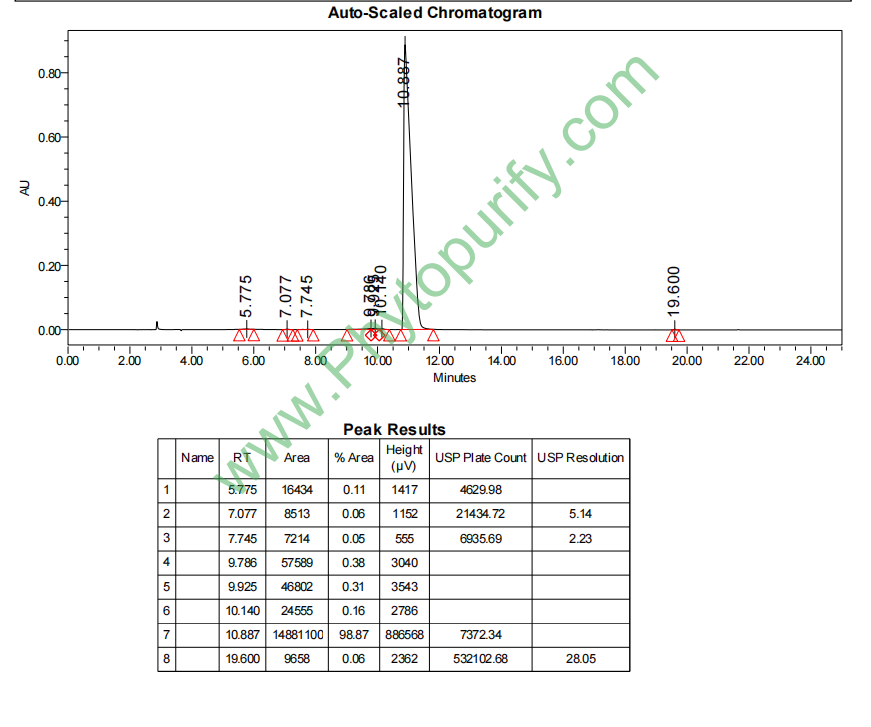
Purity: 95%~99%
Analysis Method: HPLC-DAD or/and HPLC-ELSD
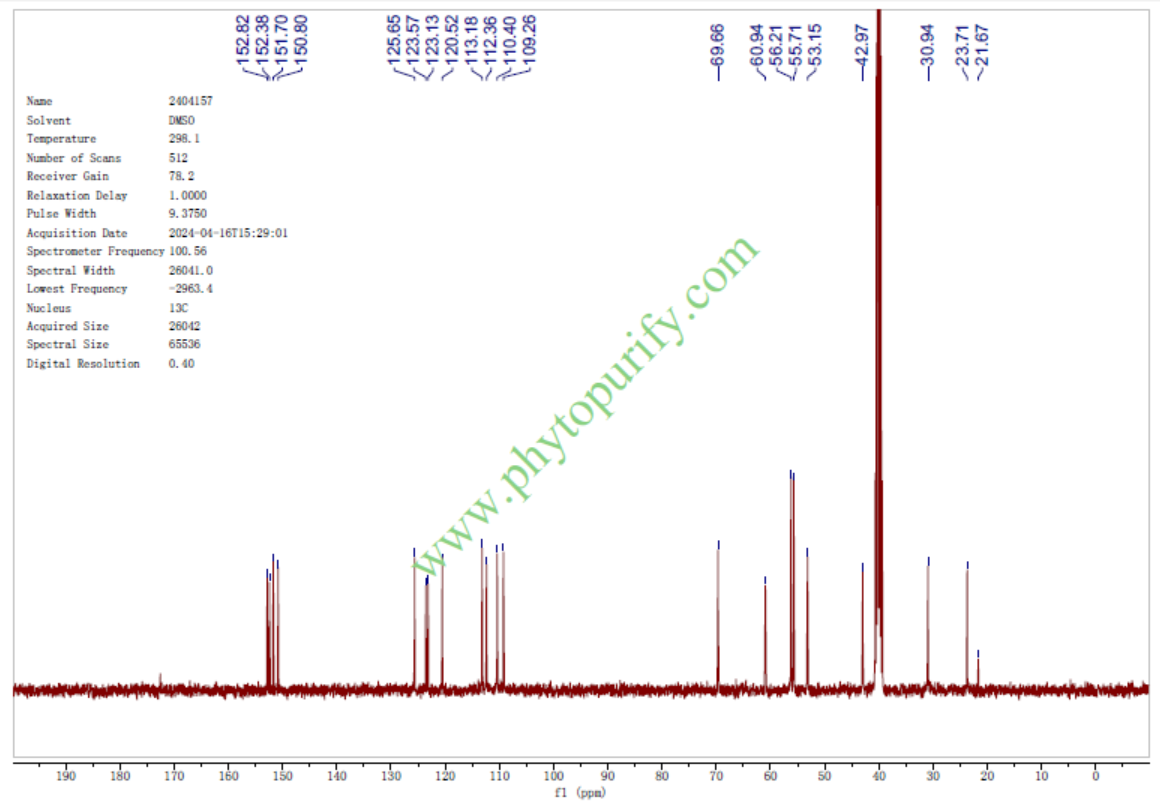
Identification Method: Mass, NMR
Packing: Brown vial or HDPE plastic bottle
Storage: Store in a well closed container, protected from air and light. Put into refrigerate or freeze for long term storage.
Whenever possible, you should prepare and use solutions on the same day. However, if you need to make up stock solutions in advance, we recommend that you store the solution as aliquots in tightly sealed vials at -20℃. Generally, these will be useable for up to two weeks.
The product could be supplied from milligrams to grams
Inquire for bulk scale.
Description:
Magnoflorine possesses high activity as α-glucosidase inhibitor in vitro and in vivo, has antidiabetic potential activity; it also has sedative and anxiolytic effects, probably mediated by a GABAergic mechanism of action. Magnoflorine has protective effects, mediated by some mechanism other than prevention of micelle formation or protection of the erythrocyte membrane against osmotic imbalance.
References:
J Nat Med. 2015 Apr 4.
Sinomenine and magnoflorine, major constituents of Sinomeni Caulis et Rhizoma, show potent protective effects against membrane damage induced by lysophosphatidylcholine in rat erythrocytes.
The effects of the water extract of Sinomeni Caulis et Rhizoma (SCR-WE) and its major constituents, sinomenine (SIN) and Magnoflorine (MAG), on moderate hemolysis induced by lysophosphatidylcholine (LPC) were investigated in rat erythrocytes and compared with the anti-hemolytic effects of lidocaine (LID) and propranolol (PRO) as reference drugs.
METHODS AND RESULTS:
LPC caused hemolysis at concentrations above the critical micelle concentration (CMC), and the concentration of LPC producing moderate hemolysis (60 %) was approximately 10 μM. SCR-WE at 1 ng/mL-100 μg/mL significantly inhibited the hemolysis induced by LPC. SIN and Magnoflorine attenuated LPC-induced hemolysis in a concentration-dependent manner from very low to high concentrations (1 nM-100 μM and 10 nM-100 μM, respectively). In contrast, the inhibiting effects of LID and PRO on LPC-induced hemolysis were observed at higher concentrations (1-100 μM) but not at lower concentrations (1-100 nM). Neither SIN nor Magnoflorine affected micelle formation of LPC, nor, at concentrations of 1 nM-1 μM, did they attenuate the hemolysis induced by osmotic imbalance (hypotonic hemolysis). Similarly, SCR-WE also did not modify micelle formation or hypotonic hemolysis, except at the highest concentration.
CONCLUSIONS:
These results suggest that SIN and Magnoflorine potently protect the erythrocyte membrane from LPC-induced damage and contribute to the beneficial action of SCR-WE. The protective effects of SIN and Magnoflorine are mediated by some mechanism other than prevention of micelle formation or protection of the erythrocyte membrane against osmotic imbalance.
Biol Pharm Bull. 2007 Jun;30(6):1157-60.
Magnoflorine from Coptidis Rhizoma protects high density lipoprotein during oxidant stress.
The objective of the present study was to investigate the beneficial properties of Magnoflorine, an alkaloid isolated from coptidis rhizoma, on protecting human high density lipoprotein (HDL) against lipid peroxidation.
METHODS AND RESULTS:
Magnoflorine exerts an inhibitory effect against Cu2+-induced lipid peroxidation of HDL, as showed by prolongation of lag time from 62 to 123 min at the concentration of 3.0 microM. It also inhibits the generation of thiobarbituric acid reactive substances (TBARS) in the dose-dependent manners with IC50 values of 2.3+/-0.2 microM and 6.2+/-0.5 microM since HDL oxidation mediated by either catalytic Cu2+ or thermo-labile radical initiator (AAPH), respectively. Separately, Cu2+ oxidized HDL lost the antioxidant action but the inclusion of Magnoflorine/Cu2+ oxidized HDL can protect LDL oxidation according to increasing Magnoflorine concentration.
CONCLUSIONS:
The results suggest that Magnoflorine may have a role to play in preventing the HDL oxidation.
NMR of Magnoflorine
HPLC of Magnoflorine
Storage conditions:Short-term storage at 2~8℃, long-term storage at -20 ~ -80℃
58.9200
-.6749
-.6829
.1529
.5914
4.8734
Low
69.7566
3.5446
No
No
No
No
Yes
No
0.6
No
No
No
No
Natural products, as an important source of drug discovery, play an irreplaceable role in the history of human disease prevention and treatment. Among them, alkaloid compounds have always been a hot topic in medicinal chemistry and pharmacology research due to their structural diversity and significant biological activity. Magnoflorine, also known as (+) - magnolol or α - magnolol (CAS number: 2141-09-5), is a tetrahydroxyaporphine isoquinoline alkaloid widely found in various medicinal plants. In recent years, with the deepening of modern pharmacological research techniques, magnolol has surpassed the early understanding of its antihypertensive effect, exhibiting multidimensional biological activities such as anti-inflammatory, immune regulation, neuroprotection, anti-tumor, and antifungal effects. Its mechanism of action involves fine regulation of mitochondrial autophagy, inflammasomes, cell apoptosis, and multiple key signaling pathways. This article aims to systematically review the chemical properties, plant sources, pharmacological activities, molecular mechanisms of action, medicinal characteristics, and clinical application potential of magnolol, in order to provide comprehensive scientific references for the deep development and transformation research of this natural product.
The molecular formula of magnolol is C20H24NO4 ⁺, with a molecular weight of 342.4150. Its core structure is the aporphine skeleton, which belongs to the quaternary ammonium alkaloid class and usually exists in the form of chloride. This structural feature determines its unique physicochemical properties: the molecule carries a positive charge, has a high polarity, a theoretical topological polar surface area (TPSA) of 58.9200 Å ², and a calculated LogP value (lipid water partition coefficient) of -0.6749, indicating good hydrophilicity. The experimental data supports a water solubility of approximately 0.1529 mg/mL. These parameters collectively indicate that magnolol has low lipid solubility and poor passive transmembrane diffusion ability, which to some extent explains the challenges it may face in oral bioavailability and its "low" blood-brain barrier permeability. In the preliminary safety screening, magnolol showed a result of 0.6 in the Ames test, indicating a low risk of mutagenicity and no significant hERG potassium channel inhibition, suggesting a low potential risk of arrhythmia and providing preliminary positive signals for its safety evaluation.
Magnoliaalkaloids are widely distributed in nature and mainly exist in various plants such as Magnoliaceae, Menispermaceae, Ranunculaceae, Berberidaceae, and Papaveraceae. Common medicinal plants rich in magnolol include Magnolia officinalis, Magnolia biondii, Coptis chinensis, Phellodendron amurense, and certain Stephania plants. These plants are often used in traditional medicine to treat inflammation, infections, hypertension, and related diseases, and some of their medicinal effects may be attributed to the presence of magnolol.
Solvent extraction method is commonly used to extract magnolol from plant materials. Due to its quaternary ammonium base, it is easily soluble in polar solvents such as water, methanol, and ethanol. The conventional process includes crushing dried plant tissues, leaching or reflux extraction with acidic aqueous solutions (such as dilute hydrochloric acid, citric acid) or alcohol water mixed solvents (such as 70% ethanol) to dissolve alkaloids in salt form. After concentration, the extract is adjusted to pH (usually alkalized) to free or transfer alkaloids to organic solvents (such as n-butanol), and then separated and purified using column chromatography techniques (such as silica gel columns, alumina columns, macroporous adsorption resins, or cation exchange resins). The application of modern separation technologies such as high-speed countercurrent chromatography (HSCCC) and preparative high-performance liquid chromatography (HPLC) has significantly improved the separation efficiency and purity of magnolol, laying the foundation for subsequent pharmacological research and quality standard establishment.
Magnolia alkaloids have broad and complex pharmacological activities, and their research has expanded from traditional antihypertensive effects to multiple modern disease treatment fields.
1. Cardiovascular system activity: anti hypertensive effect
Magnolia alkaloids were one of the most studied activities in early research. Its antihypertensive effect involves multi-target regulation: as an angiotensin-converting enzyme (ACE) inhibitor, it reduces the production of angiotensin II; Blocking α 1-adrenergic receptors (ADRA1A) and β 1-adrenergic receptors (ADRB1), relaxing blood vessels, and reducing cardiac output; May regulate vascular tone by affecting the endothelin-1 (EDN1) and nitric oxide synthase (NOS3) pathways; In addition, inhibition of renin (REN) and effects on renal ion transporters (such as SLC12A3) may also be involved in their diuretic and antihypertensive effects. This multi-target characteristic makes its antihypertensive effect mild and long-lasting.
2. Anti inflammatory and immune regulatory activity
Magnolia alkaloids exhibit strong anti-inflammatory potential. In various acute and chronic inflammation models, it can effectively inhibit the production of pro-inflammatory factors such as IL-1 β, IL-6, TNF - α. One of its key mechanisms is to inhibit the assembly and activation of NLRP3 inflammasomes, thereby reducing the cleavage of Caspase-1 and the mature release of IL-1 β. Meanwhile, magnolol can also promote Parkin/PINK1 mediated mitochondrial autophagy, clear damaged mitochondria, reduce the release of inflammatory triggers such as mitochondrial reactive oxygen species (mtROS), and inhibit inflammatory responses from the source. The study also found that magnolol can regulate the composition of intestinal microbiota and restore intestinal barrier function, which is closely related to its improvement effect on systemic inflammation and autoimmune diseases.
3. Neuroprotective activity
In models of neurodegenerative and damaging diseases such as Parkinson's disease, Alzheimer's disease, and cerebral ischemia-reperfusion injury, magnolol has shown clear protective effects. Its neuroprotective mechanism is multi pathway: by activating the Sirt1/AMPK signaling pathway, enhancing cellular energy metabolism, and inhibiting oxidative stress; By inhibiting the JNK and TLR4/NF - κ B signaling pathways, neuroinflammation and neuronal apoptosis can be alleviated. These functions collectively maintain the stability of mitochondrial function, reduce the activation of apoptosis executing proteins such as caspase-3, and thus protect neurons from damage.
4. Antitumor activity
Magnolia alkaloid showed growth inhibition and apoptosis promoting effects on a variety of tumor cells (such as breast cancer, liver cancer, colon cancer). Its anti-tumor mechanism involves epigenetic regulation and signal pathway intervention. Research has shown that magnolol can upregulate the expression of microRNA-410-3p, which inhibits high mobility group protein B1 (HMGB1) by targeting it, thereby blocking its mediated activation of the NF - κ B signaling pathway, ultimately leading to inhibited tumor cell proliferation and increased apoptosis. In addition, its anti-inflammatory and immune regulatory effects may also play an auxiliary role in regulating the tumor microenvironment.
5. Antimicrobial activity
Magnolia alkaloids have significant inhibitory effects on various fungi, such as Candida albicans, and their mechanisms may involve disrupting the integrity of fungal cell membranes or interfering with their metabolic processes. This provides a new candidate molecule for its ability to resist fungal infections, especially in dealing with drug-resistant strains.
The multiple pharmacological activities of magnolol stem from its systematic regulation of multiple key molecular targets and signaling networks inside and outside the cell.
Although magnolol has a wide range of pharmacological activities, its pharmacological properties, especially pharmacokinetic properties, are the main considerations for its clinical development.
The multi-target and multi pathway action characteristics of magnolol give it unique advantages in the treatment of complex diseases, with broad clinical application prospects but also facing challenges.
Potential application directions:
1. Chronic inflammatory diseases and autoimmune diseases: Such diseases as rheumatoid arthritis, inflammatory bowel disease, gout, etc., have shown therapeutic potential through a dual mechanism of inhibiting NLRP3 inflammasome and regulating gut microbiota.
2. Adjuvant treatment for neurodegenerative diseases: Although BBB penetration is poor, it may have neuroprotective and disease delaying effects on Parkinson's disease and Alzheimer's disease through dosage form modification or early intervention (peripheral inflammation affecting the central nervous system).
3. Diseases related to metabolic syndrome: Its anti-inflammatory and AMPK pathway regulating effects may be beneficial for improving insulin resistance, non-alcoholic fatty liver disease, and other conditions.
4. Antihypertensive treatment: As a multi-target antihypertensive natural ingredient, it can be used for mild hypertension or as a component of combination therapy.
5. Antifungal therapy: Developed as a topical antifungal agent for the treatment of skin and mucosal fungal infections.
Challenges and Future Prospects:
1. Pharmacokinetic optimization: This is the core bottleneck in the development of magnolol. Future research needs to systematically elucidate the in vivo ADME process and focus on using novel drug delivery systems to address the issues of poor absorption and limited distribution.
2. Deep analysis of the mechanism of action: Further clarification is needed on its direct molecular targets (such as whether it directly binds to Sirt1, NLRP3, etc.), and the network pharmacology panorama of its multi-target effects should be revealed using systems biology methods.
3. Preclinical and clinical studies: We need more standardized preclinical pharmacological and toxicological evaluations that comply with GLP/GCP standards, and gradually promote early clinical trials to verify their safety and effectiveness.
4. Structural modification and development of analogues: The rational structural modification of pharmacophores based on magnolol is an important task for medicinal chemists to improve their pharmacokinetic properties while retaining their activity.
5. Quality control and standardization: Ensuring stable and controllable content and quality of magnolol from plant raw materials to formulated products is the foundation of industrialization.
Magnolia alkaloids, as an ancient natural product molecule, are showing new vitality under the scrutiny of modern science and technology. Its cognitive expansion from a single antihypertensive effect to multiple activities such as anti-inflammatory, neuroprotective, and anti-tumor reflects the depth and breadth of natural product research. Its mechanism of action by regulating mitochondrial autophagy, inflammasomes, apoptotic pathways, and multiple signaling networks not only reveals the material basis of its multi-target effects, but also provides a new perspective for understanding the pathophysiology of related diseases. Although there are significant challenges in drug formulation, especially in oral absorption and brain delivery, these obstacles are expected to be gradually overcome through interdisciplinary integration and collaborative innovation such as pharmacy, medicinal chemistry, and pharmacology. In the future, magnolol and its derivatives or preparations are expected to achieve translational applications in the fields of chronic inflammatory diseases, neurodegenerative diseases, and tumor adjuvant therapy, becoming a new modern treatment option derived from traditional drugs, and continuously interpreting the immortal value of natural products in drug discovery.
