Isomagnolone: A Comprehensive Analysis of Anti inflammatory Natural Products Derived from Xinyi
1. Overview
Isomagnolone is a natural organic compound isolated from Magnoliaceae plants, with a CAS number of 155709-41-4, a molecular formula of C ₁₈ H ₁₈ O3, and a molecular weight of 282.3390 g/mol. The initial research report of this compound indicated that it could be isolated from star anise, but more in-depth and clear studies on its plant origin confirm that it is mainly isolated from star anise magnolia(Magnolia biondii), The flower buds of the Magnoliaceae plant, Magnolia grandiflora. Xinyi, as a traditional Chinese medicinal herb, is commonly used to treat nasal congestion, headaches, and inflammation related diseases, providing a traditional medical background for the biological activity research of Isomagnolone.
Isomagnolone is classified as a natural small molecule with clear anti-inflammatory activity. In modern pharmacological research, its value is mainly reflected in its regulatory effects on multiple key inflammatory targets, including tumor necrosis factor (TNF), prostaglandin endoperoxide synthase 2 (PTGS2, also known as COX-2), nuclear factor kappa B1 (NFKB1), as well as interleukin-6 (IL6) and interleukin-1 β (IL1B). These targets are core regulatory factors in acute and chronic inflammatory responses, autoimmune diseases, and even cancer development. Therefore, Isomagnolone is not only a valuable tool molecule for studying inflammatory signaling pathways, but also has the potential to be developed into a novel anti-inflammatory drug. This article will provide a systematic and professional interpretation of this compound from its chemical essence, plant origin, pharmacological mechanism, medicinal evaluation, and research prospects.
2. Chemical structure and physicochemical properties
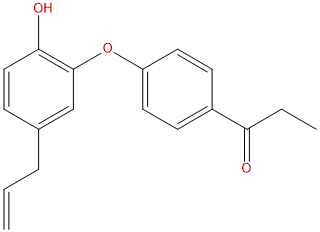
The chemical structure of Isomagnolone can be accurately described by its SMILES string (C=CCc1ccc (O) c (Oc2ccc (C (=O) CC) cc2) c1). This string reveals a diphenyl ether skeleton structure, where one benzene ring is connected to an allyl side chain (- C=CC), and the other benzene ring is connected by an ether bond and carries a propionyl (- C (=O) CC) substituent. There is a phenolic hydroxyl group (- OH) on each of the two benzene rings, which is one of the key pharmacophores for its antioxidant and target binding effects. This structure makes Isomagnolone a polyphenolic derivative with a typical aromatic hydrophobic core and polar hydroxyl groups.
Its physicochemical properties provide a quantitative basis for understanding its biological behavior:
- Molecular weight (MW):282.34 g/mol, It belongs to the typical category of small molecule compounds, far below 500 Da, which is conducive to its penetration of cell membranes and distribution in vivo.
- Lipid water partition coefficient (LogP/LogD)LogP is approximately 4.04 and LogD is approximately 4.03. This value indicates that Isomagnolone has high lipophilicity. Generally, LogP values between 2-5 are considered favorable for the oral absorption and membrane permeation of compounds. However, excessively high LogP (>5) may lead to poor water solubility. The LogP value of Isomagnolone is at the upper limit of a reasonable range, indicating good lipid solubility, but may face water solubility challenges.
- Water solubility The calculated value is approximately 0.0161 mg/mL, belonging to the category of slightly soluble or insoluble, which is consistent with the high LogP value. In practical applications, it may be necessary to improve its solubility through formulation techniques such as salt formation, use of solubilizers, or nano formulations.
- Topological Polarity Surface Area (TPSA): 46.53 Å ². TPSA is an important parameter for predicting molecular permeability, and typically TPSA<140 Å ² is beneficial for good intestinal absorption. The TPSA value of Isomagnolone is very low, indicating its excellent membrane permeation potential.
- Plasma protein binding rate (PPB)Up to 93.8%. High plasma protein binding is a common feature of many natural products, which means that in the bloodstream, most compounds bind to plasma proteins (mainly albumin), with only a small amount of free drugs exerting pharmacological effects. This will affect its efficacy, distribution volume, and clearance rate.
Overall, Isomagnolone is a small molecule with clear hydrophobic characteristics, moderate molecular weight, and excellent membrane permeability potential. The phenolic hydroxyl group in its structure lays the foundation for its biological activity.
3. Plant sources and traditional applications
The main plant source of Isomagnolone is magnolia The dried flower buds of Magnolia biondii Pamp., a plant in the Magnoliaceae family. Xinyi is an important medicinal herb with a long history in the traditional medical systems of East Asia, including China, Japan, and South Korea. It has been recorded in the "Shennong Bencao Jing" and is classified as a top grade. It is warm in nature, pungent in taste, and belongs to the lung and stomach meridians. It has the effects of dispersing wind and cold, and promoting nasal circulation. In clinical practice, Xinyi is commonly used to treat symptoms such as wind cold headache, nasal congestion, sinusitis, and allergic rhinitis. It is often used in combination with medicinal herbs such as Bai Zhi, Xi Xin, and mint, such as the classic formula "Xinyi San".
The core indications of traditional applications - nasal congestion, inflammatory headache, and sinusitis - are all related to inflammatory response Closely related. Inflammation of the nasal cavity and sinuses typically involves vasodilation, tissue edema, inflammatory cell infiltration, and the release of large amounts of inflammatory mediators such as histamine, prostaglandins, and cytokines. The anti-inflammatory effect of Xinyi is the modern scientific explanation basis for its therapeutic effect. Modern plant chemistry research has isolated and identified various active ingredients, including Isomagnolone, from Magnolia officinalis, such as magnolol, volatile oil, alkaloids, etc. These ingredients together form the basis of its multi-component and multi-target pharmacological effects.
It is worth noting that early literature mentioned that Isomagnolone can be isolated from star anise, which may be due to cross studies in plant classification or similarities in secondary metabolites of plants in the same family. But the current more conclusive evidence points to Xinyi as its primary source. The clear origin of this plant not only links traditional efficacy with modern molecular activity, but also provides direction for sustainable acquisition of this compound through cultivation, extraction optimization, and other means.
4. Pharmacological activity and mechanism of action
The core pharmacological activity of Isomagnolone is anti-inflammatory Its function is not achieved through a single pathway, but through multi-target intervention of complex inflammatory signaling networks. The database information clearly identifies five key targets of its action: TNF, PTGS2 (COX-2), NFKB1, IL6, and IL1B. Below, we will analyze the roles of these targets in inflammation and the possible intervention mechanisms of Isomagnolone one by one.
1. Tumor necrosis factor alpha (TNF - α)
TNF - α is one of the earliest and most critical pro-inflammatory cytokines in the inflammatory response, mainly produced by activated macrophages and T cells. It can activate endothelial cells, promote leukocyte adhesion and exudation; Inducing liver cells to produce acute phase proteins; And directly participate in pathological processes such as fever and tissue damage. TNF - α levels are abnormally elevated in diseases such as rheumatoid arthritis and inflammatory bowel disease. Isomagnolone may exert upstream anti-inflammatory effects by inhibiting gene transcription or protein secretion of TNF - α. Many natural polyphenolic compounds have been shown to inhibit lipopolysaccharide (LPS) - induced TNF - α production.
2. Prostaglandin endoperoxide synthase 2 (PTGS2/COX-2)
COX-2 is a key enzyme that catalyzes the production of prostaglandins (PGs) from arachidonic acid, especially when strongly induced in inflammatory sites. Prostaglandin E2 (PGE2) is one of its main products, which has analgesic, thermogenic, and vasodilatory effects. Non steroidal anti-inflammatory drugs (NSAIDs) such as ibuprofen and celecoxib exert anti-inflammatory, analgesic, and antipyretic effects by inhibiting COX-2 activity. Isomagnolone contains phenolic hydroxyl groups in its structure, which may competitively bind to the active site of COX-2 or inhibit its expression, reducing the production of PGE2 at the site of inflammation, thereby alleviating symptoms of redness, swelling, and pain.
3. Nuclear factor kappa B1 (NF - κ B p50)
NF - κ B is a core transcription factor family that regulates inflammation, immunity, cell survival, and proliferation. In the resting state, NF - κ B (usually composed of p50 and p65 subunits) binds to the inhibitory protein I κ B and exists in the cytoplasm. When cells are stimulated by TNF - α, IL-1, or LPS, I κ B is phosphorylated and degraded, allowing NF - κ B to enter the nucleus and initiate transcription of a large number of pro-inflammatory genes (including TNF - α, IL-6, IL-1 β, COX-2, etc.). The NFKB1 gene encodes the p50 subunit. Isomagnolone is likely to achieve broad-spectrum anti-inflammatory effects by intervening in the degradation of I κ B or nuclear translocation of NF - κ B, blocking this central signaling pathway from the upstream. This is the common mechanism of action of many highly effective anti-inflammatory natural products.
4. Interleukin-6 (IL-6) and interleukin-1 β (IL-1 β)
IL-6 and IL-1 β are two other crucial pro-inflammatory cytokines. IL-6 is involved in the activation of B cells and T cells, acute phase protein induction, and is closely related to chronic inflammation and autoimmune diseases. IL-1 β can strongly induce COX-2 expression and PGE2 production, and participate in the transmission of fever and pain signals. They are both downstream effectors of the NF - κ B pathway and can also activate NF - κ B in reverse, forming an inflammatory amplification loop. The inhibition of IL6 and IL1B by Isomagnolone may be a direct result of its blockade of the NF - κ B pathway, or it may be the result of its independent action on related signaling pathways such as the MAPK pathway.
Mechanism of Action Integration Model:
Overall, Isomagnolone may play a role as an "inflammatory network regulator". The core of its function is likely to be inhibition NF - κ B signaling pathway The activation. Once the activation of NF - κ B is suppressed, the expression of multiple key pro-inflammatory factors (TNF - α, IL-6, IL-1 β, COX-2) driven by it will decrease synchronously. Meanwhile, it may also directly inhibit the enzymatic activity of COX-2. This multi target and networked mode of action enables Isomagnolone to interrupt the cascade amplification effect of inflammation from multiple links. Compared with single target inhibitors, Isomagnolone may have better efficacy and lower drug resistance risk, especially suitable for the treatment of chronic diseases involving complex inflammatory networks, such as arthritis, atherosclerosis, neurodegenerative diseases, etc.
5. Evaluation of drug properties
Developing Isomagnolone from an active natural product into a candidate drug requires a systematic evaluation of its pharmacological properties. We combined Lipinski's Rule of Five (Ro5) and other key ADMET (absorption, distribution, metabolism, excretion, toxicity) parameters for analysis:
1. Lipinski Five Rule Compliance:
- Molecular weight (MW):282.34 < 500, Comply with。
- Lipid water partition coefficient (LogP):4.04 < 5, Comply with(Although approaching the upper limit).
- Hydrogen bond donor (HBD)There are 2 phenolic hydroxyl groups in the structure, with a quantity of 2<5, Comply with。
- Hydrogen bond acceptor (HBA)There are 3 oxygen atoms (2 phenolic oxygen, 1 carbonyl oxygen) in the molecule, with a quantity of 3<10, Comply with。
Isomagnolone fully meets all four criteria of Lipinski's five rules, indicating its good oral absorption potential.
2. Absorption and distribution:
- Caco-2 permeability 19.10 (× 10 ⁻⁶ cm/s), which is a relatively high value, suggests good permeability in intestinal models and suggests that oral absorption may be better.
- Effective permeability coefficient (Peff)10.06 (× 10 ⁻⁴ cm/s) further confirms its excellent intestinal absorption characteristics.
- Blood-brain barrier (BBB) penetrability Predicted as' high '. Combined with its moderate molecular weight, high lipid solubility (LogP~4), and low TPSA, Isomagnolone is indeed likely to penetrate the BBB. This is a potential advantage for developing drugs to treat central nervous system inflammations such as meningitis, neuropathic pain, and Alzheimer's disease-related neuroinflammation, but it may also bring concerns about central side effects.
- Plasma protein binding rate (PPB)93.8%, very high. This may affect the concentration of free drugs, requiring higher dosages to achieve effective therapeutic concentrations, and may also lead to drug interaction risks.
3. Metabolism and toxicity:
- AMES test Predicted as 0.0 (negative), indicating no direct bacterial gene mutation toxicity and low risk of mutagenicity.
- chromosome aberration Predicted as' yes'. This is a highly alert signal indicating that compounds may cause chromosomal damage at the mammalian cell level, with potential genotoxicity and carcinogenic risks. This is a major obstacle on Isomagnolone's path towards drug development and must be rigorously validated in early in vitro and in vivo genotoxicity experiments.
- HERG inhibition A prediction of 'no' indicates a low likelihood of causing QT interval prolongation in the heart (a serious risk of arrhythmia), and the cardiovascular safety is preliminarily optimistic.
- Hepatotoxicity markers The prediction shows that it has an impact on serum glutamyl transferase (GGT), aspartate aminotransferase (AST), and alanine aminotransferase (ALT) ("Yes"), suggesting a potential risk of liver cell injury that needs to be validated through liver cell toxicity experiments.
- Respiratory sensitization Predicted as' yes', indicating the possibility of inducing respiratory allergic reactions.
- Skin sensitization, phototoxicity, and elevated serum alkaline phosphatase Predict as none or no.
Summary of drug properties:
Isomagnolone is here Pharmacokinetic properties Excellent performance in terms of oral absorption potential, strong membrane permeability, and even the ability to penetrate the blood-brain barrier. This lays the foundation for its use as an oral or brain medication. However, it is safety There are significant hidden dangers in this regard: predicted chromosomal aberration activity, potential liver toxicity, and respiratory sensitization, which constitute the three major "red lights" on its path to drug development. Especially genetic toxicity, it is a serious issue that must be thoroughly eliminated in drug development. Therefore, Isomagnolone is currently more suitable as an excellent lead compound or Pharmacological tool molecules Future pharmaceutical chemistry optimization work should focus on using structural modifications (such as introducing specific functional groups) to retain its anti-inflammatory activity while completely eliminating its genetic toxicity and other toxicities, and may appropriately reduce plasma protein binding rates by optimizing LogP.
6. Research Status and Application Prospects
At present, research on Isomagnolone is still in progress Early detection and activity validation stage The existing literature mainly focuses on the identification, isolation and purification of its plant origin, preliminary structural identification, and reporting of anti-inflammatory activity based on cell models. Its multi-target anti-inflammatory mechanism is mainly based on bioinformatics predictions and analogies of its structural analogues, and there is still a lack of in-depth mechanism research and pharmacological verification at the molecular level (such as protein binding experiments, co crystallization structures) and in complete animal models (such as mouse arthritis and colitis models).
The application prospects are mainly reflected in the following aspects:
-
New anti-inflammatory lead compounds Its unique diphenyl ether skeleton and multi-target mechanism of action provide a new starting point for structural optimization for pharmaceutical chemists. By synthesizing a series of derivatives or analogues, it is expected to find candidate molecules with stronger activity, lower toxicity, and better drug properties for the treatment of chronic inflammatory diseases such as rheumatoid arthritis, inflammatory bowel disease, and dermatitis.
-
Exploration of therapeutic agents for neuroinflammation The high BBB penetration predicted by it makes it of unique research value in the treatment of neurodegenerative diseases (such as Alzheimer's disease, Parkinson's disease) and neuroinflammation after central nervous system trauma or infection. We can explore its role in neuroinflammatory models.
-
Research on Modern Quality Control Markers and Functional Substance Basis of Traditional Chinese Medicine Xinyi Clarifying Isomagnolone as one of the anti-inflammatory active ingredients of Xinyi can help establish a more scientific quality evaluation standard for traditional Chinese medicine (content determination), and explain the traditional efficacy of "Xinyi Tongbi Qiao" from a modern pharmacological perspective, promoting the internationalization and modernization of traditional Chinese medicine.
-
Pharmacological research tools As a small molecule NF - κ B pathway inhibitor, Isomagnolone can be used in laboratory studies to investigate the molecular mechanisms of inflammatory signal transduction.
Future research directions:
- In depth mechanism research Using techniques such as gene knockout, reporter genes, and immunoprecipitation, we aim to accurately elucidate the specific molecular targets and mechanisms of Isomagnolone's intervention in NF - κ B and other inflammatory pathways at the cellular and animal levels.
- Comprehensive preclinical evaluation On the basis of confirming its in vitro anti-inflammatory activity, promote the systematic evaluation of its in vivo efficacy, pharmacokinetics, and safety (especially genetic toxicity and hepatotoxicity) in typical inflammatory animal models.
- Research on Structural Optimization and Structure Performance Relationship Systematically study the relationship between its chemical structure, anti-inflammatory activity, and toxicity, and through rational drug design, avoid toxic groups and improve the safety window.
In summary, Isomagnolone is a natural small molecule derived from traditional Chinese medicine with clear multi-target anti-inflammatory potential. Although its current pharmacological evaluation has revealed some key safety issues, it is undoubtedly a highly valuable lead compound and scientific research tool. With the deepening of subsequent research and clever modification of medicinal chemistry, it is expected to inject new vitality into the development of innovative anti-inflammatory drugs and contribute to interpreting the scientific connotation of traditional Chinese medicine.