


Product name: Eriocitrin
Synonym name: Eriodictioside; Eriodictyol 7-rutinoside
Catalogue No.: BP0554
Cas No.: 13463-28-0
Formula: C27H32O15
Mol Weight: 596.538
Botanical Source: Aurantii fructus immaturus
Physical Description:
Type of Compound: Flavonoids
Purity: 95%~99%
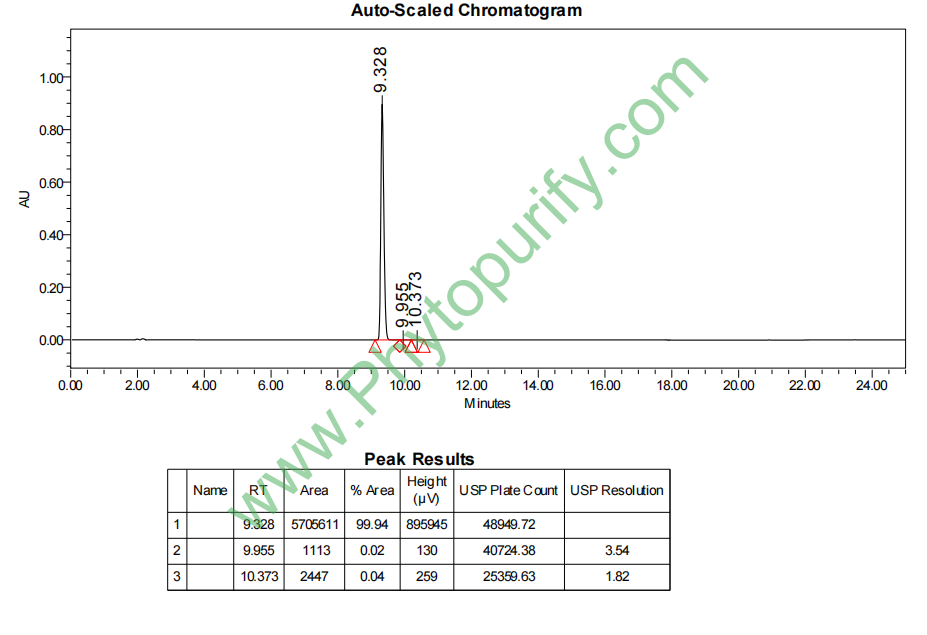
Analysis Method: HPLC-DAD or/and HPLC-ELSD
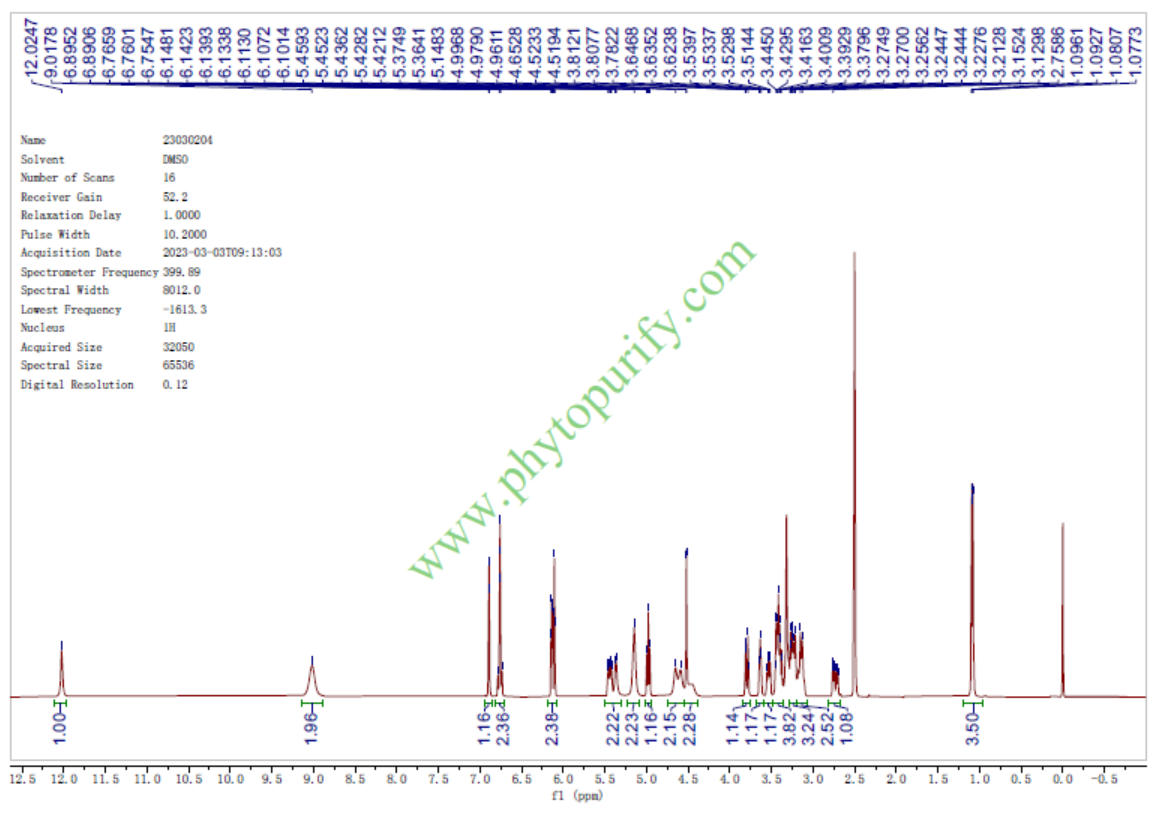
Identification Method: Mass, NMR
Packing: Brown vial or HDPE plastic bottle
Storage: Store in a well closed container, protected from air and light. Put into refrigerate or freeze for long term storage.
Whenever possible, you should prepare and use solutions on the same day. However, if you need to make up stock solutions in advance, we recommend that you store the solution as aliquots in tightly sealed vials at -20℃. Generally, these will be useable for up to two weeks.
The product could be supplied from milligrams to grams
Inquire for bulk scale.
Description:
Eriocitrin is powerful antioxidative flavonoid, it can prevent oxidative damages caused by acute exercise-induced oxidative stress, it also has lipid-lowering effect in rats on a high-fat and high-cholesterol diet. Eriocitrin is a potent inhibitor of human carbonic anhydrase VA isozyme.
References:
J. Food Sci., 2006, 71(71):S633–S7.
Lipid-Lowering Effect of Eriocitrin, the Main Flavonoid in Lemon Fruit, in Rats on a High-Fat and High-Cholesterol Diet
Eriocitrin (eriodictyol 7-O-β-rutinoside) is the main flavonoid in lemon fruit.
METHODS AND RESULTS:
In this study, Eriocitrin was investigated for its lowering effect on serum and hepatic lipids in high-fat and high-cholesterol fed rats. Rats in the control group (N = 6) were fed a 20% lard and 1% cholesterol diet for 21 d, and rats in the 0.35% Eriocitrin group (N = 6) and 0.70% Eriocitrin group (N = 6) were fed a diet supplemented with Eriocitrin 0.35% and 0.70%, respectively. The content of hepatic total cholesterol and triglyceride in the Eriocitrin group was no different from that of the control group. The total cholesterol, VLDL+LDL, triglyceride, and phospholipid in the serum of the 0.35% Eriocitrin group showed significantly lower concentrations than the control group (P < 0.05), although there was no difference in the HDL concentrations among the groups. The lowering effect of Eriocitrin for serum total cholesterol was thought to be caused by a decrease in VLDL+LDL.
CONCLUSIONS:
The 0.35% Eriocitrin group was shown to have a significant increase in excretion of fecal bile acid (P < 0.05) and a tendency for enhanced hepatic m-RNA levels of LDL receptor in comparison with the control group.
Sci Rep. 2014 Jan 15;4:3708.
Eriocitrin ameliorates diet-induced hepatic steatosis with activation of mitochondrial biogenesis.
Lemon (Citrus limon) contains various bioactive flavonoids, and prevents obesity and obesity-associated metabolic diseases. We focused on Eriocitrin (eriodictyol 7-rutinoside), a powerful antioxidative flavonoid in lemon with lipid-lowering effects in a rat model of high-fat diet.
METHODS AND RESULTS:
To investigate the mechanism of action of Eriocitrin, we conducted feeding experiments on zebrafish with diet-induced obesity. Oral administration of Eriocitrin (32 mg/kg/day for 28 days) improved dyslipidaemia and decreased lipid droplets in the liver. DNA microarray analysis revealed that Eriocitrin increased mRNA of mitochondrial biogenesis genes, such as mitochondria transcription factor, nuclear respiratory factor 1, cytochrome c oxidase subunit 4, and ATP synthase. In HepG2 cells, Eriocitrin also induced the corresponding orthologues, and reduced lipid accumulation under conditions of lipid loading. Eriocitrin increased mitochondrial size and mtDNA content, which resulted in ATP production in HepG2 cells and zebrafish.
CONCLUSIONS:
In summary, dietary Eriocitrin ameliorates diet-induced hepatic steatosis with activation of mitochondrial biogenesis.
J Agric Food Chem. 2000 Aug;48(8):3217-24.
Identification and antioxidant activity of flavonoid metabolites in plasma and urine of eriocitrin-treated rats.
Eriocitrin, a flavonoid glycoside present in lemon fruit, is metabolized in vivo to a series of eriodictyol, methylated eriodictyol, 3,4-dihydroxyhydrocinnamic acid, and their conjugates.
METHODS AND RESULTS:
Plasma antioxidant activity increased following oral administration of aqueous Eriocitrin solutions to rats. Eriocitrin metabolites were found in plasma and renal excreted urine through HPLC and LC-MS analyses. Eriocitrin was not detected in plasma and urine, but eriodictyol, homoeriodictyol, and hesperetin in their conjugated forms were detected in plasma of 4.0 h following administration of Eriocitrin. In urine for 24 h, both nonconjugates and conjugates of these metabolites were detected. 3,4-Dihydroxyhydrocinnamic acid, which is metabolized from eriodictyol by intestinal bacteria, was detected in slight amounts with each form in 4.0-h plasma and 24-h urine. Eriocitrin was suggested to be metabolized by intestinal bacteria, and then eriodictyol and 3,4-dihydroxyhydrocinnamic of its metabolite were absorbed.
CONCLUSIONS:
Following administration of Eriocitrin, plasma exhibited an elevated resistance effect to lipid peroxidation. Eriocitrin metabolites functioning as antioxidant agents are discussed.
HPLC of Eriocitrin
HNMR of Eriocitrin
Storage conditions:Short-term storage at 2~8℃, long-term storage at -20 ~ -80℃
245.2900
-.1823
-.2233
6.6891
.5373
.1213
Low
69.9465
4.8447
No
No
No
No
No
No
0.0
Yes
No
Yes
No
Natural products have long been an important source of innovative drug discovery, among which flavonoids have attracted much attention due to their broad biological activity and low toxicity. Eriocitrin, also known as Eriocitrin, is a dihydroflavonoid glycoside primarily found in plants of the Rutaceae family, particularly in lemons (Citrus limon). Since its identification, due to its excellent antioxidant capacity, sage glycoside has quickly become a research hotspot in the fields of food science, nutrition, and pharmacology. Modern pharmacological research constantly reveals its multiple biological activities beyond antioxidant, especially in anti-tumor, cardiovascular protection, anti-inflammatory, and metabolic regulation, showing great potential. The research on its inhibition of liver cancer cell proliferation through mechanisms such as regulating the cell cycle and inducing apoptosis marks its potential application in the field of tumor intervention. Meanwhile, its interactions with multiple key targets of cardiovascular diseases, such as SELP, ACE, NOS3, etc., have laid a theoretical foundation for its application in the prevention and treatment of cardiovascular and cerebrovascular diseases. This article aims to provide a systematic review of the chemical properties, plant sources, pharmacological activities, molecular mechanisms of action, pharmacological evaluation, and clinical application prospects of sage glycoside, in order to provide comprehensive scientific references for the deep development and transformation research of this natural product.
The chemical structure of San Cao Ci glycoside belongs to the class of dihydroflavonoid glycosides, and its parent nucleus is eriodictyol. A rutinose composed of rhamnose and glucose is connected to the hydroxyl group at position 7. Its CAS number is 13463-28-0, molecular formula is C27H32O15, and molecular weight is 596.5380. This structural feature determines its basic physicochemical properties.
Holy grass glycoside appears as a light yellow powder or crystal. The presence of glycosidic bonds significantly enhances its water solubility, with a calculated water solubility value of approximately 6.6891, indicating that it has good solubility in aqueous media, which is beneficial for its absorption and distribution in organisms. Its topological polar surface area (TPSA) is as high as 245.2900 Å ², which is mainly attributed to the presence of multiple oxygen atoms on hydroxyl and sugar groups in the molecule, further explaining its hydrophilicity. The calculated lipid water partition coefficient (LogP) is -0.1823, confirming that its hydrophilicity is stronger than its lipophilicity, and it belongs to a moderately polar compound. These physicochemical parameters suggest that sage glycoside is not easily able to penetrate the highly lipidated blood-brain barrier (predicted as low permeability) and mainly acts on the peripheral system.
In terms of stability, like most flavonoid glycosides, sage glycosides can be hydrolyzed by acidic or specific enzymes (such as β - glucosidase) to produce aglycones sage and rutin. It is relatively sensitive to light and heat, and attention should be paid to condition control during extraction, storage, and processing to maintain its biological activity.
Shengcao glycoside is a characteristic flavonoid component of lemon and its related products, particularly abundant in lemon peel, flesh, and juice. In addition to lemon, it is also distributed in other citrus fruits such as lemon and grapefruit, but the content is usually lower than lemon. Lemon, as a fruit widely grown and consumed globally, its processing by-products (such as skin and fruit residue) are a sustainable and economical resource for obtaining anthocyanins, in line with the concepts of green chemistry and comprehensive resource utilization.
The main method for extracting bioactive compounds from plant materials is solvent extraction. Traditional methods use aqueous solutions of methanol, ethanol, or acetone for leaching or reflux extraction. Among them, the ethanol water system is commonly used due to its safety, environmental friendliness, and low cost. In order to improve extraction efficiency and selectivity, modern extraction techniques have been widely applied:
1. Ultrasonic assisted extraction Utilizing the cavitation effect of ultrasound to destroy plant cell walls, accelerate solvent penetration and active ingredient dissolution, has the advantages of short time, high efficiency, and low temperature.
2. Microwave assisted extraction Microwaves can cause molecules to move violently and generate heat, quickly heating materials from the inside, effectively shortening extraction time and improving yield.
3. Supercritical fluid extraction Supercritical CO ₂ is usually used to change its solubility by adjusting pressure and temperature. Although this method has limited direct extraction efficiency for highly polar sage glycosides, it can be improved by adding entrainers (such as ethanol) to obtain high-purity products without solvent residue.
After the extraction solution is concentrated under reduced pressure, further separation and purification steps are required to obtain high-purity sage glycoside. Common methods include column chromatography using macroporous adsorption resins (such as AB-8 and D101), which utilize their adsorption and molecular sieve effects for enrichment; Subsequently, fine separation can be performed using techniques such as silica gel column chromatography and preparative high-performance liquid chromatography. High performance liquid chromatography-mass spectrometry and nuclear magnetic resonance spectroscopy are key techniques for identifying the structure and purity of sage glycoside.
A large number of in vitro and in vivo studies have confirmed that sage glycoside has diverse pharmacological activities, and its core function stems from its strong antioxidant capacity, which extends to multiple fields of disease prevention and treatment.
Antitumor activity Shengcaosin has shown growth inhibitory effects on various cancer cell lines, especially on liver cancer cells, which has been extensively studied. Research has shown that sage glycoside can effectively inhibit the proliferation of human liver cancer cells (such as HepG2 and Hep3B), and its mechanism involves inducing cell cycle arrest and apoptosis. It can upregulate the expression of p53 tumor suppressor protein, cyclin A, D3, and cyclin dependent kinase 6, leading to cell cycle arrest in the S phase and preventing cell division. At the same time, Shengcao glycoside activates the intrinsic apoptosis pathway mediated by mitochondria, induces a decrease in mitochondrial membrane potential, releases cytochrome c, and activates the caspase cascade reaction, ultimately leading to programmed cell death of cancer cells.
Cardiovascular protective effect This is one of the most promising pharmacological activities of sage glycoside. Its cardiovascular benefits manifest as multi-target and multi pathway:
Other activities:
The pharmacological effects of Shengcao Ci glycoside are achieved by interacting with multiple molecular targets and regulating complex cellular signaling networks. Its core mechanisms revolve around antioxidant, cell cycle regulation, apoptosis induction, and inflammation regulation.
Cell cycle and apoptosis regulatory targets:
Cardiovascular system related targets:
Antioxidant and signaling pathways As a free radical scavenger, Shengcao glycoside can also activate the cell's own antioxidant defense system, such as the Nrf2/ARE pathway, and upregulate the expression of antioxidant enzymes such as glutathione and superoxide dismutase.
These targets are not isolated, and Shengcao glycoside may trigger a chain reaction through a core initial event (such as alleviating oxidative stress), synergistically acting on multiple pathways, ultimately producing comprehensive pharmacological effects.
Based on its physical and chemical properties and preliminary research data, the pharmacological characteristics of Shengcao Ci glycoside are as follows:
Absorption, distribution, metabolism, excretion As a flavonoid glycoside, the oral bioavailability of sage glycoside is usually limited by its high polarity and molecular weight. It may be partially hydrolyzed by enzymes in the gut microbiota or epithelial cells in the gastrointestinal tract to form aglycone coumarin, which may be better absorbed. The absorbed sage glycoside and its metabolites are widely distributed in the body, but due to high TPSA and low LogP, their ability to penetrate the blood-brain barrier is predicted to be weak, mainly distributed in tissues such as blood, liver, and kidneys. Metabolism mainly occurs in the liver, involving phase II metabolic reactions such as glucuronidation, sulfation, etc., to generate more water-soluble complexes. Metabolites are mainly excreted through the kidneys with urine, and some are excreted through bile and feces.
Analysis of drug properties parameters:
Challenges and Strategies:
As a natural active ingredient with multiple targets and multiple functions, Shengcao Ci glycoside has broad clinical application prospects, but solid research is still needed to promote its transformation.
As a functional food and dietary supplement This is currently the most direct application. Lemon extract rich in sage glycoside has been used to develop health foods with antioxidant properties, auxiliary regulation of blood lipids and blood pressure, and protection of cardiovascular health. Its good safety and "medicinal food homology" characteristics make it have the potential for rapid marketization in this field.
As a lead compound for drugs:
combination therapy Research on the combination application of Shengcao Ci glycoside with existing standard therapeutic drugs may produce synergistic effects, reduce the dosage and toxic side effects of existing drugs, or overcome drug resistance.
Future research directions and challenges:
Shengcao Ci glycoside, a natural flavonoid glycoside derived from lemon, has risen from an ordinary plant chemical component to a candidate functional factor and drug lead compound with important development value due to its excellent antioxidant activity and various pharmacological effects. Its mechanism research in inducing tumor cell cycle arrest and apoptosis, multi-target protection of the cardiovascular system, and other aspects is increasingly deepening, revealing its potential as a multi-target therapeutic agent. Despite facing challenges in drug development such as oral bioavailability, its clear cardiovascular protection targets, good water solubility, and predicted low cardiac toxicity and non mutagenicity lay a positive foundation for its subsequent development. In the future, through interdisciplinary collaboration, combined with modern medicinal chemistry, pharmacy, and systems biology methods, we will deeply optimize its structure or delivery methods, and promote systematic preclinical and clinical research. Shengcao Ci Gan is expected to move from the laboratory to clinical application, providing a new natural source of choice for the prevention and treatment of major chronic diseases such as tumors and cardiovascular diseases, fully demonstrating the sustained vitality and value of natural products in modern medicine.
