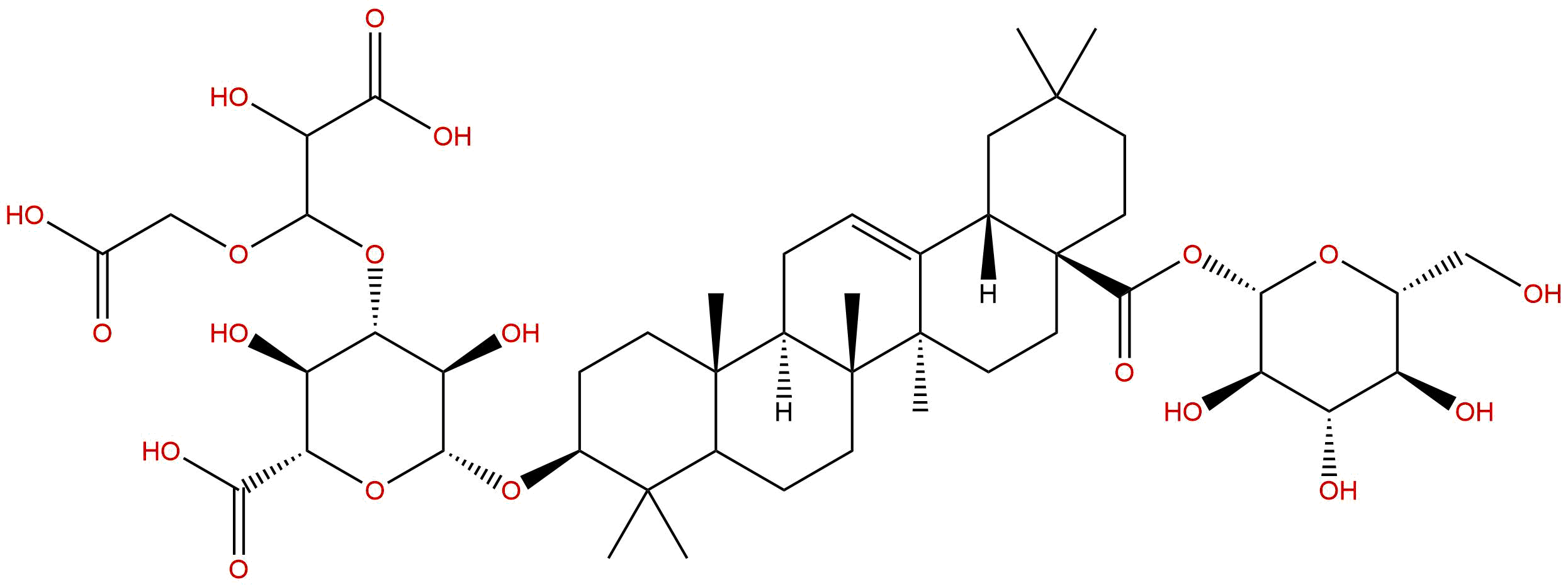


Product name: Achyranthoside C
Synonym name:
Catalogue No.: BP5145
Cas No.: 168009-90-3
Formula: C47H72O20
Mol Weight: 957.073
Botanical Source:
Type of Compound: Triterpenoids
Purity: 95%~99%
Analysis Method: HPLC-DAD or/and HPLC-ELSD
Identification Method: Mass, NMR
Packing: Brown vial or HDPE plastic bottle
Storage: Store in a well closed container, protected from air and light. Put into refrigerate or freeze for long term storage.
Whenever possible, you should prepare and use solutions on the same day. However, if you need to make up stock solutions in advance, we recommend that you store the solution as aliquots in tightly sealed vials at -20℃. Generally, these will be useable for up to two weeks.
The product could be supplied from milligrams to grams
Inquire for bulk scale.
For Reference Standard and R&D, Not for Human Use Directly.
Storage conditions:Short-term storage at 2~8℃, long-term storage at -20 ~ -80℃
325.9600
2.0442
-.8387
.1819
.5502
.1322
Low
85.8262
6.3309
Yes
No
Yes
No
No
No
0.0
Yes
No
No
No
Achyranthioside C is a natural triterpenoid saponin compound isolated from the traditional Chinese medicine Achyranthes bidentata Blume. As a traditional Chinese medicine herb, Achyranthes has always been used for various clinical indications such as promoting blood circulation, removing blood stasis, strengthening muscles and bones, diuresis, and promoting blood circulation. In recent years, with the in-depth study of the chemical composition and pharmacological activity of Achyranthes bidentata, Achyranthes saponins C, as one of its main active ingredients, have attracted much attention due to their significant role in regulating bone metabolism. Especially in the field of anti osteoporosis, Achyranthes saponins C and its structural derivatives have shown inhibitory effects on osteoclast formation, indicating their potential application value in the prevention and treatment of osteoporosis.
Osteoporosis is a metabolic bone disease characterized by reduced bone mass and microstructural damage to bone tissue, which can significantly increase the risk of fractures. Its pathogenesis is complex, involving a dynamic imbalance between bone formation and bone resorption. The current clinical treatment methods include anti bone resorption drugs (such as bisphosphonates), bone formation promoters (such as recombinant human bone morphogenetic protein), etc. However, long-term medication has side effects and drug resistance issues, and there is an urgent need to develop new safe and effective bone metabolism regulators. Due to its natural source and multi-target regulatory properties, Achyranthes bidentata saponin C provides a new approach for the treatment of osteoporosis.
This article provides a systematic review of the chemical structure and physicochemical properties, plant sources and extraction methods, pharmacological activity and mechanism of action, pharmacological evaluation and pharmacokinetic characteristics of Achyranthes bidentata saponin C. It also explores its clinical application prospects and future research directions, aiming to provide theoretical basis and research references for the field of natural product pharmacology and osteoporosis treatment.
Achyranthes saponins C belong to the triterpenoid saponin class, with a complex molecular formula and a molecular weight of 957.0730. Its structural core is a typical triterpenoid skeleton, connecting multiple sugar residues to form a typical saponin structure. The LogP value of this compound is 2.0442, indicating its moderate lipid solubility, which is beneficial for cell membrane penetration and bioavailability. The extremely high topological polar surface area (TPSA) of 325.9600 reflects the presence of a large number of polar groups, such as hydroxyl and sugar groups, in its molecules, which may affect its water solubility and membrane permeability.
The water solubility is 0.1819, indicating that the solubility of Achyranthes bidentata saponin C in water is low. However, combined with its saponin surface activity characteristics, it may form micelles in vivo or bind with liposomes, affecting its absorption and distribution. The low permeability of the blood-brain barrier suggests that its main target is limited to peripheral tissues, reducing the risk of central nervous system side effects. The hERG channel inhibition test result is negative, indicating a low risk of cardiac toxicity. The Ames mutagenicity test showed a value of 0.0, indicating that its genetic toxicity risk is extremely low and meets safety requirements.
In summary, the physicochemical properties of Achyranthes bidentata saponin C demonstrate its promising potential for drug development, especially in the treatment of bone metabolism related diseases. Its structural features provide a molecular basis for multi-target regulation.
Achyranthes bidentata Blume, a perennial herbaceous plant belonging to the Amaranthaceae family and widely distributed in China, Japan, Korea, and Southeast Asia, is the main source of Achyranthes bidentata saponins C. The root of Achyranthes bidentata is the main medicinal part, which contains abundant triterpenoid saponins, polysaccharides, steroids, and flavonoids.
The traditional methods for extracting saponins C from Achyranthes bidentata often use water extraction or alcohol extraction combined with separation and purification techniques. The specific steps include:
In recent years, the application of modern technologies such as ultrasound assisted extraction and microwave-assisted extraction has improved extraction efficiency and purity, reduced energy consumption, and laid the foundation for large-scale production.
The pharmacological activity research of Achyranthes bidentata saponin C mainly focuses on its regulatory effect on bone metabolism, especially its performance in osteoporosis models. A large number of in vitro and in vivo experiments have shown that Achyranthes saponins C and its structural derivatives can effectively inhibit the formation and activity of osteoclasts, promote bone formation, and thus improve osteoporosis.
Osteoclasts are the main executors of bone resorption, and their excessive activation is a key pathological process in osteoporosis. Achyranthes saponins C reduce the number of osteoclasts and bone resorption activity by inhibiting the differentiation of osteoclast precursor cells. In vitro studies have shown that Achyranthes saponins C can significantly inhibit RANKL induced osteoclast formation and reduce the expression of bone resorption related enzymes such as CTSK (caspase K).
Achyranthes saponins C not only inhibit bone resorption, but also promote the differentiation and function of osteoblasts. Its mechanism of action involves regulating the expression of osteogenic transcription factors RUNX2 and SP7 (osterix), promoting the synthesis of bone matrix protein COL1A1 and osteocalcin (BGLAP), and enhancing the process of bone formation.
Osteoporosis is often accompanied by inflammation and oxidative stress. Achyranthes saponins C exhibit certain anti-inflammatory and antioxidant activities, reduce the expression of pro-inflammatory factor TNF - α, alleviate the inflammatory response of the bone microenvironment, and protect bone tissue from oxidative damage.
In animal models of osteoporosis (such as ovariectomized rats), oral administration of Achyranthes saponins C can significantly increase bone density, improve bone microstructure, reduce fracture risk, and demonstrate good pharmacological properties.
The anti osteoporosis effect of Achyranthes bidentata saponins C involves the regulation of multiple signaling pathways and key molecular targets, reflecting the synergistic effect of natural products with multiple targets and pathways.
Bone metabolism is regulated by estrogen, and ESR1 is the main receptor for estrogen. Achyranthes saponins C can regulate ESR1 expression, mimic the bone protective effect of estrogen, promote bone formation, inhibit bone resorption, and have potential therapeutic effects, especially for postmenopausal osteoporosis.
MMP9 is involved in bone matrix degradation, promoting osteoclast migration and bone resorption. Achyranthes saponins C inhibit the expression of MMP9, slow down the degradation of bone matrix, and protect the integrity of bone tissue structure.
VDR regulates calcium metabolism and bone formation. Achyranthes saponins C enhance the activity of the VDR signaling pathway, promote calcium absorption and bone mineralization, and improve symptoms of osteoporosis.
These two transcription factors are key regulatory factors for osteoblast differentiation. Achyranthes saponins C upregulate the expression of RUNX2 and SP7, promote osteoblast maturation, and enhance bone matrix synthesis.
CTSK is a osteoclast specific protease involved in the degradation of collagen. Achyranthes saponins C inhibit CTSK activity and reduce bone resorption.
Osteoprotegerin, as a competitive inhibitor of RANKL, inhibits osteoclastogenesis. Achyranthes saponins C promote the expression of TNFRSF11B and enhance bone protection.
SOST is a negative regulatory factor for bone formation. Achyranthes saponins C downregulate SOST expression, relieve inhibition on bone formation, and promote bone formation.
COL1A1 encodes type I collagen, which is the main component of bone matrix; BGLAP encodes osteocalcin and is involved in bone mineralization. Achyranthes saponins C promote the expression of these two proteins and improve bone matrix quality.
In summary, Achyranthes bidentata saponins C achieve a comprehensive anti osteoporosis effect by regulating multiple targets mentioned above, coordinating bone formation and resorption processes.
The pharmacological evaluation of Achyranthes bidentata saponin C shows that it has good potential for drug development. Although the molecular weight of 957.0730 is relatively large, a moderate LogP (2.0442) is beneficial for cell membrane permeability. High TPSA (325.9600) indicates strong polarity and may limit oral absorption. Therefore, dosage form optimization or the use of nanocarrier technology is needed to improve bioavailability.
Low water solubility (0.1819) affects its solubility and may result in slow or incomplete absorption. The low permeability of the blood-brain barrier reduces the risk of central nervous system side effects and is suitable for targeted therapy of peripheral bone tissue. HERG channel inhibition negative and Ames test non mutagenic, with high safety.
Pharmacokinetic studies have shown that the absorption of Achyranthes bidentata saponin C is slow after oral administration, with a moderate plasma half-life. It is mainly metabolized through the liver, and the activity of its metabolites needs further investigation. Its distribution is mainly concentrated in bone tissue and related metabolic organs, and its excretion pathways are mainly bile and urine.
In the future, systematic pharmacokinetic and toxicological studies need to be conducted to clarify their in vivo metabolic pathways, drug interactions, and long-term safety, providing a basis for clinical applications.
Achyranthes saponins C, as a natural multi-target active ingredient for anti osteoporosis, have broad clinical application prospects. Its unique mechanism of action and good safety make it a potential therapeutic drug for osteoporosis and related bone metabolism diseases.
Future clinical applications can focus on:
In addition, the low blood-brain barrier permeability and no significant cardiac toxicity of Achyranthes bidentata saponin C provide a safety guarantee for its long-term use. With the development of nanotechnology and drug delivery systems, the bioavailability and targeting of Achyranthes sinensis saponins C will be further enhanced.
However, there are still shortcomings in current research, such as limited preclinical pharmacokinetic data and a lack of large-scale clinical trial validation. In the future, it is necessary to strengthen multi center and multi-stage clinical research, clarify its efficacy and safety, and promote its transformation into clinical drugs.
As an important active ingredient in Achyranthes bidentata, Achyranthes saponins C exhibit excellent pharmacological activity and potential as a drug in the field of osteoporosis due to their unique triterpenoid saponin structure and multi-target regulatory properties. It regulates the dynamic balance between osteoclasts and osteoblasts, inhibits bone resorption, promotes bone formation, and has anti-inflammatory and antioxidant effects, reflecting the complexity and advantages of natural product pharmacology.
Although significant progress has been made in the research of Achyranthes bidentata saponins C, systematic and in-depth pharmacokinetic, toxicological, and clinical validation work is still needed. In the future, by combining modern drug development technology and optimizing its drug properties and administration methods, it is expected to promote the development of Achyranthes Achyranthes Saponin C as an emerging drug for the treatment of osteoporosis and related bone metabolism diseases, providing new solutions for bone health management.
In summary, Achyranthes bidentata saponin C not only enriches the research system of natural products for anti osteoporosis drugs, but also provides valuable scientific basis and practical path for the modernization and innovative drug development of traditional Chinese medicine.
Batch can search by a CAS number,one per line
