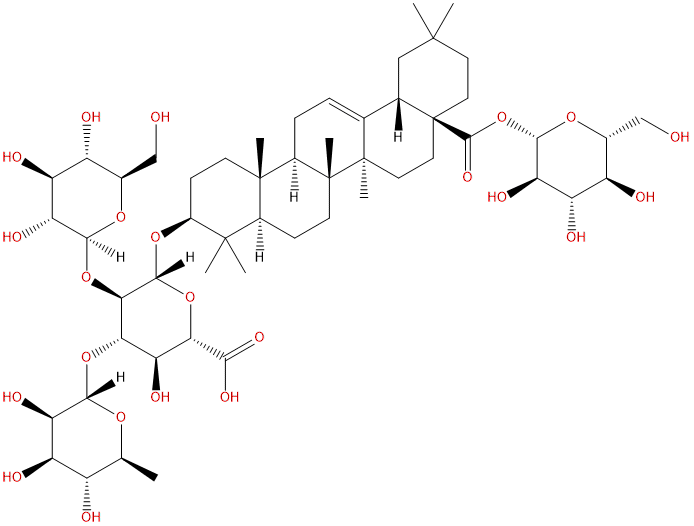


Product name: Cyaonoside A
Synonym name:
Catalogue No.: BP4722
Cas No.: 110081-91-9
Formula: C54H86O23
Mol Weight: 1103.26
Botanical Source:
Type of Compound: Triterpenoids
Purity: 95%~99%
Analysis Method: HPLC-DAD or/and HPLC-ELSD
Identification Method: Mass, NMR
Packing: Brown vial or HDPE plastic bottle
Storage: Store in a well closed container, protected from air and light. Put into refrigerate or freeze for long term storage.
Whenever possible, you should prepare and use solutions on the same day. However, if you need to make up stock solutions in advance, we recommend that you store the solution as aliquots in tightly sealed vials at -20℃. Generally, these will be useable for up to two weeks.
The product could be supplied from milligrams to grams
Inquire for bulk scale.
For Reference Standard and R&D, Not for Human Use Directly.
Storage conditions:Short-term storage at 2~8℃, long-term storage at -20 ~ -80℃
Cyanoside A (CAS number: 110081-91-9), a natural triterpenoid saponin derived from the traditional Chinese medicine Achyranthes bidentata Blume, has received widespread attention in recent years due to its significant pharmacological activity, particularly in the field of osteoporosis. Osteoporosis is a metabolic bone disease characterized by reduced bone mass and microstructural damage to bone tissue, which can easily lead to fractures and seriously affect the quality of life of patients. Although there are many existing therapeutic drugs, there are still problems such as limited efficacy and obvious side effects. Developing new safe and effective anti osteoporosis drugs has become a research hotspot. Chuanxi Achyranthes Saponin A provides new ideas and molecular basis for bone metabolism regulation due to its unique chemical structure and multi-target regulatory ability.
This article will provide a systematic review of the chemical structure and physicochemical properties, plant sources, and extraction methods of Sichuan Achyranthes saponins A, with a focus on its pharmacological activity and mechanism of action. The pharmacokinetic characteristics of the saponins will be explored in combination with their pharmacological parameters. Finally, the clinical application prospects will be discussed, providing reference for natural product pharmacology and osteoporosis treatment research.
Chuanxi Achyranthes Saponin A is a triterpenoid saponin compound with a molecular weight of 1103.2590. Its molecular structure is complex, containing multiple sugar and hydroxyl groups, and it has high polarity. Its LogP value is 1.8676, indicating moderate lipid solubility, which is beneficial for membrane penetration. The extremely high polarity is reflected in its topological polar surface area (TPSA) reaching 370.9700, indicating good water solubility (solubility of approximately 0.3298 mg/mL), which has a certain impact on oral absorption and in vivo distribution.
Structurally, Sichuan Achyranthes saponins A are mainly composed of a pentacyclic triterpenoid skeleton and multiple glycosidic residues connected by glycosidic bonds. The diversity of glycosides endows it with strong hydrophilicity and biological activity. The molecular structure did not exhibit hERG channel inhibitory activity, and the Ames mutagenicity test result was 0, indicating a low risk of genotoxicity and good safety. In addition, the blood-brain barrier permeability of Sichuan Achyranthes saponins A is relatively low, indicating that its main target of action may be limited to peripheral tissues, reducing the possibility of central nervous system side effects.
Sichuan Achyranthes bidentata saponin A mainly exists in the traditional Chinese medicine material Sichuan Achyranthes. Sichuan Achyranthes bidentata Blume is the dried root of the Amaranthaceae plant and is widely distributed in North, Central, and Southwest China. This plant is used in traditional Chinese medicine for promoting blood circulation, removing blood stasis, strengthening muscles and bones, diuresis, and promoting diuresis. Modern research has confirmed that it contains abundant triterpenoid saponins.
The extraction of saponins A from Sichuan Achyranthes usually involves reflux extraction using a water alcohol mixed solvent (such as 70% ethanol), combined with liquid-liquid distribution and column chromatography separation techniques. The specific steps include:
In recent years, ultrasound assisted extraction and microwave-assisted extraction techniques have also been applied to the efficient extraction of saponins A from Sichuan Achyranthes, improving the extraction rate and purity, and reducing energy consumption and time costs.
The pharmacological activity research of Sichuan Achyranthes saponins A mainly focuses on its anti osteoporosis effect. Multiple in vitro cell experiments and in vivo animal model studies have shown that this compound can significantly promote osteoblast proliferation and differentiation, inhibit osteoclast activity, thereby regulating the process of bone remodeling and maintaining bone metabolic balance.
Chuanxi Achyranthes Saponin A promotes the differentiation of bone marrow-derived mesenchymal stem cells into osteoblasts by activating bone formation related genes such as RUNX2, SP7 (osterix), COL1A1 (type I collagen), and BGLAP (osteocalcin) expression, enhancing bone matrix synthesis and mineralization processes. Its regulatory effects on vitamin D receptor (VDR) and estrogen receptor alpha (ESR1) further promote calcium and phosphorus metabolism and bone metabolism homeostasis.
Sichuan Achyranthes saponins A can downregulate osteoclast related enzymes such as CTSK (collagenase K) and MMP9 (matrix metalloproteinase 9), inhibiting osteoclast formation and bone resorption activity. In addition, by regulating the balance between TNFRSF11B (osteoprotegerin, OPG) and RANKL signaling pathway, the differentiation and activation of osteoclasts are inhibited, reducing bone loss.
The occurrence of osteoporosis is closely related to chronic inflammation. Chuanxi Achyranthes Saponin A exhibits certain anti-inflammatory activity, which can inhibit the expression of pro-inflammatory factors and alleviate bone tissue inflammation. Simultaneously possessing antioxidant properties, it protects bone cells from oxidative stress damage and promotes bone tissue repair.
In the osteoporosis model of ovariectomized rats, Sichuan Achyranthes saponins A significantly improved bone density, enhanced bone mechanical properties, reduced bone trabecular structure damage, and demonstrated good anti osteoporosis effects. Compared with commonly used drugs such as estrogen and bisphosphonates, Sichuan Achyranthes saponins A have fewer side effects and higher safety.
The anti osteoporosis effect of Sichuan Achyranthes saponins A involves multiple signaling pathways and key molecular targets, reflecting its pharmacological characteristics of multi-target and multi mechanism.
Chuanxi Achyranthes Saponin A activates ESR1, simulates the bone protective effect of estrogen, promotes osteoblast proliferation and differentiation, inhibits osteoclast activity, and regulates bone metabolism balance. This mechanism helps to improve postmenopausal osteoporosis.
As key transcription factors for osteogenic differentiation, the expression of RUNX2 and SP7 was significantly upregulated by saponins A from Achyranthes sinensis, promoting bone matrix protein synthesis and mineralization, and enhancing bone formation.
Chuanxi Achyranthes Saponin A enhances VDR signaling, regulates calcium and phosphorus metabolism, promotes bone mineralization, and maintains bone health.
By inhibiting the expression of CTSK and MMP9, Sichuan Achyranthes saponins A reduce bone matrix degradation and inhibit osteoclast mediated bone resorption.
Chuanxi Achyranthes Saponin A regulates the OPG/RANKL ratio and inhibits osteoclastogenesis; Simultaneously downregulating SOST expression, relieving inhibition of bone formation, and promoting bone formation.
Promote the expression of type I collagen and osteocalcin, enhance the quality of bone matrix and mechanical strength of bone tissue.
In summary, Sichuan Achyranthes saponins A achieve anti osteoporosis therapeutic effects by synergistically regulating bone metabolism related signaling pathways through multiple targets.
The pharmacological parameters of Sichuan Achyranthes saponins A indicate that they have certain potential for drug development. The high molecular weight (1103.2590) and polarity (TPSA 370.97) may limit its oral bioavailability, but a moderate LogP value (1.8676) is beneficial for cell membrane permeability. Its moderate water solubility is helpful for formulation development.
In terms of safety, Sichuan Achyranthes saponins A do not inhibit hERG channels and reduce the risk of cardiac toxicity; Ames test negative, low risk of genotoxicity, meets the requirements for safe medication. Low permeability of the blood-brain barrier reduces adverse reactions in the central nervous system.
Pharmacokinetic studies have shown that the absorption of Sichuan Achyranthes saponins A is slow after oral administration, and their distribution in the body is mainly concentrated in the bones and liver. The metabolic pathway is mainly through the liver enzyme system, and excretion is mainly through bile. Moderate half-life, supporting daily dosing frequency. In the future, it is necessary to optimize formulations to improve bioavailability, such as nanocarriers, liposome encapsulation, etc.
As a natural triterpenoid saponin, Chuanxiazi saponin A has the potential to become a new type of osteoporosis treatment drug due to its significant anti osteoporosis activity and good safety. Its multi-target regulatory properties help overcome the limitations of single target drugs and provide more comprehensive bone metabolism regulation.
The clinical application prospects are mainly reflected in:
Future research directions include:
In addition, based on the structural characteristics of Sichuan Achyranthes saponins A, structural modification and derivative design are expected to obtain more efficient and safer new drugs for the treatment of osteoporosis.
As a natural triterpenoid saponin with unique structure and multi-target regulatory ability, Sichuan Achyranthes saponins A have shown broad application prospects in the field of anti osteoporosis. It promotes osteoblast function and inhibits osteoclast activity by regulating key bone metabolism molecules such as ESR1, RUNX2, VDR, etc. It also has anti-inflammatory and antioxidant effects, reflecting the multidimensional therapeutic advantages of natural products. The drug efficacy evaluation shows that it has good safety, although there are challenges in terms of bioavailability, it is expected to be overcome through modern drug formulation technology.
In the future, combined with systematic pharmacological mechanism research and clinical verification, Sichuan Achyranthes saponins A are expected to become an important natural medicine in the field of osteoporosis treatment, providing new treatment options for improving patients' quality of life. The in-depth development of pharmacology of natural products will further promote the pharmacological process of Sichuan Achyranthes saponins A and its derivatives, and promote the modernization of traditional Chinese medicine and the research and development of innovative drugs.
