
| Catalog No | Package | Original Price | Price | Inventory | Quantity | Operating |
|---|---|---|---|---|---|---|
| BP1390-100mg | 100mg | $30.00 | Sign in |
|


Synonym name: Teonova; Theocin; Theodel; Theo-Dur; Theograd; Theolair; Theona P; Theotard
Catalogue No.: BP1390
Cas No.: 58-55-9
Formula: C7H8N4O2
Mol Weight: 180.167
Botanical Source: tea leaves (Camellia thea), Ilex paraguariensis and Paullinia cupana. Also the marine sponge Haliclona sp
Purity: 95%~99%
Analysis Method: HPLC-DAD or/and HPLC-ELSD
Identification Method: Mass, NMR
Packing: Brown vial or HDPE plastic bottle
Can be supplied from milligrams to grams.
For Reference Standard and R&D, Not for Human Use Directly.
Inquire for bulk scale.
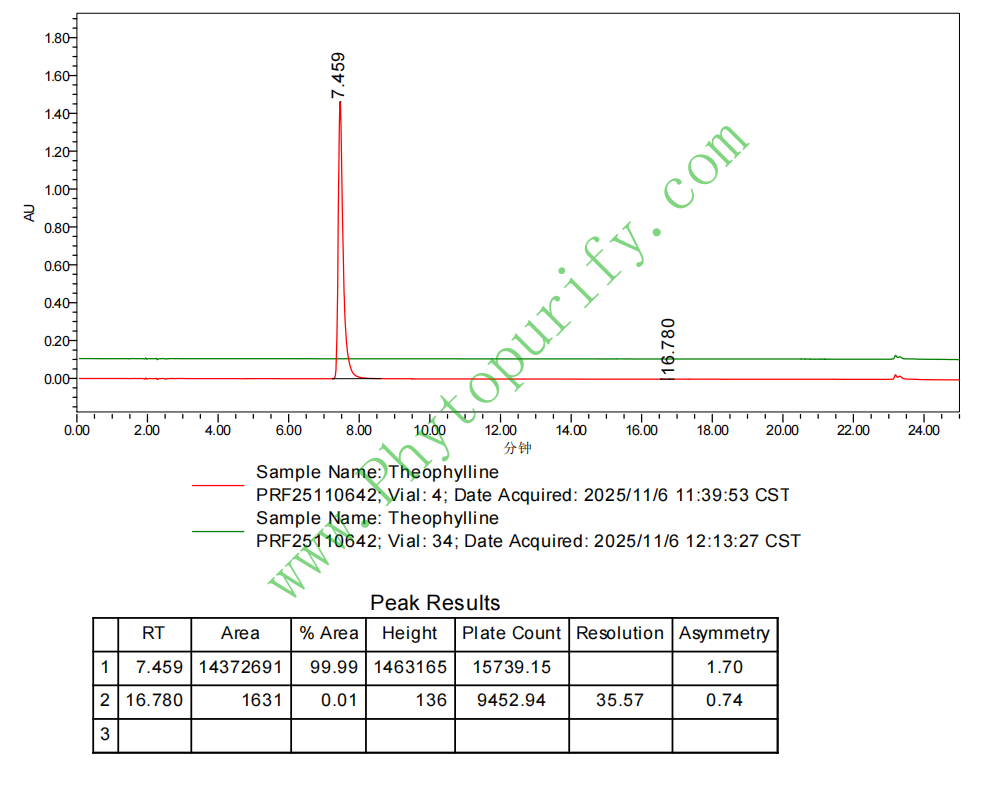
HPLC of Theophylline
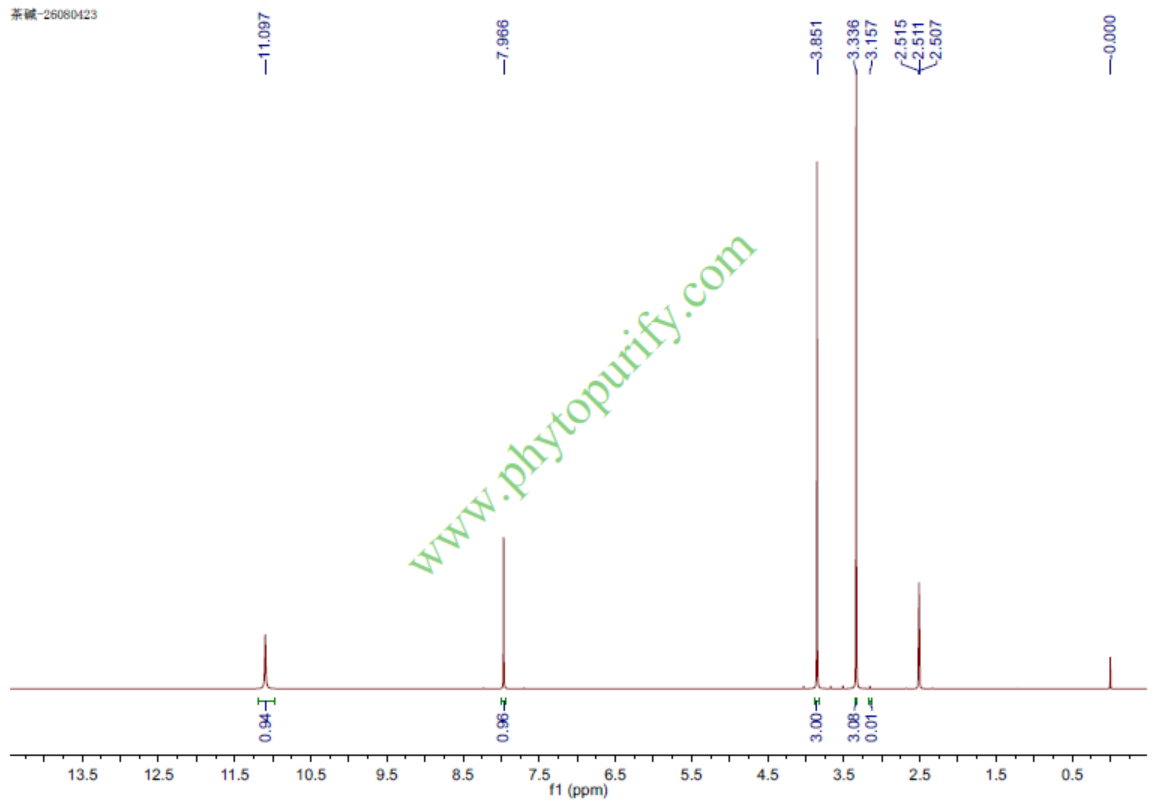
HNMR of Theophylline
Storage conditions:Short-term storage at 2~8℃, long-term storage at -20 ~ -80℃
72.6800
-.2149
-.2297
1.0014
2.7381
52.9719
High
19.1685
2.5436
Yes
Yes
No
No
Yes
No
0.6
Yes
Yes
Yes
Yes
Theophylline, also known as 1,3-dimethylxanthine, is a natural methylxanthine alkaloid with a long history. Since its discovery and isolation from tea in the late 19th century, it has been used as a bronchodilator in the treatment of respiratory diseases, especially asthma and chronic obstructive pulmonary disease (COPD), for over a century. Although its clinical status has declined after the emergence of new drugs such as long-acting β 2 receptor agonists and inhaled corticosteroids, theophylline has not withdrawn from the historical stage. Modern pharmacological research continuously reveals its complex multi-target pharmacological properties that go beyond the simple bronchodilator effect, including anti-inflammatory and immune regulation, which have regained attention in individualized treatment and difficult to treat case management. This article aims to systematically review the chemical properties, sources, multidimensional pharmacological activities, molecular mechanisms of action, pharmacological characteristics, and clinical application prospects of theophylline in modern medicine, in order to provide a scientific perspective for the deep development and rational application of this classic drug.
The chemical formula of theophylline is C7H8N4O2, with a molecular weight of 180.1670 and a CAS number of 58-55-9. Its chemical structure belongs to xanthine derivatives, which are compounds in the purine ring system where the N-1 and N-3 positions are replaced by methyl groups (1,3-dimethylxanthine). This structure is the structural basis for its competitive antagonistic effect with adenosine receptors, and also determines its core pharmacophore as a phosphodiesterase (PDE) inhibitor.
In terms of physical and chemical properties, theophylline is a white crystalline powder with a bitter taste. Its lipid water partition coefficient (LogP) is about -0.2149, indicating that it has good hydrophilicity. The topological polar surface area (TPSA) is 72.68 Å ², which is related to the multiple hydrogen bond acceptor and donor sites in its molecule. The solubility of theophylline in water is about 1.0014 mg/mL (about 5.56 mM), which belongs to the range of slightly soluble to soluble. Its solubility changes significantly with pH and increases in alkaline solutions. These properties directly affect its formulation development and in vivo absorption process. Theophylline can penetrate the blood-brain barrier well, which is related to its relatively small molecular weight and certain lipophilicity, and also explains some of the side effects such as axial excitation (such as insomnia and anxiety).
Theophylline is widely present in nature and is a natural secondary metabolite of various plants. Its main plant source is the leaves of Camellia sinensis, a plant in the family Theaceae, which is also the origin of its name. In addition, theophylline or its homologs (such as caffeine and theobromine) are also found in plants such as cocoa beans, coffee beans, and guarana.
The traditional extraction method is mainly based on solvent extraction. Usually, dried tea leaves are crushed and extracted using hot water or organic solvents such as chloroform and ethanol. After filtration and concentration, the extraction solution is preliminarily crystallized and purified using the low solubility of theophylline in cold water. Further purification can be achieved through methods such as recrystallization, column chromatography (such as silica gel column, alumina column), or preparative high-performance liquid chromatography (HPLC). In modern industrial production, chemical synthesis is often used to meet the large-scale and high-purity demand. The classic synthetic route uses ethyl cyanoacetate and urea as starting materials, and is prepared through cyclization, methylation and other steps. This process is mature and cost-effective, and is currently the main source of pharmaceutical grade theophylline.
The pharmacological activities of theophylline are complex and diverse, far beyond the traditional bronchodilator effect.
Bronchodilator effect This is the most classic and clear function of theophylline. By inhibiting PDEs (especially PDE3 and PDE4) in airway smooth muscle cells, increasing intracellular cyclic adenosine monophosphate (cAMP) levels, activating protein kinase A (PKA), leading to inactivation of myosin light chain kinase and opening of potassium channels, ultimately causing smooth muscle relaxation and airway dilation.
Anti inflammatory and immune regulatory activity This has been a hot topic in theophylline research in recent years. Theophylline can inhibit the activation and recruitment of various inflammatory cells, such as eosinophils, neutrophils, T lymphocytes, and macrophages. The mechanism involves inhibiting the nuclear translocation of nuclear factor kappa B (NF - κ B), thereby downregulating the expression of various pro-inflammatory factors such as TNF - α, IL-8, GM-CSF. Meanwhile, theophylline can induce the production of anti-inflammatory factor interleukin-10 (IL-10) and act as an activator of histone deacetylase (HDAC), enhancing the deacetylation of glucocorticoid receptors and restoring the sensitivity of steroid resistant patients to glucocorticoids.
Other system functions:
The mechanism of action of theophylline exhibits multi-target characteristics, mainly involving the following molecular targets:
Non selective phosphodiesterase (PDE) inhibitors Theophylline inhibits PDEs (especially PDE3 and PDE4) non selectively, reduces the hydrolysis of cAMP and cyclic guanosine monophosphate (cGMP), and increases the level of intracellular second messengers. In airway smooth muscle, elevated cAMP leads to relaxation; In inflammatory cells, elevated cAMP inhibits their activation and release of inflammatory mediators. among which,PDE4B、PDE4D Equivalent enzymes are highly expressed in inflammatory cells and are key targets of theophylline's anti-inflammatory effects.
Non selective adenosine receptor antagonists Theophylline is a competitive antagonist of A1, A2A, A2B, and A3 adenosine receptors. In the lungs, adenosine can mediate bronchoconstriction and degranulation of mast cells through A1 and A2B receptors. Theophylline antagonizes these receptors, contributing to its bronchodilator and partially anti-inflammatory effects. But side effects such as central excitation and arrhythmia are also closely related to this mechanism.
Histone deacetylase (HDAC) activator Theophylline can activate HDAC through mechanisms that are currently not fully elucidated, possibly related to increased intracellular cAMP or reactive oxygen species. The enhancement of HDAC activity leads to deacetylation of glucocorticoid receptors, thereby enhancing their binding ability to glucocorticoid response elements and transcription of anti-inflammatory genes. This mechanism is of great significance for reversing the common hormone resistance state in COPD patients.
The impact on other signaling pathways Theophylline can also inhibit the activation of transcription factor NF - κ B and reduce the transcription of pro-inflammatory genes; And through the PKA pathway, it affects the function of apoptosis related proteins (such as the Bcl-2 family) and participates in apoptosis induction.
In the pathological network of asthma/COPD, theophylline acts synergistically to PDE4D、PDE4B、PDE4A Waiting for targets and indirectly affecting adrenergic receptors (such as ADRB2)The downstream signal plays a multiple role in relaxing the bronchi, inhibiting airway inflammation, and remodeling.
From the perspective of pharmacological parameters, theophylline has a small molecular weight, a LogP value indicating good hydrophilic oleophilic balance, and moderate TPSA. These characteristics make it have good membrane permeability and oral absorption potential. Its water solubility is still acceptable, making it easy to make solid oral preparations or injections. It is worth noting that theophylline has no significant hERG potassium channel inhibitory activity (hERG inhibition: No), indicating a low risk of cardiac toxicity associated with acquired long QT syndrome and apical torsion ventricular tachycardia. The Ames test result is 0.6, indicating no clear mutagenicity under the standard testing system.
In terms of pharmacokinetics, theophylline is rapidly and completely absorbed orally, with a bioavailability close to 100%. It is widely distributed in the body, with a cloth volume of about 0.45 L/kg, and can pass through the placenta and blood-brain barrier. The plasma protein binding rate is about 40%. The metabolism of theophylline mainly occurs in the liver, where it undergoes N-demethylation through the cytochrome P450 enzyme system (mainly CYP1A2, followed by CYP2E1 and CYP3A4) to produce various metabolites (such as 3-methylxanthine, 1-methyluric acid, etc.), some of which still have pharmacological activity. Only about 10% is excreted in its original form through the kidneys. The elimination half-life of theophylline varies greatly among individuals, with an average of about 8-9 hours in adults, but significant differences are observed in children, the elderly, liver disease patients, heart failure patients, and smokers. Its treatment window is narrow (usually 5-15 μ g/mL), and serious toxic reactions such as nausea, vomiting, tachycardia, arrhythmia, and convulsions are prone to occur when the blood drug concentration exceeds 20 μ g/mL. Therefore, therapeutic drug monitoring (TDM) is crucial for the safe use of theophylline. Multiple drugs (such as macrolide antibiotics, fluoroquinolones, cimetidine, allopurinol) can significantly increase theophylline blood concentration by inhibiting CYP450 enzymes, and special attention should be paid to drug interactions.
At present, theophylline is still mainly used as a maintenance therapy for asthma and COPD in clinical practice, especially for moderate to severe patients, as an additional treatment for inhaled corticosteroids and long-acting β 2 receptor agonists. The anti-inflammatory and immunomodulatory effects of its low dose (maintaining blood drug concentration at 5-10 μ g/mL) are increasingly being recognized and have shown value in reducing acute exacerbations.
Looking ahead, the clinical application and research of theophylline may deepen in the following directions:
1. Precision medicine and personalized drug delivery Using pharmacogenomics, individualized starting doses and adjustment plans are developed based on factors such as patient CYP1A2 gene polymorphism, age, comorbidities, and lifestyle habits (such as smoking), combined with TDM, to maximize chemotherapy efficacy and minimize toxicity.
2. Development of new formulations and combination therapies Develop sustained-release and controlled release formulations to maintain stable blood drug concentrations and improve compliance. Explore fixed dose combination formulations of theophylline with other mechanism of action drugs, such as novel PDE4 selective inhibitors and kinase inhibitors, to enhance efficacy or reduce individual doses and side effects.
3. Expand into new therapeutic fields Based on its anti-inflammatory, immunomodulatory, and pro apoptotic properties, the potential of theophylline in non respiratory diseases such as acute lung injury/acute respiratory distress syndrome (ALI/ARDS), premature apnea, adjuvant therapy for certain autoimmune diseases and specific types of tumors is being explored, but requires extensive and rigorous clinical research validation.
4. Deepening mechanism research Further elucidating its exact molecular mechanism as an HDAC activator, as well as the cross dialogue between various pathways in its multi-target network, can help discover safer and more effective derived compounds or new targets.
Theophylline, a natural compound derived from ancient tea leaves, has undergone centuries of clinical practice and its role has evolved from a simple bronchodilator to a pharmacological tool and classic drug with multi-target and multi effect properties. Although its narrow treatment window and side effects limit its widespread use as a first-line drug, modern pharmacology's profound revelation of its anti-inflammatory, immune regulatory, and hormone resistance reversal mechanisms makes it irreplaceable in the individualized comprehensive treatment of respiratory diseases, especially severe and refractory asthma and COPD. In the future, through pharmacokinetic optimization, precise drug delivery strategies, and exploration in new therapeutic fields, theophylline, an "old drug", is expected to rejuvenate and continue to contribute its unique value to human health. The continuous and in-depth research on it is not only related to the redevelopment of the drug itself, but also provides valuable models for understanding the complex network of inflammation and immune regulation.
