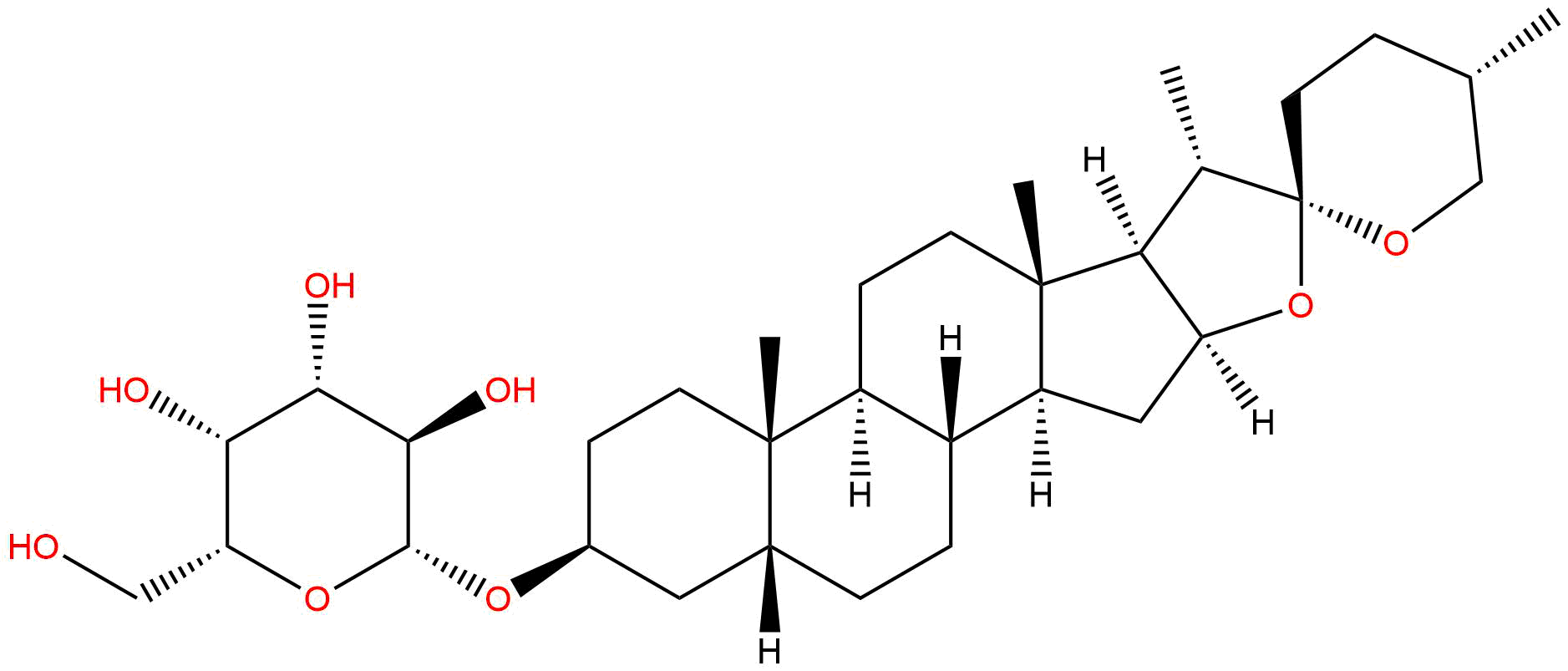


Synonym name: Sarsasapogenin 3-O-Beta-D-galactopyranosid
Catalogue No.: BP1394
Cas No.: 68422-00-4
Formula: C33H54O8
Mol Weight: 578.787
Botanical Source: dried rhizomes of Anemarrhena asphodeloides
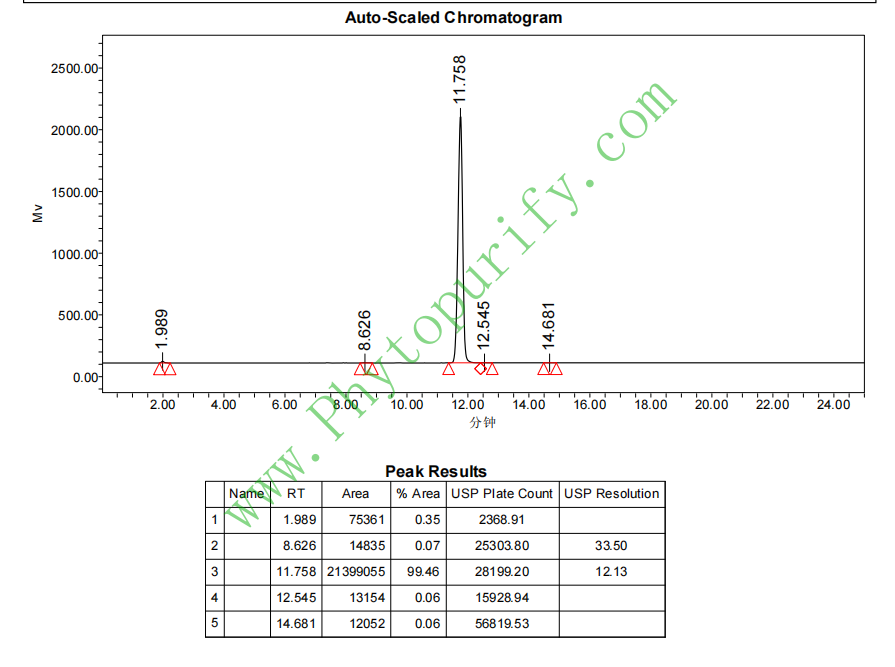
Purity: 95%~99%
Analysis Method: HPLC-DAD or/and HPLC-ELSD
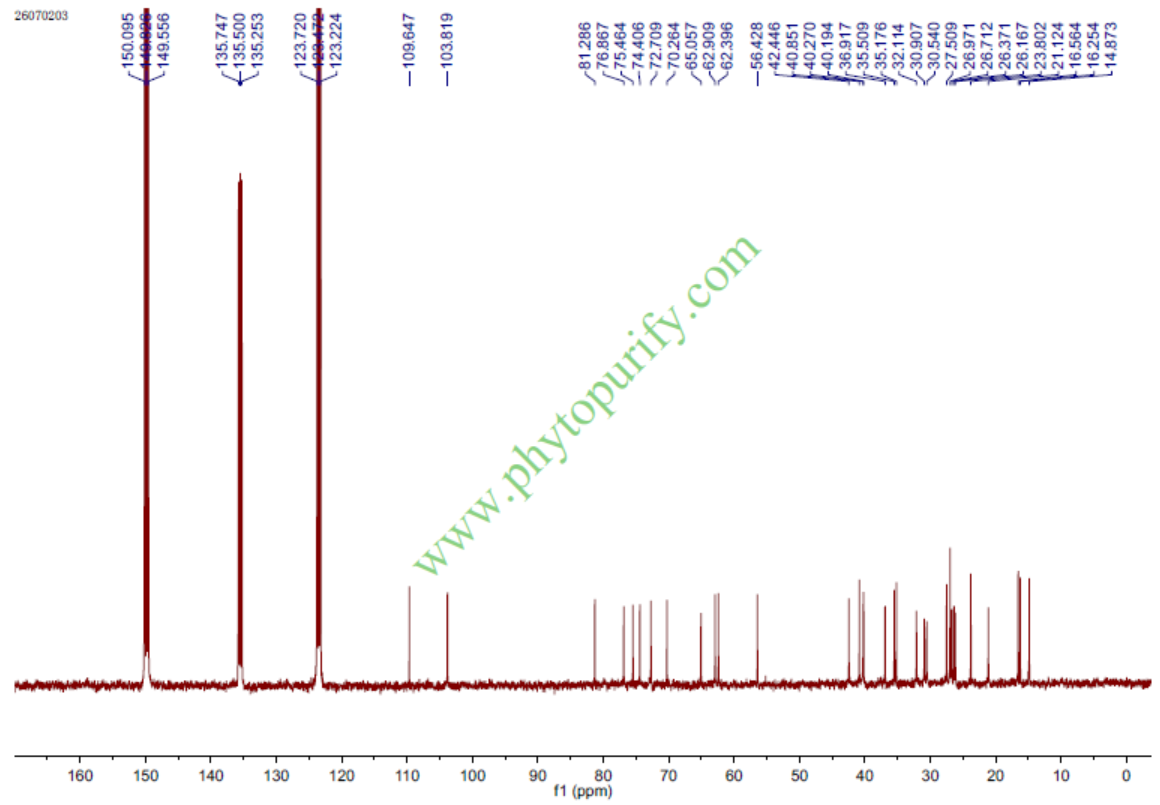
Identification Method: Mass, NMR
Packing: Brown vial or HDPE plastic bottle
Can be supplied from milligrams to grams.
For Reference Standard and R&D, Not for Human Use Directly.
Inquire for bulk scale.
HPLC of Timosaponin A1
NMR of Timosaponin A1
Storage conditions:Short-term storage at 2~8℃, long-term storage at -20 ~ -80℃
Timosaponin A1 is a natural steroidal saponin derived from the traditional Chinese medicine Anemarrhena asphodeloides Bunge, which has attracted much attention in recent years due to its multi-target pharmacological activity. As a natural product, saponin A1 of Anemarrhena asphodeloides shows significant potential in anti inflammation, anti diabetes and metabolic disease regulation, especially its inhibitory effect on 5-lipoxygenase (5-LO), cyclooxygenase-2 (COX-2) and dipeptidyl peptidase 4 (DPP-4), which provides a theoretical basis for its application in the treatment of chronic inflammation and diabetes. This article will provide a systematic review of the chemical structure, physicochemical properties, sources, and extraction methods of saponins A1 from Anemarrhena asphodeloides. It will delve into its pharmacological activity and mechanism of action, evaluate its pharmacological properties and pharmacokinetic characteristics, and look forward to its clinical application prospects.
The chemical formula of Zhimu saponin A1 is C36H58O10, with a molecular weight of 578.7870, and it belongs to the class of steroidal saponins. Its core structure is the steroid mother nucleus, connected by multiple glycosyl side chains, giving it high polarity characteristics. In terms of physical and chemical properties, the LogP value of Zhimu saponin A1 is 3.2807, indicating that it has moderate lipid solubility and is conducive to membrane penetration; The polar surface area (TPSA) is 117.8400 Å ², reflecting its high molecular polarity, which may affect its oral absorption and bioavailability. Low water solubility (0.0047 mg/mL) suggests limited solubility in aqueous phase and may require formulation optimization to improve bioavailability. The low penetration ability of the blood-brain barrier indicates limited distribution in the central nervous system, reducing the potential risk of central neurotoxicity. The hERG channel inhibition experiment showed a negative result, indicating a low risk of cardiac toxicity. The Ames mutagenicity test result is 0.3, indicating a low risk of genotoxicity and a good safety basis.
Zhimu saponin A1 mainly exists in the rhizomes of Anemarrhena asphodeloides Bunge, a plant in the lily family. Zhimu is a traditional Chinese medicinal herb widely used in formulas for clearing heat, moistening dryness, nourishing yin, and reducing fire. Its saponin components are one of its main active ingredients, and Zhimu saponin A1, as a representative steroid saponin, is relatively abundant in content.
The extraction method usually adopts solvent extraction combined with multi-stage separation and purification technology. Traditional extraction often uses ethanol or methanol aqueous solution for reflux extraction of dried rhizomes of Anemarrhena, followed by separation and purification through liquid-liquid distribution, column chromatography (such as silica gel column, reverse phase C18 column), and other methods. In recent years, new technologies such as ultrasound assisted extraction and microwave-assisted extraction have also been applied to improve extraction efficiency and purity. The purified Zhimu saponin A1 can be qualitatively and quantitatively analyzed by high performance liquid chromatography (HPLC) to ensure its purity and inter batch consistency.
Zhimu saponin A1, as an inhibitor of 5-lipoxygenase (5-LO) and cyclooxygenase-2 (COX-2), exhibits significant anti-inflammatory activity. 5-LO and COX-2 are key enzymes involved in the synthesis of inflammatory mediators, catalyzing the production of leukotrienes and prostaglandins, respectively, and participating in the regulation of inflammatory responses. The IC50 of Zhimu saponin A1 for 5-LO is 3.29 µ M, indicating strong enzyme inhibition ability; The IC50 for COX-2 inhibition is 36.43 µ M, indicating moderate inhibitory effect. Animal model studies have shown that Zhimu saponin A1 can significantly alleviate inflammatory reactions, reduce levels of inflammatory factors, inhibit infiltration of inflammatory cells, and has potential anti-inflammatory therapeutic value.
The inhibitory effect of Anemarrhena asphodeloides saponin A1 on dipeptidyl peptidase 4 (DPP-4) (IC50 is 33.25 µ M) provides a molecular basis for its anti diabetes activity. DPP-4 is an important enzyme that regulates insulin secretion and blood glucose homeostasis. Inhibiting DPP-4 can prolong the half-life of intestinal proinsulin, promote insulin secretion, and improve glucose metabolism. In addition to DPP-4, Zhimu saponin A1 also exerts comprehensive regulatory effects by regulating various glucose metabolism related targets such as AMPK, SGLT2, GCK, PPARG, AKT1, IRS1, SLC2A4, PIK3R1, and INSR, improving insulin resistance, promoting glucose uptake and utilization, and lowering blood glucose levels. Both in vivo and in vitro experiments confirmed its hypoglycemic effect on diabetes model animals and its protective effect on pancreatic β cells.
In addition to anti-inflammatory and anti diabetes activities, Anemarrhena asphodeloides saponin A1 also shows certain potential in antioxidant, anti-tumor, neuroprotective and other aspects. It has multi-target and multi pathway pharmacological characteristics by regulating oxidative stress-related signaling pathways, reducing cell damage, inhibiting tumor cell proliferation and migration.
The mechanism of action of Zhimu saponin A1 involves multiple signaling pathways and molecular targets, reflecting its multi-target pharmacological properties.
By inhibiting 5-LO and COX-2, Zhimu saponin A1 reduces the production of inflammatory mediators leukotrienes and prostaglandins, thereby reducing the intensity of the inflammatory response. In addition, it can inhibit the activation of the NF - κ B signaling pathway, reduce the expression of inflammatory factors such as TNF - α, IL-1 β, IL-6, alleviate tissue damage and inflammatory cell infiltration.
The inhibition of DPP-4 by Zhimu saponin A1 prolongs the action time of GLP-1 (glucagon like peptide-1), promotes insulin secretion, and restores beta cell function. It activates the AMPK signaling pathway, enhances cellular energy metabolism, promotes glucose uptake and lipid metabolism. By regulating key targets such as PPAR γ, IRS1, AKT1, etc., insulin signaling is improved and insulin resistance is alleviated. In addition, inhibiting SGLT2 reduces renal glucose reabsorption, promotes urinary glucose excretion, and further lowers blood sugar.
Zhimu saponin A1 enhances cellular antioxidant capacity and protects cells from oxidative damage by regulating the Nrf2/ARE signaling pathway related to oxidative stress. In tumor cells, it induces apoptosis and cell cycle arrest by inhibiting the PI3K/AKT/mTOR signaling pathway, thereby inhibiting tumor growth.
The pharmacological evaluation of Zhimu saponin A1 shows that it has certain potential for drug development. The molecular weight is 578.7870, slightly higher than the recommended upper limit of 500 Da by Lipinski rules, indicating possible oral absorption limitations. The LogP value is 3.2807, which meets the requirements of drug lipophilicity and is conducive to cell membrane penetration. The TPSA is 117.8400, and moderate polarity may affect its penetration ability and bioavailability. Low water solubility suggests the need to improve solubility through formulation technology.
The low permeability of the blood-brain barrier reduces the risk of central nervous system toxicity, but limits its application in central nervous system diseases. The hERG channel inhibition negative and Ames test low mutagenicity results indicate its good safety.
In terms of pharmacokinetics, existing studies have shown that the oral absorption of Zhimu saponin A1 is slow and its bioavailability is low, mainly through intestinal and hepatic metabolism. Widely distributed in the body, the main metabolic pathways include glycosidic bond hydrolysis and corresponding modification of steroid mother nucleus. Excretion is mainly through bile and urine. Further optimization of dosage forms and administration routes is needed in the future to enhance their in vivo exposure and therapeutic efficacy.
As a multi target natural steroidal saponin, Anemarrhena asphodeloides saponin A1 has broad application prospects in the field of anti-inflammatory and anti diabetes. Its effective inhibition of 5-LO, COX-2 and DPP-4 provides a new strategy for the combined treatment of chronic inflammatory diseases and diabetes. Especially in the treatment of diabetes, combined with its regulation of metabolism related targets such as AMPK and PPAR γ, it is expected to achieve multi-dimensional blood glucose control and metabolic improvement.
However, Zhimu saponin A1 still faces many challenges in the clinical translation process, including low water solubility and limited bioavailability, in vivo metabolic complexity, and formulation development difficulties. Future research should focus on formulation improvement (such as nanocarriers, solid dispersions, etc.), pharmacokinetic optimization, and safety evaluation, while conducting systematic preclinical and clinical trials to verify their efficacy and safety.
In addition, the multi-target properties of Zhimu saponin A1 also suggest its potential application value in metabolic syndrome, cardiovascular disease, neurodegenerative diseases, and other fields, which are worth further exploration and research.
As a natural steroidal saponin with multi target pharmacological activity, Anemarrhena asphodeloides saponin A1 shows its therapeutic potential in many diseases such as anti-inflammatory and anti diabetes. Its unique chemical structure and diverse mechanisms of action provide valuable examples for the pharmacological research of natural products. Although its clinical application is still in its infancy, with the continuous improvement of extraction and purification technology, drug design, and formulation process, Zhimu saponin A1 is expected to become an important candidate molecule for the development of new natural medicines. Future research should strengthen the systematic evaluation of its pharmacokinetics, toxicology, and clinical efficacy to promote its transition from laboratory to clinical use and benefit more patients.
