


Product name: Isomangiferin
Synonym name: 4-Glucosyl-1,3,6,7-tetrahydroxyxanthone
Catalogue No.: BP0790
Cas No.: 24699-16-9
Formula: C19H18O11
Mol Weight: 422.342
Botanical Source: Anemarrhena asphodeloides Bge.
Physical Description:
Type of Compound: Xanthones
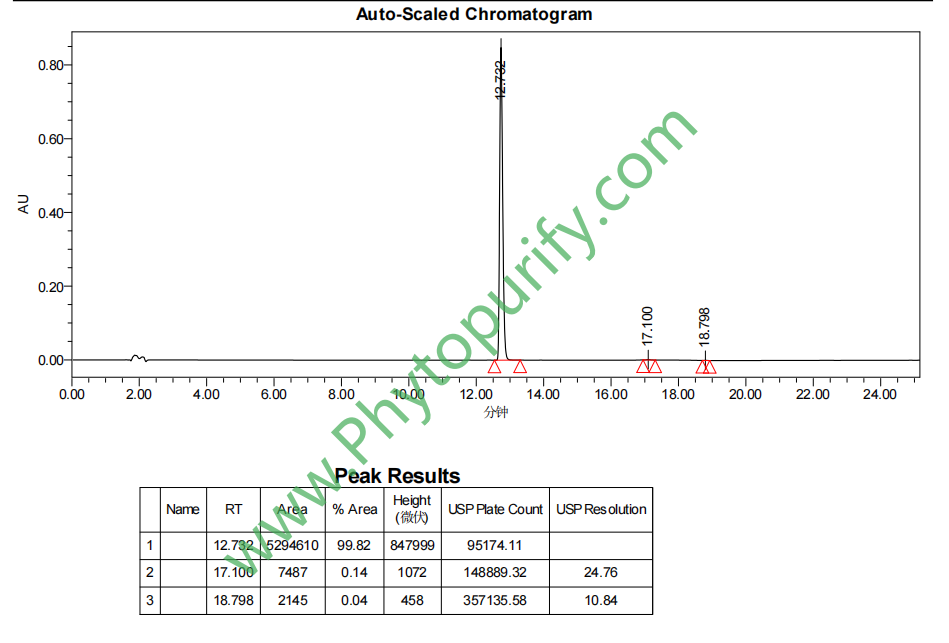
Purity: 95%~99%
Analysis Method: HPLC-DAD or/and HPLC-ELSD
Identification Method: Mass, NMR
Packing: Brown vial or HDPE plastic bottle
Storage: Store in a well closed container, protected from air and light. Put into refrigerate or freeze for long term storage.
Whenever possible, you should prepare and use solutions on the same day. However, if you need to make up stock solutions in advance, we recommend that you store the solution as aliquots in tightly sealed vials at -20℃. Generally, these will be useable for up to two weeks.
The product could be supplied from milligrams to grams
Inquire for bulk scale.
Chengdu Biopurify Phytochemicals Ltd. is a leading company in the research, development, manufacture and marketing of High Quality Phytochemicals and Extracts(especially Active Ingredients from Traditional Chinese Medicine,TCM), Natural Active Pharmaceutical Ingredients worldwide.
The main services:
A. Supply active ingredients and reference standards of TCM, from mgs to kgs scale
B. Custom extraction and purification, target Herb Active Ingredients
C. Custom synthesis and semi-synthesis for Natural Active Ingredients
D. CR(contract research), CM(contract manufacture) and PD(process development) services from lab scale, pilot scale to commercial scale(GMP is also available)
E. TCM compounds library for drug screen,more than 3000 compounds available, many of them are rare and unique.
HPLC of Isomangiferin
Storage conditions:Short-term storage at 2~8℃, long-term storage at -20 ~ -80℃
201.2800
-.2221
-.3941
1.9686
.8008
.2079
Low
70.6346
4.0946
Yes
No
No
No
Yes
No
1.2
Yes
No
Yes
No
Natural products, as an important source of drug discovery, have long played an indispensable role in the human fight against diseases. Flavonoids, as the most widely distributed class of secondary metabolites in nature, have attracted much attention due to their structural diversity and extensive biological activity. Among numerous flavonoids, mangiferin and its isomer isomangiferin have become a research hotspot due to their unique pharmacological properties. Isomangiferin, also known as 1,3,6,7-tetrahydroxyxanthenone-2-C - β - D-glucopyranose, is a naturally occurring compound of xanthenone-C-glucoside. Compared with the more well-known mangiferin, isomangiferin is only structurally different in the connection position of the glucose group, but this subtle difference endows it with unique biological characteristics and pharmacological activity spectrum.
In recent years, with the continuous deepening of research on isomangiferin, its various pharmacological activities have gradually been revealed. From its initial antioxidant, anti-inflammatory and antibacterial effects to its remarkable effects in anti-tumor, promoting fracture healing and improving complications of diabetes in recent years, isomanganin shows great medicinal potential. In particular, its discovery as a vascular endothelial growth factor receptor 2 (VEGFR-2) kinase inhibitor provides a new candidate molecule for the treatment of angiogenesis dependent diseases such as breast cancer. In addition, its regulatory effect on high mobility group protein B1 (HMGB1)/NOD like receptor heat protein domain related protein 3 (NLRP3)/nuclear factor kappa B (NF - κ B) signal pathway reveals its molecular basis in anti-inflammatory and improving diabetes nephropathy. Meanwhile, isomangiferin promotes the migration and osteogenic differentiation of bone marrow mesenchymal stem cells (BMSCs) by activating the adenosine monophosphate activated protein kinase (AMPK)/acetyl CoA carboxylase (ACC) pathway, providing a new therapeutic strategy for fracture healing.
This review aims to systematically summarize the chemical structure, physicochemical properties, plant sources, extraction methods, pharmacological activity, mechanism of action, pharmacological evaluation, and clinical application prospects of isomangiferin, in order to provide comprehensive references for the in-depth research and development of this natural product.
The chemical structure of Isomangiferin (CAS number: 24699-16-9) belongs to the derivatives of Xanthone. Its parent nucleus is 1,3,6,7-tetrahydroxyxanthone, which has one hydroxyl group substituted at positions 1, 3, 6, and 7 of the xanthone skeleton. The key difference between mangiferin and isomangiferin is that the glucose group of isomangiferin is connected to the 2nd carbon atom of the xanthenone nucleus through a C-glycosidic bond, while the glucose group of mangiferin is connected to the 4th carbon atom. This C-glycosidic bond (rather than O-glycosidic bond) endows the molecule with higher chemical stability and resistance to enzymatic hydrolysis, allowing it to maintain activity for a longer period of time in the body's circulation. The molecular formula of isomangiferin is C ₁₉ H ₁₈ O ₁₁, with a molecular weight of 422.3420 g/mol. The multiple phenolic hydroxyl groups in its structure endow it with strong antioxidant activity, effectively scavenging free radicals and chelating metal ions.
In terms of physicochemical properties, isomangiferin exhibits typical flavonoid compound characteristics. Its lipid water partition coefficient (LogP) is -0.2221, indicating strong hydrophilicity and poor lipid solubility. This characteristic is closely related to the presence of multiple polar hydroxyl and sugar moieties in its molecular structure. The polar surface area (TPSA) is as high as 201.2800 Å ², further confirming its high polarity and good water solubility (with a water solubility parameter of 1.9686). Higher water solubility is beneficial for its dissolution and absorption in the gastrointestinal tract, but it may also limit its ability to penetrate cell membranes. Isomangiferin exhibits characteristic absorption peaks under ultraviolet light, which is usually attributed to the conjugated system of its xanthenone parent nucleus. Its chemical stability is good, but it may degrade under strong acid, strong alkali, or high temperature conditions. Overall, the physicochemical properties of isomangiferin provide a basis for its oral administration, but also suggest potential challenges in terms of bioavailability.
Isomangiferin is not an isolated natural product, it is widely present in various plants, especially abundant in Anacardiaceae plants. The most famous source is the fruit, skin, leaves, bark, and roots of mangifera indica L. In addition, isomangiferin is also present in Anemarrhena asphodeloides Bunge, Polygala tenuifolia Willd., Hypericum plants, and some ferns. The content of isomangiferin varies significantly among different plants, different parts, and different growth stages. For example, the content of isomangiferin in mango leaves and bark is usually higher than that in the flesh, while the content in mango kernels is lower. The rhizome of Zhimu is also an important source of isomangiferin.
The method of extracting isomangiferin mainly relies on its polarity characteristics. Traditional extraction methods include solvent extraction, which typically uses ethanol, methanol, or water alcohol mixed solvents as extraction agents. Due to its multiple phenolic hydroxyl groups, isomangiferin is more soluble under alkaline conditions, and therefore alkaline aqueous solutions are sometimes used for extraction. In order to improve extraction efficiency and purity, modern extraction techniques such as ultrasound assisted extraction, microwave-assisted extraction, enzyme assisted extraction, and supercritical fluid extraction have been widely used. Ultrasound and microwave technology significantly improve extraction efficiency by disrupting cell walls and accelerating solvent permeation. Enzyme assisted extraction utilizes cellulase, pectinase, and other enzymes to degrade plant cell walls and release target compounds.
The crude extract after extraction needs to undergo a series of purification steps to obtain high-purity isomangiferin. Common purification technologies include liquid-liquid extraction (such as extraction with ethyl acetate or n-butanol), macroporous adsorption resin column chromatography (such as HPD-100 and D101 resins), silica gel column chromatography, polyamide column chromatography, Sephadex LH-20 column chromatography and preparative high-performance liquid chromatography (Prep-HPLC). Among them, macroporous adsorption resin is widely used for the initial enrichment of isomangiferin due to its advantages of low cost, reusability, and easy operation. Subsequently, by combining silica gel or polyamide column chromatography, impurities can be further removed. Ultimately, isomangiferin monomers with a purity of over 98% can be obtained through preparative HPLC to meet the needs of pharmacological research and drug development.
The pharmacological activity spectrum of isomangiferin is very broad, covering multiple aspects such as anti-tumor, anti-inflammatory, antioxidant, antibacterial and antiviral, promoting bone repair, and improving metabolic diseases.
1. Antitumor activity
Isomangiferin shows significant potential in the field of anti-tumor, especially in the study of breast cancer. Research has shown that isomangiferin is an effective VEGFR-2 kinase inhibitor. VEGFR-2 is the main receptor for vascular endothelial growth factor (VEGF) and plays a central role in tumor angiogenesis. By inhibiting the phosphorylation of VEGFR-2, isomangiferin can block VEGF induced endothelial cell proliferation, migration, and luminal formation, thereby inhibiting tumor angiogenesis. In the breast cancer cell model, isomanganin can not only inhibit tumor growth, but also significantly reduce the occurrence of lung metastasis and bone metastasis. In addition, it can directly induce apoptosis of breast cancer cells, and its mechanism may be related to activating caspase cascade reaction, up regulating apoptosis promoting protein Bax, down regulating anti apoptosis protein Bcl-2, and inhibiting PI3K/Akt/mTOR signaling pathway. In addition to breast cancer, isomanganin also showed certain cytotoxicity to lung cancer, liver cancer, colon cancer and other cancer cell lines.
2. Anti inflammatory and antioxidant activity
Inflammation and oxidative stress are the common pathological basis of many chronic diseases (such as diabetes, cardiovascular diseases, neurodegenerative diseases). Isomangiferin has strong anti-inflammatory and antioxidant effects. In cellular and animal models, isomangiferin can significantly inhibit the production of pro-inflammatory cytokines (such as TNF - α, IL-1 β, IL-6) and nitric oxide (NO) in macrophages induced by lipopolysaccharide (LPS). Its anti-inflammatory mechanism is closely related to the inhibition of the HMGB1/NLRP3/NF - κ B signaling pathway. HMGB1 is a damage associated molecular pattern (DAMP) molecule that can activate NLRP3 inflammasome, promote the maturation and release of IL-1 β, and activate the NF - κ B pathway, leading to an amplification of the inflammatory cascade. Isomangiferin effectively controls the inflammatory response by inhibiting the release and activity of HMGB1, blocking the assembly and activation of NLRP3 inflammasomes, and inhibiting the nuclear translocation of NF - κ B. In terms of antioxidant properties, isomangiferin can directly scavenge various free radicals (such as DPPH, ABTS+, hydroxyl radicals) and chelate transition metal ions (such as Fe ² ⁺, Cu ² ⁺), reducing the reactive oxygen species (ROS) produced by the Fenton reaction. At the same time, it can activate the nuclear factor E2 related factor 2 (NRF2) signaling pathway, upregulate the expression of a series of antioxidant enzymes, such as superoxide dismutase (SOD1, SOD2), catalase (CAT), glutathione peroxidase 1 (GPX1), and heme oxygenase 1 (HMOX1), thereby enhancing the endogenous antioxidant defense ability of cells.
3. Anti diabetes and its complications
Isomangiferin shows a good prospect in the treatment of diabetes and its complications. Studies have shown that isomanganin can improve the renal function indicators of diabetes mice, such as reducing the levels of urine protein, blood creatinine and urea nitrogen, reducing glomerulosclerosis and tubulointerstitial fibrosis. Its mechanism of action is mainly attributed to its anti-inflammatory effect, that is, by inhibiting the HMGB1/NLRP3/NF - κ B pathway, it can reduce the inflammatory reaction in diabetes nephropathy. In addition, isomangiferin can activate the AMPK pathway, improve insulin resistance, promote glucose uptake and utilization, and thus lower blood glucose levels. It can also inhibit aldose reductase activity, reduce the activation of polyol pathways, and thus alleviate cell damage caused by hyperglycemia.
4. Antibacterial and antiviral activity
Isomangiferin has inhibitory effects on various bacteria and viruses. In vitro experiments have shown that it has antibacterial activity against common pathogenic bacteria such as Staphylococcus aureus, Escherichia coli, and Pseudomonas aeruginosa. Its mechanism may be related to the destruction of bacterial cell membrane integrity and inhibition of bacterial nucleic acid or protein synthesis. In terms of antiviral activity, isomangiferin has a significant inhibitory effect on type 1 herpes simplex virus (HSV-1), which can inhibit the replication and transmission of the virus in host cells. In addition, studies have reported that it has certain inhibitory activity against influenza virus and hepatitis B virus.
5. Promote bone repair
Isomangiferin has demonstrated unique application value in bone tissue engineering and fracture healing. Research has found that isomangiferin can promote the migration and osteogenic differentiation of BMSCs. BMSCs are key cells in bone repair, and their migration to the fracture site and differentiation into osteoblasts are the limiting steps in fracture healing. Isomangiferin activates the AMPK/ACC signaling pathway, promotes the proliferation of BMSCs and the expression of osteogenic differentiation markers such as Runx2, Osterix, and osteocalcin, and increases alkaline phosphatase (ALP) activity and mineralization nodule formation. At the same time, it can significantly reduce the apoptosis of BMSCs and the production of ROS, protecting cells from oxidative stress damage and creating a favorable microenvironment for fracture healing. Animal experiments have confirmed that local or systemic administration of isomangiferin can significantly accelerate the healing process of rat fracture models, increase callus volume and bone density.
The pharmacological activity of isomangiferin is the result of multi-target and multi pathway synergistic effects. Its core mechanism of action can be summarized as follows:
1. Inhibit VEGFR-2 kinase activity
Isomangiferin can directly bind to the ATP binding site of VEGFR-2, competitively inhibiting the binding of ATP to receptors, thereby blocking the self phosphorylation of VEGFR-2 and the activation of downstream signaling pathways, including Ras/Raf/MEK/ERK and PI3K/Akt/mTOR pathways. This leads to obstruction of endothelial cell proliferation, migration, and lumen formation, ultimately inhibiting tumor angiogenesis. This mechanism is the core of its anti-tumor activity.
2. Regulating the HMGB1/NLRP3/NF - κ B inflammatory signaling axis
Isomangiferin blocks the binding of HMGB1 to TLR4 or RAGE receptors by directly binding or inhibiting its release. This further inhibits the assembly and activation of NLRP3 inflammasomes, reducing the activation of caspase-1 and the maturation of IL-1 β. Meanwhile, isomangiferin can also inhibit the phosphorylation and degradation of I κ B α, prevent the translocation of NF - κ B p65 subunit to the nucleus, and thus reduce the transcription of various pro-inflammatory genes. This mechanism is the basis of its anti-inflammatory and improvement of diabetes nephropathy.
3. Activate the NRF2/ARE antioxidant pathway
Isomangiferin can promote the dissociation of transcription factor NRF2 and Keap1, stabilizing them and translocating them into the nucleus. In the nucleus, NRF2 binds to antioxidant response elements (ARE) and initiates the expression of a series of downstream antioxidant enzyme genes, including SOD1, SOD2, CAT, GPX1, HMOX1, etc. These enzymes work together to effectively eliminate excess ROS in cells, alleviate oxidative stress damage, and protect cells from oxidative damage. This is the main molecular mechanism of its antioxidant activity.
4. Activate the AMPK/ACC signaling pathway
AMPK is a key sensor for cellular energy metabolism. Isomangiferin can activate AMPK and phosphorylate it. Activated AMPK subsequently phosphorylates and inhibits ACC, thereby reducing fatty acid synthesis and promoting fatty acid oxidation. In addition, the activation of AMPK can also promote the translocation of glucose transporter 4 (GLUT4), increase glucose uptake, and inhibit the mTOR signaling pathway, thus playing the role of anti diabetes and promoting osteogenic differentiation of BMSCs. In BMSCs, activation of AMPK is a key upstream event that promotes their migration and osteogenic differentiation.
5. Directly induce cell apoptosis
In addition to indirectly inhibiting tumor growth by suppressing angiogenesis, isomangiferin can also directly act on tumor cells and induce their apoptosis. This involves the mitochondrial pathway (endogenous pathway) and the death receptor pathway (exogenous pathway). Isomangiferin can upregulate the Bax/Bcl-2 ratio, leading to a decrease in mitochondrial membrane potential, release of cytochrome c, activation of caspase-9 and caspase-3, ultimately resulting in cell apoptosis. Meanwhile, it can also upregulate the expression of death receptors (such as Fas) and activate caspase-8.
Developing natural products into clinical drugs requires a systematic evaluation of their pharmacological properties. The pharmacological parameters of isomangiferin indicate its potential for development, but it also faces some challenges.
1. Physical and chemical properties and drug like properties
The molecular weight of isomangiferin is 422.34 Da, slightly higher than the limit of molecular weight less than 500 in the "Five Principles of Similar Drugs". Its LogP is -0.2221, indicating strong hydrophilicity and poor lipid solubility. The TPSA reached 201.28 Å ², far exceeding the threshold of 140 Å ², indicating that its oral absorption may be poor and difficult to penetrate the cell membrane. Good water solubility (1.9686), beneficial for formulation development. Overall, the physicochemical properties of isomangiferin deviate from the ideal range of traditional oral drugs and belong to Class III or IV drugs in the Biopharmaceutical Classification System (BCS), namely high solubility, low permeability or low solubility, low permeability.
2. Pharmacokinetic characteristics
At present, research on the pharmacokinetics of isomangiferin is relatively limited, but some key characteristics have been revealed in previous studies. After oral administration, the absorption of isomangiferin is poor and its absolute bioavailability is low. This is mainly attributed to its high polarity and low permeability. In the body, isomangiferin is mainly distributed in plasma, liver, and kidneys. Its metabolic pathways mainly include glucuronidation and sulfation combined reactions, forming phase II metabolites. These metabolites may be excreted through bile or urine. The low blood-brain barrier permeability of isomangiferin limits its application in central nervous system diseases, but also reduces the risk of central neurotoxicity. Its half-life is relatively short and may require frequent administration to maintain effective blood drug concentration.
3. Safety evaluation
Preliminary safety evaluation shows that isomangiferin has good safety. The hERG inhibition test result is negative, indicating a low risk of cardiac toxicity. The Ames test result is 1.2 (usually considered negative if less than 2), indicating a low risk of mutagenicity. In animal experiments, no significant acute toxicity reactions were observed when a certain dose of isomangiferin was orally administered. However, long-term toxicity and reproductive toxicity studies are not yet sufficient and require further evaluation.
4. Strategies for improving drug properties
Given the bottleneck of low bioavailability of isomangiferin, future strategies for improving its pharmacological properties may include: ① designing prodrugs, such as esterifying or phosphorylating their phenolic hydroxyl groups to enhance lipid solubility, promote absorption, and convert them into active parent drugs in vivo; ② Develop new drug delivery systems, such as liposomes, nanoparticles, phospholipid complexes, or self microemulsifying drug delivery systems, to improve their solubility and permeability; ③ Combined with absorption enhancers such as piperine, it inhibits intestinal metabolism and efflux.
As a multi-target natural product, isomangiferin has shown broad application prospects in multiple therapeutic fields.
1. Anti tumor therapy
In view of its dual role as a VEGFR-2 inhibitor and directly inducing tumor cell apoptosis, isomanganin is expected to be developed as a new anti-tumor drug, especially suitable for angiogenesis dependent tumors such as breast cancer and lung cancer. It can be used as a monotherapy or in combination with chemotherapy drugs (such as paclitaxel, cisplatin) or immune checkpoint inhibitors to enhance efficacy and overcome drug resistance. However, its low bioavailability is the main obstacle to clinical translation. Developing efficient and low toxicity nano formulations or prodrugs is the key to pushing them into clinical practice.
2. diabetes nephropathy and other inflammatory diseases
Isomangiferin plays an anti-inflammatory role by inhibiting the HMGB1/NLRP3/NF - κ B pathway, making it a potential candidate drug for the treatment of chronic inflammatory diseases such as diabetes nephropathy, rheumatoid arthritis, inflammatory bowel disease, etc. Its good water solubility and safety provide the basis for its oral or injection administration. More preclinical studies are needed in the future to clarify its efficacy and optimal dosing regimen in different inflammatory models.
3. Fracture healing and bone tissue engineering
The unique role of isomangiferin in promoting the migration and osteogenic differentiation of BMSCs makes it of significant application value in the field of orthopedics. It can be developed as a local implant to promote fracture healing (such as a scaffold made of composite with biomaterials) or as a systemic medication. Isomangiferin may also have therapeutic effects on diseases such as osteoporosis and bone defects. Combining its antioxidant and anti apoptotic properties, it is also worth further research in protecting bone cells and delaying bone aging.
4. Antioxidant and anti-aging
The powerful antioxidant activity of isomangiferin activates the NRF2 pathway and directly scavenges free radicals, making it potentially applicable in anti-aging, cardiovascular protection, neuroprotection, and other fields. It can be used as a dietary supplement or functional food ingredient to prevent oxidative stress-related diseases.
Outlook:
Although isomangiferin has broad prospects, it still faces many challenges from laboratory to clinical practice. Future research directions should focus on: ① Deeply elucidating its pharmacokinetic characteristics, especially the complete processes of absorption, distribution, metabolism, and excretion; ② Develop efficient drug delivery systems to address the bottleneck of low bioavailability; ③ Conduct a systematic toxicological evaluation, including long-term toxicity and reproductive toxicity; ④ Conduct multicenter, randomized, double-blind clinical trials to validate its efficacy and safety in specific diseases; ⑤ Utilizing structural biology and computer-aided drug design to optimize its molecular structure, enhance targeting and activity. With the continuous deepening of research, isomangiferin is expected to be transformed from a natural product into an innovative drug with clinical value.
As an isomer of mangiferin, isomangiferin exhibits a unique pharmacological activity spectrum beyond its homologs due to its unique xanthenone-C-glucoside structure. From inhibiting the anti-tumor effect of VEGFR-2 kinase, to regulating the anti-inflammatory effect of HMGB1/NLRP3/NF - κ B pathway, to activating the AMPK/ACC pathway to promote bone repair, the multi-target mechanism of action of isomangiferin makes it a highly promising natural lead compound for development. Although the low bioavailability caused by its physicochemical properties is currently the main obstacle to clinical translation, this challenge is expected to be overcome through modern medicinal chemistry and pharmaceutical methods. The in-depth study of isomanganin not only enriches our understanding of the chemical diversity and biological activity of natural products, but also provides valuable molecular templates for the development of new drugs to treat tumors, inflammatory diseases, diabetes complications and bone damage. In the future, with further analysis of its mechanism of action and advances in drug delivery technology, isomangiferin and its derivatives are expected to play an important role in clinical applications.
