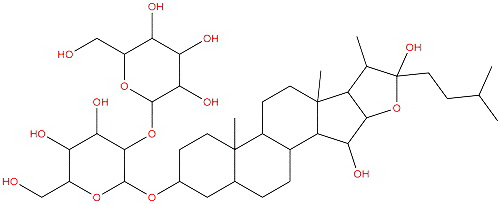


Product name: Anemarrhenasaponin I
Synonym name:
Catalogue No.: BP3918
Cas No.: 163047-21-0
Formula: C39H66O14
Mol Weight: 758.943
Botanical Source:
Physical Description:
Type of Compound:
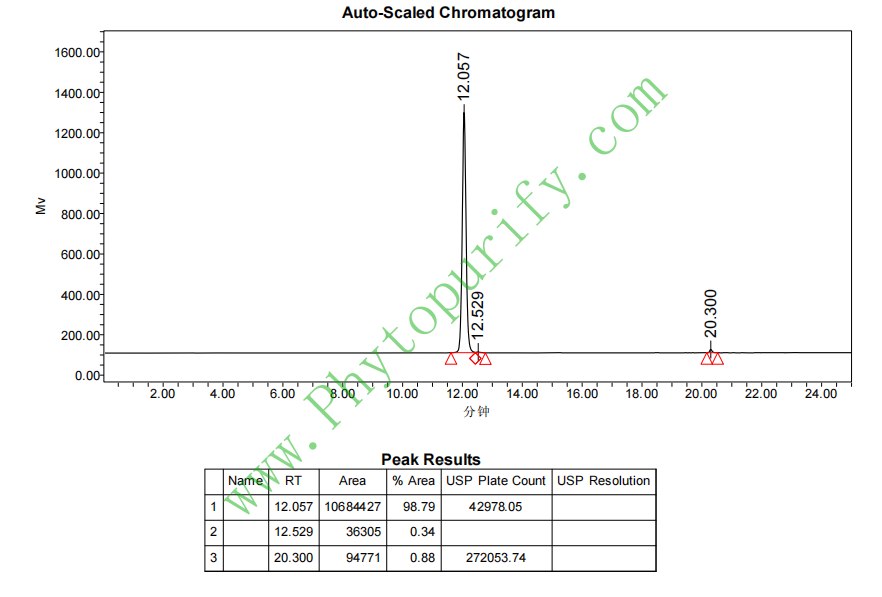
Purity: 95%~99%
Analysis Method: HPLC-DAD or/and HPLC-ELSD
Identification Method: Mass, NMR
Packing: Brown vial or HDPE plastic bottle
Storage: Store in a well closed container, protected from air and light. Put into refrigerate or freeze for long term storage.
Whenever possible, you should prepare and use solutions on the same day. However, if you need to make up stock solutions in advance, we recommend that you store the solution as aliquots in tightly sealed vials at -20℃. Generally, these will be useable for up to two weeks.
The product could be supplied from milligrams to grams
Inquire for bulk scale.
For Reference Standard and R&D, Not for Human Use Directly.
HPLC of Anemarrhenasaponin I
Storage conditions:Short-term storage at 2~8℃, long-term storage at -20 ~ -80℃
228.2200
1.9285
1.9285
.1258
.6173
.7008
Low
59.7749
5.8744
No
No
No
No
No
No
0.0
Yes
No
No
No
Natural products, as an important source of drug discovery, play an irreplaceable role in the long struggle between humans and diseases. From the practical experience of traditional medicine to the molecular mechanism analysis of modern pharmacology, numerous natural compounds derived from plants, animals, and microorganisms have been successfully transformed into clinical therapeutic drugs. Natural products and their derivatives continue to demonstrate unique therapeutic potential in areas such as cardiovascular disease, inflammatory diseases, and metabolic diseases. Among them, it originates from the traditional Chinese medicine Zhimu(Anemarrhena asphodeloides The steroidal saponins of Bge have attracted widespread attention due to their diverse biological activities, particularly their significant regulatory effects on the cardiovascular system and inflammatory response.
Zhimu is a perennial herbaceous plant belonging to the Liliaceae family. Its rhizome is a commonly used herb in traditional Chinese medicine for clearing heat, purging fire, nourishing yin, and moistening dryness. According to traditional Chinese medicine theory, the nature of cicadas is bitter, sweet, and cold, and they return to the meridians of the lungs, stomach, and kidneys. They have the effects of clearing heat, purging fire, generating fluids, and moistening dryness. They are commonly used to treat external heat diseases, high fever, restlessness, cough caused by lung heat, bone steaming, hot flashes, internal heat, and constipation caused by intestinal dryness. Modern pharmacological research has confirmed that the extract of Anemarrhena asphodeloides and its active ingredients have various pharmacological effects such as anti-inflammatory, antiplatelet aggregation, anti-tumor, hypoglycemic, and improvement of Alzheimer's disease. The chemical composition of Zhimu is complex, mainly including steroidal saponins, benzophenones (such as mangiferin and isomangiferin), lignans, flavonoids, and polysaccharides. Among them, steroidal saponins are considered to be the most characteristic group of active ingredients in Anemarrhena asphodeloides, including Anemarrhenasaponin A series (such as A-I, A-II, A-III), Anemarrhenasaponin B series (such as B-I, B-II), and Anemarrhenasaponin I, which is the focus of this article.
Anemarrhenasaponin I is an important steroid saponin monomer isolated and identified from Anemarrhena in recent years. Its chemical structure is unique and belongs to the class of furostane saponins, with a complex molecule composed of a spirostane skeleton and multiple sugar units. Preliminary pharmacological activity screening revealed that Zhimu saponin I has a significant inhibitory effect on platelet aggregation, indicating its potential application value in the prevention and treatment of thrombotic diseases. In addition, with the deepening of research, its activities in anti-inflammatory, analgesic, neuroprotective and other aspects have gradually been revealed. Especially its anti-inflammatory effect involves the regulation of multiple key inflammatory signaling pathways and targets such as IL-6, STAT3, TNF, NF - κ B, etc., showing the characteristics of multi-target and multi pathway effects, which is highly consistent with the current concept of pursuing "multi-target therapy" in drug development.
This article aims to comprehensively review the research progress of Zhimu Saponin I, covering its chemical structure and physicochemical properties, plant sources and extraction methods, pharmacological activity research, mechanism of action and molecular targets, pharmacological evaluation and pharmacokinetic characteristics, and prospects for its clinical application prospects. Through a systematic review and analysis of existing literature, the aim is to provide comprehensive and professional references for the in-depth research and future development of Zhimu Saponin I.
Anemarrhenasaponin I is a naturally occurring steroid saponin, and its chemical structure belongs to the Furostanol type saponin. The basic skeleton of this type of saponin is a steroid nucleus with 27 carbon atoms, and its C-17 side chain is an oxygen-containing five membered furan ring (F ring). The C-22 position is usually a semiketal structure, and the C-26 position is often connected to a sugar group to form a disaccharide chain structure. The precise structure of Zhimu saponin I has been confirmed by modern spectroscopic techniques such as NMR and MS. There are usually multiple hydroxyl substituents on the steroid nucleus, such as C-2, C-3, C-5, C-6, etc. The presence of these hydroxyl groups not only increases the polarity of the molecule, but also provides connecting sites for subsequent glycosylation. The sugar chain of Zhimu saponin I is usually composed of multiple monosaccharide units, including common sugar groups such as D-glucose, D-galactose, L-rhamnose, etc., which are connected to the C-3 and/or C-26 positions of the steroid nucleus through β - glycosidic bonds. This complex sugar chain structure is a key factor determining its physicochemical properties, biological activity, and pharmacokinetic behavior.
From the perspective of physical and chemical properties, the molecular formula of Zhimu saponin I is C ∝₉ H ₆₆ O ₁₅, with a molecular weight (MW) of 758.9430 Da. Its lipid water partition coefficient (LogP) is 1.9285, which is a relatively moderate value, indicating that the compound has a certain degree of lipophilicity and can penetrate biological membranes to a certain extent, but also has considerable hydrophilicity, mainly due to the numerous hydroxyl and sugar units in its molecule. The topologically polar surface area (TPSA) is as high as 228.2200 Å ², far exceeding the recommended upper limit of 140 Å ² for oral medications. A high TPSA value indicates that the molecule has a large number of hydrogen bond donors and acceptors, which is typically associated with poor oral absorption and lower membrane permeability. The water solubility data (0.1258 mg/mL) further confirms its poor water solubility, which may be one of the key factors limiting its in vivo bioavailability. In addition, the predicted results showed that the blood-brain barrier (BBB) penetration ability of Zhimu saponin I was relatively low, indicating that it may face challenges in exerting central nervous system effects, but it may also mean that its peripheral effects are more prominent and the risk of central nervous system related side effects is lower. The prediction result of hERG inhibition is' no ', indicating a low risk of inducing QT interval prolongation and arrhythmia in the heart, which is a positive pharmacological indicator. The Ames test result is 0.0, indicating that it did not show significant mutagenicity in the standard bacterial recovery mutation test, and the preliminary safety is good.
Based on its chemical structure and physicochemical properties, Zhimu saponin I is a typical natural steroidal saponin, characterized by high molecular weight, high polarity, poor water solubility, and low membrane permeability. These properties determine that its oral bioavailability may not be high, and traditional oral administration methods may be difficult to achieve ideal therapeutic effects. Therefore, in future drug development, it is necessary to explore new drug delivery systems (such as nanoliposomes, phospholipid complexes, microemulsions, etc.) or structural modifications (such as prodrug design, glycosylation modification, etc.) to improve their pharmacokinetic properties and fully exert their pharmacological activity.
The main plant source of Zhimu saponin I is the Liliaceae plant Zhimu(Anemarrhena asphodeloides Dry rhizomes of Bge. Zhimu is mainly distributed in China, Korea, Japan, Mongolia and other places. In China, it is mainly produced in Hebei, Shanxi, Shaanxi, Inner Mongolia and other places. Among them, the "Xiling Zhimu" produced in Yixian, Hebei has the best quality. The rhizome of Zhimu is thick and flat cylindrical in shape, with longitudinal grooves and segments on the surface, hard in texture, and yellow white in cross-section. Traditional harvesting and processing usually take place in the spring and autumn seasons, where the roots and sediment are removed and dried in the sun, commonly known as "Mao Zhi Mu"; Or peel off the outer skin while fresh and dry it in the sun, commonly known as "cicada meat". The content of Zhimu saponin I in the rhizome of Zhimu is influenced by various factors, including origin, harvesting time, growth period, processing method, and storage conditions. Generally speaking, the content of saponins in the rhizomes of Anemarrhena chinensis harvested in autumn is relatively high.
The extraction and purification of saponins I from Ganoderma lucidum usually follow the classic process of natural product chemistry, which includes three main stages: extraction, separation, and purification.
Extraction stage Given that Zhimu saponin I is a highly polar steroid saponin, traditional extraction methods often use polar solvents for extraction. The most commonly used solvents are aqueous solutions of ethanol or methanol, such as 70% -80% ethanol. The extraction methods include:
1. reflux extraction Heat and reflux the powder of Zhimu rhizome with a certain concentration of ethanol for extraction, usually 2-3 times for 1-2 hours each time. This method has a high extraction efficiency, but high temperatures may lead to the degradation of some thermosensitive components.
2. Percolation method Fill the medicinal powder into a percolator and slowly percolate it with ethanol solution. This method operates at a lower temperature, which is beneficial for protecting the active ingredients, but it is time-consuming.
3. Ultrasonic assisted extraction method Utilizing the cavitation effect of ultrasound to accelerate solvent penetration and component dissolution can significantly shorten extraction time, improve extraction efficiency, and be easy to operate.
4. Microwave assisted extraction method Using microwave energy for heating, the internal water of medicinal herbs evaporates, destroys cell walls, and promotes the release of active ingredients. This method has fast extraction speed and high efficiency, but the equipment cost is relatively high.
After the extraction solution is concentrated under reduced pressure and the solvent is recovered, the crude extract of total saponins is obtained.
Separation and Purification Stage The crude extract of total saponins is complex in composition and contains a large amount of impurities such as sugars, pigments, and lipids. Further separation and purification are needed to obtain high-purity monomers of Anemarrhena saponins I. Common separation and purification techniques include:
1. Solvent Extraction Method Use solvents of different polarities (such as petroleum ether, ethyl acetate, n-butanol, etc.) to perform liquid-liquid extraction on the crude extract of total saponins. Zhimu saponin I is mainly enriched in the n-butanol extraction layer, which can remove most of the lipid soluble and water-soluble impurities.
2. Macroporous adsorption resin column chromatography This is one of the most commonly used methods for separating and purifying saponin components. Load the n-butanol extract onto a macroporous adsorption resin column (such as D101, AB-8, HPD100, etc.), and first elute with a gradient of water and different concentrations of ethanol (such as 10%, 30%, 50%, 70%, 95%). Zhimu saponin I is usually enriched in the 30% -70% ethanol elution site. This method has a large sample load, low cost, and is suitable for industrial production.
3. Silica gel column chromatography Further separate the saponin fractions enriched with macroporous resin using silica gel column chromatography. Usually, chloroform methanol water (such as 8:2:0.2, 7:3:0.5, etc.) or dichloromethane methanol water systems are used for gradient elution. Multiple fractions can be obtained by combining the same spots through thin-layer chromatography (TLC) detection.
4. High performance liquid chromatography (HPLC)For saponin isomers with very similar structures, conventional column chromatography is difficult to completely separate them. At this point, preparative HPLC becomes the key means to obtain high-purity monomers (purity>98%). Typically, a reverse phase C18 column is used, with acetonitrile water or methanol water systems as the mobile phase, to achieve precise separation of target compounds through optimized gradient programs.
5. High Speed Counter Current Chromatography (HSCCC)This is a chromatographic technique based on the liquid-liquid distribution principle, which does not require a solid stationary phase and avoids irreversible adsorption of the sample on the column. It is particularly suitable for the separation of saponin components. Choosing the appropriate solvent system (such as n-butanol ethyl acetate water, etc.) is the key to successful separation.
In summary, the extraction and separation of Zhimu saponin I is a multi-step, multi technology combined process. From traditional solvent extraction to modern chromatographic separation techniques, each step aims to improve the yield and purity of the target compound. In the future, with the promotion of green chemistry concepts, more environmentally friendly and efficient extraction and separation technologies (such as supercritical fluid extraction, enzyme assisted extraction, etc.) are expected to be applied in the preparation of saponins I from Anemarrhena.
The pharmacological activity research of Zhimu saponin I has been one of the hotspots in the field of natural products in recent years. Its range of action is wide, especially in anti-inflammatory, antiplatelet aggregation, analgesic, and neuroprotective aspects, showing significant activity.
1. Antiplatelet aggregation effect
This is one of the earliest reported and most core pharmacological activities of Zhimu saponin I. Research has confirmed that saponins I from Anemarrhena can significantly inhibit platelet aggregation in rabbits and humans induced by various inducers such as adenosine diphosphate (ADP), collagen, arachidonic acid (AA), and thrombin in vitro. Its mechanism of action may be related to inhibiting the mobilization of calcium ions (Ca ² ⁺) in platelets, regulating the levels of cyclic nucleotides (cAMP/cGMP), inhibiting the production of thromboxane A2 (TXA2), and affecting the expression of platelet membrane glycoproteins. This broad-spectrum antiplatelet aggregation has potential development value in the prevention and treatment of atherosclerosis, myocardial infarction, stroke and other thrombotic diseases.
2. Anti inflammatory effect
Inflammation is the common pathological basis of various diseases. Research has shown that saponins from Anemarrhena chinensis exhibit strong anti-inflammatory activity in various inflammatory models. In a macrophage model stimulated by lipopolysaccharide (LPS), saponins I from Anemarrhena can significantly inhibit the production of pro-inflammatory cytokines such as tumor necrosis factor - α (TNF - α), interleukin-6 (IL-6), and interleukin-1 β (IL-1 β). In animal models, Zhimu saponin I has a significant inhibitory effect on acute inflammation models such as xylene induced ear swelling in mice and carrageenan induced paw swelling in rats. In addition, in chronic inflammation models such as ulcerative colitis models, saponins I from Anemarrhena can also alleviate inflammatory damage to colon tissue and reduce inflammation scores.
3. Analgesic effect
Zhimu saponin I also showed certain analgesic activity. In the classic acetic acid writhing test and hot plate test, Zhimu saponin I can significantly reduce the number of writhing movements or prolong the latent period of foot licking in mice, indicating its dual analgesic effects in both peripheral and central nervous systems. Its analgesic mechanism may be closely related to anti-inflammatory effects, by inhibiting the release of inflammatory mediators and reducing inflammatory pain. In addition, regulation of transient receptor potential (TRP) channels such as TRPV1 and TRPA1 may also be one of the important mechanisms underlying their analgesic effects.
4. Neuroprotective effect
Since Anemarrhena asphodeloides is commonly used in traditional medicine to treat "thirst" (diabetes) and its complications, and diabetes is an important risk factor for cognitive dysfunction and neurodegenerative diseases, the neuroprotective effect of Anemarrhena asphodeloides saponin I has also attracted attention. Preliminary studies have found that saponins I from Anemarrhena can inhibit the neurotoxicity induced by β - amyloid protein (A β), reduce the production of reactive oxygen species (ROS), and inhibit cell apoptosis. In animal models, it may improve the cognitive function of diabetes rats by regulating inflammatory reaction and oxidative stress in the brain. However, due to its low BBB penetration, the specific mechanism and in vivo effects of its neuroprotective effect still need further in-depth research.
5. Other pharmacological effects
In addition to the main activities mentioned above, studies have also found that saponins I from Anemarrhena chinensis may have other pharmacological effects. For example, there are reports indicating that it has certain anti-tumor activity and can inhibit the proliferation of certain tumor cells; In terms of metabolism, it may have a certain regulatory effect on glucose and lipid metabolism. But these studies are still in the preliminary stage and require more experimental evidence to support them.
The pharmacological activity of Zhimu saponin I is the result of multi-target and multi pathway synergistic effects. Its mechanism of action mainly revolves around two core functions: anti-inflammatory and antiplatelet aggregation, and is interrelated with other activities.
1. Anti inflammatory mechanism and molecular targets
The anti-inflammatory effect of Zhimu saponin I is mainly achieved through the regulation of multiple inflammatory signaling pathways.
* NF - κ B signaling pathway Nuclear factor kappa B (NF - κ B) is the core transcription factor in inflammatory response. Zhimu saponin I can inhibit the activity of I κ B kinase (IKBKB), prevent the phosphorylation and degradation of I κ B α, and thus inhibit the nuclear translocation and transcriptional activity of NF - κ B. This directly leads to downregulation of downstream pro-inflammatory genes, such as those encoding TNF - α, IL-6, IL-1 β, inducible nitric oxide synthase (NOS2), cyclooxygenase-2 (PTGS2), etc. RELA (p65) is a key subunit of the NF - κ B complex, and its inhibition of activity is an important link in the anti-inflammatory effect of saponins I from Anemarrhena.
* STAT3 signaling pathway Signal transducer and activator of transcription factor 3 (STAT3) plays a crucial role in inflammation and immune responses. Zhimu saponin I can inhibit the phosphorylation of STAT3 induced by cytokines such as IL-6 (Tyr705 site), thereby blocking the dimerization and nuclear translocation of STAT3, and inhibiting the expression of its target genes such as IL-6 and vascular endothelial growth factor (VEGF). IL-6 is both an upstream activator and a downstream target gene of STAT3. The dual inhibition of the IL-6/STAT3 pathway by saponins I from Anemarrhena henryi forms a negative feedback regulation, effectively suppressing the cascade amplification of inflammation.
* Inflammasome pathway Cysteine containing aspartic acid protease 1 (CASP1) is a key effector molecule of inflammasomes, such as NLRP3 inflammasome. After activation of inflammasomes, CASP1 is cleaved and activated, which in turn cleaves pro-IL-1 β and pro-IL-18, producing mature IL-1 β and IL-18, and inducing cell pyroptosis. Research has shown that saponins I from Anemarrhena chinensis may exert anti-inflammatory effects by inhibiting the activity of CASP1, reducing the maturation and secretion of IL-1 β.
* TRP channel Transient receptor potential (TRP) channels, particularly TRPV1 and TRPA1, are key molecules involved in pain and neurogenic inflammation. They can be activated by various inflammatory mediators such as prostaglandins, bradykinin, acid, heat, etc., causing Ca ² ⁺ influx, triggering pain signals and the release of neuropeptides such as substance P and calcitonin gene-related peptides, thereby exacerbating inflammation. Zhimu saponin I may exert dual analgesic and anti-inflammatory effects by directly or indirectly inhibiting the activity of TRPV1 and TRPA1.
* Arachidonic acid metabolic pathway Cyclooxygenase-1 (PTGS1/COX-1) and cyclooxygenase-2 (PTGS2/COX-2) are key enzymes involved in the metabolism of arachidonic acid into prostaglandins (PGs) and thromboxanes (TXs). Zhimu saponin I can inhibit the activity of PTGS1 and PTGS2, reduce the production of inflammatory mediators such as prostaglandin E2 (PGE2) and TXA2, which explains its anti-inflammatory effect and is associated with its antiplatelet aggregation effect.
2. Mechanism of antiplatelet aggregation
* Inhibit TXA2 generation As mentioned earlier, Zhimu saponin I reduces the conversion of arachidonic acid to TXA2 by inhibiting the activity of PTGS1. TXA2 is a powerful inducer of platelet aggregation and vasoconstrictor, and its reduced production is one of the core mechanisms by which saponins I from Anemarrhena chinensis inhibit platelet aggregation.
* Regulating intracellular calcium ion concentration The key step in platelet activation is the increase in intracellular Ca ² ⁺ concentration. Zhimu saponin I may inhibit the activity of phospholipase C (PLC), reduce the production of inositol triphosphate (IP3), and thus inhibit the release of Ca ² ⁺ in the endoplasmic reticulum; At the same time, it may also inhibit the influx of extracellular Ca ² ⁺, ultimately reducing the concentration of free Ca ² ⁺ in platelets and inhibiting platelet deformation, release, and aggregation.
* Affects the level of cyclic nucleotides CAMP and cGMP are negative regulators of platelet aggregation. Zhimu saponin I may increase platelet cAMP levels by activating adenylate cyclase (AC) or inhibiting phosphodiesterase (PDE); Or by activating guanylate cyclase (GC) to increase cGMP levels. The elevation of cAMP and cGMP activates corresponding protein kinases (PKA, PKG), which phosphorylate multiple target proteins and inhibit platelet activation.
In summary, Zhimu saponin I forms a complex regulatory network by acting on multiple key targets such as IKBKB, RELA, STAT3, CASP1, TRPV1, TRPA1, PTGS1, TNF, IL-6, NOS2, etc., synergistically exerting its pharmacological effects such as anti-inflammatory, antiplatelet aggregation, and analgesic effects. This multi-target mode of action is its advantage, but it also increases the complexity of mechanism research.
To develop Zhimu saponin I from an active natural product into a clinical drug, a comprehensive evaluation of its drug like and pharmacokinetic (ADME) properties is necessary. As mentioned earlier, its physicochemical properties parameters (MW 758.94, LogP 1.93, TPSA 228.22, water solubility 0.1258 mg/mL) reveal potential challenges as an oral medication.
1. Evaluation of drug properties
According to the classic "Lipinski Five Rules" (molecular weight<500, LogP<5, hydrogen bond donor<5, hydrogen bond acceptor<10), the molecular weight and number of hydrogen bond donors/acceptors of Zhimu saponin I exceed the rule range, indicating that its oral bioavailability may be poor. The high TPSA value further confirms its low membrane permeability characteristic. However, there are still successful drugs in natural products that violate the "Five Rules" (such as cyclosporine A), which suggests the need for a more comprehensive perspective. The low hERG inhibition risk and negative Ames test of Zhimu saponin I are important positive signals, indicating a low risk of cardiac and genetic toxicity. Overall, the main challenge in developing its medicinal properties lies in overcoming oral absorption barriers rather than safety concerns.
2. Pharmacokinetic characteristics
At present, there are relatively limited direct research reports on the pharmacokinetics of Zhimu saponin I in vivo. However, based on its physicochemical properties and studies on related saponin compounds, it can be inferred that its possible ADME characteristics are:
* Absorption Oral absorption is its main bottleneck. The high molecular weight, polarity, and poor water solubility make it difficult for it to passively diffuse through intestinal epithelial cells. In addition, efflux transporters such as P-glycoprotein (P-gp) may pump it into the ileal lumen, further reducing absorption. Therefore, its oral bioavailability is expected to be very low.
* Distribution After absorption into the bloodstream, Anemarrhena saponins I may highly bind to plasma proteins. Due to its hydrophilicity, its apparent distribution volume (Vd) may be small and mainly distributed in the extracellular fluid. The BBB has low penetration ability, which limits its distribution in the central nervous system.
* Metabolism Zhimu saponin I, as a steroidal saponin, is mainly metabolized in the gastrointestinal tract and liver. The gut microbiota plays a key role in the metabolism of saponins, and the glycosidases they secrete can hydrolyze sugar chains to produce secondary glycosides or aglycones (such as sarsapogenin), which may have pharmacological activities different from the original drug. The cytochrome P450 enzyme system in the liver may also be involved in its oxidative metabolism. Therefore, Zhimu saponin I may be a prodrug, and its in vivo active part is attributed to its metabolites.
* Excretion Due to its hydrophilicity, the prototype drug and its metabolites may mainly enter the intestine through bile excretion and ultimately be excreted with feces. Renal excretion may not be the main pathway.
3. Strategies for improving pharmacokinetics
Given the above challenges, the development of Zhimu Saponin I requires innovative formulation techniques or structural modification strategies:
* New drug delivery system Using nanotechnology, such as preparing polylactic acid hydroxyacetic acid copolymer (PLGA) nanoparticles, liposomes, solid lipid nanoparticles (SLN), or phospholipid complexes, can significantly improve their water solubility, membrane permeability, and oral bioavailability. For example, phospholipid complexes can enhance their affinity with cell membranes and promote absorption.
* Structural modification Properly modifying the sugar chain of Zhimu saponin I, such as introducing small molecular groups (such as acetyl and succinyl) to make prodrugs, can temporarily change its polarity, improve lipid solubility, and release active parent drugs through enzymatic interpretation in vivo. Alternatively, search for secondary glycosides or aglycones with stronger activity as new lead compounds.
* Optimization of administration route For drugs with extremely low oral bioavailability, non oral dosage forms such as injections (intravenous, intramuscular), transdermal patches, or nasal delivery formulations can be considered to bypass absorption barriers.
Zhimu saponin I, with its unique antiplatelet aggregation and anti-inflammatory activities, has shown broad application prospects in the treatment of various diseases, especially in the fields of cardiovascular and inflammatory diseases.
1. Cardiovascular and cerebrovascular diseases
Thrombosis is the core pathological process of acute cardiovascular and cerebrovascular events such as myocardial infarction and ischemic stroke. The commonly used antiplatelet drugs in clinical practice, such as aspirin and clopidogrel, have definite therapeutic effects, but they have limitations such as bleeding risk and drug resistance. As a naturally occurring compound with multi-target antiplatelet effects (inhibiting TXA2 production, regulating Ca ² ⁺ and cAMP), Zhimu saponin I may have a relatively low risk of bleeding. In the future, it is expected to be developed as a new type of antiplatelet drug or used as an adjuvant drug in combination with existing drugs to enhance efficacy and reduce side effects. In addition, its anti-inflammatory effect also helps to inhibit the occurrence and development of atherosclerosis, and plays a primary and secondary preventive role in cardiovascular and cerebrovascular diseases.
2. Inflammatory diseases
The inhibitory effect of Zhimu saponin I on multiple inflammatory pathways such as NF - κ B, STAT3, and inflammasomes makes it potential for the treatment of various chronic inflammatory diseases. For example, in diseases such as rheumatoid arthritis, osteoarthritis, ulcerative colitis, psoriasis, etc., inflammatory response is the core pathological feature. Zhimu Saponin I can inhibit the production of key pro-inflammatory factors such as TNF - α, IL-6, IL-1 β, and is expected to become a novel anti-inflammatory drug for the treatment of these diseases. Especially for chronic inflammation patients who require long-term medication, naturally sourced saponins of Anemarrhena chinensis may have better safety.
3. Pain management
The analgesic effect of Zhimu saponin I, especially its regulation of TRPV1 and TRPA1 channels, makes it promising for the treatment of inflammatory pain and neuropathic pain. Compared with traditional opioid analgesics, its addiction and risk of side effects such as respiratory depression are lower; Compared to nonsteroidal anti-inflammatory drugs (NSAIDs), their gastrointestinal and renal toxicity may be lower. Therefore, it is expected to become a new type of non opioid and non steroidal analgesic.
4. Future research directions
Despite the promising prospects, the clinical translation of Zhimu saponin I still faces many challenges, and future research should focus on the following aspects:
* In depth mechanism research Using modern technologies such as gene knockout, RNA interference, proteomics, etc., to more accurately elucidate the direct target proteins and complete signaling networks of its action, especially whether its metabolites in vivo are active, and the synergistic mechanism of its multi-target effects.
* Pharmacokinetic optimization This is currently the most urgent task. It is necessary to systematically conduct pharmacokinetic studies on it in animal models such as rats and mice, and clarify the complete process of its absorption, distribution, metabolism, and excretion. At the same time, we will vigorously develop new drug delivery systems, such as nanoliposomes, phospholipid complexes, and self microemulsifying drug delivery systems (SMEDS), to significantly improve their oral bioavailability.
* safety evaluation Although the preliminary Ames test and hERG prediction results are good, systematic preclinical toxicology studies are still needed, including acute toxicity, long-term toxicity, reproductive toxicity, immunotoxicity, etc., to comprehensively evaluate its safety and determine the safe dose range.
* Study on Structure Activity Relationship Through chemical synthesis or biotransformation, a series of structurally similar compounds of Zhimu saponin I were obtained. The effects of sugar chain length, monosaccharide composition, connection mode, and substituents on the steroid nucleus on their activity and pharmacokinetic properties were systematically studied, providing guidance for the search for lead compounds with stronger activity and better drug properties.
* clinical trial After completing sufficient preclinical studies, rigorous clinical trials should be designed, starting with Phase I clinical trials in healthy volunteers to evaluate their safety and pharmacokinetics; Subsequently, phase II/III clinical trials will be conducted in target patients, such as those with thrombotic diseases and rheumatoid arthritis, to validate its effectiveness and safety.
Zhimu saponin I, as an important active ingredient in traditional Chinese medicine Zhimu, has shown great potential as a new drug lead compound due to its significant anti platelet aggregation and anti-inflammatory activities, as well as multi-target and multi pathway mechanisms of action. Its chemical structure is unique and belongs to the typical furostane type steroid saponins, but its high polarity, low water solubility, and low membrane permeability, among other physicochemical properties, constitute the main obstacles to its oral drug development. However, its low cardiac toxicity and low genetic toxicity risk lay the foundation for its safety.
From phytochemistry to pharmacological activity, from molecular mechanisms to pharmacological evaluation, research on saponins I from Anemarrhena has achieved phased results. However, there is still a long and challenging road from laboratory research to clinical application. The future research focus should be on breaking through its pharmacokinetic bottlenecks through innovative formulation technologies or structural modification strategies, while conducting in-depth studies on its in vivo mechanisms of action and metabolic transformation. We have reason to believe that with the deepening of interdisciplinary research, especially the collaborative efforts of medicinal chemistry, pharmacy, pharmacology, and toxicology, Zhimu saponin I and its derivatives are expected to provide new, safer, and more effective treatment options for clinical challenges such as cardiovascular and cerebrovascular diseases, inflammatory diseases, and pain management in the future, thus truly realizing the modern pharmaceutical value of traditional Chinese medicine active ingredients.
