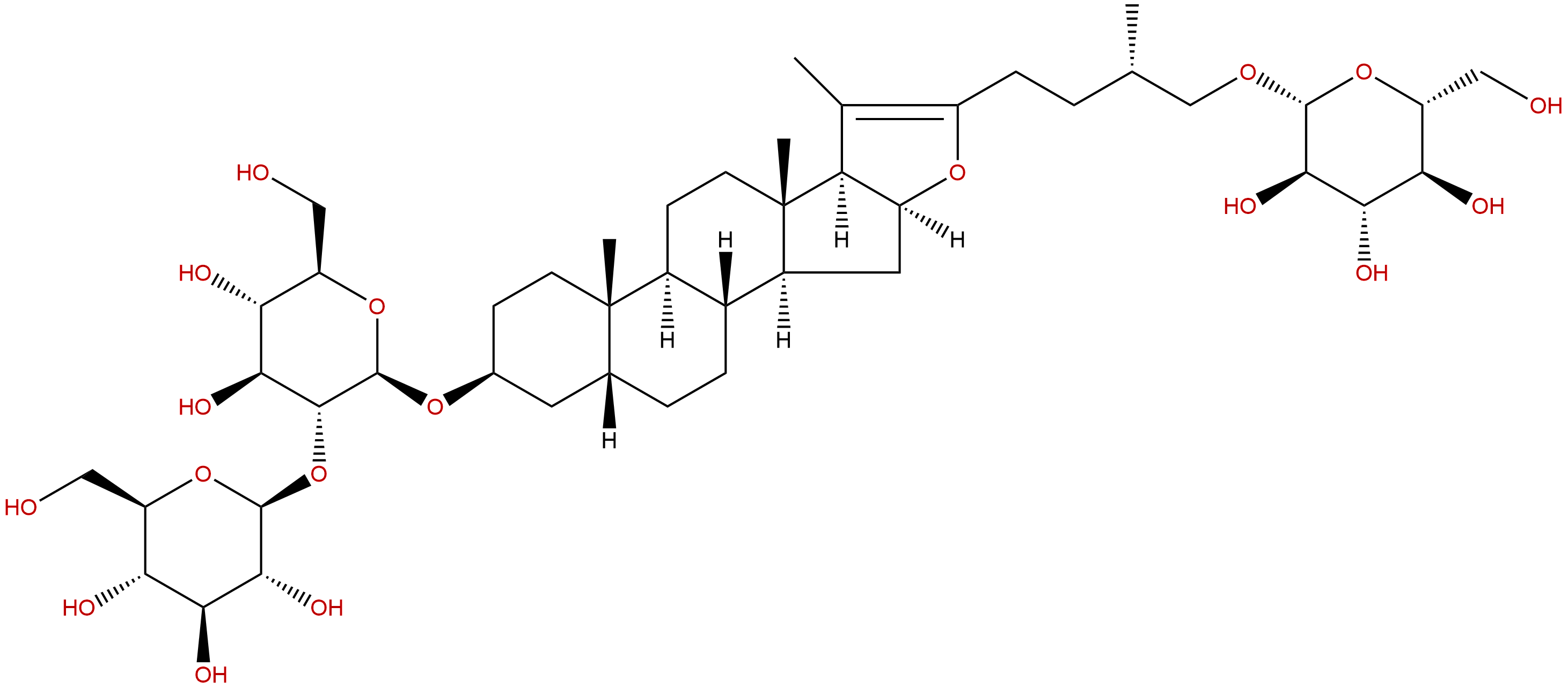


Product name: Anemarsaponin C
Synonym name: Timsaponin C
Catalogue No.: BP3432
Cas No.: 185432-00-2
Formula: C45H74O18
Mol Weight: 903.069
Botanical Source:
Physical Description: Powder
Type of Compound: Steroids
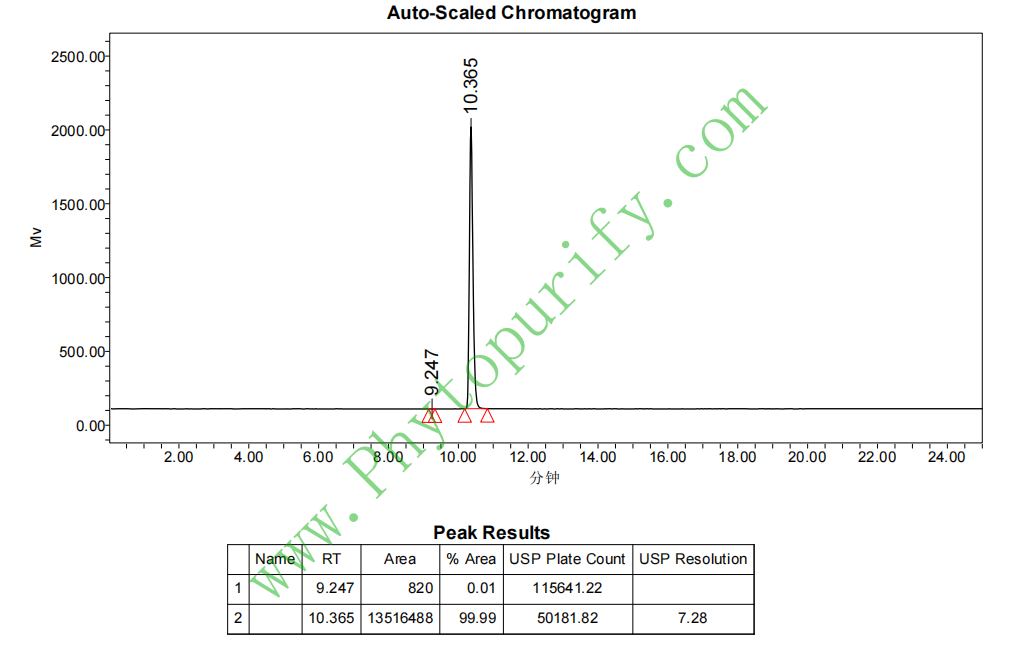
Purity: 95%~99%
Analysis Method: HPLC-DAD or/and HPLC-ELSD
Identification Method: Mass, NMR
Packing: Brown vial or HDPE plastic bottle
The product could be supplied from milligrams to grams. Inquire for bulk scale.
We provide solution to improve the water-solubility of compounds, thereby facilitating the variety of activity tests and clinic uses.
For Reference Standard and R&D, Not for Human Use Directly.
HPLC of Anemarsaponin C
Storage conditions:Short-term storage at 2~8℃, long-term storage at -20 ~ -80℃
287.1400
1.5772
1.5771
.2049
.5090
.4545
Low
63.0139
6.2397
No
No
No
No
No
No
0.0
Yes
No
No
No
In the vast field where traditional medicine and modern pharmacology intersect, natural products have always been an important treasure trove for discovering new drug lead compounds. Zhimu, as a commonly used traditional Chinese medicine with the effects of clearing heat and eliminating fire, nourishing yin and moistening dryness, has always been a research hotspot in terms of its pharmacological active substance basis. The saponins of Anemarrhena chinensis are considered as one of the key components for its pharmacological effects, among which Anemarrsapnin C has attracted much attention due to its significant anti-inflammatory activity. As a steroid saponin, Zhimu saponin C not only carries the wisdom of traditional Chinese medicine, but also demonstrates the potential to intervene in various inflammation related diseases in modern molecular pharmacology research. With the deepening understanding of the core role of chronic inflammation in the occurrence and development of complex diseases such as tumors, metabolic diseases, and neurodegenerative diseases, the search for efficient and low toxicity new anti-inflammatory drugs has become an urgent need. The purpose of this article is to systematically review the chemical properties, plant sources, pharmacological activities, especially the multi-target anti-inflammatory mechanism, pharmacological evaluation, and clinical application prospects of saponins C from Anemarrhena, in order to provide comprehensive scientific references for the in-depth research and development of this compound.
Zhimu saponin C, chemical name (25R) -26-O - β - D-glucopyranosyl-22-hydroxy-5 α - furostane-3 β, 26 diol 3-O - β - D-glucopyranosyl - (1 → 2) - β - D-galactopyranoside, CAS number 185432-00-2. Its molecular formula is C45H74O19 and its molecular weight is 903.0690.
Structurally, Zhimu saponin C belongs to the class of furostanol type steroidal saponins. Its parent nucleus is a helical sterane, with an alpha hydroxyl group connected at C-22 and a hydroxyl group at C-26 forming a glycoside with glucose, which is a typical feature of furostane saponins. The sugar chain is partially connected at position C-3, consisting of β - D-galactopyranose and β - D-glucose pyranose in sequence from the inside out, which are linked by (1 → 2) glycosidic bonds. This specific glycosylation pattern has a significant impact on its biological activity and solubility.
According to the provided pharmacological parameters, the lipid water partition coefficient (LogP) of Zhimu saponin C is 1.5772, indicating that it has a certain degree of lipophilicity, but overall it still leans towards amphiphilicity. Its topological polar surface area (TPSA) is as high as 287.1400 Å ², which is mainly attributed to the presence of multiple hydroxyl groups and oxygen atoms on the sugar ring in the molecule, resulting in strong molecular polarity. The water solubility value is 0.2049 (usually measured in mg/mL or log mol/L, not specified here, but the value is relatively small), indicating that its solubility in water is limited and it belongs to insoluble compounds. The high TPSA and limited solubility are key physicochemical factors affecting its oral absorption and bioavailability. The prediction of blood-brain barrier permeability is "low", which is consistent with the characteristics of most polar glycosides with molecular weights close to 900 Da, suggesting that their direct drug delivery to the central nervous system may face challenges. In terms of preliminary safety prediction, hERG inhibition is' no ', indicating a low potential risk of cardiac toxicity; The Ames test result was 0.0, indicating that no mutagenicity was observed in this model system, providing preliminary safety support for its further development.
Zhimu saponin C mainly comes from the lily family plant Zhimu(Anemarrhena asphodeloides Bunge's dried rhizomes. Zhimu is mainly distributed in China, South Korea, Japan and other places, with a long history of medicinal use in China. Zhimu rhizome is rich in various steroidal saponins, among which Zhimu saponin C is one of the components with high content and outstanding activity.
The extraction of Zhimu saponin C from Zhimu medicinal materials usually follows the conventional process of natural product separation and is purified using modern chromatographic techniques. The general steps are as follows:
1. Extract Solvent extraction method is often used. After drying and crushing the rhizomes of Anemarrhena, heat reflux extraction or ultrasound assisted extraction is performed using methanol, ethanol, or aqueous ethanol (such as 70% -80% ethanol). Alcohol extraction can effectively dissolve saponin components.
2. impurity removal The extract obtained by concentrating the extract is often extracted with low polarity solvents such as petroleum ether and ethyl acetate to remove fat soluble impurities. The remaining water or alcohol layer is rich in saponins.
3. Enrichment and Separation To further enrich saponins, macroporous adsorption resin (such as D101, AB-8 type) column chromatography can be used, with gradient elution using water and different concentrations of ethanol. Saponins are usually concentrated in the 30% -70% ethanol elution site. After obtaining the crude saponin, it is necessary to use normal phase silica gel column chromatography, reverse phase silica gel column chromatography (such as ODS, C18), high performance liquid chromatography (HPLC), and even preparative liquid chromatography for fine separation and purification. Methanol water or acetonitrile water is often used as the mobile phase.
4. appraisal The purified compound was structurally confirmed by nuclear magnetic resonance (NMR, including 1H-NMR, 13C-NMR, 2D-NMR), mass spectrometry (MS), and comparison with reference standards.
In recent years, some green and efficient extraction and separation technologies such as supercritical fluid extraction and high-speed countercurrent chromatography have also been explored and applied in the preparation of saponins from Anemarrhena henryi to improve extraction efficiency and product purity.
The pharmacological activity research of Zhimu saponin C mainly focuses on the anti-inflammatory field and extends to other pathological processes closely related to inflammation.
1. Core anti-inflammatory activity
A large number of in vitro and in vivo experiments have confirmed the strong anti-inflammatory effect of saponins C from Anemarrhena henryi. In various animal models of acute and chronic inflammation, such as carrageenan or carrageenan induced paw swelling in rats, xylene induced ear swelling in mice, and cotton ball induced granuloma in rats, Zhimu saponin C can significantly inhibit swelling at the site of inflammation, reduce inflammatory exudation and cell infiltration. At the cellular level, it can effectively inhibit the excessive production of pro-inflammatory mediators by macrophages (such as RAW264.7 cells) induced by stimuli such as lipopolysaccharides (LPS).
2. Analgesic effect
Inflammation and pain often coexist. Research has shown that saponins C from Anemarrhena chinensis exhibit significant analgesic effects in the second phase (inflammatory pain) of acetic acid-induced writhing and formalin experiments in mice, which may be related to the inhibition of inflammatory cytokine release and regulation of pain related ion channels.
3. Neuroprotective and antidepressant potential
Based on the role of inflammation in depression and neurodegenerative diseases, research has found that saponins C from Anemarrhena chinensis can improve the behavioral despair state and inhibit neuroinflammation in the hippocampus of chronic unpredictable mild stress (CUMS) induced depression model mice. In addition, in Alzheimer's disease cell models, it has shown potential to alleviate beta amyloid induced neuroinflammation and cytotoxicity.
4. Other potential activities
Preliminary studies also suggest that saponins C from Anemarrhena chinensis may have certain inhibitory effects on metabolic disorders (such as improving insulin resistance) and the proliferation of certain tumor cells, which are often intertwined with their anti-inflammatory properties. For example, by inhibiting the inflammatory response in the tumor microenvironment, it may indirectly affect tumor progression.
The anti-inflammatory effect of Zhimu saponin C is not achieved through a single pathway, but involves a complex multi-target regulatory network. According to the provided target information, its mechanism of action can be summarized as follows:
1. Regulating key inflammatory signaling pathways
* NF - κ B signaling pathway This is a classic and core pro-inflammatory pathway. Zhimu saponin C can inhibit the activity of IKBKB (I κ B kinase β), prevent the phosphorylation and degradation of I κ B protein, thereby inhibiting the nuclear translocation of transcription factor RELA (p65), and ultimately downregulating the expression of many inflammatory genes such as TNF, IL-6, and NOS2 (inducible nitric oxide synthase).
* JAK/STAT signaling pathway This pathway is crucial in inflammation and immune regulation. Zhimu saponin C can inhibit the phosphorylation and dimerization of STAT3 activated by cytokines such as IL-6, block its nuclear transcription activity, and thus inhibit the expression of downstream inflammation related genes.
* NLRP3 inflammasome pathway The activation of inflammasomes is a key step in the maturation and release of potent inflammatory factors such as IL-1 β. Zhimu saponin C has been reported to inhibit the assembly and activation of NLRP3 inflammasomes, reduce the activation of CASP1 (cysteine protease-1), and thus inhibit the maturation and secretion of IL-1 β and IL-18.
2. Inhibit the synthesis and release of inflammatory mediators
* Cytokines and chemokines As mentioned earlier, Zhimu saponin C can significantly reduce the production of core pro-inflammatory cytokines such as TNF - α, IL-6, IL-1 β, etc.
* Inflammatory enzymes It can inhibit the overexpression of PTGS1 (cyclooxygenase-1, involved in maintenance prostaglandin synthesis) and NOS2 (producing a large amount of NO, involved in inflammatory damage), thereby reducing the production of inflammatory mediators such as prostaglandin E2 and nitric oxide.
3. Regulate ion channels related to pain perception
* TRP channel family Transient receptor potential (TRP) channels such as TRPV1 and TRPA1 are important pain and inflammation sensors. Research has shown that saponins C from Anemarrhena chinensis may reduce the sensitivity of neurons to nociceptive stimuli by regulating the activity of these channels, which is closely related to its anti-inflammatory and analgesic effects.
In summary, Zhimu saponin C forms a synergistic anti-inflammatory network by simultaneously acting on upstream key nodes of multiple signaling pathways such as NF - κ B, JAK/STAT, NLRP3 (such as IKBKB, STAT3, CASP1), inhibiting downstream effector molecules (such as TNF, IL-6, PTGS1, NOS2), and regulating peripheral pain receptors (TRPV1, TRPA1). This multi-target characteristic may give it unique advantages in dealing with complex, multi factor driven chronic inflammatory diseases.
Although Zhimu saponin C exhibits excellent pharmacological activity, its drug like and pharmacokinetic properties are key bottlenecks in its successful development as a drug.
1. Analysis of drug properties
Based on its physicochemical parameters: larger molecular weight (>500) and extremely high TPSA (>140) usually do not meet the general requirements for oral drugs in Lipinski's "Five Rules", indicating that its membrane permeability may be poor. The limited water solubility and low fat solubility (moderate LogP) make it difficult to dissolve in gastrointestinal fluids and cross biofilms, which directly leads to its Oral bioavailability is extremely low This is a common challenge faced by most saponin compounds. The low permeability of the blood-brain barrier limits its direct therapeutic application for central nervous system diseases, but it may also reduce the risk of central side effects. In terms of early safety indicators, the absence of hERG inhibition and Ames mutagenicity are advantageous aspects.
2. Current status of pharmacokinetic research
At present, there is relatively limited research on the pharmacokinetics of Zhimu saponin C system, but it can be inferred from studies on similar saponins. Usually, saponins have poor absorption after oral administration, and some may be hydrolyzed and glycosylated by the gut microbiota, converted into aglycones and absorbed. The pharmacokinetic behavior of aglycones may be completely different from that of the original saponins. The prototype drug may mainly be distributed in tissues with abundant blood flow, but it is difficult to enter brain tissue. In terms of metabolism, phase I (such as hydroxylation) and phase II (such as glucuronidation and sulfation) reactions may occur in the liver. The main pathways of excretion may be through bile and feces.
3. Improvement strategy
In order to enhance the pharmacological properties of Zhimu saponin C, researchers are exploring various strategies:
* Formulation modification Utilizing novel drug delivery systems such as nanocrystals, liposomes, polymer micelles, and self microemulsions to enhance their solubility and stability, promote intestinal lymphatic absorption or delay clearance.
* Prodrug design Temporarily improving its lipid solubility or water solubility through chemical modifications (such as esterification, preparation of phosphate ester prodrugs), allowing it to release active active active ingredients in specific parts of the body.
* Exploration of administration routes Develop injections (such as liposomal injections), transdermal drug delivery systems, or inhalation formulations to bypass first pass effects and gastrointestinal absorption barriers.
* Simplification and optimization of structure On the basis of clarifying the pharmacophore, structural modifications are made to its sugar chain or steroid nucleus to search for small molecule analogues with similar or better activity but better physicochemical properties.
The multi-target anti-inflammatory properties of Zhimu saponin C provide broad prospects for its application in various disease fields, but its transformation still needs to overcome numerous challenges.
1. Potential therapeutic areas
* Inflammatory and autoimmune diseases Such as rheumatoid arthritis, inflammatory bowel disease (Crohn's disease, ulcerative colitis), psoriasis, etc. Its ability to inhibit multiple inflammatory pathways may have a comprehensive regulatory advantage over single target drugs.
* pain management Especially for inflammatory pain and neuropathic pain, they can be used as a supplement or alternative to opioid or nonsteroidal anti-inflammatory drugs, with different potential side effect profiles.
* Neuropsychiatric disorders Based on its anti neuroinflammatory and potential antidepressant and neuroprotective effects, it is expected to be used as an adjuvant therapy for depression, Alzheimer's disease, Parkinson's disease, and other conditions.
* Diseases related to metabolic syndrome: By inhibiting chronic low-grade inflammation, it may have a positive effect on improving type 2 diabetes, non-alcoholic fatty liver disease, etc.
* neoadjuvant therapy By regulating tumor associated inflammation and immune microenvironment, it may enhance the effectiveness of existing chemotherapy or immunotherapy.
2. Challenges faced
* The issue of bioavailability This is the biggest obstacle to its oral development.
* Depth of mechanism of action Although multiple targets are known, the precise molecular binding patterns of which are direct targets and which are downstream effects still need to be elucidated.
* Systematic toxicity assessment At present, there is limited early safety data, and comprehensive preclinical toxicology studies are needed, including long-term toxicity, reproductive toxicity, etc.
* Medicinal resources and synthesis The cost of extracting and purifying from plants is high, and the chemical synthesis route is complex. Exploring biosynthetic or semi synthetic pathways is the direction to ensure the supply of raw materials.
3. Future research directions
Future research should focus on: 1) using chemical biology methods (such as chemical proteomics) to identify its direct target proteins; 2) Conduct in-depth pharmaceutical research based on novel drug delivery systems and complete preclinical pharmacokinetic/toxicological evaluations of the system; 3) Explore its synergistic effect in disease combination therapy; 4) Carry out standardized research guided by clinical translation, laying a solid foundation for clinical trials.
Zhimu saponin C, as the active ingredient of traditional Chinese medicine Zhimu, is a successful example of modern natural product pharmacology research. It has shown great potential in intervening in complex inflammatory diseases due to its unique multi-target anti-inflammatory mechanism. From inhibiting core inflammatory signaling pathways such as NF - κ B and JAK/STAT, to regulating NLRP3 inflammasomes and pain sensing channels, its network of action is extensive and profound. However, the low bioavailability caused by its inherent physicochemical properties is a gap between laboratory research and clinical applications. Future research needs to innovate drug delivery strategies or optimize their structures based on a deep understanding of their molecular mechanisms, in order to improve their drug properties. With the breakthrough of these key bottlenecks, Zhimu saponin C is expected to transform from an excellent pharmacological active molecule into an innovative drug candidate for treating inflammation related diseases, not only interpreting the scientific connotation of modern Chinese medicine, but also bringing new treatment hope to patients worldwide.
