


Product name: Mangiferin
Synonym name: Euxanthogen; Chinomine; Alpizarin; Hedysaride; Mannipherin; Chedisaride; Shamimin
Catalogue No.: BP0922
Cas No.: 4773-96-0
Formula: C19H18O11
Mol Weight: 422.342
Botanical Source: Mangifera indica (mango) leaves, heartwood and stem bark and Iris spp., also from Salacia prinoides, Aphloia madagascariensis, Athyrium mesosorum, Anemarrhena asphodeloides, Belamcanda chinensis, Bombax spp., Hedysarum ussuriense and other pl
Physical Description: Powder
Type of Compound: Xanthones
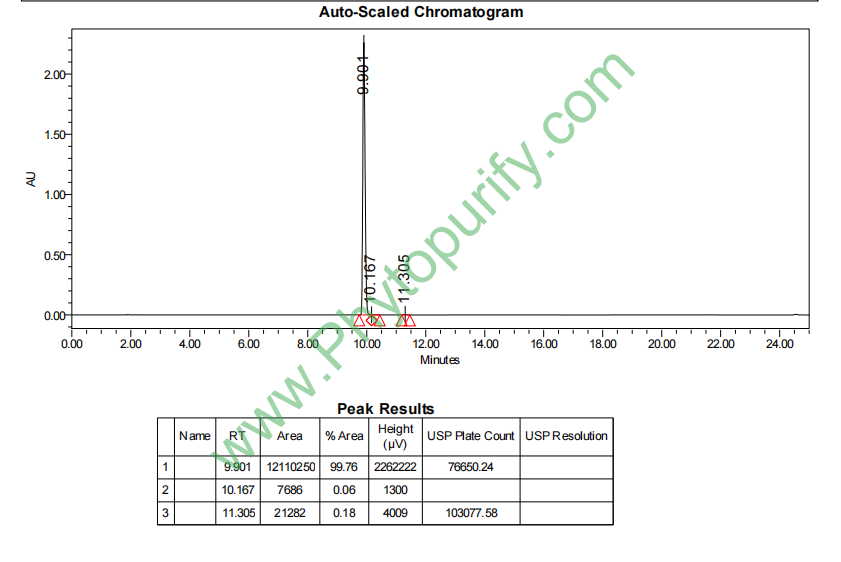
Purity: 95%~99%
Analysis Method: HPLC-DAD or/and HPLC-ELSD
Identification Method: Mass, NMR
Packing: Brown vial or HDPE plastic bottle
Storage: Store in a well closed container, protected from air and light. Put into refrigerate or freeze for long term storage.
Whenever possible, you should prepare and use solutions on the same day. However, if you need to make up stock solutions in advance, we recommend that you store the solution as aliquots in tightly sealed vials at -20℃. Generally, these will be useable for up to two weeks.
The product could be supplied from milligrams to grams, up to kilograms
Inquire for bulk scale.
Descriptions:
Mangiferin (MF) and its glucosides (mangiferin-7-O-beta-glucoside) (MG) isolated from Anemarrhena asphodeloides Bunge rhizome, have antidiabetic activity in KK-Ay mice,
MF and MG lower the blood glucose level of KK-Ay mice after oral administration, MF or MG improves hyperinsulinemia in KK-Ay mice; it seems likely that MF and MG exert their its antidiabetic activity by increasing insulin sensitivity.[1]
Mangiferin and pueraria glycoside (PG)-1 have an antioxidant activity, probably due to their ability to scavenge free radicals involved in initiation of lipid peroxidation; it can protect the streptozotocin-induced oxidative damage to cardiac and renal tissues in rats; it can protect against 1-methyl-4-phenylpyridinium toxicity mediated by oxidative stress in N2A cells.[2-4]
Mangiferin can reduce initial DNA damage and enhance DNA repair in the HPBLs exposed to 1 to 4 Gy γ-radiation and could serve as a protector against the radiation-induced DNA damage during planned and unplanned radiation exposures.[5]
Mangiferin has anti-inflammatory properties, can decrease inflammation and oxidative damage in rat brain after stress, it could be a new therapeutic strategy in neurological/neuropsychiatric pathologies in which hypothalamic/pituitary/adrenal (HPA) stress axis dysregulation, neuroinflammation, and oxidative damage take place in their pathophysiology.[6]
Mangiferin decreases plasma free fatty acids (FFA) levels through promoting FFA uptake and oxidation, inhibiting FFA and TG accumulations by regulating the key enzymes expression in liver through AMPK pathway, therefore, it is a possible beneficial natural compound for metabolic syndrome by improving FFA metabolism.[7]
Mangiferin has protective effects on iron-induced oxidative damage to rat serum and liver.[8]
Mangiferin attenuates osteoclastogenesis, bone resorption, and RANKL-induced activation of NF-κB and ERK.[9]
Mangiferin and vimang have anthelminthic and antiallergic activities.[10]
References:
[1] Ichiki H, Miura T, Kubo M, et al. Biol Pharm Bull. 1998 Dec;21(12):1389-90.
[2] Muruganandan S, Gupta S, Kataria M, et al. Toxicology, 2002, 176(3):165-73.
[3] Sato T , Kawamoto A , Tamura A ,et al. Chem Pharm Bull, 1992, 40(3):721-4.
[4] Amazzal L, Lap?tre A, Quignon F, et al. Neurosc Lett, 2007, 418(2):159-64.
[5] Jagetia G C, Venkatesha V A. Nutrition Res, 2006, 26(6):303-11.
[6] Márquez L, García-Bueno B, Madrigal J L M, et al. Eur J Nut, 2012, 51(6):729-39.
[7] Niu Y, Li S, Na L, et al. Plos One, 2012, 7(1):e30782.
[8] Pardo-Andreu G L, Barrios M F, Curti C, et al. Pharm Res, 2008, 57(1):79-86.
[9] Ang E, Liu Q, Qi M, et al. J Cell Biochem, 2011, 112(1):89-97.
[10] García D, Escalante M, Delgado R, et al. Phytother Res, 2003, 17(10):1203-8.
[11] Zhang X, Su B, Li J, et al. J Chromatogr Sci, 2012, 52(1):185-201.
HPLC of Mangiferin
Storage conditions:Short-term storage at 2~8℃, long-term storage at -20 ~ -80℃
201.2800
-.2645
-.4304
1.3540
.5664
.2495
Low
72.2608
4.0929
Yes
No
No
No
Yes
No
1.2
Yes
No
Yes
No
Natural products, as an important source of drug discovery, play an irreplaceable role in human health maintenance and disease treatment. Among numerous natural compounds with biological activity, mangiferin has attracted high attention from researchers due to its unique chemical structure and extensive pharmacological activities. Mangiferin is a naturally occurring xanthone compound, chemically named 1,3,6,7-tetrahydroxyxanthone-2- β - D-glucopyranose, with a CAS number of 4773-96-0. This compound was originally derived from mangoes(Mangifera indica L. It was isolated from the leaves, bark, and fruit of cicadas and subsequently discovered in various medicinal plants, such as Anemarrhena(Anemarrhena asphodeloides)Yuanzhi(Polygala tenuifolia)And the deer roe vegetable(Swertia chirata)Wait.
The pharmacological research of mangiferin began in the mid-20th century, but it was not until the past two decades, with the advancement of molecular biology technology and the development of systems pharmacology methods, that its mechanism of action was gradually elucidated. Research has shown that mangiferin is an effective activator of nuclear factor E2 related factor 2 (Nrf2), which can upregulate the expression of a range of antioxidant and detoxifying enzymes by activating the antioxidant response element (ARE) pathway. Meanwhile, mangiferin can inhibit the nuclear translocation of nuclear factor kappa B (NF - κ B) subunits p65 and p50, thereby exerting anti-inflammatory effects. This dual regulatory mechanism demonstrates enormous potential in the treatment of oxidative stress and inflammation related diseases.
At present, mangiferin has been reported to have a variety of pharmacological activities such as antioxidant, anti diabetes, anti hyperuricemia, anti-virus, anti-cancer and anti-inflammatory. It is worth noting that mangiferin has shown unique advantages in the treatment of diabetes and its complications. Its target involves AMP activated protein kinase (AMPK), sodium glucose cotransporter 2 (SGLT2), glucokinase (GCK) and other key molecules. In addition, the regulatory effects of mangiferin on Alzheimer's disease-related proteins (APP), protein tyrosine phosphatase 1B (PTPN1), monoamine oxidase A (MAOA), and estrogen receptor beta (ESR2) have further expanded its clinical application prospects.
This article will provide a systematic review of the research progress of mangiferin from the aspects of chemical structure and physicochemical properties, plant sources and extraction methods, pharmacological activity research, mechanism of action and molecular targets, drug evaluation and pharmacokinetics, clinical application prospects and prospects, in order to provide reference for the in-depth study and clinical translation of this natural product.
The chemical structure of mangiferin belongs to xanthone compounds, and its parent nucleus is xanthone, which is dibenzo - γ - pyranone. Specifically, the chemical name of mangiferin is 1,3,6,7-tetrahydroxychalcone-2- β - D-glucopyranoside, with a molecular formula of C ₁ H ₁ O ₁ and a molecular weight of 422.3420 Da. Its structural features include four hydroxyl groups (located at positions 1, 3, 6, and 7) connected to the chalcone nucleus, and a β - D-glucopyranosyl group connected to the nucleus through the C-2 position. This glycosylation modification not only increases the water solubility of the compound, but also affects its bioavailability and pharmacological activity.
From the perspective of physicochemical properties, mangiferin exhibits typical phenolic compound characteristics. The lipid water partition coefficient (LogP) of the compound is -0.2645, indicating that it has good hydrophilicity, which is consistent with the presence of multiple hydroxyl and sugar groups in the molecule. The topological polar surface area (TPSA) is 201.2800 Å ², which is a relatively high value, indicating that mangiferin may have difficulty passing through the lipid bilayer of the cell membrane. However, its water solubility (1.3540 mg/mL) is good, which is beneficial for its distribution in body fluids. It is worth noting that mangiferin has a low blood-brain barrier penetration ability, which to some extent limits its therapeutic application in central nervous system diseases, but also reduces potential central nervous system toxicity.
The UV absorption spectrum characteristics of mangiferin are closely related to the conjugated system of its xanthenone parent nucleus, with characteristic absorption peaks in the range of 240-260 nm and 310-370 nm. Its infrared spectrum shows characteristic absorption of hydroxyl (~3400 cm ⁻¹), carbonyl (~1650 cm ⁻¹), and aromatic rings (~1600 cm ⁻¹). In the nuclear magnetic resonance hydrogen spectrum, aromatic proton signals appear in the δ 6.0-7.5 ppm region, while glycosyl proton signals appear in the δ 3.0-5.5 ppm region. These spectral features provide important basis for the structural identification of mangiferin.
Mangiferin is relatively stable under acidic conditions, but it is prone to oxidative degradation under alkaline conditions. Its stability is affected by factors such as temperature, light, and metal ions, so appropriate protective measures need to be taken in formulation development. In addition, mangiferin can form complexes with various metal ions, which may affect its distribution and metabolism in vivo.
Mangiferin is widely distributed in nature and mainly exists in plant families and genera such as Anacardiaceae, Liliaceae, Polygalaceae, and Gentianaceae. Among them, mango(Mangifera indica L. Mangiferin is the most abundant source of mangiferin, which is present in its leaves, bark, fruit, and nucleus. The content of mangiferin varies significantly among different varieties of mangoes, with the highest content usually found in the leaves, reaching 1-5% of dry weight. In addition, Zhimu(Anemarrhena asphodeloides)Root and stem, distant aspirations(Polygala tenuifolia)Roots and Swertia(Swertia chirata)The whole grass and golden peach(Hypericum The aboveground part of the plant is also an important source of mangiferin.
From the perspective of plant chemical taxonomy, mangiferin mainly exists in the following families and genera of plants:
1. Lacquer tree family Mango genus(Mangifera)Cashew nut genus(Anacardium)
2. Liliaceae: Mother of Knowledge(Anemarrhena)
3. Yuanzhi Science: Yuanzhi genus(Polygala)
4. Gentianaceae: Swertia genus(Swertia)Gentiana genus(Gentiana)
5. Fujicaceae family: Hypericum genus(Hypericum)
The extraction methods of mangiferin mainly include traditional solvent extraction and modern assisted extraction techniques. The traditional method uses ethanol or methanol as solvents, and adopts reflux extraction or percolation extraction. The extraction temperature is usually controlled at 60-80 ° C and the extraction time is 2-4 hours. Research has shown that a 70% ethanol aqueous solution has the highest extraction efficiency for mangiferin, with an extraction rate of 2-3% of the dry weight of the raw material. However, traditional methods have disadvantages such as high solvent consumption, long extraction time, and high impurity content.
Modern assisted extraction technology has significantly improved the extraction efficiency and purity of mangiferin
1. Ultrasonic assisted extraction Utilizing the cavitation effect of ultrasound to destroy plant cell walls and accelerate the dissolution of mangiferin. Under the conditions of 40-60 kHz frequency and 30-50 ° C, the extraction time can be shortened to 30 minutes, and the extraction rate can be increased by 20-30%.
2. Microwave assisted extraction By utilizing the penetrability and selective heating of microwaves, the internal temperature of plant cells rapidly increases, promoting the release of mangiferin. Under the conditions of 300-600 W power and 60-80 ° C, the extraction time only takes 10-15 minutes.
3. Enzyme assisted extraction Using cellulase, pectinase and other enzymes to degrade plant cell wall polysaccharides and improve the accessibility of mangiferin. The enzymatic hydrolysis temperature is usually 40-50 ° C, pH 4.5-5.5, and the enzymatic hydrolysis time is 1-2 hours.
4. Supercritical fluid extraction Using CO ₂ as the solvent and adding an appropriate amount of ethanol as the entrainer, extract at 30-50 MPa and 40-60 ° C. This method can obtain high-purity mangiferin, but the equipment cost is relatively high.
The crude extract after extraction needs to undergo purification steps to obtain high-purity mangiferin. Common purification methods include macroporous adsorption resin column chromatography (such as HPD-100, AB-8 resin), polyamide column chromatography, silica gel column chromatography, and preparative high-performance liquid chromatography. Among them, the macroporous adsorption resin method is widely used in the industrial production of mangiferin due to its advantages of easy operation, low cost, and scalable production.
The antioxidant activity of mangiferin is one of its most concerned pharmacological properties. As a potent activator of Nrf2, mangiferin can upregulate the expression of a range of antioxidant enzymes, including heme oxygenase-1 (HO-1), quinone oxidoreductase 1 (NQO1), glutathione S-transferase (GST), superoxide dismutase (SOD), and catalase (CAT), through the Keap1-Nrf2-ARE signaling pathway. In vitro experiments have shown that mangiferin can significantly reduce the levels of reactive oxygen species (ROS) induced by H ₂ O ₂, tert butyl hydroperoxide (t-BHP), and lipopolysaccharide (LPS) within the concentration range of 1-50 μ M.
In cell models, mangiferin pretreatment can protect liver cells, myocardial cells, nerve cells, and pancreatic beta cells from oxidative stress damage. For example, in H9c2 cardiomyocytes, pretreatment with mangiferin (10 μ M) for 24 hours significantly reduced hypoxia/reoxygenation induced apoptosis and ROS production, and its protective effect was closely related to Nrf2 nuclear translocation and upregulation of HO-1 expression. In SH-SY5Y nerve cells, mangiferin (5-20 μ M) can alleviate oxidative damage induced by β - amyloid protein (A β), indicating its potential application value in neurodegenerative diseases.
The anti diabetes activity of mangiferin has been verified in many animal models. In the streptozotocin (STZ) induced type 1 diabetes rat model, mangiferin (20-50 mg/kg, oral) can significantly reduce fasting blood glucose level, improve glucose tolerance, and increase serum insulin level after 4 weeks of continuous administration. In db/db mice and high-fat diet induced type 2 diabetes models, mangiferin (30-100 mg/kg) can reduce blood sugar, improve insulin resistance, and regulate lipid metabolism disorders.
The anti diabetes mechanism of mangiferin involves multiple targets:
1. AMPK activation Mangiferin can activate AMPK, promote glucose uptake and fatty acid oxidation, and inhibit hepatic gluconeogenesis.
2. SGLT2 inhibition Mangiferin can inhibit the activity of SGLT2 in the proximal tubules of the kidney, reduce glucose reabsorption, and increase urinary glucose excretion.
3. GCK activation Mangiferin can activate glucokinase and promote liver glucose metabolism.
4. PTPN1 inhibition Mangiferin enhances insulin signaling by inhibiting protein tyrosine phosphatase 1B.
In recent years, significant progress has been made in the research of mangiferin in the treatment of hyperuricemia. Animal experiments have shown that mangiferin (20-80 mg/kg) can significantly reduce serum uric acid levels in potassium oxonate induced hyperuricemia mice, and its effect is comparable to the positive drug allopurinol. Mechanism studies have found that mangiferin reduces uric acid production by inhibiting xanthine oxidase (XOD) activity; Meanwhile, mangiferin can upregulate the expression of renal uric acid transporters OAT1 and OAT3, promoting uric acid excretion.
Mangiferin exhibits broad-spectrum antiviral activity, including resistance against herpes simplex virus (HSV), influenza virus, dengue virus, and human immunodeficiency virus (HIV). In HSV-1 and HSV-2 infection models, mangiferin (10-50 μ M) can inhibit virus replication, with a half maximal inhibitory concentration (IC ₅₀) of 5-20 μ M. Mechanism studies have shown that mangiferin exerts antiviral effects by inhibiting viral DNA polymerase activity, interfering with virus adsorption and penetration processes, and regulating host cell immune responses.
Mangiferin has shown anti proliferation and pro apoptosis activities in a variety of cancer cell lines, including liver cancer, breast cancer, lung cancer, colon cancer and melanoma. In HepG2 liver cancer cells, mangiferin (20-80 μ M) can induce cell cycle arrest in the G0/G1 phase and induce apoptosis through the mitochondrial pathway. In breast cancer MCF-7 cells, mangiferin (10-50 μ M) reduces cell proliferation and migration by inhibiting NF - κ B and PI3K/Akt signaling pathways.
It is worth noting that mangiferin has low toxicity to normal cells and exhibits certain selective anti-tumor activity. This selectivity may be related to higher levels of oxidative stress and Nrf2/NF - κ B signaling imbalance in cancer cells. In addition, mangiferin can enhance the sensitivity of chemotherapy drugs, such as when used in combination with cisplatin, doxorubicin, etc., it can reduce the effective dose of chemotherapy drugs and minimize toxic side effects.
The anti-inflammatory activity of mangiferin has been confirmed in various inflammatory models, including acute lung injury, colitis, arthritis, and neuropathy. In a mouse model of LPS induced acute lung injury, mangiferin (20-50 mg/kg) can reduce the number of inflammatory cells and levels of pro-inflammatory cytokines (TNF - α, IL-1 β, IL-6) in bronchoalveolar lavage fluid, alleviating pathological damage to lung tissue.
The anti-inflammatory mechanism of mangiferin mainly involves:
1. NF - κ B inhibition Mangiferin inhibits the phosphorylation and degradation of I κ B α, preventing nuclear translocation of NF - κ B subunits p65 and p50, thereby suppressing the transcription of pro-inflammatory genes.
2. MAPK pathway regulation Mangiferin can inhibit the phosphorylation of p38, JNK, and ERK, reducing the production of inflammatory mediators.
3. Nrf2 activation By activating Nrf2, mangiferin upregulates the expression of antioxidant enzymes such as HO-1, reducing inflammation related oxidative damage.
The pharmacological activity of mangiferin stems from its interaction with multiple molecular targets, and this multi-target mode of action is the basis for its extensive biological activity. The following will elaborate on the main mechanism of action and molecular targets of mangiferin.
Mangiferin is a known potent activator of Nrf2. Under normal physiological conditions, Nrf2 binds to Kelch like ECH related protein 1 (Keap1) and is degraded through the ubiquitin proteasome pathway. Mangiferin can undergo covalent modification with cysteine residues of Keap1 (such as Cys151, Cys273, and Cys288), leading to conformational changes in Keap1 and the release of Nrf2. The released Nrf2 translocates to the nucleus, forms heterodimers with small Maf proteins, binds to antioxidant response elements (ARE), and initiates transcription of downstream target genes.
The effect of mangiferin activating Nrf2 is concentration - and time-dependent. In HepG2 cells, treatment with mangiferin (10-50 μ M) for 2-4 hours can detect an increase in Nrf2 nuclear translocation, and after 6-12 hours, the expression of target genes such as HO-1 and NQO1 is significantly upregulated. This activation effect can last for 24-48 hours, providing cells with long-lasting antioxidant protection.
The inhibition of NF - κ B signaling pathway by mangiferin is the core mechanism of its anti-inflammatory activity. In resting cells, NF - κ B dimer (p65/p50) binds to the inhibitory protein I κ B α and exists in an inactive form in the cytoplasm. When cells are stimulated by inflammation (such as TNF - α, LPS), I κ B kinase (IKK) is activated, phosphorylating I κ B α, leading to its ubiquitination degradation and release of NF - κ B for translocation to the nucleus.
Mangiferin inhibits NF - κ B signaling through the following pathways:
1. Inhibition of IKK activity Mangiferin directly binds to IKK β, inhibiting its kinase activity and reducing I κ B α phosphorylation.
2. Stable I κ B αMangiferin reduces the degradation of I κ B α and maintains the retention of NF - κ B in the cytoplasm.
3. Inhibition of p65 nuclear translocation Mangiferin prevents nuclear translocation of p65 and p50 subunits, reducing their binding to DNA.
4. Regulating p65 acetylation Mangiferin affects the acetylation state of p65 and reduces its transcriptional activity.
AMPK is a key regulator of cell energy metabolism, which is of great significance in the treatment of diabetes and metabolic syndrome. Mangiferin can activate AMPK, and its mechanism includes:
1. Increase AMP/ATP ratio Mangiferin indirectly activates AMPK by inhibiting mitochondrial respiratory chain complex I, reducing ATP production, increasing AMP levels.
2. Directly combined with AMPK Molecular docking studies have shown that mangiferin can bind to the gamma subunit of AMPK, mimic the action of AMP, and promote AMPK phosphorylation.
3. Upstream kinase regulation Mangiferin can activate LKB1 and CaMKK β, upstream kinases that phosphorylate the Thr172 site of AMPK.
After AMPK activation, downstream target proteins such as acetyl CoA carboxylase (ACC), HMG CoA reductase, and TSC2 can be phosphorylated, thereby regulating fatty acid oxidation, cholesterol synthesis, and protein synthesis. In the liver, AMPK activation can inhibit the expression of key gluconeogenic enzymes such as PEPCK and G6Pase, reducing blood glucose levels.
The inhibitory effect of mangiferin on SGLT2 is an important part of its anti diabetes activity. SGLT2 is the main transporter protein responsible for glucose reabsorption in the proximal tubules of the kidney. Mangiferin (10-50 μ M) can competitively inhibit the activity of SGLT2, reduce glucose reabsorption, and increase urinary glucose excretion. Molecular docking studies have shown that the glucose moiety of mangiferin interacts with the sugar binding site of SGLT2, while the xanthenone core binds to the hydrophobic pocket to form a stable complex.
Mangiferin also acts on multiple other targets:
1. GCK Mangiferin can activate glucokinase, promote liver glucose phosphorylation, and enhance glucose metabolism.
2. PTPN1 Mangiferin inhibits protein tyrosine phosphatase 1B, prolongs insulin receptor phosphorylation status, and enhances insulin signaling.
3. MAOA Mangiferin has an inhibitory effect on monoamine oxidase A, which may affect neurotransmitter metabolism.
4. ESR2 Mangiferin can bind to estrogen receptor beta and exert selective estrogen receptor regulation.
5. APP Mangiferin can regulate the metabolism of amyloid precursor proteins and reduce the production of A β.
The pharmacological evaluation of mangiferin is based on its physicochemical properties and pharmacokinetic characteristics. From the molecular weight of 422.34 Da, mangiferin meets the Lipinski five rule requirement of a molecular weight less than 500. However, its LogP value is -0.2645, far below the recommended range of 1-5 by Lipinski's rule, indicating that the compound has strong hydrophilicity and may lead to poor membrane permeability. The TPSA is 201.28 Å ², which is higher than the recommended upper limit of 140 Å ², further suggesting that its oral absorption may be limited.
The water solubility of mangiferin (1.354 mg/mL) is good, which is beneficial for the development of formulations. Its blood-brain barrier penetration ability is low, which limits the therapeutic application of central nervous system diseases, but also reduces the risk of central nervous system toxicity. The hERG inhibition test result was negative, indicating a low risk of mangiferin causing QT interval prolongation in the heart. The Ames test result is 1.2, indicating that the compound may have slight genetic toxicity and further evaluation is needed.
The pharmacokinetic studies of mangiferin have been conducted in various animal models. After oral administration, the absorption rate of mangiferin is slower and its bioavailability is lower (the oral bioavailability in rats is about 1-3%), which is related to its high hydrophilicity and low membrane permeability. Mangiferin can be metabolized by gut microbiota in the gastrointestinal tract, partially converted into glycosides (deglycosylation products), which may have different pharmacological activities.
Mangiferin is widely distributed in the body, mainly in tissues such as the liver, kidneys, lungs, and heart. Its plasma protein binding rate is about 80-90%, mainly binding to albumin. The metabolism of mangiferin mainly occurs through glucuronidation and sulfation reactions in the liver, generating corresponding complexes. In addition, mangiferin can also be metabolized by the cytochrome P450 enzyme system, but at a slower rate.
The elimination of mangiferin is mainly through bile and urine excretion. In rats, within 24 hours after oral administration, approximately 30-40% of the dose is excreted in its original form or metabolite form in urine, and 20-30% is excreted in feces. Its plasma half-life is about 2-4 hours and requires frequent administration to maintain effective blood drug concentration.
To improve the oral bioavailability and therapeutic effect of mangiferin, researchers have developed various new formulations:
1. liposome Mangiferin liposomes can increase its oral absorption rate and bioavailability by 2-3 times.
2. nanoparticle Poly (lactic acid glycolic acid) copolymer (PLGA) nanoparticles can encapsulate mangiferin, achieving sustained release and targeted delivery.
3. Phospholipid complex Mangiferin phospholipid complex can enhance its lipid solubility and promote transmembrane transport.
4. Cyclodextrin inclusion complex Hydroxypropyl - β - cyclodextrin inclusion complex can increase the solubility and stability of mangiferin.
5. Solid dispersion Mango glycoside solid dispersion can improve its dissolution rate and oral absorption.
Mangiferin has the most promising clinical application prospect in the treatment of diabetes. Its multi-target mechanism of action (AMPK activation, SGLT2 inhibition, GCK activation, PTPN1 inhibition) enables it to simultaneously improve insulin resistance, promote glucose excretion, and enhance glucose metabolism. In addition, the antioxidant and anti-inflammatory activities of mangiferin can help prevent and treat complications of diabetes, such as diabetes nephropathy, diabetes retinopathy and diabetes neuropathy.
At present, the development of mangiferin as a candidate drug for the treatment of diabetes has entered the pre clinical research stage. In the future, systematic clinical research is needed to evaluate its safety, efficacy, and optimal dosing regimen. It is worth noting that the combination of mangiferin with existing hypoglycemic drugs such as metformin and SGLT2 inhibitors may produce synergistic effects, which is worth further exploration.
The regulatory effects of mangiferin on lipid metabolism, uric acid metabolism, and energy balance make it promising for the comprehensive treatment of metabolic syndrome. Animal experiments have shown that mangiferin can reduce body weight, improve blood lipid profile, lower uric acid levels, and alleviate fatty liver. These effects are related to mechanisms such as AMPK activation, SGLT2 inhibition, and XOD inhibition.
The anti-inflammatory activity of mangiferin provides a basis for its application in inflammatory diseases. Mangiferin has shown therapeutic effects in disease models such as rheumatoid arthritis, inflammatory bowel disease, asthma, and chronic obstructive pulmonary disease. It can effectively control inflammatory response and alleviate oxidative damage by inhibiting NF - κ B and activating Nrf2 through a dual mechanism.
Although mangiferin has a low blood-brain barrier penetration ability, its potential application in neurodegenerative diseases remains a concern. Research has shown that mangiferin can exert neuroprotective effects in Alzheimer's disease models by regulating APP metabolism, inhibiting A β aggregation, and reducing neuroinflammation. In addition, the inhibitory effect of mangiferin on MAOA may affect neurotransmitter levels and has potential application value in depression and Parkinson's disease.
The anticancer activity and chemotherapy sensitization of mangiferin provide the possibility for its application in cancer adjuvant therapy. Mangiferin can enhance the efficacy of chemotherapy drugs while reducing their toxic side effects. In addition, the antioxidant activity of mangiferin may help prevent normal tissue damage caused by chemotherapy.
Although mangiferin has a wide range of pharmacological activities and good safety, its clinical translation still faces many challenges:
1. Low oral bioavailability New formulation technologies need to be developed to improve its absorption rate.
2. Poor metabolic stability Mangiferin is easily metabolized in the body and requires exploration of structural modification strategies.
3. Multi-target effect Although multi-target action is its advantage, it also increases the complexity of studying the mechanism of action.
4. Dose Optimization The effective dose varies greatly among different disease models, and it is necessary to determine the optimal therapeutic dose.
Future research directions include: structural modification of mangiferin to enhance its medicinal properties; Development of new delivery systems; Research on synergistic effects with other drugs; And preclinical and clinical studies targeting specific diseases. With the in-depth study of these issues, mangiferin is expected to become a new natural drug for the treatment of diabetes, metabolic syndrome and inflammatory diseases.
Mangiferin, as a naturally occurring xanthone compound, has shown significant research value and application potential in the field of natural product pharmacology due to its unique chemical structure and multi-target mechanism of action. From a chemical structure perspective, the binding of mangiferin's xanthenone nucleus to the glucose group endows it with unique physicochemical properties and biological activity. From the perspective of pharmacological activity, mangiferin plays a wide range of pharmacological effects such as anti-oxidation, anti diabetes, anti-inflammatory, anti-cancer and anti-virus by activating Nrf2, inhibiting NF - κ B, regulating AMPK and SGLT2 and other signaling pathways.
In the field of diabetes treatment, mangiferin's multi target mode of action (AMPK activation, SGLT2 inhibition, GCK activation, PTPN1 inhibition) makes it a candidate drug with unique advantages. In the field of anti-inflammatory and antioxidant, mangiferin can effectively control inflammatory response and oxidative damage through the dual regulatory mechanism of Nrf2/NF - κ B. In addition, the application prospects of mangiferin in anti hyperuricemia, neuroprotection, and cancer adjuvant therapy are also worth looking forward to.
However, the clinical translation of mangiferin still faces challenges such as low oral bioavailability and poor metabolic stability. Future research needs to focus on structural modification, development of novel formulations, and systems pharmacology studies to overcome these obstacles. With the development of nanotechnology, medicinal chemistry, and systems biology, mangiferin is expected to become a new natural medicine for treating various chronic diseases and contribute to human health.
In summary, mangiferin, as a natural product with multi-target action characteristics, has made significant progress in pharmacological research, but further exploration is still needed. Through interdisciplinary collaboration, the clinical translational potential of mangiferin is expected to be fully realized, providing patients with more treatment options.
