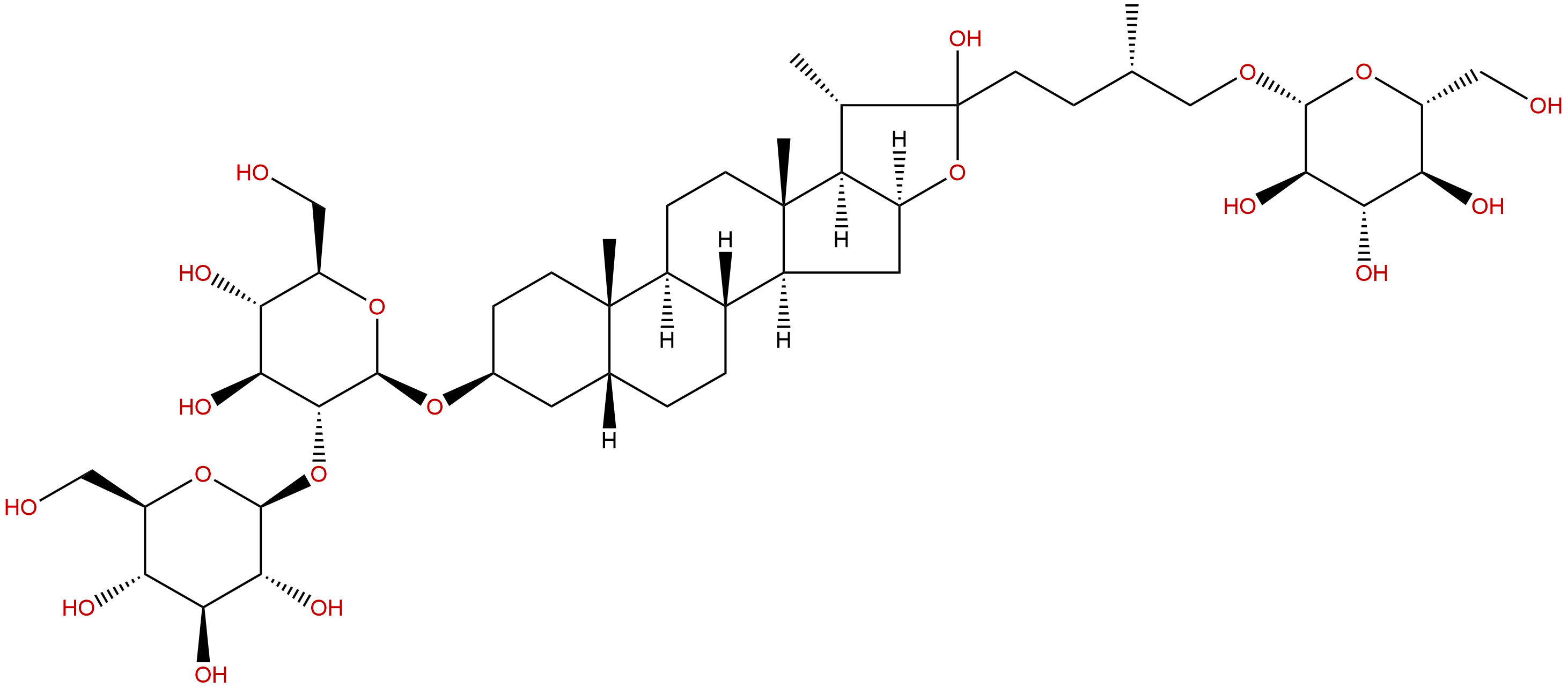


Product name: Officinalisinin I
Synonym name:
Catalogue No.: BP3281
Cas No.: 57944-18-0
Formula: C45H76O19
Mol Weight: 921.084
Botanical Source:
Physical Description: Powder
Type of Compound: Steroids
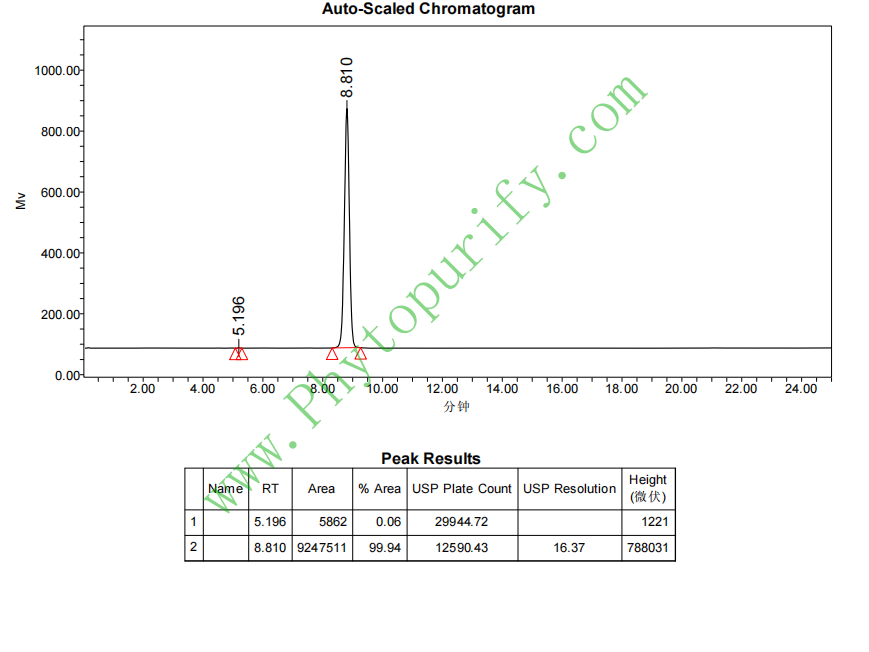
Purity: 95%~99%
Analysis Method: HPLC-DAD or/and HPLC-ELSD
Identification Method: Mass, NMR
Packing: Brown vial or HDPE plastic bottle
The product could be supplied from milligrams to grams. Inquire for bulk scale.
We provide solution to improve the water-solubility of compounds, thereby facilitating the variety of activity tests and clinic uses.
For Reference Standard and R&D, Not for Human Use Directly.
HPLC of Officinalisinin I
Storage conditions:Short-term storage at 2~8℃, long-term storage at -20 ~ -80℃
307.3700
1.2754
1.2755
.1566
.5074
.3949
Low
55.9829
6.3209
No
No
No
No
No
No
0.0
Yes
No
No
No
Rheumatoid Arthritis (RA) is an autoimmune disease characterized by chronic, symmetrical, and erosive polyarthritis. Its pathological features include synovial hyperplasia, inflammatory cell infiltration, vascular opacities formation, and progressive destruction of articular cartilage and bone. The global incidence rate is about 0.5% -1%, with high disability rate, which brings heavy burden to patients and society. The current treatment strategies for RA, such as nonsteroidal anti-inflammatory drugs, anti rheumatic drugs, glucocorticoids, and biologics, can effectively control symptoms, but they generally have problems such as large side effects, high prices, poor response or drug resistance in some patients. Therefore, exploring efficient and low toxicity new therapeutic drugs from natural products has always been an important direction for drug development.
Zhimu(Anemarrhena asphodeloides Bunge, as a traditional Chinese medicine, has the effects of clearing heat, purging fire, nourishing yin, and moistening dryness. It is commonly used to treat diseases such as fever, thirst, lung heat, dry cough, bone steaming, and hot flashes. Modern pharmacological research has shown that Anemarrhena chinensis is rich in various steroidal saponins, which are the main material basis for its anti-inflammatory, immune regulatory, and anti osteoporosis activities. Officinalisin I (CAS number: 57944-18-0) is an important steroidal saponin isolated from the rhizome of Anemarrhena. In recent years, studies have found that the saponins BII from Ganoderma lucidum have shown significant potential in anti-inflammatory, immune regulation, and bone protection, especially in the multi-target regulatory network related to RA, showing unique advantages, making it a highly promising candidate compound for development. This article aims to provide a systematic review of the chemical structure, plant origin, pharmacological activity, mechanism of action, and pharmacological properties of the new Zhimu saponin BII, and to explore its clinical application prospects.
Xinzhimu saponin BII is a spirostanol type steroid saponin. Its basic skeleton consists of a steroid core (cyclopentane and phenanthrene) with 27 carbon atoms and a furan spiro ring (E, F rings). Its glycoside is sarsasapogenin, and a disaccharide chain composed of glucose and galactose is connected to the C-3 hydroxyl group of the glycoside. Its molecular formula is C45H74O19 and its molecular weight is 921.0840.
From the analysis of physical and chemical properties, the calculated lipid water partition coefficient (LogP) of the compound is 1.2754, indicating that it has a certain lipophilicity, but not highly lipophilic. Its topological polar surface area (TPSA) is as high as 307.3700 Å ², mainly attributed to the presence of multiple hydroxyl groups and oxygen atoms on the sugar ring in the molecule, forming abundant hydrogen bond donor and acceptor sites. A high TPSA value usually indicates strong polarity. The predicted water solubility value is 0.1566 (usually measured in mg/mL or log mol/L, indicating low solubility), which is consistent with the characteristics of large molecular saponin compounds, which have a certain hydrophilicity due to the presence of sugar chains, but their overall molecular weight limits their free dissolution in water. These physical and chemical parameters collectively determine the absorption and distribution characteristics of saponins BII from Anemarrhena chinensis in vivo.
New Zhimu saponin BII is specifically derived from the Liliaceae plant Zhimu(Anemarrhena asphodeloides Bunge's dried rhizomes. Zhimu is mainly distributed in East Asian regions such as China, South Korea, and Japan. The content of saponins in its medicinal parts and rhizomes is closely related to the place of origin, harvesting season, and growth period.
The extraction and isolation of new saponins BII from Anemarrhena chinensis usually follow the conventional process of natural product chemistry. Firstly, alcohol (such as methanol, ethanol) or alcohol water mixed solvents are used to heat reflux or ultrasound assisted extraction of dried powder of Ganoderma lucidum to fully extract saponin components. After vacuum concentration, the crude extract obtained was subjected to liquid-liquid distribution using organic solvents such as petroleum ether and ethyl acetate to remove lipophilic impurities. Saponins were mainly enriched in the aqueous layer or n-butanol extraction layer.
Further purification and separation rely on various chromatographic techniques. Large pore adsorption resins (such as D101, AB-8) are commonly used for initial enrichment by column chromatography, and the adsorption desorption characteristics of saponins and resins are utilized for crude separation. Subsequently, silica gel column chromatography, reverse phase silica gel column chromatography (such as ODS, C18), dextran gel column chromatography (such as Sephadex LH-20), etc. were used for repeated separation. High performance liquid chromatography, especially preparative high-performance liquid chromatography, is a key step in obtaining high-purity saponin BII from Ganoderma lucidum. Acetonitrile water or methanol water is often used as the mobile phase for gradient elution. The structure of the compound was ultimately identified and confirmed through spectroscopic techniques such as nuclear magnetic resonance spectroscopy, mass spectrometry, and infrared spectroscopy.
A large number of in vitro and in vivo pharmacological experiments have confirmed that the saponin BII of Xinzhimu has a wide range of biological activities, with its core effects focused on anti-inflammatory, immune regulation, and joint protection, which is highly compatible with the treatment needs of RA.
anti-inflammatory effect In the lipopolysaccharide induced macrophage (such as RAW264.7) inflammation model, the saponin BII of Xinzhimu can dose dependently inhibit the production of inflammatory mediators such as nitric oxide and prostaglandin E2, while downregulating the expression of inducible nitric oxide synthase and cyclooxygenase-2. In rat paw swelling and arthritis models induced by carrageenan or Freund's complete adjuvant, this compound can significantly reduce local joint redness and swelling, lower inflammatory cytokine levels, and exhibit good in vivo anti-inflammatory effects.
Immune regulatory effect The saponin BII of Xinzhimu has a regulatory effect on both adaptive and innate immunity. It can inhibit the excessive activation and proliferation of T lymphocytes, especially helper T cells17, and reduce the secretion of pro-inflammatory cytokines such as interleukin-17 and interferon - γ. Meanwhile, it can regulate the polarization of macrophages from the pro-inflammatory M1 phenotype to the anti-inflammatory M2 phenotype, which helps alleviate immune imbalance.
Protective effect of cartilage and bone In models of injury to chondrocytes or fibroblast like synoviocytes induced by interleukin-1 β or tumor necrosis factor - α, the new saponin BII can inhibit the expression of matrix metalloproteinases (such as MMP-1, MMP-3, MMP-13), promote the synthesis of collagen II and aggrecan, thereby protecting the extracellular matrix and delaying cartilage degradation. In addition, it can potentially protect against bone erosion in RA by affecting the nuclear factor kappa B receptor activator ligand/osteoprotegerin system, inhibiting osteoclast differentiation and bone resorption activity.
anti-oxidative stress New Zhimu saponin BII can enhance the activity of intracellular antioxidant enzymes (such as superoxide dismutase and glutathione peroxidase), reduce the levels of reactive oxygen species and malondialdehyde, and alleviate oxidative stress damage to joint tissues.
The multifaceted therapeutic effects of Xinzhimu saponin BII on RA stem from its multi-target intervention on complex cellular signaling networks. Existing research has revealed that its mechanism of action involves the following key targets and pathways:
Regulating the AMPK signaling pathway Adenosine activated protein kinase is a core regulator of cellular energy metabolism and also has strong anti-inflammatory effects. Xinzhimu saponin BII can activate AMPK (PRKAA1), thereby inhibiting the activity of mammalian rapamycin target protein complex 1, and negatively regulating downstream nuclear factor - κ B and signal transduction and transcriptional activation factor 3 signaling pathways, thereby inhibiting the production of inflammatory factors (such as IL-6).
Inhibition of TLR4/NF - κ B and JAK/STAT pathway Toll like receptor 4 is an important pattern recognition receptor that recognizes endogenous danger signals and exogenous pathogens, and its overactivation is a key initiating factor in RA synovitis. Xinzhimu saponin BII can inhibit the expression of TLR4 and its downstream myeloid differentiation factor 88, block the phosphorylation degradation of nuclear factor kappa B inhibitory protein, and thus prevent nuclear factor kappa B from entering the nucleus to initiate the transcription of inflammatory genes. At the same time, it can also inhibit the JAK/STAT3 pathway activated by cytokines such as IL-6, reduce STAT3 phosphorylation and nuclear translocation, and cut off the positive feedback loop of inflammation.
Regulating tryptophan metabolism and IDO1 Indoleamine 2,3-dioxygenase 1 is the rate limiting enzyme for tryptophan metabolism along the kynurenine pathway in dogs, playing an important role in immune tolerance and inflammation. New Zhimu saponin BII has been shown to regulate the activity of IDO1, possibly by affecting tryptophan metabolites to regulate the balance of Treg/Th17 cells and exert immunosuppressive effects.
Intervention of PI3K/Akt pathway The phosphatidylinositol 3-kinase/protein kinase B pathway is involved in cell survival, proliferation, and inflammatory response. The saponin BII from Xinzhimu can inhibit the phosphorylation of PI3K catalytic subunit gamma and downstream Akt, which is related to its induction of cellular autophagy, inhibition of synovial cell abnormal proliferation, and inflammatory response.
Activate Nrf2 antioxidant pathway Nuclear factor E2 related factor 2 is a key transcription factor in antioxidant response. Xinzhimu saponin BII can promote the transfer of Nrf2 from cytoplasm to nucleus, upregulate the expression of phase II detoxifying enzymes and antioxidant proteins such as heme oxygenase-1 and quinone oxidoreductase-1, and enhance the antioxidant defense ability of cells.
Affects other key enzymes This compound can also inhibit the activity of 5-lipoxygenase and reduce the production of pro-inflammatory mediators such as leukotrienes; Inhibit the overactivation of protein kinase C subtype and regulate immune cell function; Directly or indirectly inhibit the activity of matrix degrading enzymes such as MMP-1.
In summary, the saponin BII of Ganoderma lucidum forms a synergistic network by simultaneously acting on multiple targets such as AMPK, TLR4, STAT3, PIK3CG, NFE2L2, etc. It comprehensively intervenes in the pathological process of RA from multiple levels such as energy metabolism, inflammatory signaling, immune response, oxidative stress, and matrix degradation, reflecting the multi-target and multi pathway nature of natural products.
Based on computational chemistry and preliminary experimental data, a preliminary evaluation of the pharmacological properties of Xinzhimu saponin BII was conducted
absorb The compound has a large molecular weight (>500) and high TPSA, which may pose challenges in predicting its oral bioavailability. High polarity sugar chains may affect their passive diffusion across the intestinal epithelial cell membrane. However, certain saponin components can be hydrolyzed by gut microbiota to convert some glycosides into aglycones, or absorbed in small amounts in their intact form through paracellular pathways or active transport. Their actual oral absorption characteristics need to be confirmed through pharmacokinetic studies in vivo.
distribution It is predicted that its blood-brain barrier permeability is low, which is consistent with the characteristics of most saponin components, indicating that the risk of central nervous system side effects is relatively low. The distribution of its internal tissues, especially whether it can be targeted and enriched in inflamed joints, is the key to determining its therapeutic effect, and further research is needed using techniques such as radioactive labeling or high-sensitivity mass spectrometry imaging.
Metabolism and excretion As a saponin compound, it may undergo various metabolic transformations in the body, such as hydrolysis (especially in the intestine and liver), oxidation, and binding (such as glucuronidation and sulfation). The excretion pathway of prototype drugs and their metabolites may mainly be through the kidneys and/or bile.
Preliminary Safety Prediction The calculation prediction shows that there is no risk of hERG potassium channel inhibition (indicating a low potential risk of cardiac toxicity), and the Ames test prediction result is negative (indicating a low risk of mutagenicity), all of which provide preliminary positive signals for its safety. However, a comprehensive toxicity assessment, including acute toxicity, long-term toxicity, reproductive toxicity, etc., still requires systematic preclinical research to be completed.
At present, there are insufficient research reports on the pharmacokinetics of the BII system of Xinzhimu saponins. Future research needs to clarify key parameters such as absolute bioavailability, plasma protein binding rate, major metabolites, elimination half-life, and major excretion pathways, in order to provide a basis for dosage form design and optimization of dosing regimens. To address the potential issue of poor oral absorption, new drug delivery systems such as nano formulations, phospholipid complexes, and self microemulsions can be developed to improve their bioavailability.
The application potential of new saponins BII in the treatment of RA has been demonstrated. Its multi-target mechanism of action is highly matched with the complex pathogenesis network of RA, which may provide new treatment options for patients who have poor response or intolerance to existing drugs such as methotrexate and biologics. Its development path may include:
1. As a new type of chemical drug development Continue to conduct systematic preclinical pharmacological, pharmacokinetic, and toxicological studies, clarify its therapeutic window and safety, and ultimately advance to clinical trials, developing it into a Class 1 new drug for the treatment of RA.
2. As the core material basis of traditional Chinese medicine compound prescriptions In the clinical application of Zhimu and related formulas (such as Zhibai Dihuang Wan and Baihu Tang) in the treatment of RA or related "heat syndrome", the new Zhimu saponin BII can be used as a key quality marker for the quality control, process optimization, and mechanism of action of the formulas.
3. Combination therapy strategy Given its unique mechanism of action, it can be used in combination with traditional DMARDs such as methotrexate or low-dose biologics to explore the possibility of synergistic enhancement, reduction of individual doses and toxic side effects.
4. Formulation innovation: In order to solve the bottleneck of drug formation, it may be a promising direction to develop local dosage forms (such as joint cavity injection of gel, transdermal patches), which can achieve high local concentration of joints and low systemic exposure, improve the efficacy and reduce systemic side effects.
However, its clinical application still faces many challenges: firstly, a comprehensive and standardized GLP toxicology evaluation needs to be completed. Secondly, it is necessary to address the potential issues of oral absorption and bioavailability. Furthermore, it is necessary to more accurately elucidate the main targets and network regulatory relationships of its in vivo effects. Finally, it is necessary to establish stable and economical large-scale preparation or synthesis processes to meet the demand for raw materials in future drug development.
As a representative steroidal saponin component in Ganoderma lucidum, BII stands out in the treatment research of rheumatoid arthritis due to its significant multiple pharmacological activities such as anti-inflammatory, immune regulation, cartilage and bone protection. Its mechanism of action involves the regulation of multiple key signaling pathways such as AMPK, TLR4/NF - κ B, JAK/STAT, PI3K/Akt, Nrf2, etc., reflecting the advantages of multi-target and holistic regulation. Although there may be challenges in drug formulation, such as oral absorption, they can be overcome through modern pharmaceutical techniques and in-depth pharmacokinetic research. In summary, the saponin BII of Anemarrhena asphodeloides is a natural product lead compound with great research value and development potential. Its subsequent systematic research and development are not only expected to bring new therapeutic hope to RA patients, but also provide strong support for interpreting the modern scientific connotation of traditional pharmacological effects of Anemarrhena asphodeloides. Future research should focus on the construction of a complete evidence chain for its preclinical development, and actively explore its application in new dosage forms and combination therapies, accelerating its transition from laboratory to clinical use.
