| Catalog No | Package | Original Price | Price | Inventory | Quantity | Operating |
|---|---|---|---|---|---|---|
| SBP00183-20mg | 20mg | $150.00 | Sign in |
|


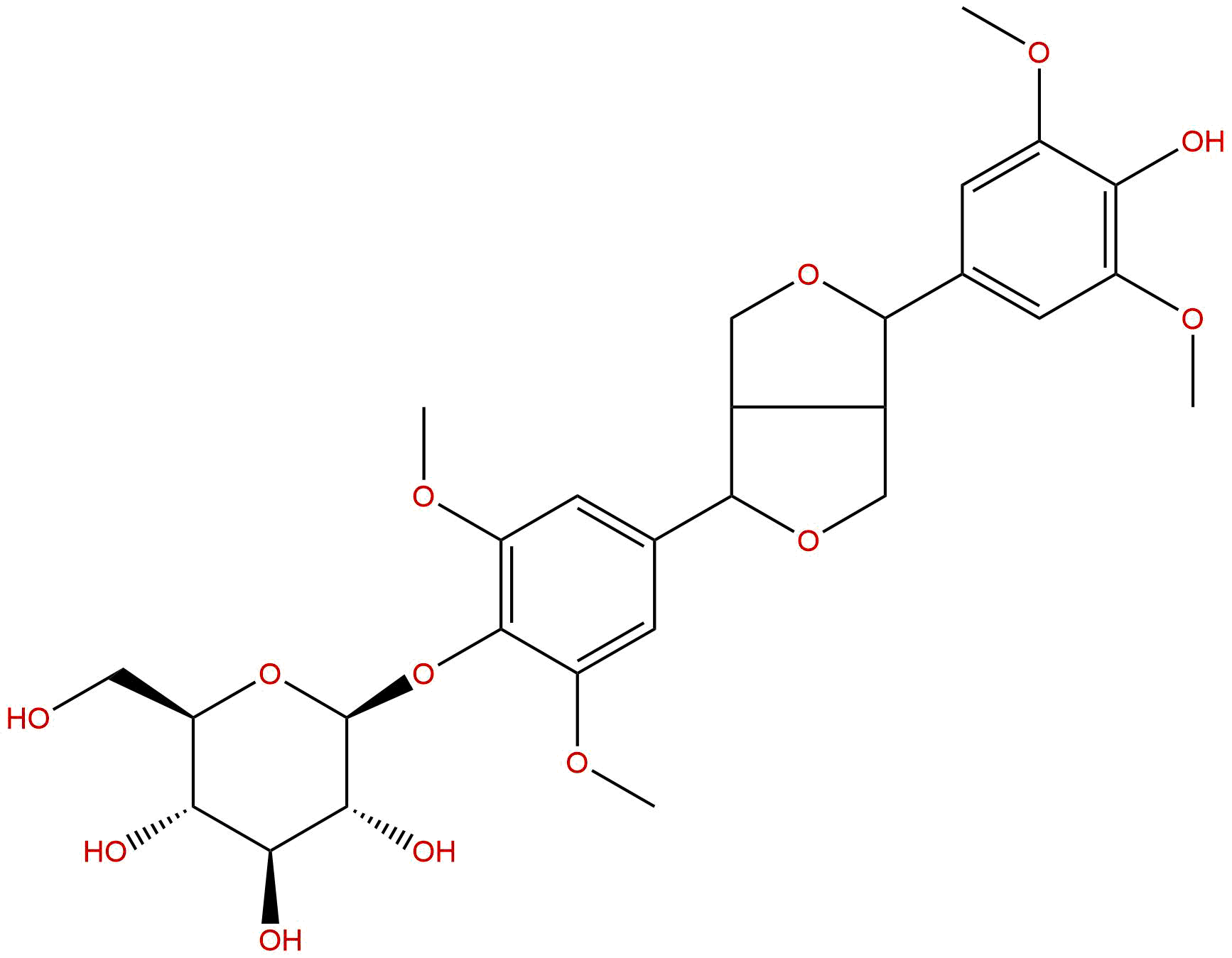
Product name: Acanthoside B
Synonym name: Eleutheroside E1;(+)-Syringaresinol 4-O-β-D-glucoside,(+)-Syringaresinol 4'-O-β-D-glucoside
Catalogue No.: SBP00183
Cas No.: 7374-79-0
Formula: C28H36O13
Mol Weight: 580.583
Botanical Source:
Physical Description: Powder
Type of Compound: Lignans
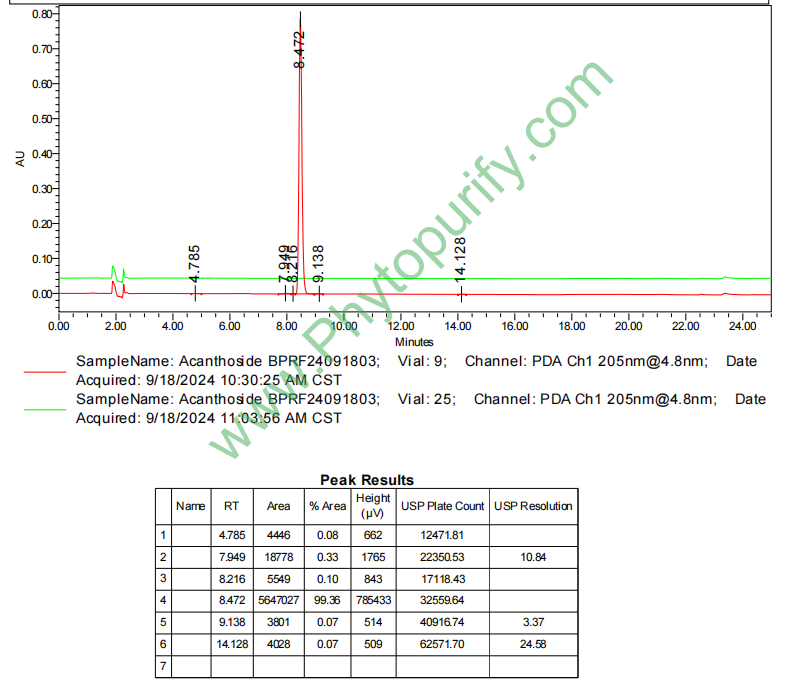
Purity: 95%~99%
Analysis Method: HPLC-DAD or/and HPLC-ELSD
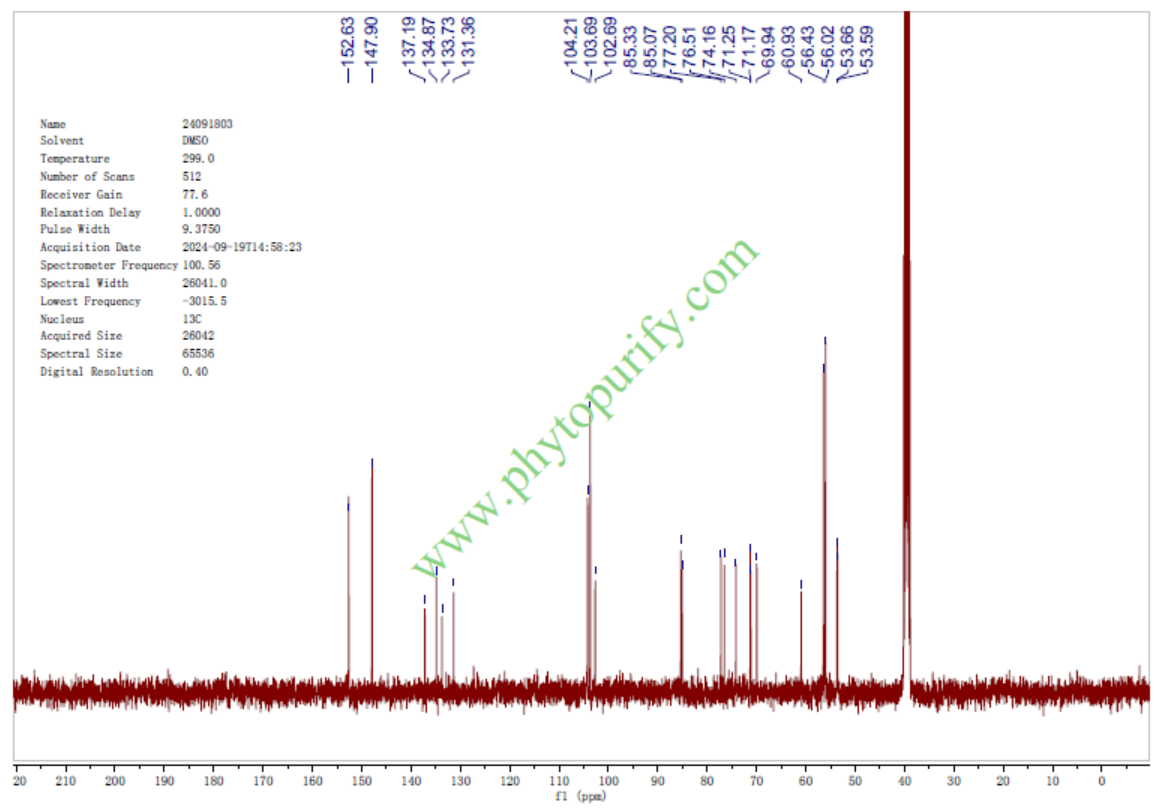
Identification Method: Mass, NMR
Packing: Brown vial or HDPE plastic bottle
The product could be supplied from milligrams to grams. Inquire for bulk scale.
We provide solution to improve the water-solubility of compounds, thereby facilitating the variety of activity tests and clinic uses.
For Reference Standard and R&D, Not for Human Use Directly.
HPLC of Eleutheroside E1
NMR of Eleutheroside E1
Storage conditions:Short-term storage at 2~8℃, long-term storage at -20 ~ -80℃
174.9900
.6293
.6272
2.0719
.7450
.1750
Low
75.2514
4.6147
Yes
No
No
No
No
No
0.0
Yes
No
Yes
Yes
Eleutheroside E1 is a natural product isolated from Eleutherococcus senticosus and belongs to the glycoside class of compounds. Ciwujia, as a traditional Chinese medicinal herb, has been widely studied for its significant immunomodulatory and anti fatigue effects. In recent years, with the deepening of natural medicine research, Ciwujia glycoside E1 has gradually become a research hotspot in the field of immune regulation due to its unique chemical structure and multi-target pharmacological activity. This compound not only exhibits potential in regulating immune system function, but also demonstrates regulatory effects on multiple signaling pathways, particularly closely related to key immune related molecules such as TLR4, STAT3, NFKB1, etc. This article aims to systematically review the chemical structure, sources, pharmacological activity, mechanism of action, and pharmacological evaluation of Ciwujia glycoside E1, and explore its potential clinical application value in immune regulation related diseases.
The molecular formula of Ciwujia glycoside E1 is C28H44O12, with a molecular weight of 580.5830 and a CAS number of 7374-79-0. Its chemical structure belongs to the glycoside class, containing multiple hydroxyl and sugar groups, giving it good water solubility (2.0719) and low lipid solubility (LogP of 0.6293). The polar surface area (TPSA) of this compound is as high as 174.99 Å ², indicating its abundant polar groups, which may affect its biofilm permeability and in vivo distribution. The low blood-brain barrier permeability of Ciwujia glycoside E1 suggests its limited role in the central nervous system. In addition, the hERG channel inhibition experiment showed a negative result, indicating a low risk of cardiac toxicity; The Ames test result is 0.0, indicating no significant mutagenicity and meeting safety requirements.
In terms of chemical structure, Acanthopanax senticosus glycoside E1 contains a steroid skeleton and a glycoside moiety, which is structurally stable and suitable for obtaining through various extraction and purification techniques. The presence of multiple hydroxyl groups provides a possible basis for its binding to various protein targets, which is one of the molecular foundations for its immunomodulatory effects.
The main source of Eleutherococcus senticosus E1 is Eleutherococcus senticosus, a plant in the Araliaceae family. This plant is widely distributed in East Asia, especially in Northeast China, the Korean Peninsula, and the Russian Far East. As a traditional medicinal plant, Ciwujia contains various active ingredients in its roots, stems, and leaves, among which glycosides are one of its main bioactive components.
The common methods for extracting Ciwujia glycoside E1 include solvent extraction, ultrasound assisted extraction, and high-performance liquid chromatography (HPLC) purification. Generally, ethanol or methanol is used as the extraction solvent, combined with aqueous extraction to improve the recovery rate of polar glycosides. After concentration, separation, and purification, the extract is subjected to component identification and content determination using HPLC or liquid chromatography-mass spectrometry (LC-MS) technology. In recent years, the application of supercritical fluid extraction and membrane separation technology has improved extraction efficiency and purity, providing technical support for the large-scale preparation of Acanthopanax senticosus glycoside E1.
Ciwujia glycoside E1 has shown significant immunomodulatory activity in multiple in vitro and in vivo studies. Its main pharmacological effects are focused on regulating immune cell function, inhibiting inflammatory responses, and regulating immune signaling pathways.
Immune cell regulation
Ciwujia glycoside E1 can promote T cell proliferation and activation, enhance the phagocytic ability of natural killer cells (NK cells) and macrophages. Research has shown that this compound can upregulate the expression of IL-2 and IFN - γ, promote cellular immune response, and maintain immune homeostasis by regulating the balance of FOXP3 positive regulatory T cells (Treg).
anti-inflammatory effect
Ciwujia glycoside E1 reduces the release of pro-inflammatory factors such as TNF - α and IL-6 by inhibiting the NFKB1 signaling pathway, thereby alleviating the inflammatory response. It has a significant inhibitory effect on TLR4 mediated inflammatory signals, indicating its potential application value in infectious and autoimmune diseases.
Antioxidant and Cellular Protection
This compound exhibits antioxidant activity, capable of clearing free radicals, reducing cellular damage caused by oxidative stress, and thus protecting immune cell function and tissue integrity.
Regulating cytokine network
Ciwujia glycoside E1 regulates the expression of various cytokines such as TGFB1, IL10, and STAT family members, and participates in regulating the balance of immune tolerance and inflammatory response.
The immunomodulatory effect of Ciwujia glycoside E1 involves multiple signaling pathways and key molecular targets, and the specific mechanism is as follows:
TLR4 signaling pathway
As an important receptor of innate immunity, TLR4 recognizes pathogen associated molecular patterns (PAMPs) and initiates downstream inflammatory signals. Ciwujia glycoside E1 achieves anti-inflammatory effects by inhibiting TLR4 activation, blocking MyD88 dependent signaling, reducing NFKB1 nuclear translocation, and lowering the expression of pro-inflammatory cytokines.
STAT signaling pathway
Ciwujia glycoside E1 regulates the activity of STAT3 and STAT4, affecting cytokine signaling. The regulation of STAT3 helps to suppress inflammatory responses and promote immune tolerance, while STAT4 is involved in enhancing cellular immune responses. By regulating these two factors, Ciwujia glycoside E1 achieves bidirectional regulation of the immune system.
Cytokine regulation
Ciwujia glycoside E1 promotes the expression of IL2 and IFNG, enhances T cell proliferation and effector function. Meanwhile, upregulating IL10 and TGFB1 contributes to immune suppression and tissue repair. The regulation of CTLA4 affects immune checkpoints and regulates immune activity.
Regulatory T cell (Treg) function
By affecting FOXP3 expression, Ciwujia glycoside E1 promotes the development and function of Treg cells, maintains immune tolerance, and prevents excessive activation of autoimmune reactions.
In summary, Ciwujia glycoside E1 achieves precise regulation of the immune system through the synergistic effect of multiple targets and pathways, demonstrating excellent potential for immune regulation.
The pharmacological evaluation of Ciwujia glycoside E1 shows that it has good safety and drug compatibility. Although the molecular weight of 580.5830 is slightly higher, reasonable polarity and water solubility (2.0719) are beneficial for in vivo absorption. The LogP value of 0.6293 indicates that it has strong hydrophilicity, which may limit its ability to pass through lipid membranes, but helps with dissolution and distribution in the blood.
The low permeability of the blood-brain barrier suggests limited efficacy in the central nervous system, but this also reduces the potential risk of central neurotoxicity. HERG channel inhibition was negative and Ames test showed no mutagenicity, further confirming its safety.
In terms of pharmacokinetics, existing research is relatively limited, but it is speculated that its oral bioavailability is limited, and it may be necessary to improve the dosage form or co administration to increase the effective concentration in vivo. Its metabolic pathway has not been systematically elucidated, and it is expected to be mainly processed through the liver metabolic enzyme system. The activity and safety of metabolites need further research.
Ciwujia glycoside E1, as a natural immunomodulatory agent, has broad clinical application potential. It regulates the immune system through multiple targets and is suitable for adjuvant therapy of various immune related diseases, including autoimmune diseases, chronic inflammatory diseases, and immune dysfunction.
Autoimmune diseases
By regulating Treg cells and inhibiting inflammatory signals, Ciwujia glycoside E1 is expected to be used for the treatment of autoimmune diseases such as rheumatoid arthritis and systemic lupus erythematosus, reducing immune-mediated tissue damage.
infectious diseases
Its inhibitory effect on TLR4 and NFKB1 helps to control the excessive inflammatory response caused by infection, reduce the pathological progression of sepsis and inflammatory diseases.
Immune function regulation
In immunocompromised patients, Ciwujia glycoside E1 can enhance immune cell activity, improve body resistance, and assist in immune recovery for cancer patients and the elderly.
Potential for combination therapy
Combined with modern immunotherapy strategies, Ciwujia glycoside E1 can be used as an immune regulatory adjuvant to enhance the efficacy of immune checkpoint inhibitors and reduce side effects.
Future research needs to focus on its pharmacokinetic optimization, formulation development, and clinical trial validation, clarifying its safe and effective dosage and indication range. In addition, in-depth analysis of its molecular mechanism of action and the biological activity of its metabolites will lay a solid foundation for its clinical translation.
Ciwujia glycoside E1, as an important active ingredient in Ciwujia, has demonstrated broad medicinal value and development potential due to its unique chemical structure and multi-target immune regulatory mechanism. Its excellent safety and significant immune regulatory activity have made it a research hotspot in the field of natural product pharmacology. Although there is currently insufficient systematic research on its pharmacokinetics and clinical applications, with technological advancements and in-depth research, Ciwujia Glycoside E1 is expected to become a new generation of natural immunomodulatory drugs, providing new ideas and means for the treatment of immune related diseases. Future research should strengthen its mechanism analysis, dosage form optimization, and clinical validation to promote its transition from laboratory to clinical application and maximize the medicinal value of natural products.
