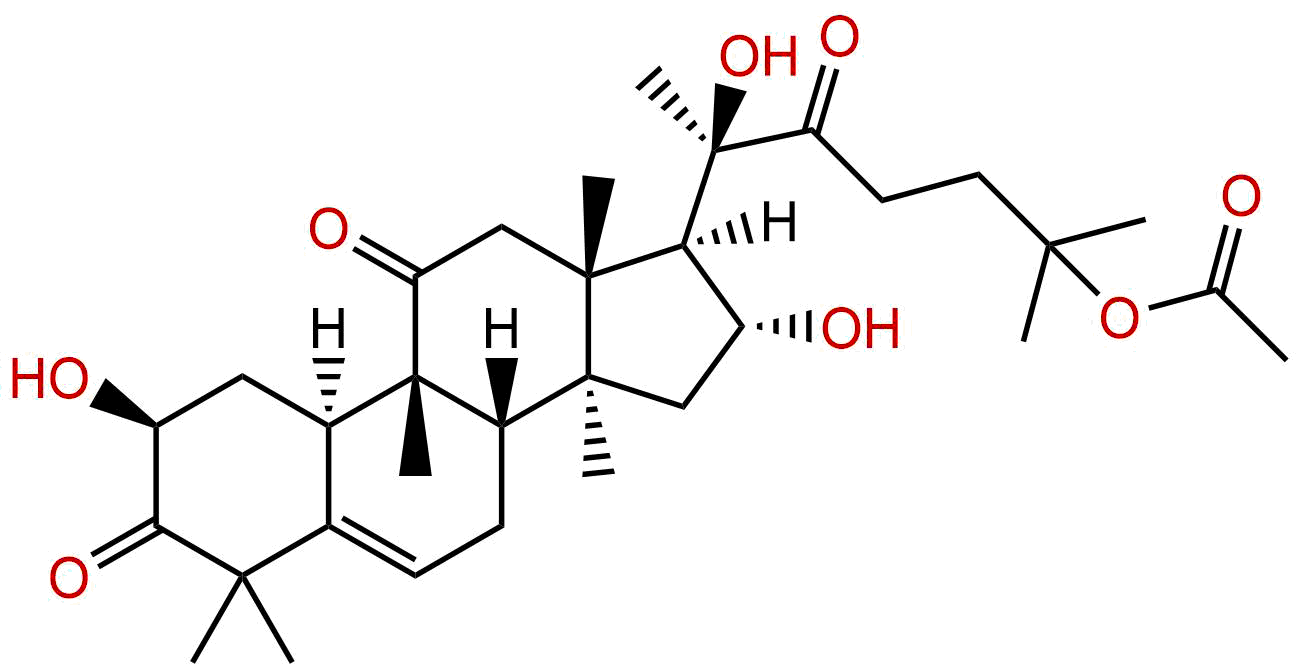


Product name: Dihydrocucurbitacin B
Synonym name:
Catalogue No.: BPF2140
Cas No.: 13201-14-4
Formula: C32H48O8
Mol Weight: 560.73
Botanical Source: Cucumis melo L.
Physical Description:
Type of Compound: Triterpenoids
Purity: 95%~99%
Analysis Method: HPLC-DAD or/and HPLC-ELSD
Identification Method: Mass, NMR
Packing: Brown vial or HDPE plastic bottle
Storage: Store in a well closed container, protected from air and light. Put into refrigerate or freeze for long term storage.
Whenever possible, you should prepare and use solutions on the same day. However, if you need to make up stock solutions in advance, we recommend that you store the solution as aliquots in tightly sealed vials at -20℃. Generally, these will be useable for up to two weeks.
The product could be supplied from milligrams to grams
Inquire for bulk scale.
For Reference Standard and R&D, Not for Human Use Directly.
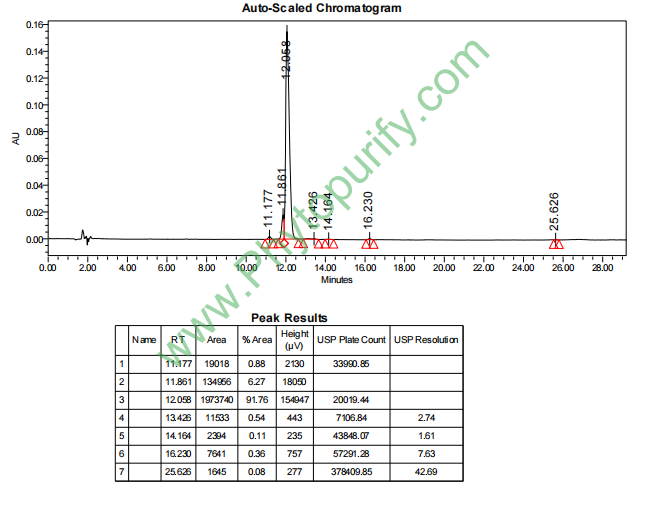
HPLC of Dihydrocucurbitacin B
Storage conditions:Short-term storage at 2~8℃, long-term storage at -20 ~ -80℃
138.2000
3.2496
3.2493
.0137
1.7375
6.6426
Low
78.0855
5.3616
No
No
No
No
No
No
0.0
Yes
No
No
Yes
Natural products, as an important source of drug discovery, play an irreplaceable role in the long history of human fight against diseases. Cucurbitacins are a class of highly oxidized tetracyclic triterpenoids, mainly distributed in Cucurbitaceae plants, known for their significant cytotoxicity and anti-tumor activity. However, its strong toxic side effects, especially gastrointestinal toxicity, severely limit its clinical translation. Finding a balance between structural diversity and biological activity has become a core research topic in this field. Dihydrocucurbitacin B (DHCB), as a derivative of cucurbitacin B (CuB) with reduced double bonds at positions 23,24, exhibits unique pharmacological properties and differentiated mechanisms of action while retaining its parent nucleus anti-tumor activity. It is gradually becoming a hot topic in natural product pharmacology research.
DHCB (CAS number: 13201-14-4) was first established in the elegant root of the tower(Erythroxylum australe)When isolated and identified from plants, its chemical structure is 23,24-dihydrocucurbitacin, which introduces a saturated bond between C-23 and C-24 of cucurbitacin B. This subtle structural modification not only changes the spatial conformation and polarity of the molecule, but also profoundly affects its interaction mode with biological targets. Unlike cucurbitacin B, which mainly exerts anti-tumor effects by inhibiting the JAK/STAT3 signaling pathway, DHCB exhibits a more complex multi-target regulatory network. Existing studies have shown that DHCB can inhibit the activity of activated T cell nuclear factor (NFAT), induce tumor cell cycle arrest in the G0 phase, and effectively suppress delayed hypersensitivity reactions, indicating its potential value in immune regulation and anti-inflammatory fields.
This article aims to systematically review the research progress of dihydrocucurbitacin B, covering its chemical structure and physicochemical properties, plant sources and extraction methods, pharmacological activity, mechanism of action and molecular targets, pharmacological evaluation and pharmacokinetic characteristics. Based on this, the clinical application prospects of dihydrocucurbitacin B are also discussed. Through in-depth analysis of this natural product, it is expected to provide theoretical basis for innovative drug design based on cucurbitacin skeleton, and open up new ideas for the development of low toxicity and high efficiency anti-tumor and immune regulating drugs.
The chemical structure of dihydrocucurbitacin B belongs to 23,24-dihydrocucurbitacin, and its core skeleton is lanostane tetracyclic triterpenoid. The skeleton is highly oxidized, with hydroxyl, methyl, and oxo (carbonyl) substituents attached to multiple carbon sites (such as C-2, C-3, C-11, C-16, C-20, C-22, C-25). Its structural characteristics can be summarized as follows: there is a double bond (Δ ⁵) at the C-5 position, forming a conjugated system of A/B rings; The hydroxyl group at position C-25 is acetylated to form an acetate group; There is a secondary alpha hydroxy ketone and a tertiary alpha hydroxy ketone structure at positions C-20 and C-22, respectively. Compared with cucurbitacin B, the most significant structural difference of DHCB is that the double bond between C-23 and C-24 is reduced to a single bond, which increases the flexibility of the side chain and changes the steric hindrance.
From the perspective of physical and chemical properties, the molecular formula of DHCB is C ∝₂ H ₄₈ O ₉, with a molecular weight of 560.7280 g/mol. The LogP of its lipid water partition coefficient is 3.2496, indicating that the compound has moderate lipophilicity, which is beneficial for its transmembrane transport. The topological polar surface area (TPSA) is 138.2000 Å ², which is a relatively high value mainly due to the presence of multiple hydroxyl and carbonyl groups in the molecule, suggesting that it may have some water solubility, but overall it still tends to be lipophilic. The calculated water solubility (LogS) is 0.0137 mg/mL, which belongs to a low water solubility compound, which may affect its bioavailability in practical applications. It is worth noting that the blood-brain barrier (BBB) penetration ability of DHCB has been evaluated as "low", which to some extent reduces its potential neurotoxic risk. In addition, the hERG inhibition prediction result was "no", and the Ames test result was 0.0, indicating that the compound did not exhibit significant mutagenicity and cardiotoxicity risks in early evaluation, providing a favorable safety window for its further drug development.
The distribution of dihydrocucurbitacin B in nature is relatively limited, mainly found in plants of the Cucurbitaceae family and a few other families and genera. Its earliest and most famous source is the elegant tower root(Erythroxylum australe)Furthermore, in Erythroxylum Other species of the genus and some gourd family plants (such as Cucurbita Belonging to Citrullus Trace amounts were also found in the roots, stems, and fruits of the genus. It is worth noting that DHCB often coexists with cucurbitacin B in plants, and the content is usually low, which poses a challenge for its large-scale acquisition.
The traditional extraction method mainly relies on organic solvent extraction. Common solvents include methanol, ethanol, ethyl acetate, or chloroform. Due to the moderate polarity of DHCB, ethanol or methanol is usually used for cold soaking or hot reflux extraction. After vacuum concentration, the extract is preliminarily purified by liquid-liquid extraction (such as petroleum ether water, chloroform water) to remove lipid soluble impurities and water-soluble sugars. Subsequently, fine separation was performed using silica gel column chromatography, reverse phase C18 column chromatography, or preparative high-performance liquid chromatography (Prep HPLC). Due to the similarity in structure between DHCB and cucurbitacin B, separation is difficult and often requires a combination of gradient elution and multiple recrystallization to obtain high-purity monomers.
In recent years, with the promotion of green chemistry concepts, some new extraction technologies have also been attempted to be applied to the extraction of DHCB. For example, supercritical fluid extraction (SFE) uses CO ₂ as a solvent and selectively extracts target compounds by adjusting pressure and temperature, with advantages such as low solvent residue and environmental friendliness. In addition, ultrasound assisted extraction (UAE) and microwave-assisted extraction (MAE) can significantly shorten extraction time and improve yield by disrupting cell wall structure. However, these methods are still in the laboratory exploration stage, and large-scale industrial production still relies mainly on traditional solvent extraction combined with modern chromatography technology. In the future, developing efficient and low-cost biosynthetic or semi synthetic methods will be a key direction to solve the bottleneck of DHCB sources.
The most notable pharmacological activity of dihydrocucurbitacin B is its anti-tumor effect. A large number of in vitro experiments have shown that DHCB has a significant proliferation inhibitory effect on a variety of human tumor cell lines, including breast cancer (MCF-7, MDA MB-231), prostate cancer (PC-3, DU145), lung cancer (A549), liver cancer (HepG2), colorectal cancer (HCT-116) and leukemia (K562). Its half maximal inhibitory concentration (IC ₅₀) is usually in the micromolar range (0.1-10 μ M), exhibiting strong cytotoxicity. It is worth noting that DHCB has relatively low toxicity to certain normal cells, such as human peripheral blood monocytes, suggesting that it may have some selectivity.
At the mechanistic level, DHCB induced cell death exhibits diversity. Research has found that DHCB can induce G0/G1 phase cell cycle arrest in tumor cells, rather than the classical G2/M phase arrest. This unique phenomenon is closely related to its inhibition of NFAT activity. NFAT is an important transcription factor involved in cell cycle regulation and immune response. DHCB inhibits the nuclear translocation of NFAT, downregulates the expression of its downstream target genes Cyclin D1 and CDK4, thereby blocking cells in the G0 phase and putting them into a quiescent state, thereby inhibiting tumor proliferation. In addition, DHCB can induce cell apoptosis through the mitochondrial pathway by activating Caspase-3/9, upregulating the Bax/Bcl-2 ratio. Some studies have also observed that DHCB can induce autophagic cell death, but its specific mechanism remains to be elucidated.
In addition to its direct anti-tumor effect, DHCB also exhibits unique value in immune regulation. Research has shown that DHCB can effectively inhibit delayed type hypersensitivity (DTH), a type IV hypersensitivity reaction mediated by T cells. In animal models, DHCB treatment can significantly reduce ear swelling and inflammatory cell infiltration. The mechanism is related to the inhibition of NFAT activity, as NFAT is a key transcription factor necessary for T cell activation. By blocking NFAT signaling, DHCB can inhibit T cell proliferation, activation, and secretion of pro-inflammatory cytokines such as IL-2 and IFN - γ. This discovery suggests that DHCB may become a novel immunosuppressant for the treatment of autoimmune diseases or transplant rejection.
In addition, DHCB also exhibits certain anti-inflammatory activity. It can inhibit the production of nitric oxide (NO) and prostaglandin E2 (PGE2) in macrophages stimulated by lipopolysaccharide (LPS), and downregulate the expression of inducible nitric oxide synthase (iNOS) and cyclooxygenase-2 (COX-2). These effects may be related to their regulation of the NF - κ B and MAPK signaling pathways. Overall, DHCB possesses dual activities of anti-tumor and immune regulation, making it potentially applicable in the field of tumor immunotherapy.
The pharmacological effects of dihydrocucurbitacin B are the result of multi-target and multi pathway synergistic regulation. Based on existing research, its core molecular mechanisms can be summarized as follows:
NFAT is one of the most clear direct targets of DHCB. DHCB inhibits the dephosphorylation and nuclear translocation of NFAT by directly binding to NFAT protein, preventing its interaction with calcineurin. Once NFAT cannot enter the nucleus, it cannot initiate the transcription of downstream target genes such as IL-2, Cyclin D1, CDK4. This mechanism not only explains the cell cycle effect of DHCB induced G0 phase arrest, but also elucidates its immunosuppressive activity in inhibiting T cell activation and DTH response. It is worth noting that DHCB has a selective inhibitory effect on NFAT, with little impact on other transcription factors such as NF - κ B and AP-1.
DHCB induces cell apoptosis by regulating the expression of Bcl-2 family proteins. It can significantly upregulate the expression of pro apoptotic proteins Bax and Bak, while downregulating the levels of anti apoptotic proteins MCL1 and BCL2. This imbalance in proportion leads to an increase in mitochondrial outer membrane permeability, releasing cytochrome c, which in turn activates Caspase-9 and Caspase-3, initiating a cascade apoptotic response. In addition, DHCB can also inhibit the phosphorylation of STAT3. STAT3 is a key oncogenic transcription factor, and its sustained activation is associated with the proliferation, invasion, and drug resistance of various tumors. DHCB further enhances its anti-tumor effect by inhibiting the activation of STAT3 and downregulating its downstream target genes (such as Survivor, VEGF, Cyclin D1).
The invasion and metastasis of tumors are the main causes of patient death. DHCB can inhibit the activity of matrix metalloproteinases MMP2 and MMP9, thereby reducing the degradation of extracellular matrix and hindering the migration and invasion of tumor cells. In addition, DHCB can also inhibit the formation of tumor neovascularization by suppressing the expression of HIF1A and reducing the secretion of hypoxia induced angiogenic factors (such as VEGF). These effects collectively constitute the molecular basis of DHCB's anti metastatic properties.
DHCB can also inhibit the activity of topoisomerases TOP1 and TOP2A. Topoisomerase plays a crucial role in DNA replication, transcription, and repair, and its inhibition can lead to DNA damage and cell death. In addition, the regulation of DHCB on estrogen receptor ESR1 and aromatase CYP19A1 suggests that DHCB may have special therapeutic value in hormone dependent tumors (such as breast cancer). By inhibiting aromatase activity, DHCB can reduce the synthesis of estrogen, thereby inhibiting the growth of estrogen receptor positive breast cancer cells.
In summary, DHCB forms a complex network regulatory system by simultaneously acting on multiple targets such as NFAT, STAT3, Bcl-2 family, MMP, HIF1A, TOP1/2A, ESR1, and CYP19A1. This multi-target characteristic makes DHCB potentially advantageous in overcoming tumor heterogeneity and drug resistance, but it also increases the complexity of its mechanism of action research.
The success of drug development depends not only on the efficacy of the drug, but also on its drug properties, namely good pharmacokinetic characteristics and safety. Based on computational predictions and preliminary experimental data, conduct a systematic evaluation of the pharmacological properties of DHCB.
According to Lipinski's five rules, the molecular weight of DHCB (560.7) is slightly higher than 500, LogP (3.25) is within an acceptable range, and the number of hydrogen bond donors (5 hydroxyl groups) and hydrogen bond acceptors (9 oxygen atoms) conforms to the rules. Although the molecular weight exceeds the standard, considering that many successful drugs in natural products, such as paclitaxel and rapamycin, have high molecular weights, DHCB still has a certain degree of drug like properties. Its TPSA (138.2 Å ²) is relatively high, indicating that oral absorption may be limited, but it can be improved through prodrug design or formulation technology.
At present, there are few reports on the pharmacokinetics of DHCB in vivo, but speculation can be made based on its structural characteristics. Due to poor water solubility (LogS=0.0137 mg/mL), the oral bioavailability of DHCB may be low. Its high lipophilicity facilitates passive diffusion into cells, but may also lead to accumulation in the liver and adipose tissue. In terms of metabolism, the acetyl and hydroxyl groups of DHCB are potential metabolic sites that may be eliminated through esterase hydrolysis or glucuronic acid binding reactions. Its low BBB penetration ability is a favorable feature that can avoid central nervous system side effects.
Early toxicological assessments showed that DHCB has a low risk of hERG inhibition and a negative Ames test, indicating no significant mutagenicity or cardiac toxicity. However, as a member of the cucurbitacin family, DHCB may still retain some gastrointestinal toxicity. In fact, severe diarrhea and hepatotoxicity of cucurbitacin B are the main reasons for its clinical failure. Due to structural modifications, the toxicity spectrum of DHCB may be improved, but the specific toxic target organs and dose dependence still need to be confirmed through systematic in vivo toxicology experiments. In addition, its inhibitory effect on NFAT may pose an immune suppression related infection risk, which needs to be monitored during long-term medication.
The unique pharmacological activity spectrum and relatively favorable safety window of dihydrocucurbitacin B have opened up multiple possible directions for its clinical application.
The most direct application prospect of DHCB is as a candidate anti-tumor drug. Its multi-target mechanism of action, especially its dual inhibition of NFAT and STAT3, makes it promising for the treatment of tumors resistant to traditional chemotherapy. For example, DHCB may play a unique role in the triple negative breast cancer and pancreatic cancer where STAT3 is continuously activated. In addition, the characteristic of DHCB inducing G0 phase arrest allows it to be used in combination with cell cycle specific drugs such as paclitaxel and vinblastine to synchronize tumor cells in the G0 phase and enhance chemotherapy sensitivity. In the future, the development of novel delivery systems such as nanoliposomes and polymer micelles for DHCB is expected to improve its water solubility, targeting, and bioavailability, while reducing systemic toxicity.
Given the inhibitory effect of DHCB on NFAT, it may become a novel immunosuppressant for the treatment of autoimmune diseases such as rheumatoid arthritis, psoriasis, and systemic lupus erythematosus. Compared with existing calcineurin inhibitors such as cyclosporine A and tacrolimus, DHCB may have a different spectrum of side effects, especially in avoiding nephrotoxicity and neurotoxicity. However, its immunosuppressive intensity, treatment window, and long-term safety still need to be validated through rigorous clinical trials.
In recent years, immune checkpoint inhibitors (such as PD-1/PD-L1 antibodies) have made breakthrough progress in tumor treatment, but the response rate is limited. The immunomodulatory activity of DHCB may provide new strategies for combination therapy. On the one hand, DHCB can reduce the activity of regulatory T cells (Tregs) and enhance anti-tumor immune response by inhibiting NFAT; On the other hand, its direct killing effect on tumor cells can release tumor antigens and activate specific T cells. Therefore, the combined application of DHCB and PD-1 inhibitors is expected to achieve the transformation from "cold tumors" to "hot tumors" and improve the effectiveness of immunotherapy.
The structure of DHCB provides abundant modification sites for medicinal chemists. In the future, through systematic structure-activity relationship (SAR) studies, a series of DHCB derivatives can be designed and synthesized with the aim of enhancing activity, reducing toxicity, and improving pharmacokinetic properties. For example, modifying the C-25 acetyl group may alter its metabolic stability; Alkylation or glycosylation of hydroxyl groups at C-2, C-3, and C-11 positions may regulate their water solubility and targeting properties. In addition, based on the eutectic structure of DHCB and NFAT proteins, computer-aided drug design (CADD) is expected to develop highly selective NFAT inhibitors.
Dihydrocucurbitacin B, as a unique new star in the cucurbitacin family, exhibits distinct pharmacological activity and mechanism of action from its parent compound cucurbitacin B due to its 23,24-dihydrogenated structural characteristics. It not only retains significant anti-tumor activity, but also opens up new application areas for immune regulation and anti-inflammatory by inhibiting the NFAT signaling pathway. Its multi-target mode of action, including regulation of MCL1, BCL2, STAT3, MMP2, TOP1, HIF1A, ESR1, and CYP19A1, reveals its enormous potential as a therapeutic drug for complex diseases.
However, from laboratory discoveries to clinical applications, DHCB still faces many challenges. Its low water solubility, potential gastrointestinal toxicity, and unclear pharmacokinetic characteristics in vivo are the key bottlenecks restricting its transformation. Future research should focus on the following aspects: firstly, conducting in-depth in vivo pharmacological and toxicological studies to clarify their therapeutic window and toxic target organs; The second is to use modern medicinal chemistry methods to optimize the structure and improve drug properties; Thirdly, develop advanced drug delivery systems to achieve targeted delivery and sustained release; The fourth is to explore its combined application strategy with existing anti-tumor drugs or immunotherapy.
In summary, dihydrocucurbitacin B is a natural product that combines academic value and development potential. In depth research on it not only helps to understand the structure-activity relationship of cucurbitacin compounds, but also provides valuable lead compounds for the development of a new generation of low toxicity and efficient anti-tumor and immune regulating drugs. With advances in synthetic biology, structural biology, and nanomedicine, we have reason to believe that dihydrocucurbitacin B and its derivatives will eventually play their rightful role in human health.
