| Catalog No | Package | Original Price | Price | Inventory | Quantity | Operating |
|---|---|---|---|---|---|---|
| BPF0324-5mg | 5mg | $420.00 | Sign in |
|


Storage conditions:Short-term storage at 2~8℃, long-term storage at -20 ~ -80℃
158.4300
2.5752
2.5751
.0516
1.5548
5.9863
Low
75.1465
5.5312
No
No
No
No
No
No
0.0
Yes
No
Yes
Yes
Natural products, as an important source of drug discovery, play an irreplaceable role in the long history of human fight against diseases. Among them, cucurbitacins derived from Cucurbitaceae plants are a class of highly oxidized tetracyclic triterpenoids that have attracted much attention for their significant biological activity and unique chemical structure. Since its first isolation and identification in the 1950s, more than 50 members of the cucurbitacin family have been discovered, among which cucurbitacin A, as an important representative of this family, has become one of the hotspots in natural product pharmacology research due to its outstanding anti-cancer activity.
Hulusin A (CAS number: 6040-19-3) is mainly derived from cantaloupe(Cucumis melo)It is a highly oxidized tetracyclic triterpenoid saponin isolated from plants in the Cucurbitaceae family. In traditional medicine, plant extracts containing cucurbitacin are used to treat various diseases such as inflammation, liver disease, and tumors. Modern pharmacological research has confirmed that cucurbitacin A exhibits broad-spectrum anti-tumor activity, which can inhibit tumor cell proliferation, induce apoptosis, inhibit angiogenesis and metastasis through multi-target and multi pathway pathways. Its mechanism of action involves the regulation of multiple key targets such as MCL1, BCL2, STAT3, MMP2, TOP1, HIF1A, TOP2A, MAPK1, ESR1, CYP19A1, etc., demonstrating great potential as a lead compound for novel anti-tumor drugs.
However, the clinical application of cucurbitacin A still faces many challenges, including its relatively high cytotoxicity, poor water solubility, and complex pharmacokinetic properties. This article aims to systematically review the chemical structure and physicochemical properties, plant sources and extraction methods, pharmacological activity, mechanism of action, pharmacological evaluation, and clinical application prospects of cucurbitacin A, in order to provide comprehensive scientific basis for the in-depth research and development of this natural product.
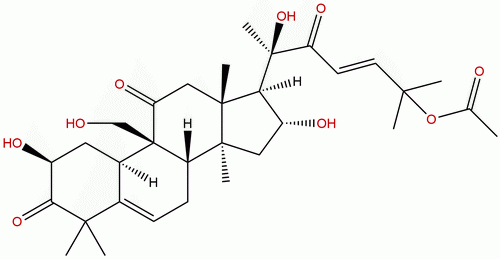
Hulusin A belongs to the cucurbitane tetracyclic triterpenoid class, with a core skeleton of 19- (10 → 9 β) - abeo-10 α - lanost-5-ene, which has a unique 9 β - methyl-19-lanostane structure. This structural feature distinguishes it from other triterpenoid compounds and endows it with special biological activity. The molecular formula of cucurbitacin A is C ∝₂ H ₄₆ O ₉, with a molecular weight of 574.7110 g/mol. Its structure contains multiple hydroxyl groups, carbonyl groups, and one acetoxy group, and the presence of these functional groups not only determines its chemical reactivity, but also closely relates to its pharmacological effects. Specifically, the A ring of cucurbitacin A is an α, β - unsaturated ketone structure, with multiple hydroxyl substituents on the C and D rings. The side chain contains a unit with a conjugated diene ketone structure, which is considered a key pharmacophore for its anti-tumor activity.
In terms of physicochemical properties, cucurbitacin A exhibits typical triterpenoid saponin characteristics. Its lipid water partition coefficient (LogP) is 2.5752, indicating that it has a certain lipophilicity, which is beneficial for it to penetrate the cell membrane and enter the cell to exert pharmacological effects. However, its topologically polar surface area (TPSA) is as high as 158.4300 Å ², reflecting the presence of a large number of polar groups (such as hydroxyl and carbonyl) in the molecule. A higher TPSA usually means that the molecule has good water solubility, but the measured water solubility of cucurbitacin A is only 0.0516 mg/mL, which is a poorly soluble compound. This seemingly contradictory phenomenon may be related to the formation of intramolecular hydrogen bonds and the tight packing of crystal structures. Low water solubility is one of the main obstacles limiting the bioavailability and formulation development of cucurbitacin A.
In addition, cucurbitacin A is unstable under acidic or alkaline conditions and is prone to hydrolysis, oxidation, or rearrangement reactions. The α, β - unsaturated ketone structures in its molecule are sensitive to nucleophiles and can undergo Michael addition reactions with thiol compounds such as glutathione (GSH) in the body. This is not only one of the mechanisms by which it exerts biological activity, but also a potential cause of its toxicity. Under light and high temperature conditions, cucurbitacin A is also prone to degradation, so it needs to be stored away from light and at low temperatures during storage and experimentation.
Cucurbitacin A is mainly found in the roots, stems, leaves, and fruits of Cucurbitaceae plants, including cantaloupe(Cucumis melo)The roots and fruits are the most abundant in content. In addition, in cucumber(Cucumis sativus)Bitter gourd(Momordica charantia)Silk gourd(Luffa cylindrica)And spraying melons(Ecballium elaterium)It has also been found in plants. There are significant differences in the content of cucurbitacin A among different plant species, tissue parts, and growth stages. Usually, the content is higher in the roots and immature fruits of plants, while it is lower in the leaves and mature fruits. In addition, environmental factors such as light, temperature, moisture, and soil conditions can also affect the accumulation of cucurbitacin A in plants.
The traditional extraction method of cucurbitacin A is mainly based on solvent extraction. Due to the good solubility of cucurbitacin A in organic solvents such as methanol, ethanol, and ethyl acetate, ethanol or methanol is often used for soaking or reflux extraction of dried plant powders. To improve extraction efficiency, ultrasound assisted extraction or microwave-assisted extraction techniques can be used, which can destroy plant cell walls and accelerate the dissolution of target compounds. After the extraction solution is concentrated under reduced pressure, crude extract is obtained. Due to the high content of lipophilic impurities and other cucurbitacin analogues in the crude extract, further separation and purification are required.
Modern separation and purification techniques have been widely used in the preparation of cucurbitacin A. Liquid liquid extraction is a commonly used method for preliminary separation. By utilizing the difference in distribution coefficients of cucurbitacin A in different solvents and performing graded extraction using solvents such as petroleum ether, chloroform, and ethyl acetate, most non-polar impurities can be removed. Subsequently, column chromatography became the core step of purification. Silica gel column chromatography is the most classic method, which uses gradient elution systems such as chloroform methanol or petroleum ether acetone to achieve preliminary separation of cucurbitacin A from other cucurbitacin analogues. For compounds with highly similar structures, high-performance liquid chromatography (HPLC) or preparative thin layer chromatography (PTLC) provide higher separation efficiency. In recent years, high-speed countercurrent chromatography (HSCCC) has been successfully applied as a liquid-liquid distribution chromatography technique for the efficient separation of cucurbitacin A due to its advantages of irreversible adsorption and high sample recovery rate. In addition, new separation methods such as molecular imprinting technology are also being explored to achieve targeted and efficient extraction of cucurbitacin A.
The pharmacological activity research of cucurbitacin A mainly focuses on the field of anti-tumor, and a large number of in vitro and in vivo experiments have confirmed its broad-spectrum anti-cancer effect. In vitro experiments, cucurbitacin A showed significant inhibitory effects on the proliferation of a variety of human cancer cell lines, including breast cancer (MCF-7, MDA MB-231), prostate cancer (PC-3, LNCaP), lung cancer (A549, H1299), liver cancer (HepG2, Huh7), colorectal cancer (HCT-116, HT-29), pancreatic cancer (PANC-1), ovarian cancer (SKOV3) and leukemia (K562, HL-60). Its half maximal inhibitory concentration (IC ₅₀) is typically in the nanomolar to micromolar range, exhibiting strong cytotoxicity. It is worth noting that cucurbitacin A is also effective against certain drug-resistant tumor cell lines, suggesting its potential to overcome multidrug resistance (MDR).
In in vivo animal models, cucurbitacin A also showed good anti-tumor effects. For example, in nude mice xenograft tumor model, intraperitoneal injection or oral administration of cucurbitacin A can significantly inhibit the growth of breast cancer, lung cancer and liver cancer xenografts, and prolong the survival period of tumor bearing mice. Histopathological analysis showed that extensive areas of cell apoptosis and necrosis were observed in the tumor tissues of the cucurbitacin A treatment group, while microvascular density decreased, indicating its inhibitory effect on tumor angiogenesis.
In addition to its direct anti-tumor activity, cucurbitacin A also exhibits other important pharmacological effects. Research has shown that cucurbitacin A has significant anti-inflammatory activity, which can inhibit the production of nitric oxide (NO) and prostaglandin E2 (PGE2) in macrophages induced by lipopolysaccharide (LPS), and downregulate the expression of pro-inflammatory cytokines such as tumor necrosis factor - α (TNF - α) and interleukin-6 (IL-6). In addition, cucurbitacin A also exhibits antiviral activity, particularly inhibiting certain RNA viruses such as influenza virus and enterovirus. Its antiviral mechanism may be related to interfering with the virus replication cycle or regulating the host immune response. However, there is relatively little research on these non anti-tumor activities, and their specific mechanisms and potential application value need further exploration.
The anti-tumor mechanism of cucurbitacin A is extremely complex, involving the regulation of multiple signaling pathways and molecular targets, exhibiting the characteristics of multi-target and multi pathway. The core mechanism can be summarized as follows:
1. Inducing cell apoptosis: Hulusin A induces tumor cell apoptosis through two pathways: endogenous (mitochondrial) and exogenous (death receptor). In the intrinsic pathway, cucurbitacin A can downregulate the expression of anti apoptotic proteins MCL1 and BCL2, while upregulating the levels of pro apoptotic proteins BAX and BAK, leading to loss of mitochondrial membrane potential, release of cytochrome c, and activation of the Caspase-9 and Caspase-3 cascade reaction. In external pathways, cucurbitacin A can upregulate the expression of death receptors Fas and DR5, and activate Caspase-8. In addition, cucurbitacin A can also inhibit the transcriptional activity of STAT3 by suppressing its phosphorylation. STAT3, as an important transcription factor, its sustained activation can promote the transcription of anti apoptotic genes such as MCL1 and BCL2. Therefore, inhibiting the STAT3 signaling pathway is one of the key mechanisms by which cucurbitacin A induces apoptosis.
2. Inhibit cell proliferation and cycle arrest: Hulusin A can arrest the tumor cell cycle in the G2/M phase or G0/G1 phase. Its mechanism involves the regulation of cyclins and cyclin dependent kinases (CDKs). For example, cucurbitacin A can downregulate the expression of Cyclin B1 and CDK1, resulting in cells being unable to enter the mitotic phase. Meanwhile, it can also upregulate the levels of CDK inhibitors such as p21 and p27, thereby inhibiting the progression of the cell cycle. MAPK1 (i.e. ERK2) is a key member of the RAS-RAF-MEK-ERK signaling pathway, and its abnormal activation is closely related to cell proliferation. Research has shown that cucurbitacin A can inhibit the phosphorylation of MAPK1, thereby blocking the transmission of this pro proliferative signaling pathway.
3. Inhibit tumor invasion and metastasis: The invasion and metastasis of tumors are the main causes of death in cancer patients. Hulusin A can significantly inhibit the migration and invasion ability of tumor cells. Matrix metalloproteinases (MMPs), especially MMP2, play a crucial role in degrading extracellular matrix and promoting tumor cell infiltration. Hulusin A can weaken the invasive ability of tumor cells by inhibiting the activity of transcription factors AP-1 or NF - κ B, downregulating the expression of MMP2. In addition, cucurbitacin A can also inhibit epithelial mesenchymal transition (EMT), which is a key step for tumor cells to acquire migration and invasion abilities.
4. Inhibit tumor angiogenesis: The growth and metastasis of solid tumors depend on the generation of new blood vessels. Hypoxia inducible factor-1 alpha (HIF1A) is a core transcription factor that responds to hypoxic environments and can upregulate the expression of vascular endothelial growth factor (VEGF), driving angiogenesis. Hulusin A can reduce the stability of HIF1A by inhibiting its protein synthesis or promoting its degradation, thereby reducing the secretion of VEGF and inhibiting tumor angiogenesis.
5. Interference with DNA topology: Hulusin A has been found to be an inhibitor of DNA topoisomerase I (TOP1) and topoisomerase II alpha (TOP2A). Topoisomerase is crucial in DNA replication, transcription, and repair processes. Hulusin A induces tumor cell death by stabilizing topoisomerase DNA cleavage complexes, leading to DNA double strand breaks. This mechanism is similar to the widely used camptothecin (TOP1 inhibitor) and etoposide (TOP2 inhibitor) in clinical practice.
6. Regulating hormone signaling pathways: For hormone dependent tumors, such as breast cancer, cucurbitacin A shows a unique role. It can downregulate the expression of estrogen receptor alpha (ESR1) and inhibit the activity of aromatase (CYP19A1). CYP19A1 is a key enzyme that converts androgen into estrogen. Its inhibition of activity can reduce the estrogen level in vivo, thus inhibiting the growth of estrogen receptor positive breast cancer cells.
In summary, cucurbitacin A forms a complex anti-tumor network by simultaneously acting on multiple key targets such as MCL1, BCL2, STAT3, MMP2, TOP1, HIF1A, TOP2A, MAPK1, ESR1, CYP19A1, etc., which gives it potential advantages in overcoming the susceptibility of single target drugs to drug resistance.
Although cucurbitacin A exhibits strong anti-tumor activity both in vitro and in vivo, its drug like evaluation reveals significant challenges in developing it into a clinical drug. According to Lipinski's "Rule of Five," an ideal candidate drug should meet the following criteria: molecular weight<500, LogP<5, Hydrogen bond donor<5, hydrogen bond acceptor<10. The molecular weight of cucurbitacin A is 574.71, exceeding the threshold of 500; The number of hydrogen bond donors and acceptors is also relatively high. Although the LogP value (2.5752) meets the requirements, exceeding the molecular weight limit is the main obstacle. In addition, the Ames test result was 0.0, indicating that it does not have significant mutagenicity, which is a favorable aspect. The hERG inhibition test result is negative, indicating a low risk of causing QT interval prolongation in the heart.
The pharmacokinetic (PK) characteristics are a key factor determining whether a drug can successfully enter clinical practice. The pharmacokinetic study of cucurbitacin A is not yet sufficient, but existing data reveals the challenges it faces. Firstly, its poor water solubility (0.0516 mg/mL) results in extremely low oral bioavailability. Animal experiments have shown that after oral administration of cucurbitacin A, the plasma drug concentration is very low, making it difficult to achieve effective therapeutic levels. Secondly, cucurbitacin A may undergo extensive metabolism in the body. The hydroxyl and carbonyl groups in its molecule are potential sites of action for phase I metabolic enzymes (such as CYP450 enzyme system), while phase II metabolic reactions such as glucuronidation and sulfation may also occur. The activity and toxicity of metabolites are not yet clear. In addition, the blood-brain barrier (BBB) penetration ability of cucurbitacin A is relatively low, which reduces the risk of central neurotoxicity but also limits its application in the treatment of brain tumors.
In terms of distribution, cucurbitacin A may be widely distributed in tissues throughout the body, especially in the liver and kidneys, which may be the main sites of its metabolism and excretion. Its half-life (t ₁/₂) may be short and requires frequent administration to maintain effective blood drug concentration. The main excretion pathways may be bile and urine.
To overcome these barriers to drug development, researchers are exploring various strategies.Structural modification This is the main direction for improving drug properties. By chemically modifying specific functional groups of cucurbitacin A, such as introducing hydrophilic groups (such as phosphate groups, amino acid esters) or preparing prodrugs, its water solubility and bioavailability can be improved.Nanoformulation technology Such as liposomes, polymer micelles, albumin nanoparticles, etc., can encapsulate cucurbitacin A, improve its solubility, stability, and targeting, while reducing systemic toxicity.Drug delivery system For example, antibody drug conjugates (ADCs) can specifically deliver cucurbitacin A to the tumor site, achieving precise treatment.
Although the pharmacological properties of cucurbitacin A face challenges, its unique anti-tumor mechanism and strong activity still have broad prospects for clinical translation. At present, cucurbitacin A has not yet entered clinical trials as a single drug, but its derivatives or analogues, as well as plant extract preparations containing cucurbitacin A, have been used as traditional medicines or health supplements in some countries and regions.
Looking ahead to the future, research and development of cucurbitacin A should focus on the following directions:
1. Mechanism based combination therapy strategy: Given the multi-target nature of cucurbitacin A, its combination with existing chemotherapy drugs or targeted drugs may result in synergistic and attenuated effects. For example, the combination of cucurbitacin A and paclitaxel (microtubule inhibitor) can enhance the blockade of G2/M phase; Combined with cisplatin (a DNA damaging agent), it can synergistically induce apoptosis; Combined with immune checkpoint inhibitors such as PD-1/PD-L1 antibodies, it may enhance anti-tumor immune response by inducing immunogenic cell death (ICD). Systematic combination therapy research is a shortcut to promoting its clinical application.
2. Development of new drug delivery systems: The use of nanotechnology to solve the water solubility and toxicity problems of cucurbitacin A is currently a research hotspot. Designing nanocarriers with tumor microenvironment responsiveness (such as pH response and enzyme response) can achieve targeted release of cucurbitacin A, improve therapeutic efficacy, and reduce damage to normal tissues. In addition, developing oral formulations such as self microemulsifying drug delivery systems (SMEDDS) to improve their oral bioavailability will greatly facilitate patient medication.
3. Research on structural optimization and structure-activity relationship: A deep understanding of the structure-activity relationship (SAR) of cucurbitacin A is the foundation for developing better derivatives. By modifying the structure of the system, identify which functional groups are crucial for activity and which can be modified to improve pharmacokinetic properties. For example, retaining key pharmacophores such as alpha and beta unsaturated ketones while introducing groups that improve water solubility and metabolic stability is expected to result in candidate compounds with stronger activity, lower toxicity, and better pharmacokinetic properties.
4. Expand indication research: In addition to anti-tumor effects, the anti-inflammatory and antiviral activities of cucurbitacin A are also worth exploring in depth. Especially in the treatment of chronic inflammation related diseases such as arthritis and inflammatory bowel disease, as well as newly emerging viral infectious diseases such as COVID-19, cucurbitacin A may play a unique role. Exploring its applications in these non tumor fields can broaden its clinical value.
5. Precision medicine and biomarker research: Finding biomarkers that can predict the efficacy of cucurbitacin A is crucial for achieving personalized treatment. For example, high expression of STAT3, MCL1, or HIF1A in tumor tissue may indicate sensitivity of patients to cucurbitacin A treatment. By accurately screening advantageous populations, the success rate of clinical trials can be maximized.
Hulusin A, as a shining pearl in the gourd family, occupies an important position in the field of natural product pharmacology due to its complex chemical structure and multi-target anti-tumor mechanism. From inhibiting cell proliferation and inducing apoptosis to blocking angiogenesis and metastasis, cucurbitacin A demonstrates profound intervention capabilities in tumor biology. However, the road from laboratory to clinical translation is not smooth, and its poor water solubility, potential toxicity, and unsatisfactory pharmacokinetic properties are key bottlenecks that urgently need to be overcome.
Despite numerous challenges, the research on cucurbitacin A is far from stopping. With the rapid development of modern medicinal chemistry, nanotechnology, and systems pharmacology, we have reason to believe that through structural optimization, development of new formulations, and rational combination therapy strategies, cucurbitacin A and its derivatives have the potential to break through existing limitations and ultimately be transformed into clinically available anti-tumor drugs. The continuous in-depth research on cucurbitacin A will not only bring new therapeutic hope to cancer patients, but also provide valuable experience and paradigm for discovering innovative drugs from traditional natural products. In the future, the star of the natural product industry, cucurbitacin A, will surely shine even brighter on the modern pharmaceutical stage.
Batch can search by a CAS number,one per line
