


Product name: Cucurbitacin B
Synonym name: Amarin
Catalogue No.: BP0414
Cas No.: 6199-67-3
Formula: C32H46O8
Mol Weight: 558.712
Botanical Source: Bitter principle of fruits of Cucurbitaceae, also present in some other plants, e.g. Anagallis arvensis, Luffa acutangula, Luffa graveolens, Luffa echinata, Echinocystis fabacea, Iberis spp., Begonia tuberhybris-alba, Begonia heracleifolia, Bryonia alba,
Physical Description: White powder
Type of Compound: Triterpenoids
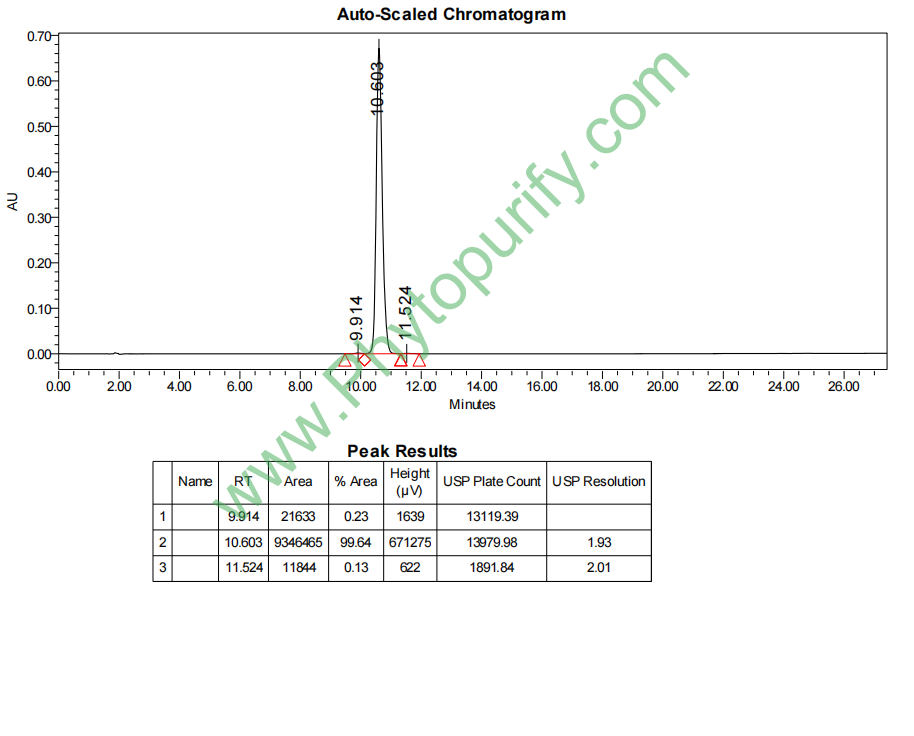
Purity: 95%~99%
Analysis Method: HPLC-DAD or/and HPLC-ELSD
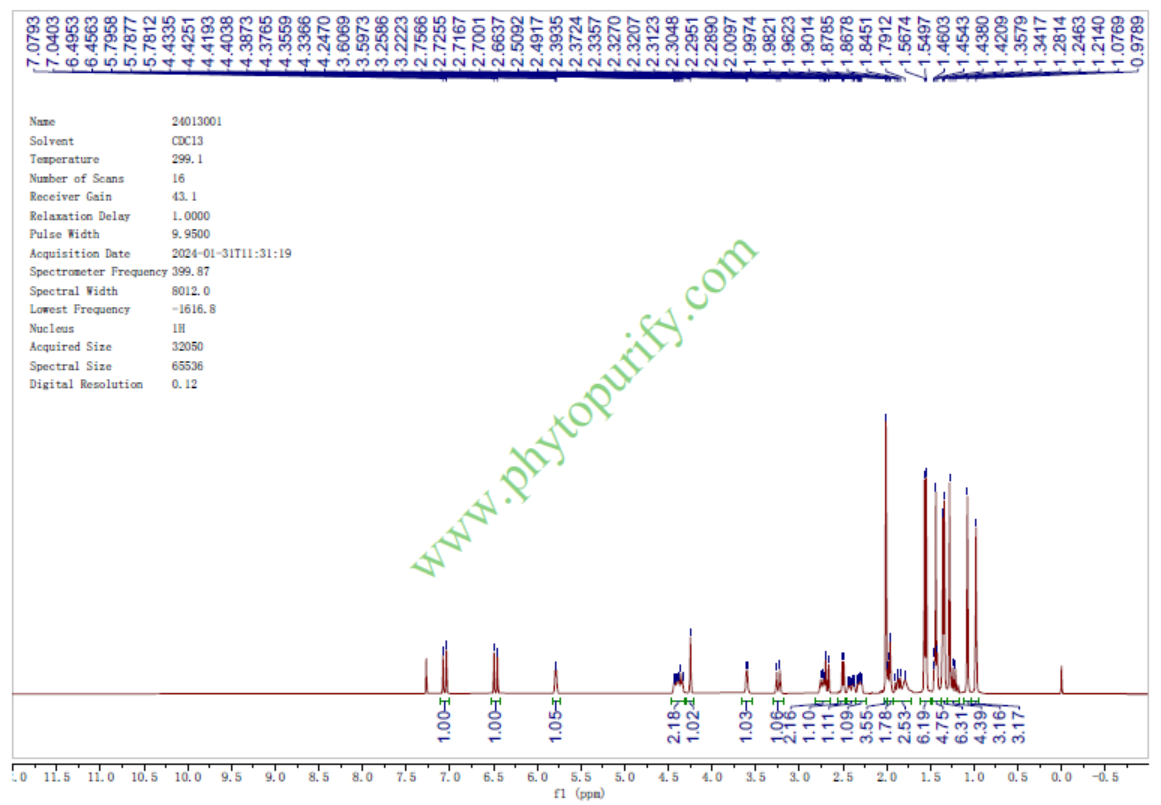
Identification Method: Mass, NMR
Packing: Brown vial or HDPE plastic bottle
Storage: Store in a well closed container, protected from air and light. Put into refrigerate or freeze for long term storage.
Whenever possible, you should prepare and use solutions on the same day. However, if you need to make up stock solutions in advance, we recommend that you store the solution as aliquots in tightly sealed vials at -20℃. Generally, these will be useable for up to two weeks.
The product could be supplied from milligrams to grams, up to kilograms
Inquire for bulk scale.
Descriptions:
Cucurbitacin B (cucB) is a triterpenoid constituent of Cucurbitaceae vegetables and a promising phytochemical for cancer prevention, cucB induces G(2) arrest and apoptosis through a STAT3-independent but ROS-dependent mechanism in SW480 cells.[1]
Cucurbitacin B has antiproliferative effect, can induce apoptosis by inhibition of the JAK/STAT pathway and potentiates antiproliferative effects of gemcitabine on pancreatic cancer cells, may be an effective, new approach for the treatment of ER-, Her2/neu amplified, and p53 mutant breast cancers.[2,3]
Combination of cucurbitacin B at a relatively low concentration with either of the chemotherapeutic agents, docetaxel (DOC) or gemcitabine (GEM) , shows prominent antiproliferative activity against breast cancer cells without increased toxicity, this promising combination should be examined in therapeutic trials of breast cancer.[4]
Cucurbitacin B has anti-cutaneous squamous cell carcinoma (CSCC) activity by inhibiting growth, arresting the cell cycle, and synergistically potentiate the anti-proliferative effect of cisplatin in CSCC.[5]
Cucurbitacin B a selective inhibitor of JAK2/STAT3 signaling, could promote dendritic cells (DCs) differentiation and improve antitumor immunity, also significantly reduce the frequency of imCs in patients with lung cancers and enhance the effect of p53-specific CTL on tumor 16HBE/BPDE cells.[6]
References:
[1] Yasuda S, Yogosawa S, Izutani Y, et al. Mol Nutr Food Res, 2010, 54(4):559–65.
[2] Thoennissen N H, Iwanski G B, Doan N B, et al. Cancer Res, 2009, 69(14):5876-84.
[3] Wakimoto N, Dong Y, O’Kelly J, et al. Cancer Sci, 2008, 99(9):1793–7.
[4] Aribi A, Sigal Gery ?, Lee D H, et al. Int J Cancer, 2013, 132(12):2730–7.
[5] Chen W, Leiter A, Yin D, et al. Int J Oncolo, 2010, 37(3):737-43.
[6] Lu P, Yu B, Xu J. Cancer Biother Radio, 2012, 27(27):495-503.
[7] Sun W, Chao Z M, Wang C, et al. Chinese Journal of Experimental Traditional Medical Formulae ,2014, 20(23):86-8.
HPLC of Cucurbitacin B
HNMR of Cucurbitacin B
Storage conditions:Short-term storage at 2~8℃, long-term storage at -20 ~ -80℃
Cucurbitacin B (CAS number: 6199-67-3) is a highly oxidized natural product of tetracyclic triterpenoids, widely present in plants of the Cucurbitaceae family. As an important member of the cucurbitacin family, cucurbitacin B has attracted widespread attention in recent years due to its significant biological activity, especially in the field of anti-tumor potential. Numerous in vitro and in vivo experiments have shown that cucurbitacin B not only inhibits the proliferation, migration, and invasion of cancer cells, but also induces cell cycle arrest and promotes cell apoptosis. In addition, its multiple pharmacological effects such as anti-inflammatory, antioxidant, antiviral, hypoglycemic, hepatoprotective, and neuroprotective have made it a hot topic in natural product pharmacology research.
This review aims to systematically summarize the chemical structure and physicochemical properties, plant sources, and extraction methods of cucurbitacin B, explore its pharmacological activity and mechanism of action, evaluate its pharmacological properties and pharmacokinetic characteristics, and finally look forward to its clinical application prospects, in order to provide theoretical basis and reference for related research.
Cucurbitacin B belongs to highly oxidized tetracyclic triterpenoids, with a molecular formula of C32H46O8 and a molecular weight of 542.7. Its core structure consists of four rings, containing multiple hydroxyl and ketone groups, exhibiting high polarity and complex stereochemical characteristics. The LogP value of cucurbitacin B is about 3.5, indicating that it has moderate lipid solubility and is beneficial for oral absorption. Its topological polar surface area (TPSA) is 146.47 Å ² and the number of hydrogen bond acceptors is 8, indicating that its molecule has strong polarity and hydrogen bonding ability, which is of great significance for its binding to biological targets.
The structural characteristics of cucurbitacin B endow it with unique biological activity, but also bring certain pharmacokinetic challenges. Its low blood-brain barrier penetration ability limits its potential application in central nervous system diseases. The existing research has not yet clarified its hepatotoxicity and cardiotoxicity, and the hERG channel inhibition test result is negative, indicating a low risk of cardiotoxicity. However, the Ames mutagenicity test showed a positive result, indicating a possible genetic toxicity risk, which needs to be given special attention in subsequent drug development.
Cucurbitacin B is mainly distributed in the roots, stems, leaves, and fruits of plants in the Cucurbitaceae family, such as Momordica charantia, Cucurbita pepo, Trichosanthes kirilowii, and other related plants. Different plant species and their growth environments have a significant impact on the content and composition of cucurbitacin B.
Traditional extraction methods often use organic solvents such as methanol, ethanol, or ethyl acetate for extraction, combined with ultrasound assisted extraction or reflux extraction techniques to improve extraction efficiency. The extraction solution undergoes concentration, separation, column chromatography and other steps, and is finally purified and identified by techniques such as high-performance liquid chromatography (HPLC) or gas chromatography-mass spectrometry (GC-MS). In recent years, the application of supercritical CO2 extraction and molecular imprinting technology has provided new ideas for the efficient and green extraction of cucurbitacin B.
Hulusin B exhibits significant cytotoxicity in various tumor cell lines and can inhibit the proliferation, migration, and invasion of cancer cells. Its anti-tumor effect involves the regulation of multiple signaling pathways, manifested as cell cycle arrest and promotion of apoptosis. For example, cucurbitacin B has shown good anti-tumor effect in models of breast cancer, lung cancer, colorectal cancer, liver cancer and pancreatic cancer. In vivo experiments have also confirmed that it can significantly inhibit tumor growth and reduce the formation of metastatic lesions.
Hulusin B exhibits strong anti-inflammatory activity by inhibiting the release of inflammatory mediators and regulating immune cell function. It can downregulate the expression of pro-inflammatory factors such as TNF - α, IL-6, and IL-1 β, and alleviate the inflammatory response. Meanwhile, cucurbitacin B has the ability to clear free radicals and enhance antioxidant enzyme activity, effectively reducing oxidative stress damage.
Research has shown that cucurbitacin B has inhibitory effects on various viruses, including hepatitis B virus (HBV), human immunodeficiency virus (HIV), and influenza virus. Its antiviral mechanism is mainly achieved by interfering with virus replication, blocking the binding between the virus and host cells, and regulating immune responses.
Cucurbitacin B showed hypoglycemic effect in diabetes model, which may be achieved by improving insulin sensitivity and regulating the activities of glucose metabolism related enzymes. In addition, it has a protective effect on the liver, can alleviate liver inflammation and fibrosis, and promote liver cell repair.
Hulusin B exhibits neuroprotective effects in neurodegenerative disease models, mainly through antioxidant, anti-inflammatory, and regulation of neuronal apoptosis pathways, slowing down nerve damage and improving cognitive function.
The multi-target mechanism of action of cucurbitacin B is the basis of its multiple pharmacological activities. The main targets include:
In addition, cucurbitacin B also participates in inflammatory response and cell survival regulation by regulating signaling pathways such as NF - κ B, PI3K/Akt, and JAK/STAT.
The molecular weight of cucurbitacin B is 542.7 and the LogP is 3.5, which conforms to certain drug lipophilicity and is beneficial for cell membrane penetration and oral absorption. Its high TPSA means that the molecular polarity is strong, which may limit its ability to pass through biological membranes, especially its ability to penetrate the blood-brain barrier is low.
At present, the hepatotoxicity and cardiotoxicity data of cucurbitacin B are not clear, and the hERG channel inhibition test result is negative, indicating good cardiac safety. However, a positive Ames test result suggests a potential genetic toxicity risk, which needs to be given special attention in subsequent safety evaluations.
Pharmacokinetic studies have shown that cucurbitacin B is absorbed rapidly after oral administration, but its bioavailability is limited by its solubility and metabolic stability. Its main metabolic pathways may involve liver oxidation and binding reactions, and the activity and toxicity of metabolites need further research. Research on in vivo distribution shows that cucurbitacin B accumulates more in liver, kidney, and tumor tissues, but its concentration is lower in the central nervous system.
Hulusin B has good clinical development potential due to its broad-spectrum pharmacological activity, especially its outstanding performance in the field of anti-tumor. Its multi-target and multi pathway mechanism of action helps overcome tumor drug resistance and heterogeneity, making it suitable for combination therapy strategies. In addition, the anti-inflammatory, antioxidant, and neuroprotective effects of cucurbitacin B also provide possibilities for its application in chronic inflammation, autoimmune diseases, and neurodegenerative diseases.
However, the genetic toxicity risk, pharmacokinetic limitations, and safety issues of cucurbitacin B remain the main obstacles to clinical translation. Future research should focus on structural optimization, formulation improvement, and targeted delivery technologies to enhance their bioavailability and safety. Meanwhile, systematic toxicological evaluation and preclinical research are key to promoting the clinical application of cucurbitacin B.
In addition, combining modern drug design techniques such as computer-aided drug design (CADD), multi omics analysis, and precision medicine strategies will help reveal the network of action of cucurbitacin B and optimize its clinical indications.
Hulusin B, as a widely sourced and biologically active natural product, exhibits excellent anti-tumor and multiple pharmacological effects. Its complex molecular structure and multi-target mechanism of action provide valuable models for natural medicine research. Despite facing certain safety and pharmacokinetic challenges, with advances in extraction and purification technologies, drug design, and delivery systems, cucurbitacin B is expected to become an important candidate for future natural product drug development.
Future research should strengthen the systematic evaluation of the toxicology of cucurbitacin B, deepen the molecular level analysis of its mechanism of action, expand its clinical indications, and explore its synergistic effects with existing drugs, promoting its transition from laboratory to clinical application and benefiting patients.
