Introduction/Overview
Natural products, as an important source of drug discovery, play an irreplaceable role in the long history of human fight against diseases. Among them, cucurbitacins derived from Cucurbitaceae plants are a class of highly oxidized tetracyclic triterpenoids that have long been of great concern to medicinal chemists and pharmacologists due to their structural diversity and significant and widespread biological activity, especially their strong cytotoxicity. The cucurbitacin family contains dozens of structurally similar compounds, such as cucurbitacin B, D, E, I, etc. They usually exist in the form of glycosides or glycosides in plants and are important secondary metabolites for plants to resist external stress.
Among the numerous cucurbitacin members, cucurbitacin I (Cu I for short) stands out due to its unique pharmacological properties and relatively clear targets of action. As a natural and selective inhibitor of the JAK2/STAT3 signaling pathway, cucurbitacin I has shown great potential in the field of anti-tumor research. STAT3 (Signal Transduction and Transcription Activation Factor 3) is a key aggregation node in various oncogenic signaling pathways, continuously activated in various solid tumors and hematological malignancies, driving tumor cell proliferation, survival, angiogenesis, immune escape, and metastasis. Therefore, targeting the overactivation of STAT3 is considered a highly promising anti-tumor strategy. However, directly targeting the transcription factor function of STAT3 is highly challenging in medicinal chemistry, and cucurbitacin I indirectly but effectively inhibits STAT3 phosphorylation and nuclear translocation by acting on its upstream kinase JAK2, thereby blocking its carcinogenic activity.
Unlike many broad-spectrum cytotoxic chemotherapy drugs, cucurbitacin I exhibits a high selective killing effect on tumor cells by specifically interfering with the key signaling axis JAK2/STAT3, while its toxicity to normal cells is relatively low at certain doses. This characteristic makes it an ideal lead compound for developing novel targeted anti-tumor drugs. In addition, recent studies have revealed the multiple pharmacological effects of cucurbitacin I in regulating cell apoptosis, cell cycle, autophagy, tumor microenvironment, and immune regulation, further expanding its potential therapeutic applications.
This review aims to systematically review the research progress of cucurbitacin I, starting from its chemical structure and physicochemical properties, explore its plant origin and extraction process, deeply analyze its anti-tumor and related pharmacological activities, focus on its molecular mechanism of action with JAK2/STAT3 as the core, and evaluate its pharmacokinetic properties based on synthetic drug parameters. Finally, it looks forward to its prospects and challenges as a candidate drug or lead compound in clinical applications, in order to provide comprehensive reference for the in-depth research and development of this natural product.
Chemical structure and physicochemical properties
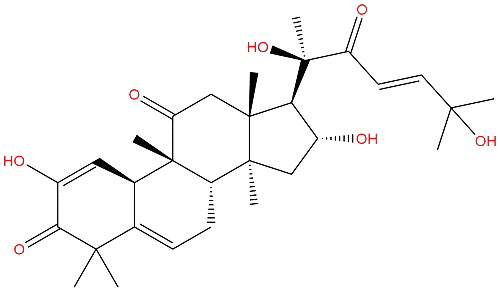
The chemical structure of cucurbitacin I is the material basis for its biological activity. According to its systematic name, cucurbitacin I is a 9,10,14-trimethyl-4,9-cyclo-9,10-secocolesta-2,523-triene derivative. The core skeleton of cucurbitacin is a tetracyclic triterpenoid of cucurbitacin type, with a unique 9,10-cyclopropane ring system (forming a ternary ring between C-9 and C-10), which is a key structural feature that distinguishes the cucurbitacin family from other triterpenoid compounds. In the molecule of cucurbitacin I, multiple sites are substituted by hydroxyl (- OH) and oxygen (=O) groups, specifically: hydroxyl substitution exists at positions C-2, C-16, C-20, and C-25; There are carbonyl (=O) substitutions at positions C-1, C-11, and C-22. In addition, its side chain contains a double bond (23 triene) between C-23 and C-24, which is conjugated with the carbonyl group at C-22 to form an α, β - unsaturated ketone structure. The hydroxyl group at position C-20 is a tertiary hydroxyl group, which, together with the carbonyl group at position C-22, forms a structural unit of a tertiary α - hydroxyketone. This structure is believed to be closely related to its biological activity.
From the perspective of physical and chemical properties, the molecular formula of cucurbitacin I is C ∝₀ H ₄₂ O ₇, with a molecular weight of 514.6590 g/mol. Its lipid water partition coefficient (LogP) is 3.0573, indicating that the compound has a certain degree of lipid solubility, which is beneficial for it to penetrate the cell membrane and exert its effects inside the cell. Its polar surface area (TPSA) is 132.1300 Å ², which is a relatively high value, usually indicating that the molecule has more hydrogen bond donors and acceptors, which may affect its oral absorption and blood-brain barrier permeability. In fact, its blood-brain barrier permeability has been evaluated as' low ', which may be a favorable feature for the development of non central nervous system targeted anti-tumor drugs to reduce central neurotoxicity. Its water solubility is 0.0542 mg/mL, which belongs to insoluble compounds, which may be a key issue that needs to be addressed in the development of its drug properties. In terms of safety prediction, hERG inhibition was evaluated as' no ', indicating a low risk of causing QT interval prolongation and arrhythmia in the heart; The Ames test result is 0.0, indicating that it did not show significant mutagenicity in the bacterial recovery mutation test, and the preliminary genetic toxicity risk is low.
Plant sources and extraction methods
Cucurbitacin I mainly comes from plants in the Cucurbitaceae family, which includes many common vegetables and medicinal plants such as cucumber, pumpkin, winter melon, loofah, bitter gourd, as well as medicinal plants such as Hemsleya spp., Bollostemma paniculatum, and Eclalium elaterium. Among them, the fruits and roots of snow gall plants (such as Hemsleya amabilis, Hemsleya chinensis) and spray melons are abundant sources of cucurbitacin compounds, especially cucurbitacin I. In addition, cucurbitacin I can also be detected in certain varieties or specific parts of luffa cylindrica and Momordica charantia, but the content is usually low. The content of cucurbitacin I varies significantly among different plant species, growth environments, harvest seasons, and plant parts (roots, stems, leaves, fruits, seeds), with higher levels usually found in roots or fruits.
The extraction method of cucurbitacin I usually follows the classic process of natural product separation. Due to the fact that cucurbitacin I mostly exists in the form of free glycosides in plants and has a certain degree of lipid solubility, organic solvent extraction is often used. Common solvents include methanol, ethanol, ethyl acetate, or their mixed solvents. The extraction process usually involves crushing dry plant materials, soaking or percolating them with a certain concentration of ethanol or methanol at room temperature or heating conditions, and repeating several times to fully extract the target components. Combine the extracts and concentrate under reduced pressure to obtain the extract.
The crude extract contains a large amount of lipophilic impurities, pigments, and other compounds with similar polarity, which require further separation and purification. Liquid liquid extraction is a commonly used purification method as the first step, usually dispersing the extract in water and sequentially extracting it with solvents of different polarities such as petroleum ether, ethyl acetate, n-butanol, etc. Due to its equipolarity, cucurbitacin I is mainly enriched in the ethyl acetate extraction layer. Subsequently, various chromatographic techniques were used for fine separation. Silica gel column chromatography is the most commonly used method, which uses solvent systems such as chloroform methanol or dichloromethane methanol for gradient elution to achieve preliminary separation. For cucurbitacin analogues with highly similar structures, more efficient separation methods such as high-performance liquid chromatography (HPLC) or preparative thin layer chromatography (PTLC) are needed. In recent years, modern separation techniques such as high-speed countercurrent chromatography (HSCCC) have also been applied to the separation of cucurbitacin compounds, which have the advantages of high separation efficiency and low sample loss. Finally, the isolated compound was structurally identified using spectroscopic techniques such as nuclear magnetic resonance (NMR) and mass spectrometry (MS) to confirm its identity as cucurbitacin I.
Pharmacological activity research
The pharmacological activity research of cucurbitacin I mainly focuses on the field of anti-tumor, and its strong cytotoxicity is its most remarkable characteristic. Numerous in vitro and in vivo studies have confirmed that cucurbitacin I has significant inhibitory effects on proliferation and induces apoptosis in various types of tumor cell lines, with concentrations typically ranging from nanomolar to low micromolar levels.
1. Antitumor activity:
Hulusin I exhibits activity against various solid tumors and hematological malignancies. In terms of solid tumors, studies have shown that it has killing effects on breast cancer, lung cancer, liver cancer, pancreatic cancer, prostate cancer, ovarian cancer, colorectal cancer, melanoma, osteosarcoma and other cell lines. For example, in breast cancer cells (such as MDA-MB-231, MCF-7), cucurbitacin I can effectively inhibit cell viability and induce G2/M cell cycle arrest and apoptosis. In non-small cell lung cancer cells, it also exhibits strong anti proliferative effects. For extremely malignant pancreatic cancer, cucurbitacin I can also inhibit its growth and induce apoptosis. In hematological tumors, cucurbitacin I also exhibits significant cytotoxicity towards multiple myeloma, acute myeloid leukemia (AML), and lymphoma cells.
2. Inducing cell apoptosis and autophagy:
The main way in which cucurbitacin I induces cell death is through the activation of endogenous (mitochondrial) and exogenous (death receptor) apoptotic pathways. Research has shown that after treatment with cucurbitacin I, the expression of pro apoptotic proteins (such as Bax, Bak, Bad) is upregulated in tumor cells, while the expression of anti apoptotic proteins (such as Bcl-2, Bcl xL, Mcl-1) is downregulated. This leads to the loss of mitochondrial membrane potential, the release of cytochrome c into the cytoplasm, which in turn activates Caspase-9 and Caspase-3, ultimately triggering an apoptotic cascade reaction. Meanwhile, cucurbitacin I can upregulate the expression of death receptors (such as Fas, DR5) and activate Caspase-8. In addition to apoptosis, cucurbitacin I has also been found to induce autophagic death in tumor cells. In certain cell types, treatment with cucurbitacin I can lead to increased expression of autophagy markers (such as LC3-II, Beclin-1) and enhanced autophagy flow. Interestingly, autophagy plays a dual role in cucurbitacin I-mediated cell death: in some cases, autophagy is a protective mechanism that promotes cell survival; In other cases, excessive or sustained autophagy can lead to cell death (i.e. type II programmed cell death).
3. Inhibit cell migration and invasion:
Metastasis is one of the main causes of death in malignant tumors. Hulusin I has also shown potential in inhibiting tumor cell migration and invasion. The mechanism is closely related to the downregulation of the expression and activity of matrix metalloproteinases (MMPs) such as MMP-2 and MMP-9. MMPs can degrade extracellular matrix and are key enzymes for tumor cell invasion and metastasis. Hulusin I directly or indirectly inhibits the transcription of MMP-2 and MMP-9 by suppressing the STAT3 signaling pathway, thereby weakening the invasive ability of tumor cells. In addition, it can also affect the epithelial mesenchymal transition (EMT) process by upregulating epithelial markers (such as E-cadherin) and downregulating mesenchymal markers (such as N-cadherin, Vimentin), reversing the invasive phenotype of tumor cells.
4. Anti angiogenesis:
The growth and metastasis of tumors depend on the formation of new blood vessels. Hulusin I has significant anti angiogenic activity. In vitro experiments have shown that it can inhibit the proliferation, migration, and tubular formation of human umbilical vein endothelial cells (HUVECs). The mechanism is related to the inhibition of STAT3 and HIF-1 α (hypoxia inducible factor-1 α) signaling pathways. HIF-1 α is a key transcription factor that responds to hypoxic environments and upregulates the expression of vascular endothelial growth factor (VEGF). Hulusin I inhibits the activity of STAT3, reduces the protein accumulation of HIF-1 α, thereby reducing the transcription and secretion of VEGF, and ultimately inhibits tumor angiogenesis.
5. Other activities:
In addition to its anti-tumor activity, cucurbitacin I has also been reported to have anti-inflammatory and immunomodulatory activities. For example, it can reduce the production of pro-inflammatory cytokines such as IL-6 and TNF - α by inhibiting the STAT3 and NF - κ B signaling pathways. In addition, preliminary studies have explored the potential of cucurbitacin I in antiviral (such as anti influenza virus) and anti parasitic aspects, but the evidence in these areas is still insufficient and needs further verification.
Mechanism of action and molecular targets
The various pharmacological activities of cucurbitacin I, especially its strong anti-tumor effect, are mainly attributed to its specific inhibition of the JAK2/STAT3 signaling pathway. This core mechanism is key to understanding its biological function.
1. Core targets of JAK2/STAT3 signaling pathway:
STAT3 is a key transcription factor whose activation is strictly regulated in normal cells. When cytokines (such as IL-6) or growth factors bind to their respective receptors, they activate receptor coupled JAK kinases (primarily JAK2). Activated tyrosine residues in the intracellular segment of JAK2 phosphorylated receptors provide anchoring sites for STAT3. Subsequently, JAK2 phosphorylates the Tyr705 site at the C-terminus of STAT3 protein. Phosphorylated STAT3 forms homodimers, translocates into the nucleus, binds to the promoter region of target genes, and initiates transcription of a series of genes related to cell proliferation, survival, angiogenesis, and immune suppression, such as Cyclin D1, c-Myc, Survivor, Bcl xL, Mcl-1, VEGF, and MMP-2/9.
In various tumors, STAT3 remains in a sustained phosphorylated state due to sustained activation of upstream signals (such as JAK2 mutations or autocrine IL-6 loops) or loss of function of negative regulatory factors (such as SOCS, PIAS), driving the malignant phenotype of tumors. Hulusin I has been identified as a selective inhibitor of the JAK2/STAT3 pathway. Its mechanism of action is not directly binding to STAT3 protein, but by inhibiting the activity of upstream kinase JAK2 and blocking JAK2 mediated phosphorylation of STAT3 Tyr705 site. Research has shown that cucurbitacin I can reduce the levels of p-STAT3 (Tyr705) in various tumor cells in a dose-dependent and time-dependent manner, without affecting the expression of total STAT3 protein. Meanwhile, it can also inhibit the self phosphorylation of JAK2, confirming that its target is located at the JAK2 level. By blocking the activation of STAT3, cucurbitacin I effectively shuts down the expression of a series of downstream oncogenic target genes, thereby exerting anti-tumor effects.
2. Effects on other signaling pathways:
Although JAK2/STAT3 is the main target of cucurbitacin I, its function is not entirely singular. As a multi-target natural product, cucurbitacin I also has cross talk with other important signaling pathways.
- MAPK/ERK pathway: Hulusin I has been found to inhibit the phosphorylation of MAPK1 (i.e. ERK2), thereby affecting the RAS-RAF-MEK-ERK signaling cascade. This pathway also plays a critical role in cell proliferation and survival. Inhibition of ERK signaling can enhance the apoptotic effect induced by cucurbitacin I.
- PI3K/AKT/mTOR pathway: Some studies have shown that cucurbitacin I can also inhibit the phosphorylation of AKT, thereby affecting the PI3K/AKT/mTOR survival pathway. This may be related to the mutual regulation between the STAT3 and AKT pathways.
- NF - κ B pathway: Hulusin I can inhibit the activation of NF - κ B, which is closely related to its anti-inflammatory activity. NF - κ B and STAT3 often act synergistically in inflammation and tumorigenesis, and inhibiting these two pathways may produce a synergistic anti-tumor effect.
- Topoisomerase (TOP1/TOP2A): Hulusin I has been reported to inhibit the activity of topoisomerases I (TOP1) and II α (TOP2A). Topoisomerase is an enzyme essential for DNA replication and transcription, and inhibiting its activity can lead to DNA damage, thereby inducing cell death. This may be another supplementary mechanism for the cytotoxicity of cucurbitacin I.
- Estrogen receptor (ESR1) and aromatase (CYP19A1): In hormone dependent breast cancer, cucurbitacin I was found to down regulate the expression of estrogen receptor α (ESR1) and inhibit the activity of aromatase (CYP19A1), thereby reducing estrogen synthesis. This suggests that it may play a dual role in the treatment of hormone sensitive breast cancer.
3. Molecular target network:
Overall, cucurbitacin I forms a complex molecular network by acting on multiple targets such as MAPK1, AKT, NF - κ B, TOP1/2A, ESR1, CYP19A1, etc., with JAK2/STAT3 as the core. This multi-target characteristic is the basis for its efficient anti-tumor activity, but it also increases the complexity of its mechanism of action research. Among them, the downregulation of anti apoptotic proteins such as MCL1 and BCL2, as well as the inhibition of HIF1A, are key downstream events that induce apoptosis and anti angiogenesis.
Evaluation of drug properties and pharmacokinetics
The conversion of cucurbitacin I from a natural product into a clinically available drug requires a systematic evaluation of its pharmacological properties, particularly its pharmacokinetic (ADME) characteristics. Based on the provided pharmacological parameters, we can conduct preliminary analysis.
1. Physical and chemical properties and drug like properties:
The molecular weight of cucurbitacin I (514.66 Da) exceeds the classical "Lipinski Five Rules" limit of molecular weight less than 500, which may affect its oral absorption. Its LogP value is 3.06, which is within the ideal range (-0.4 to 5.6), indicating moderate lipophilicity and favorable transmembrane transport. However, its high TPSA value (132.13 Å ²) exceeds the threshold of 140 Å ², which is typically associated with poor oral absorption and low membrane permeability. The poor water solubility (0.0542 mg/mL) is its main weakness, which may lead to low oral bioavailability and pose challenges for formulation development.
2. Pharmacokinetic characteristics:
At present, detailed research data on the pharmacokinetics of cucurbitacin I in vivo is relatively limited, but existing animal experiments and computational predictions provide some clues.
- Absorption: Due to its low water solubility and high TPSA, the oral absorption of cucurbitacin I is likely to be poor and its bioavailability is low. Therefore, current research mostly adopts non oral administration routes such as intraperitoneal injection or intravenous injection. Developing appropriate formulation technologies (such as liposomes, nanoparticles, cyclodextrin inclusion complexes, etc.) to improve their solubility and oral absorption is an important direction for the future.
- Distribution: Hulusin I has moderate lipid solubility and theoretically can be distributed to various tissues throughout the body. But low blood-brain barrier permeability is a favorable characteristic that can reduce central nervous system toxicity. Its binding rate to plasma proteins is not yet clear, but a high protein binding rate may limit its free drug concentration.
- Metabolism: Hulusin I contains multiple hydroxyl and carbonyl groups and is a potential substrate for phase I and phase II metabolic enzymes. Cytochrome P450 enzymes (CYPs) in the liver may mediate its oxidative metabolism, while glucuronosyltransferases (UGTs) and sulfotransferases (SULTs) may catalyze its binding reaction. The specific metabolic pathways and the activity of metabolites need to be further studied.
- Excretion: Hulusin I and its metabolites are mainly excreted through bile and urine. Its half-life (t1/2) is not yet clear, but it is speculated to be relatively short and requires frequent administration to maintain effective blood drug concentration.
3. Toxicity assessment:
The preliminary toxicity prediction results are relatively optimistic. The low risk of hERG inhibition suggests a lower risk of cardiac toxicity. The Ames test is negative, indicating no direct genetic toxicity. However, this is only a preliminary in vitro and computer prediction. As a potent cytotoxic compound, cucurbitacin I may have a narrow therapeutic window (the ratio of effective dose to toxic dose). In vivo experiments have observed that it has certain liver and kidney toxicity, as well as gastrointestinal reactions. Therefore, a comprehensive in vivo toxicological evaluation is required during the development process, including acute toxicity, long-term toxicity, reproductive toxicity, etc., to determine its safe dose range.
Clinical application prospects and prospects
Hulusin I, with its unique JAK2/STAT3 selective inhibition mechanism and strong anti-tumor activity, has shown promising prospects in the field of drug development, but it also faces many challenges.
1. Potential as anti-tumor candidate drugs:
Given the central role of STAT3 in various cancers, cucurbitacin I, as a natural STAT3 pathway inhibitor, has broad-spectrum anti-tumor potential. It is especially suitable for those tumor types with highly activated STAT3, such as head and neck squamous cell carcinoma, breast cancer, multiple myeloma, acute myeloid leukemia, etc. Compared with traditional chemotherapy drugs, it has stronger targeting and theoretically causes less damage to normal cells. In addition, its anti angiogenic and anti metastatic activities also give it advantages in controlling tumor recurrence and metastasis.
2. Combination therapy strategy:
A single drug often struggles to overcome the heterogeneity and resistance of tumors. The combination application of cucurbitacin I with other anti-tumor drugs or treatment methods is an important research direction in the future. For example:
- Combined use with chemotherapy drugs: Hulusin I can enhance the sensitivity of traditional chemotherapy drugs (such as paclitaxel, cisplatin, and doxorubicin), especially in tumor cells resistant to chemotherapy, by inhibiting the STAT3 mediated resistance mechanism, achieving synergistic enhancement.
- Combined use with targeted drugs: Combined with targeted drugs targeting other signaling pathways, such as EGFR inhibitors and MEK inhibitors, multiple oncogenic pathways can be simultaneously blocked, overcoming feedback activation and resistance caused by single target inhibition.
- Combined with immunotherapy: STAT3 plays an important role in tumor immune escape by inhibiting dendritic cell function, promoting the accumulation of regulatory T cells (Tregs) and myeloid derived suppressor cells (MDSCs). Hulusin I may reshape the tumor immune microenvironment and enhance the efficacy of immune checkpoint inhibitors (such as PD-1/PD-L1 antibodies) by inhibiting STAT3. This is a highly promising direction.
3. Challenges and solutions:
- Water solubility and bioavailability: This is the biggest obstacle to the development of cucurbitacin I into medicine. Developing new drug delivery systems is the key to solving this problem. For example, encapsulating it in liposomes, polymer nanoparticles, micelles, or forming inclusion complexes with cyclodextrin can significantly improve its water solubility, stability, and tumor targeting. In addition, designing its prodrug by introducing hydrophilic groups such as phosphate or amino acids on the molecule to improve water solubility and release active drugs after enzymatic hydrolysis in vivo is also an effective strategy.
- Toxicity issue: Despite being more selective than traditional chemotherapy, cucurbitacin I still has certain systemic toxicity. By using targeted delivery systems such as antibody drug conjugates (ADCs) or nanocarriers to deliver drugs specifically to tumor sites, their exposure to normal tissues can be reduced, thereby expanding the treatment window.
- Structural optimization: Using cucurbitacin I as the lead compound, a systematic structural modification and structure-activity relationship (SAR) study was conducted to search for derivatives with higher activity, lower toxicity, and better pharmacokinetic properties. For example, modifying the hydroxyl groups at positions C-2, C-16, C-20, and C-25, or modifying the α, β - unsaturated ketone structures of the side chains, may lead to more ideal candidate compounds.
Conclusion
As a shining pearl in the cucurbitacin family, cucurbitacin I occupies an important position in the field of anti-tumor drug research due to its unique identity as a natural JAK2/STAT3 selective inhibitor. From a chemical structure perspective, its complex 4-hydroxy and multi carbonyl substituted tetracyclic triterpenoid skeleton endows it with abundant biological activity; From a pharmacological perspective, it is centered around JAK2/STAT3 and regulates multiple key signaling nodes such as MAPK, NF - κ B, HIF-1 α, etc., forming an efficient multi-target action network, thereby exerting strong anti proliferative, pro apoptotic, anti metastatic, and anti angiogenic effects.
Although cucurbitacin I has significant shortcomings in drug development, especially in terms of water solubility and oral bioavailability, its clear targets, strong activity, and initially demonstrated low hERG risk and low mutagenicity provide a solid foundation for its further development. The future research focus should be on: firstly, overcoming the deficiencies in their physicochemical properties through advanced drug delivery systems or prodrug design strategies; The second is to conduct in-depth research on structure-activity relationships and obtain better derivatives through semi synthesis or total synthesis; The third is to actively explore its combined application strategies with modern therapies such as immunotherapy and targeted therapy, in order to maximize its clinical value.
The road from natural products in the laboratory to effective drugs in clinical practice is long and challenging. The research process of cucurbitacin I vividly illustrates the classic paradigm of discovering lead compounds from traditional medicinal plants and using modern molecular biology and medicinal chemistry methods to elucidate their mechanisms of action and optimize their medicinal properties. With the continuous deepening of research, we have reason to believe that cucurbitacin I or its optimized derivatives have the potential to become important members of the novel anti-tumor drug family targeting the JAK2/STAT3 pathway in the future, bringing new therapeutic hope to cancer patients.