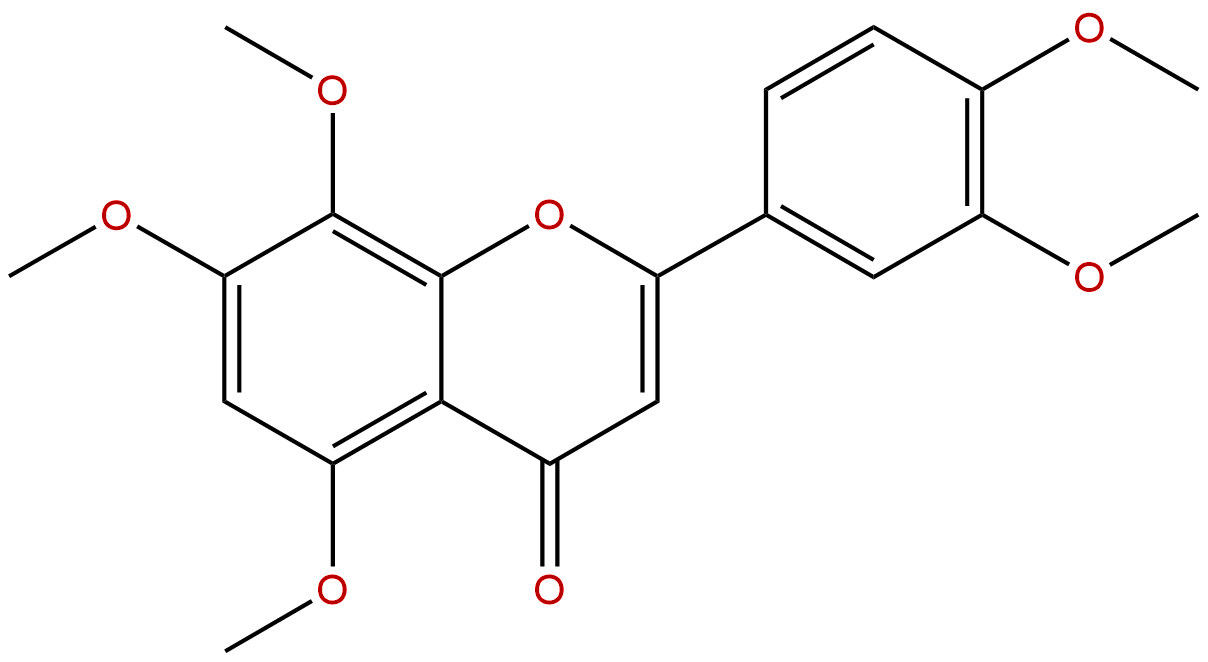


Product name: Isosinensetin
Synonym name: 6-Demethoxynobiletin; 5,7,8,3',4'-Pentamethoxyflavone
Catalogue No.: BP1803
Cas No.: 17290-70-9
Formula: C20H20O7
Mol Weight: 372.373
Botanical Source: Citrus aurantium L.
Physical Description:
Type of Compound: Flavonoids
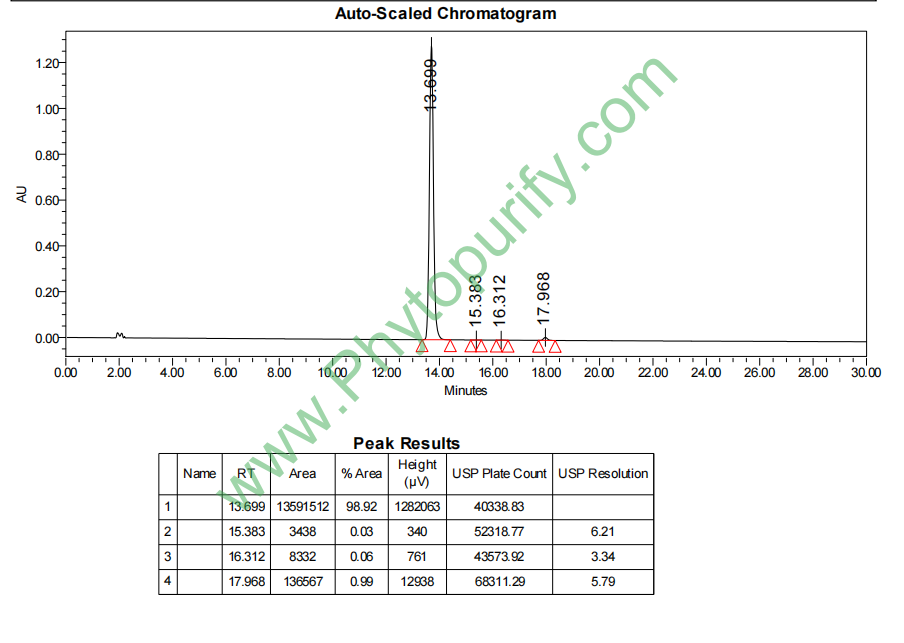
Purity: 95%~99%
Analysis Method: HPLC-DAD or/and HPLC-ELSD
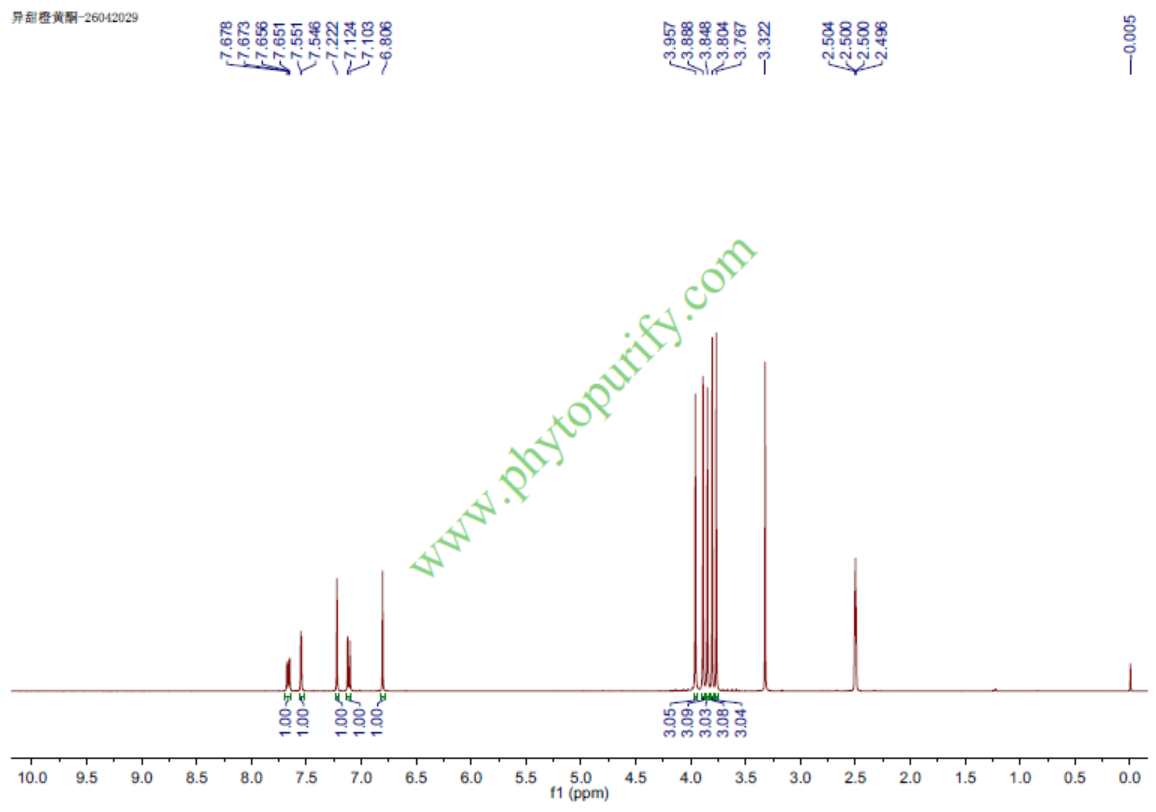
Identification Method: Mass, NMR
Packing: Brown vial or HDPE plastic bottle
The product could be supplied from milligrams to grams. Inquire for bulk scale.
We provide solution to improve the water-solubility of compounds, thereby facilitating the variety of activity tests and clinic uses.
For Reference Standard and R&D, Not for Human Use Directly.
Description:
Isosinensetin shows antioxidant and HIV-1 protease inhibiting activities.
References:
Phytomedicine. 2011 Jan 15;18(2-3):189-93.
Isolation of adenosine, iso-sinensetin and dimethylguanosine with antioxidant and HIV-1 protease inhibiting activities from fruiting bodies of Cordyceps militaris
According to previous studies, a close relationship between oxidative stress and AIDS suggests that antioxidants might play an important role in the treatment of AIDS.
METHODS AND RESULTS:
Cordyceps militaris was selected from nine edible mushrooms by assay of inhibition of erythrocyte hemolysis. Macroporous adsorption resin and HPLC were used to purify three micromolecular compounds named L3a, L3b and L3c. L3a was identified to be adenosine with the molecular formula C(10)H(13)N(5)O(4); L3b was 6,7,2',4',5'-pentamethoxyflavone with the molecular formula C(20)H(20)O(7), and L3c was dimethylguanosine with the molecular formula C(12)H(17)N(5)O(5). The compound 6,7,2',4',5'-pentamethoxyflavone was first isolated from C. militaris. The assay of inhibition of HIV-1 protease (HIV-1 PR) was based on the fact that the expression of this enzyme can inhibit the growth of E. coli.
CONCLUSIONS:
This is a new screening system for HIV-1 PR inhibitors. Both L3a and L3b showed high inhibition to HIV-1 PR. These compounds could be new anti-HIV-1 PR drugs.
HPLC of Isosinensetin
HNMR of Isosinensetin
Storage conditions:Short-term storage at 2~8℃, long-term storage at -20 ~ -80℃
76.3600
2.7389
2.7388
.0059
3.1956
41.5770
High
84.3067
2.2554
Yes
No
Yes
No
Yes
No
0.6
No
No
Yes
Yes
Natural products have always been an important source of innovative drug discovery, among which flavonoids have attracted much attention due to their broad biological activity and relatively low toxicity. Isosensetin, as a multi methoxy flavonoid, has become a hot topic in pharmacological research since its discovery due to its unique chemical structure and diverse pharmacological activities. Its CAS number is 17290-70-9, mainly found in citrus plants of the Rutaceae family. Early studies revealed its potential as an inhibitor of HIV-1 protease and protein tyrosine phosphatase 1B (PTP1B), suggesting its application prospects in the field of antiviral and diabetes treatment. With the deepening of research, various pharmacological activities such as anti-tumor, anti-inflammatory, antioxidant, and gastroprotective effects of isosweet orange flavonoids have been reported successively, expanding their research scope from single activity screening to exploring complex disease intervention mechanisms with multiple targets and pathways. Especially in disease models such as gastric ulcer, osteoporosis, and metabolic syndrome, the excellent effects demonstrated further highlight its value as a multifunctional lead compound. This article aims to provide a systematic review of the chemical properties, plant sources, pharmacological activities, mechanisms of action, and medicinal properties of isosweet orange flavonoids, as well as prospects for their future research and development directions, in order to provide comprehensive scientific references for the in-depth study and potential drug development of this compound.
The chemical name of isosweet orange flavonoids is 5,6,7,3 ', 4' - pentamethoxyflavone, with a molecular formula of C20H20O7 and a molecular weight of 372.37 g/mol. Its core structure is the flavonoid nucleus, which is composed of two benzene rings (A and B rings) connected by an oxygen-containing heterocyclic ring (C ring). Its characteristic is that the 5, 6, and 7 positions of the A ring and the 3 'and 4' positions of the B ring are all replaced by methoxy (- OCH3) groups. This highly methoxylated structure is the key that distinguishes it from other flavonoids such as hesperidin and naringin, and profoundly affects its physicochemical properties and biological activity.
From the analysis of physical and chemical properties, the calculated value of the lipid water partition coefficient (LogP) of isosweet orange flavonoids is about 2.74, indicating that they have moderate lipophilicity, which is beneficial for their penetration into cell membranes. Its topological polar surface area (TPSA) is 76.36 Å ², which is relatively small and further supports its good membrane permeability. The water solubility is poor, about 0.0059 mg/mL, which to some extent limits its bioavailability in aqueous systems. It is worth noting that its predicted blood-brain barrier (BBB) permeability is "high", indicating its potential therapeutic value for central nervous system diseases. In the preliminary safety screening, its Ames test value was 0.6, indicating a low risk of mutagenicity and no significant inhibitory effect on hERG potassium channels, reducing the potential risk of heart QT interval prolongation and providing favorable preliminary safety data for its subsequent development.
Iso sweet orange flavonoids are mainly distributed in the peel, leaves, and seeds of citrus plants in the Rutaceae family, especially in common citrus fruits such as sweet oranges (Citrus sinensis), lemons (Citrus limon), and tangerines (Citrus reticulata), where the content is relatively abundant. In addition, it has also been detected in some traditional medicinal plants such as Citrus aurantium. Its content is influenced by factors such as plant variety, origin, harvest season, and location, and is usually higher in the skin than in the flesh.
Organic solvent extraction is commonly used to extract flavonoids from plant materials. Polar solvents such as methanol, ethanol, and acetone are widely used due to their good solubility in methoxyflavonoids. The conventional process includes heating and refluxing the dried and crushed citrus peel with organic solvents (such as 80% ethanol) or ultrasound assisted extraction, followed by filtration and concentration to obtain the crude extract. To further enrich and purify isoflavones in sweet oranges, it is necessary to combine multiple chromatographic separation techniques. Silica gel column chromatography is commonly used for preliminary separation, and gradient elution systems such as petroleum ether ethyl acetate or chloroform methanol are used for elution. Subsequently, fine purification is performed using preparative high-performance liquid chromatography (HPLC) or semi preparative HPLC, typically using a reverse phase C18 column with methanol water or acetonitrile water as the mobile phase, monitored by a UV detector (with characteristic absorption at wavelengths of 250-280 nm and 330-350 nm). In recent years, efficient separation techniques such as high-speed counter current chromatography (HSCCC) have also been applied to the rapid preparation of isosweet orange flavonoids, which has the advantage of avoiding irreversible adsorption loss of samples caused by solid adsorbents.
Numerous in vitro and in vivo pharmacological studies have confirmed that isoquercetin has broad and significant biological activities.
1. Antitumor activity: Iso sweet orange flavonoids exhibit growth inhibition and pro apoptotic effects on various cancer cell lines. Studies have shown that it can inhibit the proliferation of human liver cancer cells (such as HepG2, Huh7), breast cancer cells (such as MCF-7), colon cancer cells (such as HT-29), and its mechanism involves inducing cell cycle arrest (such as G2/M phase), activating caspase cascade reaction, regulating the proportion of Bcl-2/Bax protein, and inhibiting migration and invasion. It is worth noting that it can also inhibit the function of multidrug resistance protein P-glycoprotein (P-gp), which may help reverse multidrug resistance in tumors.
2. Anti inflammatory and antioxidant activity: Iso sweet orange flavonoids are effective antioxidants that can directly scavenge free radicals such as DPPH and ABTS. In the macrophage inflammation model induced by lipopolysaccharide (LPS), it can significantly inhibit the production of pro-inflammatory factors such as nitric oxide (NO), prostaglandin E2 (PGE2), interleukin-6 (IL-6), and tumor necrosis factor alpha (TNF - α). Its anti-inflammatory effect has also been validated in acute inflammation models such as carrageenan induced paw edema in rats.
3. Antiviral activity: Early research focused on its use as an HIV-1 protease inhibitor, directly inhibiting key enzymes involved in virus replication. In addition, studies have reported that it has certain inhibitory potential against other viruses such as dengue fever virus, hepatitis C virus, etc., but its specific mechanism and in vivo effectiveness still need to be further explored.
4. Metabolic disease-related activities:
* Anti diabetes: As an effective inhibitor of PTP1B (IC50: 2.61 µ M; Ki: 0.92 µ M), isoquercetin can enhance insulin signaling pathway sensitivity and has shown potential to improve glucose metabolism in insulin resistance models.
* Anti osteoporosis: Research has shown that it can promote bone formation and inhibit bone resorption by regulating the balance between osteoblasts and osteoclasts, and has a protective effect in a rat model of osteoporosis induced by ovariectomy.
* Gastric protective effect: In experimental gastric ulcer models induced by ethanol, indomethacin, or stress, pretreatment with isoquercetin can significantly reduce gastric mucosal damage and lower ulcer index, and its effect is comparable to classical anti ulcer drugs.
5. Neuroprotective activity: Given its high blood-brain barrier permeability and antioxidant anti-inflammatory properties, it has also shown certain protective effects in neurodegenerative disease models such as Alzheimer's disease and Parkinson's disease, such as reducing beta amyloid toxicity and inhibiting excessive activation of microglia.
The multiple pharmacological activities of isoflavones in sweet orange stem from their regulation of multiple key targets and pathways in the cellular signaling network, reflecting the characteristics of multi-target action. Regarding its prominent gastric protective effect, relevant studies have revealed its complex network of action:
Antioxidant and Nrf2/ARE pathway activation: Iso sweet orange flavonoids can directly scavenge reactive oxygen species (ROS) and upregulate the expression of nuclear factor E2 related factor 2 (NFE2L2/Nrf2). Nrf2 is a core transcription factor for cellular antioxidant stress. After activation, it enters the nucleus and binds to antioxidant response elements (ARE), initiating the transcription of phase II detoxifying enzymes such as heme oxygenase-1 (HO-1) and quinone oxidoreductase 1 (NQO1), as well as antioxidant proteins, thereby enhancing the self-defense ability of gastric mucosal cells and combating oxidative damage caused by stimuli such as ethanol.
Anti inflammation and inhibition of NF - κ B and MAPK pathways: Iso sweet orange flavonoids can effectively inhibit the activation of the nuclear factor kappa B (NF - κ B) pathway, reduce the expression of pro-inflammatory factors TNF - α, IL-6, and inducible nitric oxide synthase (NOS2/iNOS). Meanwhile, it can also inhibit the phosphorylation of members of the mitogen activated protein kinase (MAPK) family, such as p38, JNK, and ERK. The inhibition of these pathways collectively alleviates the inflammatory cascade of gastric mucosa.
Regulating prostaglandin synthesis and cell protection: Iso sweet orange flavonoids have a regulatory effect on cyclooxygenase (PTGS1/COX-1 and PTGS2/COX-2). In gastric ulcer models, it may balance mucosal protection and inflammation control by maintaining moderate levels of COX-1-derived protective prostaglandins (such as PGE2) while inhibiting inflammatory prostaglandins caused by overexpression of inducible COX-2.
Affects sensory nerves and TRPV1 receptors: Transient receptor potential vanillic acid subtype 1 (TRPV1) plays an important role in gastric mucosal injury and inflammation. Research has shown that isoflavones from sweet oranges may participate in regulating gastric mucosal blood flow and pain perception by modulating the activity of TRPV1 receptors, affecting the release of neuropeptides such as substance P and CGRP, and exerting a protective effect.
Other related targets: It also involves regulating the transforming growth factor - β/Smad (such as SMAD3) pathway to affect tissue repair; Regulating lipid metabolism and inflammation by acting on peroxisome proliferator activated receptor gamma (PPARG); And it may also affect mucosal cell proliferation and migration through pathways such as epidermal growth factor receptor (EGFR).
In terms of anti-tumor and anti diabetes, its core mechanism involves the key regulation of apoptosis pathway and the direct inhibition of PTP1B, the negative regulator of insulin signaling pathway.
Although isoquercetin exhibits excellent pharmacological activity, its drug like and pharmacokinetic (PK) properties are the key factors determining its successful development as a drug.
According to its physical and chemical parameters, isoquercetin basically conforms to Lipinski's "five rules", indicating that it has good oral absorption potential. Its moderate LogP value and lower TPSA are beneficial for its passive diffusion across biofilms. However, its extremely low water solubility is the main limiting factor for oral bioavailability (BA). Improving solubility and dissolution rate will be the primary challenge in formulation development, which can be improved through formulation technologies such as nanocrystals, solid dispersions, cyclodextrin inclusion or phospholipid complexes.
At present, there is relatively limited pharmacokinetic research on the flavonoid system of sweet orange. Existing data suggests that its oral absorption may be moderate and it will undergo extensive metabolism in the body. The main metabolic pathways of polymethoxyflavonoids in the body are demethylation (catalyzed by cytochrome P450 enzymes, especially CYP1A2 and CYP2C9) and glucuronidation/sulfation binding reactions. Its metabolites may still have biological activity, but overall may lead to reduced exposure and shortened half-life of the prototype drug. While its high BBB permeability brings opportunities for central nervous system drug development, attention should also be paid to its potential central side effects. The preliminary negative results of hERG and Ames provide early support for its safety, but comprehensive preclinical toxicological evaluation (such as long-term toxicity, reproductive toxicity, etc.) is still needed.
As a natural small molecule with multiple targets and effects, isoquercetin has shown broad clinical application prospects in various disease fields.
1. Potential therapeutic areas:
* Digestive system diseases: Based on its significant gastric protective effect and anti-inflammatory antioxidant mechanism, it is expected to be developed as a new type of gastric ulcer treatment or adjuvant therapy drug, especially for the prevention of nonsteroidal anti-inflammatory drug (NSAID) - related gastric injury.
* Metabolic disorders: As a PTP1B inhibitor, it is a potential candidate drug for the treatment of type 2 diabetes and insulin resistance. Its anti osteoporosis activity also provides the possibility for its application in the treatment of postmenopausal osteoporosis.
* Tumor adjuvant therapy: Its anti-tumor activity and P-gp inhibitory properties make it possible to be used as a chemotherapy sensitizer or in combination with existing chemotherapy drugs to overcome tumor multidrug resistance.
* Chronic inflammatory diseases: Can be used for the management of chronic inflammation such as rheumatoid arthritis and inflammatory bowel disease.
* Neurodegenerative diseases: Its neuroprotective activity and high BBB permeability provide new ideas for the prevention or treatment of Alzheimer's disease and Parkinson's disease.
2. Future research directions and challenges:
* In depth mechanism research: It is necessary to use chemical biology methods such as affinity fishing and molecular probes to more accurately identify its direct target and elucidate the network biology mechanism of its multi-target synergistic effect.
* Pharmacokinetic optimization: The system conducts research on its ADME (absorption, distribution, metabolism, excretion) to clarify its in vivo fate. By modifying its structure (such as preparing prodrugs and synthesizing derivatives), its water solubility and metabolic stability can be improved, and its bioavailability can be enhanced.
* Formulation development: Develop new drug delivery systems (such as nano formulations, self microemulsions, etc.) to address the bottleneck of poor solubility, and explore different delivery routes.
* Preclinical and clinical studies: Complete standardized preclinical pharmacological, pharmacokinetic, and toxicological evaluations to provide solid data for its entry into clinical trials. Explore its application value as a dietary supplement or functional food ingredient in disease prevention.
* Multi component collaborative research: Study its synergistic effect with other flavonoids or active ingredients in the source plants, and develop compound preparations based on natural products.
As a multi methoxy flavonoid derived from citrus plants, isoquercetin has become an important molecule in natural product pharmacology research due to its unique chemical structure and extensive pharmacological activity. From antiviral, anti-tumor, anti-inflammatory, antioxidant, to specific protective effects against metabolic diseases and gastric ulcers, its versatile nature highlights the unique advantages of natural products in complex disease interventions. Despite facing challenges such as water solubility and metabolic stability in drug development, its clear molecular targets (such as PTP1B), good preliminary safety, and high blood-brain barrier permeability have laid a solid foundation for its drug development. With the in-depth application of modern pharmaceutical chemistry, pharmaceutics and system biology technology, through structural optimization, preparation innovation and in-depth mechanism analysis of isosweet orange flavonoids, it is expected to gradually promote it from a potential lead compound to clinical use, providing new drug options for the prevention and treatment of various human diseases, such as cancer, diabetes, gastric ulcer, etc. The research process once again confirms the enormous value and infinite possibilities of mining modern therapeutic drugs from traditional medicinal plants.
