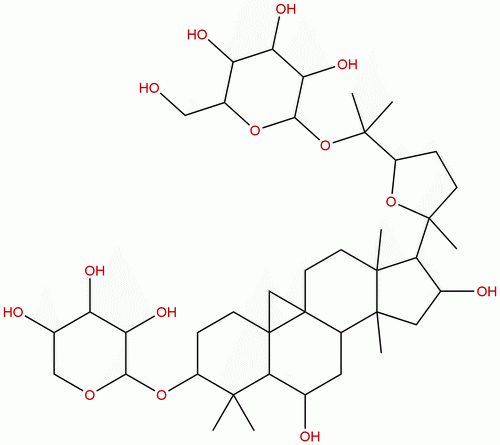


Product name: Isoastragaloside IV
Synonym name:
Catalogue No.: BP3917
Cas No.: 136033-55-1
Formula: C41H68O14
Mol Weight: 784.981
Botanical Source: Roots of Astragalus membranaceus var. mongholicus
Physical Description:
Type of Compound:
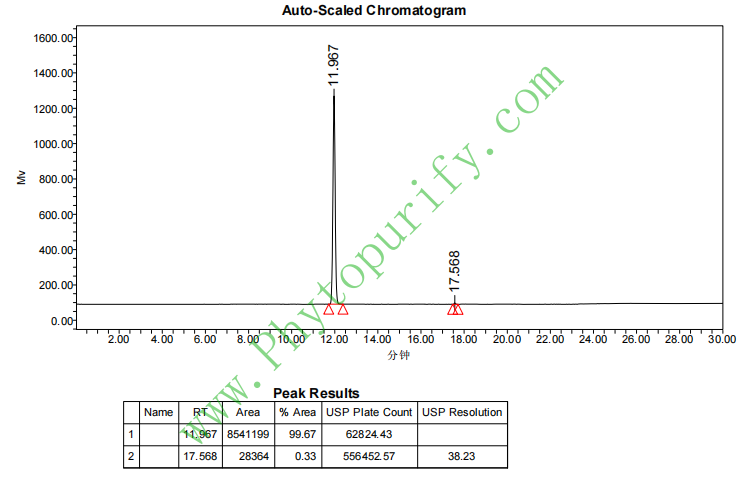
Purity: 95%~99%
Analysis Method: HPLC-DAD or/and HPLC-ELSD
Identification Method: Mass, NMR
Packing: Brown vial or HDPE plastic bottle
The product could be supplied from milligrams to grams
Inquire for bulk scale.
For Reference Standard and R&D, Not for Human Use Directly.
HPLC of Isoastragaloside IV
Storage conditions:Short-term storage at 2~8℃, long-term storage at -20 ~ -80℃
228.2200
2.3184
2.3184
.0515
.5801
.7613
Low
70.3431
6.8548
No
No
No
No
No
No
0.0
Yes
No
No
No
Natural products, as an important source of drug discovery, play an irreplaceable role in human health maintenance and disease treatment. In the treasure trove of traditional Chinese medicine, Huangqi (Astragalus membranaceus)(Astragalus membranaceus (Fisch.) Bge., as a classic medicine that nourishes qi, solidifies the surface, supports toxins, and promotes muscle growth, can be traced back to the "Shennong Bencao Jing" over two thousand years ago. Modern pharmacological research has confirmed that Astragalus membranaceus contains various active ingredients, including polysaccharides, flavonoids, saponins, etc. Among them, Astragalus membranaceus saponins have attracted much attention due to their significant biological activities such as immune regulation, anti-inflammatory, anti-tumor, and anti-aging.
Isoastragaloside IV (ISO-IV) is a saponin compound isolated from Astragalus membranaceus, which has a cyclic arachnoid tetracyclic triterpenoid skeleton. Since its first identification, researchers have gradually revealed its multiple pharmacological effects in immune regulation, anti-inflammatory, anti fibrotic, anti-tumor, and protection of the cardiovascular and cerebrovascular systems. Especially in recent years, with the deepening of immunology and molecular pharmacology research, the mechanism of ISO-IV in regulating immune cell function, intervening in key signaling pathways (such as TLR4/NF - κ B, STAT3, TGF - β 1/Smad, etc.), and affecting the expression of immune checkpoint molecules (such as CTLA-4) has been gradually elucidated, demonstrating its enormous potential as a novel immune modulator.
This article aims to systematically review the chemical structure, physicochemical properties, plant sources, extraction methods, pharmacological activity, mechanism of action, pharmacological evaluation, and clinical application prospects of Astragaloside IV, in order to provide comprehensive academic references for the in-depth research and development of this natural product.
The chemical structure of Isoastragaloside IV belongs to the cycloartane type tetracyclic triterpenoid saponin. Its glycoside is cycloastragenol, and the sugar chain is composed of two glucose groups and one xylose group. Specifically, the structural feature of ISO-IV is a trisaccharide chain consisting of a β - D-xylopyranosyl - (1 → 2) - β - D-glucopyranosyl - (1 → 2) - β - D-glucopyranosyl group connected to the hydroxyl group at position 3 of cycloastragaloside. Its molecular formula is C ₄₁ H ₆₈ O ₁₄, and its molecular weight is 784.9810 Da.
From the perspective of physical and chemical properties, the lipid water partition coefficient (LogP) of ISO-IV is 2.3184, indicating that it has a certain degree of lipophilicity, but overall tends towards moderate polarity. Its polar surface area (TPSA) is as high as 228.2200 Å ², which is mainly attributed to the presence of multiple hydroxyl and glycosidic bonds in the molecule, endowing the compound with excellent hydrogen bond donor and acceptor abilities. The water solubility data (0.0515 mg/mL) shows that it has a low solubility in water and belongs to a poorly soluble compound, which may affect its bioavailability to some extent. In addition, the blood-brain barrier penetration ability of ISO-IV was evaluated as "low", indicating that its application in the treatment of central nervous system diseases may be limited, but it also means that the safety of peripheral medication is relatively high. In terms of toxicology prediction, the hERG inhibition assessment is "no", and the Ames test result is 0.0, indicating that its cardiac toxicity and genetic toxicity risks are low, and it has good preliminary safety characteristics.
Isoastragaloside IV is mainly derived from the leguminous plant Astragalus(Astragalus)Dry roots. Among them, Mongolian Astragalus membranaceus(Astragalus membranaceus (Fisch.) Bge. var. mongholicus (Bge.) Hsiao and Astragalus membranaceus membranaceus(Astragalus membranaceus Fisch. Bge. is a genuine source of medicinal herbs listed in the Chinese Pharmacopoeia. The content of ISO-IV in Huangqi is relatively low and usually requires enrichment and purification to obtain sufficient amounts of monomeric compounds.
Traditional extraction methods often use ethanol or methanol reflux extraction. Due to ISO-IV being a moderately polar triterpenoid saponin, 70% -80% ethanol aqueous solution is often used as the extraction solvent. The extraction process usually includes: crushing the Huangqi medicinal herb, refluxing with a certain concentration of ethanol under heating conditions for 2-3 times, combining the extraction liquids, and recovering the solvent under reduced pressure to obtain the extract. Subsequently, the extract was dispersed in water and subjected to liquid-liquid extraction using petroleum ether, ethyl acetate, and n-butanol in sequence. ISO-IV was mainly enriched in the n-butanol extraction layer.
Modern separation and purification techniques have significantly improved the yield and purity of ISO-IV. Macroporous adsorption resin (such as D101, AB-8 type) column chromatography is a commonly used method for enriching total saponins in Astragalus membranaceus. Through gradient elution with different concentrations of ethanol, preliminary separation of saponin components can be achieved. Further purification typically involves silica gel column chromatography, ODS reverse phase column chromatography, and preparative high-performance liquid chromatography (Pre HPLC). Due to the extremely similar structure of ISO-IV and astragaloside IV (with only differences in the configuration or connection mode of the sugar chain end glycans), their separation and purification require precise chromatographic conditions, such as silica gel column chromatography using chloroform methanol water system or reverse phase preparative chromatography using acetonitrile water system. In recent years, new separation methods such as high-speed countercurrent chromatography (HSCCC) and molecular imprinting technology have also been attempted for the efficient preparation of ISO-IV.
The most prominent pharmacological activity of ISO-IV is reflected in immune regulation. Research has shown that ISO-IV can bidirectionally regulate immune function: in a state of immune dysfunction, it can promote the proliferation of T lymphocytes and B lymphocytes, enhance the activity of natural killer cells (NK cells), improve the phagocytic function of macrophages, and promote the secretion of cytokines such as interleukin-2 (IL-2) and interferon - γ (IFN - γ); In models of excessive immune response or autoimmune diseases, ISO-IV exhibits immunosuppressive effects by regulating the function of regulatory T cells (Tregs) and inhibiting the excessive production of pro-inflammatory cytokines.
ISO-IV has shown significant anti-inflammatory effects in various inflammatory models. In the lipopolysaccharide (LPS) - induced macrophage inflammation model, ISO-IV can significantly reduce the levels of pro-inflammatory factors such as tumor necrosis factor - α (TNF - α), interleukin-6 (IL-6), and IL-1 β. In animal models, ISO-IV exhibits protective effects against inflammatory diseases such as acute lung injury, colitis, and arthritis, and its mechanism is closely related to the inhibition of excessive activation of inflammatory signaling pathways.
Fibrosis is a common pathological feature of various chronic diseases. ISO-IV exhibits anti fibrotic activity in liver fibrosis, kidney fibrosis, and pulmonary fibrosis models. It can inhibit the activation of fibroblasts, reduce the deposition of extracellular matrix (such as collagen I, III), and promote the expression of matrix metalloproteinases (MMPs), thereby reversing or delaying the fibrosis process.
ISO-IV can inhibit the proliferation and induce apoptosis of many tumor cell lines (such as liver cancer, lung cancer, breast cancer, colon cancer, etc.). It is worth noting that the anti-tumor effect of ISO-IV often synergizes with its immune regulatory function, that is, by improving the immunosuppressive state in the tumor microenvironment and enhancing the body's anti-tumor immune response. In addition, ISO-IV can enhance the sensitivity of chemotherapy drugs and reverse the multidrug resistance of tumor cells.
In addition to the aforementioned activities, ISO-IV has been reported to have various pharmacological effects such as antioxidant, anti-aging, protection of myocardial cells, improvement of insulin resistance, and promotion of wound healing. These pleiotropy properties make it a highly valuable natural lead compound for development.
The pharmacological effects of ISO-IV involve multiple signaling pathways and molecular targets, and its core mechanisms can be summarized as follows:
Toll like receptor 4 (TLR4) is a key pattern recognition receptor in the innate immune system, which upon activation triggers downstream NF - κ B nuclear translocation through the MyD88 dependent pathway, initiating transcription of inflammatory cytokine genes. ISO-IV can directly or indirectly inhibit the expression of TLR4 or block its binding to ligands, thereby inhibiting the activation of NF - κ B. This mechanism is the basis of its anti-inflammatory and immune regulatory effects. By downregulating the activity of NFKB1 (NF - κ B p50 subunit), ISO-IV can reduce the production of pro-inflammatory factors such as TNF - α and IL-6, while upregulating the expression of anti-inflammatory factors such as IL-10.
The signal transduction and transcription activator (STAT) family plays a central role in cytokine signaling. The regulation of STAT3 and STAT4 by ISO-IV exhibits duality. In the tumor microenvironment, ISO-IV can inhibit the excessive phosphorylation of STAT3, thereby blocking its mediated pro proliferative and anti apoptotic signals; In immune cells, ISO-IV may affect the differentiation of Th1 cells and the production of IFN - γ by regulating the activity of STAT4. In addition, ISO-IV can regulate T cell activation and proliferation by affecting the IL-2/STAT5 signaling pathway.
Transforming growth factor - β 1 (TGF - β 1) is a key driving factor in the fibrosis process. ISO-IV can downregulate the expression of TGFB1 and inhibit the phosphorylation of Smad2/3, thereby blocking the transmission of the TGF - β 1/Smad signaling pathway. This mechanism is the molecular basis of its anti fibrotic activity. Meanwhile, TGF - β 1 is also an important immune regulatory factor, and the regulation of TGF - β 1 signaling by ISO-IV may be related to its regulation of Treg cell differentiation.
ISO-IV has a regulatory effect on the expression of immune checkpoint molecule CTLA-4 (cytotoxic T lymphocyte associated protein 4). CTLA-4 is a negative regulator of T cell activation and plays an important role in tumor immune escape. Research has shown that ISO-IV may enhance the anti-tumor activity of effector T cells by downregulating the expression of CTLA-4 or interfering with its binding to ligands. In addition, ISO-IV can upregulate the expression of FOXP3 (forkhead box protein P3), promote the differentiation and function of Treg cells, which is of great significance in the treatment of autoimmune diseases.
ISO-IV has direct or indirect regulatory effects on various cytokines. It can promote the production of IL-2 and IFN - γ, enhance cellular immune response; It can also induce the secretion of IL-10 and exert anti-inflammatory effects. This precise regulation of cytokine networks enables ISO-IV to exert bidirectional immune regulatory effects based on the different immune states of the body.
From a medicinal chemistry perspective, the molecular weight of ISO-IV (784.98 Da) exceeds the classical "Lipinski Five Rules" (MW<500), which typically means its oral bioavailability may be low. Its LogP value is 2.3184, which is within a reasonable range, but its TPSA is as high as 228.22 Å ², far higher than the recommended upper limit of 140 Å ² for oral medication, indicating that its intestinal permeability may be poor. The water solubility (0.0515 mg/mL) is also low, belonging to the low solubility drugs in the BCS (Biopharmaceutical Classification System). These physicochemical properties indicate that the development of ISO-IV as an oral medication faces certain challenges.
However, ISO-IV performs well in terms of security. The hERG inhibition assessment was negative, reducing the risk of cardiac toxicity; The Ames test result is 0.0, indicating no genetic toxicity. The low penetration ability of the blood-brain barrier limits the application of central nervous system diseases, but reduces central related side effects. These safety advantages provide important guarantees for its development as a chronic disease treatment drug or immune modulator.
At present, there is insufficient systematic research on the pharmacokinetics of ISO-IV in vivo, but the pharmacokinetic behavior of its structurally similar compound, astragaloside IV, can be referenced. After oral administration, saponin compounds usually have poor absorption and low bioavailability due to their high molecular weight and polarity. ISO-IV may undergo deglycosylation metabolism in the gastrointestinal tract, producing secondary glycosides or aglycones (such as cycloastragaloside), which may have better membrane permeability. Intravenous administration may be an effective way to improve its bioavailability. In addition, new drug delivery systems such as nanomaterials, liposomes, and phospholipid complexes have been attempted to improve the oral absorption of astragalus saponins, and these strategies are also applicable to ISO-IV.
The metabolism of ISO-IV mainly occurs in the liver and gut microbiota. β - glucosidase and β - xylosidase in the gut microbiota can hydrolyze their sugar chains, gradually degrading them into secondary saponins and aglycones. The cytochrome P450 enzyme system in the liver may be involved in the oxidative metabolism of its glycoside skeleton. Metabolites may retain some biological activity, and in some cases even have higher activity than the prototype drug. The main excretion pathway is bile excretion, with some being excreted through the kidneys.
Based on the regulatory ability of ISO-IV on multiple immune related targets such as TLR4, STAT3, NF - κ B, TGF - β 1, CTLA-4, FOXP3, etc., it has broad application prospects in the following disease fields:
Autoimmune diseases Such as rheumatoid arthritis, systemic lupus erythematosus, inflammatory bowel disease, etc. ISO-IV is expected to restore immune homeostasis by inhibiting the excessive activation of NF - κ B and STAT3, while promoting Treg cell function.
Tumor immunotherapy The regulatory effect of ISO-IV on CTLA-4 suggests that it may serve as an adjuvant drug for immune checkpoint inhibitors (such as anti-CTLA-4 antibodies) to enhance anti-tumor immune responses. In addition, its ability to improve the immunosuppressive state of the tumor microenvironment can be combined with chemotherapy, radiotherapy, or immunotherapy.
Organ fibrosis There is currently a lack of effective therapeutic drugs for diseases such as liver fibrosis, kidney fibrosis, and pulmonary fibrosis. ISO-IV exhibits anti fibrotic potential by inhibiting the TGF - β 1/Smad signaling pathway, and is expected to be developed as a new anti fibrotic drug.
Infectious diseases and Immunodeficiency ISO-IV enhances macrophage function and promotes the production of IL-2 and IFN - γ, which can be used as an adjuvant therapy for chronic infections or immune dysfunction.
Although ISO-IV has multiple pharmacological activities and good safety, the main challenges it faces in drug development include low oral bioavailability, poor water solubility, and unstable metabolism in vivo. Future development strategies should focus on:
Structural modification Improve its physicochemical properties and pharmacokinetic characteristics through prodrug design, sugar chain modification, and aglycone skeleton modification. For example, introducing phosphate groups or amino acid residues can improve water solubility; Preparing ester prodrugs can improve lipid solubility.
New drug delivery system Using nanotechnology (such as lipid nanoparticles, polymer micelles, solid lipid nanoparticles), phospholipid complexes, self microemulsifying drug delivery systems, etc., to improve the oral absorption and targeting of ISO-IV.
combination therapy Explore the synergistic effects of ISO-IV with existing clinical drugs such as immune checkpoint inhibitors, anti fibrotic drugs, and chemotherapy drugs, and develop combination therapy plans.
In depth research on biological activity orientation Using omics technologies such as transcriptomics, proteomics, and metabolomics to systematically reveal the molecular network of ISO-IV and discover new therapeutic targets and indications.
Isoastragaloside IV, as an important active ingredient in Astragalus membranaceus, has shown significant research value in the field of natural product pharmacology due to its unique cyclic angiotensin type triterpenoid saponin structure and multi-target pharmacological mechanism. Its regulatory ability on immune related targets such as TLR4, STAT3, NF - κ B, TGF - β 1, CTLA-4, FOXP3, etc. makes it have broad application prospects in immune regulation, anti-inflammatory, anti fibrotic, and anti-tumor therapy. Although its physicochemical properties and pharmacokinetic characteristics pose challenges for oral administration, these obstacles are expected to be overcome through structural modifications, development of novel drug delivery systems, and combination therapy strategies.
In the future, with a deeper understanding of the mechanism of action of ISO-IV, comprehensive elucidation of pharmacokinetic characteristics, and continuous exploration of medicinal chemical modifications, this natural product derived from traditional Chinese medicine is expected to be transformed into a new type of immunomodulatory drug with clinical value, providing new options for the treatment of major diseases such as autoimmune diseases, tumors, and fibrosis. Meanwhile, the research on ISO-IV also provides a successful example for discovering and developing lead compounds from traditional Chinese medicine, demonstrating the sustained vitality of natural products in modern drug discovery.
