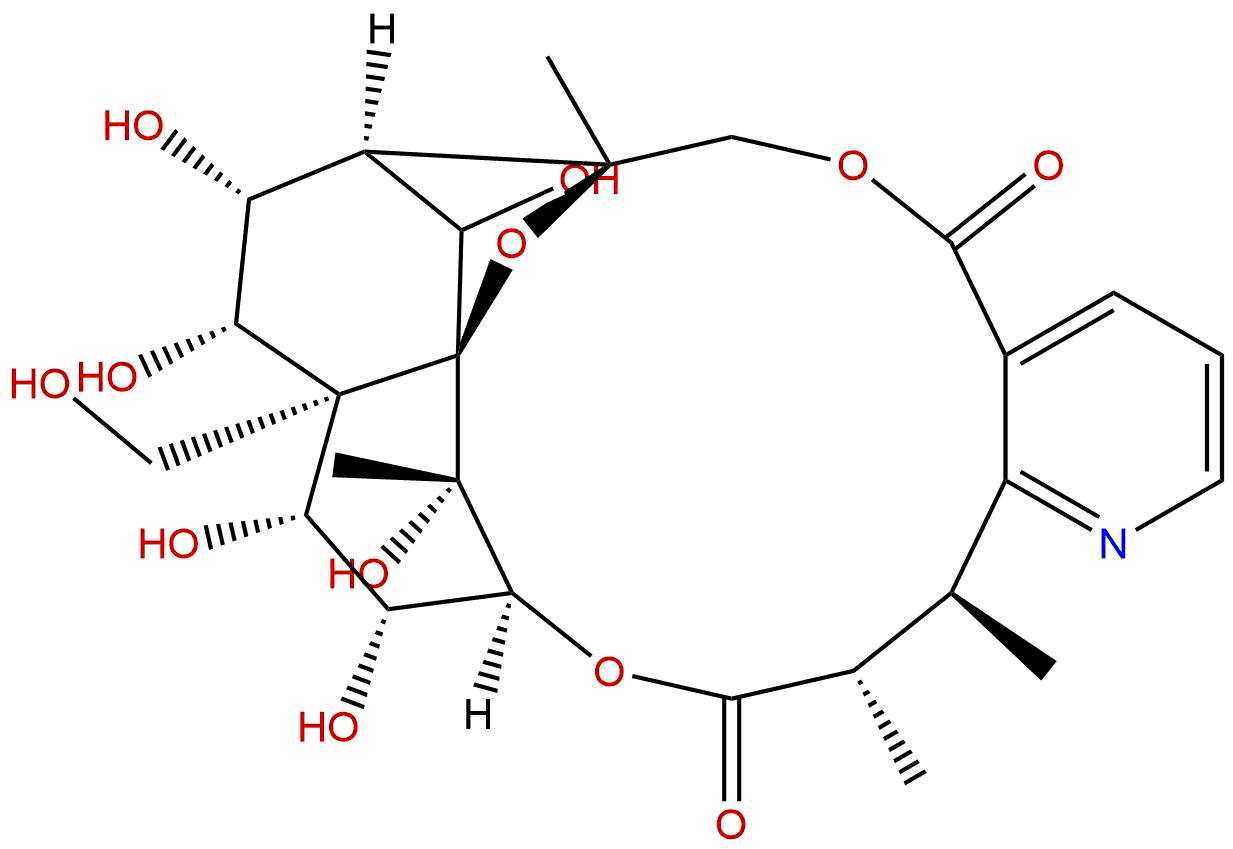


Product name: Hexadesacetyleuomynine
Synonym name: Euonymine, hexadeacetyl-
Catalogue No.: BP5411
Cas No.: 33458-84-3
Formula: C26H35NO12
Mol Weight: 553.561
Botanical Source: Tripterygium wilfordii Hook.F.
Type of Compound: Alkaloids
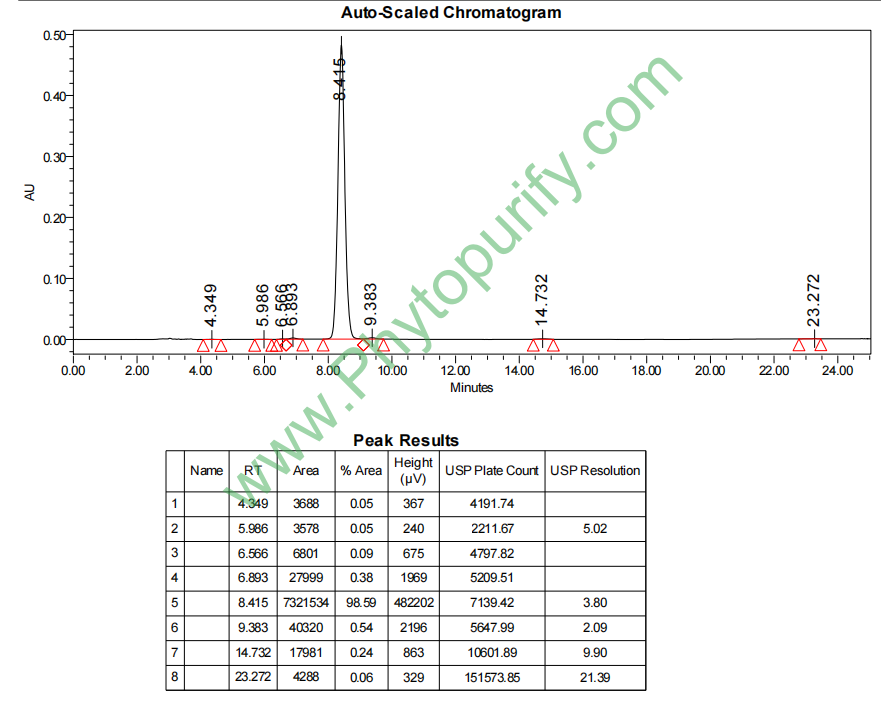
Purity: 95%~99%
Analysis Method: HPLC-DAD or/and HPLC-ELSD
Identification Method: Mass, NMR
Packing: Brown vial or HDPE plastic bottle
Storage: Store in a well closed container, protected from air and light. Put into refrigerate or freeze for long term storage.
Whenever possible, you should prepare and use solutions on the same day. However, if you need to make up stock solutions in advance, we recommend that you store the solution as aliquots in tightly sealed vials at -20℃. Generally, these will be useable for up to two weeks.
The product could be supplied from milligrams to grams
Inquire for bulk scale.
For Reference Standard and R&D, Not for Human Use Directly.
HPLC of Hexadesacetyleuomynine
Storage conditions:Short-term storage at 2~8℃, long-term storage at -20 ~ -80℃
216.3300
-.8269
-.8270
2.1851
.5874
1.6680
Low
41.2945
7.4849
Yes
No
No
No
No
No
0.0
Yes
No
Yes
Yes
Natural products, as an important source of drug discovery, play an irreplaceable role in the long history of human fight against diseases. In the treasure trove of traditional Chinese medicine, Tripterygium wilfordii(Tripterygium wilfordii Hook. f., as a traditional Chinese medicine with a long history and significant therapeutic effects, has long been widely recognized for its medicinal value. Thunder God Vine has a bitter and pungent taste, a cold nature, and is highly toxic. It belongs to the liver and kidney meridians and has the effects of dispelling wind and dampness, promoting blood circulation and unblocking collaterals, reducing swelling and pain, killing insects and detoxifying. It is commonly used in clinical practice to treat various autoimmune and inflammatory diseases such as rheumatoid arthritis, systemic lupus erythematosus, and nephrotic syndrome. However, its significant toxicity, especially its toxic side effects on the reproductive system, liver, kidneys, and blood system, greatly limits its clinical application scope.
Modern pharmacological research has shown that the complex chemical composition of Tripterygium wilfordii is the material basis for its pharmacological activity and toxicity. Among them, dihydroagarwood furan type sesquiterpenes are a characteristic component of Tripterygium wilfordii and its main active and toxic components. These compounds have unique structures and often contain multiple substituents such as acetyl and benzoyl groups, exhibiting diverse biological activities such as immunosuppression, anti-inflammatory, anti-tumor, and anti fertility. Hexadesacetyleuomynine (HDE), as a nitrogen-containing dihydroagarofuran derivative isolated from dried roots of Tripterygium wilfordii, is characterized by a significantly lower number of acetyl groups on the parent nucleus compared to other similar compounds such as Triptolide and Triptolide. This structural difference may endow it with a unique pharmacological activity spectrum and toxicity characteristics.
In recent years, with the in-depth exploration of the chemical components of Tripterygium wilfordii and the advancement of activity screening techniques, HDE has gradually entered the field of researchers' vision. Preliminary studies have shown that HDE exhibits significant proliferation inhibitory activity against various tumor cell lines, especially lymphoma cells. Lymphoma is a group of malignant tumors originating from the lymphohematopoietic system, and its incidence rate is on the rise worldwide. Despite significant progress in existing chemotherapy, radiotherapy, targeted therapy, and immunotherapy, drug resistance, high recurrence rates, and severe toxic side effects remain significant challenges in clinical practice. Therefore, the search for novel structures, unique mechanisms of action, and low toxic side effects of natural products for anti lymphoma has important scientific significance and clinical value. This article aims to provide a systematic review of the chemical structure, physicochemical properties, plant origin, pharmacological activity, mechanism of action, medicinal properties, and clinical application prospects of HDE, in order to provide comprehensive references for the in-depth research and development of this compound.
Hexadesacetyleuomynine (HDE) belongs to the dihydroagarofuran type sesquiterpenes. Its core skeleton is a hydrogenated naphthalene structure composed of a six membered ring (A ring) and a five membered ring (B ring), where the B ring contains an oxygen bridge, forming a furan ring. Unlike the common polyacetyl substituted dihydroagarfuran in Tripterygium wilfordii (such as Tripterygium wilfordii Hook. f. containing three acetyl groups), the naming of HDE "Hexadesacetyl" implies a significant reduction in the number of acetyl groups on its parent nucleus. Specifically, the mother nucleus of HDE is usually connected to multiple polar groups such as hydroxyl (- OH) or methoxy (- OCH ∝), rather than acetyl (- OCOCH ∝). In addition, the HDE structure also contains a nitrogen atom, usually in the form of a pyridine ring or a nitrogen-containing heterocyclic ring, which is connected to a specific position in the mother nucleus (such as C-8 or C-9) through ester or ether bonds. The presence of nitrogen-containing substituents is a significant feature that distinguishes HDE from other dihydroagarfuran compounds and may be crucial for its interaction with biological targets.
From the perspective of physical and chemical properties, the molecular formula of HDE is C ₂₈ H ∝₅ NO ₁₁, with a molecular weight of 553.5610 g/mol. The LogP of its lipid water partition coefficient is -0.8269, indicating that the compound has high hydrophilicity and better solubility in the aqueous phase than in the lipid phase. This characteristic is consistent with the structural feature of having multiple hydroxyl and nitrogen-containing groups in its molecule. The calculated topological polar surface area (TPSA) is 216.3300 Å ², which is much higher than the recommended upper limit of 140 Å ² for oral medications, suggesting that it may have lower membrane permeability. The predicted value of water solubility is 2.1851 mg/mL, which belongs to moderate water solubility. These physicochemical properties collectively determine the in vivo behavior of HDE: high hydrophilicity and low fat solubility make it difficult for it to passively diffuse through the lipid bilayer of the cell membrane, but its good water solubility also facilitates its distribution in blood and extracellular fluid. In addition, the predicted results show that HDE has a low blood-brain barrier (BBB) penetration ability, which suggests that its risk of toxic side effects in the central nervous system may be low, but also limits its potential application in the treatment of brain tumors. The hERG inhibition prediction is negative, and the Ames test result is 0.0, indicating a low risk of cardiac and genetic toxicity, but this still needs to be rigorously validated through experiments.
HDE mainly comes from the Celastraceae plant, Tripterygium wilfordii(Tripterygium wilfordii)Dry roots. Thunder God Vine is mainly distributed in the southern regions of the Yangtze River Basin in China, as well as in Japan, Korea, and other places. Its roots, stems, and leaves can all be used as medicine, but the xylem of the roots (peeled root core) has the highest medicinal value and relatively low toxicity. The content of HDE in Thunder God Vine roots is usually low and belongs to trace components, which poses certain challenges for its separation and purification.
The classic process of extracting HDE usually follows the general strategy of natural product chemistry and is optimized by combining the characteristics of dihydroagarfuran compounds. The basic steps are as follows:
1. Raw material pretreatment Crush the dried roots of Tripterygium wilfordii to an appropriate particle size (such as 20-40 mesh) to improve extraction efficiency.
2. Solvent extraction Extract using polar solvents. Given that HDE contains multiple hydroxyl groups and has high polarity, methanol, ethanol, or aqueous ethanol are often used as extraction solvents. Usually, cold soaking or heating reflux methods are used to extract multiple times (such as 3 times), and the extracted liquids are combined.
3. Concentration and preliminary separation Concentrate the extract under reduced pressure until it becomes a paste. The extract can be dispersed in water and subjected to liquid-liquid extraction using solvents of different polarities such as petroleum ether, ethyl acetate, and n-butanol to achieve preliminary component separation. Due to its equipolarity, HDE may mainly accumulate in the ethyl acetate extraction layer or n-butanol extraction layer.
4. chromatographic separation This is a crucial step in obtaining purified HDE. Usually, normal phase silica gel column chromatography is used, with gradient elution using solvent systems such as chloroform methanol, dichloromethane methanol, or petroleum ether acetone. According to the results of thin-layer chromatography (TLC) detection, combine the fractions containing HDE. Subsequently, a variety of modern chromatographic techniques such as reverse phase silica gel column chromatography (such as ODS-C18), Sephadex LH-20 gel column chromatography, and preparative high-performance liquid chromatography (Prep HPLC) can be combined for further fine separation and purification. Due to the similarity in polarity between HDE and other dihydroagarofuran compounds with similar structures in Tripterygium wilfordii, such as Triptolide and Triptolide, separation is difficult and requires repeated chromatographic operations and precise optimization of conditions.
5. Structural Identification The final pure product was structurally confirmed by spectroscopic methods, including nuclear magnetic resonance spectroscopy (¹ H-NMR, ¹ ³ C-NMR, 2D-NMR), high-resolution mass spectrometry (HR-ESI-MS), infrared spectroscopy (IR), and ultraviolet spectroscopy (UV), and compared with data reported in literature.
It is worth noting that due to the toxicity of the medicinal herb Tripterygium wilfordii, safety regulations must be strictly followed during the extraction process, and personal protective measures must be taken. In addition, there may be differences in the content of HDE in Thunder God Vine from different origins and harvesting seasons. Establishing stable and controllable raw material sources and standardized extraction processes is the basis for ensuring the reproducibility of subsequent research.
Existing research evidence indicates that HDE exhibits various pharmacological activities, among which anti-tumor activity, especially targeting lymphoma, is the most prominent.
HDE exhibits inhibitory activity on proliferation and induces apoptosis in various tumor cell lines. In the field of lymphoma, studies have shown that HDE can inhibit the proliferation of various lymphoma cell lines (such as Raji, Jurkat, U937, etc.) in a dose-dependent and time-dependent manner. Its half maximal inhibitory concentration (IC ₅₀) is usually at the micromolar level, demonstrating strong in vitro activity. Compared with Triptolide, HDE may have relatively lower cytotoxicity, suggesting that it may have a better therapeutic window. In addition to lymphoma, HDE also showed a certain inhibitory effect on other solid tumor cells, such as breast cancer, lung cancer, liver cancer, colon cancer, etc., but its sensitivity and selectivity need further systematic evaluation.
As the active ingredient of Tripterygium wilfordii, HDE may also inherit the immunosuppressive and anti-inflammatory properties of its parent plant. Preliminary studies have shown that HDE can inhibit the activation and proliferation of T lymphocytes, and reduce the production of pro-inflammatory cytokines such as TNF - α, IL-1 β, and IL-6. This activity may be associated with its anti-tumor effect, as chronic inflammation and immune dysfunction are important microenvironmental factors in the occurrence and development of tumors. However, current research on the specific effects and mechanisms of HDE in immune regulation is not yet in-depth, and more experimental evidence is needed to support it.
Given the structural diversity of dihydroagarwood furan compounds, HDE may also have other potential pharmacological activities, such as antiviral, antibacterial, neuroprotective, etc. But research in these fields is currently almost blank and is a direction worth exploring in the future.
The molecular mechanism by which HDE exerts its pharmacological activity, especially its anti lymphoma effect, is the core issue in its research. Based on the relevant targets provided in existing literature and compound information, the possible action network of HDE can be outlined.
Inducing tumor cell apoptosis is one of the main mechanisms of HDE's anti-tumor effect. Its function involves two apoptotic pathways: endogenous (mitochondria) and exogenous (death receptors).
- Regulating BCL-2 family proteins The targets MCL1 and BCL2 mentioned in the information are key anti apoptotic proteins in the BCL-2 family. HDE may neutralize its anti apoptotic function by downregulating the expression of MCL1 and BCL2, or by activating BH3 only proteins such as BIM and BAD, thereby breaking the stability of the mitochondrial outer membrane, promoting cytochrome c release, and activating the Caspase cascade reaction. CASP8 (Caspase-8) serves as the initiator of the exogenous apoptotic pathway, and its activation may be involved in the HDE induced apoptosis process.
- Activate the TP53 signaling pathway TP53 (p53 protein) is an important tumor suppressor that can respond to stress signals such as DNA damage and transcriptional regulation of downstream pro apoptotic genes (such as BAX, PUMA, NOXA). HDE may enhance its induction of apoptosis by activating the p53 signaling pathway. TP53 as a target in the information suggests that HDE may directly or indirectly affect the activity or expression of p53.
- Inhibition of STAT3 signaling pathway STAT3 is a transcription factor that is continuously activated in various tumors, including lymphoma, promoting cell proliferation, survival, and angiogenesis. HDE may exert anti-tumor effects by inhibiting the phosphorylation (Tyr705 site) and nuclear translocation of STAT3, reducing its transcriptional activity and downregulating the expression of its target genes (such as MCL1, BCL2, Cyclin D1, etc.).
In addition to inducing apoptosis, HDE may also inhibit tumor cell proliferation by interfering with the cell cycle progression. The target CDC25B is a cell cycle phosphatase responsible for activating the CDK1/Cyclin B complex, which is a key regulatory factor for G2/M phase transition. HDE may inhibit the activity of CDC25B, leading to cell cycle arrest in the G2/M phase and thus suppressing cell division. TOP2A (Topoisomerase II α) is an enzyme essential for DNA replication and transcription, and is also a target for various chemotherapy drugs such as etoposide and doxorubicin. HDE may cause DNA damage and trigger cell cycle checkpoints and apoptosis by inhibiting the activity of TOP2A.
In summary, the anti lymphoma mechanism of HDE is a complex network of multiple targets and pathways. It may exert synergistic anti-tumor effects by simultaneously acting on multiple key nodes such as apoptosis, cell cycle, and signal transduction. This multi-target characteristic is both its advantage (less likely to develop drug resistance) and a challenge for its mechanism research. In the future, modern molecular biology techniques such as gene knockout/knock in, proteomics, ChIP seq, etc. need to be utilized to further elucidate their direct targets and fine molecular regulatory networks.
To push HDE from laboratory research to clinical application, a comprehensive evaluation of its drug like and pharmacokinetic (ADME) properties is necessary.
Based on classic pharmacological evaluation criteria such as Lipinski's "Five Rules", the molecular weight of HDE (553.56 Da) is slightly higher than the threshold of 500 Da, the LogP value (-0.83) is less than 5, the number of hydrogen bond donors (hydroxyl) and acceptors (carbonyl, ether oxygen, nitrogen atoms) is relatively high, and the TPSA (216.33 Å ²) is much higher than 140 Å ². These data indicate that HDE does not comply with the pharmacological rules of traditional oral drugs, and its oral bioavailability may be low. High polarity and large TPSA result in poor membrane permeability, making it difficult to be absorbed by the intestine through passive diffusion. Therefore, HDE may not be suitable for development as an oral formulation, but is more suitable for use through injection administration (such as intravenous injection, intramuscular injection) or local administration (such as topical formulation).
However, the rule of medicinal properties is not absolute. With the development of medicinal chemistry, many successfully marketed drugs (such as macrolide antibiotics and certain anti-tumor drugs) have also broken these rules. For HDE, its pharmacokinetic properties and bioavailability can be improved through strategies such as prodrug design (such as esterifying hydroxyl groups to enhance lipid solubility), nano formulations (such as liposomes, polymer micelles), or combination therapy with other drugs.
At present, there is very limited publicly available research data on the pharmacokinetics of HDE in vivo. Based on its physical and chemical properties, some reasonable speculations can be made:
- absorb Poor oral absorption and low bioavailability. Intravenous injection may be the main route of administration.
- distribution Due to its high hydrophilicity, HDE is mainly distributed in plasma and extracellular fluid, and tissue distribution may be limited. BBB has low penetrability and is not easily able to enter the central nervous system. Its apparent distribution volume (Vd) may be relatively small.
- Metabolism HDE contains multiple hydroxyl and ester bonds and may undergo extensive phase I metabolism (such as oxidation, reduction, hydrolysis) and phase II metabolism (such as glucuronidation, sulfation) in the liver. Its metabolites may have activity or toxicity, requiring metabolite identification and activity research.
- excretion HDE and its metabolites may be mainly excreted through the kidneys (urine) and/or bile (feces).
The hERG inhibition prediction in the pharmacological parameters is negative, which is a positive signal indicating a lower risk of HDE induced cardiac QT interval prolongation and arrhythmia. The Ames test result is 0.0, indicating no significant mutagenicity and a low risk of genetic toxicity. These preliminary safety evaluation results provide favorable conditions for the further development of HDE. However, it must be emphasized that these predicted results cannot replace rigorous in vitro and in vivo toxicology experiments. In the future, it is necessary to conduct systematic research on the acute toxicity, long-term toxicity, reproductive toxicity, and immunotoxicity of HDE, and comprehensively evaluate its safety.
HDE, as a natural product with unique structure and novel mechanism of action, has shown promising application prospects in the field of anti lymphoma and other tumor treatments.
The treatment of lymphoma has entered the era of precision medicine, but the problem of drug resistance remains severe. The multi-target mechanism of HDE, especially its simultaneous action on multiple key targets closely related to the occurrence and development of lymphoma such as BCL-2, STAT3, CDC25B, gives it the potential to overcome traditional single target drug resistance. For example, in lymphoma patients resistant to BCL-2 inhibitors such as Venetoclax, HDE may exert therapeutic effects by simultaneously inhibiting STAT3 or activating the p53 pathway. In addition, the lower predictive cardiotoxicity and genotoxicity of HDE may make it superior to certain existing chemotherapy drugs in terms of safety.
Despite the bright future, the development of HDE still faces many challenges:
1. Pharmacokinetic defects Low oral bioavailability is the biggest obstacle. The solution strategy includes: a) Structural modification Introducing lipid soluble functional groups or designing prodrugs through medicinal chemical methods while maintaining activity; b) New drug delivery system Using carrier technologies such as liposomes, nanoparticles, and microemulsions to improve their solubility and targeted delivery efficiency; c) Change the route of administration Develop into injections or transdermal patches.
2. Source restrictions HDE has low content in Tripterygium wilfordii and high natural extraction cost, making it difficult to meet large-scale production and clinical needs. The solution strategy includes: a) Fully synthetic or semi synthetic Developing efficient chemical synthesis routes is the fundamental way to solve the source problem; b) biosynthesis Using synthetic biology techniques to heterogeneously synthesize HDE or its precursors in microbial or plant cell factories; c) tissue culture Optimize the culture system of Tripterygium wilfordii cells or hairy roots to increase the yield of HDE.
3. The mechanism of action is unclear Currently, there is limited understanding of the direct molecular targets and detailed signal networks of HDE. In the future, chemical biology methods such as activity-based proteomic analysis (ABPP) will be needed to identify the protein targets it directly binds to, and gene editing and omics technologies will be used to deeply analyze its mechanism of action.
4. Toxicity issue Although the initial prediction of toxicity is low, the toxicity background of Tripterygium wilfordii cannot be ignored. A systematic and rigorous toxicological evaluation of HDE must be conducted to clarify its toxic target organs, toxic mechanisms, and safe dose range. Especially to evaluate its potential impact on the liver, kidneys, and reproductive system.
Future research on HDE should focus on the following aspects:
- Deepen mechanism research Using techniques such as ABPP and CRISPR-Cas9 library screening, identify the direct target of HDE and elucidate the molecular details of its interaction with known targets such as MCL1 and STAT3.
- lead optimization Using HDE as a lead, conduct systematic structure-activity relationship (SAR) studies, design and synthesize a series of structurally similar compounds, and screen for candidate compounds with stronger activity, higher selectivity, and better pharmacokinetic properties.
- In vivo efficacy and safety evaluation Establish in vivo xenograft tumor models for various lymphomas (such as diffuse large B-cell lymphoma, mantle cell lymphoma, etc.), and systematically evaluate the anti-tumor efficacy, pharmacokinetics, and toxicological characteristics of HDE and its derivatives.
- Combination therapy strategy Explore the synergistic effects of HDE with existing chemotherapy drugs (such as doxorubicin, cisplatin), targeted drugs (such as Ibrutinib, Venetoclax), or immune checkpoint inhibitors (such as PD-1/PD-L1 antibodies) in order to improve efficacy, reduce toxicity, and delay drug resistance.
- Expand indications On the basis of anti lymphoma research, explore the therapeutic potential of HDE for other hematological malignancies (such as multiple myeloma, leukemia) and solid tumors, and conduct in-depth research on its immunomodulatory and anti-inflammatory effects.
Hexadesacetyleuomynine, as a unique nitrogen-containing derivative of agarwood furan in Tripterygium wilfordii, has attracted the attention of researchers due to its structural characteristics that distinguish it from other similar compounds and its potential multi-target anti-tumor activity, especially for lymphoma. It induces apoptosis and cell cycle arrest in tumor cells by regulating multiple key targets such as BCL-2 family, STAT3, p53, CDC25B, laying a theoretical foundation for its potential as a novel anti lymphoma candidate drug. Although HDE faces challenges in terms of oral bioavailability and natural sources, its low predictive cardiotoxicity and genotoxicity, as well as the potential to overcome drug resistance through multi-target action, make it of significant development value.
In the future, through drug chemical modification, new formulation technology, in-depth mechanism research, and systematic in vitro and in vivo evaluation, it is expected to overcome the existing shortcomings of HDE and develop it into highly efficient and low toxicity anti-tumor drugs. In depth research on HDE may not only provide new treatment options for lymphoma patients, but also further reveal the scientific connotation of Tripterygium wilfordii, a traditional Chinese medicine, and provide an example for discovering innovative drugs from natural products. The road to the transformation of HDE from laboratory discoveries to clinical applications is long and arduous, but its scientific potential and clinical value are worthy of continuous exploration and investment by researchers.
