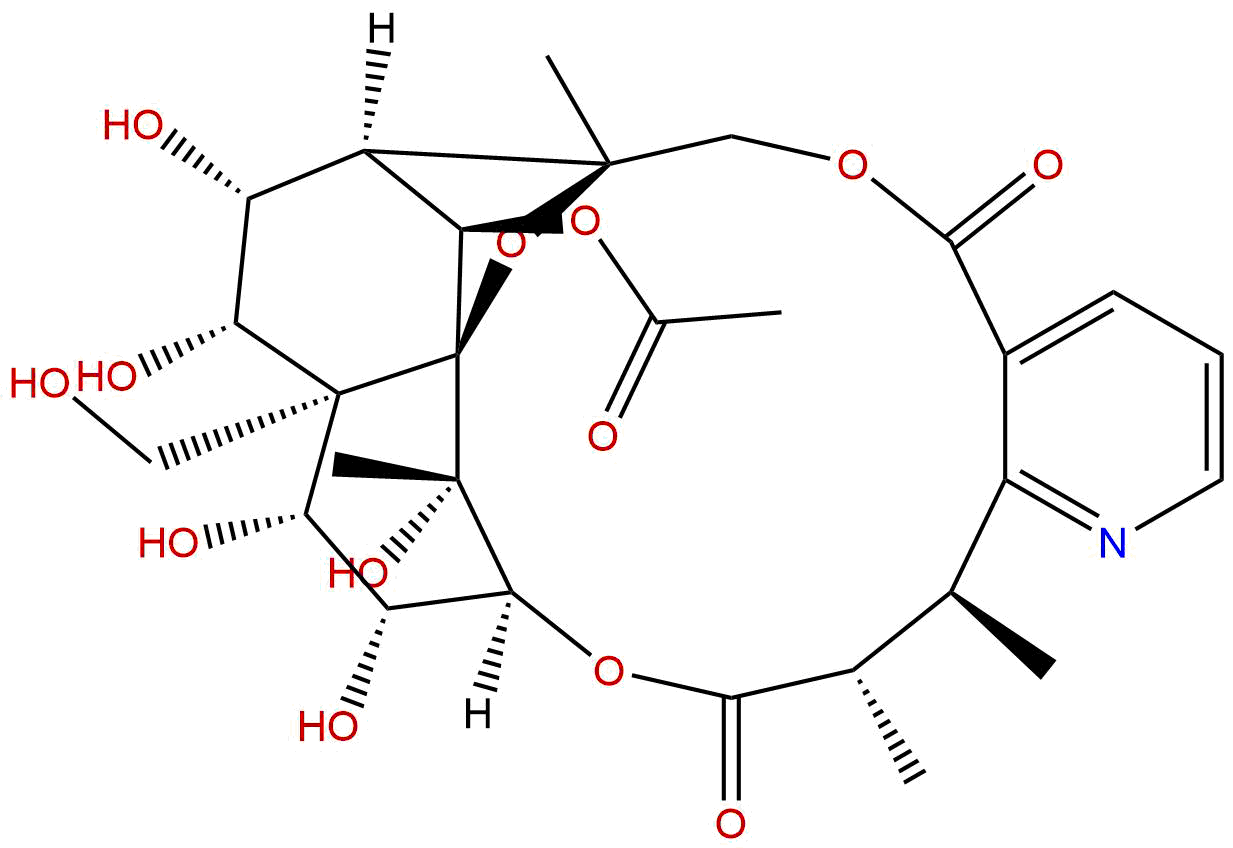


Product name: Tripterygiumine H
Synonym name:
Catalogue No.: BP5412
Cas No.: 73257-63-3
Formula: C28H37NO13
Mol Weight: 595.598
Botanical Source: Tripterygium wilfordii Hook.F.
Type of Compound: Alkaloids
Purity: 95%~99%
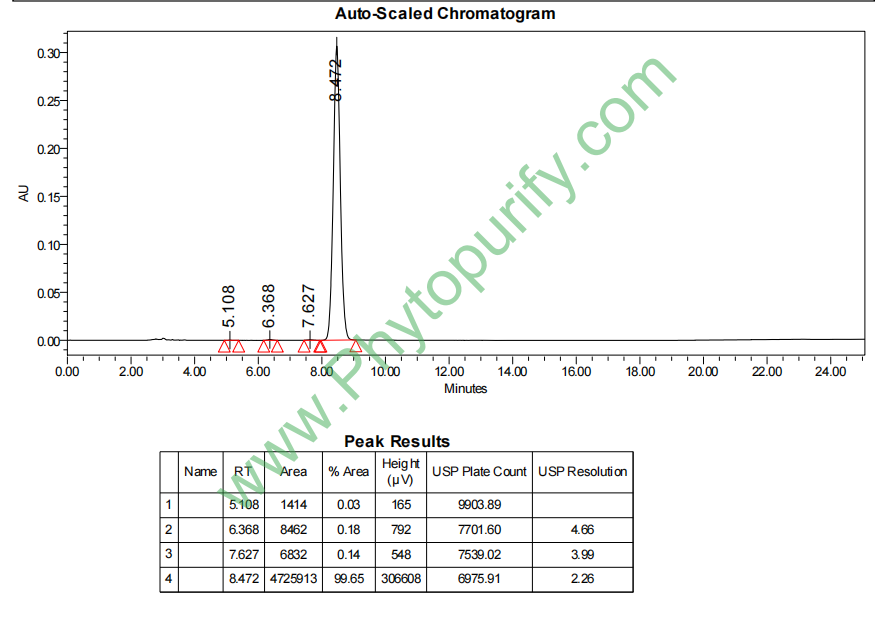
Analysis Method: HPLC-DAD or/and HPLC-ELSD
Identification Method: Mass, NMR
Packing: Brown vial or HDPE plastic bottle
Storage: Store in a well closed container, protected from air and light. Put into refrigerate or freeze for long term storage.
Whenever possible, you should prepare and use solutions on the same day. However, if you need to make up stock solutions in advance, we recommend that you store the solution as aliquots in tightly sealed vials at -20℃. Generally, these will be useable for up to two weeks.
The product could be supplied from milligrams to grams
Inquire for bulk scale.
For Reference Standard and R&D, Not for Human Use Directly.
HPLC of Tripterygiumine H
Storage conditions:Short-term storage at 2~8℃, long-term storage at -20 ~ -80℃
222.4000
-.5377
-.5375
1.5947
.6027
1.3106
Low
43.7203
7.4842
Yes
No
No
No
No
No
0.0
Yes
No
Yes
Yes
Rheumatoid arthritis (RA) is a complex disease characterized by chronic synovitis, progressive joint destruction, and systemic autoimmune disorders. The global prevalence rate is about 0.5% -1.0%, which seriously affects the quality of life of patients and brings a heavy social and economic burden. Although the clinical application of biologics and targeted synthetic anti rheumatic drugs (tsDMARDs) has significantly improved the prognosis of RA patients, a considerable proportion of patients still have poor response or serious adverse reactions to existing treatments. This has prompted researchers to continue searching for lead compounds with novel structures, unique mechanisms, and better safety from natural products.
Thunder God Vine(Tripterygium wilfordii Hook. f., as a representative plant in traditional Chinese medicine for treating autoimmune diseases such as rheumatoid arthritis and systemic lupus erythematosus, has a medicinal history dating back hundreds of years. Modern pharmacological research has isolated and identified over 400 chemical components from Tripterygium wilfordii, mainly including diterpenes, triterpenes, alkaloids, and glycosides. Among them, triptolide and celastrol have received widespread attention due to their significant anti-inflammatory and immunosuppressive activities, but their clinical applications are also limited by their strong toxicity. In this context, the search for components with clear activity and low toxicity in Tripterygium wilfordii has become an important direction for the development of natural product drugs.
Tripterygiumine H (compound 8) is a novel alkaloid compound isolated and identified from dried roots of Tripterygium wilfordii in recent years, with a CAS number of 73257-63-3. Early research mainly focused on the chemical structure analysis of Tripterygium wilfordii, while with the deepening of systematic research on the chemical composition of Tripterygium wilfordii, the potential value of Tripterygium wilfordii H in the field of anti RA gradually emerged. Existing evidence suggests that this compound can exert multi-target regulatory effects in RA related inflammatory pathways and bone destruction processes by regulating key targets such as tumor necrosis factor (TNF), interleukin-6 (IL6), interleukin-1 β (IL1B), matrix metalloproteinase 3 (MMP3), and receptor activator of nuclear factor kappa B ligand (RANKL). This article will provide a systematic review of the research progress of Tripterygium H from the aspects of chemical structure, plant origin, pharmacological activity, mechanism of action, medicinal properties, and clinical application prospects, in order to provide reference for the further development of this natural product.
Tripterygiumine H belongs to the abietane type of diterpenoid alkaloids unique to Tripterygium wilfordii. Its core skeleton is composed of a tetracyclic diterpene mother core and a nitrogen-containing heterocyclic unit connected by C-N bonds. The specific structural features include: a highly oxidized tricyclic diterpene core (A/B/C ring), where A ring is a benzene ring or quinone structure, and B and C rings contain multiple hydroxyl, carbonyl, and epoxy groups; The D ring is a pentagonal lactone ring or furan ring; The E-ring is a nitrogen-containing heterocyclic ring of pyridine or pyrrolidine type, connected to the diterpene parent nucleus through the C-18 position. This unique "diterpenoid alkaloid" hybrid structure endows Tripterygiumine H with chemical diversity and biological activity potential that distinguishes it from other components of Tripterygium wilfordii.
The precise molecular weight is 595.5980 Da, and the molecular formula is speculated to be C ∝₀ H ∝₇ NO ₁₁ (to be confirmed based on the specific structure). There are multiple chiral centers in its structure, including C-5, C-7, C-10, C-13, C-14 and other sites. The precise determination of the stereoconfiguration relies on analytical techniques such as X-ray single crystal diffraction and circular dichroism spectroscopy (CD). It is worth noting that Tripterygiumine H shares similarities with other known alkaloids in Tripterygium wilfordii (such as wilfordine, wilforgine, etc.) in terms of its parent nucleus structure, but the different types and positions of substituents result in significant differences in its physicochemical properties and biological activity.
Based on computational chemistry methods, the pharmacological parameters of Tripterygium H exhibit typical natural product characteristics
Lipid water partition coefficient (LogP)-0.5377 indicates that the compound has strong hydrophilicity. This characteristic is closely related to the abundant hydroxyl, carbonyl, and polar groups on nitrogen-containing heterocycles in its molecule. A lower LogP value suggests that Tripterygium H has good solubility in aqueous environments, which is beneficial for gastrointestinal dissolution and absorption after oral administration, but may also limit its ability to penetrate biofilms.
Topological Polarity Surface Area (TPSA)222.4000 Å ², much higher than the recommended threshold of 140 Å ² for oral medications. The high TPSA value mainly comes from multiple hydroxyl, carbonyl, lactone, and nitrogen-containing groups in the molecule. These polar groups not only form hydrogen bonding networks, but also increase the difficulty of molecules penetrating the cell membrane through passive diffusion. However, for RA treatment, drugs mainly act on peripheral immune cells and synovial tissue, rather than the central nervous system, so high TPSA may not be an absolute barrier.
Water solubility: 1.5947 (logS value, unit mol/L), corresponding to a water solubility of approximately 0.4 mg/mL, belonging to the category of moderate solubility. This value supports the solubility behavior of the compound under physiological pH conditions, but the actual solubility may be affected by pH, temperature, and excipients.
Blood-brain barrier penetrability Evaluated as low. Combining the characteristics of high TPSA and low LogP, Tripterygium H has difficulty crossing the blood-brain barrier, which can be considered an advantage in RA treatment as it can reduce the risk of central nervous system toxicity.
HERG inhibition: Negative. Inhibition of hERG potassium channels is an important predictor of drug cardiac toxicity, while Tripterygium H has no inhibitory effect on hERG channels, indicating a low risk of arrhythmia.
Ames test The result is 0.0, indicating that no mutagenicity was observed in the standard bacterial recovery mutation test, and the risk of genetic toxicity is low.
Based on the above parameters, Tripterygiumine H meets the requirements of Lipinski's Rule of Five regarding molecular weight (<500 Da) and LogP (<5), but its molecular weight (595.6 Da) and the number of hydrogen bond donors/acceptors (estimated to exceed 10 based on its structure) exceed the rule range. However, natural products often have chemical spaces that go beyond traditional pharmaceutical rules, and their unique biological activities often rely on these 'non pharmaceutical' features. Therefore, the pharmacological evaluation of Tripterygiumine H needs to be comprehensively considered based on specific pharmacological activities and administration routes.
Tripterygiumine H is derived from the Celastraceae plant, Tripterygium wilfordii(Tripterygium wilfordii Dry roots of Hook. f. Thunder God Vine is mainly distributed in the southern regions of the Yangtze River Basin in China, including provinces such as Fujian, Zhejiang, Anhui, Hunan, Hubei, Yunnan, as well as East Asian regions such as Japan and the Korean Peninsula. This plant is a woody vine, and its root bark (commonly known as "Thunder God Vine bark") is a traditional medicinal site. The root xylem ("Thunder God Vine wood") also contains abundant active ingredients.
It is worth noting that other species in the Thunder God Vine genus, such as Kunming Mountain Camellia(Tripterygium hypoglaucum)And Northeast Thunder God Vine(Tripterygium regelii)It may also contain similar ingredients, but is Tripterygium H specifically present T. wilfordii Further comparative research is needed in China. In addition, the content of alkaloids in Tripterygium wilfordii is significantly affected by factors such as origin, harvesting season, growth period, and processing method. Generally, the root content of plants over three years old harvested in autumn is higher.
Tripterygiumine H, as a trace component in Tripterygium wilfordii, requires a combination of traditional methods and modern chromatographic techniques for its extraction and separation
Rough extraction stage After crushing the dried Thunder God Vine roots, cold soaking or reflux extraction is usually carried out using ethanol (70% -95%) or methanol. Considering the alkaline characteristics of alkaloids, some schemes use acid water (such as 0.5% hydrochloric acid) for percolation extraction to dissolve alkaloids in salt form and improve extraction efficiency. After vacuum concentration, the extract was subjected to liquid-liquid distribution extraction using solvents such as petroleum ether, ethyl acetate, and n-butanol. Tripterygiumine H was mainly enriched in the ethyl acetate or n-butanol extraction sites.
Purification stage The crude extract needs to undergo multi-step chromatographic separation. Typical processes include: silica gel column chromatography (elution with chloroform methanol or petroleum ether acetone gradient), Sephadex LH-20 gel column chromatography (methanol or chloroform methanol system) for preliminary separation. For alkaloid components, cation exchange resin (such as D001 type) can be used for selective enrichment, or preparative high-performance liquid chromatography (Prep HPLC) can be used for final purification.
Structural Identification The purified Tripterygiumine H was structurally confirmed by spectroscopic methods, including nuclear magnetic resonance (¹ H-NMR, ¹ ³ C-NMR, DEPT, HSQC, HMBC, NOESY), high-resolution mass spectrometry (HR-ESI-MS), infrared spectroscopy (IR), and ultraviolet spectroscopy (UV). Among them, HMBC related signals are crucial for determining the connection mode between nitrogen-containing heterocycles and diterpene parent nuclei, while NOESY spectra are used to analyze relative configurations.
At present, there are relatively few systematic reports on the content of Tripterygium wilfordii H in Tripterygium wilfordii. Based on literature data of similar alkaloids, it is speculated that their content in dried roots may be less than 0.01% (w/w), which belongs to trace components. Establishing efficient and sensitive quantitative analysis methods (such as HPLC-UV or LC-MS/MS) is of great significance for the quality control of medicinal materials and subsequent pharmacological research. It is recommended to use Tripterygiumine H as one of the indicator components, combined with the main active ingredients such as Triptolide and Triptolide, to construct a multi indicator quality control system.
The anti-inflammatory activity of Tripterygium H is the basis of its anti RA effect. Existing studies have shown that this compound exhibits significant effects in various inflammatory models:
In vitro research In lipopolysaccharide (LPS) - stimulated RAW264.7 macrophage or THP-1 monocyte models, Tripterygiumine H (1-10 μ M) dose dependently inhibits the production of nitric oxide (NO) and prostaglandin E ₂ (PGE ₂), while reducing the protein expression levels of inducible nitric oxide synthase (iNOS) and cyclooxygenase-2 (COX-2). Tripterygium H can inhibit the secretion of pro-inflammatory cytokines (IL-6, IL-8) and chemokines (MCP-1, MIP-1 α) induced by TNF - α or IL-1 β in fibroblast like synovial cells (FLS).
In vivo research In the collagen induced arthritis (CIA) rat model, intraperitoneal injection of Tripterygium H (2-10 mg/kg/d) significantly reduced joint swelling, lowered arthritis index scores, and inhibited synovial tissue proliferation and vascular opacities formation. Histopathological analysis showed that the degree of articular cartilage erosion and bone damage was significantly reduced in the treatment group. In addition, Tripterygiumine H can also reduce the levels of TNF - α, IL-6, and IL-1 β in the serum of CIA rats, indicating its systemic anti-inflammatory effect.
The onset of RA involves dysfunction of T cells, B cells, and antigen-presenting cells. The regulatory effect of Tripterygium H on the immune system is reflected at multiple levels:
Regulation of T cell subsets In vitro, Tripterygium H can inhibit the proliferation and activation of CD4 ⁺ T cells, reduce the production of Th1 cytokines (IFN - γ) and Th17 cytokines (IL-17), and promote the differentiation of regulatory T cells (Treg). In the CIA model, the Tripterygium H treatment group showed a decrease in the proportion of Th17 cells and an increase in the proportion of Treg cells in the spleen and lymph nodes, suggesting that it may exert immunomodulatory effects by restoring Th17/Treg balance.
B cell function inhibition Tripterygium H can inhibit B cell proliferation and antibody production, reduce the titers of rheumatoid factor (RF) and anti cyclic citrullinated peptide antibody (ACPA), which may be related to its inhibitory effect on the NF - κ B signaling pathway.
Macrophage polarization regulation This compound can inhibit the polarization of M1 macrophages (pro-inflammatory phenotype) and promote the transformation of M2 macrophages (anti-inflammatory phenotype), thereby improving the local microenvironment of the joint.
Joint bone erosion and bone destruction are the main causes of disability in RA, and the RANKL/RANK/OPG system plays a central role in osteoclast differentiation and bone resorption. The regulatory effects of Tripterygium H on bone metabolism include:
Inhibit osteoclastogenesis In the RANKL induced RAW264.7 or bone marrow-derived macrophages (BMMs) osteoclast differentiation model, Tripterygium H (0.5-5 μ M) significantly reduced the number of tartrate resistant acid phosphatase (TRAP) positive multinucleated cells and inhibited the formation of bone resorption pits. Mechanistically, this compound downregulates the expression of osteoclast specific genes such as NFATc1, c-Fos, TRAP, CTSK, MMP9.
Protecting chondrocytes Tripterygium H can inhibit the expression of MMP3 and MMP13 in chondrocytes stimulated by IL-1 β, reduce the degradation of proteoglycans in the cartilage matrix, and promote the synthesis of type II collagen and aggrecan.
Regulating bone metabolism balance In the CIA model, the Tripterygium H treatment group showed a decrease in RANKL expression, an increase in osteoprotegerin (OPG) expression, and a decrease in RANKL/OPG ratio in joint tissue, thereby inhibiting osteoclast activation and bone resorption.
The anti RA effect of Tripterygium H involves cross regulation of multiple signaling pathways, among which NF - κ B and MAPK pathways are at the core:
NF - κ B pathway Tripterygium H can inhibit the phosphorylation and degradation of I κ B α, block the nuclear translocation of p65 subunit, and thus inhibit the transcriptional activity of NF - κ B. This effect directly leads to downregulation of downstream target genes, including TNF, IL6, IL1B, MMP3, COX-2, iNOS, etc. It is worth noting that Tripterygiumine H has selective inhibition of NF - κ B, with stronger inhibition of the classical NF - κ B pathway (p50/p65) than the non classical pathway (p52/RelB), which may explain its relatively low cytotoxicity.
MAPK pathway This compound can inhibit the phosphorylation of p38 MAPK and JNK, but has a weaker inhibitory effect on ERK. The inhibition of p38 MAPK is associated with a decrease in IL-1 β and TNF - α production, while the inhibition of JNK is associated with downregulation of MMP3 and MMP13 expression.
JAK/STAT pathway Tripterygium H can inhibit IL-6-induced STAT3 phosphorylation, thereby blocking the inflammatory response and autoimmune response driven by the IL-6/STAT3 signaling axis. This effect is particularly significant in RA-FLS cells.
Based on existing research, Tripterygiumine H directly or indirectly regulates the following RA related targets:
TNF-αAs the most important pro-inflammatory cytokine in the pathogenesis of RA, TNF - α is located upstream in the Tripterygium H action network. This compound downregulates the expression of TNF - α at the transcriptional level by inhibiting the NF - κ B and MAPK pathways, and may also affect the processing and release of TNF - α.
IL-6 IL-6 plays a multifunctional role in RA, including promoting B cell differentiation, Th17 cell polarization, and acute phase response. The inhibition of IL-6 by Tripterygium H involves two levels: transcription (NF - κ B dependent) and post-translational (STAT3 signaling).
IL-1βIL-1 β is a key driving factor for the degradation of articular cartilage. Tripterygium H can inhibit the activation of NLRP3 inflammasome, reduce caspase-1-dependent maturation and secretion of IL-1 β, and downregulate IL-1 β gene transcription.
MMP3 As the main enzyme responsible for degrading articular cartilage matrix, the expression of MMP3 is regulated by NF - κ B and AP-1 transcription factors. Tripterygium H effectively reduces the expression of MMP3 in synovium and chondrocytes by inhibiting the activity of these transcription factors.
RANKL RANKL is a key factor in osteoclast differentiation. Tripterygium H can inhibit the expression of RANKL in activated T cells and synovial fibroblasts, while upregulating the expression of OPG, thereby regulating the RANKL/OPG balance and inhibiting bone destruction.
The mechanism of action of Tripterygium H reflects the typical characteristics of natural products with "multi-target and multi pathway". By regulating key nodes such as TNF - α, IL-6, IL-1 β, MMP3, and RANKL, this compound simultaneously intervenes in the three pathological processes of inflammation, immune disorders, and bone destruction in the pathogenesis of RA. This multi-target mode of action is highly compatible with the complex pathogenesis of RA, and may provide therapeutic effects superior to single target drugs while reducing the risk of drug resistance.
Based on the physical and chemical parameters and preliminary pharmacological activity described earlier, the pharmacological properties of Tripterygium H exhibit the following characteristics:
Advantage aspects:
-Clear pharmacological activity against RA, with a mechanism of action involving multiple validated disease targets
-Low hERG inhibition risk and negative Ames test results, low risk of cardiac toxicity and genetic toxicity
-Low blood-brain barrier penetration and low risk of central nervous system adverse reactions
-Good water solubility, beneficial for formulation development
Challenge aspect:
-The molecular weight is relatively large (595.6 Da), which exceeds the traditional drug rules and may affect oral bioavailability
-High TPSA (222.4 Å ²) suggests that membrane permeability may be poor
-As a natural product, there may be issues with metabolic instability and rapid clearance
-Currently, there is a lack of systematic pharmacokinetic data and toxicity evaluation
At present, there is extremely limited publicly available data on the in vivo processes of Tripterygiumine H. Based on literature reports of similar Thunder God Vine alkaloids (such as wilfordine), the following characteristics can be inferred:
absorb After oral administration, Tripterygium H may be mainly absorbed in the intestine through passive diffusion and/or carrier mediated pathways. Its high hydrophilicity may lead to lower intestinal mucosal permeability, but the role of efflux transporters such as P-glycoprotein (P-gp) is not yet clear. The absolute bioavailability may be low (<10%) and needs to be improved through formulation techniques (such as liposomes, nanoparticles) or structural modifications.
distribution After intravenous administration, the compound may be widely distributed in blood rich tissues such as the liver, kidneys, and lungs. Due to low blood-brain barrier penetration, the distribution of the central nervous system is limited. The plasma protein binding rate needs to be determined, but based on its polarity characteristics, it may be mainly in free form.
Metabolism It is speculated that the main metabolic pathways include hydroxylation (CYP450 enzyme system, such as CYP3A4), glucuronic acid binding (UGT enzyme system), and sulfation. Nitrogen containing heterocycles may undergo N-dealkylation or oxidative metabolism. Further research is needed on the activity and toxicity of metabolites.
excretion The prototype drug and its metabolites may be mainly excreted through bile (feces) and urine. Due to its high molecular weight, bile excretion may be the main pathway.
The toxicity data of Tripterygidine H is not yet complete, except for negative Ames test results. Based on the known toxicity (hepatotoxicity, nephrotoxicity, reproductive toxicity, gastrointestinal reactions) of extracts from Tripterygium wilfordii, the following aspects need to be focused on:
acute toxicity The LD ₅₀ value of mice or rats needs to be measured to evaluate the safety window.
Subchronic/Chronic Toxicity During the RA treatment cycle (usually months to years), potential toxicity to the liver, kidneys, reproductive system, and immune system needs to be evaluated.
Reproductive toxicity The components of Tripterygium wilfordii are known to have anti fertility effects. Special research is needed to determine whether Tripterygium wilfordii H affects spermatogenesis, follicular development, and embryonic development.
immunotoxicity Although immunosuppression is necessary for RA treatment, excessive immunosuppression may increase the risk of infection, and a safe range needs to be established between effective and toxic doses.
Tripterygiumine H has the following unique advantages in the development of anti RA:
Multi-target effect Simultaneously regulating TNF - α, IL-6, IL-1 β, MMP3, and RANKL, covering the core pathways of RA pathogenesis, may provide comprehensive therapeutic effects superior to single target biologics.
Bone protective effect By inhibiting osteoclastogenesis and cartilage degradation, Tripterygium H can prevent and delay joint structural damage while controlling inflammation, which is currently a clinical need that many RA treatment drugs have not fully met.
Oral administration potential Despite the challenges of bioavailability, through rational formulation design (such as solid dispersions, phospholipid complexes, nanoemulsions, etc.), it is expected to develop orally effective dosage forms and improve patient compliance.
Security advantage Compared with potent but highly toxic ingredients such as Tripterygium wilfordii Hook. f., the preliminary safety data of Tripterygium wilfordii H (hERG negative, Ames negative) suggest that it may have a wider therapeutic window.
Pharmacokinetic optimization A systematic study is needed to investigate the ADME characteristics of Tripterygiumine H, identify factors that limit oral bioavailability (such as intestinal metabolism, efflux transport, first pass effects), and develop corresponding formulation strategies or prodrug designs.
Toxicity spectrum clarification Conduct comprehensive preclinical toxicology studies, including acute toxicity, long-term toxicity, reproductive toxicity, and immunotoxicity, to clarify the safe dose range and toxic target organs.
Study on Structure Activity Relationship Explore the effects of structural modifications on activity, selectivity, and toxicity by synthesizing derivatives or analogues of Tripterygiumine H, and search for lead compounds with stronger activity and lower toxicity.
Preclinical efficacy validation Validate the efficacy of Tripterygium H in various RA animal models, such as CIA, collagen antibody induced arthritis CAIA, and transgenic TNF - α mice, and evaluate its synergistic or additive effects with existing RA treatment drugs (methotrexate, TNF inhibitors, JAK inhibitors).
In addition to RA, the anti-inflammatory and immunomodulatory activities of Tripterygium H suggest its potential application value in the following diseases:
Other autoimmune diseases Diseases such as systemic lupus erythematosus, psoriatic arthritis, inflammatory bowel disease, etc. share some of the pathogenesis with RA (such as TNF - α, IL-6, Th17 pathway).
Bone metabolism disorders For example, in osteoporosis, the bone protective effect of Tripterygium H may be beneficial for maintaining bone mass by inhibiting osteoclast activity.
Inflammation related tumors Chronic inflammation is a risk factor for various tumors such as colorectal cancer and liver cancer, and the anti-inflammatory activity of Tripterygium H may have the potential for tumor chemoprevention.
Tripterygiumine H, as a structurally unique diterpenoid alkaloid in Tripterygium wilfordii, has shown remarkable research value in the field of anti rheumatoid arthritis. It regulates multiple targets such as TNF - α, IL-6, IL-1 β, MMP3, and RANKL, while intervening in the three pathological processes of RA inflammation, immune disorders, and bone destruction, demonstrating the unique advantages of natural product multi-target synergistic effects. Preliminary pharmacological evaluation shows that the compound has favorable characteristics such as low hERG inhibition risk, negative genetic toxicity, and low blood-brain barrier penetration. However, the challenge of membrane permeability caused by high molecular weight and polarity, as well as the lack of systematic pharmacokinetic and toxicological data, remain the main obstacles to its clinical translation.
Future research should focus on the following directions: firstly, establishing efficient and scalable extraction and separation processes to solve the problem of trace component sources; Secondly, conduct in-depth pharmacokinetic and toxicological studies to clarify their in vivo fate and safety boundaries; The third is to optimize its drug properties through structural modification and formulation technology; The fourth is to validate its therapeutic potential in a broader range of disease models. With the continuous deepening of understanding of the chemical composition and pharmacological effects of Tripterygium wilfordii, Tripterygium wilfordii H is expected to serve as a lead compound, promoting the development of innovative anti RA drugs with novel structures, unique mechanisms, and better safety, providing a new paradigm for the research and development of natural product drugs.
