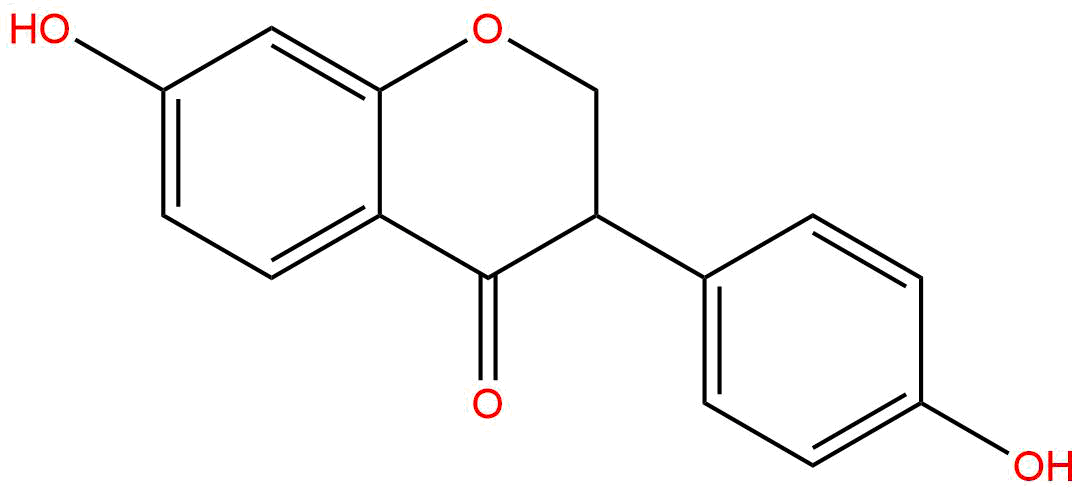


Product name: DihydroDaidzein
Synonym name: 17238-05-0, (±)-Dihydrodaidzein;S-2,3-dihydro-7-hydroxy-3-(4-hydroxyphenyl)-4H-1-Benzopyran-4-one
Catalogue No.: BP3946
Cas No.: 879559-75-8
Formula: C15H12O4
Mol Weight: 256.257
Botanical Source:
Physical Description:
Type of Compound:
Purity: 95%~99%
Analysis Method: HPLC-DAD or/and HPLC-ELSD
Identification Method: Mass, NMR
Packing: Brown vial or HDPE plastic bottle
Storage: Store in a well closed container, protected from air and light. Put into refrigerate or freeze for long term storage.
Whenever possible, you should prepare and use solutions on the same day. However, if you need to make up stock solutions in advance, we recommend that you store the solution as aliquots in tightly sealed vials at -20℃. Generally, these will be useable for up to two weeks.
The product could be supplied from milligrams to grams
Inquire for bulk scale.
For Reference Standard and R&D, Not for Human Use Directly.
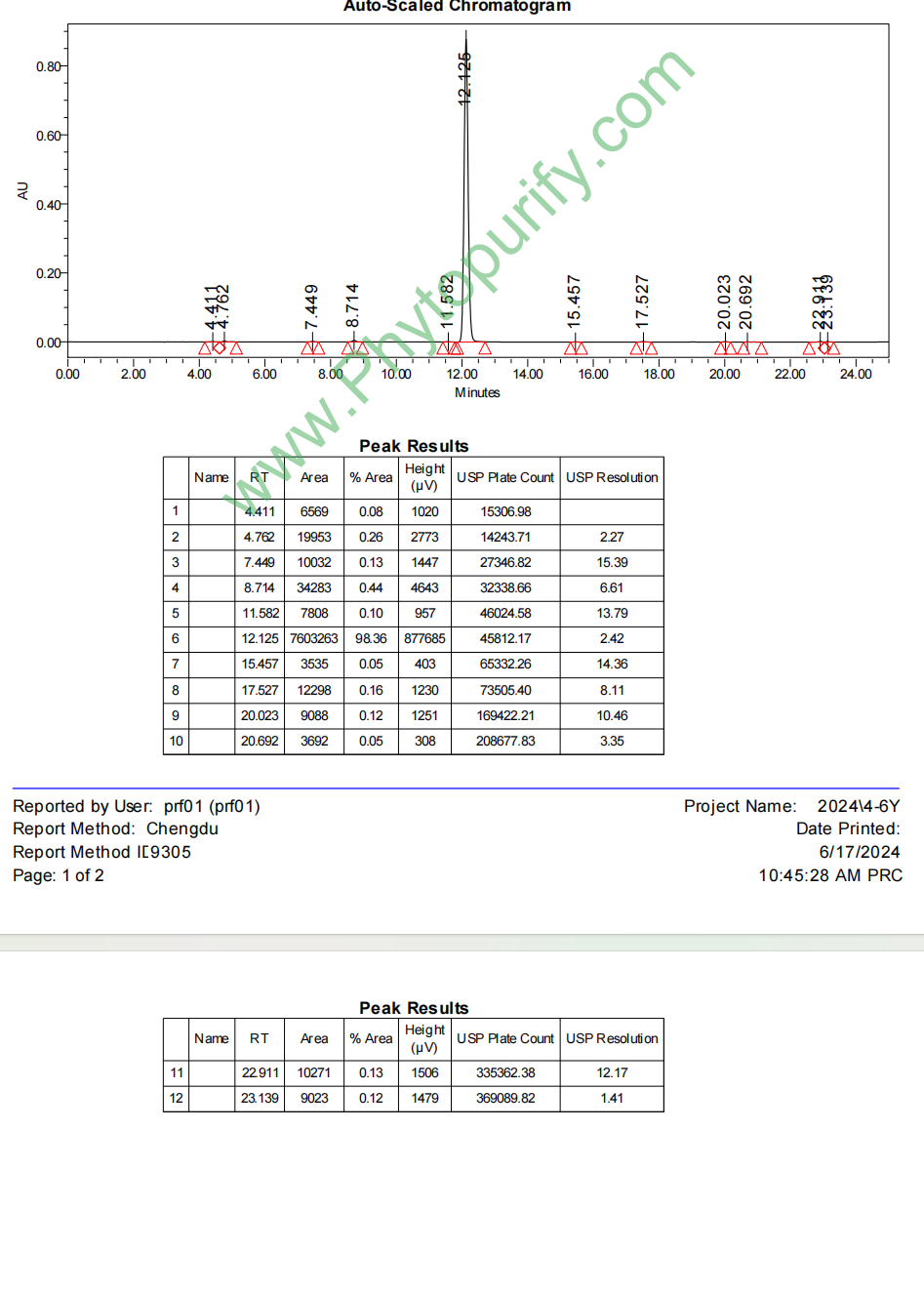
HPLC of DihydroDaidzein
Storage conditions:Short-term storage at 2~8℃, long-term storage at -20 ~ -80℃
66.7600
2.3770
2.3398
.2725
3.1923
14.9732
Low
88.2521
2.7187
No
No
No
No
Yes
No
0.0
Yes
Yes
Yes
Yes
Natural products, as an important source of drug discovery, play an indispensable role in maintaining human health and treating diseases. Among numerous natural products with biological activity, phytoestrogens, due to their structural similarity with endogenous estrogen 17 β - estradiol, can interact with estrogen receptors (ERs), thus demonstrating great potential in the prevention and treatment of hormone related diseases, metabolic diseases, and cancer. Soy isoflavones are the most extensively studied class of plant estrogens, mainly including daidzein, genistein, and genistein. However, after being metabolized by gut microbiota in the body, these isoflavones are converted into a series of metabolites with unique biological activities, among which dihydrodaidzein (DHD) is a key intermediate in the daidzein metabolic pathway.
Dihydrodaidzein, English name Dihydrodaidzein, CAS number 879559-75-8, chemical name 4 ', 7-dihydroxyisoflavanone. It is not a primitive component directly synthesized in large quantities by plants, but a metabolic product of daidzein generated through specific microbial mediated reduction reactions in mammalian intestines. This conversion process is key to understanding the individual differences in biological effects of soy isoflavones. Compared with the parent compound daidzein, dihydrodaidzein has undergone significant structural changes, with the C2-C3 double bond in its isoflavone backbone reduced to form a chiral center, which may endow it with different stereochemical properties and biological activities. As one of the most famous edible plant estrogens, dihydrodaidzein not only inherits the ability to bind to estrogen receptors, but also demonstrates unique research value in regulating estrogen signaling pathways, antioxidant, anti-inflammatory, and anti-tumor effects due to its unique metabolic intermediate identity.
In recent years, with the continuous deepening of understanding of the interaction between the gut microbiome and host health, the importance of dihydrodaidzein as a bridge molecule connecting dietary isoflavones with bioactive metabolites such as estrol has become increasingly prominent. It not only has pharmacological activity on its own, but also serves as a precursor for synthesizing the final metabolite estrol with stronger estrogenic activity. Therefore, in-depth analysis of the chemical properties, biological sources, pharmacological effects, and molecular mechanisms of dihydrodaidzein is of great scientific significance and clinical application value for elucidating the health benefits of soy food, developing precise nutritional strategies based on gut microbiota regulation, and designing new plant estrogen drugs. This article aims to provide a systematic review of the research status of dihydrodaidzein, covering its chemical structure, physicochemical properties, sources, pharmacological activity, mechanism of action, drug properties, and clinical application prospects, in order to provide reference for further research in this field.
The chemical structure of dihydrodaidzein is the basis of its biological function. From a chemical classification perspective, it belongs to Isoflavonone, which is the product of the reduction of the C2-C3 double bond of daidzein (an isoflavone). Its system is named 4 ', 7-dihydroxyisoflavanone. This molecule is composed of a diphenylpropane backbone, with the B ring connected to the C3 position, which corresponds to the structural characteristics of isoflavones (B ring connected to the C3 position) and isoflavones (B ring connected to the C3 position without double bonds or carbonyl groups). The core structure of dihydrodaidzein is a chromone ring system with a carbonyl group at the C4 position and single bonds at the C2 and C3 positions, making C2 and C3 two chiral centers. Therefore, there are four possible stereoisomers of dihydrodaidzein: (2R, 3R) -, (2R, 3S) -, (2S, 3R) -, and (2S, 3S) - dihydrodaidzein. Dihydrodaidzein produced from natural sources or biotransformation typically exists in specific enantiomeric or diastereomeric mixtures, and its stereoconfiguration has a decisive impact on its binding affinity and subsequent biological activity with biomolecules such as estrogen receptors. For example, studies have shown that different configurations of dihydrodaidzein may exhibit significant differences in estrogenic activity.
In terms of physicochemical properties, the molecular weight of dihydrodaidzein (formula C ₁₅ H ₁₂ O ₄) is 256.2570 g/mol. The LogP of its lipid water partition coefficient is 2.3770, indicating that the compound has moderate lipophilicity, which allows it to easily penetrate cell membranes, but also limits its solubility in aqueous environments. Its water solubility parameter is 0.2725 mg/mL, belonging to the category of slight solubility, which is related to the presence of two phenolic hydroxyl groups (4 '- OH and 7-OH) and one carbonyl group (C=O) in its molecular structure. These polar groups can form hydrogen bonds with water molecules, but the overall non-polar aromatic ring skeleton still dominates. The topological polar surface area (TPSA) is 66.7600 Å ². TPSA is an important parameter for predicting drug oral absorption and blood-brain barrier penetration ability. Typically, molecules with TPSA less than 60 Å ² are more likely to penetrate the blood-brain barrier, while molecules larger than 140 Å ² are more difficult to penetrate. The TPSA of dihydrodaidzein is 66.76 Å ², slightly higher than the threshold of 60 Å ², which is consistent with its predicted characteristic of "low blood-brain barrier penetration". This means that the distribution of dihydrodaidzein in the central nervous system may be limited, and its pharmacological effects are mainly concentrated in peripheral tissues. In addition, the molecule contains two phenolic hydroxyl groups, giving it a certain acidity (pKa between 7-10) and partial ionization under physiological pH conditions, which also affects its solubility and binding to proteins. Its UV absorption characteristics mainly come from the aromatic systems of the A and B rings, with characteristic absorption peaks at around 280 nm and 310 nm, which can be used for its qualitative and quantitative analysis.
Unlike daidzein and genistein, which are directly synthesized by plants, dihydrodaidzein has extremely low content in plants and is usually not considered a secondary metabolite directly produced by plants. Its main source is the metabolism of gut microbiota in mammals (including humans). Therefore, the "source" of dihydrodaidzein is more accurately described as a "biotransformation source".
Intestinal microbiota transformation: When people ingest foods rich in daidzein (such as tofu, soybean milk, soybean flour, etc.), daidzein is absorbed in the small intestine, but most of it enters the colon in the form of glycosides (such as daidzin, Daidzin). In the colon, the β - glucosidase secreted by the gut microbiota first hydrolyzes daidzein into aglycones - daidzein. Subsequently, specific intestinal bacteria such as certain lactic acid bacteria(Lactobacillus spp.)、 Bifidobacterium(Bifidobacterium Spp.) and Clostridium(Clostridium Through its expressed reductases such as Isoflavone Reductase, the C2-C3 double bond of daidzein is reduced to form dihydrodaidzein. This reduction reaction is stereoselective, and different strains may produce different configurations of dihydrodaidzein. Dihydrodaidzein is a key precursor for further metabolism into estrol or O-Desmethylangolenin (O-DMA). Therefore, the compositional differences in individual gut microbiota directly determine the efficiency of dihydrodaidzein production and its subsequent metabolic pathways, which is also an important reason for the existence of "estradiol producer" and "non producer" phenotypes in the population.
Extraction and Separation Methods Due to the fact that dihydrodaidzein is not abundant in nature, its acquisition mainly relies on chemical synthesis or biotransformation methods.
Chemical Synthesis This is the main method for obtaining standard samples and conducting large-scale research. Dihydrodaidzein is usually synthesized from daidzein by catalytic hydrogenation (such as using palladium carbon, platinum and other catalysts under hydrogen conditions) to selectively reduce the C2-C3 double bond. The challenge of this method lies in controlling the stereoselectivity of the reaction to obtain a single configuration of the product. Asymmetric synthesis of specific enantiomers can be achieved by using chiral catalysts or chiral auxiliary reagents. The synthesized product needs to be purified by column chromatography, recrystallization, or high-performance liquid chromatography (HPLC).
Biotransformation method Using specific microorganisms (such as engineered ones)Escherichia coli Or gut strains that naturally produce dihydrodaidzein are used for biotransformation in a fermentation tank using daidzein as a substrate. This method has mild conditions, is environmentally friendly, and may obtain natural conformational products consistent with in vivo metabolism. After centrifugation and filtration, the fermentation broth is enriched with the target product through liquid-liquid extraction (such as using ethyl acetate) or solid-phase extraction (SPE), and then separated and purified by preparative HPLC.
Extract from biological samples To study metabolism in the body, dihydrodaidzein can be extracted from animal or human blood, urine, or feces after consuming soy products. Samples typically require enzymatic hydrolysis (such as using β - glucuronidase/sulfatase) to hydrolyze their complexes with glucuronic acid or sulfuric acid, followed by enrichment through liquid-liquid extraction or SPE, and finally qualitative and quantitative analysis using HPLC or liquid chromatography-mass spectrometry (LC-MS/MS).
Analysis and testing methods The analysis and detection of dihydrodaidzein mainly rely on high-performance liquid chromatography (HPLC) combined with ultraviolet detector (UV) or mass spectrometry detector (MS). LC-MS/MS has become the gold standard for the quantification of trace amounts of dihydrodaidzein in biological samples due to its high sensitivity and specificity. Chiral chromatography columns such as Chiralcel OD-H can be used for the separation and identification of stereoisomers of dihydrodaidzein.
Dihydrodaidzein, as a key metabolite of daidzein, although its pharmacological activity is not as extensive as that of the parent compound, its potential intervention effects in multiple physiological and pathological processes have been revealed.
Estrogen like activity This is the core pharmacological activity of dihydrodaidzein. As a plant estrogen, it can bind to estrogen receptors ER α and ER β. Research has shown that dihydrodaidzein has a relatively higher affinity for ER β, similar to the characteristics of many other plant estrogens such as genistein. Its estrogenic activity is usually weaker than endogenous estradiol, but stronger than its precursor daidzein. This selective ER β activation is believed to be associated with many health benefits, for example, in the cardiovascular system, ER β activation can mediate vasodilation, anti-inflammatory and anti atherosclerosis effects; In the skeletal system, ER β agonists can promote osteoblast differentiation, inhibit osteoclast activity, and thus prevent osteoporosis; In the nervous system, the activation of ER β has neuroprotective effects. Dihydrodaidzein can stimulate the proliferation of MCF-7 breast cancer cells (ER positive), showing a weak estrogen effect, but its effect is far lower than that of estradiol, and may show anti estrogen activity at high concentrations.
antioxidant activity The two phenolic hydroxyl groups (4 '- OH and 7-OH) in the molecular structure of dihydrodaidzein are key functional groups for its antioxidant activity. They can act as hydrogen atom donors to scavenge free radicals (such as DPPH radicals, ABTS radicals, hydroxyl radicals, etc.), thereby blocking the chain reaction of lipid peroxidation. Research has shown that dihydrodaidzein exhibits significant antioxidant capacity in vitro experiments and can protect cells from oxidative stress-induced damage. Its antioxidant activity may synergize with its estrogenic activity, jointly exerting a protective effect on the cardiovascular and nervous systems.
anti-inflammatory activity Chronic inflammation is the common pathological basis of many diseases (such as cardiovascular disease, diabetes, cancer). Dihydrodaidzein has been proven to have anti-inflammatory effects. In the macrophage model stimulated by lipopolysaccharide (LPS), dihydrodaidzein can significantly inhibit the production of pro-inflammatory cytokines (such as TNF - α, IL-6, IL-1 β) and nitric oxide (NO). The mechanism may be related to the inhibition of the activation of the nuclear factor kappa B (NF - κ B) signaling pathway. NF - κ B is a core transcription factor in inflammatory response, and inhibiting its activity can downregulate the expression of various inflammatory mediators.
Antitumor activity: The antitumor effect of dihydrodaidzein has attracted much attention, especially in hormone dependent cancers (such as breast cancer and prostate cancer). Its mechanism of action is complex and may involve multiple pathways:
Metabolic regulation effect As a precursor of estradiol, dihydrodaidzein has also shown potential in regulating glucose and lipid metabolism. Research has shown that dihydrodaidzein and its metabolite estrol can improve insulin sensitivity, promote glucose uptake, and regulate adipocyte differentiation and lipid metabolism. These effects may be realized by activating nuclear receptors such as PPAR γ (peroxisome proliferator activated receptor γ), thus having beneficial effects on type 2 diabetes and obesity.
The pharmacological activity of dihydrodaidzein originates from its interactions with multiple molecular targets, and its mechanism network is complex, covering multiple levels from cell membrane receptors to nuclear transcription factors.
The estrogen receptor (ER) - mediated signaling pathway:
NF - κ B signaling pathway The anti-inflammatory effect of dihydrodaidzein is mainly attributed to its inhibition of the NF - κ B pathway. In the resting state, NF - κ B binds to the inhibitory protein I κ B and exists in an inactive form in the cytoplasm. When stimulated by inflammation such as LPS and TNF - α, I κ B kinase (IKK) is activated, phosphorylating I κ B and leading to its ubiquitination degradation. The released NF - κ B translocates into the nucleus, initiating the transcription of pro-inflammatory genes such as TNF - α, IL-6, COX-2, iNOS. Dihydrodaidzein can inhibit the activity of IKK or directly interfere with the binding of NF - κ B to DNA, thereby blocking this process and exerting anti-inflammatory effects.
AMPK/mTOR signaling pathway AMPK is a key sensor for cellular energy metabolism. Dihydrodaidzein has been reported to activate AMPK, possibly by increasing the AMP/ATP ratio or directly acting on the regulatory subunits of AMPK. Activated AMPK phosphorylation and inhibition of downstream mTORC1 complexes. MTORC1 is the core regulator of cell growth and proliferation. Inhibition of mTORC1 activity can lead to reduced protein synthesis, cell cycle arrest, and autophagy induction. This mechanism is considered an important pathway for dihydrodaidzein to exert anti-tumor and metabolic regulatory effects.
Antioxidant defense system Dihydrodaidzein not only directly scavenges free radicals, but also enhances the endogenous antioxidant defense ability of cells by activating the nuclear factor E2 related factor 2 (Nrf2) signaling pathway. Nrf2 is a transcription factor that is released from Keap1 protein under oxidative stress, translocated into the nucleus, binds to antioxidant response elements (ARE), and initiates the expression of a series of antioxidant enzymes (such as HO-1, NQO1, SOD, CAT) and phase II detoxifying enzymes. Dihydrodaidzein may promote nuclear translocation of Nrf2 by modifying cysteine residues on Keap1 or activating upstream kinases such as PI3K and MAPK.
Other potential targets:
Developing dihydrodaidzein as a candidate drug requires a systematic evaluation of its pharmacological properties. Based on the provided parameters and combined with its pharmacokinetic properties, the potential for drug development can be analyzed.
Analysis of drug properties parameters:
- Molecular weight (256.2570)Meets the requirement of molecular weight less than 500 in the Lipinski Five Rules, indicating good oral absorption potential.
- LogP (2.3770)Moderate lipid solubility, between 1-3, is an ideal range of drug candidates. Moderate LogP is beneficial for the transmembrane transport and distribution of drugs in the body.
- TPSA (66.7600 Ų)Less than 140 Å ² indicates good oral absorption. Meanwhile, this value is slightly higher than 60 Å ², indicating its low blood-brain barrier penetration, which is both an advantage and a disadvantage. The advantage is that it can reduce central nervous system side effects, but the disadvantage is that it limits its application in brain diseases such as Alzheimer's disease.
- Water solubility (0.2725 mg/mL)Belonging to the category of slight solubility. Although not ideal, its bioavailability can be significantly improved through formulation techniques such as solid dispersions, cyclodextrin inclusion complexes, nanoemulsions, etc.
- HERG inhibition (No)This is a very positive signal. HERG (human ether - à - go related gene) potassium channel inhibition is the main cause of drug-induced QT interval prolongation and fatal arrhythmias, such as apical torsion ventricular tachycardia. Dihydrodaidzein has no hERG inhibitory activity, greatly reducing its risk of cardiac toxicity.
- Ames test (0.0)Ames test is used to detect the mutagenicity of compounds. The result is 0.0, indicating that it has no mutagenicity under testing conditions and low genetic toxicity risk, which is an important advantage for early safety evaluation in drug development.
Pharmacokinetic properties:
- absorb Dihydrodaidzein is mainly generated by gut microbiota in the colon and is not the main form of direct oral absorption. After oral administration of daidzein, there are significant individual differences in its absorption and metabolism, mainly depending on the composition of the gut microbiota. Part of the generated dihydrodaidzein is absorbed by colonic epithelial cells and enters the portal vein circulation. The absorption rate and degree are influenced by factors such as intestinal microbiota activity, intestinal pH value, and food substrate.
- distribution After absorption, dihydrodaidzein mainly binds to plasma proteins, especially albumin. Its moderate LogP and TPSA indicate a wide tissue distribution, mainly in peripheral tissues such as liver, kidney, breast, prostate, bones, etc. Due to its low penetration through the blood-brain barrier, its concentration in the central nervous system is relatively low.
- Metabolism Dihydrodaidzein undergoes extensive phase II metabolism in the body, mainly binding with glucuronic acid or sulfuric acid in the liver and intestinal mucosa to form more water-soluble complexes, which facilitate excretion from urine and bile. These complexes can re-enter the intestine through the enterohepatic circulation, be hydrolyzed by β - glucuronidase of the gut microbiota, and release free dihydrodaidzein, thereby prolonging their retention time in the body. More importantly, dihydrodaidzein is a direct precursor of estrol, and under the action of specific gut microbiota, its C4 carbonyl group can be further reduced to a hydroxyl group to produce estrol.
- excretion Dihydrodaidzein and its metabolites (including estrol, O-DMA, and various conjugates) are mainly excreted through urine and feces. Its half-life and clearance rate vary depending on individual differences in gut microbiota.
Summary of Drug Evaluation Dihydrodaidzein has a good medicinal basis. Its molecular weight, lipid solubility, absence of hERG inhibition, and negative Ames test all provide favorable conditions for its drug development. The main challenge lies in its poor water solubility and high dependence on individual gut microbiota for oral bioavailability. Future drug development strategies could include: 1) developing prodrugs to enhance their oral absorption and bioavailability; 2) Designed as a sustained-release formulation to simulate its sustained generation in the colon; 3) Combined with probiotics or prebiotics to regulate gut microbiota and optimize their in vivo transformation; 4) Develop specific stereoisomers to enhance target selectivity and drug efficacy.
Based on the unique pharmacological activity and good drug properties of dihydrodaidzein, its application prospects in multiple disease fields are broad, but it also faces many challenges.
Clinical application prospects:
1. Alternative therapies for menopausal syndrome Dihydrodaidzein, as a plant estrogen, has a selective ER β agonist effect, making it a potential alternative therapy for alleviating menopausal symptoms such as hot flashes, night sweats, and emotional fluctuations. Compared with traditional hormone replacement therapy (HRT), the risk of side effects (such as breast cancer and thrombosis) may be lower. Developing dietary supplements based on dihydrodaidzein or its precursors (such as daidzein) combined with specific probiotics is expected to provide a safer and more effective option for menopausal women.
Prevention and Treatment of Osteoporosis By activating ER β in osteoblasts, dihydrodaidzein can promote bone formation while inhibiting osteoclast activity and reducing bone resorption. Its anti-inflammatory and antioxidant activities also contribute to maintaining the homeostasis of the bone microenvironment. Preclinical studies have shown its potential in combating osteoporosis, and in the future, it can be developed as a drug or functional food for treating or preventing postmenopausal osteoporosis.
Adjuvant therapy for cardiovascular diseases Dihydrodaidzein exerts cardiovascular protective effects by improving endothelial function (activating eNOS and promoting NO production), anti-inflammatory (inhibiting NF - κ B), antioxidant (activating Nrf2), and regulating lipid metabolism (activating PPAR γ) through multiple mechanisms. It can be used as an adjuvant therapy for lipid-lowering drugs such as statins, or for primary prevention of cardiovascular diseases.
Intervention for metabolic syndrome In view of its role in improving insulin sensitivity and regulating glucose and lipid metabolism, dihydrodaidzein is expected to be used in the intervention of type 2 diabetes and obesity. The activation of AMPK is one of the core mechanisms by which it exerts metabolic regulatory effects.
Chemical Prevention of Hormone Dependent Cancer: For people at high risk of breast cancer and prostate cancer, long-term intake of foods rich in dihydrodaidzein or its precursors may play a chemopreventive role through its weak estrogen/antiestrogen activity and hormone independent mechanisms (such as inducing apoptosis and inhibiting angiogenesis). However, for confirmed ER positive breast cancer patients, their use should be extremely cautious, because their weak estrogen activity may theoretically stimulate tumor growth.
Challenges and Future Prospects:
1. Individual differences issue The biggest challenge is that the in vivo generation of dihydrodaidzein is highly dependent on individual gut microbiota. The proportion of "estradiol producers" in the population varies greatly among different races and regions (about 30-50%). How to ensure that non producers can also benefit from dihydrodaidzein therapy is an urgent problem to be solved. The future direction is to develop "precision probiotics" or "synthetic biology strains" that can stably convert daidzein to dihydrodaidzein in the intestines of all individuals.
Research on stereoisomers Currently, research on dihydrodaidzein mostly uses racemic mixtures. There may be significant differences in pharmacological activity, metabolic pathways, and safety among different stereoisomers. In the future, it is necessary to systematically study the biological activity of single configuration dihydrodaidzein and develop a high-purity and highly stereoselective synthesis method.
Clinical translational research Currently, research mostly focuses on in vitro and animal experiments. It is urgent to design rigorous, large-scale, randomized controlled clinical trials to verify the effectiveness, safety, and optimal dosage of dihydrodaidzein in humans. Reliable biomarkers need to be developed, such as the concentration of dihydrodaidzein and its metabolites in blood or urine, to evaluate their exposure levels and efficacy.
Formulation and delivery system To solve the problems of poor water solubility and low oral bioavailability, advanced drug delivery systems such as liposomes, nanoparticles, phospholipid complexes, etc. need to be developed to improve their oral absorption and targeted delivery capabilities.
safety assessment Although the Ames test is negative, the safety of long-term use, especially the potential impact on hormone sensitive tissues such as the breast and uterus, still needs to be comprehensively evaluated through long-term toxicology studies and post market monitoring.
Dihydrodaidzein, as a key metabolite of daidzein under the action of gut microbiota, has surpassed its role as a simple intermediate and demonstrated enormous potential as a multi-target, multifunctional natural active molecule. Its unique chemical structure endows it with moderate lipophilicity and good safety features (no hERG inhibition, no mutagenicity), making it an ideal candidate skeleton for drug development. From the estrogen receptor signaling pathway to key regulatory networks such as AMPK, NF - κ B, Nrf2, etc., dihydrodaidzein has shown remarkable application prospects in the prevention and treatment of menopausal syndrome, osteoporosis, cardiovascular disease, metabolic syndrome, and even cancer through complex molecular mechanisms.
However, the path from laboratory research to clinical application is still full of challenges. The significant differences in individual gut microbiota are the root cause of pharmacokinetic and pharmacodynamic uncertainty, and also the main obstacle to achieving precise treatment. Future research should focus on: in-depth analysis of the structure-activity relationships of its different stereoisomers; Develop engineering bacteria or probiotic combinations that can stably and efficiently convert daidzein into dihydrodaidzein; Using advanced formulation technology to overcome bottlenecks in solubility and bioavailability; And verify its exact efficacy and long-term safety through high-quality clinical studies.
In summary, dihydrodaidzein is an important bridge connecting diet, gut microbiota, and host health. In depth research on it will not only deepen our understanding of the molecular mechanisms underlying the health benefits of soy food, but also have the potential to generate a new class of plant-based estrogen drugs or functional foods based on gut microbiota regulation, contributing to human health. With the continuous development of systems biology, synthetic biology, and precision medicine, the clinical translation prospects of dihydrodaidzein are worth looking forward to.
