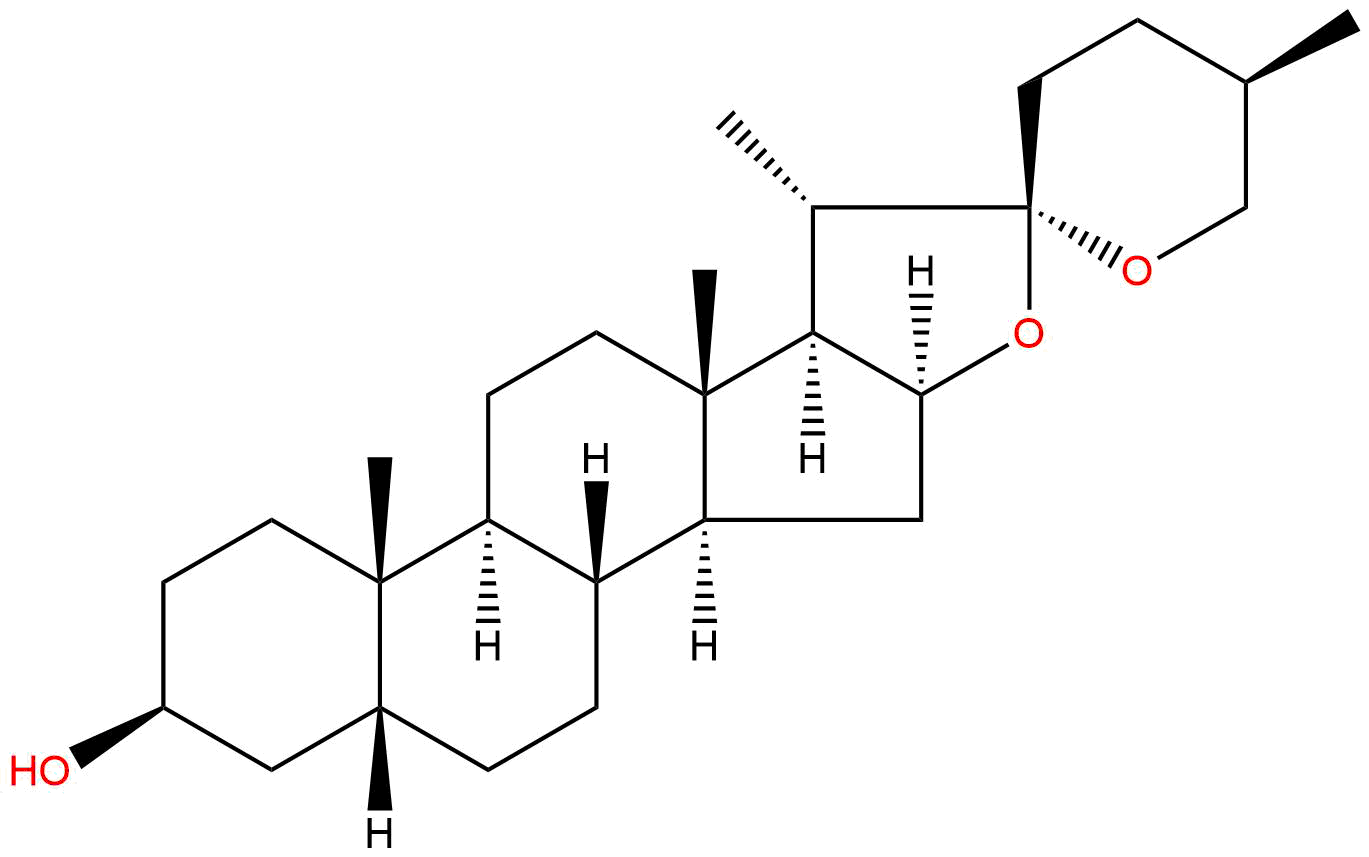


Product name: Smilagenin
Synonym name: Isosarsasapogenin;Cogane; Esmilagenin
Catalogue No.: BP2191
Cas No.: 126-18-1
Formula: C27H44O3
Mol Weight: 416.646
Botanical Source:
Type of Compound: Steroids
Purity: 95%~99%
Analysis Method: HPLC-DAD or/and HPLC-ELSD
Identification Method: Mass, NMR
Packing: Brown vial or HDPE plastic bottle
Storage: Store in a well closed container, protected from air and light. Put into refrigerate or freeze for long term storage.
Whenever possible, you should prepare and use solutions on the same day. However, if you need to make up stock solutions in advance, we recommend that you store the solution as aliquots in tightly sealed vials at -20℃. Generally, these will be useable for up to two weeks.
The product could be supplied from milligrams to grams
Inquire for bulk scale.
For Reference Standard and R&D, Not for Human Use Directly.
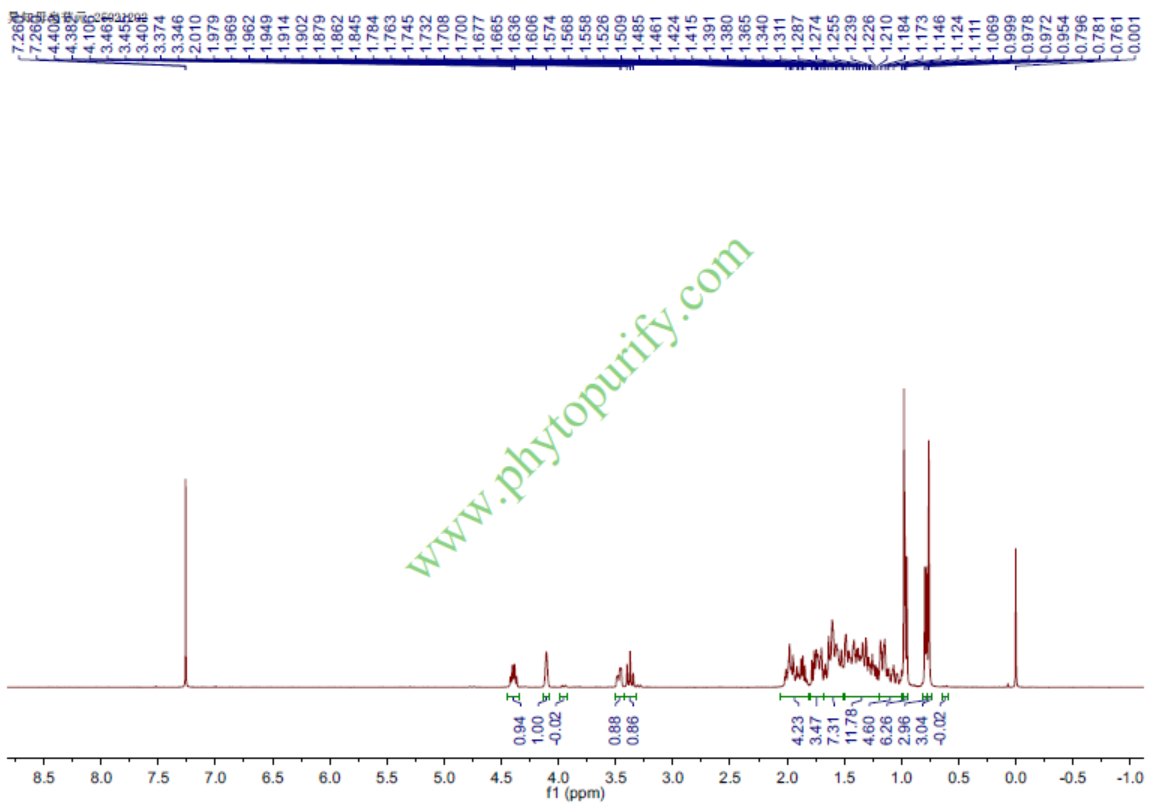
HNMR of Smilagenin
Storage conditions:Short-term storage at 2~8℃, long-term storage at -20 ~ -80℃
38.6900
5.4410
5.4410
.0002
7.0881
9.4667
High
90.1714
5.2196
No
No
No
No
No
No
0.0
No
No
No
No
Neurodegenerative diseases and chronic inflammatory diseases are major challenges facing global public health today. Alzheimer's disease (AD) and rheumatoid arthritis (RA), as two typical representatives, have complex pathogenesis and limited existing treatment methods, often accompanied by significant side effects. Therefore, exploring lead compounds with multi-target and high safety potential from natural products has become an important direction for new drug development. Smilagenin (SMI, CAS: 126-18-1), a saponin derived from traditional Chinese medicine Anemarrhena(Anemarrhena asphodeloides)The steroidal saponins of plants are increasingly demonstrating their unique research value in the above-mentioned disease fields. Early research revealed that SMI can improve cognitive function by regulating central muscarinic M1 receptors and brain-derived neurotrophic factor (BDNF), laying the foundation for its use in AD research. In recent years, its pharmacological activity spectrum has been continuously expanding, especially in the areas of anti-inflammatory and immune regulation, showing potential for intervention in RA related complex signaling networks. This article aims to systematically review the chemical properties, plant sources, multidimensional pharmacological activities, mechanisms of action, pharmacological characteristics, and clinical application prospects of SMI, in order to provide comprehensive academic references for the in-depth development and transformation research of this natural product.
Smilagenin is a small molecule steroidal sapogenin with the chemical name (25R) -5 β - spirostane-3 β - ol. Its molecular formula is C27H44O3 and its molecular weight is 416.6460. Structurally speaking, SMI belongs to the class of spirostanol compounds, with a classic steroid core (cyclopentane dihydrophenanthrene). Its A/B rings are cis coupled (5 β - H configuration), and the C-3 position is connected to a β - hydroxyl group, which is an important active group. The E and F rings are connected by a screw atom (C-22) to form a characteristic spirostane structure, and the C-25 position is in the R configuration (25R), which is often associated with its specific biological activity.
In terms of physicochemical properties, SMI exhibits typical steroidal sapogenin properties. Its lipophilic water partition coefficient (LogP) is 5.4410, indicating that the compound has a high degree of lipophilicity. The topologically polar surface area (TPSA) is relatively low, at 38.6900 Å ². These parameters collectively determine the extremely low water solubility of SMI (approximately 0.0002 mg/mL), which poses a challenge for its formulation development. However, its high lipophilicity also endows it with good membrane permeability, and its blood-brain barrier (BBB) permeability is predicted to be "high", which is highly consistent with its reported direct pharmacological effects in the central nervous system (such as improving memory and neuroprotection), and is its unique advantage in treating central nervous system diseases. In addition, preliminary pharmacological risk assessment showed that SMI had a negative result (0.0) in the Ames test (mutagenicity) and no significant hERG potassium channel inhibitory activity, indicating a low potential genetic toxicity risk and controllable cardiac toxicity risk, providing a favorable safety starting point for its further development.
The main source of saponins from Anemarrhena heterophylla is from the Liliaceae plant Anemarrhena heterophylla(Anemarrhena asphodeloides Bunge's dried rhizomes. As a classic traditional Chinese medicine for clearing heat and purging fire, Zhimu has a history of more than two thousand years of application. Its active ingredients are mainly steroidal saponins, and SMI is a key glycoside form produced by the in vivo metabolism or in vitro hydrolysis of its saponin components (such as Zhimu saponins A-III, B-II, etc.). In addition, SMI also exists in the geranium plant of the Geranium family(Pelargonium hortorum)Among other plants, Zhimu is still its main and most traditional medicinal source.
Obtaining SMI from plant materials typically involves multiple steps such as extraction, hydrolysis, and purification. The conventional extraction process is as follows: firstly, the rhizomes of Anemarrhena asphodeloides are dried and crushed, and then subjected to heating reflux or ultrasound assisted extraction using solvents such as methanol, ethanol, or aqueous ethanol to obtain the crude extract of total saponins. Due to the fact that SMI mostly exists in the form of glycosides in plants, the crude extract needs to be subjected to acid hydrolysis (usually hydrochloric acid or sulfuric acid) or enzymatic hydrolysis to cut off the sugar chain and release sapogenins. After hydrolysis, the hydrolysis product is extracted using low polarity organic solvents such as chloroform and ethyl acetate to enrich the saponin moiety. Further purification is often carried out using silica gel column chromatography, with gradient elution using different ratios of petroleum ether ethyl acetate or chloroform methanol systems, combined with thin-layer chromatography (TLC) or high-performance liquid chromatography (HPLC) monitoring, to separate high-purity SMI monomers. The application of modern separation technologies such as high-speed countercurrent chromatography (HSCCC) and preparative HPLC has significantly improved the separation efficiency and purity of SMI. The optimization of extraction process, such as solvent selection and control of hydrolysis conditions (temperature, acid concentration, time), is the key to ensuring the yield and quality of SMI.
The pharmacological activity research of saponins from Ganoderma lucidum has expanded from the initial field of the nervous system to multiple aspects such as anti-inflammatory, immune regulation, and bone metabolism regulation, demonstrating various biological activities.
1. Neuroprotective and cognitive improvement activity: This is the area where SMI was first extensively researched. In various AD animal models (such as A β 25-35 induction and D-galactose combined with AlCl3 induction), long-term administration of SMI can significantly improve learning and memory impairment in model animals and reduce hippocampal neuron apoptosis rate. Its function is not limited to improving symptoms, but also manifests as intervention in pathological processes, such as alleviating oxidative stress and mitochondrial dysfunction induced by β - amyloid protein (A β).
2. Anti inflammatory and immune regulatory activity: Research focus in recent years. SMI exhibits strong anti-inflammatory effects in cellular and animal models associated with rheumatoid arthritis (RA). SMI can dose dependently inhibit the production of nitric oxide (NO), prostaglandin E2 (PGE2), and key pro-inflammatory factors such as interleukin-6 (IL-6) and tumor necrosis factor - α (TNF - α) in macrophages (such as RAW264.7 cells) or fibroblast like synovial cells stimulated by lipopolysaccharide (LPS) or inflammatory cytokines (such as TNF - α, IL-1 β). In collagen induced arthritis (CIA) rat or mouse models, SMI treatment can effectively reduce joint swelling, lower clinical scores of arthritis, and improve pathological damage to joint tissue, such as synovial hyperplasia, inflammatory cell infiltration, and cartilage destruction.
3. Other potential activities: Some studies suggest that SMI may also have effects on regulating bone metabolism (affecting osteoclast differentiation), anti fatigue, etc., but these activities still require more evidence to support.
The multiple pharmacological activities of saponins from Ganoderma lucidum stem from their diverse regulation of complex cellular signaling networks. Its mechanism of action can be summarized as the following key pathways and targets:
1. Mechanisms related to the nervous system:
* Regulating the cholinergic system: SMI can specifically increase the density of M1 subtypes of muscarinic acetylcholine receptors (M1 receptors) in brain regions such as the cerebral cortex and hippocampus, without affecting M2 receptors. This directly enhances cholinergic neurotransmission closely related to learning and memory, which is one of the core mechanisms for improving cognitive function.
* Activate neurotrophic signals: SMI can significantly upregulate the gene and protein expression of brain-derived neurotrophic factor (BDNF). BDNF activates its receptor TrkB, thereby initiating downstream survival promoting pathways such as PI3K/Akt and MAPK/ERK, inhibiting neuronal apoptosis, promoting synaptic plasticity, and thus combating neurodegeneration induced by toxic substances such as A β.
2. Anti inflammatory and anti arthritis core mechanisms (targeting RA related target networks):
The intervention of SMI on RA exhibits multi-target characteristics, and its action network covers multiple links such as inflammation, immunity, matrix degradation, and oxidative stress
* Inhibition of pro-inflammatory signaling center: SMI can effectively inhibit the Toll like receptor 4 (TLR4)/myeloid differentiation factor 88 (MyD88) signaling pathway, thereby downregulating the activation of nuclear factor kappa B (NF - κ B). NF - κ B is a master switch that regulates the expression of numerous inflammatory mediators such as IL-6, TNF - α, cyclooxygenase-2 (COX-2), and inducible nitric oxide synthase (iNOS). Its inhibition is the basis of SMI's anti-inflammatory effect.
* Regulating key inflammatory cytokines and signal transduction: SMI directly inhibits the production of IL-6 and the overactivation of the downstream Janus kinase/signal transducer and activator of transcription 3 (JAK/STAT3) signaling pathway. The sustained activation of STAT3 is crucial for the abnormal proliferation of RA synovial cells and the maintenance of inflammation. Meanwhile, SMI may also affect the activity of protein kinase C alpha (PRKCA), which is involved in regulating various inflammatory responses.
* Intervention in arachidonic acid metabolism and matrix disruption: SMI has an inhibitory effect on the expression or activity of 5-lipoxygenase (ALOX5) and matrix metalloproteinase-1 (MMP-1). ALOX5 is the rate limiting enzyme for leukotriene synthesis, which is a potent pro-inflammatory and chemotactic mediator; MMP-1 directly degrades collagen in articular cartilage, leading to joint destruction. Inhibiting both is an important pathway for SMI to alleviate RA inflammation and joint damage.
* Activate endogenous protective pathways: SMI can activate adenosine monophosphate activated protein kinase (AMPK, encoded by PRKAA1) and nuclear factor E2 related factor 2 (NFE2L2, Nrf2). The activation of AMPK not only regulates energy metabolism, but also has a wide range of anti-inflammatory effects; The activation of Nrf2 drives the expression of antioxidant enzymes (such as HO-1, NQO1) regulated by a series of antioxidant response elements (ARE) to counteract oxidative stress in RA pathology. In addition, SMI's regulation of hypoxia inducible factor-1 α (HIF1A) may affect the adaptive response of synovial cells in inflammatory hypoxic environments.
* Potential immune regulation: The potential impact of indoleamine 2,3-dioxygenase 1 (IDO1) suggests that SMI may be involved in regulating tryptophan metabolism and T cell function, providing new clues for exploring its role in RA immune tolerance imbalance.
Based on its physical and chemical properties, isoquercetin exhibits unique medicinal properties. Its high lipid solubility and low TPSA ensure excellent membrane permeability and high blood-brain barrier permeability, which are its core advantages as a candidate drug for the treatment of central nervous system diseases. The absence of hERG inhibition and negative Ames test provide preliminary positive data for its safety assessment.
However, its extremely low water solubility is a major challenge for oral administration, which may result in limited dissolution rate, limited absorption, and suboptimal bioavailability. Therefore, developing appropriate formulation strategies is key to advancing its preclinical and clinical research. Possible solutions include: making nanocrystals, liposomes, solid dispersions, or cyclodextrin inclusion complexes to improve their solubility and dissolution rate; Or designed as a prodrug to improve its hydrophilicity.
At present, there are relatively limited research reports on the pharmacokinetics of SMI systems. Existing animal pharmacokinetic studies suggest that SMI may experience some first pass effects in the gastrointestinal tract after oral administration. Due to its lipophilicity, it is expected to be widely distributed in the body and easily enter lipid rich tissues and organs, including the central nervous system. In terms of metabolism, as a steroid compound, SMI may be mainly metabolized by the liver cytochrome P450 enzyme system, undergoing hydroxylation, oxidation and other reactions, and ultimately excreted through bile and feces. A comprehensive and detailed pharmacokinetic study, including the entire process of absorption, distribution, metabolism, and excretion (ADME), as well as the impact of formulations on their pharmacokinetic behavior, is a gap that must be filled in future preclinical development.
As a natural small molecule with multi-target activity, the clinical application prospects of saponins from Ganoderma lucidum mainly focus on two fields:
1. Neurodegenerative diseases, especially Alzheimer's disease (AD): SMI works through a dual mechanism of cholinergic enhancement (upregulation of M1 receptor) and neurotrophic support (upregulation of BDNF), which may have more fundamental therapeutic potential compared to the single target mode of current AD treatment drugs such as cholinesterase inhibitors. Future research could explore its combination therapy with existing drugs or as a component of disease modifying therapies for early intervention in AD.
2. Chronic inflammatory diseases, especially rheumatoid arthritis (RA): SMI regulates key nodes such as AMPK, NF - κ B, STAT3, Nrf2, and acts on multiple pathological processes of RA, including inflammation, immunity, oxidative stress, and joint destruction, demonstrating the therapeutic potential of "multi pathway synergy". Compared to expensive drugs such as biologics that target single cytokines, SMI, a multi-target small molecule, may have lower costs, convenient oral administration, and the potential to regulate overall immune homeostasis. Its application in other autoimmune diseases such as multiple sclerosis and inflammatory bowel disease is also worth exploring.
Future research prospects and challenges include:
* Deep exploration of mechanisms: Chemical biology methods such as affinity fishing, molecular docking, and site directed mutagenesis validation need to be used to clarify the direct interaction sites and patterns between SMI and the aforementioned targets (such as AMPK, STAT3).
* Optimization of drug properties: Pharmaceutical research is of utmost importance, and it is necessary to develop stabilizer types that can significantly improve oral bioavailability.
* Preclinical systematic review: Long term efficacy, safety (GLP toxicology), and pharmacokinetic comprehensive evaluation need to be conducted in animal models that are closer to human diseases, such as transgenic AD mice and humanized RA models.
* Structural modification and development of analogues: Based on SMI core, structural optimization can improve its water solubility and pharmacokinetic properties while retaining or enhancing its activity, which may lead to the discovery of better candidate drugs.
Smilagenin, derived from the traditional Chinese medicine Anemarrhena, reflects a profound transformation from traditional experience to modern molecular pharmacology in its research process. It not only occupies a place in the field of neuroprotection by regulating the cholinergic system and BDNF pathway, but also demonstrates remarkable potential in the fields of anti-inflammatory and immune regulation due to its extensive regulation of complex signaling networks such as AMPK/NF - κ B/STAT3/Nrf2, providing a new multi-target intervention strategy for the treatment of major chronic diseases such as Alzheimer's disease and rheumatoid arthritis. Despite facing challenges in drug formulation, particularly in terms of solubility and systemic pharmacokinetics, its clear multiple activities, unique high blood-brain barrier penetration, and good preliminary safety characteristics make it a highly valuable lead compound for development. With the breakthrough of formulation technology, in-depth elucidation of the mechanism of action, and the advancement of systematic preclinical research, isosorbide saponins are expected to inject new vitality into the development of innovative drugs for related diseases in the future, becoming one of the models connecting traditional wisdom and modern medicine.
