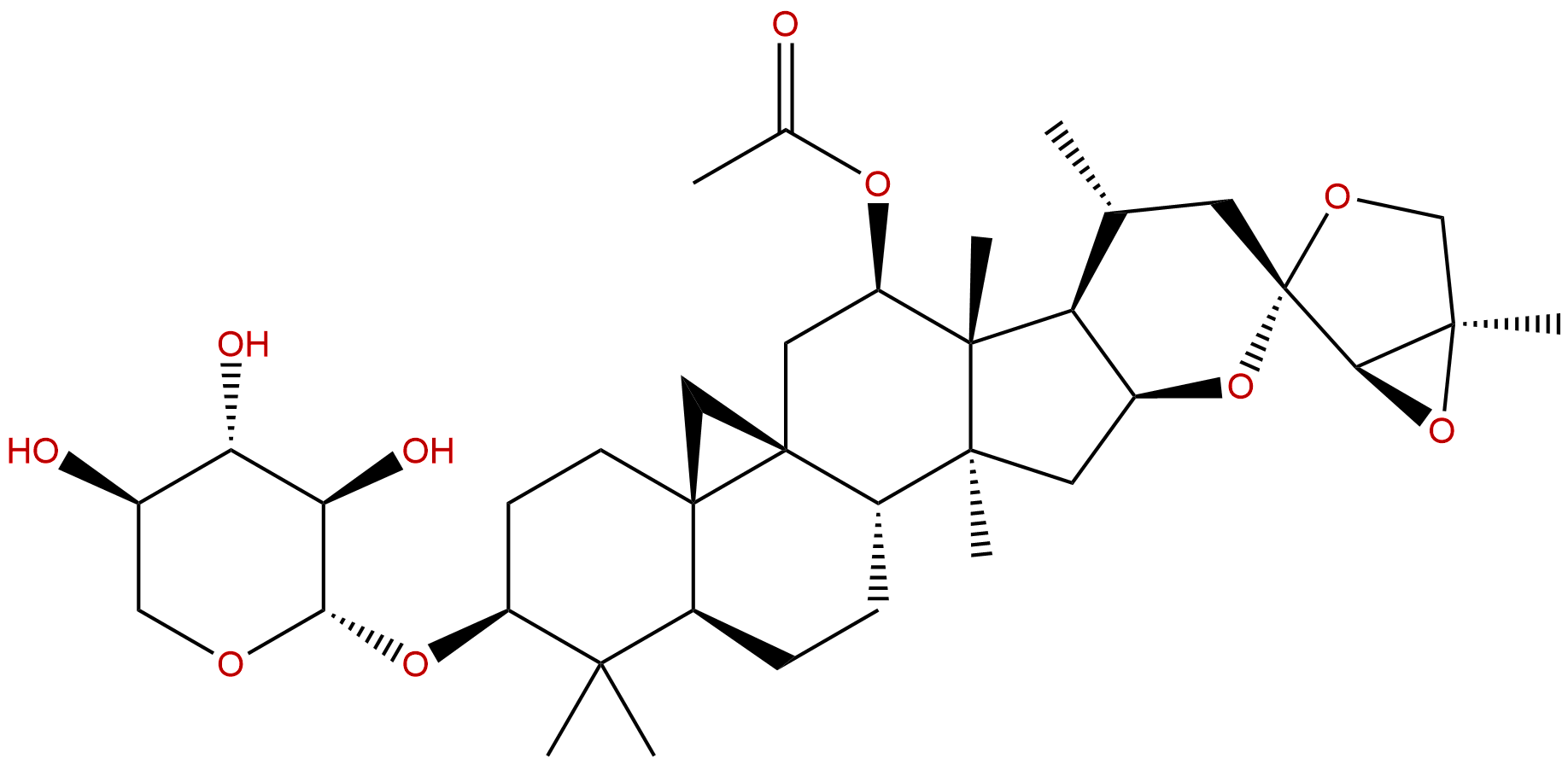


Product name: 27-Deoxyactein
Synonym name: (-)-27-Deoxyactein
Catalogue No.: BP1786
Cas No.: 264624-38-6
Formula: C37H56O10
Mol Weight: 660.845
Botanical Source: Cimicifuga foetida
Physical Description:
Type of Compound: Triterpenoids
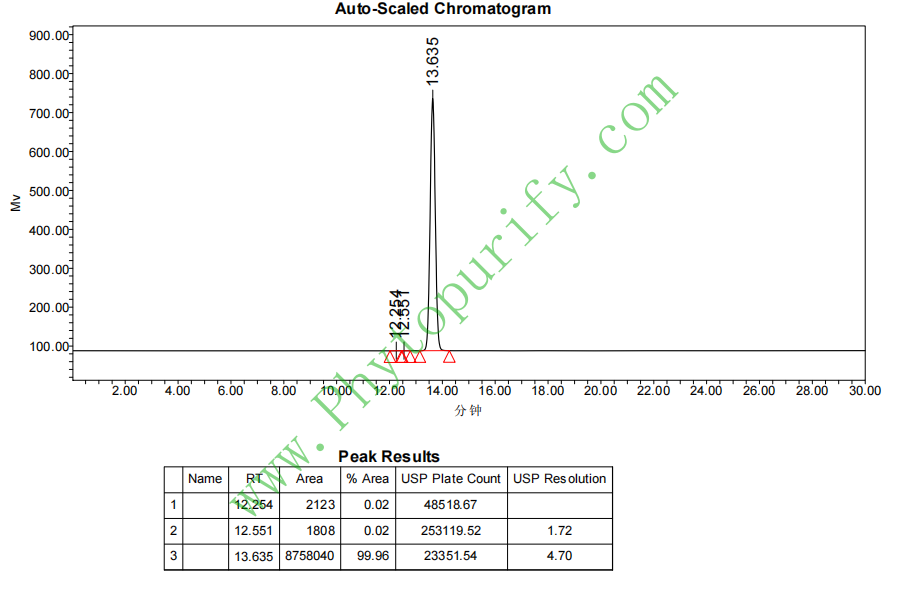
Purity: 95%~99%
Analysis Method: HPLC-DAD or/and HPLC-ELSD
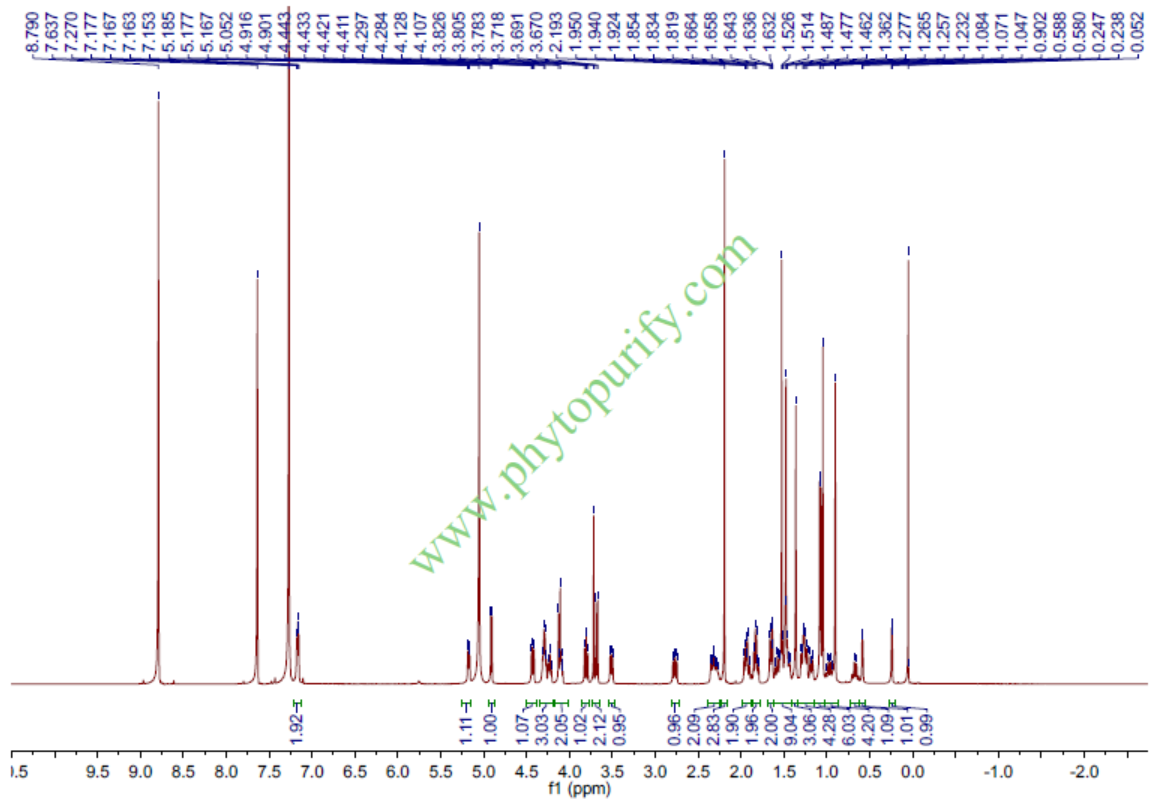
Identification Method: Mass, NMR
Packing: Brown vial or HDPE plastic bottle
The product could be supplied from milligrams to grams. Inquire for bulk scale.
We provide solution to improve the water-solubility of compounds, thereby facilitating the variety of activity tests and clinic uses.
For Reference Standard and R&D, Not for Human Use Directly.
HPLC of 27-Deoxyactein
HNMR of 27-Deoxyactein
Storage conditions:Short-term storage at 2~8℃, long-term storage at -20 ~ -80℃
136.4400
3.7913
3.7913
.0070
.5074
.8762
Low
79.3217
6.9235
No
No
No
No
No
No
0.3
Yes
No
Yes
No
Natural products, as an important treasure trove for drug discovery and development, play an irreplaceable role in the history of human disease prevention and treatment. Among them, the active ingredients derived from plants of the Ranunculaceae family and the Cistanche genus have attracted much attention due to their extensive pharmacological activities. Racemose sesame(Cimicifuga racemosa Currently, it is mostly included in Actaea racemosa)As a traditional herbal medicine, it is often used to alleviate the symptoms of female menopause. Its extract contains a variety of cyclo jackfruit alkyl triterpenoid saponins with unique structure, which constitutes the material basis of its pharmacological activity. 27 Deoxyactoin (CAS number: 264624-38-6), also known as 26 Deoxyactoin, is one of the main active ingredients in the racemic sesame. In recent years, with the deepening of research, its pharmacological activity has expanded from the initial estrogen like effect to the regulation of specific cell signaling pathways, especially showing potential in combating cell damage induced by environmental toxins. Research has shown that 27 deoxy Shengma Ting can antagonize the aromatic hydrocarbon receptor (AhR) signaling pathway, inhibit the expression of downstream cytochrome P450 1A1 (CYP1A1) and abnormal activation of extracellular signal regulated kinase (ERK), thereby preventing osteoblast damage induced by environmental pollutants such as 2,3,7,8-tetrachlorodibenzodioxins (TCDD). More notably, based on its multi-target regulatory properties, this compound has shown new application prospects in the treatment of complex inflammatory and autoimmune diseases such as psoriasis. Its potential targets involve multiple key signaling molecules such as AMPK, RARs, STAT3, CASP1, etc. The purpose of this article is to systematically review the chemical structure, plant origin, pharmacological activity, mechanism of action, and medicinal properties of 27 deoxy Shengma Ting, and to prospect its clinical application prospects, in order to provide scientific references for the deep development and utilization of this natural product.
27 deoxycifugating is a cyclic jackfruit alkyl triterpene saponin. Its parent nucleus is a tetracyclic triterpene structure, which has the characteristics of a cyclic jackfruit alkane skeleton. Compared with Actein, which has a similar structure, its difference lies in the absence of a hydroxyl group (- OH) at a specific position on the glycosidic ligand (aglycone), specifically at the C-27 position (or C-26 position according to different naming systems), which is not hydroxylated. This is also the origin of its name "deoxygenation". This compound is linked to sugar chains through glycosidic bonds, typically containing monosaccharide units such as xylose. The presence of sugar chains has a significant impact on its water solubility and biological activity.
Its basic physicochemical properties are as follows: the molecular formula is C ∝₇ H ₅₆ O ₁₁, and the molecular weight is 660.8450. The calculated logarithm of the lipid water partition coefficient (LogP) is 3.7913, indicating that the compound has moderate lipophilic properties. The topological polar surface area (TPSA) is 136.4400 Å ², reflecting the surface area occupied by polar atoms (mainly oxygen atoms in the sugar moiety) in the molecule. Its water solubility is relatively low, about 0.0070 mg/mL, which is related to the fact that although its saponin structure contains hydrophilic sugar groups, the overall molecular weight is relatively large and the glycoside moiety is highly hydrophobic. These physical and chemical parameters collectively determine its initial behavior such as absorption and distribution within the organism. From the perspective of structure-activity relationships, the glycoside backbone is the core of its interactions with various target proteins, such as nuclear receptors and kinases, while the glycosyl portion may affect its cell membrane permeability, affinity for specific receptors, and pharmacokinetic characteristics.
27 Deoxygenic Cistanche Pavilion is mainly derived from plants in the Ranunculaceae family, including the racemic Cistanche(Cimicifuga racemosa / Actaea racemosa)Most importantly, it is the primary natural reservoir for this compound. Hemp is a perennial herbaceous plant native to eastern North America, and its dry rhizomes and roots are medicinal parts. In addition to 27 deoxy coumarin, this plant also contains various structurally similar triterpenoid saponins such as coumarin, coumarin, and isocoumarin, as well as other components such as phenolic acids and isoflavones, which together form its complex chemical composition spectrum.
The extraction and separation of 27 deoxy gastrodia elata from plant materials usually follows the following process: first, dry and crushed gastrodia elata rhizomes are refluxed or ultrasonically assisted with suitable solvents (such as methanol, ethanol, or ethanol water mixture) to obtain crude total saponin extract. Subsequently, macroporous adsorption resins (such as D101, AB-8) were used for preliminary enrichment and decolorization to remove impurities such as polysaccharides and pigments. Further purification relies on various chromatographic techniques. Silica gel column chromatography is commonly used for preliminary separation using gradient elution systems such as chloroform methanol water. High performance liquid chromatography (HPLC), especially preparative or semi preparative reverse phase HPLC (usually using a C18 column with methanol water or acetonitrile water as the mobile phase), is a key step in achieving the separation of high-purity monomer compounds. Modern separation and analysis techniques such as liquid chromatography-mass spectrometry (LC-MS) and nuclear magnetic resonance (NMR) are widely used for online monitoring, structural identification, and purity confirmation of compounds during the extraction process. Optimizing the extraction process (such as solvent selection, temperature, time) and separation strategy is crucial for improving the yield and purity of 27 deoxy cohosphamide, and is also the basis for its subsequent pharmacological research and application development.
The pharmacological activity research of 27 deoxy Shengma Ting has revealed its multifaceted biological effects, surpassing the traditional gynecological application scope of its source plant.
Bone protection function Early research focused on its protective effects on the skeletal system. Research has found that 27 deoxy Shengma Ting can effectively counteract osteoblast damage induced by environmental toxin TCDD. TCDD activates the AhR pathway, triggering oxidative stress and cytotoxicity, and inhibiting osteoblast differentiation and function. Pre treatment with 27 deoxy Shengma Ting can significantly enhance osteoblast viability, reduce apoptosis, and promote the expression of osteogenic differentiation markers such as alkaline phosphatase (ALP) activity, indicating its potential in preventing environmental pollutant related bone metabolism diseases such as osteoporosis.
AhR pathway inhibitory effect As one of the core mechanisms of its bone protective effect, 27 deoxycyhalothrin has been proven to be an effective inhibitor of the AhR signaling pathway. It can block the binding or subsequent nuclear translocation of TCDD and AhR, thereby inhibiting the transcription and protein expression of downstream target gene CYP1A1. The abnormal activation of CYP1A1 is associated with various toxicity and inflammatory processes, therefore this inhibitory effect has broad significance.
Anti inflammatory and immune regulatory activity This is a current research hotspot, especially related to diseases such as psoriasis. Research has shown that 27 deoxy Shengma Ting exhibits significant anti-inflammatory effects in various cellular and animal inflammatory models. It can inhibit the production of pro-inflammatory cytokines (such as TNF - α, IL-6, IL-1 β) induced by stimuli such as lipopolysaccharide (LPS) or interleukin (IL). In terms of immune regulation, it may affect the differentiation and function of T lymphocytes, especially Th17 cells, which are key drivers of autoimmune diseases such as psoriasis.
Potential anti psoriasis activity Based on its anti-inflammatory and immunomodulatory properties, 27 deoxycyhalothrin is speculated to have therapeutic potential for psoriasis. Psoriasis is a chronic skin disease characterized by excessive proliferation, abnormal differentiation, and strong inflammatory infiltration of keratinocytes. This compound may improve psoriasis like pathological changes by inhibiting excessive epidermal proliferation and reducing dermal inflammation through multi-target action. Studies on animal models, such as the mouse psoriasis like dermatitis model induced by imiquimod, preliminarily support this hypothesis, showing that it can alleviate skin thickening, erythema, and scales.
Other potential activities In addition, sporadic studies suggest that 27 deoxy Shengma Ting may also have neuroprotective, anti anxiety, and energy metabolism regulating activities (through the AMPK pathway), but further systematic and in-depth research is needed to confirm these areas.
The basis for the multi effect pharmacological activity of 27 deoxy Shengma Ting lies in its regulation of multiple key signaling pathways and molecular targets, especially in the pathological network of psoriasis, where its targets exhibit networked characteristics.
Core pathway: AhR signaling pathway 27 Deoxycohosphamide directly targets and inhibits aromatic hydrocarbon receptors (AhR). AhR is a ligand activated transcription factor that translocates to the nucleus after being activated by ligands such as TCDD, forms heterodimers with ARNT, binds to specific DNA sequences (XRE), and drives gene expression such as CYP1A1. 27 DeoxyShengma Ting inhibits AhR activation through competitive binding or other means, thereby blocking this toxic/inflammatory pathway. AhR also plays a complex role in skin immunity and psoriasis, and its inhibition may help restore immune homeostasis.
Psoriasis related key target network:
MAPK/ERK pathway As mentioned earlier, 27 deoxy Shengma Ting can inhibit the elevation of ERK levels induced by TCDD. ERK is a member of the MAPK family, involved in cell proliferation, differentiation, and inflammatory response. In psoriasis, the ERK pathway is often abnormally activated. Inhibiting ERK signaling may help control excessive proliferation of keratinocytes.
In summary, 27 deoxy Shengma Ting may form a multidimensional and synergistic pharmacological network by simultaneously acting on multiple targets such as AMPK, STAT3, RARs, NF - κ B, RORC, etc., intervening in the pathological process of complex diseases such as psoriasis from multiple aspects such as inhibiting abnormal proliferation, promoting normal differentiation, regulating immune bias, and reducing inflammation.
Preliminary pharmacological evaluation of 27 deoxy Shengma Ting can help determine its potential as a candidate drug for development.
Preliminary analysis of drug properties According to its physical and chemical parameters, the molecular weight of 660.85 is slightly higher than the usual upper limit of the "Five Rules for Drugs" (<500), but still within the range of many successful drugs, especially natural products and their derivatives. A LogP value of 3.79 indicates good membrane permeability, but excessive lipophilicity may also lead to poor solubility and excessive distribution volume. One of its main drawbacks is its low measured water solubility (0.007 mg/mL), which may affect oral absorption and formulation development. A higher TPSA (136.44 Å ²) is usually unfavorable for passive transmembrane diffusion, but may be absorbed through active transport or specific mechanisms.
Pharmacokinetic prediction and challenges Based on its saponin structure, after oral administration, 27 deoxy Shengma Ting may undergo hydrolysis (glycosidic bond cleavage) in the gastrointestinal tract to convert into aglycones. The absorption and metabolic characteristics of aglycones may differ from the prototype drug, which increases the complexity of its in vivo processes. Its blood-brain barrier permeability is predicted to be "low", which is unfavorable for the treatment of central nervous system diseases, but may reduce central side effects for diseases that mainly affect the peripheral system (such as skin and bones). A negative inhibition of hERG is a positive signal, indicating a lower potential risk of cardiac toxicity. The Ames test value is 0.3 (usually considered to be<1.5 and non dose dependent negative), indicating a low risk of mutagenicity, but further in vivo genetic toxicity testing is needed to confirm.
ADMET characteristics Currently, there is very limited publicly available research data on the pharmacokinetics (absorption, distribution, metabolism, excretion, toxicity) of the 27 deoxy Shengma Ting system. It can be speculated that as a medium molecular weight, lipophilic compound, it may be partially absorbed in the intestine through passive diffusion or through transporters. In the body, it is likely to undergo extensive phase I metabolism (such as oxidation through the CYP450 enzyme system) and phase II binding reactions (such as glucuronidation and sulfation). Its metabolites may have activity or toxicity and need to be identified. The excretion pathway may involve bile and urine. The acute and long-term toxicity data are still blank and require strict preclinical safety evaluation to fill the gap.
Pharmaceutical considerations To enhance its bioavailability, it may be necessary to develop advanced drug delivery systems such as nanocrystals, liposomes, micelles, or solid dispersions to improve their solubility and stability, and potentially achieve targeted delivery (such as transdermal or skin targeted drug delivery systems for psoriasis).
As a natural active ingredient with multi-target effects, 27 deoxy Shengma Ting has shown unique application prospects in multiple disease fields, but also faces many challenges.
Potential therapeutic areas:
Development Challenge:
Future research directions:
As an important cyclo jackfruit alkyl triterpene saponin in general cohosh, the pharmacological activity of 27 deoxycifugating has expanded from the traditional bone protection to the new field of anti-inflammatory, immune regulation and multi-target intervention in complex diseases. Especially by regulating key targets such as AMPK, STAT3, RARs, AhR, etc., it has shown attractive potential for application in the treatment of diseases such as psoriasis. Its multi-target action characteristics highly match the network pathology of complex diseases, providing new ideas for the development of novel therapeutic drugs. However, the path from natural active compounds to successful drugs is full of challenges. There are still significant gaps in the understanding of its precise molecular mechanism, systemic pharmacokinetics, and safety, and its inherent physicochemical properties (such as low solubility) also limit its bioavailability. Future research should aim to further elucidate its interaction mechanism with key targets, optimize its drug properties through rational drug chemistry strategies, and conduct systematic and rigorous preclinical and clinical studies to fully evaluate its efficacy and safety. With the gradual resolution of these scientific issues, 27 deoxy Shengma Ting is expected to develop from a potential natural product molecule into a new candidate drug for treating psoriasis and other related diseases, or provide a lead structure for designing a new generation of multi-target drugs, demonstrating the sustained vitality of natural products in modern drug discovery.
