


Synonym name: Cimigenol-3-O-alpha-L-arabinoside; Cimiracemoside C
Catalogue No.: BP0359
Cas No.: 256925-92-5
Formula: C35H56O9
Mol Weight: 620.824
Botanical Source: Cimicifuga racemosa
Purity: 95%~99%
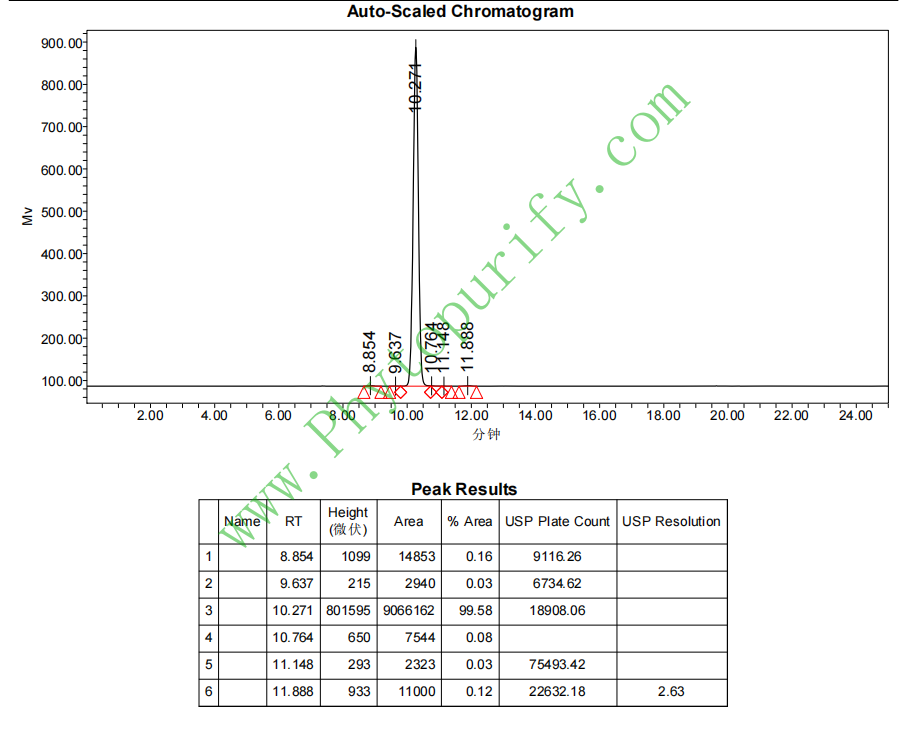
Analysis Method: HPLC-DAD or/and HPLC-ELSD
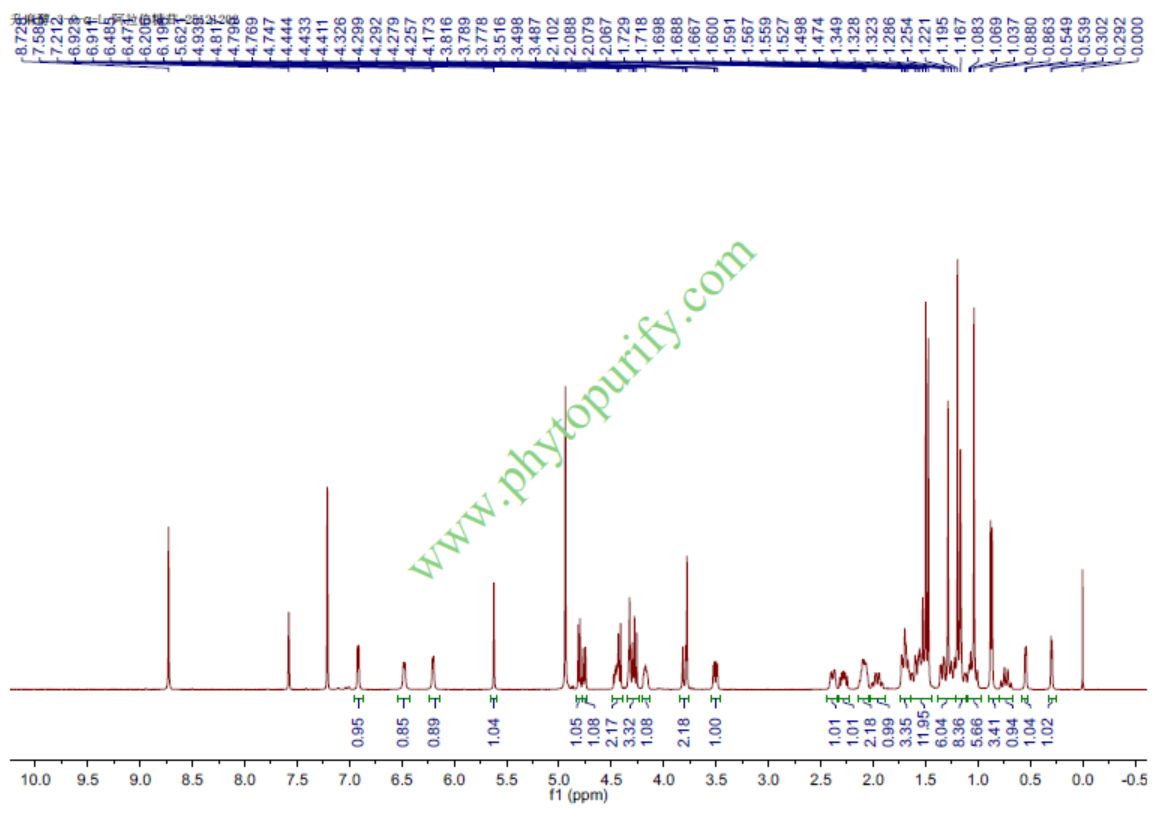
Identification Method: Mass, NMR
Packing: Brown vial or HDPE plastic bottle
Can be supplied from milligrams to grams.
For Reference Standard and R&D, Not for Human Use Directly.
Inquire for bulk scale.
HPLC of Cimigenol-3-O-alpha-L-arabinoside
HNMR of Cimigenol-3-O-alpha-L-arabinoside
Storage conditions:Short-term storage at 2~8℃, long-term storage at -20 ~ -80℃
156.0400
1.3200
1.3200
Low
.7100
No
No
No
No
No
No
Cimigenol-3-O-alpha-L-arabinolide (CAS number: 256925-92-5) is a natural plant derived steroidal saponin compound that has received widespread attention in recent years for its potential pharmacological activity in the treatment of tumors, particularly lung cancer. As one of the malignant tumors with the highest incidence rate and mortality in the world, lung cancer urgently needs to develop new therapeutic methods and drug molecules. Shengma alcohol-3-O - α - L-arabinoside exhibits excellent anti-tumor potential by regulating cell apoptosis, proliferation, and signal transduction pathways through multiple targets. This article will provide a systematic review of the chemical structure, plant origin, pharmacological activity, and mechanism of action of the compound, combined with drug evaluation and clinical application prospects, to provide theoretical basis for its subsequent research and development.
Shengma alcohol-3-O - α - L-arabinoside belongs to the class of steroidal saponins, with a complex molecular formula and a molecular weight of 604.8100 Da. Its core structure is the steroid skeleton, and the 3-hydroxyl group is connected to the sugar group through an α - L-arabinoside bond. The presence of this glycosidic bond endows the molecule with good water solubility and biological activity regulation function. In terms of physicochemical properties, the LogP value of coumarin-3-O - α - L-arabinoside is about 1.32, indicating its moderate hydrophobicity, which helps to penetrate cell membranes but does not excessively affect bioavailability due to hydrophobicity. The TPSA (topological polar surface area) is 156.04 Å ², and a higher polar surface area suggests that it may have some absorption limitations in vivo, but it is also beneficial for the binding of molecules to polar targets. The molecule contains 9 hydrogen bond receptors, further enhancing its binding ability to protein targets. Its physical and chemical properties generally conform to the characteristics of medium molecular weight natural products, providing a basis for its biological activity.
Cilicianol-3-O - α - L-Arabinoside is mainly found in plants of the Cistanche genus, especially in the rhizomes of Cistanche (Cimicifuga spp.). As a traditional Chinese medicinal herb, Shengma has a long history and is widely used in anti-inflammatory, antipyretic, and anti-tumor fields. The common methods for extracting this compound include:
Solvent extraction
Using polar organic solvents such as methanol or ethanol for reflux extraction of dried gastrodia elata rhizomes, the extract is concentrated and then subjected to liquid-liquid distribution to remove lipid soluble impurities.
Column chromatography separation
Separation and purification were carried out using silica gel column or C18 reverse phase column, and high-purity coumarin-3-O - α - L-arabinoside was obtained by gradient elution.
Identification by High Performance Liquid Chromatography (HPLC)
The purified sample was subjected to structural confirmation and purity detection using HPLC and mass spectrometry (LC-MS) techniques.
In recent years, with the advancement of separation technology, the extraction efficiency and purity of coumarin-3-O - α - L-arabinoside have been significantly improved, providing sufficient material basis for its pharmacological research.
The pharmacological activity of coumarin-3-O - α - L-arabinoside is mainly concentrated in the field of anti-tumor, especially its inhibitory effect on lung cancer cells. Multiple in vitro cell experiments have shown that this compound can significantly inhibit the proliferation of lung cancer cell lines, induce cell apoptosis, and block the migration and invasion ability of tumor cells.
Cell proliferation inhibition
MTT and CCK-8 cell viability assays showed that coumarin-3-O - α - L-arabinoside had dose-dependent inhibitory effects on lung cancer cell lines such as A549 and H1299 at different concentrations.
Inducing cell apoptosis
Through flow cytometry detection of apoptosis rate, it was found that the compound can activate endogenous apoptosis pathways, promote CASP9 (caspase 9) activation, and lead to programmed cell death.
Anti inflammatory and immune regulation
The compound also exhibits the ability to regulate the expression of inflammatory factors, indirectly inhibiting the pro cancerous inflammatory response in the tumor microenvironment.
Antioxidant effect
By clearing free radicals, reducing oxidative stress levels, and alleviating DNA damage in tumor cells.
In addition, coumarin-3-O - α - L-arabinoside has shown good anti-tumor effects in animal models and has no significant liver or cardiac toxicity, demonstrating good safety.
The mechanism of anti lung cancer effect of coumarin-3-O - α - L-arabinoside involves multiple signaling pathways and key molecular targets, reflecting its multi-target and multi pathway regulation characteristics.
BCL2 family protein regulation
BCL2, as a key inhibitor of cell apoptosis, can be downregulated by coumarin-3-O - α - L-arabinoside, promoting the activation of apoptosis related proteins and inducing cell apoptosis.
STAT3 signaling pathway inhibition
STAT3 is abnormally activated in various tumor cells, promoting cell proliferation and immune escape. This compound inhibits the phosphorylation of STAT3, blocks its transcriptional activity, and suppresses tumor growth.
Regulation of estrogen receptor beta (ESR2)
ESR2 plays a tumor suppressive role in lung cancer, and coumarin-3-O - α - L-arabinoside regulates ESR2 expression, affecting the proliferation and differentiation of tumor cells.
The impact of MAPK signaling pathway
This compound regulates the activity of MAPK1 (ERK2) and MAPK8 (JNK1), regulates the cell cycle and stress response, and promotes apoptosis.
PI3K/AKT pathway regulation
By inhibiting PIK3CG (PI3K γ) activity, coumarin-3-O - α - L-arabinoside blocks PI3K/AKT signaling and reduces cell survival signal transduction.
Inhibition of NF - κ B pathway
By inhibiting the activation of RELA (p65) subunit, reducing the expression of pro-inflammatory and anti apoptotic genes, and enhancing the sensitivity of tumor cells to apoptosis.
PPAR γ activation
This compound can activate PPARG, regulate lipid metabolism and inflammatory response, and indirectly inhibit tumor progression.
In summary, the synergistic effect of 3-O - α - L-arabinoside on multiple targets regulates cell growth, apoptosis, and immune microenvironment, demonstrating a complex and efficient anti-tumor mechanism.
The pharmacological parameters of Shengma alcohol-3-O - α - L-arabinoside show that it has good potential for drug development:
At present, there is limited pharmacokinetic data on the 3-O - α - L-arabinoside of coumarin. Preliminary in vivo experiments have shown that its oral bioavailability is low, which may be due to its high polarity and glycosidic structure leading to limited intestinal absorption. The metabolic pathway mainly involves glycoside hydrolysis and steroid skeleton modification through the liver enzyme system. Further systematic research on ADME (absorption, distribution, metabolism, excretion) is needed in the future to optimize drug delivery methods and dosage form design.
Based on the significant anti-tumor activity and good safety of coumarin-3-O - α - L-arabinoside in lung cancer cells and animal models, its development prospects as a novel anti lung cancer drug are broad. Future research directions include:
In depth mechanism research
Using genomics, proteomics, and metabolomics techniques, further elucidate its multi-target action network and upstream and downstream signaling pathways.
Pharmacokinetic optimization
By utilizing strategies such as structural modification, nanocarrier or liposome encapsulation, its in vivo stability and bioavailability can be improved.
Combination therapy research
Explore the synergistic effects with existing chemotherapy drugs, targeted drugs, and immune checkpoint inhibitors to enhance treatment efficacy and reduce the risk of drug resistance.
Preclinical safety evaluation
The system conducts long-term toxicology and pharmacodynamics research to provide data support for clinical trials.
Clinical trial design
Gradually advancing Phase I clinical trials, evaluating their safety, tolerability, and initial efficacy, exploring indications and dosing regimens.
In addition, the potential application of coumarin-3-O - α - L-arabinoside in other tumor types and inflammation related diseases is also worth paying attention to, expanding its medicinal value.
As a natural steroidal saponin with multi-target anti lung cancer activity, coumarin-3-O - α - L-arabinoside has the potential to become a new type of anti-tumor drug due to its unique chemical structure and good drug properties. It induces tumor cell apoptosis and inhibits proliferation by regulating key pathways such as BCL2, STAT3, MAPK, and PI3K/AKT, providing a new approach for the treatment of lung cancer. In the future, it is necessary to strengthen research on its pharmacokinetics and clinical safety, and combine modern drug development technology to promote its clinical translation. Overall, the research on coumarin-3-O - α - L-arabinoside not only enriches the library of natural anti-tumor drugs, but also opens up new directions for precision treatment of lung cancer.
