Introduction/Overview
Inflammation is a complex defense response of the body in response to infection, injury, or stress, and its precise regulation is crucial for maintaining internal environmental stability. However, uncontrolled chronic inflammation is the common pathological basis of many major diseases, such as rheumatoid arthritis, atherosclerosis, neurodegenerative diseases and a variety of cancers. Therefore, exploring new anti-inflammatory drugs with high efficiency and low toxicity has always been a frontier hotspot in pharmacological research. Natural products have become an important source of innovative drug discovery due to their structural diversity and rich biological activity. Among them, triterpenoid saponins have attracted much attention due to their extensive pharmacological effects. As a cyclic jackfruit alkyl triterpenoid saponin isolated from traditional medicinal plants, 23-O-Acetylshengmanol-3-O-alpha-L-arabinopyranside (ASA) has been gradually revealed its significant anti-inflammatory activity in recent years. This article aims to provide a systematic review of the chemical characteristics, plant sources, pharmacological activities, molecular mechanisms of action, and medicinal potential of ASA, in order to provide comprehensive academic references for the in-depth research and development of this compound.
Chemical structure and physicochemical properties
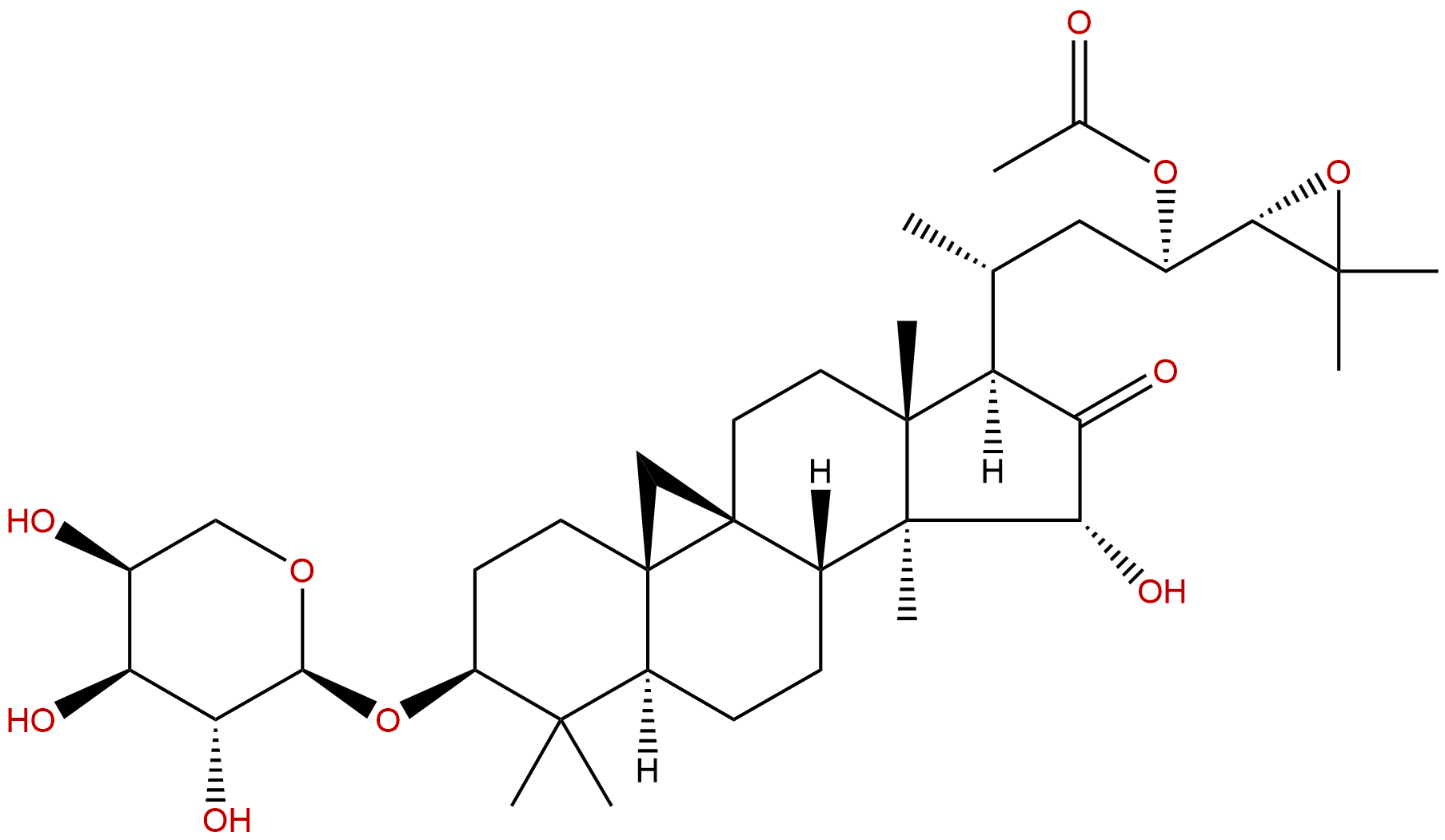
The chemical name ASA clearly reveals its structural characteristics: 23-O-Acetyl Cimicinol-3-O - α - L-Arabinopyranoside. Its CAS number is 402513-88-6, molecular formula is C ∝₇ H ₅₈ O ₁₁, and molecular weight is 662.8610. The compound belongs to cyclic jackfruit alkyl triterpene saponin, and its aglycone is a derivative of Shengmanol. Specifically, an alpha configured L-arabinopyranose group is connected to the C-3 hydroxyl group of aglycone through a glycosidic bond, while an acetyl group exists on the C-23 hydroxyl group of aglycone. This glycosylation and acetylation modification has a decisive impact on its solubility, biological activity, and interaction with the target.
From the analysis of parameters related to drug formation, the lipid water partition coefficient (LogP) of ASA is 3.78, indicating that it has a certain lipophilicity, which is beneficial for its penetration into cell membranes. Its topological polar surface area (TPSA) is 155.28 Å ², which is relatively high and mainly attributed to multiple hydroxyl groups and oxygen atoms on the sugar ring in the molecule, suggesting the formation of a strong hydrogen bonding network. The water solubility data (0.0114 mg/mL) confirms that it is a poorly soluble compound, which may be a major limiting factor for its oral bioavailability. Preliminary computer simulation toxicity prediction shows that the Ames test result is negative (0.0), indicating no direct mutagenic risk; Meanwhile, it showed no significant inhibitory tendency towards hERG potassium channels, indicating a low potential risk of arrhythmia. In addition, it is predicted that its ability to penetrate the blood-brain barrier is low, which limits its direct effects on central nervous system diseases, but may also reduce potential neurological side effects.
Plant sources and extraction methods
ASA mainly comes from various plants in the Ranunculaceae family, including Cimicifuga and Actaea. Among them, Cimicifuga dahurica, Cimicifuga heracleifolia, and Cimicifuga racemosa are the most common. These plants have a long history in traditional Chinese medicine and Western medicine, and are commonly used to treat fever, inflammation, gynecological diseases, and rheumatic pain.
The extraction and separation of ASA from plant materials typically involves the use of organic solvent extraction combined with various chromatographic techniques. The conventional process is as follows: first, the dried roots and stems of ramie are crushed, and then heated and refluxed with methanol or ethanol (70-95%) or extracted with ultrasound assistance. After vacuum concentration, the obtained total extract was suspended in water and subjected to solvent gradient extraction with petroleum ether, ethyl acetate, and n-butanol in sequence. ASA is mainly enriched in the n-butanol fraction. Subsequently, a combination of methods including silica gel column chromatography, reverse phase silica gel (such as ODS) column chromatography, and high-performance liquid chromatography (HPLC, commonly using C18 chromatography columns and gradient elution with methanol water or acetonitrile water as mobile phases) were used for repeated separation and purification. Its structure was ultimately identified by nuclear magnetic resonance (NMR, including ¹ H, ¹ ³ C, DEPT, HSQC, HMBC, etc.), mass spectrometry (MS, such as ESI-MS, HR-ESI-MS), and comparison with literature data. Modern technologies such as high-speed countercurrent chromatography (HSCCC) can also be used for efficient preparation and separation of this type of saponin.
Pharmacological activity research
The core pharmacological activity of ASA focuses on anti-inflammatory effects and has been validated in various in vitro and in vivo inflammatory models.
In vitro research This indicates that ASA can significantly inhibit lipopolysaccharide (LPS) - induced macrophage (such as RAW264.7 cells) production of nitric oxide (NO) and prostaglandin E ₂ (PGE ₂), which are key mediators of inflammatory response. Meanwhile, ASA can dose dependently downregulate the protein and mRNA expression of inducible nitric oxide synthase (iNOS) and cyclooxygenase-2 (COX-2) in macrophages stimulated by LPS. At the cytokine level, ASA can effectively inhibit the production of pro-inflammatory factors such as TNF - α, IL-6, IL-1 β, etc.
In vivo research Further confirmed its anti-inflammatory effect. In the mouse ear xylene induced inflammation model, carrageenan induced paw swelling model, and cotton ball induced granuloma model, ASA intraperitoneal injection or gavage administration showed significant anti-inflammatory effects, reducing tissue edema and inflammatory cell infiltration. More importantly, in autoimmune inflammatory disease models such as collagen induced arthritis (CIA) mice, ASA treatment can significantly improve joint swelling and pathological damage, reduce serum levels of inflammatory cytokines, and demonstrate the potential for treating chronic inflammatory diseases.
In addition to its classic anti-inflammatory activity, ASA may also play a role in other related pathological processes based on the diversity of its targets. For example, by regulating signaling pathways such as STAT3, it may indirectly affect cell proliferation and survival closely related to inflammation; Its potential regulatory effect on TRPV1/TRPA1 channels suggests that it may have analgesic activity, which is consistent with its traditional use in treating pain.
Mechanism of action and molecular targets
The anti-inflammatory effect of ASA is not achieved through a single pathway, but rather the result of the synergistic effect of multiple targets and pathways, and its action network involves multiple key nodes in inflammatory signal transduction.
-
Inhibition of NF - κ B signaling pathway NF - κ B is a core transcription factor that regulates the expression of inflammatory genes. Research has shown that ASA can inhibit the activation of LPS induced I κ B kinases (IKK, especially IKBKB), prevent the phosphorylation and degradation of I κ B α, and thus inhibit the translocation of NF - κ B dimers (such as p65/RELA) to the nucleus. This directly leads to a decrease in transcription of downstream genes such as iNOS, COX-2, TNF - α, IL-6, etc.
-
Regulating the JAK/STAT signaling pathway Cytokines such as IL-6 amplify inflammatory responses by activating the JAK/STAT pathway, particularly the phosphorylation and dimerization of STAT3. ASA has been shown to inhibit the phosphorylation of STAT3 (Tyr705 site), block its nuclear translocation and binding ability to DNA, thereby suppressing inflammation and immune responses driven by the IL-6/STAT3 axis.
-
Affects NLRP3 inflammasome activation NLRP3 inflammasome is a key platform for intracellular perception of danger signals and mediating the mature secretion of IL-1 β and IL-18. ASA may reduce the activation of caspase-1 (CASP1) by inhibiting the assembly or activation of NLRP3 inflammasomes, thereby lowering the release of mature IL-1 β, which is particularly important in chronic low-grade inflammation related diseases.
-
Regulating ion channels and enzyme activity:
- TRP channel ASA may act as a regulator to affect the activity of transient receptor potential vanillic acid subtype 1 (TRPV1) and transient receptor potential anchor protein subtype 1 (TRPA1). These two channels play a central role in the perception of inflammatory pain and neurogenic inflammation, and ASA intervention may bring dual benefits of anti-inflammatory and analgesic effects.
- Cyclooxygenase In addition to downregulating the expression of COX-2, ASA may also have a direct inhibitory effect on the enzymatic activity of COX-1 (PTGS1) and COX-2, reducing the synthesis of prostaglandin mediators.
- Nitric oxide synthase Directly or indirectly inhibit the activity of iNOS (NOS2) and reduce the production of excessive NO.
In summary, ASA interacts with core signaling pathways such as NF - κ B, JAK/STAT, NLRP3, and affects TRP channels and key inflammatory enzymes, forming a multi-level anti-inflammatory network, which may be the molecular basis for its highly effective anti-inflammatory effects.
Evaluation of drug properties and pharmacokinetics
Although ASA has shown good anti-inflammatory activity in vitro and animal models, its pharmacological properties still require systematic evaluation.
Pharmacokinetic properties At present, research is not sufficient. Based on its physicochemical properties (moderate LogP value, high TPSA, low water solubility), it can be inferred that after oral administration, the absorption of ASA in the gastrointestinal tract may be limited, and its bioavailability may be low. Its metabolism in the body may mainly involve deacetylation, hydroxylation, and hydrolysis of glycosidic bonds (deglycosylation) catalyzed by the liver cytochrome P450 enzyme system. The distribution and excretion pathways of prototype drugs and their metabolites need to be clarified. Its low blood-brain barrier permeability prediction makes it more suitable for peripheral systemic diseases.
Pharmaceutical advantages:
* Clear activity Multiple models have confirmed its potent anti-inflammatory effect.
* Multi-target effect May bring synergistic therapeutic effects and reduce the risk of drug resistance.
* Preliminary safety Ames negative and low risk of hERG inhibition indicate controllable baseline toxicity.
Drug Challenge:
* Solubility and permeability Low water solubility and large molecular weight may seriously affect its oral absorption, and it belongs to Class IV (low solubility, low permeability) or Class II (low solubility, high permeability) compounds in the Biopharmaceutical Classification System (BCS).
* Metabolic stability As glycoside compounds, they are easily hydrolyzed by gut microbiota or glycosidases in the body, leading to inactivation.
* System exposure level Pharmacokinetic studies are needed to confirm that it can achieve the required blood drug concentration and duration for treatment.
improvement strategy:
* Formulation optimization Using preparation technologies such as nanocrystals, liposomes, micelles, and solid dispersions to improve their solubility and dissolution rate.
* Prodrug design Modification of sugar or hydroxyl groups to prepare lipophilic prodrugs for improved absorption, which are then converted into active forms in vivo.
* Exploration of administration routes Consider local administration (such as intra-articular injection for treating arthritis) or developing injectable formulations.
* Research on System PK/PD Conduct comprehensive pharmacokinetic pharmacodynamic correlation studies to provide a basis for dose design.
Clinical application prospects and prospects
ASA, as a natural compound with a clear multi-target anti-inflammatory mechanism, has a clinical application prospect mainly in the field of chronic inflammatory diseases.
Potential indications:
1. Autoimmune diseases Such as rheumatoid arthritis, psoriatic arthritis, inflammatory bowel disease (Crohn's disease, ulcerative colitis), etc. Its inhibitory effects on the IL-6/STAT3 and NF - κ B pathways are particularly relevant.
2. Osteoarthritis In addition to anti-inflammatory effects, its potential action on pain related targets (TRPV1/TRPA1) may alleviate pain and delay cartilage degeneration.
3. Neuroinflammatory related diseases Although BBB permeability is low, it may still play a role in diseases associated with peripheral inflammation (such as some pathological processes of multiple sclerosis) or through the development of delivery systems. Its inhibition of NLRP3 inflammasome is also consistent with the treatment strategies for neurodegenerative diseases such as Alzheimer's disease.
4. Inflammatory pain Develop topical preparations for the treatment of muscle pain, arthritis pain, etc.
Future research directions:
1. In depth mechanism exploration Using proteomics, chemical proteomics, and other techniques, search for the direct target proteins of ASA and draw a more accurate signal network diagram.
2. Structural optimization and structure-activity relationship Systematically study the effects of sugar type, acetyl position, and glycoside modification on its activity, selectivity, and pharmacokinetic properties, to guide the synthesis of better derivatives.
3. Preclinical development research Complete the toxicological evaluation of the system (acute toxicity, long-term toxicity, reproductive toxicity, etc.), and validate the efficacy in animal models that are closer to human diseases (such as humanized mouse models).
4. Exploration of combination therapy Study whether the combined use of ASA and existing anti-inflammatory drugs (such as NSAIDs and biologics) has a synergistic and detoxifying effect.
5. Biological synthesis research Analyze its biosynthetic pathway in plants, laying the foundation for sustainable production using synthetic biology techniques.
Conclusion
Acetylcohoshol-3-O - α - L-arabinoside is a kind of active ring alkyl triterpene saponin from jackfruit, a traditional medicinal plant. Numerous studies have confirmed that it exerts significant anti-inflammatory effects through multi-target and multi pathway synergy, with core mechanisms involving inhibition of NF - κ B and JAK/STAT3 signaling pathways, as well as regulation of key nodes such as NLRP3 inflammasome and TRP channel. Despite facing challenges such as poor solubility and unstable metabolism in drug development, it is expected to overcome these bottlenecks through optimization of modern medicinal chemistry and pharmacology methods. This compound not only provides a scientific basis for understanding the pharmacological substance basis of plants in the Cistanche genus, but also offers a promising lead compound for the development of new drugs for the treatment of chronic inflammatory diseases such as rheumatoid arthritis and inflammatory bowel disease due to its unique multi-target action characteristics. Future research should focus on precise molecular target identification, structure optimization based on structure-activity relationships, and systematic preclinical development to promote its transition from laboratory research to clinical applications.