


Synonym name:
Catalogue No.: BP0123
Cas No.: 18642-44-9
Formula: C37H56O11
Mol Weight: 676.844
Botanical Source: Actaea racemosa (Cimicifuga racemosa) and Cimicifuga spicata
Purity: 95%~99%
Analysis Method: HPLC-DAD or/and HPLC-ELSD
Identification Method: Mass, NMR
Packing: Brown vial or HDPE plastic bottle
Can be supplied from milligrams to grams.
For Reference Standard and R&D, Not for Human Use Directly.
Inquire for bulk scale.
HPLC of Actein
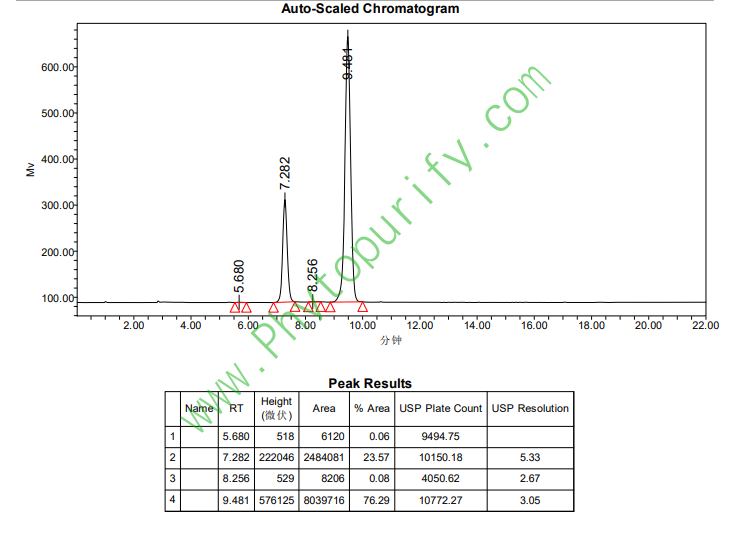
Storage conditions:Short-term storage at 2~8℃, long-term storage at -20 ~ -80℃
180.0000
3.5000
Low
No
No
No
Unknown
No
Unknown
Actein (CAS number 18642-44-9) is a natural triterpenoid glycoside derived from the rhizome of the Chinese medicinal herb Cimicifuga foetida. In recent years, it has received widespread attention due to its diverse biological activities. As a natural triterpene with significant pharmacological activity, Cimicifetin not only shows potential therapeutic value in bone metabolism regulation, anti-tumor, antioxidant and other aspects, but also involves the regulation mechanism of multiple signal pathways, showing its application prospects in osteoporosis, tumors, especially breast cancer cancer, bladder cancer cancer, liver cirrhosis and other diseases. This article will provide a systematic review of the chemical structure and physicochemical properties, plant sources and extraction methods, pharmacological activity and mechanism of action of Shengma Ting. Combined with pharmacological evaluation and pharmacokinetic data, it will explore its potential for clinical application and future development directions.
Shengma Ting belongs to the triterpenoid glycoside class, with a molecular weight of 660.8 and a LogP value of approximately 3.5, indicating its moderate lipid solubility. Its molecular structure contains multiple hydroxyl and glycosidic groups, with a TPSA (topological polar surface area) of 180 and 11 hydrogen bond acceptors, indicating a high molecular polarity that may affect its bioavailability and cell membrane permeability. The chemical structure of Shengma Pavilion is complex, consisting of a typical triterpenoid skeleton connected to glycosides, endowing it with unique biological activity.
In terms of physical and chemical properties, Shengma Ting exhibits moderate solubility in water and organic solvents, good stability, and is suitable for various extraction and purification processes. The combination of its LogP value and TPSA value shows that Shengma Ting has a low ability to penetrate the blood-brain barrier (Blood Brain Barrier permeability: Low), which to some extent limits its application in central nervous system diseases, but helps to reduce central nervous system toxicity.
Shengma Pavilion is mainly isolated from the rhizomes of Cimicifuga foetida. Shengma, a plant of the Ranunculaceae family, is widely distributed in Northeast and North China. In traditional Chinese medicine, it is used for relieving external heat, clearing heat, and relieving pain. Shengma Ting, as one of the main active ingredients of Shengma, has a mature extraction and purification process.
Common extraction methods include alcohol extraction (such as ethanol or methanol extraction) combined with liquid-liquid partitioning and column chromatography separation. The specific process usually involves crushing the dried roots and rhizomes of Gastrodia elata, extracting them with 70% ethanol reflux, concentrating them, distributing them with solvents such as water ethyl acetate, and then purifying them using silica gel column chromatography or high-performance liquid chromatography (HPLC). In recent years, new technologies such as ultrasound assisted extraction and supercritical fluid extraction have also been applied to the extraction of Shengma Ting, improving extraction efficiency and purity.
The pharmacological activities of Shengma Ting are extensive, covering multiple aspects such as bone metabolism regulation, anti-tumor, antioxidant, and anti fibrosis.
Shengma Ting has a significant bone formation promoting effect on osteoblasts, which can stimulate their proliferation and differentiation, and promote the synthesis of bone matrix. Research has shown that Shengma Ting can prevent oxidative damage to osteoblasts in patients with osteoporosis, slow down the process of bone loss, and demonstrate its potential value in the prevention and treatment of osteoporosis. It has a good bone protective effect by regulating the intracellular redox state, protecting osteoblasts from oxidative stress damage, promoting bone formation.
Shengma Ting exhibits activity in inhibiting proliferation, inducing apoptosis, and autophagy in various tumor cell lines. Especially in breast cancer and bladder cancer cells, cimetin plays an anti-cancer role through multiple signal pathways. The mechanism includes:
Shengma Ting enhances cellular antioxidant capacity and reduces oxidative stress-related cell damage by activating the NFE2L2 (Nrf2) pathway. In addition, Shengma Ting exhibits potential protective effects against fibrotic diseases such as cirrhosis, possibly by regulating key targets such as STAT3, MMP2, and HIF1A to inhibit fibrosis progression and improve liver function.
The multi-target mechanism of action of Shengma Ting is the basis for the realization of its various biological activities. Mainly involving the following molecular targets and signaling pathways:
The pharmacological parameters of Shengma Ting indicate that it has certain development potential. The molecular weight of 660.8 is relatively high, the TPSA is 180, and the number of hydrogen bond acceptors is 11, indicating its strong polarity, which may affect oral bioavailability. A LogP value of 3.5 indicates moderate lipid solubility, which is beneficial for cell membrane penetration. Low blood-brain barrier permeability reduces the risk of central nervous system side effects.
In toxicology evaluation, Shengma Ting did not show significant cardiac toxicity or hERG channel inhibition, indicating its good cardiovascular safety. Hepatotoxicity and Ames mutagenicity are not yet clear and require further systematic research.
In terms of pharmacokinetics, existing literature reports are relatively limited, but preliminary studies have shown that Shengma Ting is widely distributed in the body, metabolically stable, and has low toxicity, making it suitable for further drug development. In the future, it is necessary to conduct in-depth research on its absorption, distribution, metabolism, and excretion (ADME) characteristics, optimize the administration method and dosage form.
As a multifunctional natural triterpenoid glycoside, Shengma Ting has shown broad clinical application prospects due to its significant activities in bone metabolism regulation, anti-tumor, and anti fibrosis.
Future research should focus on the preclinical pharmacokinetics and toxicology systematic evaluation of Shengma Ting, clarify the molecular mechanism of its target, and conduct clinical trials to verify its safety and effectiveness. At the same time, by combining modern medicinal chemistry and formulation, optimizing its drug properties and administration methods, we aim to promote the transition of Shengma Ting from laboratory to clinical application.
Shengma Ting, as a natural triterpenoid glycoside derived from Shengma, has shown broad application prospects in the treatment of diseases such as osteoporosis, tumors, and liver fibrosis due to its multi-target and multi mechanism pharmacological activities. Its unique chemical structure and physicochemical properties provide the basis for its biological activity, while rich pharmacological research reveals its complex mechanism of action. Although there is currently insufficient clinical data on Shengma Ting, its good safety and diverse therapeutic potential make it a research hotspot in the field of natural product pharmacology. In the future, through in-depth mechanism research and clinical validation, Shengma Ting is expected to become an important candidate molecule for natural drug development, providing new treatment strategies for the prevention and treatment of related diseases.
