


Synonym name:
Catalogue No.: BP1021
Cas No.: 70588-05-5
Formula: C18H16O7
Mol Weight: 344.319
Botanical Source: seeds of Cassia obtusifolia
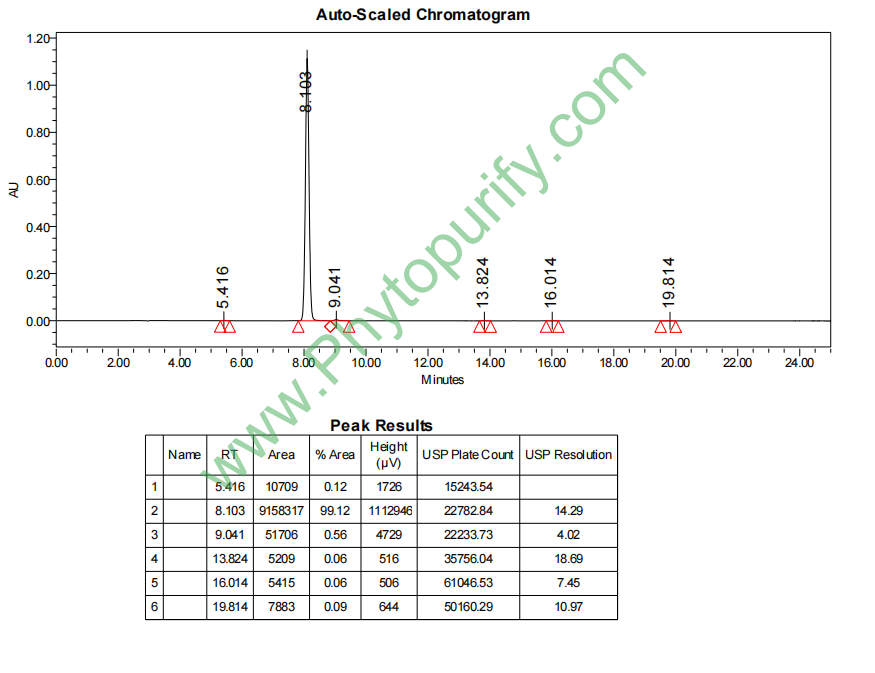
Purity: 95%~99%
Analysis Method: HPLC-DAD or/and HPLC-ELSD
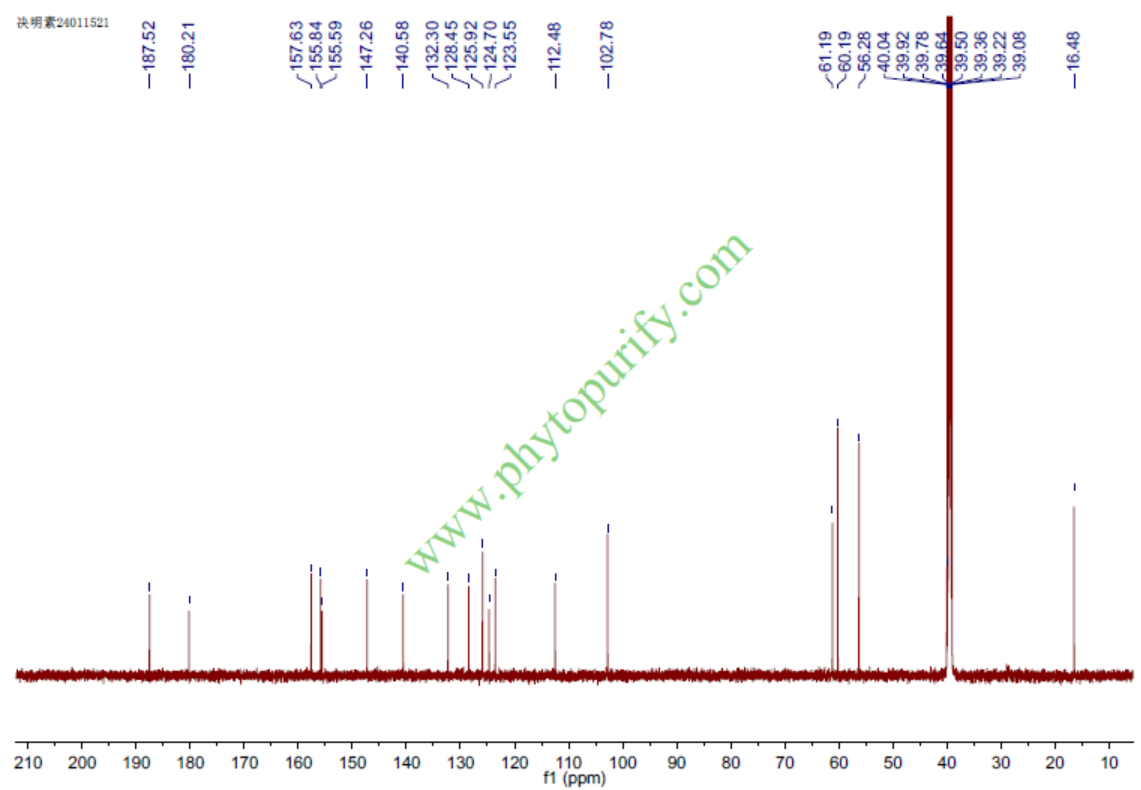
Identification Method: Mass, NMR
Packing: Brown vial or HDPE plastic bottle
Can be supplied from milligrams to grams.
For Reference Standard and R&D, Not for Human Use Directly.
Inquire for bulk scale.
HPLC of Obtusin
NMR of Obtusin
Storage conditions:Short-term storage at 2~8℃, long-term storage at -20 ~ -80℃
102.2900
2.7240
1.9764
.0193
4.7377
10.1211
Low
87.1591
2.5704
Yes
No
Yes
No
Yes
Yes
1.2
Yes
No
Yes
No
Natural products, as an important source of drug discovery, play an irreplaceable role in the long history of human fight against diseases. The active ingredients isolated and identified from traditional herbs not only provide lead compounds for modern drug development, but also often become a hot topic in pharmacological research due to their unique chemical structures and novel mechanisms of action. Among numerous natural products, it originates from the traditional Chinese medicine Cassia seed(Cassia obtusifolia L. Or Cassia tora L. The anthraquinone compound, Astaxanthin, has attracted widespread attention from researchers in recent years due to its significant biological activity, especially its potential application value in the fields of neuropsychiatric and metabolic diseases.
Cassia seed, as a commonly used traditional Chinese medicine for clearing heat, improving vision, moistening intestines, and promoting bowel movements, has a complex chemical composition, mainly including anthraquinone, naphthopyranone, fatty acids, etc. Astutin (CAS number: 70588-05-5) is one of the important methylated anthraquinone derivatives. Early research mostly focused on its activities such as lowering blood lipids and antioxidation. However, recent breakthroughs in pharmacology have revealed that quercetin is a highly selective and competitive inhibitor of human monoamine oxidase A (hMAO-A), with a half maximal inhibitory concentration (IC ₅₀) of 11.12 μ M and an inhibition constant (Ki) of 6.15 μ M. This discovery has pushed the research on quercetin towards the prevention and treatment of neurodegenerative diseases, especially anxiety and depression.
Monoamine oxidase (MAO) is a key enzyme involved in the metabolism of monoamine neurotransmitters such as serotonin, norepinephrine, and dopamine in the body, and is divided into two subtypes: MAO-A and MAO-B. MAO-A mainly metabolizes serotonin and norepinephrine, and its overactivity is closely related to the pathophysiological processes of depression and anxiety. Therefore, selective MAO-A inhibitors are an important class of antidepressant and anti anxiety drugs. As a natural selective MAO-A inhibitor, quercetin may have lower toxic side effects and better tolerance compared to synthetic drugs, providing valuable natural lead compounds for the development of new antidepressant drugs.
At the same time, cassia also shows potential in the prevention and treatment of metabolic diseases, especially diabetes and its complications. Research has shown that it may exert hypoglycemic effects by acting on multiple targets related to blood glucose regulation, such as glucokinase (GCK), peroxisome proliferator activated receptor gamma (PPARG), dipeptidyl peptidase 4 (DPP4), insulin receptor substrate 1 (IRS1), glucose transporter 4 (SLC2A4), and insulin receptor (INSR). This multi target action feature is in line with the modern comprehensive intervention concept for the treatment of complex metabolic diseases (such as type 2 diabetes).
This article aims to systematically review the research progress of cassia extract, including its chemical structure and physicochemical properties, plant sources and extraction methods, pharmacological activity, mechanism of action, drug evaluation, and clinical application prospects. A comprehensive and in-depth analysis is conducted to provide scientific basis for the further development and utilization of cassia extract.
The chemical name of Astusin is 1,3,5-trimethoxy-2-methyl-6,7-dihydroxyanthraquinone, which belongs to the anthraquinone class of compounds substituted with multiple methoxy groups. Its chemical structure parent nucleus is anthraquinone (9,10-anthraquinone), with multiple substituents distributed on the A and C rings. Specifically, its structural features are: three methoxy groups (- OCH ∝) are attached to positions 1, 3, and 5 of the anthraquinone parent nucleus, one methyl group (- CH ∝) is attached to position 2, and two hydroxyl groups (- OH) are attached to positions 6 and 7. This unique substitution pattern, especially the presence of 6,7-dihydroxy and multiple methoxy groups, endows quercetin with specific physicochemical properties and biological activity.
From the perspective of physical and chemical properties, quercetin is a yellow or orange yellow crystalline powder with certain lipid solubility and weak acidity. Its molecular weight is 344.3190 g/mol, which belongs to small molecule compounds and is conducive to transmembrane transport and binding with target proteins. Its lipid water partition coefficient (LogP) is 2.7240, indicating that it has moderate lipophilicity, which allows it to be soluble in organic solvents such as methanol, ethanol, chloroform, and ethyl acetate, as well as to some extent in water. The topological polar surface area (TPSA) is 102.2900 Å ², which is slightly higher than the "rule" upper limit of traditional oral drugs (usually considered TPSA<140 Å ²), indicating that it may be absorbed through passive diffusion, but the degree of absorption may be limited to some extent. Its solubility is 0.0193 mg/mL, making it a poorly soluble compound, which may pose a challenge to its oral bioavailability.
It is worth noting that the blood-brain barrier (BBB) penetration ability of quercetin was evaluated as "low". This characteristic is both an advantage and a disadvantage for it as a central nervous system (CNS) drug. For the treatment of CNS diseases such as anxiety and depression, low BBB penetration means that higher doses or more specialized administration methods are needed to achieve effective brain concentrations, which may limit its direct use as a CNS drug. However, from a safety perspective, low BBB penetration also means a lower risk of central side effects such as sedation and dizziness. In addition, the risk assessment of hERG (human ether - à - go go related gene) inhibition is' no ', indicating a low risk of inducing QT interval prolongation and arrhythmia in the heart, which is an important safety advantage. The Ames test result is 1.2, indicating a low potential genetic toxicity risk, but further validation is needed.
Cassia extract mainly comes from the leguminous plant Cassia(Cassia obtusifolia L. ) and Xiao Jueming(Cassia tora L. The dried and mature seeds of Chinese medicine, namely Cassia seed. In addition, trace amounts have also been found in a few other plants, but cassia seed is its main natural source. The content of anthraquinone components in Cassia seed varies depending on factors such as place of origin, harvest season, and processing method, among which Cassia extract, Cassia flavescens extract, Emodin, and Emodin are its main active ingredients.
The traditional methods for extracting cassia extract are mostly based on solvent extraction. Due to the moderate polarity of quercetin, methanol, ethanol, or ethyl acetate are often used as extraction solvents. The common extraction process includes: crushing the cassia seed medicinal material, heating it with a certain concentration of ethanol (such as 70% -95% ethanol) for reflux extraction or cold soaking extraction, and concentrating the extract to obtain a paste. The extract is then subjected to liquid-liquid extraction (such as sequential extraction with petroleum ether, chloroform, ethyl acetate, and n-butanol) for preliminary separation, and quercetin is usually enriched in the ethyl acetate or chloroform extraction sites.
In order to obtain high-purity quercetin, multiple chromatographic separation techniques need to be combined. Modern separation methods mainly rely on column chromatography technology, such as silica gel column chromatography, ODS (octadecylsilane bonded silica gel) reverse phase column chromatography, Sephadex LH-20 gel column chromatography and preparative high-performance liquid chromatography (Pre HPLC). For example, using a silica gel column on the ethyl acetate extraction site and gradient elution with different ratios of petroleum ether ethyl acetate or chloroform methanol system can preliminarily enrich quercetin. Subsequently, further purification was carried out using ODS reverse phase column chromatography with methanol water or acetonitrile water systems. Finally, using Sephadex LH-20 gel column chromatography (usually eluted with methanol or chloroform methanol) to remove pigments and impurities, or directly using preparative HPLC, you can obtain cassia monomer with a purity of more than 98%.
In recent years, in order to improve extraction efficiency and yield, some modern extraction techniques have also been applied to the extraction of quercetin, such as ultrasound assisted extraction, microwave-assisted extraction, and supercritical fluid extraction (SFE). Ultrasound and microwave-assisted extraction can significantly shorten extraction time and improve yield by disrupting cell walls and accelerating molecular movement. Supercritical CO ₂ extraction has advantages in extracting thermosensitive components due to its green and solvent-free characteristics, but the equipment cost is relatively high. In industrial production, the process of ethanol reflux extraction combined with macroporous adsorption resin (such as HPD-100, AB-8) enrichment and purification is commonly used. This process has low cost, simple operation, and is suitable for large-scale production.
The pharmacological activity research of quercetin has expanded from early antioxidant and lipid-lowering activities to multiple fields such as neuroprotection, antidepressant, anti anxiety, and hypoglycemic effects, demonstrating multiple effects.
1. Pharmacological activity of the nervous and psychiatric system
This is currently the most focused area of research on quercetin. Its core discovery is as a selective hMAO-A inhibitor. Research has confirmed that quercetin competitively inhibits hMAO-A with a Ki value of 6.15 μ M and an IC ₅₀ of 11.12 μ M. This means that it can competitively bind to the active site of MAO-A with substrates such as serotonin, effectively inhibiting MAO-A's degradation of monoamine neurotransmitters and increasing the concentration of neurotransmitters such as serotonin and norepinephrine in synaptic cleft, thereby exerting antidepressant and anti anxiety effects. Importantly, its inhibitory activity against hMAO-B is weak, exhibiting high subtype selectivity. This selectivity is crucial because non selective MAO inhibitors not only inhibit MAO-A but also MAO-B, which may lead to the "cheese effect" (i.e. hypertensive crisis caused by consuming foods rich in tyramine), while selective MAO-A inhibitors have lower risk.
In animal behavior experiments, it has been confirmed that quercetin can significantly shorten the immobility time of mice in forced swimming and tail suspension experiments, which are classic antidepressant efficacy evaluation models. At the same time, in the elevated cross maze and open box experiments, quercetin can increase the dwell time of mice in open arms and open boxes, demonstrating a clear anti anxiety effect. These behavioral improvement effects are consistent with changes in biochemical indicators such as inhibition of MAO-A activity in the brain and elevation of serotonin and norepinephrine levels. In addition, quercetin also exhibits certain neuroprotective effects, which may alleviate neuronal damage through antioxidant stress and anti apoptotic mechanisms, which is of great significance for preventing the occurrence and development of neurodegenerative diseases.
2. Pharmacological activity of metabolic regulation
In addition to its role in CNS, quercetin also shows potential in regulating glucose and lipid metabolism. Research shows that cassia can reduce the blood sugar level of diabetes model animals. Its mechanism of action is not singular, but involves multiple targets. It may accelerate glucose utilization by activating glucokinase (GCK), promoting liver phosphorylation of glucose; By activating peroxisome proliferator activated receptor gamma (PPARG), insulin sensitivity can be improved; By inhibiting dipeptidyl peptidase 4 (DPP4) and prolonging the half-life of glucagon like peptide-1 (GLP-1), insulin secretion is promoted; By upregulating the expression of insulin receptor substrate 1 (IRS1) and glucose transporter 4 (SLC2A4), insulin signaling transduction is improved and peripheral tissue uptake of glucose is promoted; At the same time, it may also directly act on the insulin receptor (INSR) to enhance insulin signaling. This multi target synergy mode makes cassia obtusifolia have unique advantages in the treatment of type 2 diabetes and its complications.
3. Other pharmacological activities
Early research also found that quercetin has antioxidant activity, can scavenge free radicals, and inhibit lipid peroxidation. In addition, it has been reported to have mild antibacterial and anti-inflammatory effects. These activities may have a synergistic relationship with their neuroprotective and metabolic regulatory effects.
The pharmacological mechanism of action of quercetin is multi-level and multi-target, and its core mechanism can be summarized as follows:
1. Selective inhibition of monoamine oxidase A (MAO-A)
This is the core molecular mechanism by which quercetin exerts its antidepressant and anti anxiety effects. Molecular docking and enzyme dynamics studies have revealed that quercetin molecules can embed into the active center cavity of hMAO-A, and their anthraquinone mother nucleus forms π - π stacking interactions with FAD cofactors. Meanwhile, 6,7-dihydroxy and methoxy groups form hydrogen bonds and hydrophobic interactions with key amino acid residues within the active site, such as Tyr407, Tyr444, Gln215, etc. This stable binding mode enables quercetin to competitively prevent substrates (such as serotonin) from entering the active site, effectively inhibiting the catalytic activity of the enzyme. The reason for its selective inhibition of MAO-A rather than MAO-B is mainly due to the difference in the cavity structure of the two subtypes of active centers. The cavity of MAO-A is narrow and elongated, while the cavity of MAO-B is larger and spherical. The molecular shape and substituent pattern of quercetin perfectly match the cavity of MAO-A, achieving high selectivity.
2. Regulating blood glucose homeostasis related signaling pathways
Cassia extract finely regulates glucose metabolism by acting on multiple targets:
- Activate GCK GCK is a glucose sensor in liver and pancreatic beta cells. Cassia extract may enhance the activity of GCK, promote glucose phosphorylation, and thus lower blood glucose levels through direct binding or indirect regulation.
- Activate PPARG PPARG is a key transcription factor for adipocyte differentiation and insulin sensitivity. As an agonist of PPARG, quercetin can promote the uptake and storage of free fatty acids by adipocytes, improve lipid metabolism, and upregulate the expression of insulin signaling pathway related genes, thereby enhancing the body's sensitivity to insulin.
- Inhibit DPP4 DPP4 is an enzyme that degrades the intestinal insulinotropic hormones GLP-1 and GIP. Cassia extract inhibits DPP4 activity, prolongs the action time of GLP-1, stimulates insulin secretion, and inhibits glucagon release.
- Improve insulin signaling transduction By upregulating the expression of IRS1 and SLC2A4, insulin receptor signaling is enhanced, promoting the translocation of GLUT4 (encoded by SLC2A4) to the cell membrane, thereby increasing glucose uptake by skeletal muscle and adipocytes.
- Directly acting on INSR Studies have shown that certain anthraquinone compounds can act as insulin receptor agonists or allosteric modulators, directly activating the insulin signaling pathway, and quercetin may also have a similar effect.
3. Antioxidant and anti-inflammatory mechanisms
The phenolic hydroxyl group in the molecule of quercetin endows it with the ability to scavenge free radicals. It can directly neutralize reactive oxygen species (ROS) and reactive nitrogen species (RNS), and may upregulate the expression of endogenous antioxidant enzymes such as superoxide dismutase (SOD) and catalase (CAT) by activating antioxidant signaling pathways such as Nrf2/ARE. In addition, it can inhibit inflammatory signaling pathways such as NF - κ B and reduce the production of pro-inflammatory cytokines such as TNF - α and IL-6. These mechanisms together form the basis of its neuroprotective and metabolic regulatory effects.
Based on existing data, conduct a preliminary evaluation of the pharmacological properties of quercetin.
1. Analysis of pharmacological parameters
2. Pharmacokinetic characteristics (speculation and outlook)
At present, there are few detailed studies on the pharmacokinetics of quercetin in vivo. Based on its physicochemical properties and research on similar compounds, it can be inferred that:
- absorb After oral administration, due to its poor water solubility, absorption may not be complete, and it is affected by food and gastrointestinal environment. Its absorption mechanism may involve passive diffusion and/or efflux of intestinal transporters such as P-glycoprotein.
- distribution Due to its moderate lipophilicity, its distribution volume may be relatively large. However, low BBB penetration suggests that its concentration in brain tissue may be lower.
- Metabolism Anthraquinone compounds mainly undergo phase II metabolism in the liver, such as glucuronidation and sulfation. Its methoxy group may also undergo demethylation reaction. Metabolites may retain or lose some activity.
- excretion Mainly excreted in the form of metabolites through bile and urine.
3. Challenges in drug development and improvement strategies
The main challenge for the medicinal properties of cassia extract lies in its Low water solubility and Low BBB penetration To address these issues, the following strategies can be adopted:
- Formulation technology Modern formulation technologies such as solid dispersions, liposomes, nanoparticles, and cyclodextrin inclusion complexes can significantly improve their solubility and oral bioavailability.
- Prodrug design Introducing hydrophilic groups such as phosphate, amino acid, or sugar groups onto phenolic hydroxyl groups to produce prodrugs, which can be hydrolyzed in vivo to release the active ingredient and improve water solubility and absorption.
- Structural modification Under the premise of maintaining MAO-A inhibitory activity, the molecular structure can be modified, such as introducing polar groups or changing the position of substituents, to balance lipophilicity and water solubility, and may improve BBB penetration.
As a natural product with unique pharmacological activity, quercetin has shown promising clinical application prospects in multiple therapeutic fields.
1. In the field of neurological and psychiatric disorders
Although the BBB penetration of quercetin is low, its potential as a selective MAO-A inhibitor cannot be ignored. Future research should focus on:
- Develop a new drug delivery system Using nasal delivery, transdermal delivery, or nanocarrier technology to bypass the BBB and directly or indirectly deliver quercetin into the brain, exerting antidepressant and anti anxiety effects.
- combination therapy Combined with natural products or synthetic drugs that have synergistic effects, such as serotonin reuptake inhibitors (SSRIs), may achieve synergistic and attenuated effects.
- Treat mild to moderate depression/anxiety For peripheral nervous system diseases that do not require high BBB penetration, or as an adjuvant therapy, quercetin still has application value.
2. Metabolic diseases field
The multi target hypoglycemic effect of cassia has made it a candidate drug for the treatment of type 2 diabetes and its complications (such as diabetes nephropathy and retinopathy). Its advantages lie in:
- Comprehensive regulation: Improve insulin secretion, insulin sensitivity and glucose utilization at the same time, in line with the concept of comprehensive treatment of diabetes.
- Security advantage The preliminary safety evaluation is good, with no hERG inhibition or significant genetic toxicity, and may have better safety than some synthetic hypoglycemic drugs.
- Develop as functional food or dietary supplement Given that it originates from the medicinal and edible Cassia seed, it can be developed as a health food to assist in lowering blood sugar.
3. Other potential applications
Future research directions:
Cassia extract, an anthraquinone compound derived from the traditional Chinese medicine Cassia seed, is standing out from the ancient treasure trove of traditional Chinese medicine with its unique chemical structure and multi effect pharmacological activity, becoming a rising star in the field of modern drug development. As a highly selective inhibitor of human monoamine oxidase A, it provides valuable natural lead compounds for the development of novel, low side effect antidepressant and anti anxiety drugs. At the same time, it exerts hypoglycemic effects by acting on multiple targets such as GCK, PPARG, DPP4, IRS1, SLC2A4, INSR, etc., providing a new approach for multi-target intervention in the treatment of complex metabolic diseases.
Although there are still challenges in the pharmacological development of quercetin, especially in terms of water solubility and blood-brain barrier penetration, the development of modern medicinal chemistry, pharmacy, and biotechnology provides multiple effective strategies to address these issues. It is entirely possible to overcome these obstacles and develop drugs or health products with clinical application value through structural modification, prodrug design, and new formulation technologies.
In the future, with the continuous deepening of research on the mechanism of action, pharmacokinetics, and toxicology of quercetin, as well as the systematic exploration of its structure activity relationship, we have reason to believe that quercetin and its derivatives are expected to play an important role in the prevention and treatment of neurological and metabolic diseases, and contribute to human health. The transformation research of quercetin from natural products to innovative drugs is a vivid manifestation of the deep integration of traditional Chinese medicine wisdom and modern scientific technology.
