


Synonym name:
Catalogue No.: BP0221
Cas No.: 67979-25-3
Formula: C17H14O7
Mol Weight: 330.292
Botanical Source: seeds of Cassia obtusifolia
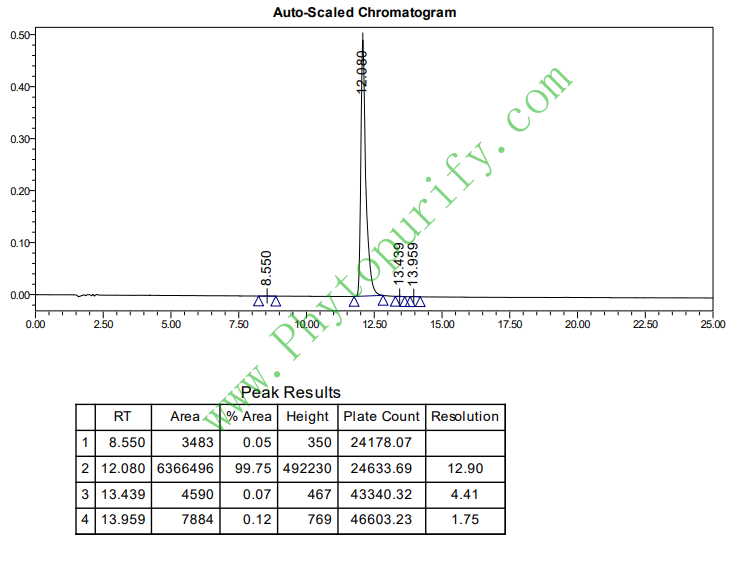
Purity: 95%~99%
Analysis Method: HPLC-DAD or/and HPLC-ELSD
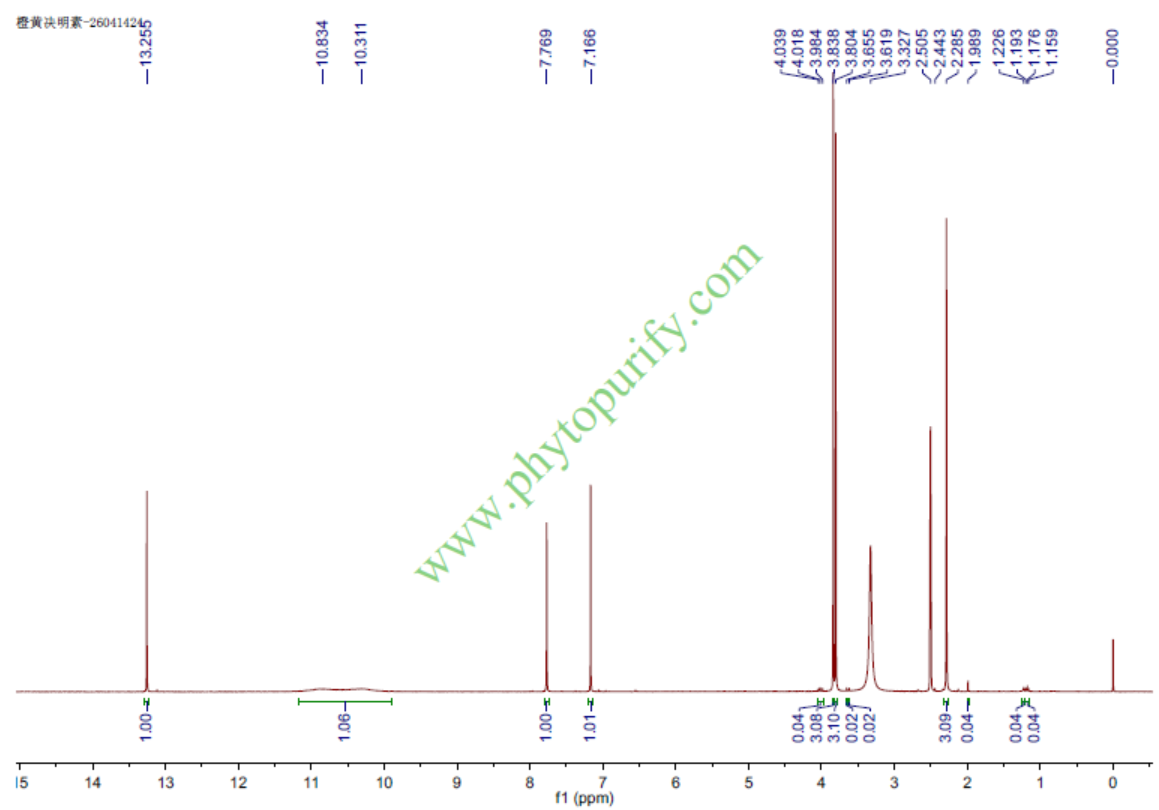
Identification Method: Mass, NMR
Packing: Brown vial or HDPE plastic bottle
Can be supplied from milligrams to grams.
For Reference Standard and R&D, Not for Human Use Directly.
Inquire for bulk scale.
HPLC of Aurantioobtusin
HNMR of Aurantioobtusin
Storage conditions:Short-term storage at 2~8℃, long-term storage at -20 ~ -80℃
Aurantioobtusin, CAS number 67979-25-3, is a natural product of trihydroxyanthraquinone with unique structural characteristics, mainly distributed in traditional Chinese medicinal materials such as Cassia obtusifolia L. As an important member of anthraquinone compounds, quercetin has attracted widespread attention due to its diverse biological activities, especially in the pharmacological fields of anti-tumor, anti-inflammatory, and antioxidant effects, showing significant potential. In recent years, with the increasing incidence of malignant hematological diseases such as acute lymphoblastic leukemia (ALL), the study of natural products for its pathological mechanism has become a hot spot. Orange cassia extract has shown potential therapeutic value in regulating various key molecular targets, especially targeting targets closely related to ALL such as UBP2, BLM, MCL1, BCL2, NOTCH1, suggesting that it may become a candidate molecule for novel anti leukemia drugs.
This article aims to systematically review the chemical structure and physicochemical properties, plant sources and extraction methods, pharmacological activity research, mechanism of action and molecular targets, pharmacological evaluation and pharmacokinetic characteristics of Cassia flavescens extract. Combined with its potential applications in diseases such as acute lymphoblastic leukemia, it explores its clinical translation prospects and future research directions, providing theoretical basis and practical guidance for the field of natural product pharmacology.
The chemical name of orange cassia extract is 1,3,7-trihydroxy-9,10-anthraquinone, with a molecular formula of C17H14O7 and a molecular weight of 330.29. Its structural characteristics include methoxy substituents at positions 2 and 8 on the anthraquinone skeleton, as well as methyl substituents at position 6, forming a unique electronic distribution and spatial configuration. This compound contains three hydroxyl groups, which endow it with strong polarity and hydrogen bonding ability. At the same time, the presence of methoxy and methyl groups regulates the balance between its lipophilicity and hydrophilicity.
In terms of physical and chemical properties, the LogP value of orange cassia extract is about 2.2, indicating that it has moderate lipid solubility, which is beneficial for cell membrane penetration and in vivo distribution. The polarization surface area (TPSA) is 118.89 Å ², reflecting its high polarity and potential number of hydrogen bond acceptors (7), which have important implications for its binding to biomolecule targets. The low blood-brain barrier permeability of this compound suggests its limited distribution in the central nervous system, which may reduce the risk of central neurotoxicity. Safety indicators such as hepatotoxicity, cardiotoxicity, and hERG channel inhibition are not yet clear and require further in vitro and in vivo evaluation.
Orange cassia extract is mainly found in the seeds and leaves of the leguminous plant Cassia obtusifolia L. Cassia seed, as a traditional Chinese medicinal herb, is widely used in clinical practices such as clearing the liver and improving vision, moistening the intestines and promoting bowel movements. Orange cassia extract, as one of its main active ingredients, bears some of the pharmacological basis.
The extraction method usually uses organic solvent extraction combined with column chromatography separation technology. Common solvents include methanol, ethanol, ethyl acetate, etc., which are optimized based on differences in solubility and polarity. The extraction process generally includes: drying and crushing of plant materials → extraction with organic solvents → concentration → separation of crude extracts → purification by silica gel column chromatography or high-performance liquid chromatography (HPLC). In recent years, the application of ultrasound assisted extraction and microwave-assisted extraction technologies has improved the extraction efficiency and purity of quercetin, while reducing the amount of solvent used and extraction time.
In addition, for the quantitative analysis of quercetin, high-performance liquid chromatography ultraviolet detection (HPLC-UV) and mass spectrometry (LC-MS/MS) are commonly used to ensure the accurate content of this component in the extract, providing technical support for subsequent pharmacological research and quality control.
The pharmacological activity research of orange cassia extract covers multiple aspects such as anti-tumor, anti-inflammatory, antioxidant, and metabolic regulation, showing a wide range of biological effects.
A large number of in vitro cell experiments have shown that quercetin has inhibitory effects on various tumor cells, especially in acute lymphocytic leukemia cell lines, showing significant cell proliferation inhibition and induction of apoptosis. Its mechanism of action involves regulating cell cycle related proteins, activating apoptotic signaling pathways, and inhibiting tumor related gene expression.
Orange cassia extract can significantly reduce the expression of inflammatory factors such as TNF - α and IL-6, and alleviate the inflammatory response. Its antioxidant activity is mainly achieved by clearing free radicals, inhibiting lipid peroxidation, and enhancing endogenous antioxidant enzyme activity, which helps to slow down cell damage and tissue inflammation.
Partial studies have shown that quercetin has regulatory effects on lipid metabolism and glucose metabolism, and can improve insulin resistance and the pathological status of fatty liver, suggesting its potential application value in metabolic syndrome related diseases.
The mechanism of action of quercetin in acute lymphocytic leukemia is closely related to its regulation of multiple key molecular targets. The relevant targets include:
UBP2(Ubiquitin-specific protease 2)Participate in protein ubiquitination modification, regulate cell cycle and apoptosis. Orange cassia extract may affect the proliferation and survival of leukemia cells by regulating UBP2 activity.
BLM (Bloom Syndrome Protein)DNA helicase, involved in DNA repair and maintenance of genome stability. Orange cassia extract may enhance DNA damage repair and induce tumor cell apoptosis by regulating BLM expression.
MCL1 and BCL2 Anti apoptotic proteins regulate cell survival. Orange cassia extract can downregulate the expression of MCL1 and BCL2, and promote apoptosis of leukemia cells.
NOTCH1 Signal transduction molecules involved in cell differentiation and proliferation. Orange cassia extract may inhibit the NOTCH1 signaling pathway and block abnormal proliferation of leukemia cells.
PTPN1 (protein tyrosine phosphatase 1)Regulating signal transduction, affecting cell metabolism and proliferation. The regulation of PTPN1 by quercetin helps to restore cellular signal balance.
MAOA (monoamine oxidase A)Participate in neurotransmitter metabolism and also affect the tumor microenvironment. Orange cassia extract may affect the metabolic status of leukemia cells by regulating MAOA activity.
APEX1 (DNA AP endonuclease)Key enzyme for DNA repair, maintaining genomic stability. The effect of quercetin on APEX1 promotes DNA damage repair and induces tumor cell death.
RECQL (RecQ like DNA helicase)and FEN1 (structure specific endonuclease)Both participate in DNA repair and replication. Orange cassia extract affects the genomic integrity of tumor cells by regulating the activity of these enzymes.
In summary, quercetin exerts a complex and effective anti-tumor mechanism by synergistically regulating the proliferation, apoptosis, and genomic stability of leukemia cells through multiple targets and pathways.
The pharmacological evaluation of Cassia flavescens extract shows that it has certain potential for drug development. The molecular weight of 330.29 conforms to the ideal range of Lipinski rule, and the LogP value of 2.2 indicates moderate lipid solubility, which is beneficial for oral absorption. Although TPSA118.89 is slightly higher, it is still within an acceptable range, indicating that it has a certain ability to penetrate cell membranes.
The number of hydrogen bond receptors is 7, indicating a strong binding ability with the target protein, but it may affect membrane permeability. The low permeability of the blood-brain barrier reduces the risk of central nervous system side effects. There is no clear data on safety indicators such as hepatotoxicity, cardiotoxicity, and hERG channel inhibition, and further in vivo toxicology and safety evaluation are needed.
In terms of pharmacokinetics, existing research is relatively limited. Preliminary in vivo experiments have shown that the absorption of quercetin is relatively fast after oral administration, with a moderate plasma half-life. It is mainly metabolized by the liver and excreted by the kidneys. Its metabolic pathway may involve phase I oxidation and phase II binding reactions. In the future, systematic ADME (absorption, distribution, metabolism, excretion) research needs to be conducted to clarify its bioavailability, tissue distribution, and metabolites, and optimize dosage form design.
As a small molecule compound of natural products, quercetin has shown broad application prospects in the treatment of malignant hematological diseases such as acute lymphoblastic leukemia due to its multi-target anti-tumor activity and superior physicochemical properties. It provides a new approach for leukemia treatment by regulating key cell apoptosis and DNA repair related targets.
The key to future clinical applications lies in thoroughly elucidating its pharmacological mechanisms, improving safety evaluations, and optimizing dosing regimens. By combining modern drug design techniques such as structural modification and nanocarrier delivery, it is expected to enhance its bioavailability and targeting, and reduce potential toxic side effects. In addition, the combination application of quercetin and existing chemotherapy drugs is also worth exploring, which may achieve synergistic effects and overcome drug resistance.
In the process of clinical translation, it is necessary to conduct systematic preclinical studies, including efficacy evaluation, toxicology testing, and pharmacokinetic analysis, to lay the foundation for clinical trials. Multi center, multi-stage clinical trials will be a key step in verifying its safety and effectiveness.
As a unique structure of trihydroxyanthraquinone natural product, Cassia flavescens has become an important object of pharmacological research in natural products due to its multi-target anti-tumor activity and good pharmacological parameters. Its potential therapeutic value in diseases such as acute lymphoblastic leukemia provides valuable resources for the development of new natural product drugs. In the future, by combining modern medicinal chemistry and molecular biology techniques, we can deeply explore the mechanism of action of quercetin and optimize its drug properties, which is expected to promote its clinical application process and benefit patients.
Continuous basic research and clinical translation work will further reveal the biological functions and drug potential of quercetin, promoting the widespread application of natural products in modern medicine.
