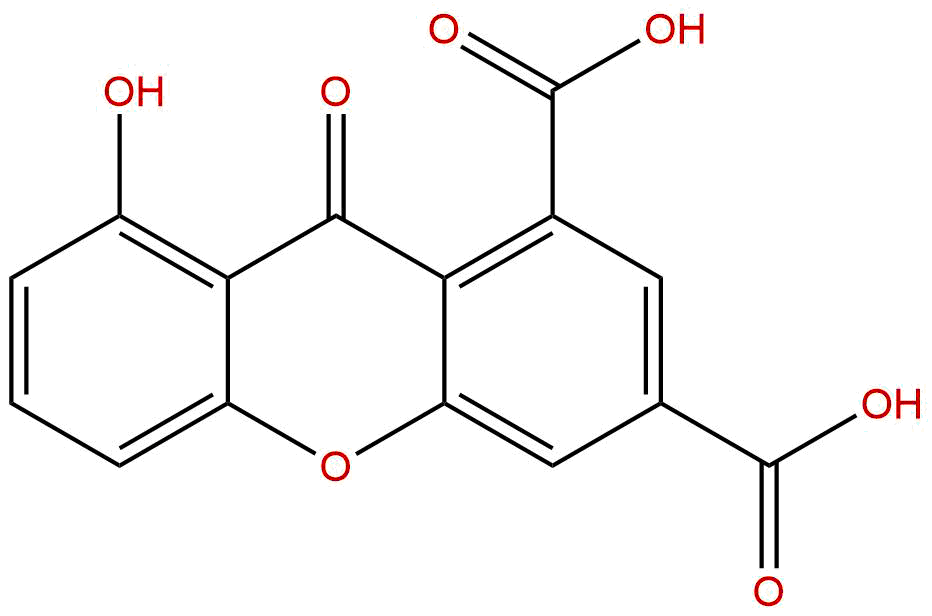
Introduction/Overview
Natural products, as an important source of drug discovery, play an irreplaceable role in the long history of human struggle against diseases. From ancient medicinal plants to the development of modern targeted drugs, the diverse secondary metabolites in nature have always been a treasure trove of innovative drug lead compounds. Among the numerous biologically active natural product families, Xanthone compounds have attracted much attention due to their unique chemical skeleton and extensive pharmacological activities. These compounds are usually found in plants such as Gentianaceae, Theaceae, and Leguminosae, exhibiting various biological activities such as anti-inflammatory, antioxidant, anti-tumor, antibacterial, and neuroprotective effects.
Cassiaxanthone, CAS number 28917-02-4, is a species of plant from the Fabaceae genus Cassiaxanthone(Cassia)Natural anthraquinone compounds obtained through separation. Its name directly points to its plant source - the genus Cassia. As one of the characteristic active ingredients in this genus of plants, quercetin has gradually entered the field of researchers in recent years. Preliminary studies suggest that the compound may have anti-inflammatory, antioxidant, and potential anti-tumor activities, but its in-depth pharmacological mechanisms, molecular targets, and systematic pharmacological evaluation are still in their infancy. Given the continuous deepening of natural product research and the urgent need for novel chemical entities (NCEs) in modern drug development, it is of great significance to systematically review the research status of quercetin and evaluate its potential as a lead compound to promote its subsequent development. This article aims to provide a comprehensive and in-depth review of the chemical structure, plant sources, extraction methods, pharmacological activities, mechanism of action, medicinal properties, and clinical application prospects of Quechuanxiong ketone, in order to provide reference for further research in this field.
Chemical structure and physicochemical properties
Xianmingshan ketone belongs to the class of anthraquinone compounds, and its core skeleton is composed of two benzene rings fused together through an oxygen-containing hexagonal heterocyclic ring (dibenzo - γ - pyranone). This tricyclic structure endows anthraquinone compounds with unique planarity and aromaticity, enabling them to undergo π - π stacking, hydrogen bonding, and hydrophobic interactions with various biomolecules such as proteins and DNA. The specific structure of quercetin usually carries substituents such as hydroxyl and methoxy groups, and the type, number, and position of these substituents directly determine its physicochemical properties and biological activity. According to existing literature, the molecular formula of quercetin is C ₁₆ H ₁₂ O ₆, with a molecular weight of 300.2200 g/mol. Its structure usually contains multiple phenolic hydroxyl groups, which gives the compound a certain polarity and acidity, while also endowing it with good antioxidant capacity - phenolic hydroxyl groups can effectively scavenge free radicals.
In terms of physical and chemical properties, based on its molecular structure, it can be inferred that quercetin is a yellow or light yellow crystalline powder with a certain melting point. Due to the presence of multiple polar groups (such as - OH) in its molecule, it has good solubility in polar solvents (such as methanol, ethanol, dimethyl sulfoxide), while its solubility in water is relatively low. The balance between lipophilicity and hydrophilicity (usually measured by the oil-water partition coefficient LogP) is crucial for its absorption, distribution, metabolism, and excretion (ADME) processes in organisms. Preliminary pharmacological parameters show that its molecular weight (300.22 Da) meets the requirement of less than 500 in Lipinski's Rule of Five, indicating its good oral absorption potential. However, key data regarding its blood-brain barrier permeability, liver toxicity, cardiac toxicity (such as hERG channel inhibition), and genetic toxicity (Ames test) are currently labeled as "Unknown", which constitutes a key gap in its pharmacological evaluation and is also a direction that needs to be prioritized for future research breakthroughs.
Plant sources and extraction methods
The main plant source of quercetin is Fabaceae, a genus of cassia in the legume family(Cassia)Plants. The genus Cassia is a vast plant group, comprising approximately 600 species, widely distributed in tropical and subtropical regions. Many plants in the Cassia genus have a long history of application in traditional medicine, such as Cassia(Cassia obtusifolia L. The seeds of () are used as medicinal herbs for clearing the liver, improving vision, moistening the intestines, and promoting bowel movements; Senna leaves(Cassia angustifolia Vahl is known for its laxative effect. Xianmingshan ketone is one of the active ingredients isolated and identified from these medicinal plants. In addition to the genus Cassia, there are reports that this compound may also exist in other plant genera, but Cassia plants are still its main and most reliable source.
Extracting quercetin from plant raw materials usually follows the classic process of natural product chemistry, which mainly includes the following steps:
- Raw material pretreatment Collect roots, stems, leaves, or seeds of plants in the Cassia genus, dry and crush them to obtain uniform plant powder.
- Solvent extraction Using the principle of "similar solubility", select appropriate organic solvents for extraction. Due to the polarity of quercetin, methanol, ethanol, or their mixed aqueous solutions are commonly used as extraction solvents. The extraction methods include cold soaking, percolation, or heating reflux extraction. In order to improve extraction efficiency and yield of target compounds, modern techniques such as ultrasound assisted extraction (UAE) or microwave-assisted extraction (MAE) are sometimes used.
- Preliminary separation and enrichment Concentrate the extract under reduced pressure to obtain the crude extract. The crude extract has complex components and contains a large amount of impurities such as pigments, oils, and sugars. Usually, liquid-liquid extraction method (such as sequential extraction with petroleum ether, ethyl acetate, and n-butanol) is used for preliminary separation, and quercetin is enriched in the moderately polar ethyl acetate or n-butanol extraction sites.
- Chromatographic Separation and Purification This is a key step in obtaining high-purity cassia mountain ketone. Common chromatographic techniques include:
- Silica gel column chromatography Using the adsorption effect of silica gel, gradient elution is carried out with different proportions of organic solvents (such as petroleum ether ethyl acetate, chloroform methanol) to achieve preliminary separation.
- Gel column chromatography Such as Sephadex LH-20, which is separated based on molecular size and commonly used for removing pigments and further purification.
- High performance liquid chromatography (HPLC)Especially preparative HPLC is the most effective method for obtaining high-purity monomer compounds (purity>98%). By optimizing the mobile phase (such as methanol water, acetonitrile water) and chromatographic column, baseline separation of quercetin from other structurally similar compounds can be achieved.
- Structural Identification The purified compound was structurally confirmed by spectroscopic methods, mainly including nuclear magnetic resonance spectroscopy (¹ H-NMR, ¹ ³ C-NMR, 2D-NMR), mass spectrometry (MS, especially high-resolution mass spectrometry HR-MS), infrared spectroscopy (IR), and ultraviolet visible spectroscopy (UV Vis). By comparing with literature data, its chemical structure was ultimately determined.
Pharmacological activity research
Although the research history of quercetin is relatively short, existing pharmacological studies have revealed its multiple biological activities, demonstrating its potential as a multi-target natural product.
1. Antioxidant activity
This is one of the most common and extensively studied activities of anthraquinone compounds. The phenolic hydroxyl group in the molecular structure of quercetin is an effective hydrogen atom donor, capable of neutralizing reactive oxygen species (ROS) and reactive nitrogen species (RNS), such as hydroxyl radicals (· OH), superoxide anions (O ₂⁻·), and peroxynitrite (ONOO ⁻). In vitro chemical experiments (such as DPPH, ABTS, FRAP methods) have confirmed its significant antioxidant capacity. This antioxidant activity is an important basis for its other pharmacological effects, such as anti-inflammatory and hepatoprotective effects.
2. Anti inflammatory activity
Inflammation is the common pathological basis of many chronic diseases (such as cardiovascular diseases, diabetes, neurodegenerative diseases). Research has shown that quercetin can inhibit the production of nitric oxide (NO) and prostaglandin E ₂ (PGE ₂) in macrophages (such as RAW 264.7 cells) stimulated by lipopolysaccharide (LPS). The mechanism may be related to the inhibition of the expression of inducible nitric oxide synthase (iNOS) and cyclooxygenase-2 (COX-2). In addition, it may also reduce the release of downstream pro-inflammatory cytokines such as TNF - α, IL-1 β, IL-6 by inhibiting the activation of nuclear factor kappa B (NF - κ B) or mitogen activated protein kinase (MAPK) signaling pathways.
3. Antitumor activity
Preliminary cell experiments showed that Cassia obtusifolia had a proliferation inhibitory effect on some tumor cell lines (such as HepG2, MCF-7, and HT-29). Its mechanism of action may involve multiple aspects: inducing cell cycle arrest (such as blocking cells in G0/G1 or G2/M phases), inducing cell apoptosis (by activating Caspase family proteins and regulating the Bcl-2/Bax ratio), inhibiting tumor cell migration and invasion (possibly by downregulating the expression of matrix metalloproteinase MMP-2/9). However, current research mostly remains at the cellular level in vitro, lacking validation through in vivo animal models, and its anti-tumor spectrum and selectivity also need further clarification.
4. Antibacterial activity
Some studies have reported that quercetin has certain inhibitory effects on certain bacteria and fungi. For example, it may be effective against Staphylococcus aureus(Staphylococcus aureus)Bacillus subtilis(Bacillus subtilis)Gram positive bacteria exhibit inhibitory activity, but their activity against Gram negative bacteria is usually weak. Its antibacterial mechanism may be related to the destruction of bacterial cell membrane integrity or inhibition of key bacterial enzyme activity.
5. Other activities
In addition, there are sporadic reports suggesting that quercetin may have activities such as hepatoprotective, hypoglycemic, or neuroprotective effects. For example, in liver cell injury models, it may alleviate liver injury through antioxidant and anti-inflammatory effects; In diabetes model, it may delay carbohydrate absorption by inhibiting α - glucosidase activity. But these findings still require more and more systematic research to confirm.
Mechanism of action and molecular targets
A deep understanding of the mechanism of action and molecular targets of quercetin is key to transforming it from a natural product into a lead compound. At present, research on its molecular mechanism is not yet in-depth, but based on its structural characteristics and limited pharmacological data, its possible mode of action can be inferred.
1. Signal pathway regulation
- NF - κ B pathway NF - κ B is a core transcription factor in inflammation and immune response. In the resting state, NF - κ B binds to I κ B protein and exists in an inactive form in the cytoplasm. When stimulated by LPS, TNF - α, etc., I κ B kinase (IKK) is activated, leading to phosphorylation and degradation of I κ B, releasing NF - κ B into the nucleus and initiating transcription of target genes (such as iNOS, COX-2, TNF - α). Kaempferol may exert anti-inflammatory effects by inhibiting the activity of IKK or preventing the degradation of I κ B, thereby blocking the nuclear translocation of NF - κ B.
- MAPK pathway The MAPK family includes three main pathways: ERK, JNK, and p38, which are involved in regulating cell proliferation, differentiation, apoptosis, and inflammatory response. Research has shown that certain anthraquinone compounds can inhibit LPS induced phosphorylation of p38 and JNK, thereby reducing the production of inflammatory mediators. Quercetin may have a similar effect.
- PI3K/Akt/mTOR pathway This pathway is a key signaling pathway that regulates cell growth, proliferation, and survival, and is abnormally activated in various cancers. Kaempferol may inhibit the activity of mTOR and induce autophagy or apoptosis in tumor cells by suppressing the phosphorylation of PI3K or Akt.
2. Direct molecular targets
- Enzyme inhibition Based on its planar aromatic ring structure, quercetin may serve as an inhibitor for certain enzymes. For example, it may directly bind to targets such as iNOS, COX-2, alpha glucosidase, or topoisomerase, inhibiting their catalytic activity. Molecular Docking technology is a powerful tool for predicting its binding mode with potential targets, but further enzymatic experiments such as surface plasmon resonance (SPR) and isothermal titration calorimetry (ITC) are needed for validation.
- Receptor regulation Although there are few reports, it cannot be ruled out that quercetin may interact with certain cell surface receptors (such as Toll like receptor TLR4, estrogen receptor ER) or nuclear receptors (such as peroxisome proliferator activated receptor PPAR γ) to regulate downstream signals.
3. Epigenetic regulation
In recent years, the impact of natural products on epigenetic modifications has received increasing attention. Whether quercetin can alter chromatin status and gene expression by inhibiting the activity of histone deacetylase (HDAC) or DNA methyltransferase (DNMT) is a new direction worth exploring.
Overall, the mechanism of action of quercetin exhibits the characteristics of "multi-target and multi pathway", which is not only the advantage of natural products (possibly producing synergistic effects and reducing drug resistance), but also poses challenges for the in-depth study of its mechanism. In the future, it is necessary to combine systems biology methods such as transcriptomics and proteomics, as well as molecular biology techniques such as gene knockout/knock in, to accurately depict their functional networks and key targets.
Evaluation of drug properties and pharmacokinetics
To become a candidate drug, a compound not only needs to have excellent pharmacological activity, but also must have good drug affinity and acceptable pharmacokinetic (ADME) properties. For quercetin, research in this area is the biggest bottleneck in its transition from an "active compound" to a "lead compound".
1. Analysis of drug properties
According to Lipinski's Five Rules, the molecular weight (300.22 Da<500), number of hydrogen bond donors (phenolic hydroxyl groups, usually>5? Require specific structural confirmation, but generally the number of hydrogen bond donors for anthraquinone compounds is between 3-5), number of hydrogen bond acceptors (oxygen atoms, usually<10), and lipid water partition coefficient (LogP, to be experimentally determined, predicted values may be between 2-4) of quercetin are all within an acceptable range. This indicates that it theoretically has good potential for oral bioavailability. However, the Five Rules are only a preliminary screening criterion and cannot fully represent the actual internal behavior.
2. Key ADME features
- absorb The poor water solubility of quercetin may be the main factor limiting its oral absorption. What is its permeability? Is it active transport or passive diffusion? Is it a substrate for P-glycoprotein (P-gp)? These questions are not clear.
- distribution The plasma protein binding rate and apparent volume of distribution (Vd) are unknown. Especially the blood-brain barrier (BBB) permeability is labeled as "Unknown", which is crucial for evaluating its potential applications in central nervous system diseases such as neurodegenerative diseases.
- Metabolism The liver is the main organ for drug metabolism. The phenolic hydroxyl group of quercetin is a potential site for phase I metabolism (such as glucuronidation and sulfation) and phase II metabolism (such as methylation). Will it be metabolized by the cytochrome P450 enzyme system (CYP450)? Are metabolites active or toxic? These are all unknowns. The liver toxicity is marked as "Unknown", indicating that its liver safety needs to be evaluated.
- excretion Is Quercetin and its metabolites mainly excreted through bile or kidneys? What is its half-life (t ₁/₂)? These data are completely blank.
3. Safety evaluation
- cardiotoxicity HERG (human Ether - à - go Related Gene) potassium channel inhibition is the main cause of drug-induced QT interval prolongation and fatal arrhythmias (apical torsion ventricular tachycardia). The inhibitory activity of quercetin on hERG channels is "unknown", which is a high-risk item in its safety evaluation and must be evaluated first through in vitro hERG patch clamp experiments.
- Genotoxicity Ames test is a standard method for detecting the mutagenicity of compounds. The result is' Unknown ', indicating that its potential genetic toxicity risk is unknown. If the compound exhibits anti-tumor activity, it may act through DNA damage mechanisms, but this can also pose a risk of carcinogenesis. Therefore, Ames test is necessary.
- Other toxicities Acute toxicity, subchronic toxicity, reproductive toxicity, etc. have not been investigated.
4. Structural modification and optimization
Given the potential issues with the solubility, metabolic stability, and potential toxicity of quercetin, medicinal chemists can improve its pharmacological properties through structural modifications. For example:
- Introducing hydrophilic groups Introduce amino, carboxyl, or sugar groups at appropriate positions to improve water solubility.
- Block metabolic sites Methylation or ethylation of easily metabolized phenolic hydroxyl groups to improve metabolic stability.
- Prodrug design Convert phenolic hydroxyl groups into phosphate or amino acid ester prodrugs to improve water solubility and oral absorption, and release the original drug after enzymatic hydrolysis or hydrolysis in the body.
Clinical application prospects and prospects
Although the research on quercetin is still in its early stages, its unique chemical structure and preliminarily discovered pharmacological activity provide imaginative space for its application prospects in multiple disease fields.
1. Inflammatory diseases
Based on its anti-inflammatory activity, quercetin or its derivatives have the potential to be developed as drugs for treating chronic inflammatory diseases such as rheumatoid arthritis, inflammatory bowel disease (IBD), or asthma. Its multi-target anti-inflammatory mechanism may have lower gastrointestinal side effects than single target nonsteroidal anti-inflammatory drugs (NSAIDs).
2. Tumor adjuvant therapy
Although its direct anti-tumor activity may not be strong enough, quercetin can be used as a chemotherapy sensitizer or radiotherapy sensitizer, in combination with existing chemotherapy drugs such as cisplatin and doxorubicin, to reduce the dosage and toxic side effects of chemotherapy drugs, or to reverse multidrug resistance (MDR) of tumors. In addition, its antioxidant activity also makes it potential as a cancer preventive agent.
3. Metabolic disorders
Its inhibitory activity on α - glucosidase suggests that it may be used for the treatment of type 2 diabetes. In addition, its antioxidant and anti-inflammatory activities may also have a protective effect on the complications of diabetes, such as nephropathy and retinopathy.
4. Neurodegenerative diseases
If its BBB permeability problem can be solved, the antioxidant and anti-inflammatory properties of quercetin make it potentially valuable in the treatment of Alzheimer's disease (AD) and Parkinson's disease (PD). It may exert neuroprotective effects by inhibiting β - amyloid (A β) aggregation, clearing free radicals, and suppressing neuroinflammation.
Future research directions and challenges:
- Systematic pharmacological research It is necessary to expand from in vitro cell experiments to in vivo animal models (such as mouse inflammation models and xenograft tumor models), verify their in vivo efficacy, and determine their dose-response relationship.
- In depth mechanism research Using methods such as chemical biology and proteomics, identify its direct molecular targets and elucidate its precise mechanism of action.
- Comprehensive ADME/Tox evaluation This is currently the most urgent task. It is necessary to systematically conduct in vitro ADME experiments (such as Caco-2 cell permeability, liver microsomal stability, CYP450 inhibition/induction), hERG safety evaluation, Ames test, as well as preliminary animal pharmacokinetic and acute toxicity experiments.
- Pharmaceutical Chemistry Optimization Based on the ADME/Tox evaluation results, reasonable structural modifications were carried out to synthesize a series of derivatives, and structure-activity relationship (SAR) studies were conducted in order to obtain lead compounds with higher activity, better selectivity, and better drug properties.
- Biological synthesis research Elucidating the biosynthetic pathway of quercetin in plants can help achieve efficient and green large-scale production through synthetic biology techniques, freeing it from dependence on plant resources.
Conclusion
As an important natural anthraquinone compound in leguminous plants of the Cassia genus, Xianmingshan ketone has demonstrated its potential as a lead compound for drugs due to its unique chemical structure and multiple pharmacological activities such as antioxidant, anti-inflammatory, and anti-tumor. However, the current research status is like the tip of the iceberg, with a large number of gaps in its in-depth pharmacological mechanisms, precise molecular targets, and crucial drug efficacy evaluation (especially ADME/Tox characteristics). The journey from "natural products" to "innovative drugs" is full of opportunities, but also accompanied by enormous challenges. Future research must shift its focus from simple activity screening to systematic drug efficacy evaluation and in-depth mechanism exploration. Only through the collaborative research and development of multiple disciplines such as medicinal chemistry, pharmacology, pharmacokinetics, and toxicology can the true value of quercetin be scientifically evaluated, and ultimately determine whether it can move from the laboratory to clinical practice and contribute to human health. In the vast expanse of natural medicinal chemistry, whether the "star" of quercetin can truly shine still requires the test of time and the unremitting efforts of researchers.