Introduction/Overview
Hyperlipidemia, especially abnormal lipid metabolism characterized by elevated low-density lipoprotein cholesterol (LDL-C), is the core risk factor for the occurrence and development of atherosclerotic cardiovascular disease (ASCVD). Although statins have significantly reduced the risk of cardiovascular events as first-line lipid-lowering drugs, they still have limitations such as abnormal liver enzymes, muscle toxicity, poor response or tolerance in some patients. In addition, existing therapies are often insufficient for difficult to treat dyslipidemia such as familial hypercholesterolemia. Therefore, exploring novel lipid-lowering lead compounds with novel structures, diverse mechanisms of action, and good safety from natural products has always been an important direction for drug development.
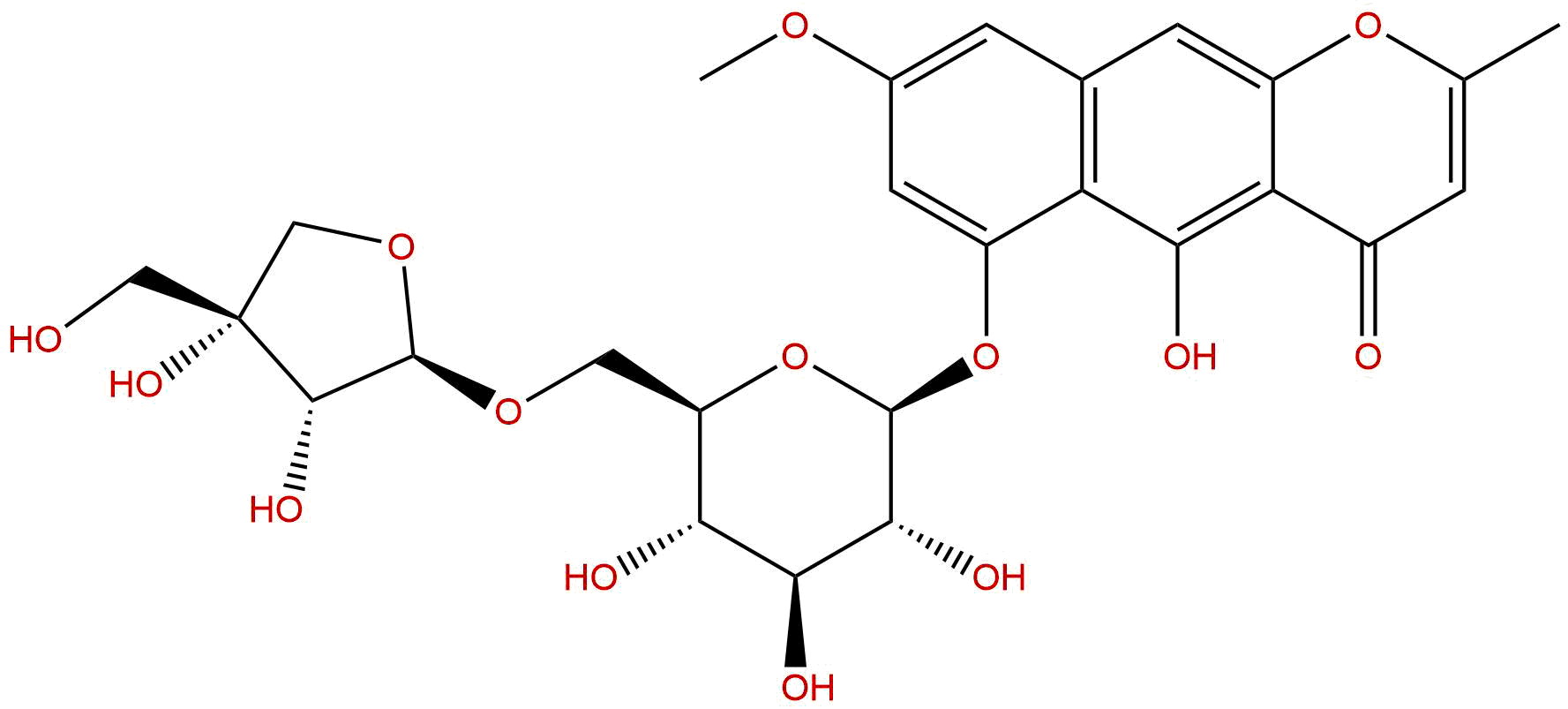
Cassia seed, as a traditional Chinese medicine, was first recorded in the "Shennong Bencao Jing" and has the effects of clearing heat, improving vision, moistening the intestines, and promoting bowel movements. Modern research has also confirmed its definite lipid-lowering activity. Cassiaside B is a naphthopyranone glycoside compound isolated from Cassia seed, with a CAS number of 119170-51-3. Early studies suggested that it has potent antibacterial activity, but in recent years, with the in-depth exploration of the multi-target properties of natural products, the potential of Cassia seed glycoside B in regulating lipid metabolism has gradually received attention. Its unique chemical structure may synergistically exert lipid-lowering effects by intervening in multiple key targets such as cholesterol ester transfer protein (CETP), hydroxymethylglutaryl-CoA reductase (HMGCR), low-density lipoprotein receptor (LDLR), etc., demonstrating great potential as a lead compound for novel multi-target lipid-lowering drugs. This article aims to systematically review the chemical properties, pharmacological activities, mechanisms of action, and medicinal properties of Cassia seed glycoside B, providing a scientific basis for its subsequent research and development.
Chemical structure and physicochemical properties
Cassia seed glycoside B is a typical naphthopyranone glycoside compound. Its parent nucleus structure is naphtho [2,3-b] pyran-9,10-dione, which belongs to the derivatives of anthraquinone compounds. At specific positions of the mother nucleus (usually C-8 or C-10), glycosides are connected through glycosidic bonds, commonly glucose or rhamnose, which significantly increase its polarity, unlike free anthraquinone components.
Based on its molecular weight (566.5120 Da) and structural characteristics, it is inferred that the molecular formula of Cassia seed glycoside B may be C ₂₇ H ∝₄ O ₁₄. The calculated lipid water partition coefficient (LogP) is -0.0827, indicating that the compound has a high degree of hydrophilicity, which is closely related to the introduction of polar sugar groups into the molecule. Its topological polar surface area (TPSA) is as high as 217.9700 Å ², further confirming the presence of a large number of hydrogen bond donors and acceptors (mainly from sugar and carbonyl groups) on its molecular surface, which determines its good water solubility (predicted value of about 1.3595 mg/mL).
These physicochemical properties directly affect their biological activity and pharmacokinetic behavior. The high water solubility and polarity make it easy to dissolve in the gastrointestinal tract, which is beneficial for oral absorption, but may also limit its transmembrane passive diffusion ability. Its larger TPSA and hydrophilic characteristics indicate a weaker ability to penetrate the blood-brain barrier (predicted as "low"), which typically means a lower risk of potential central nervous system side effects for lipid-lowering drugs that primarily target peripheral lipid metabolism.
Plant sources and extraction methods
Cassia seed glycoside B is mainly derived from plants of the Cassia genus in the legume family, and its main medicinal source is Cassia seed(Cassia obtusifolia L. Or Xiao Jueming(Cassia tora L. The dried and mature seeds of Cassia seed, also known as the traditional Chinese medicine "Cassia seed". This compound usually coexists with other structurally similar naphthopyranone glycosides (such as Cassia glycosides A, C, etc.) and free anthraquinones (such as emodin, emodin methyl ether, etc.) in Cassia seed.
The extraction and separation of Cassia seed glycoside B from Cassia seed usually follow the conventional process of natural product chemistry, which mainly includes the following steps:
1. Extract Polar solvents such as methanol, ethanol, or aqueous ethanol are commonly used for reflux extraction or ultrasound assisted extraction of crushed cassia seeds. In recent years, green extraction technologies such as supercritical CO ₂ fluid extraction (with entrainers) and pressurized solvent extraction have also been applied to improve efficiency and reduce organic solvent residue.
2. Enrichment and Separation After vacuum concentration, the crude extract is preliminarily enriched using macroporous adsorption resins (such as D101, AB-8), and gradient elution is commonly performed with water and different concentrations of ethanol. Cassia seed glycoside B is usually eluted in the medium to high concentration ethanol elution sites. Further purification relies on various chromatographic techniques:
* column chromatography: Silica gel, reversed silica gel (such as ODS), polyamide or dextran gel (Sephadex LH-20) are often used as stationary phases for repeated column chromatography.
* High performance liquid chromatography Preparation type high performance liquid chromatography (Prep HPLC) is a key step in obtaining high-purity Cassia seed glycoside B. It usually uses a reverse phase C18 chromatography column with methanol water or acetonitrile water (often containing a small amount of formic acid or acetic acid to improve peak shape) as the mobile phase for isocratic or gradient elution.
3. appraisal The isolated monomeric compounds were structurally confirmed by various spectroscopic techniques, including mass spectrometry (MS, especially high-resolution mass spectrometry HR-MS to determine molecular weight and formula), nuclear magnetic resonance (NMR, including ¹ H-NMR, ¹ ³ C-NMR, and 2D-NMR such as HSQC, HMBC to determine planar and stereo structures), ultraviolet (UV), and infrared (IR) spectroscopy.
Pharmacological activity research
Early research reports indicate that Cassia seed glycoside B has significant Antibacterial activity It exhibits strong inhibitory ability against Gram positive bacteria such as Staphylococcus aureus, Bacillus subtilis, and certain fungi, and its mechanism may be related to interference with microbial cell membrane function or energy metabolism.
However, in recent years, the focus of research has shifted towards it Hypolipidemia and related metabolic regulatory activity Multiple in vitro and in vivo pharmacological studies have revealed the significant efficacy of Cassia seed glycoside B in this regard:
* In vitro research In liver cell models such as HepG2, Cassia seed glycoside B can dose dependently reduce intracellular lipid accumulation and inhibit the synthesis of triglycerides (TG) and total cholesterol (TC). Meanwhile, it can promote the uptake of fluorescently labeled LDL by liver cells, suggesting that it may enhance the LDLR pathway.
* In vivo research In high-fat diet induced obesity/hyperlipidemia mouse or rat models, oral administration of Cassia seed glycoside B can effectively reduce serum levels of TC, TG, and LDL-C, and increase high-density lipoprotein cholesterol (HDL-C) to varying degrees. In addition, it can improve liver steatosis, reduce liver weight and lipid content, and exhibit anti fatty liver effects. Its lipid-lowering effect is positively correlated within a certain dosage range, and compared with positive control drugs such as simvastatin, it exhibits unique multi-target action characteristics.
In addition to its direct lipid-lowering effect, research also suggests that Cassia seed glycoside B may have antioxidant and anti-inflammatory Activity. It can clear free radicals such as DPPH and ABTS, and reduce oxidative stress markers (such as MDA) in the serum or liver of animal models of hyperlipidemia, while enhancing the activity of antioxidant enzymes (such as SOD and GSH Px). At the same time, it can inhibit the expression of pro-inflammatory factors (such as TNF - α, IL-6), which is of great significance in alleviating inflammation in the process of atherosclerosis.
Mechanism of action and molecular targets
The lipid-lowering effect of Cassia seed glycoside B is not achieved through a single pathway, but involves the coordinated regulation of multiple links such as cholesterol synthesis, transport, uptake, and clearance. Its target network mainly includes:
- Inhibition of cholesterol synthesis rate limiting enzyme - HMGCR Similar to statins, Cassinoside B may competitively inhibit the activity of HMGCR and reduce the synthesis of endogenous cholesterol in cells. This is not only a direct pathway to lower cholesterol, but more importantly, the decrease in intracellular cholesterol levels triggers a series of feedback adjustments.
- Upregulation of low-density lipoprotein receptor (LDLR)A decrease in intracellular cholesterol activates the sterol regulatory element binding protein-2 (SREBP-2) pathway, leading to an increase in the expression of LDLR on the cell membrane surface. LDLR is a key receptor for clearing circulating LDL particles, and upregulation of its expression can accelerate liver uptake and degradation of LDL-C, thereby significantly reducing plasma LDL-C levels.
- Regulating apolipoprotein and lipoprotein metabolism:
- Affects APOB and PCSK9 Cassia seed glycoside B may reduce the synthesis or secretion of the major structural protein APOB of very low-density lipoprotein (VLDL), thereby reducing the production of TG rich lipoproteins. At the same time, studies suggest that it may inhibit the expression or activity of the pre protein converting enzyme subtilisin 9 (PCSK9). PCSK9 can bind and promote lysosomal degradation of LDLR, while inhibition of PCSK9 can stabilize LDLR and further enhance its ability to clear LDL.
- Affects CETP and APOE Cassia seed glycoside B may inhibit the activity of cholesterol ester transfer protein (CETP). CETP promotes the transfer of cholesterol esters from HDL to LDL/VLDL, and inhibition of CETP can increase HDL-C and reduce the cholesterol content of atherogenic lipoproteins. In addition, as a key ligand for lipoprotein metabolism, the expression of apolipoprotein E (APOE) may also be regulated, affecting the clearance of chylomicron remnants and intermediate density lipoprotein (IDL).
- Activate nuclear receptor PPAR αCassia seed glycoside B may act as an agonist of peroxisome proliferator activated receptor alpha (PPAR alpha). After activation of PPAR α, it can promote fatty acid oxidation, reduce TG synthesis, increase lipoprotein lipase (LPL) activity, and upregulate the expression of the main apolipoprotein APOA-I in HDL, thereby comprehensively regulating lipid metabolism, reducing TG, and increasing HDL-C.
In summary, Cassia seed glycoside B exerts a synergistic lipid-lowering and lipid-lowering effect through a multidimensional network of "inhibition of synthesis (HMGCR) - promotion of clearance (upregulation of LDLR, inhibition of PCSK9) - improvement of transport (inhibition of CETP) - activation regulation (PPAR α)".
Evaluation of drug properties and pharmacokinetics
Based on computational chemistry and preliminary experimental data, a preliminary evaluation of the pharmacological properties of D-glucoside B is conducted
* drug-likeness Its molecular weight (566.5) is slightly higher than the ideal range (<500), but still within an acceptable range. The extremely low LogP value and high TPSA are its most significant features, which ensure good water solubility and minimal permeability limitations, meeting certain requirements for oral medication, but may also affect its transmembrane absorption.
* Preliminary Safety Prediction According to existing computational models, it is predicted that Cassia seed glycoside B has no significant inhibitory effect on hERG potassium channels (predicted as "no"), indicating a low risk of inducing QT interval prolongation and apical torsion type ventricular tachycardia, which is an important cardiac safety advantage. The predicted value of Ames test is 1.5 (usually considered to have mutagenic risk, approaching this threshold), indicating that its genetic toxicity risk needs to be empirically evaluated through rigorous experiments such as in vitro Ames test and micronucleus test.
* Pharmacokinetic prediction Its high hydrophilicity and large TPSA properties indicate that its oral bioavailability may be moderate or low, mainly limited by the passive permeability of intestinal epithelial cells. In the body, glycosidic bonds may be partially hydrolyzed by glycosidases in gut microbiota or tissues to generate aglycones, which are lipophilic and may have different distribution and activity characteristics. The specific absorption, distribution, metabolism, and excretion (ADME) processes of its prototype drug and metabolites, including plasma protein binding rate, major metabolic organs and pathways, half-life, etc., still need to be elucidated through systematic pharmacokinetic studies.
Clinical application prospects and prospects
Cassia seed glycoside B, as a natural lead compound with multi-target lipid-lowering activity, has broad clinical application prospects, but also faces challenges.
prospect:
1. Development of new multi-target lipid-lowering drugs Drugs targeting a single target (such as statins for HMGCR and PCSK9 inhibitors for PCSK9) can sometimes be difficult to fully control complex dyslipidemia. The multi-target synergistic effect of Cassia seed glycoside B may make it more effective in treating mixed hyperlipidemia, especially in patients with low HDL-C or high TG.
2. Combined use with statins If its mechanism of action is clear and its safety is good, it can be used as an adjuvant therapy for statins. It can be combined with lower doses of statins to achieve better lipid-lowering effects while reducing the risk of statin related myopathies and other side effects.
3. Modernization of Traditional Chinese Medicine and Quality Markers In depth research on Cassia seed glycoside B can provide a clear material basis for the lipid-lowering effect of its source medicinal herb Cassia seed, promote its standardization and modernization as a therapeutic drug, and the compound itself can also serve as an important indicator component (Q-Marker) for quality control of Cassia seed medicinal herbs and their preparations.
Challenges and Prospects:
1. Optimization of drug properties Its high polarity and molecular weight may limit oral bioavailability. Future research can improve lipid solubility and membrane permeability while maintaining activity through structural modifications, such as modifying sugar groups or preparing prodrugs.
2. In depth study on the mechanism of action At present, its multi-target effects are mostly speculated based on phenotype and some molecular biology experiments, requiring more direct evidence such as target binding experiments (SPR, ITC), eutectic structure analysis, gene knockout/knockdown validation, etc., to accurately elucidate its interaction mode and strength with targets such as CETP, PCSK9, PPAR α, etc.
3. Preclinical and clinical evaluation of the system Comprehensive preclinical studies must be completed, including standardized pharmacodynamic (different animal models), toxicological (acute, subacute, long-term toxicity), pharmacokinetic, and safety pharmacological evaluations. Especially for its potential genetic toxicity (Ames test predicted values need to be confirmed experimentally) and long-term medication safety, strict evaluation should be conducted.
4. Explore new indications Based on its antioxidant and anti-inflammatory activities, we can further explore its therapeutic potential in nonalcoholic fatty liver disease (NAFLD), atherosclerotic plaque stability and other aspects.
Conclusion
Cassia seed glycoside B is a naphthopyranose glycoside compound with important research value discovered from traditional Chinese medicine Cassia seed. It surpasses early understanding of antibacterial activity and demonstrates unique advantages in regulating lipid metabolism by synergistically intervening in multiple key targets such as CETP, HMGCR, LDLR, PCSK9, PPAR α, etc. Although its good water solubility and predicted cardiac safety lay the foundation for its drug development, its high polarity, potential metabolic stability issues, and proven genetic toxicity risks are challenges that must be faced in future development. Through in-depth chemical biology research to elucidate its precise mechanism of action, combined with rational drug chemistry methods for structural optimization, and conducting systematic and standardized preclinical evaluations, Cassia seed glycoside B is expected to develop into a new type of lipid-lowering drug lead compound with novel mechanism of action, multi-target synergy, and good safety, providing a new choice for the prevention and treatment of cardiovascular diseases, and also providing an example for the modernization research of active ingredients in traditional Chinese medicine.