Introduction/Overview
Alzheimer's disease (AD) is a neurodegenerative disease characterized by progressive cognitive impairment and memory loss, which has become a major challenge in the global public health field. With the acceleration of population aging, the incidence of AD is increasing year by year, bringing heavy economic and care burdens to patients, families, and society. Despite the continuous development of drugs targeting pathological hypotheses such as β - amyloid (A β) deposition, excessive phosphorylation of Tau protein, oxidative stress, and neuroinflammation over the past few decades, there is still a lack of disease modifying therapies that can effectively reverse or delay disease progression. Existing clinical drugs such as cholinesterase inhibitors and N-methyl-D-aspartate receptor antagonists can only partially improve symptoms and are accompanied by varying degrees of side effects. Therefore, searching for novel structures, unique mechanisms of action, and high safety anti AD lead compounds from natural products has become an important direction for new drug development.
Among numerous natural products, it comes from the traditional Chinese medicine Cassia seed(Cassia obtusifolia L. Or Cassia tora L. The anthraquinone and naphthoquinone components of [compound name] have attracted much attention due to their diverse biological activities. Cassiaside (CAS number: 13709-03-0) is one of the representative naphthol glycosides. In recent years, studies have found that cassia seed glycosides exhibit significant inhibitory activity against β - secretase 1 (BACE1), with a half maximal inhibitory concentration (IC ₅₀) of 4.45 μ M, an inhibition constant (Ki) of 9.85 μ M, and a mixed inhibition type. BACE1 is a key rate limiting enzyme that catalyzes the generation of A β from amyloid precursor protein (APP), therefore, BACE1 inhibitors are considered one of the core targets for developing anti AD drugs. In addition, cassia seed glycosides have shown potential for multi-target regulation related to antioxidant defense networks, involving nuclear factor E2 related factor 2 (NFE2L2/NRF2), superoxide dismutase (SOD1/SOD2), catalase (CAT), glutathione peroxidase 1 (GPX1), heme oxygenase 1 (HMOX1), and matrix metalloproteinases (MMP1/MMP3). This multi-target characteristic gives it a unique advantage in dealing with the complex pathological network of AD.
This review aims to systematically sort out the chemical structure, plant origin, pharmacological activity, mechanism of action, and pharmacological characteristics of Cassia seed glycoside, and explore its clinical application prospects and potential challenges as an anti AD candidate molecule in combination with the current bottleneck in AD drug development, in order to provide reference for in-depth research on natural product derived BACE1 inhibitors.
Chemical structure and physicochemical properties
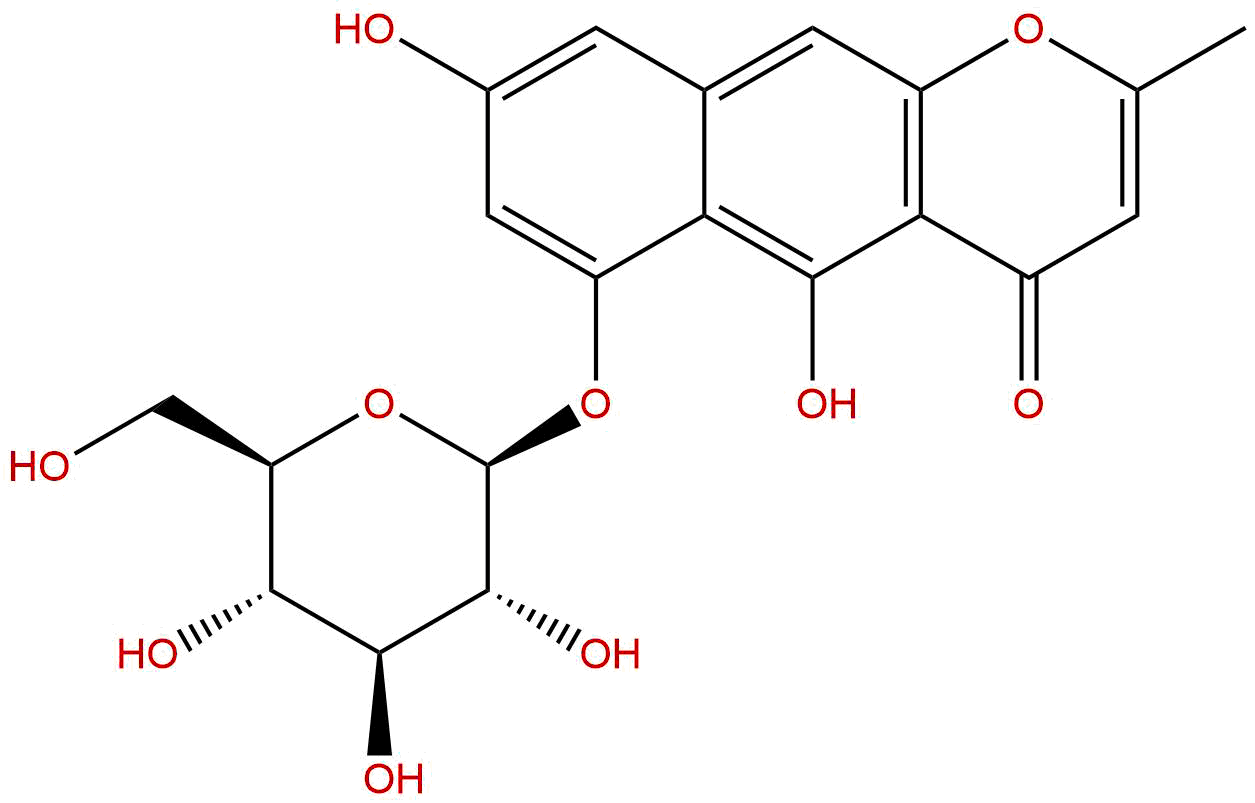
Cassia seed glycoside belongs to the class of naphthol glycosides, and its chemical structure is composed of naphthol glycosides and glycosyl units connected by glycosidic bonds. From a structural classification perspective, naphthoquinone compounds are an important class of secondary metabolites in plants of the Cassia genus, closely related to anthraquinone compounds in the biosynthesis pathway. The molecular formula of Cassia seed glycoside is C ₂₁ H ₂₄ O ₉, with a molecular weight of 420.3700 g/mol. The naphthalene methyl ketone parent nucleus in its structure endows the molecule with certain planarity and aromaticity, while the introduction of the sugar moiety significantly enhances the polarity and water solubility of the molecule.
In terms of physicochemical properties, the lipid water partition coefficient (LogP) of Cassia seed glycoside is 0.2523, indicating its strong hydrophilicity and low lipid solubility. This characteristic is highly consistent with the structural feature of having multiple hydroxyl groups and one sugar unit in its molecule. The topological polar surface area (TPSA) is 170.0500 Å ², which is much higher than the threshold for passive diffusion across the blood-brain barrier (usually TPSA<90 Å ²). This suggests that its ability to penetrate the blood-brain barrier may be limited at the molecular structure level. The water solubility parameter (1.7342) further confirms its good solubility in aqueous environments, which is of positive significance for the development of drug formulations and the design of in vivo administration routes.
The UV absorption characteristics of Cassia seed glycosides mainly come from the conjugated system of their naphthoquinone parent nucleus, which usually exhibits characteristic absorption peaks in the range of 220-280 nm and 300-400 nm. This property can be used for their qualitative and quantitative analysis. In terms of stability, as a glycoside compound, cassia seed glycosides may undergo glycosidic bond cleavage under acidic or enzymatic conditions, generating aglycones and glycosyl moieties, which have important implications for their metabolic fate in the gastrointestinal environment. Overall, the chemical structure of cassia glycoside determines its hydrophilicity and a certain degree of molecular rigidity, which provides spatial and energy possibilities for its interaction with BACE1 active sites.
Plant sources and extraction methods
Cassia seed glycosides are mainly derived from plants of the Cassia genus in the legume family, with the two most common medicinal plants being Cassia crenulata(Cassia obtusifolia L. ) and Decisive(Cassia tora L.)。 The dried and mature seeds of these two plants are collectively referred to as "cassia seeds" in traditional Chinese medicine clinical practice. They have the effects of clearing the liver, improving vision, moistening the intestines, and promoting bowel movements. They have been used for a long time to treat symptoms such as redness, pain, headache, dizziness, and constipation. Modern plant chemistry research has shown that cassia seeds are rich in anthraquinones (such as emodin, emodin, and emodin methyl ether), naphthophenones (such as cassia glycosides and cassia lactones), as well as various chemical components such as polysaccharides and proteins. Among them, the content of naphthoquinone components in seeds is relatively high, which is one of the characteristic components that distinguishes Cassia seed from other anthraquinone medicinal materials.
The distribution of Cassia seed glycosides in plants has certain tissue specificity, mainly enriched in seeds, while the content is lower in nutrient organs such as stems and leaves. Its content is influenced by various factors, including plant variety, place of origin, harvesting time, storage conditions, etc. Generally speaking, the content of quercetin in mature seeds is higher than that in immature seeds, which may be related to the accumulation pattern of secondary metabolites during seed maturation. Differences in climate and soil conditions in different regions can also lead to significant fluctuations in the content of Cassia seed glycosides.
In terms of extraction methods, the traditional extraction process of Cassia seed glycosides often uses organic solvent extraction. Due to its water solubility and the presence of multiple hydroxyl groups in its molecule, cassia seed glycosides are commonly extracted using methanol, ethanol, or aqueous ethanol as solvents. The typical extraction process includes: crushing the seeds of Cassia seed, soaking or refluxing them in a 70% -80% ethanol aqueous solution at room temperature or heating conditions, concentrating the extract under reduced pressure, and sequentially extracting it with solvents such as petroleum ether, ethyl acetate, and n-butanol to remove lipophilic impurities and moderately polar components. Cassia seed glycoside is mainly enriched in the n-butanol extraction fraction. Subsequently, cassia saponin monomer can be further purified by silica gel column chromatography, Sephadex LH-20 gel column chromatography, reverse phase C18 column chromatography and other separation methods, combined with thin layer chromatography (TLC) and high performance liquid chromatography (HPLC) monitoring.
In recent years, with the promotion of the concept of green chemistry, new extraction technologies such as ultrasound assisted extraction, microwave-assisted extraction, and supercritical fluid extraction have also been attempted to be applied to the extraction of cassia glycosides. These technologies have the advantages of short extraction time, low solvent dosage, and high extraction efficiency, but the cost and equipment requirements for industrial application are relatively high. In addition, in order to ensure the quality and batch consistency of extracts, it is crucial to establish fingerprint spectra and content determination methods based on HPLC or ultra high performance liquid chromatography (UPLC) for the standardization research of Cassia seed glycosides.
Pharmacological activity research
Anti Alzheimer's disease activity
The most noteworthy pharmacological activity of Cassia seed glycoside is its inhibitory effect on BACE1. BACE1 is the initiating enzyme for APP metabolism to generate A β, and its abnormally elevated activity is considered an upstream key event in the pathogenesis of AD. Research has shown that quercetin can act on BACE1 in a mixed inhibitory manner, with an IC ₅₀ of 4.45 μ M and a Ki value of 9.85 μ M. Mixed inhibition means that quercetin can bind to both free enzymes and enzyme substrate complexes. This inhibition mode may give it more flexible regulatory ability under in vivo conditions, making it less susceptible to complete failure due to fluctuations in substrate concentration. Compared with some reported BACE1 inhibitors, the inhibitory activity of cassia glycoside is at a moderate level, but its natural product source and relatively low molecular weight give it the potential for further structural optimization.
At the cellular level, quercetin can reduce the secretion levels of A β ₁₋₄₀ and A β ₁₋₄₂ in APP transfected cells or AD model neurons, and decrease BACE1 protein expression or enzyme activity. In addition, as the oxidative stress and neurotoxicity induced by A β aggregation are important links in the pathological progression of AD, the antioxidant activity of Cassia seed glycoside may have a synergistic effect with its anti AD effect.
antioxidant activity
Oxidative stress plays a dual role in the pathogenesis of AD: on the one hand, A β deposition can induce the production of reactive oxygen species (ROS); On the other hand, the accumulation of ROS further promotes the aggregation of A β and abnormal phosphorylation of Tau protein, forming a vicious cycle. Therefore, antioxidant strategies are considered an important adjunct to AD treatment.
Cassia seed glycoside exhibits significant antioxidant activity in various oxidative stress models. Its mechanism of action involves the regulation of multiple antioxidant related targets. Specifically, quercetin can activate the nuclear transcription factor NRF2 (encoded by the NFE2L2 gene), which is a core regulatory factor of the cellular antioxidant defense system. It can transcribe and activate the expression of a series of downstream antioxidant enzyme genes, including SOD1, SOD2, CAT, GPX1, and HMOX1. These enzymes are responsible for clearing superoxide anions, hydrogen peroxide, and lipid peroxides, thereby reducing oxidative damage. In addition, Cassia seed glycoside also has a regulatory effect on matrix metalloproteinases MMP1 and MMP3. MMP family members play important roles in extracellular matrix remodeling and neuroinflammation, and their abnormal activation is associated with blood-brain barrier disruption and neurodegenerative disorders. By inhibiting the overexpression or activity of MMP1 and MMP3, quercetin may help maintain the integrity of neurovascular units.
It is worth noting that quercetin also has potential regulatory effects on tyrosinase (TYR). TYR is a key enzyme in melanin synthesis, and its abnormal activity is associated with pigment deposition diseases. However, recent studies have found that the expression of TYR in the nervous system and its association with dopamine metabolism are also worthy of attention. Although the direct link between TYR and AD is not yet clear, the discovery of this target has expanded the scope of pharmacological activity research on cassia glycosides.
Other pharmacological activities
In addition to its anti AD and antioxidant activities, cassia seed glycoside has also been reported to have anti-inflammatory, antibacterial, and hepatoprotective effects. For example, in the lipopolysaccharide (LPS) - induced macrophage inflammation model, cassia seed glycoside can inhibit the production of nitric oxide (NO) and prostaglandin E ₂ (PGE ₂), and reduce the expression of pro-inflammatory cytokines such as tumor necrosis factor - α (TNF - α) and interleukin-6 (IL-6). These anti-inflammatory effects may be related to their inhibition of the NF - κ B signaling pathway. In terms of liver protection, Cassia seed glycoside has a protective effect on liver cell damage induced by carbon tetrachloride or acetaminophen, and its mechanism is related to enhancing liver antioxidant enzyme activity and inhibiting lipid peroxidation.
Mechanism of action and molecular targets
The pharmacological mechanism of action of Cassia seed glycoside exhibits multi-target and multi pathway characteristics, which is highly consistent with the pathological features of AD as a complex disease. The molecular mechanism of BACE1 inhibition and antioxidant regulation will be analyzed in depth from two core dimensions.
Mixed inhibition mechanism of BACE1
BACE1 is an aspartic protease with its active site located in the extracellular domain, containing two conserved aspartic acid residues (Asp32 and Asp228), responsible for catalyzing the β - site cleavage of APP. The mixed inhibition of BACE1 by Cassia seed glycoside suggests that it may bind to both the active and inactive sites of the enzyme simultaneously. Molecular docking and dynamic simulation studies (if reported) may reveal that the naphthol core of Cassia seed glycoside forms π - π stacking or hydrophobic interactions with aromatic amino acid residues (such as Tyr71, Trp76, Phe108, etc.) in the BACE1 active pocket, while its sugar moiety may form hydrogen bonding networks with polar residues at the edge of the active site (such as Arg235, Ser229, etc.). This multimodal combination may explain the dynamic characteristics of its mixed inhibition.
Unlike competitive inhibitors, mixed inhibitors can still maintain a certain inhibitory effect when substrate concentration increases, which may have advantages in practical treatment because the local concentration of APP in synaptic cleft may fluctuate due to neuronal activity. In addition, the selectivity of Cassia seed glycoside towards BACE1 is also a matter of concern. BACE2 and BACE1 have high homology, but inhibition of BACE2 may lead to side effects in peripheral tissues such as the pancreas. At present, there is insufficient data on the selectivity of Cassia seed glycoside towards BACE2, which is a gap that needs to be filled in future research.
Activation of NRF2/ARE antioxidant pathway
NRF2 is a core transcription factor that cells use to respond to oxidative stress and electrophilic substances. Under normal physiological conditions, NRF2 binds to Kelch like ECH related protein 1 (Keap1) in the cytoplasm and is in an inhibited state of ubiquitination degradation. When cells are stimulated by oxidative stress or electrophilic substances, the cysteine residue of Keap1 is modified, leading to the release and translocation of NRF2 into the nucleus, which binds to antioxidant response elements (ARE) and initiates the transcription of downstream protective genes.
Cassia seed glycoside may promote nuclear translocation of NRF2 by directly modifying cysteine residues of Keap1 or by activating upstream kinases such as PI3K/Akt and MAPK. Once NRF2 is activated, the expression of downstream target genes such as SOD1, SOD2, CAT, GPX1, and HMOX1 is upregulated, thereby enhancing the cell's ability to clear ROS and repair oxidative damage. Under AD pathological conditions, the activity of NRF2 is usually inhibited. Therefore, reactivating the NRF2 pathway through quercetin may help restore the antioxidant defense ability of neurons and alleviate A β - induced oxidative toxicity.
Regulation of MMP family
MMP1 (interstitial collagenase) and MMP3 (matrix metalloproteinase-1) play important roles in neuroinflammation and blood-brain barrier disruption. In the brains of AD patients, the expression and activity of MMP3 are significantly increased, which can degrade extracellular matrix components, increase blood-brain barrier permeability, promote peripheral immune cell infiltration, and amplify neuroinflammation. The inhibitory effect of Cassia seed glycoside on MMP1 and MMP3 may be achieved through two pathways: firstly, it directly binds to the catalytic zinc ions of MMP, inhibiting its enzymatic activity; The second is to downregulate the gene expression of MMP by inhibiting the activity of transcription factors such as NF - κ B or AP-1. This dual regulatory mechanism helps maintain the homeostasis of extracellular matrix and protect the functional integrity of neurovascular units.
Evaluation of drug properties and pharmacokinetics
Analysis of drug properties parameters
The evaluation of drug properties is a crucial step in determining whether natural products can be transported from the laboratory to clinical practice. According to the calculated prediction results, the pharmacological parameters of Cassia seed glycoside exhibit a clear combination of advantages and disadvantages.
Firstly, the molecular weight (420.37 Da) is slightly higher than the threshold of molecular weight less than 500 Da in Lipinski's Rule of Five, which is within an acceptable range. The LogP value (0.2523) is much lower than 5, indicating that its hydrophilicity is too strong, which may lead to insufficient lipid solubility and affect its ability to penetrate biofilms. The TPSA (170.05 Å ²) is significantly higher than the recommended upper limit of 140 Å ², further confirming its difficulty in predicting passive diffusion across the blood-brain barrier. Good water solubility (1.7342) is beneficial for the dissolution and absorption of oral preparations.
In terms of safety prediction, the hERG inhibition prediction result is "no", indicating that the risk of cassia seed glycoside causing QT interval prolongation in the heart is relatively low. The Ames test predicts a value of 0.6, which is generally considered to have a low risk of mutagenicity when the value is below 0.5. 0.6 is in the moderate risk range, indicating a possible genetic toxicity risk that needs to be validated in subsequent experiments.
Overall, the main challenges facing the pharmacological properties of Cassia seed glycosides are their insufficient blood-brain barrier permeability and potential genetic toxicity risks. However, these parameters are based on the predicted results of computational models, and the actual in vivo situation may be improved due to strategies such as active transport mediated by transport proteins, nano formulations, or prodrug design.
Pharmacokinetic characteristics
At present, there is relatively limited experimental data on the pharmacokinetics of Cassia seed glycoside in vivo, but reasonable speculation can be made based on its structural characteristics and research on similar compounds. As a glycoside compound, cassia seed glycoside may face hydrolysis by gut microbiota or intestinal wall enzymes after oral administration, generating aglycones (naphthones) and glucose components. Glycosides may have higher lipid solubility, making them easier to absorb and cross the blood-brain barrier. Therefore, cassia seed glycoside may exert its effects in its prodrug form, and its active ingredients in vivo may be its metabolites.
In terms of distribution, due to the high polarity of cassia seed glycosides themselves, their distribution volume may be small, mainly distributed in extracellular fluid. The binding rate of glycosides to plasma proteins is not yet clear, but glycosides usually have weak binding to albumin. In terms of metabolism, in addition to glycosidic bond hydrolysis, aglycones may also undergo II phase metabolic reactions such as glucuronidation, sulfation, or methylation. The main excretion pathways may be the kidneys and bile.
It is worth noting that the blood-brain barrier permeability of quercetin is predicted to be "low", which is a major obstacle for its use as an anti AD drug. However, the function of the blood-brain barrier in AD patients is inherently abnormal, and permeability may increase; In addition, coupling strategies such as nanocarriers, liposomes, or targeted brain transport receptors may improve their brain delivery efficiency.
Clinical application prospects and prospects
Cassia seed glycoside, as a naturally derived BACE1 inhibitor, has both antioxidant and multi-target regulatory activities, demonstrating unique application potential in the field of AD treatment. However, from its discovery to its actual clinical application, it still faces many challenges and opportunities.
Advantages and Opportunities
-
Multi target synergistic effect The pathological mechanism of AD involves multiple links such as A β deposition, Tau protein lesions, oxidative stress, neuroinflammation, and synaptic damage. Cassia seed glycoside simultaneously acts on the BACE1 and NRF2/antioxidant pathways, and regulates MMP activity. This multi-target characteristic may result in better therapeutic efficacy and lower resistance risk compared to single target drugs.
-
Fundamentals of Natural Product Safety Cassia seed, as a traditional Chinese medicine with medicinal and edible origins, has a history of thousands of years of consumption and medicinal use, and its safety is relatively high. Cassia seed glycoside, as one of its main active ingredients, may have good tolerance at conventional doses.
-
Structural decoration space The naphthol core and glycosyl portion of Cassia seed glycoside provide abundant structural modification sites. Through chemical synthesis or semi synthesis methods, its sugar groups can be replaced, lipophilic groups can be introduced, or prodrugs can be designed to improve its blood-brain barrier permeability and metabolic stability.
Challenge and Solution Strategies
-
Blood-brain barrier permeability This is the most core issue faced by Cassia Seed Glycosides. The solution strategy includes: (a) designing glycoside derivatives or prodrugs with higher lipid solubility; (b) Using nanotechnology (such as polylactic acid hydroxyacetic acid copolymer nanoparticles, liposomes) for brain targeted delivery; (c) Conjugated with ligands of glucose transporter or transferrin receptor to achieve receptor-mediated cross cellular transport.
-
bioavailability Oral bioavailability may be lower due to first pass effects and intestinal metabolism. It can be improved by increasing the dissolution rate of the formulation, using absorption enhancers, or changing the route of administration (such as nasal administration).
-
selectivity The selective inhibition of BACE2 needs to be clarified to avoid potential pancreatic toxicity. In addition, the selectivity of other members of the MMP family also needs to be evaluated to prevent interference with the normal tissue remodeling process.
-
clinical translation At present, research on cassia seed glycosides mainly remains at the level of in vitro and animal models, lacking systematic preclinical pharmacological, pharmacokinetic, and toxicological evaluations. In the future, it is necessary to establish a pharmacological evaluation system for AD transgenic animal models (such as 5xFAD, APP/PS1 mice) and conduct long-term toxicity studies.
Future research directions
-
Research on Structure Activity Relationship Systematically synthesize a series of derivatives of cassia seed glycoside, clarify the contribution of the naphthalene ketone parent nucleus and sugar moiety to BACE1 inhibitory activity and NRF2 activation activity, and search for lead compounds with stronger activity and higher selectivity.
-
Development of Brain Targeted Delivery System Develop brain targeted nano formulations of Cassia seed glycoside using pharmaceutical methods, and validate its brain drug concentration and efficacy in vivo.
-
Joint study of multiple omics Using transcriptomics, proteomics, and metabolomics techniques, comprehensively reveal the molecular regulatory network of Cassia seed glycosides in AD models, and discover new targets and biomarkers of action.
-
Combination therapy strategy Exploring the combined efficacy of Cassia seed glycoside with acetylcholinesterase inhibitors (such as donepezil) or anti A β monoclonal antibodies (such as aducanumab) to achieve the dual goals of symptom improvement and disease modification.
Conclusion
Cassia seed glycosides, as an important active ingredient of naphthonic acid glycosides in Cassia seed, occupy a place in the research field of natural products against Alzheimer's disease due to their mixed inhibitory activity on BACE1 (IC ₅₀=4.45 μ M) and regulatory ability on NRF2/antioxidant signaling pathway. Its multi-target characteristics make it uniquely advantageous in dealing with the complex pathological network of AD. However, the insufficient lipid solubility, low blood-brain barrier permeability, and potential genetic toxicity risks revealed by drug efficacy evaluation constitute the main obstacles for its transition from laboratory to clinical application.
In the future, research on cassia seed glycosides should not be limited to the discovery and verification of their natural activities, but should pay more attention to structure based drug chemistry optimization, development of brain targeted delivery systems, and systematic preclinical evaluation. Only by combining the chemical diversity of natural products with rational strategies in modern drug design can potential natural molecules such as quercetin be truly transformed into effective drugs that can benefit AD patients. In the long journey of natural product drug research and development, cassia seed glycoside is not only a candidate molecule worth exploring in depth, but also a bridge connecting the wisdom of traditional Chinese medicine with modern neuropharmacology.