


Product name: Cinobufagin
Synonym name: Cinobufagine
Catalogue No.: BP0366
Cas No.: 470-37-1
Formula: C26H34O6
Mol Weight: 442.552
Botanical Source: Bufonis Venenum
Physical Description:
Type of Compound: Steroids
Purity: 95%~99%
Analysis Method: HPLC-DAD or/and HPLC-ELSD
Identification Method: Mass, NMR
Packing: Brown vial or HDPE plastic bottle
The product could be supplied from milligrams to grams
Inquire for bulk scale.
Description:
Cinobufagin, a kind of Chinese materia medica with antitumor effect, is widely used in clinical practice, especially in anti-liver cancer, it also has anti-hepatitis B virus activity . Cinobufagin inhibits the proliferation and induces apoptosis, may be related to the mitochondria-mediated pathway and GSK-3β/NF-κB pathway. Cinobufagin can significantly relieve cancer pain in mice and raised their pain threshold, mainly upregulating the expression levels of β -END and μ -OR in the hind paw tumor and adjacent tissue.Cinobufagin and bufalin exhibit cardiotonic and natriuretic activities, they also have inhibitory effects on steroidogenesis of aldosterone and cortisol.
References:
Immunopharmacol Immunotoxicol. 2015 May 18:1-9.Cinobufagin exerts anti-proliferative and pro-apoptotic effects through the modulation ROS-mediated MAPKs signaling pathway.
Cinobufagin (CBG) is a cardiotoxic bufanolide steroid secreted by the skin and parotid venom glands of the Asiatic toad Bufo bufo gargarizans (called Chan-Su). Although CBG is known to exhibit anti-cancer activities, very little is known about its potential mechanism(s) of action. In this study, we investigated whether CBG mediates its effect through the modulation of the mitogen-activated protein kinases (MAPKs) signaling pathway in human multiple myeloma (MM) U266 cells.
METHODS AND RESULTS:We found that CBG caused the significant activation of ERK, JNK and p38 MAPK in U266 cells. CBG showed much higher cytotoxicity against U266 cells as compared to peripheral blood mononuclear cells (PBMC). Induction of CBG increased reactive oxygen species (ROS) generation from mitochondria, which is associated with the induction of apoptosis as characterized by increased sub-G1 DNA contents of cell cycle, positive Annexin V binding, activation of caspase-3 and cleavage of PARP. Inhibition of ROS generation by N-acetyl-l-cysteine (NAC) significantly prevented CBG-induced ERK, JNK and p38 MAPK activation and apoptosis. CBG also down-regulated the expression of various downstream gene products that mediate cell proliferation, survival, angiogenesis and metastasis. Interestingly, ERK, JNK and p38MAPK pharmacological inhibitors blocked CBG-induced MAPKs activation and ERK inhibitor (PD98059) also prevented the CBG-induced caspase-3 activation and PARP cleavage in U266 cells.
METHODS AND RESULTS:Taken together, these findings suggest that CBG can act as a potent anticancer agent against MM and possibly exerts its effects through the ROS-mediated activation of ERK, JNK and p38 MAPK leading to the activation of caspase-3 in U266 cells.
Biol Pharm Bull. 2010;33(10):1728-32.Anti-hepatitis B virus activities of cinobufacini and its active components bufalin and cinobufagin in HepG2.2.15 cells.
Cinobufacini (Huachansu) is a Chinese medicine prepared from the skin of Bufo bufo gargarizans Cantor (Bufonidae), which has long been used in traditional Chinese medicine (TCM). The aim of present study was to examine the anti-hepatitis B virus (HBV) activities of cinobufacini and its active components bufalin and Cinobufagin in the human HBV-transfected cell line HepG2.2.15.
METHODS AND RESULTS:The hepatitis B surface antigen (HBsAg), hepatitis B e antigen (HBeAg), and hepatitis B core-related antigen (HBcrAg) concentrations in cell culture medium were determined by chemiluminescent enzyme immunoassay after HepG2.2.15 cells were respectively treated with different concentrations of cinobufacini, bufalin, and Cinobufagin for 3 or 6 d. HBV DNA and mRNA were determined using transcription-mediated amplification and real-time polymerase chain reaction (PCR), respectively. On d 3, cinobufacini at a concentration of 1 μg/ml had no activity against HBV virological markers. However, on d 6, cinobufacini at 1 μg/ml effectively inhibited the secretion of HBsAg, HBeAg, and HBcrAg by 29.58, 32.87, and 42.52%. It was more potent than the positive control lamivudine (100 μg/ml). Bufalin and Cinobufagin slightly inhibited HBV antigen secretion. Treatment with cinobufacini, bufalin, or Cinobufagin had no anti-HBV effect on DNA in cell culture medium. Consistent with the HBV antigen reduction, HBV mRNA expression was markedly inhibited in comparison to the control when HepG2.2.15 cells were treated with cinobufacini, bufalin, or Cinobufagin.
CONCLUSIONS:Results suggested that cinobufacini had more potent activity against HBV antigen secretion than its components bufalin and Cinobufagin and this inhibitory role was attributed to the specific inhibition of HBV mRNA expression.
Evid Based Complement Alternat Med. 2013;2013:851256.
A Study on the Mechanism of Cinobufagin in the Treatment of Paw Cancer Pain by Modulating Local β -Endorphin Expression In Vivo.
Cinobufagin has been widely used in the treatment of carcinoma and plays an important role in the relief of cancer pain. But the involved mechanism remains unknown. To investigate the changes in thermal and mechanical hyperalgesia in paw cancer pain in mice and the action mechanism of Cinobufagin using a paw cancer pain model.
METHODS AND RESULTS:
60 female mice were randomly divided into 5 groups: control group, model group, Cinobufagin group, Cinobufagin +NAL-M group, and morphine group; except ones in control group, mice were inoculated with H22 hepatoma cells in the right hind paw. From the 9th day after inoculation, mice were administrated drug once daily lasting for 8 days. The pain behavior was determined on the 2nd, 4th, 6th, and 8th days before and after administration. On the last day, they were sacrificed. The levels of β -END, CRF, and IL-1 β were analyzed by ELISA; immunohistochemistry was performed to detect the expressions of β -END, POMC, and μ -OR in the tumor and adjacent tissue. The thresholds of thermal pain and mechanical pain were significantly increased by Cinobufagin. Moreover, the expressions of β -END, CRF, POMC, and μ -OR were significantly upregulated by Cinobufagin. The analgesic effect of Cinobufagin was blocked by the peripheral opioid receptor antagonist NAL-M.
METHODS AND RESULTS:
Cinobufagin significantly relieved cancer pain in mice and raised their pain threshold, mainly upregulating the expression levels of β -END and μ -OR in the hind paw tumor and adjacent tissue.
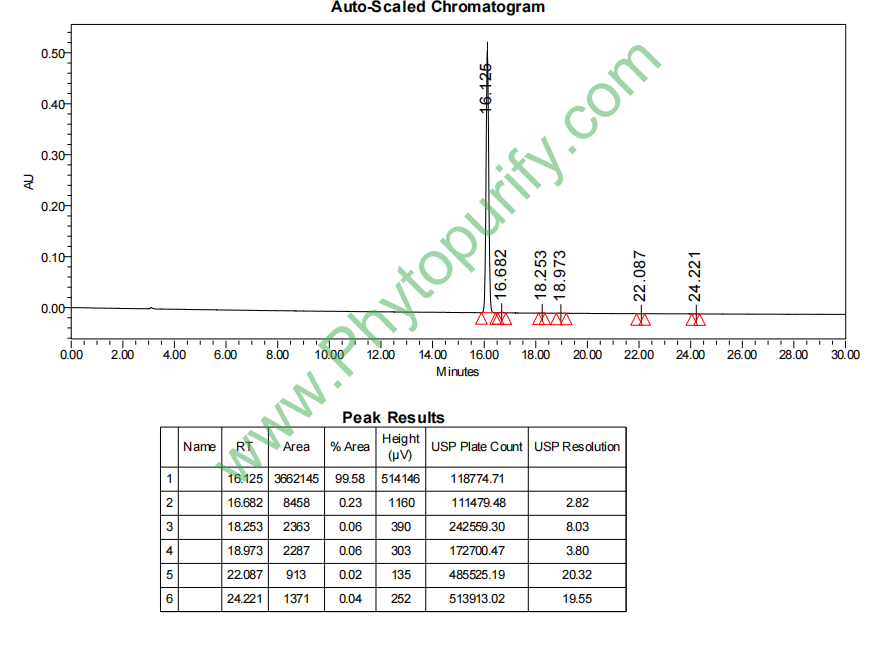
HPLC of Cinobufagin
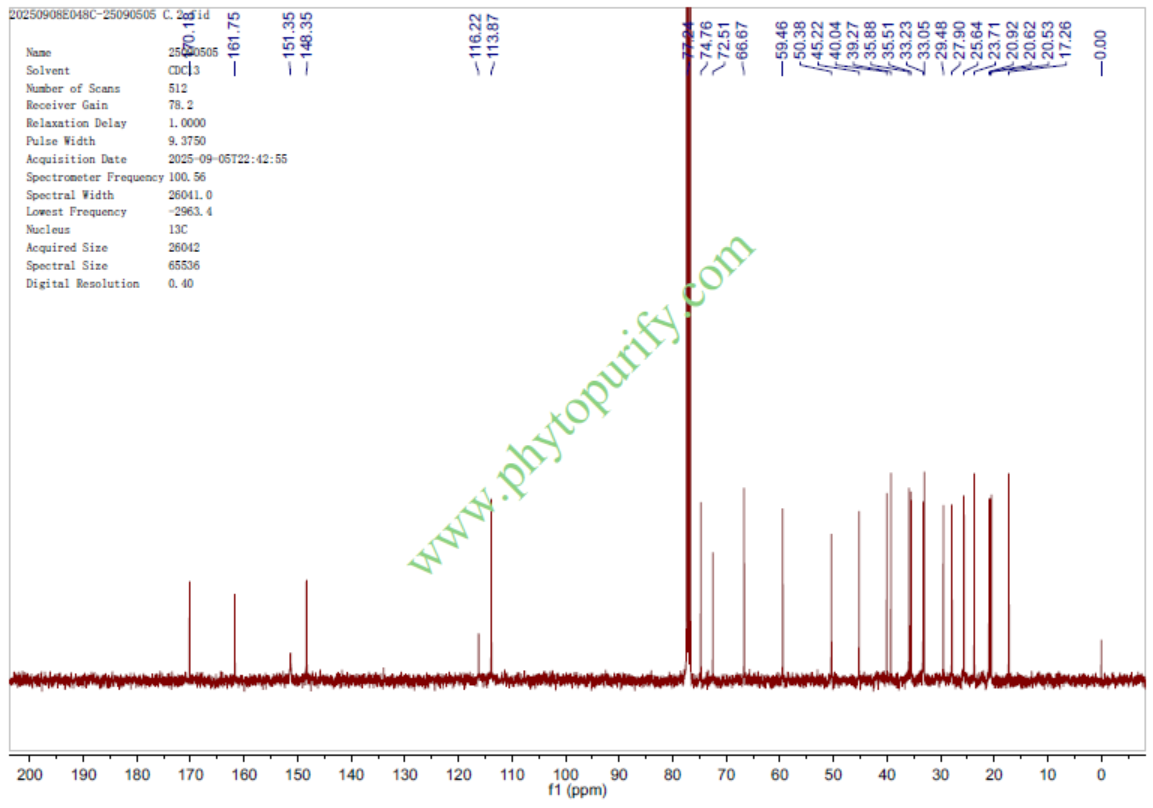
NMR of Cinobufagin
Storage conditions:Short-term storage at 2~8℃, long-term storage at -20 ~ -80℃
89.2700
3.3536
3.3533
.0134
2.8270
4.1164
High
86.5460
5.2018
No
No
No
No
Yes
No
0.3
Yes
No
No
Yes
Natural products play an irreplaceable role in the history of human drug development, providing valuable lead compounds for numerous difficult to treat diseases. Cinobufagin, also known as Cinobufagin, is an active steroid lactone compound extracted from the traditional Chinese medicine Chansu, with a CAS number of 470-37-1. As one of the main components of toad venom in toad venom, it has a long history of being used in traditional medicine to treat diseases such as carbuncles, sores, heart failure, and tumors. Modern pharmacological research has revealed that Huachandu ligand exhibits extensive and significant anti-tumor activity, especially in the field of liver cancer treatment, showing great potential. Liver cancer is a malignant tumor with the highest incidence rate and mortality in the world. Its occurrence and development involve abnormal regulation of multiple genes and multiple signal pathways, and it is prone to drug resistance to existing treatment methods. Therefore, it is urgent to develop new and efficient treatment strategies. Huachan toxin ligand acts on multiple key targets such as BCL2, STAT3, TOP1, HIF1A, RELA, MAPK1, IKBKB, TERT, PIK3CA, MMP9, etc., exhibiting multi-target and multi pathway effects in inducing tumor cell apoptosis, inhibiting proliferation, invasion and metastasis, and overcoming drug resistance. It has become a hot topic in the development of anti liver cancer drugs. This article aims to provide a systematic review of the chemical properties, pharmacological activities, molecular mechanisms of action, pharmacological properties, and clinical application prospects of Huachandu ligand, in order to provide comprehensive scientific references for the in-depth research and development of this compound.
Huabufalin is a C24 steroid lactone with a maternal nuclear structure similar to the cardiac glycoside bufadinolides, belonging to the bufalin family. Its basic skeleton consists of steroid rings (A, B, C, D rings) and an α - pyranone lactone ring (hexagonal unsaturated lactone ring) located at C-17, which is the key pharmacophore for its biological activity. Compared with typical cardiac glycosides, it has specific substituents such as hydroxyl and acetoxy groups in its structure, which have important effects on its activity and selectivity.
Its molecular formula is C26H34O6 and its molecular weight is 442.5520. This compound exhibits moderate lipophilicity, with a calculated LogP value of 3.3536, indicating that it has a certain degree of lipophilicity and is conducive to transmembrane transport. Its topological polar surface area (TPSA) is 89.2700 Å ², indicating the presence of a certain number of hydrogen bond donor and acceptor sites in the molecule. The water solubility is poor, about 0.0134 mg/mL, which to some extent limits its formulation development and bioavailability. Preliminary evaluation of its pharmacological properties shows that Huabufalin has a high potential for blood-brain barrier penetration, which provides a possibility for its use in the treatment of central nervous system related tumors or metastases. In terms of safety, existing data shows a negative risk of hERG channel inhibition, indicating a low potential risk of causing QT interval prolongation in the heart. The Ames test result is 0.3, indicating a low risk of mutagenicity, but further in vitro and in vivo genetic toxicity experiments are needed to confirm. These physical, chemical, and pharmacological parameters provide key basis for the structural optimization and formulation design of Chinese toad venom ligands.
The main source of Huachan toxin ligand comes from toad venom. Chansu is a traditional Chinese medicine made by drying and processing the white slurry secreted by the ear gland and skin gland of toads such as the Chinese toad or the black eyed toad. The chemical composition of toad venom is complex, mainly including toad venom ligands, alkaloids, sterols, etc. Among them, toad venom ligands are its main active ingredients.
Organic solvent extraction combined with modern chromatographic separation techniques is commonly used to extract the compound from Chinese toad venom. The classic process is as follows: first, the dried toad venom is crushed, and then heated and refluxed with polar organic solvents such as ethanol or methanol or ultrasound assisted extraction is carried out to fully dissolve the fat soluble components. After merging the extracts, the extract was concentrated under reduced pressure to obtain a paste. Subsequently, silica gel column chromatography is used for preliminary separation, often using gradient elution systems such as petroleum ether ethyl acetate or chloroform methanol to separate different polar components. The fraction rich in bufotaxime was further purified by preparative high-performance liquid chromatography to obtain high-purity monomeric compounds. In recent years, new technologies such as high-speed countercurrent chromatography and supercritical fluid extraction have also been applied to the separation and purification of active ingredients in toad venom, in order to improve efficiency and yield. The extraction process requires strict control of process parameters to ensure the yield and stability of the target compound, and to avoid the residue of other toxic components.
A large number of preclinical studies have confirmed that huperzine has a wide range of pharmacological activities, and its most remarkable is its strong anti-tumor effect, especially in liver cancer models where the effect is significant.
1. Antitumor activity:
Huachan toxin ligand exhibits significant proliferation inhibition and cytotoxicity on various liver cancer cell lines (such as HepG2, Huh7, SMMC-7721, Bel-7402, etc.), and its effect is concentration - and time-dependent. Its anti-tumor activity is not only limited to liver cancer, but also shows activity in lung cancer, stomach cancer, colon cancer, breast cancer, leukemia and other models, indicating that its role is broad-spectrum.
2. Inducing cell apoptosis:
Huachan toxin ligand can effectively induce programmed cell death in liver cancer cells. Research has found that it can cause a decrease in mitochondrial membrane potential, promote cytochrome C release, upregulate the expression of pro apoptotic protein Bax, and downregulate the level of anti apoptotic protein BCL2, thereby activating the caspase cascade reaction and ultimately leading to cell apoptosis.
3. Inhibit cell proliferation and cycle arrest:
This compound can block liver cancer cells at specific stages of the cell cycle (such as G2/M phase or S phase) by regulating the expression of cyclins (such as Cyclin B1) and cyclin dependent kinases (CDKs), inhibiting DNA synthesis and mitosis, thereby preventing unrestricted proliferation of tumor cells.
4. Anti invasion and anti metastasis:
Huachan toxin ligand can significantly inhibit the migration and invasion ability of liver cancer cells. The mechanism is related to downregulation of matrix metalloproteinases (such as MMP9) expression, upregulation of tissue metalloproteinase inhibitors (TIMPs), and inhibition of epithelial mesenchymal transition process.
5. Anti angiogenesis:
Tumor neovascularization is the key to its growth and metastasis. Huachan toxin ligand can interfere with tumor angiogenesis and cut off tumor nutrition supply by inhibiting the expression of vascular endothelial growth factor and its receptors.
6. Reversing multidrug resistance:
Part of the research suggests that huperzine may enhance the sensitivity of liver cancer cells to traditional chemotherapy drugs (such as cisplatin and 5-fluorouracil) by inhibiting the function of drug efflux pumps such as P-glycoprotein or regulating related signaling pathways, and has the potential to reverse drug resistance.
In addition, Huachan toxin ligand has been reported to have traditional pharmacological effects such as anti-inflammatory, analgesic, and cardiotonic effects, but its application in tumor treatment is currently the core of research.
The anti liver cancer effect of Huachan toxin ligand involves a complex multi-target and multi pathway network system, which works synergistically by intervening in multiple key signaling pathways and molecular targets.
1. Apoptosis pathway targets:
* BCL2 family: As one of the core targets, Huachan toxin ligand can directly or indirectly inhibit the expression or function of anti apoptotic protein BCL2, while promoting the activation of pro apoptotic proteins such as Bax, disrupting mitochondrial outer membrane permeability, and triggering intrinsic apoptotic pathways.
* STAT3 signaling pathway: STAT3 is an important oncogenic transcription factor. Huachan toxin ligand can inhibit the phosphorylation activation of STAT3, prevent its nuclear translocation, and downregulate the expression of downstream target genes related to proliferation (such as c-Myc, Cyclin D1), survival (such as Bcl-2, Bcl xL), and angiogenesis (such as VEGF).
* NF - κ B signaling pathway: Huachan toxin ligand can inhibit the activity of IKBKB (IKK β), prevent the phosphorylation and degradation of I κ B α, thereby inhibiting the nuclear translocation and transcriptional activity of NF - κ B complexes (such as RELA/p65 subunit), reducing the expression of inflammatory factors and anti apoptotic genes, promoting apoptosis and inhibiting invasion.
2. Proliferation and survival pathway targets:
* PI3K/Akt pathway: Huachan toxin ligand can inhibit the activity or expression of PIK3CA (PI3K catalytic subunit p110 α), thereby reducing the phosphorylation level of downstream Akt and inhibiting this key pathway that promotes cell growth, survival, and metabolism.
* MAPK/ERK pathway: Its inhibition of MAPK1 (ERK2) activity can block growth factor signaling and inhibit cell proliferation.
* Telomerase reverse transcriptase: By inhibiting the expression or activity of TERT, huperzine may weaken the telomere maintenance ability of liver cancer cells, induce cell aging or death.
3. Stress and microenvironment targets:
* Hypoxia inducible factor-1 alpha: In the hypoxic microenvironment of tumors, huperzine can promote the degradation of HIF1A or inhibit its transcriptional activity, thereby interfering with tumor hypoxia adaptation, glucose metabolism reprogramming, and angiogenesis.
* Matrix metalloproteinase-9: By downregulating the expression and secretion of MMP9, huperzine effectively inhibits extracellular matrix degradation, hindering the invasion and metastasis of tumor cells.
4. DNA damage targets:
* Topoisomerase I: There are studies suggesting that bufogenin may exert cytotoxic effects by inhibiting the activity of TOP1, interfering with DNA replication and transcription, leading to the accumulation of DNA damage.
These targets do not exist in isolation, but are interwoven into a network. For example, inhibiting the PI3K/Akt and MAPK pathways can synergistically suppress cell proliferation; Inhibition of STAT3 and NF - κ B can synergistically promote apoptosis and suppress the inflammatory microenvironment. The multi-target action characteristic of Huachan toxin ligand enables it to simultaneously attack multiple weaknesses of tumor cells, which may help overcome the resistance problem of single target drugs.
Although the pharmacological activity of Huachan toxin ligand is clear, its pharmacological development still faces challenges, and pharmacokinetic properties are one of the key factors limiting its clinical translation.
Pharmacokinetic characteristics:
Animal pharmacokinetic studies have shown that the absorption of huperzine after oral administration is relatively fast, but its absolute bioavailability is generally low, mainly due to its poor water solubility and possible first pass effects. It is widely distributed in the body, and due to its high lipid solubility and LogP value, it is easily distributed in organs with abundant blood flow such as the liver, lungs, and kidneys, and can pass through the blood-brain barrier. Huachan toxin ligand is mainly metabolized by the liver cytochrome P450 enzyme system (such as CYP3A4) in vivo, undergoing hydroxylation, deacetylation and other reactions, generating various metabolites, some of which still have biological activity. Its prototype and metabolites are mainly excreted through bile and kidneys. Overall, it is characterized by rapid elimination and relatively short half-life, which may lead to insufficient effective action time in the body.
Challenges and optimization strategies for drug development:
1. Water solubility and bioavailability: Low water solubility and low oral bioavailability are the primary challenges. The strategy includes: ① Structural modification: preparing water-soluble prodrugs (such as phosphate esters, amino acid esters) or modifying functional groups to improve solubility. ② Formulation technology: Develop new delivery systems such as nano formulations (such as liposomes, polymer nanoparticles, solid lipid nanoparticles), microemulsions, cyclodextrin inclusion complexes, phospholipid complexes, etc., to improve solubility, stability, and targeting, enhance oral absorption, or achieve injection administration.
2. Targeting and toxicity: Although its hERG inhibition risk is low, toad venom ligand compounds traditionally have some toxicity to the heart. By using formulation methods to achieve tumor targeted delivery (such as EPR based nanoparticles and active targeting ligand modifications), drug accumulation at the tumor site can be increased while reducing exposure and potential toxicity to normal tissues such as the heart.
3. Metabolic stability: Due to its fast metabolism, structural modifications can be used to block easily metabolized sites, or combined with CYP enzyme inhibitors to prolong its in vivo circulation time.
At present, research has been devoted to the development of nanocarriers and structural analogues based on Chinese toad venom, which have shown improved pharmacokinetic properties and enhanced anti-tumor effects, laying the foundation for their clinical translation.
As a highly promising natural lead compound for anti liver cancer, the clinical application development of Huachan toxin ligand is advancing in multiple directions.
Current progress:
At present, Huachan Poison Powder has not been approved for marketing as a single chemical drug. However, its source medicinal herb Chansu and compound preparations mainly composed of Chansu (such as Huachansu injection and Huachansu tablets) have been approved in China for the clinical treatment of various malignant tumors such as liver cancer and gastric cancer. As an adjuvant therapy, it is often used in combination with chemotherapy and radiotherapy to reduce toxicity and increase efficacy. These preparations are a mixture of various bufalin ligands, among which bufalin is one of the key active ingredients. The development of new drugs targeting high-purity huperzine or its optimized derivatives is currently in the preclinical or early exploration stage.
Future development direction:
1. New drug development based on mechanism of action: Further elucidating its multi-target action network, especially discovering its direct target proteins, will provide a structural basis for designing highly selective and effective derivatives. Computer assisted drug design, fragment based drug discovery, and other technologies can be used to optimize its structure and improve drug efficacy while retaining activity.
2. Development of a new delivery system: Developing intelligent responsive nano delivery systems (such as pH sensitive, enzyme sensitive, photothermal responsive) to achieve specific drug release at tumor sites is an important strategy for improving efficacy and reducing systemic toxicity. Combined targeting ligands such as folate and RGD peptide can further enhance active targeting ability.
3. Combination therapy strategy: Explore the combination therapy of Huachan toxin ligand with existing standard therapies such as targeted drugs such as sorafenib and lenvatinib, immune checkpoint inhibitors, chemotherapy, and radiotherapy. Its multi-target characteristics may generate synergistic effects through different mechanisms to overcome drug resistance, making it one of the most promising directions for clinical translation in recent times.
4. Expand indication research: In addition to liver cancer, its efficacy in other solid tumors or hematological tumors that are insensitive to existing treatments deserves further exploration.
5. Clinical translational studies: Promote high-quality, internationally compliant preclinical safety evaluations and pharmacokinetic studies to provide solid data for applying for clinical trials. Conduct exploratory clinical studies to evaluate the safety, tolerability, and preliminary efficacy of monotherapy or combination therapy in patients with advanced liver cancer.
As a treasure of traditional Chinese medicine Chansu, Huachan toxin ligand has become an important lead compound in the development of modern anti-tumor drugs due to its unique multi-target anti liver cancer pharmacological activity. From a chemical structure perspective, it belongs to the steroid lactone family and has clear physicochemical properties. Its pharmacological effects are extensive, and it can induce apoptosis, inhibit proliferation, invasion and metastasis, and angiogenesis in liver cancer cells by regulating key signaling pathways such as BCL2, STAT3, PI3K/Akt, NF - κ B, and HIF1 α. However, its poor water solubility and pharmacokinetic properties constitute the main bottleneck for clinical translation. Through structural modification, development of novel delivery systems, and exploration of combination therapy strategies, it is expected to overcome these obstacles and unleash its enormous therapeutic potential. In the future, with the deepening of interdisciplinary research, Huachandu ligand base may transform from a traditional active ingredient into a new, efficient, and low toxicity anti liver cancer drug or its components, bringing new hope to liver cancer patients and providing a model for the modern research of other natural products.
