


Synonym name:
Catalogue No.: BP0367
Cas No.: 1108-68-5
Formula: C26H34O7
Mol Weight: 458.551
Botanical Source: Ch'an Su, the dried venom of Chinese toads
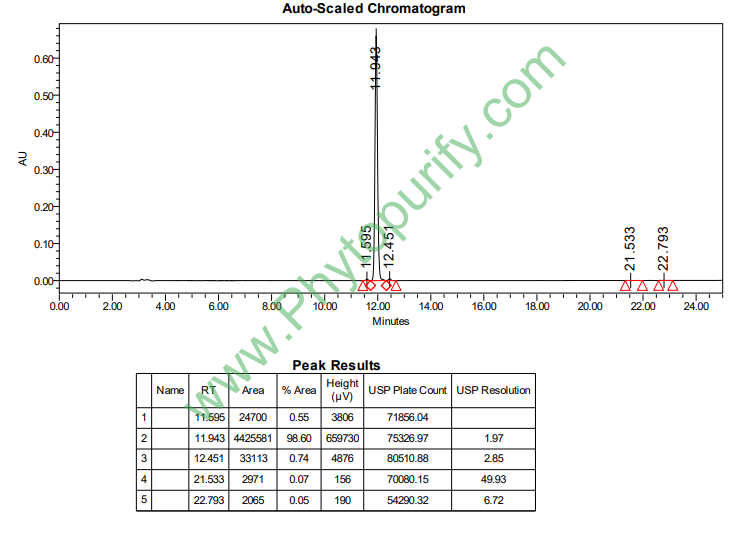
Purity: 95%~99%
Analysis Method: HPLC-DAD or/and HPLC-ELSD
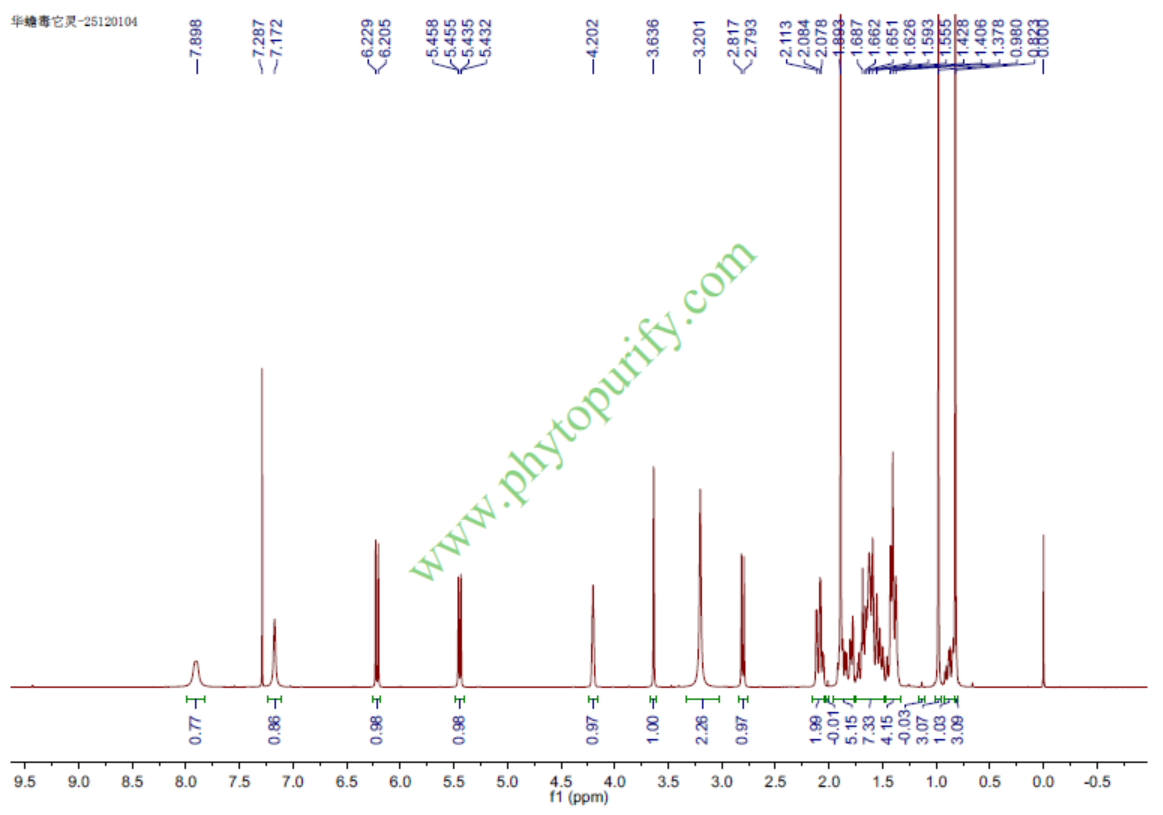
Identification Method: Mass, NMR
Packing: Brown vial or HDPE plastic bottle
Can be supplied from milligrams to grams.
For Reference Standard and R&D, Not for Human Use Directly.
Inquire for bulk scale.
Description:
Cinobufotalin is a main cardiac toxin in toad, it is a novel anti-HCC agent, it induces growth inhibition and apoptosis in cultured HCC cells through ceramide production. Cinobufotalin is also an effective reversal agent for the multidrug resistance of tumors, it can reverse the adriamycin-resistance in Raji/ADR cells and the expression of P-gp and MRP-1 proteins. Cinobufotalin can promote the dendritic cells(DCs) derived from peripheral blood of patients with chronic hepatitis B to mature and effectively enhance its(the DCs') capabilities, therefore the treatment of cinobufotalin may potentiate the antiviral immunity of the patients with chronic hepatitis B(CHB).
References:
Tumour Biol. 2015 Feb 28.
Ceramide production mediates cinobufotalin-induced growth inhibition and apoptosis in cultured hepatocellular carcinoma cells.
Hepatocellular carcinoma (HCC) is a highly aggressive and lethal neoplasm with poor prognosis. The aim of this study is to investigate the anticancer activity of Cinobufotalin, a bufadienolide isolated from toad venom, in cultured HCC cells, and to study the underlying mechanisms.
METHODS AND RESULTS:
We found that Cinobufotalin (at nmol/L) significantly inhibited HCC cell growth and survival while inducing considerable cell apoptosis. Further, Cinobufotalin inhibited sphingosine kinase 1 (SphK1) activity and induced pro-apoptotic ceramide production. Ceramide synthase-1 small hairpin RNA (shRNA)-depletion inhibited Cinobufotalin-induced ceramide production and HCC cell apoptosis. On the other hand, the glucosylceramide synthase (GCS) inhibitor 1-phenyl-2-decanoylamino-3-morpholino-1-propanol (PDMP) facilitated Cinobufotalin-induced ceramide production and cell apoptosis. SphK1 inhibitor II (SKI-II), similar to Cinobufotalin, increased cellular ceramide level and promoted HCC cell apoptosis. Finally, we observed that Cinobufotalin inactivated Akt-S6K1 signaling in HepG2 cells, which was again inhibited by ceramide synthase-1 shRNA-depletion.
CONCLUSIONS:
In conclusion, the results of this study suggest that Cinobufotalin induces growth inhibition and apoptosis in cultured HCC cells through ceramide production. Cinobufotalin may be investigated as a novel anti-HCC agent.
Zhongguo Shi Yan Xue Ye Xue Za Zhi. 2014 Oct;22(5):1306-10.
[Reversal effect of cinobufacini on multidrug resistance of Raji/ADR cells and its mechanisms].
The aim of this study was to explore the reversing effect of cinobufacini on multidrug resistance of Raji/ADR cells and its mechanisms.
METHODS AND RESULTS:
The growth inhibitory rate, half inhibitory concentration (IC50), reversing multiples to adriamycin- resistance were detected by MTT, and the curve of growth inhibitory rate was drawn; the MDR-1 and MRP-1 gene transcription was determined by RT-PCR; the expressions of P-gp and MRP-1 proteins were assayed by Western blot and flow cytometry. The results showed that the inhibitory rates of cinobufacini on Raji and Raji/ADR cells at 72 h were 75.6% and 69.3% respectively, the IC50 were 3.9 mmol/L and 4.6 mmol/L without significant difference (P > 0.05). The reversing multiples to adriamycin-resistance were 255.7 multiples, the transcription of mdr-1 and mrp-1 genes and the expression of P-gp and MRP-1 proteins significantly decreased (P < 0.05) in Raji/ADR cells after the treatment with Cinobufotalin.
CONCLUSIONS:
It is concluded that Cinobufotalin can reverse the adriamycin-resistance in Raji/ADR cells and the expression of P-gp and MRP-1 proteins were down-regulated through the transcriptional pathway. The Cinobufotalin is an effective reversal agent for the multidrug resistance of tumors.
Life Sci. 1998;63(9):781-8.
Neutralization of cardiac toxins oleandrin, oleandrigenin, bufalin, and cinobufotalin by digibind: monitoring the effect by measuring free digitoxin concentrations.
Oleandrin plant poisoning is common in children and the plant extract is used in Chinese medicines. The toxicity is due to oleandrin and the deglycosylated metabolite oleandrigenin. Bufalin and Cinobufotalin (toad cardiac toxins) are also widely used in Chinese medicines like Chan SU, and Lu-Shen -WU. Severe toxicity from bufalin after consumption of toad soup has been reported.
METHODS AND RESULTS:
Taking advantage of structural similarities of these toxins with digitoxin, we demonstrated that these compounds can be rapidly detected in blood by the fluorescence polarization immunoassay for digitoxin. The cross reactivities of these compounds with digoxin assay were much lower. For example, when a drug free serum was supplemented with 10 microg/ml of oleandrin, we observed 127.7 ng/ml of digitoxin equivalent but only 2.4 ng/ml of digoxin equivalent concentration. Digibind neutralized all cardiac toxins studied as evidenced by significant fall of free concentrations. When aliquots of serum pool containing 50.0 microg/ml of oleandrin were supplemented with 0, 10.0, 25.0, 50.0, 100, and 200 microg/ml of digibind, the mean free concentrations were 30.6, 23.3, 16.0, 10.7, 7.8 and 5.5 microg/ml respectively. Similarly, with 50.0 microg/ml of oleandrigenin (total concentration: 36.2 ng/ml), the free concentration was 14.5 ng/ml digitoxin equivalent in the absence of digibind and 5.4 ng/ml in the presence of 200 microg/ml of digibind. In another specimen containing 500 ng/ml bufalin (total concentration: 156.9 ng/ml), the free concentration was 8.6 ng/ml in the absence of digibind and none detected in the presence of 100.0 microg/ml digibind.
CONCLUSIONS:
Because such neutralization may also occur in vivo, digibind may be useful in treating patients exposed to these toxins.
HPLC of Cinobufotalin
HNMR of Cinobufotalin
Storage conditions:Short-term storage at 2~8℃, long-term storage at -20 ~ -80℃
109.5000
2.4755
2.4756
.0210
2.0580
3.3888
High
79.9415
5.3743
No
No
No
No
Yes
No
0.0
Yes
No
No
Yes
Cardiotonic steroids are a type of natural product with a long history of medicinal use, whose core structure is the steroid nucleus connected to an unsaturated lactone ring. Traditionally, cardiac glycoside drugs represented by digoxin are mainly used to treat heart failure and arrhythmia. However, recent studies have revealed that these compounds have shown remarkable potential in the field of anti-tumor therapy, and their mechanism of action goes beyond traditional myocardial Na ⁺/K ⁺ - ATPase inhibition, involving extensive regulation of multiple cellular signaling pathways. Huachandu Tailing, as a cardiac steroid (also known as butyrolactone) isolated from traditional Chinese medicine Chansu, is a representative molecule in this research hotspot. It is not only an active ingredient used in traditional medicine for heart strengthening, diuresis and hemostasis, but also a leading compound with multi-target and multi-channel anti-tumor properties confirmed by modern pharmacological research, especially in the treatment of breast cancer and other solid tumors, showing broad application prospects. This article aims to provide a systematic review of the chemical characteristics, sources, pharmacological activities, molecular mechanisms of action, pharmacological properties, and clinical application potential of Huachandu Talin, in order to provide comprehensive academic references for the in-depth development and transformation research of this natural product.
The chemical name of Hua Chan Du Ta Ling is 3 β, 14 β - dihydroxy-5 β - bufotoxin-20,22-dienol, and its CAS number is 1108-68-5. Structurally, it belongs to the class of bufadienolide compounds and has a typical steroid skeleton: A/B rings are cis coupled (5 β - H), B/C and C/D rings are both trans coupled, with C/D ring being cis coupled, which is a key structural feature of strong cardiac activity. The steroid nucleus is connected to a β - hydroxyl group at positions C-3 and C-14, and an α -, β - unsaturated pentagonal lactone ring (butyrolactone) at position C-17. This unique structure is the material basis for its biological activity.
According to the provided pharmacological parameters, the molecular weight of Huachandu Talin is 458.5510 g/mol. The calculated lipid water partition coefficient (LogP) is 2.4755, indicating that the molecule has moderate lipophilicity, which is beneficial for its penetration of cell membranes, but may also affect its water solubility. Its topological polar surface area (TPSA) is 109.5 Å ², relatively high, mainly attributed to the hydroxyl groups and oxygen atoms in the lactone ring of the molecule. The measured or predicted water solubility is relatively low, about 0.0210 mg/mL, indicating that solubilization strategies may need to be considered in formulation development. It is worth noting that its blood-brain barrier permeability is predicted to be "high", indicating that it may have the potential to treat central nervous system related diseases, but also suggesting potential neurotoxic risks. In the preliminary safety screening, data showed that it has no hERG potassium channel inhibitory activity (hERG inhibition: No), which reduces its risk of inducing QT interval prolongation and apical torsion type ventricular tachycardia, and is a positive pharmacological feature. In addition, the Ames test result was 0.0, which preliminarily indicates that there is no mutagenicity in this testing system, but further genetic toxicity evaluation is needed.
The Chinese toad poison spirit is not derived from plants, but mainly extracted and isolated from the skin gland secretions of toads such as the Chinese toad or the black eyed toad, known as toad venom. As a traditional Chinese medicine, Chansu has a history of over a thousand years of application and is included in multiple editions of the Chinese Pharmacopoeia. It has the effects of detoxification, pain relief, and awakening the mind.
The extraction and separation methods follow the conventional process of natural product chemistry and are constantly optimized. Traditional methods often use organic solvents (such as ethanol and methanol) for cold soaking or reflux extraction of dried toad venom to obtain crude extracts. Subsequently, systematic separation and purification were carried out using chromatographic techniques such as silica gel column chromatography, reverse phase column chromatography, and high-performance liquid chromatography. In modern technology, efficient separation methods such as high-speed counter current chromatography and preparative high-performance liquid chromatography are often combined to improve the purity and yield of Huabufotalin. The extraction process needs to be strictly controlled, as the original pulp of toad venom contains multiple structurally similar bufalin (such as bufalin, lipobufalin, etc.) and biologically active amine components with strong cardiovascular activity, making separation difficult. In addition, to ensure the sustainability of resources and consistency of products, efforts are currently being made to obtain such active ingredients through cell culture or biosynthetic pathways.
The pharmacological activity research of Huachandu Tailing has expanded from the traditional cardiovascular system to a wide range of anti-tumor fields, and its activity has been validated in various in vitro and in vivo models.
1. Antitumor activity:
Huabufotalin showed significant proliferation inhibition and apoptosis promoting activity on a variety of human tumor cell lines, of which breast cancer was the most in-depth study. Studies have shown that cinobufotalin can inhibit the activity of breast cancer cells (such as MCF-7, MDA-MB-231) in a dose-dependent manner, induce cell cycle arrest (usually in G2/M phase) and trigger apoptosis. In addition, it can also effectively inhibit the migration, invasion and metastasis of breast cancer cells, suggesting that it has the potential of anti-tumor metastasis. In addition to breast cancer, it also shows anti-tumor effect on lung cancer, liver cancer, colon cancer, gastric cancer and other malignant tumors, which is consistent with the description of "potential anti lung cancer active molecules" mentioned in the literature.
2. Cardiovascular activity:
As a cardiac steroid, Huachandu Tailing has a positive inotropic effect, which enhances myocardial contractility. Its traditional use as a cardiotonic is based on this. Its mechanism of action is related to the inhibition of Na ⁺/K ⁺ - ATPase on the myocardial cell membrane, leading to an increase in intracellular Na ⁺ concentration, which in turn increases intracellular Ca ⁺ concentration through Na ⁺/Ca ² ⁺ exchangers, ultimately enhancing myocardial contraction. But the treatment window is narrow, and the dose of cardiotonic and toxic effects (such as arrhythmia) is close.
3. Other activities:
In traditional applications, it is also believed to have diuretic and hemostatic effects. Modern research suggests that it may exert these effects by affecting vascular permeability or coagulation factors, but the specific mechanism remains to be elucidated.
The anti-tumor effect of cinobufotalin, especially in breast cancer, involves a complex multi target, multi-channel network, rather than a single mechanism. Based on the provided target information, its mechanism of action can be summarized as follows:
1. Inducing cell apoptosis and autophagy:
* BCL2 family regulation: Huachan toxin can downregulate the expression of anti apoptotic protein BCL2, while possibly upregulating the levels of pro apoptotic proteins such as BAX, disrupting mitochondrial membrane potential, leading to the release of cytochrome C, thereby activating the Caspase cascade reaction and inducing intrinsic apoptotic pathways.
* AMPK pathway activation: Adenosine activated protein kinase is an energy receptor in cells. Huachan toxin can activate AMPK (PRKAA1), which may lead to inhibition of the mTOR signaling pathway, inducing protective autophagy, or in some cases promoting apoptosis. The activation of AMPK is also related to the inhibition of cell growth and metabolic reprogramming.
* STAT3 signal suppression: Signal transducer and activator of transcription factor 3 is an important oncogenic transcription factor. Hua Chan Du Ta Ling can inhibit the phosphorylation (activation) of STAT3, prevent its nuclear translocation and the transcription of downstream target genes (such as Survivors, BCL2, Cyclin D1), thereby inhibiting cell proliferation, promoting apoptosis, and weakening its malignant phenotype.
2. Inhibit proliferation, invasion, and metastasis:
* Matrix metalloproteinase inhibition: Huachan toxin can downregulate the expression and activity of matrix metalloproteinase 2. MMP2 is a key enzyme that degrades the extracellular matrix, and inhibition of its activity can effectively weaken the invasion and metastasis ability of tumor cells.
* Regulation of protein kinase C: Protein kinase C α is a key molecule involved in signal transduction for cell proliferation, differentiation, and migration. Hua Chan Du Ta Ling may inhibit tumor growth by regulating the activity of PRKCA and affecting downstream pathways such as MAPK/ERK.
* Estrogen receptor pathway: For hormone receptor positive breast cancer, cinobufotalin may interfere with the growth of estrogen dependent cells by affecting the signal of estrogen receptor beta.
3. Reversing multidrug resistance:
Chemotherapy for breast cancer often fails due to multidrug resistance. Huabufotalin has been proved to be an effective inhibitor of ATP binding cassette transporters such as P-glycoprotein and breast cancer resistant proteins. By inhibiting the efflux function of these "drug pumps", Huabufotalin can increase the accumulation of chemotherapy drugs (such as doxorubicin and paclitaxel) in drug-resistant cells, thereby reversing drug resistance and enhancing chemotherapy efficacy.
4. Other potential targets:
The provided targets also include tyrosinase and microtubule associated protein tau. The former may indicate its potential effect on melanoma, while the latter may be related to its predicted high blood-brain barrier permeability or its effect on the nervous system, but its specific significance in the context of anti breast cancer needs further research.
5. Classic target: Na ⁺/K ⁺ - ATPase:
In addition to the "non classical" targets mentioned above, Huachandu Tailing, as a cardiac steroid, can also inhibit Na ⁺/K ⁺ - ATPase on tumor cell membranes. This can not only trigger ion concentration changes similar to heart cells, but also activate downstream survival or apoptosis promoting signaling pathways such as SRC/EGFR/RAS/MAPK, forming a "signaling complex" whose ultimate effect depends on the cellular background.
Despite its significant in vitro activity, the pharmacological properties (including pharmacokinetic properties) of Huachandu Tailing are the key to determining its successful development as a drug.
Pharmacodynamics:
Existing literature indicates that the pharmacokinetic behavior of Huachandu Tailing in vivo is complex. Due to its low solubility, oral bioavailability may be limited. Animal studies have shown that it is widely distributed after entering the body, and its predicted high blood-brain barrier permeability has been observed and confirmed in some studies. Hua Chan Du Ta Ling is mainly metabolized in the body through the liver, which may involve redox reactions of the CYP450 enzyme system and glucuronic acid binding reactions, with diverse metabolites. Its prototype and metabolites are mainly excreted through bile and kidneys. Overall, its in vivo processes may exhibit rapid distribution and moderate elimination rates, but systematic human pharmacokinetic data is still lacking.
Challenges and optimization of drug development:
1. Solubility and bioavailability: Low water solubility is its main bottleneck. The strategy includes developing nano formulations (such as liposomes, nanoparticles, micelles), cyclodextrin inclusion complexes, solid dispersions, or prodrugs to enhance their solubility and oral absorption.
2. Treatment window: As a cardiac steroid, its effective anti-tumor dose may be close to the dose that produces cardiac toxicity, and the therapeutic index needs to be carefully evaluated. Selective enrichment of drugs in tumor tissues through targeted delivery systems, such as tumor targeted nanocarriers, is a key direction for improving efficacy and reducing systemic toxicity.
3. Security: Although the preliminary hERG and Ames test results are negative, a comprehensive preclinical safety evaluation is still needed, including long-term toxicity, reproductive toxicity, etc. The potential neural effects brought about by its high BBB permeability also need attention.
4. Drug interactions: As a substrate or inhibitor of CYP450 enzyme, Huabufotalin may interact with co administered drugs and needs to be investigated in clinical studies.
The transformation of Hua Chan Du Ta Ling from traditional Chinese medicine active ingredients to modern anti-tumor drugs has clear and broad prospects, but also faces many challenges.
Prospect:
1. New anti breast cancer candidate drugs: Its multi-target mechanism of action, especially its influence on STAT3, AMPK and other key pathways, and its ability to inhibit ABC transporters, makes it possible to develop a new drug to treat triple negative breast cancer or reverse chemotherapy resistance.
2. Combination therapy sensitizer: Given its ability to reverse multidrug resistance, the combination of Huabufotalin with conventional chemotherapy drugs such as paclitaxel and doxorubicin may significantly improve the efficacy of existing therapies and has important clinical translational value.
3. Targeted delivery system development: The use of nanotechnology to construct an intelligent delivery system can achieve tumor targeting and controlled release of huperzine, maximizing its anti-tumor effect while minimizing its toxicity to normal tissues such as the heart. This is a highly promising research and development direction.
4. Structural modification and optimization: Using it as the parent nucleus for structural modification aims to enhance activity, reduce toxicity, and improve pharmacokinetic properties, which is an effective way to discover better candidate compounds.
Challenges and Prospects:
1. Deep exploration of mechanisms: At present, the understanding of its functional network is still incomplete, especially the interaction between different targets and their dominant mechanisms in specific tumor microenvironments. It is necessary to use omics technology and gene editing tools for more detailed analysis.
2. Breakthrough in Pharmaceutical Science: Developing stable, efficient, and industrializable advanced formulations is a necessary path to promote their entry into clinical research.
3. Accumulation of clinical evidence: At present, the vast majority of research is still in the preclinical stage. It is urgent to design rigorous clinical trials to evaluate its safety, tolerability, pharmacokinetic characteristics, and initial efficacy in cancer patients, especially to explore its optimal dosing regimen and biomarkers.
4. Source quality control: Ensuring the uniform quality and stable content of huperzine from natural sources, or developing economically feasible synthetic/biosynthetic routes, is an important guarantee for industrialization.
Hua Chan Du Ta Ling, as a cardiac steroid derived from the traditional Chinese medicine Chan Su, has become a star molecule in the field of natural product anti-tumor research due to its unique chemical structure and multi-target anti-tumor pharmacological activity. Its multiple effects in the treatment of breast cancer, such as inhibition of proliferation, induction of apoptosis, anti invasion and metastasis, and reversal of multidrug resistance, reveal its huge development potential. Despite facing challenges such as solubility and therapeutic window in drug formulation, the development of modern pharmaceutical, medicinal chemistry, and molecular biology technologies provides powerful tools for addressing these issues. In the future, through in-depth elucidation of its molecular action network, innovative drug delivery strategies, and promotion of systematic clinical transformation research, cinobufotalin is expected to move from laboratory to clinical, providing a new treatment option for patients with malignant tumors such as breast cancer, fully interpreting the modern value of "ancient prescriptions for new use", and providing a model for exploring innovative drugs from the treasure house of traditional medicine.
