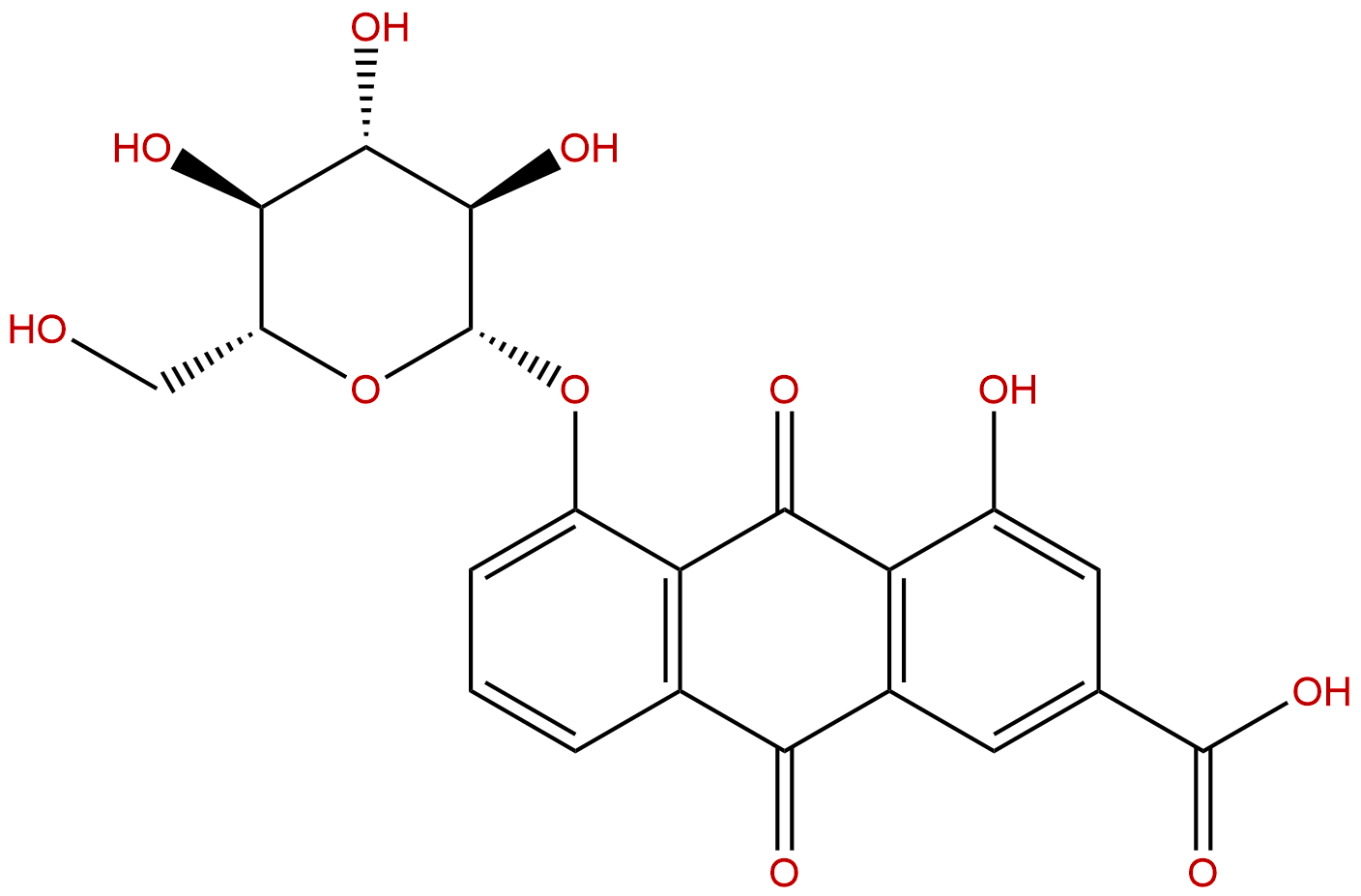


Product name: Rhein-8-glucoside
Synonym name: 8-Glucosylrhein; Glucorhein
Catalogue No.: BP1527
Cas No.: 34298-86-7
Formula: C21H18O11
Mol Weight: 446.364
Botanical Source:
Physical Description:
Type of Compound: Anthraquinones
Purity: 95%~99%
Analysis Method: HPLC-DAD or/and HPLC-ELSD
Identification Method: Mass, NMR
Packing: Brown vial or HDPE plastic bottle
The product could be supplied from milligrams to grams. Inquire for bulk scale.
We provide solution to improve the water-solubility of compounds, thereby facilitating the variety of activity tests and clinic uses.
For Reference Standard and R&D, Not for Human Use Directly.
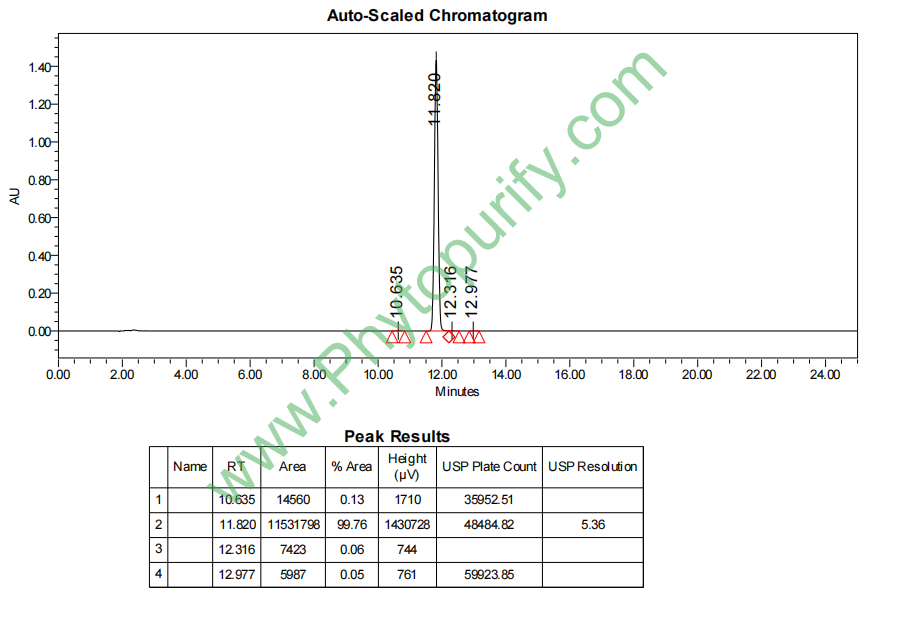
HPLC of Rhein-8-glucoside
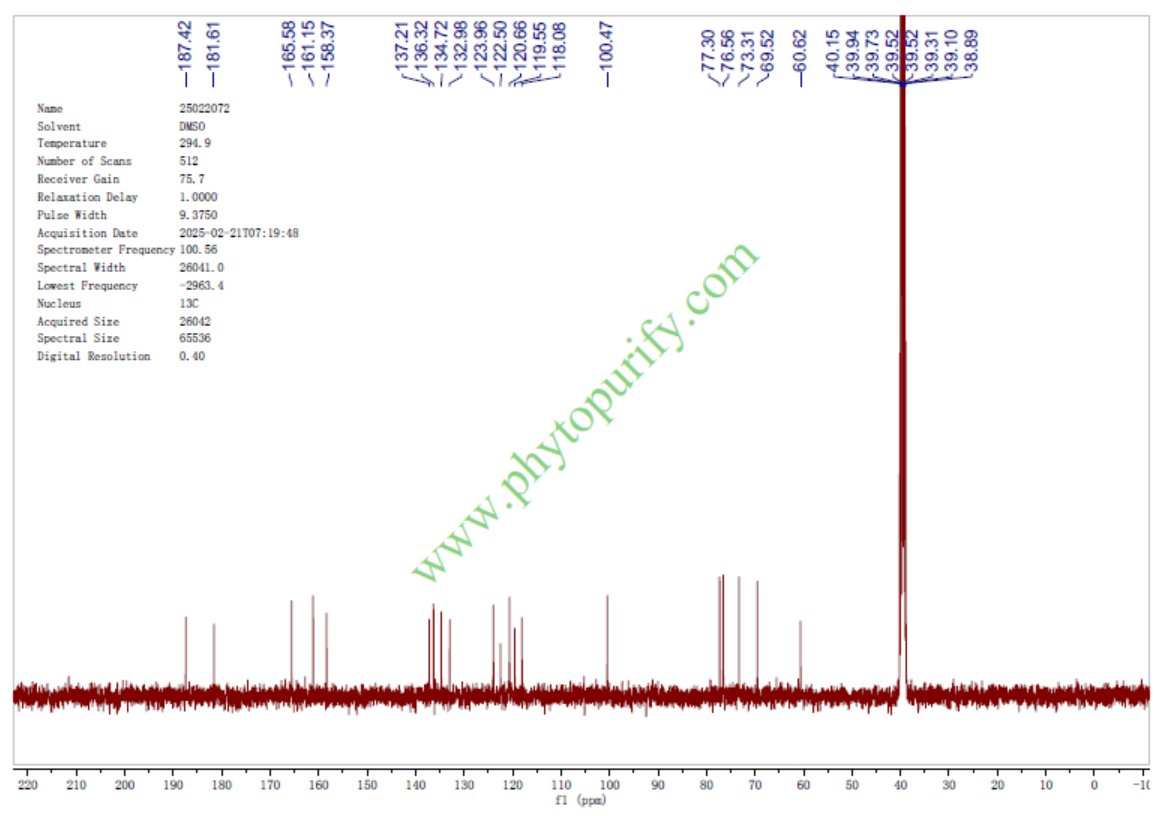
NMR of Rhein-8-glucoside
Storage conditions:Short-term storage at 2~8℃, long-term storage at -20 ~ -80℃
191.0500
.5730
-2.0584
4.8320
.5340
.1180
Low
80.1348
3.8111
Yes
No
No
No
Yes
No
1.2
Yes
No
Yes
Yes
Anthraquinone compounds are an important class of secondary metabolites widely present in nature, especially in plants such as Polygonaceae, Rubiaceae, and Fabaceae, and have attracted much attention for their diverse biological activities. As a representative traditional Chinese medicine, rhubarb has been used for thousands of years for its laxative, anti-inflammatory, and antibacterial effects. Modern research has confirmed that its pharmacological substance is closely related to the anthraquinone components it contains. Rhein-8-O-glucoside (CAS: 34298-86-7) is a key anthraquinone glycoside compound in rhubarb, formed by the glycosidic bond between rhein and a molecule of glucose at the C-8 position. Compared to its aglycone rhein, this glycoside compound exhibits different characteristics in solubility, bioavailability, and targeted delivery, and its classic laxative effect is only the tip of the iceberg. In recent years, with the deep integration of natural product chemistry and molecular pharmacology, research on emodin 8-O-glucoside has surpassed traditional understanding. Its potential multiple pharmacological activities such as anti-inflammatory, antioxidant, anti-tumor, and metabolic regulation have gradually been revealed, and its mechanism of action is becoming increasingly clear. This article aims to systematically review the chemical properties, plant sources, pharmacological activities, molecular mechanisms of action, pharmacological evaluation, and clinical application prospects of emodin 8-O-glucoside, in order to provide comprehensive scientific references for the in-depth research and development of this compound.
The chemical name of rhein 8-O-glucoside is 1,8-dihydroxy-3-carboxyanthraquinone-8-O - β - D-glucopyranoside. Its molecular formula is C21H18O11 and its molecular weight is 446.3640. Structurally, its parent nucleus is 9,10-anthraquinone, with one hydroxyl group at positions 1 and 8 and one carboxyl group at position 3. Among them, the hydroxyl group at position 8 is connected to the terminal carbon of β - D-glucopyranose through an oxygen glycosidic bond, forming a glycosidic structure. This glycosylation modification significantly altered its physicochemical properties.
In terms of physicochemical properties, the introduction of glycosidic bonds greatly enhances the hydrophilicity of the molecule. Its theoretical lipid water partition coefficient (LogP) is 0.5730, indicating that it is a moderately hydrophilic compound. The topologically polar surface area (TPSA) is as high as 191.0500 Å ², mainly attributed to the numerous hydrogen bond acceptors (hydroxyl, carboxyl, oxygen atoms on sugar rings) in the molecule. The predicted value of its water solubility is 4.8320 (usually expressed in log mol/L or mg/mL, indicating good water solubility), which is consistent with its glycoside structure and beneficial for dissolution and absorption in aqueous media. This compound often appears as yellow to orange yellow crystals or powder at room temperature. In terms of spectral characteristics, its UV visible spectrum exhibits strong absorption in the anthraquinone characteristic absorption region (approximately 220-280 nm and 400-450 nm); Infrared spectroscopy can display characteristic absorption peaks of hydroxyl, carbonyl (C=O of anthraquinone and C=O of carboxyl), and sugar ring C-O-C; The nuclear magnetic resonance hydrogen spectrum and carbon spectrum can clearly distinguish the signals of aglycones and glycosides, especially the coupling constant of the hydrogen end groups of glycosides can be used to determine the configuration of glycosidic bonds (β - type).
Rhubarb acid-8-O-glucoside mainly comes from the Polygonaceae family, Rheum genus(Rheum)Plants, such as palmar rhubarb(Rheum palmatum L.)、 Tanggu Extra Large Yellow(Rheum tanguticum Maxim. ex Balf. or medicinal rhubarb(Rheum officinale Dry roots and rhizomes of Baill. These plants are collectively referred to as "rhubarb" and are the authentic source of the traditional Chinese medicine rhubarb. In addition, other plants in the same family, such as the tiger cane(Polygonum cuspidatum)Similar anthraquinone glycosides with similar structures may also be detected.
Extracting emodin 8-O-glucoside from plant materials usually follows the general principles of natural product extraction and optimizes its anthraquinone glycoside properties. Common methods include:
1. Solvent extraction method The most traditional and commonly used method. Given that the target substance has both polarity and hydrophilicity, different concentrations of ethanol (such as 50% -70%) or methanol aqueous solutions are often used for reflux extraction or ultrasound assisted extraction. High concentration alcohol can effectively extract free anthraquinone and glycosides, while water is more conducive to the dissolution of glycosides. Therefore, the alcohol water mixed system is the preferred choice for balancing extraction efficiency and selectivity.
2. Modern assisted extraction technology Microwave assisted extraction (MAE) and ultrasound assisted extraction (UAE) are widely used to improve extraction efficiency, shorten time, and reduce solvent consumption. These technologies accelerate plant cell wall rupture and component dissolution through physical action.
3. Purification and Separation After concentration, the crude extract is usually enriched using macroporous adsorption resins (such as D101, AB-8). By utilizing the adsorption characteristics of the resin for anthraquinone substances and using a gradient elution with water and different concentrations of ethanol, glycosides and aglycones can be preliminarily separated. Further purification relies on column chromatography techniques, such as silica gel column chromatography (using chloroform methanol water system gradient elution), reverse phase silica gel (such as ODS, using methanol water system elution), and preparative high-performance liquid chromatography (HPLC). High performance liquid chromatography-mass spectrometry (HPLC-MS) and nuclear magnetic resonance (NMR) are key techniques for identifying its chemical structure.
The pharmacological activity research of emodin 8-O-glucoside has expanded from traditional laxative effects to multiple modern pharmacological fields.
Diarrhea effect This is its earliest recognized and most classic function. Its main site of action is in the large intestine. The glycoside itself has a high polarity and is not easily absorbed by the upper gastrointestinal tract after oral administration, but can directly reach the colon. Under the action of β - glucosidase secreted by colonic bacteria, glycosidic bonds are hydrolyzed, releasing the aglycone rhein. Rhubarb directly stimulates the colonic mucosa, inhibits the absorption of Na ⁺ and water by intestinal wall cells, promotes the secretion of water and electrolytes in the intestinal lumen, and enhances intestinal peristalsis, thereby producing a mild diarrhea effect. This "prodrug" characteristic makes its effect more colon targeted, reducing irritation to the upper gastrointestinal tract.
Anti inflammatory and immune regulatory activity Research has shown that rhein-8-O-glucoside and its metabolite rhein exhibit inhibitory effects on various acute and chronic inflammation models. It can significantly inhibit the production of nitric oxide (NO), prostaglandin E2 (PGE2), and pro-inflammatory cytokines such as tumor necrosis factor - α (TNF - α), interleukin-1 β (IL-1 β), and IL-6 by macrophages (such as RAW264.7) induced by lipopolysaccharide (LPS). Its anti-inflammatory effect is closely related to regulating the inflammatory signaling pathway.
antioxidant activity The anthraquinone structure endows it with the ability to scavenge free radicals. Rhubarb acid-8-O-glucoside can scavenge DPPH free radicals and ABTS ⁺ free radicals, and exhibits iron ion reduction antioxidant activity. Its antioxidant effect helps alleviate tissue damage in oxidative stress-related diseases.
Antitumor activity: Preliminary in vitro studies have shown that rhein 8-O-glucoside and its aglycone can inhibit the growth of many tumor cell lines (such as liver cancer, breast cancer, colon cancer cells), and can induce cell cycle arrest (such as G1 phase) and apoptosis. The mechanism may involve activation of mitochondrial pathways, triggering of caspase cascade reactions, and regulation of related protein expression.
Antibacterial and antiviral activity Has a certain inhibitory effect on common bacteria such as Staphylococcus aureus and Escherichia coli. In recent years, there have also been studies exploring its potential inhibitory effects on certain viruses.
Metabolic regulation effect Recent studies suggest that rhein -8-O-glucoside may have potential therapeutic value for metabolic diseases such as diabetes and its complications, non-alcoholic fatty liver, etc. by regulating the signal pathway related to glucose and lipid metabolism.
The biological activity of Rhein-8-O-glucoside, especially its anti-inflammatory, antioxidant, and anti-tumor effects, is mainly achieved by intervening in key intracellular signaling pathways, and its targets have multidimensional characteristics.
Nuclear factor kappa B (NF - κ B) signaling pathway This is one of the core mechanisms by which it exerts anti-inflammatory effects. In the resting state, NF - κ B binds to the inhibitory protein I κ B and exists in the cytoplasm. Under inflammatory stimuli such as LPS, the I κ B kinase (IKK) complex is activated, phosphorylated, and degraded, allowing NF - κ B (mainly p65/p50 dimer) to enter the nucleus and initiate downstream inflammatory cytokine gene transcription. Research has shown that rhein-8-O-glucoside/rhein can inhibit IKK activity, prevent phosphorylation and degradation of I κ B α, thereby inhibiting nuclear translocation and DNA binding activity of NF - κ B, ultimately downregulating the expression of inflammatory mediators such as TNF - α, IL-6, IL-1 β, inducible nitric oxide synthase (iNOS), and cyclooxygenase-2 (COX-2).
Mitogen activated protein kinase (MAPK) pathway This pathway includes three main branches: extracellular signal regulated kinase (ERK), c-Jun N-terminal kinase (JNK), and p38 MAPK. Rhubarb acid-8-O-glucoside has been shown to inhibit LPS induced phosphorylation activation of JNK and p38 in macrophages, while its effect on the ERK pathway varies depending on cell type and conditions. By inhibiting the JNK/p38 pathway, further regulating the activity of transcription factors such as AP-1, and synergistically inhibiting inflammatory responses.
Nuclear factor E2 related factor 2/antioxidant response element (Nrf2/ARE) pathway This is the core defense pathway of cells against oxidative stress. Under oxidative stress, Nrf2 dissociates from Keap1, enters the nucleus, binds to ARE, and initiates a series of downstream phase II detoxifying enzymes and antioxidant proteins (such as heme oxygenase-1, HO-1; Transcription of quinone oxidoreductase 1 (NQO1). Research suggests that rhein-8-O-glucoside may enhance cellular antioxidant capacity by activating the Nrf2/ARE pathway, upregulating the expression of proteins such as HO-1.
Apoptosis related pathways In terms of anti-tumor effects, it can upregulate the expression of pro apoptotic protein Bax and downregulate the expression of anti apoptotic protein Bcl-2, leading to a decrease in mitochondrial membrane potential, release of cytochrome C, and activation of caspase-9 and caspase-3, inducing cell apoptosis. In addition, it may also involve the regulation of death receptor pathways such as Fas/FasL.
Other potential targets It also includes targets related to metabolic regulation such as peroxisome proliferator activated receptor gamma (PPAR gamma) and adenosine monophosphate activated protein kinase (AMPK), as well as upstream signaling molecules of pattern recognition receptors such as Toll like receptor 4 (TLR4).
It is worth noting that as a glycoside, some of the biological effects of Rhein-8-O-glucoside may stem from the release of its aglycone, rhein, by gut microbiota or tissue enzymes in vivo. Therefore, its ultimate mechanism of action network is the result of the combined action of the glycoside itself and its active metabolites.
Based on its physicochemical parameters and preliminary biological data, a preliminary evaluation of the pharmacological properties of emodin 8-O-glucoside was conducted.
Analysis of drug properties parameters:
- Molecular weight (446.36)Compliant with the five rules for generic drugs (<500 Da).
- Lipid water partition coefficient (LogP 0.57)Moderate indicates that it has a certain degree of amphiphilicity, which is conducive to transmembrane absorption, but excessive hydrophilicity may limit its passive diffusion through the lipid bilayer.
- Topological Polarity Surface Area (TPSA 191.05 Å ²)The high value is a key negative factor affecting its oral absorption and blood-brain barrier penetration. High TPSA is usually associated with low membrane permeability.
- Water solubility Good predictive value, beneficial for formulation development and dissolution in gastrointestinal fluids.
- Blood-brain barrier penetrability Predicted as' low ', which is consistent with high TPSA and the presence of polar groups such as carboxyl and multiple hydroxyl groups, indicating that it is not easily able to enter the central nervous system. For drugs that mainly act on the peripheral system, this may reduce central side effects.
- HERG inhibition The prediction is' no ', indicating a low risk of cardiac toxicity (QT interval prolongation), but experimental verification is needed.
- Ames test (1.2)This value usually refers to the recovery mutation rate (number of mutant colonies/number of control colonies), where 1.2 is close to 1.0 (negative control), indicating that its mutagenic risk may be low, but it still requires standardized experimental confirmation.
Pharmacokinetic characteristics:
Existing research has mostly focused on its glycoside element rhein, and systematic pharmacokinetic studies on rhein-8-O-glucoside itself are relatively limited. However, inferences can be made based on its structure:
- absorb After oral administration, due to its glycosidic structure and polarity, its absorption in the upper gastrointestinal tract (stomach, small intestine) may be limited, mainly reaching the colon in its original form. The gut microbiota in the colon is rich in β - glucosidase, which can be hydrolyzed into aglycone rhein, which is absorbed into the systemic circulation. Therefore, its oral bioavailability may be low and exhibit colon targeted release characteristics.
- distribution After absorption, rhein (or a small amount of prototype glycoside) is widely distributed in the body, but mainly distributed in organs with abundant blood flow, such as the liver and kidneys. Due to its high polarity and low LogP, it is predicted that its plasma protein binding rate is moderate, tissue permeability is average, and it is not easily distributed to fat and the brain.
- Metabolism In addition to the hydrolytic metabolism of colonic microbiota, it may undergo further II binding reactions such as glucuronidation and sulfation after entering the liver.
- excretion Mainly excreted through the kidneys via urine, some conjugates may also enter the intestine through bile, forming enterohepatic circulation.
Overall, the oral absolute bioavailability of rhein 8-O-glucoside itself may not be high, but its advantage as a colon targeted prodrug lies in its ability to exert a laxative effect. To develop its systemic pharmacological effects (such as anti-inflammatory and anti-tumor effects), it may be necessary to enhance its bioavailability through formulation techniques (such as nanocarriers, prodrug modifications) or by changing the route of administration.
The clinical application prospects of emodin 8-O-glucoside are based on its multiple pharmacological activities and relatively clear mechanism of action, but it also faces challenges.
Modernization interpretation and optimization of traditional applications As one of the main active ingredients in rhubarb for diarrhea, milder and more localized laxatives or drugs for treating constipation predominant irritable bowel syndrome (IBS-C) can be developed based on its colon targeted release characteristics, reducing systemic side effects.
Treatment of inflammatory diseases Its clear anti-inflammatory mechanism (inhibition of NF - κ B and MAPK pathways) makes it potential for the treatment of chronic inflammatory diseases, such as ulcerative colitis, Crohn's disease and inflammatory bowel disease (IBD), as well as arthritis, dermatitis, etc. Utilizing its colon targeting properties to develop local therapeutic drugs for IBD is a highly attractive direction.
Metabolic diseases Aim at its possible role in regulating PPAR γ, AMPK and other pathways, explore its application value in the treatment of metabolic syndrome such as type 2 diabetes and non-alcoholic fatty liver disease.
Antitumor adjuvant therapy Its ability to induce tumor cell apoptosis and inhibit the inflammatory microenvironment makes it a potential adjuvant drug for traditional chemotherapy or radiotherapy, for the treatment or prevention of colorectal cancer, liver cancer, and other diseases.
Challenges and Prospects:
Rhubarb acid-8-O-glucoside, as an important anthraquinone glycoside component in rhubarb, has extended its research value from the traditional laxative pharmacological substance basis to the lead compound of modern multi-target therapeutic drugs. Its unique chemical structure determines its colon targeted metabolic characteristics and diverse biological activities. In terms of its mechanism of action, it exerts multiple effects such as anti-inflammatory, antioxidant, and anti-tumor by regulating key signaling pathways such as NF - κ B, MAPK, and Nrf2. Despite facing the challenge of low bioavailability in drug development, its clear pharmacological activity and relatively clear mechanism provide a solid foundation for subsequent development. With the advancement of drug delivery technology, optimization of structural modification strategies, and in-depth and systematic pharmacological and toxicological research, rhein 8-O-glucoside and its derivatives are expected to achieve a leap from traditional medicinal plant ingredients to modern innovative drugs in the fields of inflammatory diseases, metabolic diseases, and tumor adjuvant therapy, demonstrating broad development prospects. The continuous in-depth research on it is not only a modern excavation of the treasure trove of traditional Chinese medicine, but also an important practice to promote the creation of new natural product drugs.
