


Product name: Isoliquiritin
Synonym name: Isoliquiritoside
Catalogue No.: BP0788
Cas No.: 5041-81-6
Formula: C21H22O9
Mol Weight: 418.398
Botanical Source: Allium chinense (rakkyo), Glycyrrhiza glabra (licorice) and other Glycyrrhiza spp., Trifolium subterraneum and other spp.
Physical Description: Yellow powder
Type of Compound: Chalcones
Purity: 95%~99%
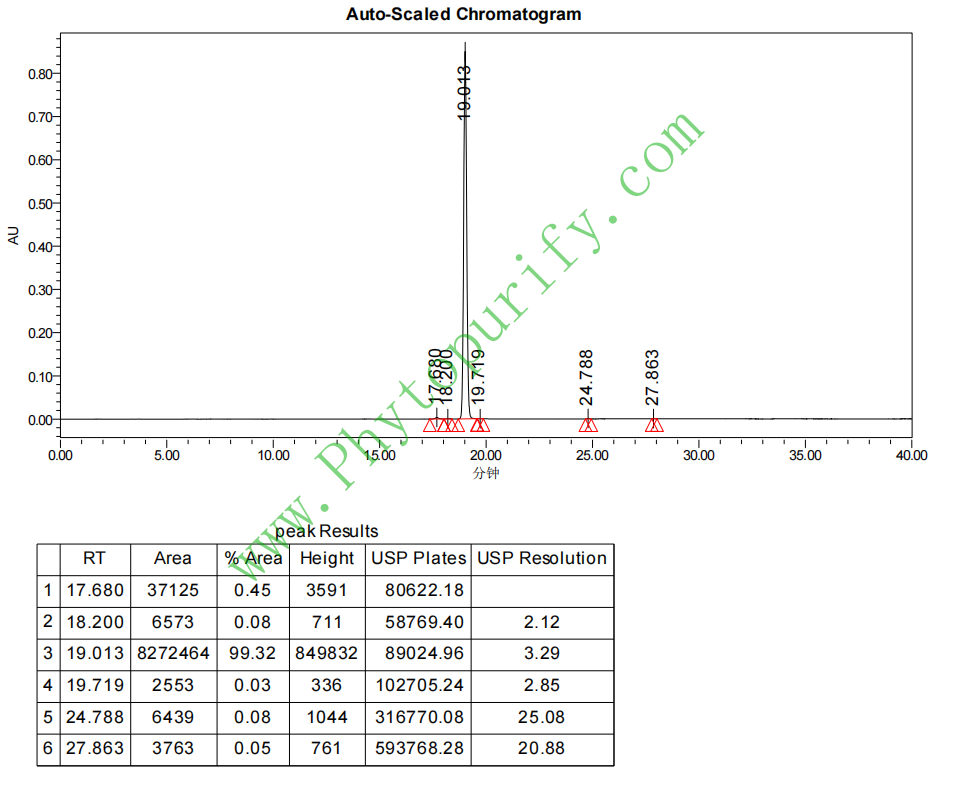
Analysis Method: HPLC-DAD or/and HPLC-ELSD
Identification Method: Mass, NMR
Packing: Brown vial or HDPE plastic bottle
Storage: Store in a well closed container, protected from air and light. Put into refrigerate or freeze for long term storage.
Whenever possible, you should prepare and use solutions on the same day. However, if you need to make up stock solutions in advance, we recommend that you store the solution as aliquots in tightly sealed vials at -20℃. Generally, these will be useable for up to two weeks.
The product could be supplied from milligrams to grams, up to kilograms
Inquire for bulk scale.
Descriptions:
Insampaedoksan is a traditional herbal medicine used for antipyretic and antiinflammatory diseases, isoliquiritigenin is the main compound of it , thus , isoliquiritigenin has bioactivity effects such as antioxidant, estrogenic and anticancer. [1]
Isoliquiritin, liquiritin,and isoliquirigenin are the active polyphenols present in Glycyrrhiza uralensis which has been used for the treatment of cancer and its complications, they induce apoptotic cell death through upregulating p53 and p21 in the A549 non-small cell lung cancer cells and inhibit the p53-dependent pathway and showed crosstalk between Akt activities,suggests they can be an alternative agent for the treatment of lung cancer.[2]
Isoliquiritin and liquiritin produce significant antidepressant-like effects, and their mechanism of action may be due to increased 5-HT and NE in the mouse hippocampus, hypothalamus and cortex.[3]
Isoliquiritin has antifungal activity, and has inhibitory effect against peronophythora litchi chen through a membrane damage mechanism, it may be used as a natural alternative to commercial fungicides or a lead compound to develop new fungicides for the control of litchi downy blight.[4]
Isoliquiritin has anti-tumor activity, can induce hepatoma cell apoptosis in H22-bearing mice by down-regulating the expression of Bcl-2 and up-regulating expression of Bax, Cyt-c and Caspase-3, it can also induce the apoptosis in MDA-MB-231 cells.[5]
References:
[1] Lee K J, Jung P M, Roh J H, et al. Asian J Chem, 2014,26(8):24-5.
[2] Zhou Y, Ho W S. Oncol Rep, 2014, 31(1):298-304.
[3] Wang W, Hu X, Zhao Z, et al. Prog Neuro-psychoph, 2008, 32(5):1179-84.
[4] Luo J, Li Z, Wang J, et al. Molecules, 2016, 21(2):237.
[5] Luo J, Li Z, Wang J, et al. Central South Pharmacy, 2015(08):806-10.
[6] Liu Y, Yang J S. China Pharm (English), 2005, 14(4):227-30.
HPLC of Isoliquiritin
Storage conditions:Short-term storage at 2~8℃, long-term storage at -20 ~ -80℃
156.9100
.6862
.6517
1.4426
.6787
.1540
Low
79.4950
3.6467
Yes
No
Yes
No
Yes
No
0.0
Yes
Yes
Yes
Yes
Natural products, as an important source of drug discovery, play an irreplaceable role in the long history of human struggle against diseases. Licorice(Glycyrrhiza Species, as a traditional medicinal plant with a long history and wide application, is known as the "old man of the country" and its medicinal value is highly recognized in both Eastern and Western medical systems. The chemical composition of licorice is complex and diverse, mainly including triterpenoid saponins (such as glycyrrhizic acid and glycyrrhetinic acid) and flavonoids. Among them, flavonoids have attracted much attention due to their significant biological activity. Isoliquiritin (CAS number: 5041-81-6) is an important active flavonoid component in licorice, belonging to chalcone compounds. In recent years, with the advancement of separation technology and pharmacological screening methods, various pharmacological activities of isoliquiritigenin have been gradually revealed, including anti-tumor, anti-inflammatory, antioxidant, antidepressant, and antifungal effects, demonstrating potential drug development value. This article aims to systematically review the chemical structure, physicochemical properties, plant sources, extraction methods, pharmacological activity, mechanism of action, medicinal properties, and clinical application prospects of isoliquiritigenin, in order to provide reference for the in-depth research and development of this natural product.
The chemical essence of isoliquiritigenin is a monosaccharide derivative, and its parent nucleus structure is trans chalcone. Specifically, its structural feature is that the 2 'and 4' positions of the chalcone skeleton are replaced by hydroxyl groups (- OH), and the hydroxyl group at the 4 'position is further connected to the β - D-glucopyranose group through glycosidic bonds, forming β - D-glucoside. Therefore, the systematic naming of isoliquiritigenin can be described as: 2 ', 4,4' - trihydroxychalcone-4 '- O - β - D-glucopyranoside. Its molecular formula is C ₂₁ H ₂₂ O ₉, and its molecular weight is 418.3980 g/mol. From a structural classification perspective, isoliquiritigenin combines the characteristics of chalcones, resorcinol (due to its A-ring being a resorcinol structure), and monosaccharide derivatives, and is closely related in function to trans chalcones.
In terms of physicochemical properties, the lipid water partition coefficient (LogP) of isoliquiritigenin is 0.6862, indicating its hydrophilicity, which is mainly attributed to the presence of multiple hydroxyl and glucose groups in the molecule. Its polar surface area (TPSA) is 156.9100 Å ², which is a high value indicating its high polarity and may affect its transmembrane transport and oral absorption. The water solubility parameter is 1.4426, indicating that its solubility in water is limited but superior to many highly lipophilic aglycones. It is worth noting that the blood-brain barrier (BBB) penetration ability of isoliquiritigenin is relatively low, which limits its application in the treatment of central nervous system diseases, but may also mean that its peripheral effects are more significant. In addition, the negative prediction result of hERG inhibition indicates a low risk of cardiac toxicity; The Ames test result is 0.0, indicating no significant genetic toxicity. These physicochemical properties and preliminary safety evaluations provide a favorable basis for the subsequent development of isoliquiritigenin.
Isoglycyrrhizin is mainly derived from the Fabaceae genus of licorice(Glycyrrhiza)Plants such as Ural licorice(Glycyrrhiza uralensis Fisch.)、 Swelling fruit licorice(Glycyrrhiza inflata Bat. and licorice with light fruit(Glycyrrhiza glabra L. Wait, wait. These plants are the legal base plants of traditional Chinese medicine licorice, widely distributed in China, Central Asia, West Asia, and some parts of Europe. The roots and rhizomes of licorice are the main medicinal parts, and the content of isoliquiritigenin varies depending on the variety, place of origin, harvest season, and processing method. Usually, the content of isoliquiritigenin in Ural licorice is relatively high. In addition to plants of the licorice genus, there are research reports that trace amounts have also been found in some other plants, but licorice is still its main and most economical source.
The method of extracting isoliquiritigenin usually follows the classic process of natural product chemistry and combines modern separation techniques. Traditional methods include solvent extraction, such as using methanol, ethanol, or water alcohol mixed solvents to heat reflux or cold soak licorice powder for extraction. Due to its high polarity as a glycoside, the extraction efficiency of high concentration ethanol or methanol is usually better than that of pure water. After concentration, the extract can be preliminarily enriched through liquid-liquid extraction (such as using ethyl acetate or n-butanol). Modern extraction techniques place greater emphasis on efficiency, selectivity, and environmental friendliness, such as:
1. Ultrasound assisted extraction Utilizing the cavitation effect of ultrasound to accelerate cell wall rupture and promote the dissolution of target components can significantly shorten extraction time and improve yield.
2. Microwave assisted extraction By utilizing the penetrability and selective heating of microwaves, polar molecules are rapidly heated, thereby improving extraction efficiency.
3. Enzyme assisted extraction Using cellulases, pectinases, and other enzymes to break down plant cell walls can help release intracellular components, especially suitable for extracting glycosides.
The crude extract after extraction needs further separation and purification to obtain high-purity isoliquiritigenin. Common separation methods include:
* Column chromatography method Such as silica gel column chromatography, polyamide column chromatography, macroporous adsorption resin column chromatography, etc. Polyamide column chromatography has good selectivity for flavonoids and is commonly used for preliminary separation. Macroporous adsorption resin can be used for sugar removal, decolorization, and preliminary enrichment.
* High performance liquid chromatography method Preparative HPLC is a commonly used method to obtain high-purity isoliquiritigenin (purity>98%), typically using a reverse phase C18 chromatography column with methanol water or acetonitrile water system as the mobile phase for isocratic or gradient elution.
* High-speed countercurrent chromatography A chromatographic technique based on liquid-liquid distribution principle, which does not require solid support and can avoid irreversible adsorption of samples on the column, suitable for preparation grade separation.
Overall, establishing an efficient, green, and low-cost process for extracting and purifying isoliquiritigenin is the key to promoting its industrial production and subsequent research.
In recent years, significant progress has been made in the pharmacological activity research of isoliquiritigenin, which exhibits pleiotropic effects in multiple disease models.
1. Antitumor activity
One of the most notable activities of isoliquiritigenin is its anti-tumor effect. Studies have shown that isoliquiritigenin can effectively inhibit the proliferation of a variety of cancer cells, including liver cancer, breast cancer, lung cancer, colon cancer and melanoma. Its mechanism of action involves multiple aspects: firstly, isoliquiritigenin can inhibit tumor angiogenesis and tube formation, which are key steps in tumor growth and metastasis. By blocking the generation of new blood vessels in tumors, isoliquiritigenin can "starve" tumors. Secondly, isoliquiritigenin can induce apoptosis in tumor cells by activating the mitochondrial pathway or death receptor pathway, upregulating the expression of pro apoptotic proteins such as Bax and cleaved caspase-3, and downregulating the expression of anti apoptotic proteins such as Bcl-2. In addition, it can also block the proliferation and survival signals of tumor cells by inhibiting key signaling pathways such as PI3K/Akt/mTOR.
2. Anti inflammatory activity
Inflammation is a common pathological basis for various diseases, including cancer, cardiovascular disease, and neurodegenerative diseases. Isoglycyrrhizin exhibits strong anti-inflammatory activity. In a macrophage model stimulated by lipopolysaccharide (LPS), isoliquiritigenin can significantly inhibit the production of pro-inflammatory cytokines such as tumor necrosis factor - α (TNF - α), interleukin-6 (IL-6), and interleukin-1 β (IL-1 β). Its anti-inflammatory mechanism is mainly related to the inhibition of the activation of nuclear factor kappa B (NF - κ B) and mitogen activated protein kinase (MAPK) signaling pathways. NF - κ B is the core transcription factor of inflammatory response, and isoliquiritigenin inhibits the phosphorylation and degradation of I κ B α, preventing the nuclear translocation of NF - κ B and downregulating the expression of various inflammatory genes.
3. Antioxidant activity
Oxidative stress is the result of an imbalance between the production of reactive oxygen species (ROS) and the body's antioxidant defense system, and is closely related to aging, cancer, cardiovascular disease, and other conditions. Isoglycyrrhizin has significant antioxidant capacity. In vitro chemical experiments have shown that it can effectively scavenge DPPH free radicals, ABTS cationic free radicals, and superoxide anions. At the cellular level, isoliquiritigenin can reduce intracellular ROS levels induced by hydrogen peroxide (H ₂ O ₂) or other oxidants, alleviating oxidative damage. Its antioxidant effect is partially achieved by activating the nuclear factor E2 related factor 2 (Nrf2) signaling pathway. Nrf2 is the main regulator of cellular antioxidant defense, and isoliquiritigenin can promote the dissociation and translocation of Nrf2 from Keap1 into the nucleus, where it binds to antioxidant response elements (ARE) and upregulates the expression of a series of antioxidant enzyme genes, such as superoxide dismutase (SOD1, SOD2), catalase (CAT), glutathione peroxidase 1 (GPX1), and heme oxygenase 1 (HMOX1). These enzymes together form a strong defense line for cells to resist oxidative damage.
4. Antidepressant activity
Depression is a common mental disorder with a complex pathogenesis. Isoglycyrrhizin has shown antidepressant like effects in animal depression models. Behavioral experiments (such as forced swimming experiments and tail suspension experiments) have shown that administration of isoliquiritigenin can significantly reduce immobility time in mice, suggesting its antidepressant potential. The mechanism may be related to regulating the hypothalamic pituitary adrenal (HPA) axis function, increasing the expression of brain-derived neurotrophic factor (BDNF), and regulating the levels of monoamine neurotransmitters such as serotonin and dopamine. In addition, its anti-inflammatory and antioxidant activities may also play a synergistic role in antidepressant effects, as neuroinflammation and oxidative stress are considered important pathological processes in depression.
5. Antifungal activity
Isoglycyrrhizin also exhibits certain antifungal activity. Research reports on its effectiveness against various pathogenic fungi, such as Candida albicans(Candida albicans)Cryptococcus neoformans(Cryptococcus neoformans)It has inhibitory effects on certain skin fungi. Its antifungal mechanism may be related to the destruction of fungal cell membrane integrity, inhibition of fungal cell wall synthesis, or interference with fungal metabolic processes. This provides potential lead compounds for the development of novel antifungal drugs.
The pharmacological activity of isoliquiritigenin is the result of multi-target and multi pathway synergistic effects. Its core mechanism of action can be summarized as follows:
Regulating redox balance As mentioned above, isoliquiritigenin is an effective activator of the Nrf2/ARE signaling pathway. By upregulating the expression and activity of NFE2L2 (the coding gene for Nrf2), it promotes the transcription of downstream target genes such as SOD1, SOD2, CAT, GPX1, and HMOX1, thereby enhancing the overall antioxidant capacity of cells. This mechanism is an important basis for its anti-inflammatory, anti-tumor, and neuroprotective effects.
Inhibition of inflammatory signaling pathway Isoglycyrrhizin can directly or indirectly inhibit key inflammatory signaling pathways, especially the NF - κ B and MAPK pathways. It inhibits the activity of I κ B kinase (IKK) and prevents the degradation of I κ B α, thereby anchoring NF - κ B (p65/p50 dimer) in the cytoplasm and preventing it from entering the nucleus to initiate the transcription of pro-inflammatory genes. Meanwhile, it can also inhibit the phosphorylation of p38 MAPK, JNK, and ERK1/2, thereby blocking the cascade amplification of inflammatory signals.
Intervention of cell proliferation and apoptosis signaling In terms of anti-tumor effects, isoliquiritigenin inhibits the PI3K/Akt/mTOR signaling pathway, blocking growth factor mediated cell survival and proliferation signals. In addition, it can directly act on mitochondria, alter mitochondrial membrane potential, release cytochrome c, activate caspase cascade reaction, and induce cell apoptosis. Its inhibitory effect on angiogenesis may be related to the downregulation of the expression of vascular endothelial growth factor (VEGF) and its receptor (VEGFR).
Regulating neurotransmitters and neurotrophic factors In its antidepressant effect, isoliquiritigenin may increase the levels of monoamine neurotransmitters such as serotonin and norepinephrine in synaptic cleft by inhibiting the activity of monoamine oxidase (MAO). At the same time, it can upregulate the expression of BDNF in the hippocampus and prefrontal cortex, which is a key neurotrophic factor that promotes neuronal survival, synaptic plasticity, and neurogenesis.
These molecular targets and signaling pathways do not exist in isolation, but are interwoven to form a complex network. For example, activation of Nrf2 can inhibit the activity of NF - κ B, thereby synergistically exerting anti-inflammatory and antioxidant effects. Isoglycyrrhizin exhibits its pleiotropic pharmacological activity by acting on multiple key nodes in this network.
The evaluation of drug properties is a crucial step in pushing natural products from the laboratory to clinical applications. Based on the provided parameters, the pharmacological characteristics of isoliquiritigenin are as follows:
Regarding the pharmacokinetic (ADME) properties, there is currently insufficient research on isoliquiritigenin, but there are some preliminary understandings:
* absorb Due to its high molecular weight and polarity, the oral bioavailability of isoliquiritigenin may be low. After oral administration, it may be metabolized by gut microbiota, and its glycosidic bonds may be hydrolyzed, releasing aglycone - isoliquiritigenin. As a glycoside element, isoliquiritigenin has higher lipid solubility and is more easily absorbed. Therefore, isoliquiritigenin may play a role as a prodrug, converting into more active aglycones in the body to exert its effects.
* distribution Due to its hydrophilicity and low BBB penetration, isoliquiritigenin is mainly distributed in plasma and extracellular fluid, making it difficult to enter the central nervous system.
* Metabolism The liver and gut microbiota are its main metabolic sites. Metabolic reactions mainly include II phase metabolic reactions such as glycosidic bond hydrolysis, glucuronidation, sulfation, and methylation. Isoglycyrrhizin is further metabolized into various complexes.
* excretion Metabolites are mainly excreted through urine and bile.
Overall, the pharmaceutical challenge of isoliquiritigenin lies mainly in its low oral bioavailability. Future drug development strategies may need to consider:
1. Structural modification Improve oral absorption and bioavailability through prodrug design (such as introducing ester or phosphate groups) or nanoformulation technology (such as liposomes, polymer nanoparticles).
2. Optimization of administration route Explore non oral routes of administration, such as transdermal, nasal, or injection administration, to bypass first pass effects.
3. combination therapy Combined use with absorption enhancers or P-glycoprotein inhibitors may improve their absorption.
Based on its pleiotropic pharmacological activity and preliminary safety evaluation, isoliquiritigenin has shown broad application prospects in multiple therapeutic fields.
Antitumor adjuvant therapy Isoglycyrrhizin, as an angiogenesis inhibitor and apoptosis inducer, is expected to be developed as a low toxicity adjuvant therapy for tumors. Its advantage lies in its ability to act on multiple targets in the tumor microenvironment, which may have a synergistic effect with traditional chemotherapy drugs or targeted drugs, and alleviate the toxic side effects of the latter. Especially for solid tumors with strong angiogenesis dependence, such as liver cancer and breast cancer, it has potential application value.
Chronic inflammatory diseases In view of its strong anti-inflammatory and antioxidant activities, isoliquiritigenin can be used to treat a variety of chronic inflammatory diseases, such as inflammatory bowel disease (IBD), rheumatoid arthritis, atherosclerosis, etc. By inhibiting NF - κ B and activating the Nrf2 pathway, it can effectively control inflammatory responses and alleviate tissue damage.
Metabolic diseases Oxidative stress and chronic low-grade inflammation are the core pathological links of metabolic diseases such as type 2 diabetes and non-alcoholic fatty liver disease (NAFLD). Isoglycyrrhizin may play a role in the prevention and treatment of these diseases by improving insulin resistance, regulating lipid metabolism, and reducing liver oxidative damage.
Neuropsychiatric disorders Although BBB penetration is low, the antidepressant effect of isoliquiritigenin has been confirmed in animal models. The mechanism may indirectly affect the central nervous system by regulating peripheral inflammation and oxidative stress. In addition, its aglycone isoliquiritigenin may be more likely to enter the brain. Therefore, developing derivatives or preparations of isoliquiritigenin that can effectively deliver into the brain may provide new ideas for the treatment of neurodegenerative diseases such as depression and Alzheimer's disease.
Skin diseases and cosmetics The antioxidant, anti-inflammatory, and antifungal activities of isoliquiritigenin make it have potential applications in the field of skin care. It can be added as an active ingredient to skincare products for anti-aging, whitening, soothing, and treating acne, dermatitis, and more.
Future research directions should focus on:
* In depth mechanism research Using omics techniques such as transcriptomics, proteomics, and metabolomics to systematically elucidate the multi-target action network of isoliquiritigenin.
* Pharmacokinetic optimization Systematically study its in vivo ADME process and develop novel drug delivery systems (such as nanoparticles and phospholipid complexes) to overcome its low bioavailability bottleneck.
* Study on Structure Activity Relationship Synthesize a series of derivatives of isoliquiritigenin, explore the relationship between their structure (such as sugar type, substituent position) and activity, and search for candidate compounds with stronger activity and better drug properties.
* Preclinical safety evaluation Conduct systematic safety evaluations of acute and chronic toxicity, reproductive toxicity, genetic toxicity, etc., laying the foundation for clinical trials.
* clinical trial After clarifying its efficacy and safety, design rigorous clinical trials to verify its effectiveness and safety in specific diseases such as adjuvant therapy for tumors and IBD.
As an important chalcone active ingredient in licorice, isoliquiritigenin has become a research hotspot in the field of natural product pharmacology due to its various pharmacological activities such as anti-tumor, anti-inflammatory, antioxidant, antidepressant, and antifungal effects. Its mechanism of action involves multiple key signaling pathways such as Nrf2/ARE, NF - κ B, PI3K/Akt, reflecting the multi-target and multi pathway characteristics of natural products. Although its low oral bioavailability is the main obstacle to its clinical translation, this challenge is expected to be overcome through structural modification and the application of novel formulation technologies. Combined with its good preliminary safety characteristics, isoliquiritigenin and its derivatives have shown promising development prospects in the treatment of tumors, inflammation, metabolism, and neurological and psychiatric disorders. In the future, with a deeper understanding of its mechanism of action and the resolution of pharmacokinetic issues, isoliquiritigenin is expected to transform from an ancient natural product into a new star in modern drug development, contributing to human health.
