


Product name: α-Linolenic acid
Synonym name:
Catalogue No.: BP4133
Cas No.: 463-40-1
Formula: C18H30O2
Mol Weight: 278.436
Botanical Source:
Physical Description:
Type of Compound: Aliphatics
Purity: 95%~99%
Analysis Method: HPLC-DAD or/and HPLC-ELSD
Identification Method: Mass, NMR
Packing: Brown vial or HDPE plastic bottle
Storage: Store in a well closed container, protected from air and light. Put into refrigerate or freeze for long term storage.
Whenever possible, you should prepare and use solutions on the same day. However, if you need to make up stock solutions in advance, we recommend that you store the solution as aliquots in tightly sealed vials at -20℃. Generally, these will be useable for up to two weeks.
The product could be supplied from milligrams to grams
Inquire for bulk scale.
For Reference Standard and R&D, Not for Human Use Directly.
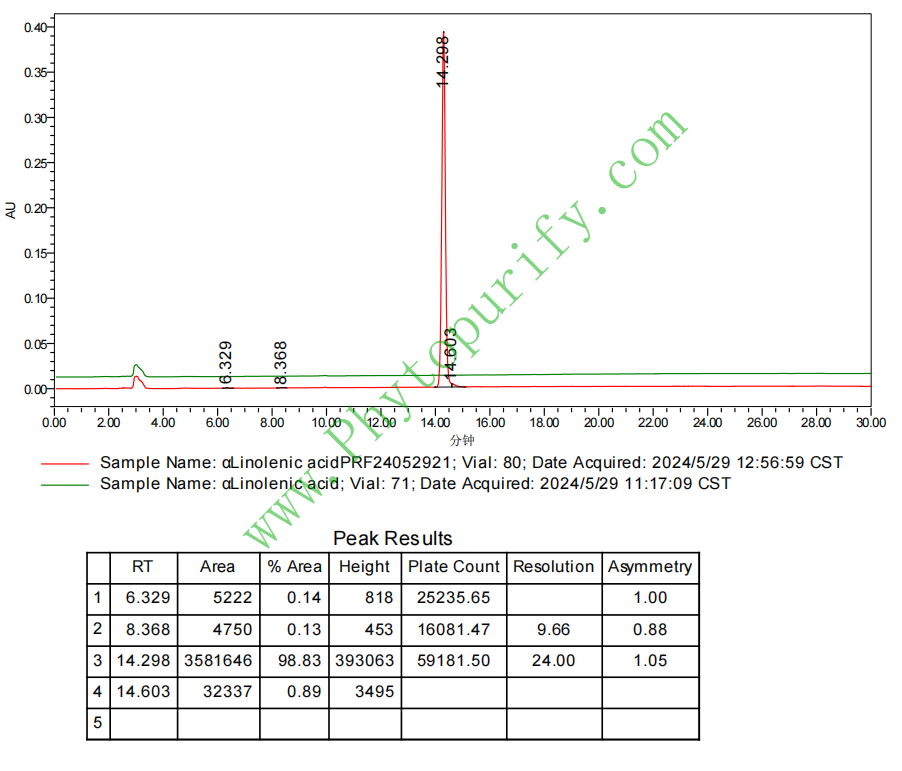
HPLC of α-Linolenic acid
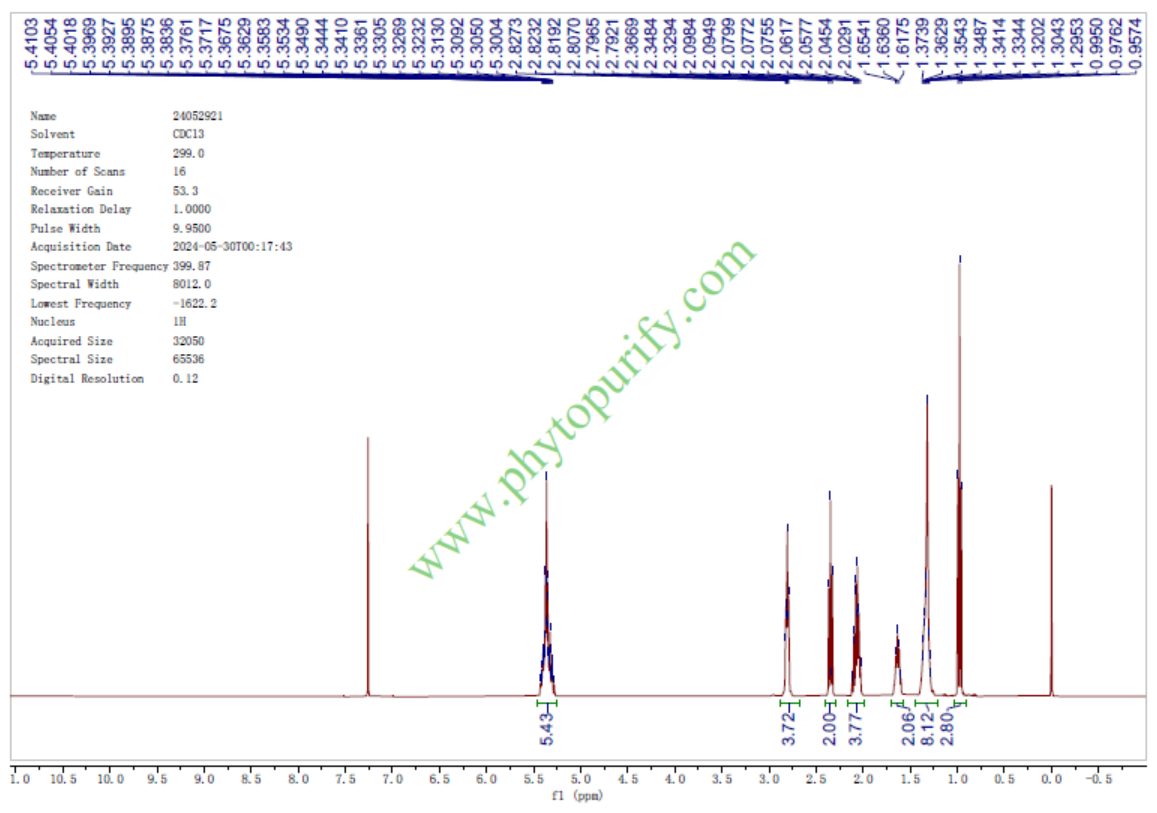
HNMR of α-Linolenic acid
Storage conditions:Short-term storage at 2~8℃, long-term storage at -20 ~ -80℃
37.3000
6.2239
3.8966
.0071
4.4791
3.2530
High
96.4360
2.5886
Yes
Yes
No
No
No
No
0.0
No
Yes
Yes
Yes
Alpha linolenic acid (ALA, CAS number: 463-40-1) is a typical plant derived omega-3 polyunsaturated fatty acid, widely present in flaxseed oil, perilla oil, walnut oil, and other plant oils. As one of the essential fatty acids in the human body, alpha linolenic acid plays an important role in maintaining lipid metabolism, regulating inflammatory responses, and cardiovascular protection. In recent years, with the continuous increase of the incidence rate of cardiovascular and cerebrovascular diseases, more and more attention has been paid to the cardiovascular protective components of natural products. Alpha linolenic acid, due to its unique chemical structure and physiological functions, has become an important target for the research and development of new nutritional supplements and drugs.
This article aims to systematically review the chemical structure and physicochemical properties, plant sources, and extraction methods of alpha linolenic acid, with a focus on its pharmacological activity and mechanism of action. Combined with the latest molecular target research, it deeply analyzes its pharmacological and pharmacokinetic characteristics, and finally looks forward to its potential in clinical applications and future research directions, providing comprehensive reference materials for the field of natural product pharmacology.
Alpha linolenic acid is a polyunsaturated fatty acid containing 18 carbon atoms, with a molecular formula of C18H30O2 and a molecular weight of 278.4360. Its structural feature is the presence of cis (Z) double bonds at positions 9, 12, and 15 of the carbon chain, and its chemical name is (9Z, 12Z, 15Z) - octadeca-9,12,15-tricarboxylic acid. The triple cis double bond endows it with unique chemical activity and biological functions.
In terms of physical and chemical properties, alpha linolenic acid exhibits high lipophilicity with a LogP value of 6.2239, indicating its strong lipophilicity, easy solubility in organic solvents, and extremely low water solubility (0.0071 mg/mL). Its polar surface area (TPSA) is 37.3 Å ², indicating that the overall polarity of its molecules is low, which is conducive to passive diffusion through the cell membrane. The high permeability of the blood-brain barrier suggests that it may affect the function of the central nervous system. It is worth noting that alpha linolenic acid does not exhibit hERG channel inhibition, and the Ames mutagenicity test result is 0.0, indicating its high safety and low toxicological risk.
Alpha linolenic acid, as a type of fatty acid, has conjugated acids of alpha linolenic acid ester and (9Z, 12Z, 15Z) - octadec-9,12,15-tricarboxylic acid ester. It often exists in the form of esterification in plant oils and requires hydrolysis to release free fatty acids before exerting biological activity.
Alpha linolenic acid mainly comes from various plant seed oils rich in omega-3 fatty acids, among which flaxseed oil has the highest content, accounting for about 50% -60% of the total fatty acids. In addition, Perilla frutescens seed oil, Juglans regia oil, sunflower seed oil, etc. also contain a certain proportion of alpha linolenic acid.
Traditional extraction methods often use cold pressing and solvent extraction methods. The cold pressing method uses mechanical extrusion to avoid damage to the fatty acid structure caused by high temperatures, while retaining a high content of alpha linolenic acid and its natural active ingredients. Solvent extraction commonly uses organic solvents such as hexane and ethanol, which have high extraction efficiency. However, attention should be paid to the effects of solvent residue and heat treatment on the structure of fatty acids.
In recent years, supercritical CO2 extraction technology has become the preferred method for extracting alpha linolenic acid due to its mild temperature, no solvent residue, and strong selectivity. This technology can effectively protect the cis double bond structure of alpha linolenic acid and maximize its biological activity.
The extracted raw materials usually need to undergo refining steps such as degumming, decolorization, and deodorization to remove impurities and unpleasant odors, and obtain high-purity alpha linolenic acid oil products, which are suitable for the development of nutritional supplements and medicinal preparations.
Alpha linolenic acid, as an important omega-3 fatty acid, has various biological activities, especially outstanding in cardiovascular protection, anti-inflammatory, antithrombotic, and metabolic regulation.
Numerous clinical and experimental studies have shown that alpha linolenic acid can significantly reduce the risk of cardiovascular disease. Its main mechanisms include regulating blood lipid level, reducing low-density lipoprotein cholesterol (LDL-C), increasing high-density lipoprotein cholesterol (HDL-C), inhibiting platelet aggregation, improving vascular endothelial function, and reducing the formation of atherosclerosis.
Animal model studies show that α - linolenic acid supplementation can reduce atherosclerosis induced by high-fat diet, reduce plasma triglycerides and inflammatory factors, and improve vasodilation function. In addition, alpha linolenic acid can also exert a hypotensive effect by regulating blood pressure related signaling pathways.
The role of alpha linolenic acid in antithrombotic therapy is particularly significant. It reduces the incidence of myocardial infarction and stroke by inhibiting platelet activation and aggregation, reducing thrombus formation. Related studies have shown that alpha linolenic acid can regulate platelet membrane lipid composition, affect platelet calcium ion concentration and signal transduction, and ultimately inhibit the activity of thrombotic enzymes.
Alpha linolenic acid has good anti-inflammatory activity and can downregulate the expression of pro-inflammatory cytokines such as TNF - α and IL-6, inhibit the activation of the NF - κ B signaling pathway, and alleviate chronic inflammation. Its metabolites also participate in regulating immune cell function, promoting self repair of inflammation and tissue regeneration.
As an important regulator of energy metabolism, α - linolenic acid can promote fatty acid oxidation, improve insulin sensitivity, and prevent obesity and type 2 diabetes. Studies on mouse metabolites have shown that alpha linolenic acid affects the expression of lipid metabolism related genes and regulates energy balance.
The multiple biological effects of alpha linolenic acid depend on its interactions with multiple molecular targets, involving signal transduction, gene expression regulation, and cellular function regulation.
The P-selectin encoded by SELP is expressed in platelets and endothelial cells, and is involved in inflammation and thrombosis processes. Alpha linolenic acid reduces platelet adhesion to vascular walls and inhibits thrombus formation by regulating the expression of SELP.
PPARG is a key regulatory factor in lipid metabolism and inflammatory response. Alpha linolenic acid, as a natural ligand of PPARG, can activate its signaling pathway, promote fatty acid oxidation, inhibit inflammatory gene expression, and improve metabolic syndrome.
ACE plays a central role in blood pressure regulation. Alpha linolenic acid exerts antihypertensive and vascular protective effects by inhibiting ACE activity, reducing the production of angiotensin II.
AKT1 is involved in cell survival, metabolism, and angiogenesis. Alpha linolenic acid activates the AKT1 signaling pathway, promotes endothelial cell function and vascular repair, and enhances vascular elasticity.
ADRB2 regulates the stress response of the cardiovascular system. Alpha linolenic acid improves myocardial function and vasodilation ability by regulating ADRB2 expression.
KCNH2 channels affect cardiac electrical activity and rhythm. Alpha linolenic acid has no inhibitory effect on KCNH2, indicating its good cardiac safety.
NOS3 produces vasodilator nitric oxide (NO), which maintains endothelial function. Alpha linolenic acid promotes the expression and activity of NOS3, enhances NO production, and improves vasodilation.
ICAM1 and VCAM1 mediate the adhesion between white blood cells and endothelial cells, which are important markers of inflammatory response. Alpha linolenic acid inhibits the expression of these two molecules and reduces vascular inflammation.
SLC8A1 regulates intracellular calcium homeostasis and affects myocardial cell function. Alpha linolenic acid protects myocardial cells from calcium overload damage by regulating SLC8A1.
In summary, alpha linolenic acid achieves multiple pharmacological effects such as cardiovascular protection and anti-inflammatory effects through multi-target and multi pathway synergistic effects.
The pharmacological evaluation of alpha linolenic acid shows that it has good safety and bioavailability. Its molecular weight is moderate (278.4360) and its lipophilicity is high (LogP=6.2239), which is beneficial for oral absorption and cell membrane penetration. The low polarity surface area (TPSA=37.3) supports its good membrane permeability.
The extremely low water solubility (0.0071 mg/mL) limits its solubility in aqueous environments, which may affect the bioavailability of oral formulations, but can be effectively improved through lipid carrier or nanoformulation technology.
The high permeability of the blood-brain barrier suggests its potential role in neurological diseases, but attention should be paid to potential central nervous system side effects.
In toxicology assessment, alpha linolenic acid did not exhibit hERG channel inhibition, reducing the risk of arrhythmia. The Ames mutagenicity test was negative, indicating a low risk of genotoxicity.
In terms of pharmacokinetics, alpha linolenic acid is mainly absorbed into the bloodstream through the intestine and then metabolized by the liver, participating in the lipid metabolism pathway. Its metabolites include precursors of eicosapentaenoic acid (EPA) and docosahexaenoic acid (DHA), which further exert biological activity. Moderate half-life, suitable for daily supplementation.
Alpha linolenic acid, as a safe and effective natural omega-3 fatty acid, has been widely used in the field of nutritional supplements, especially in the prevention and adjuvant treatment of cardiovascular diseases, showing promising prospects. Its multiple effects of antithrombotic, lipid-lowering, anti-inflammatory, and improving endothelial function provide a natural treatment option for patients with cardiovascular disease.
In the future, with the deepening of molecular target research, α - linolenic acid is expected to develop new drugs targeting specific signal pathways, especially in the metabolic syndrome, diabetes and neurodegenerative diseases.
In addition, utilizing modern formulation technologies such as liposomes, nanoparticles, and solid dispersions to enhance the bioavailability and targeting of alpha linolenic acid will further broaden its clinical application scope.
Combining genomics and metabolomics techniques to deeply analyze the interaction between alpha linolenic acid and individual genetic background can help achieve precise nutrition and personalized treatment.
Alpha linolenic acid, as an important plant derived omega-3 fatty acid, has shown broad application prospects in cardiovascular protection, anti-inflammatory, and metabolic regulation fields due to its unique chemical structure and multi-target pharmacological effects. Its good medicinal properties and safety provide a solid foundation for further development.
Future research should focus on in-depth analysis of its molecular mechanisms, development of new formulations, and systematic evaluation of clinical efficacy, in order to better convert alpha linolenic acid into clinically available natural medicines or functional nutritional supplements for the benefit of human health.
