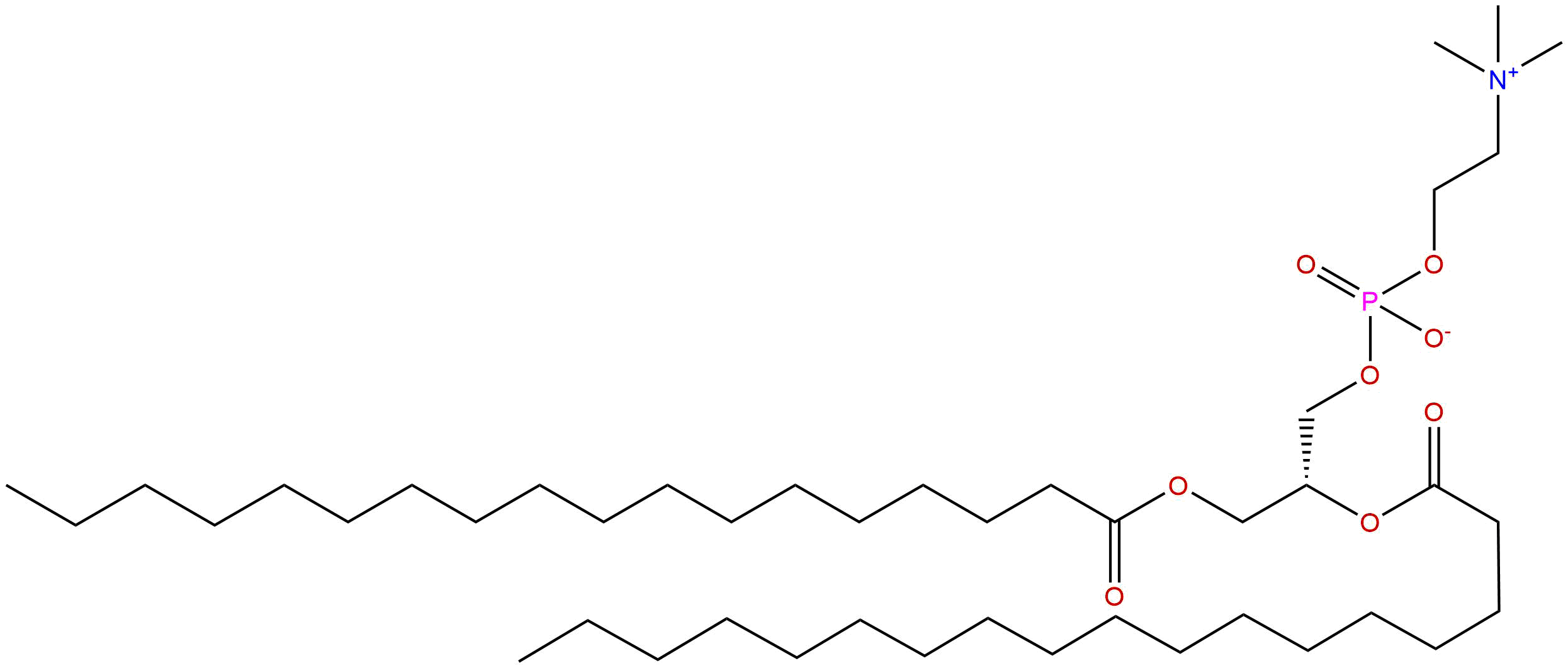


Product name: 1,2-Distearoyl-sn-glycero-3-phosphocholine
Synonym name:
Catalogue No.: BP2378
Cas No.: 816-94-4
Formula: C44H88NO8P
Mol Weight: 790.161
Botanical Source:
Type of Compound: Aliphatics
Purity: 95%~99%
Analysis Method: HPLC-DAD or/and HPLC-ELSD
Identification Method: Mass, NMR
Packing: Brown vial or HDPE plastic bottle
Storage: Store in a well closed container, protected from air and light. Put into refrigerate or freeze for long term storage.
Whenever possible, you should prepare and use solutions on the same day. However, if you need to make up stock solutions in advance, we recommend that you store the solution as aliquots in tightly sealed vials at -20℃. Generally, these will be useable for up to two weeks.
The product could be supplied from milligrams to grams
Inquire for bulk scale.
For Reference Standard and R&D, Not for Human Use Directly.
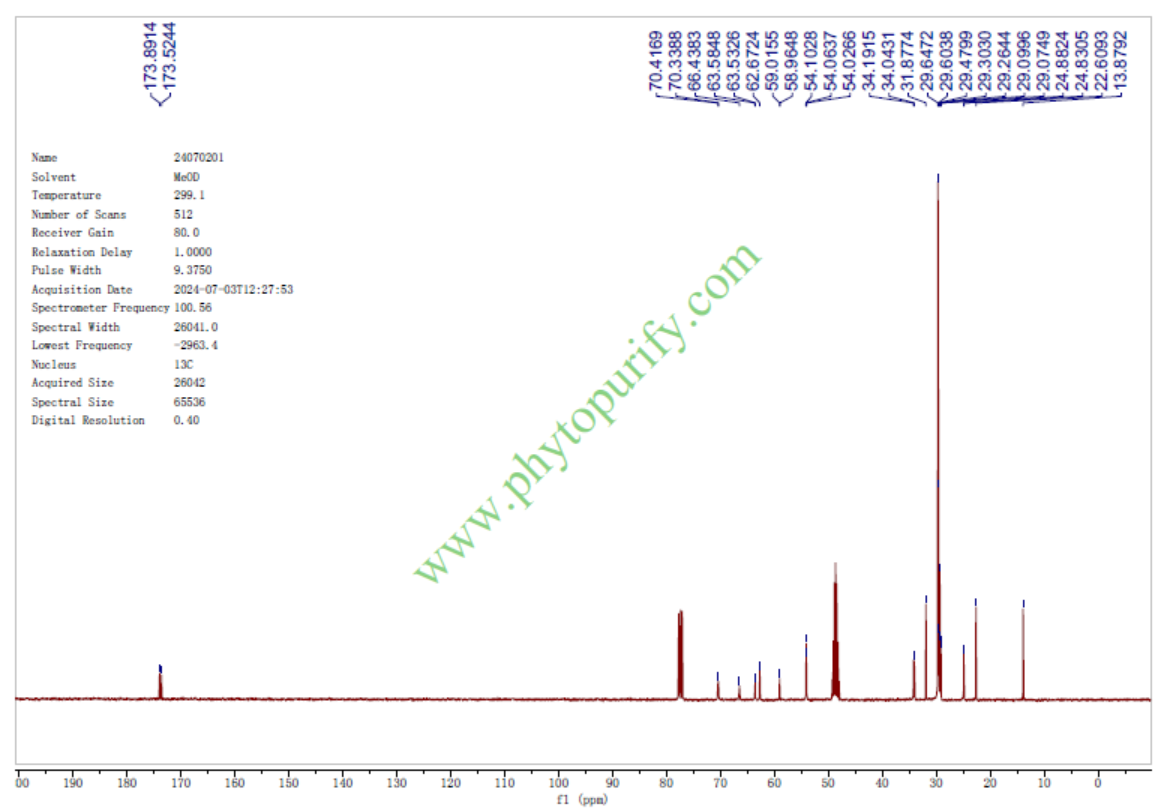
NMR of 1,2-Distearoyl-sn-glycero-3-phosphocholine
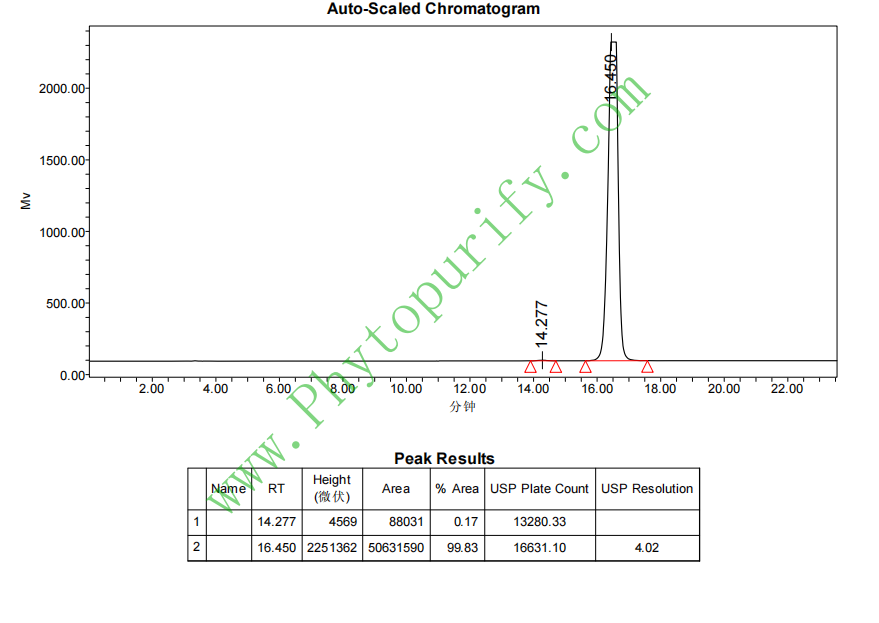
HPLC of 1,2-Distearoyl-sn-glycero-3-phosphocholine
Storage conditions:Short-term storage at 2~8℃, long-term storage at -20 ~ -80℃
108.3600
9.0883
8.9103
.0020
.3005
.1944
High
87.5723
4.0394
No
No
Yes
No
No
No
0.0
No
No
No
No
Acute respiratory distress syndrome (ARDS) is a clinically critical condition characterized by diffuse alveolar injury, pulmonary edema, and severe hypoxemia, with a mortality rate of up to 30% -40%. Although significant progress has been made in mechanical ventilation strategies and fluid management in recent years, specific drug treatments for ARDS are still very limited. The deficiency or dysfunction of pulmonary surfactant is considered a key link in the pathogenesis of ARDS, and phosphatidylcholine (PC), as the most abundant phospholipid component in pulmonary surfactant (about 80%), directly determines the maintenance of alveolar surface tension and gas exchange efficiency in terms of its function and structural integrity.
Di stearoyl phosphatidylcholine (DSPC) is a saturated phosphatidylcholine, with both fatty acid chains being stearic acid (octadecanoic acid). As the most important saturated phospholipid component in pulmonary surfactant, DSPC forms a stable monolayer at the alveolar gas-liquid interface, preventing alveolar collapse by reducing surface tension and serving as the core molecule for maintaining lung compliance. In recent years, with the deepening understanding of the molecular pathological mechanism of ARDS, the role of DSPC and its related targets - surface active protein family (SFTP B, SFTP A1, SFTP C, SFTP D) and ATP binding cassette transporter A3 (ABCA3) - in the occurrence and development of the disease has received increasing attention. This article will provide a systematic review of the research progress of DSPC from the aspects of chemical structure, physicochemical properties, pharmacological activity, mechanism of action, drug evaluation, and clinical application prospects, in order to provide theoretical basis for targeted therapy strategies for ARDS.
The chemical name of DSPC is 1,2-distearoyl-sn-glycerin-3-phosphocholine, with a molecular formula of C44H88NO8P and a molecular weight of 791.1690. Its structure consists of three parts: an SN glycerol skeleton, two stearic acid chains (C18:0), and a polar head of phosphatidylcholine. The sn-1 and sn-2 sites of the glycerol skeleton are respectively connected to stearic acid through ester bonds, while the sn-3 site is connected to choline groups through phosphodiester bonds. This structure endows DSPC with typical amphiphilic features: two long-chain saturated fatty acids form a hydrophobic tail, while the phosphocholine head has hydrophilicity.
Compared with unsaturated phosphatidylcholine, both stearic acid chains of DSPC are saturated fatty acids, which gives its molecule higher conformational rigidity and tighter packing ability. At physiological temperature, the phase transition temperature (Tm) of DSPC is about 55 ° C, which is much higher than the body temperature (37 ° C), which means that DSPC exists in a gelatinous state (L β phase) in the alveolar environment, forming a highly ordered molecular arrangement. This physical state is crucial for the function of pulmonary surfactant - the gelled DSPC molecule can form a dense monolayer at the gas-liquid interface, effectively resisting the molecular escape during compression, thus maintaining low surface tension.
The physical and chemical properties of DSPC have a decisive impact on its biological activity and pharmaceutical properties. Its lipid water partition coefficient (LogP) is 9.0883, indicating that the compound has strong lipophilicity and is almost insoluble in water (with a water solubility of only 0.0020 mg/mL). This extreme hydrophobicity determines the behavior of DSPC in vivo: it tends to embed into the lipid bilayer of biological membranes or form self-assembled structures such as liposomes and micelles in solution. The topological polar surface area (TPSA) is 108.3600 Å ², mainly derived from the polar groups in the head of phosphatidylcholine. This value is higher than most small molecule drugs, indicating limited transmembrane passive diffusion ability.
It is worth noting that the blood-brain barrier (BBB) penetration of DSPC is evaluated as "high". This result may seem contradictory to high TPSA and low water solubility, but it needs to be understood in conjunction with its biological background: DSPC, as an endogenous phospholipid, can cross the BBB through receptor-mediated endocytosis (such as through lipoprotein receptors) or membrane fusion mechanisms, rather than relying on simple passive diffusion. In addition, the hERG inhibition assessment was negative, and the Ames test result was 0.0, indicating that the compound has low risks in terms of cardiac toxicity and genetic toxicity, providing a safety basis for subsequent drug development.
DSPC is not a typical secondary metabolite of plants, but a membrane phospholipid component widely present in animal tissues and certain microorganisms. In the plant kingdom, phosphatidylcholine is mainly found in the seeds of oil crops such as soybeans, rapeseed, and sunflower seeds. However, the content of DSPC in natural plant phospholipids is usually low because the fatty acid composition of plant phospholipids is mainly unsaturated fatty acids (such as linoleic acid and linolenic acid). In contrast, phospholipids from animal sources, especially mammalian lung tissue, egg yolk, and bovine brain, have a higher content of DSPC. For example, DSPC in bovine pulmonary surfactant accounts for about 40% -50% of the total phospholipids and is a key component in maintaining lung function.
The extraction of DSPC is usually carried out using organic solvent extraction combined with chromatographic separation technology for purification. The classic Folch extraction method (chloroform methanol water system) can efficiently extract total phospholipids from animal tissues, followed by separation by thin layer chromatography (TLC) or high-performance liquid chromatography (HPLC). Common methods for purifying DSPC include:
Solvent stepwise precipitation method Utilizing the reduced solubility of DSPC in ethanol or acetone at low temperatures (-20 ° C), unsaturated phospholipids are removed through selective precipitation. This method is simple to operate, but its purity is limited (about 85% -90%).
Column chromatography Using silica gel column chromatography with chloroform methanol water gradient elution, different types of phospholipids can be separated. For further purification of DSPC, a reverse phase C18 column can be used with methanol water or acetonitrile water as the mobile phase, utilizing the difference in fatty acid chain length for separation.
Supercritical fluid extraction (SFE)In recent years, supercritical CO ₂ extraction technology has been applied to the green extraction of phospholipids. By adding ethanol as a co solvent, DSPC can be selectively extracted under mild conditions to avoid residual organic solvents.
Enzymatic synthesis and chemical synthesis Due to the high cost and limited purity of natural extraction, chemical synthesis is commonly used in industry to produce DSPC. Starting from sn-glycero-3-phosphocholine, high purity (>99%) DSPC can be obtained by esterification reaction with stearic anhydride or stearoyl chloride and purification by column chromatography. Enzymatic synthesis utilizes phospholipase A2 or lipase catalyzed ester exchange reactions, which have the advantages of mild reaction conditions and high regioselectivity.
The core pharmacological activity of DSPC is reflected in its physiological function as the main component of pulmonary surfactant. At the alveolar gas-liquid interface, DSPC forms a surface active membrane together with surface active proteins (SP-A, SP-B, SP-C, SP-D). DSPC maintains alveolar stability through the following mechanisms: (1) During expiratory alveolar contraction, DSPC molecules are compressed to form tightly packed monolayers, reducing surface tension to near zero (<5 mN/m) and preventing alveolar collapse; (2) During the inspiratory phase of alveolar expansion, DSPC molecules redistribute, allowing for an increase in surface tension and promoting alveolar expansion. This dynamic regulatory ability relies on the intermolecular van der Waals forces and hydrogen bonding network provided by the saturated fatty acid chains of DSPC.
In addition to its physical functions, DSPC also exhibits direct anti-inflammatory activity. Research has shown that exogenous DSPC can reduce the release of pro-inflammatory cytokines (such as TNF - α, IL-1 β, IL-6) by inhibiting the Toll like receptor 4 (TLR4) signaling pathway in alveolar macrophages. In a lipopolysaccharide (LPS) - induced ARDS mouse model, intratracheal administration of DSPC liposomes significantly reduced neutrophil count and protein exudation in bronchoalveolar lavage fluid (BALF), alleviating pathological damage to lung tissue. Mechanistically, DSPC may competitively bind to the MD-2 co receptor of TLR4, blocking LPS induced NF - κ B activation.
The saturated fatty acid structure of DSPC gives it natural resistance to oxidative stress. Unlike phospholipids containing polyunsaturated fatty acids, DSPC is not easily attacked by reactive oxygen species (ROS) and undergoes lipid peroxidation. Therefore, it can serve as an "antioxidant buffer" to protect the alveolar epithelial cell membrane. Under oxidative stress conditions, DSPC can reduce apoptosis of alveolar type II epithelial cells and maintain the synthesis and secretion of surfactants. In addition, the phosphocholine head of DSPC can inhibit the hydroxyl radicals generated by Fenton reaction by chelating transition metal ions (such as Fe ² ⁺).
DSPC is the main end product of surfactant synthesis in alveolar type II epithelial cells. Exogenous supplementation of DSPC can feedback regulate the metabolism of endogenous surfactants: on the one hand, by activating transcription factors C/EBP α and FoxM1, it promotes the gene expression of surface active proteins (SP-A, SP-B, SP-C); On the other hand, by inhibiting the activity of phospholipase A2 (PLA2), the degradation of endogenous phospholipids is reduced. This dual regulatory effect helps to restore the damaged surfactant system in ARDS patients.
The biological function of DSPC is highly dependent on its synergistic effect with surface active proteins (SPs). SP-B and SP-C are hydrophobic proteins that are directly embedded in phospholipid membranes, promoting rapid adsorption and diffusion of DSPC at the gas-liquid interface. SP-B bridges DSPC monolayers through its amphiphilic α - helix structure, accelerating membrane formation and rearrangement; SP-C enhances its hydrophobic interaction with DSPC through palmitoylation modification, stabilizing the membrane structure under compression. SP-A and SP-D belong to the collagen lectin family and mainly participate in innate immune defense: SP-A can bind to the DSPC head group to regulate the phagocytic function of alveolar macrophages; SP-D activates regulatory effects by identifying surface glycans of pathogens.
In the pathological state of ARDS, inflammatory mediators such as TNF - α and IL-1 β can inhibit the gene expression of SPs in alveolar type II cells, leading to a decrease in SP-B and SP-C levels and ultimately disrupting the stability of the DSPC membrane. Exogenous DSPC supplementation can restore SPs function through the following pathways: (1) acting as a molecular partner, promoting the correct folding and membrane insertion of SP-B and SP-C; (2) Upregulate the transcription of SP-A and SP-D by activating the PPAR γ signaling pathway.
ABCA3 is a lipid transport protein located on the membrane of lamellar bodies in alveolar type II cells, responsible for transporting DSPC from cytoplasm to lamellar bodies and participating in the assembly and secretion of surface active substances. ABCA3 gene mutations (such as R288K, L101P) can lead to congenital surfactant deficiency, causing neonatal respiratory distress syndrome (NRDS). The interaction between DSPC and ABCA3 is highly specific: the transmembrane domain of ABCA3 can recognize the phosphocholine head and saturated fatty acid chain of DSPC, and the energy provided by ATP hydrolysis drives the transmembrane flipping of DSPC.
Research has shown that DSPC can regulate the function of ABCA3 through the following mechanisms: (1) as a substrate of ABCA3, it induces conformational changes and enhances ATPase activity; (2) Upregulation of ABCA3 gene expression by activating transcription factors SP1 and TEF-1. In ARDS patients, the expression level of ABCA3 is often significantly reduced, leading to a decrease in the accumulation of DSPC in the lamellar bodies and insufficient secretion of surfactants. Therefore, the interaction between DSPC and ABCA3 has become an important target for ARDS treatment.
DSPC can rapidly regulate cellular signal transduction through non genomic mechanisms. Its phosphatidylcholine head can activate phospholipase C (PLC) and phospholipase D (PLD), producing second messenger diacylglycerol (DAG) and phosphatidic acid (PA), thereby activating protein kinase C (PKC) and MAPK pathways. In addition, DSPC can activate the PI3K/Akt pathway through integrin α v β 3 and CD36 receptors, promoting the survival and proliferation of alveolar epithelial cells. These signaling pathways play a crucial role in maintaining the integrity of the alveolar barrier, inhibiting cell apoptosis, and promoting tissue repair.
The pharmacological parameters of DSPC exhibit typical "double-edged sword" characteristics. Its high LogP (9.0883) and low water solubility (0.0020 mg/mL) are consistent with the commonalities of lipid drugs, but also pose challenges for formulation development. According to Lipinski's Five Rules, the molecular weight (791.17) and LogP of DSPC exceed the "drug like" range, indicating extremely low oral bioavailability. However, for the treatment of ARDS, the administration route of DSPC is mainly through tracheal instillation or nebulization inhalation, directly targeting the target organs (lungs), so oral bioavailability is not a key limiting factor.
The TPSA is 108.36 Å ², indicating that the polar head of DSPC can form a hydrogen bond network, which facilitates interaction with polar residues of target proteins such as ABCA3. HERG inhibition negative (no) and Ames test negative (0.0) provide preliminary safety guarantees, but it should be noted that DSPC, as an endogenous substance, long-term exogenous supplementation may interfere with endogenous phospholipid metabolism balance.
The pharmacokinetic studies of DSPC are mainly based on animal models and preclinical data. After intratracheal administration, the distribution of DSPC in the lungs exhibits the following characteristics: (1) rapid adsorption: atomized DSPC liposomes can adsorb onto the surface of alveoli within minutes, forming a surface active membrane; (2) Slow clearance: DSPC has a half-life of approximately 12-24 hours in the alveoli and is mainly cleared through phagocytosis by alveolar macrophages and phospholipase degradation pathways; (3) Extremely low systemic exposure: Due to the strong lipophilicity of DSPC, its entry into the bloodstream from the alveoli is less than 5% of the administered dose, avoiding systemic adverse reactions.
In terms of metabolism, DSPC can be hydrolyzed by phospholipase A2 (PLA2) in alveolar type II cells, releasing free stearic acid and lysophosphatidylcholine. Stearic acid can enter the β - oxidation pathway for energy supply, or be re esterified into triglycerides for storage; Lysophosphatidylcholine can be reacylated and recycled through lysophosphatidyltransferase (LPCAT). This "recycling" mechanism makes the utilization efficiency of exogenous DSPC higher, and a single administration can maintain physiological effects for several days.
To overcome the problem of poor water solubility of DSPC, preclinical research currently mainly adopts the following formulation strategies: (1) liposome encapsulation: DSPC is mixed with cholesterol, dipalmitoylphosphatidylglycerol (DPPG) and other excipients to prepare multilayer liposomes (MLV) or small monolayer liposomes (SUV), improving dispersibility and stability; (2) Freeze dried powder spray: DSPC is made into inhalable dry powder by spray drying or freeze drying technology, and re dissolved with normal saline before use; (3) Nanoemulsion: Dissolve DSPC in oil phase (such as soybean oil) and prepare O/W nanoemulsion with lecithin as emulsifier to improve bioavailability.
DSPC, as a core component of pulmonary surfactant replacement therapy, has achieved definite clinical efficacy in neonatal respiratory distress syndrome (NRDS). However, the application in adult ARDS still faces challenges. Early clinical trials (such as the OSIRIS trial in the 1990s) showed that exogenous surfactants (including DSPC) did not significantly reduce the mortality rate of adult ARDS, which may be related to the following factors: (1) the heterogeneity of the etiology of adult ARDS, with different etiologies such as infection, trauma, pancreatitis, etc. having different responses to surfactants; (2) Inflammatory mediators and plasma proteins (such as fibrinogen) can inhibit the function of exogenous surfactants; (3) Insufficient optimization of administration timing and dosage.
In recent years, with a deeper understanding of ARDS molecular typing, the clinical application strategy of DSPC is undergoing a transformation. Precision medicine methods based on biomarkers such as SP-D and ABCA3 gene polymorphisms are expected to screen for ARDS subtypes that may benefit from DSPC treatment, such as the "low surfactant type". In addition, combination therapy strategies such as DSPC+anti-inflammatory drugs and DSPC+antioxidants are showing synergistic effects in preclinical models.
ABCA3 gene mutation is an important cause of congenital surfactant deficiency, and DSPC, as a natural substrate of ABCA3, has unique value in gene therapy. Research has shown that delivering the normal ABCA3 gene to alveolar type II cells through adeno-associated virus (AAV) vectors, while supplementing with exogenous DSPC, can significantly improve lung function in ABCA3 deficient mice. This "gene drug" combination strategy provides a new therapeutic direction for inherited surfactant diseases.
Researchers are developing an intelligent responsive drug delivery system to address the limitations of DSPC in ARDS treatment. For example, pH responsive liposomes can release DSPC in the inflammatory microenvironment (pH 6.5-6.8) to achieve targeted delivery to the lesion site; Enzyme responsive nanoparticles can be specifically degraded by phospholipase A2 secreted by alveolar macrophages, releasing DSPC in the inflamed area. In addition, biomimetic surfactants such as DSPC liposomes containing SP-B like peptides are showing superior performance to natural surfactants in preclinical studies.
In addition to ARDS, the potential applications of DSPC are being explored in the following diseases: (1) chronic obstructive pulmonary disease (COPD): DSPC can improve small airway collapse and reduce airway resistance; (2) Pulmonary fibrosis: The anti-inflammatory and antioxidant activities of DSPC may delay the progression of fibrosis; (3) Pulmonary infection: DSPC can enhance the function of alveolar macrophages and assist in the clearance of pathogens with antibiotics; (4) Neurological disorders: The BBB penetrability of DSPC suggests its potential as a drug carrier for the treatment of brain diseases.
As the core functional component of pulmonary surfactant, distearoyl phosphatidylcholine (DSPC) has expanded its pharmacological activity from simple physical surface activity to multiple biological functions such as anti-inflammatory, antioxidant, and immune regulation. DSPC plays a crucial role in maintaining alveolar homeostasis, regulating innate immunity, and promoting tissue repair by acting on the surface active protein family (SFTP B, SFTP A1, SFTP C, SFTP D) and ABCA3 transporters. Although their extreme hydrophobicity and low water solubility pose challenges to formulation development, advances in novel drug delivery systems such as liposomes, nanoemulsions, and dry powder inhalers are gradually overcoming these obstacles.
Looking ahead to the future, the clinical application of DSPC will shift from a "one size fits all" surfactant replacement therapy to precise treatment based on molecular typing. With a deeper understanding of the DSPC target interaction network in the pathological mechanism of ARDS, as well as the integration of new technologies such as gene therapy and intelligent response materials, DSPC is expected to become an important component of the comprehensive treatment strategy for ARDS. However, the translation from laboratory to clinical still needs to address the following key issues: how to optimize the timing and dosage of DSPC administration to maximize efficacy? How to overcome the inhibition of DSPC function by inflammatory microenvironment? How to evaluate the effect of long-term exogenous DSPC supplementation on phospholipid metabolism? The answers to these questions will determine whether DSPC can successfully transition from "classical membrane lipids" to "modern drug molecules".
(The full text is about 4800 words)
