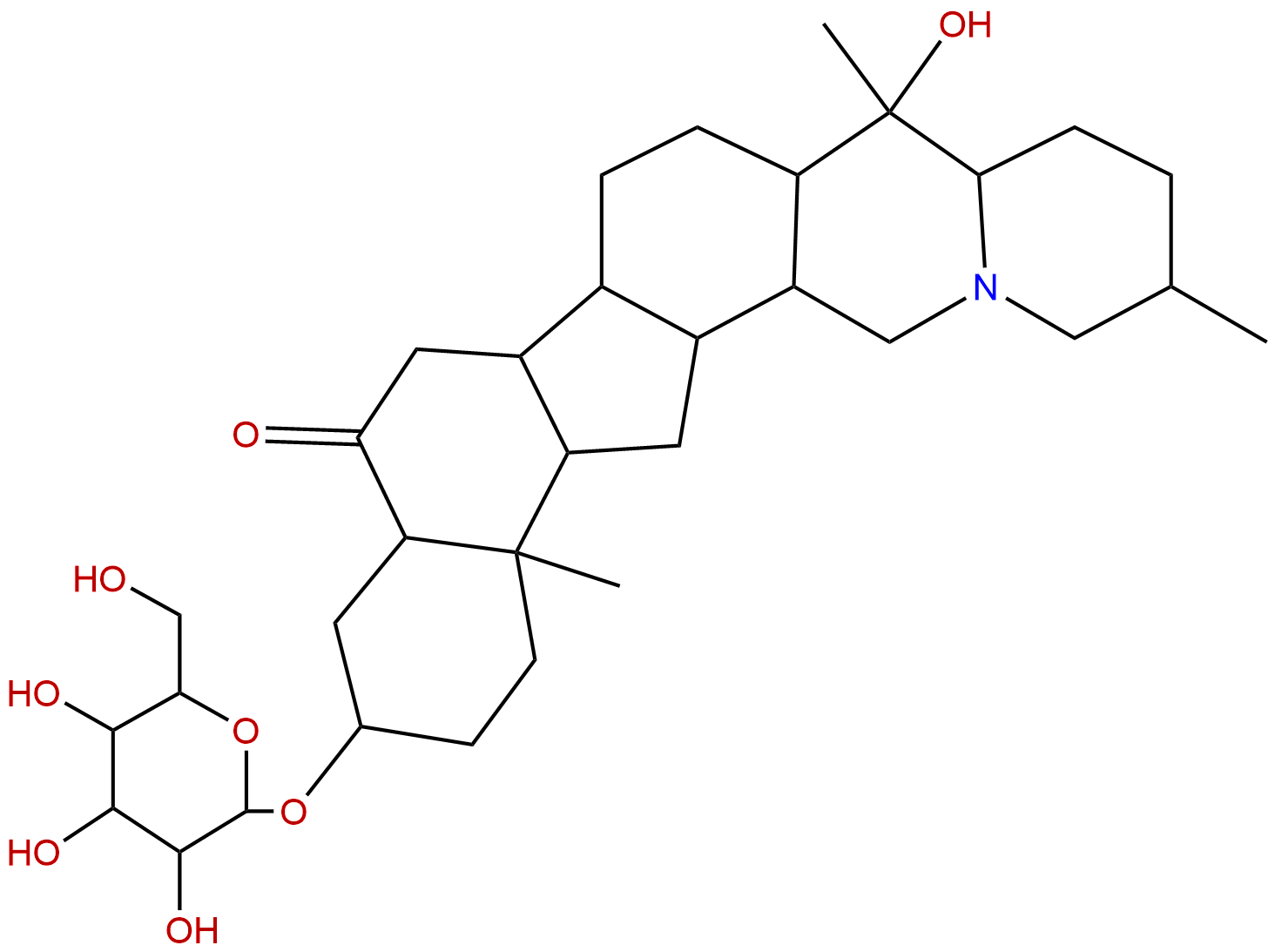


Product name: Edpetiline
Synonym name:
Catalogue No.: BP1507
Cas No.: 32685-93-1
Formula: C33H53NO8
Mol Weight: 591.786
Botanical Source: Alkaloid from Petilium eduardii (Liliaceae)
Physical Description:
Type of Compound: Triterpenoids
Purity: 95%~99%
Analysis Method: HPLC-DAD or/and HPLC-ELSD
Identification Method: Mass, NMR
Packing: Brown vial or HDPE plastic bottle
The product could be supplied from milligrams to grams. Inquire for bulk scale.
We provide solution to improve the water-solubility of compounds, thereby facilitating the variety of activity tests and clinic uses.
For Reference Standard and R&D, Not for Human Use Directly.
Description:
Edpetiline is a natural product from Petilium eduardi.
References:
Chemistry of Natural Compounds, 2003 , 39 (6) :603-4.
Accumulation Dynamics of Alkaloids in Petilium eduardi
METHODS AND RESULTS:
In continuation of studies of alkaloids from P. eduardi Rgl. [3, 4], we investigated the accumulation dynamics of alkaloids from plants collected in the South Pamir-Alai mountains on slopes of Gissarsk ridge near Shargun, Zivar, in Khanaka and Babatag. Samples of the air-dried raw material were treated with ammonia (10%). Alkaloids were extracted with CHCl 3 in a Soxhlet apparatus. After the extraction was complete, the extract was decanted, concentrated to a small volume, and extracted with H 2 SO 4 (5%). The acidic solution of bases was washed with ether and made basic with ammonia (25%). Alkaloids from the basic solution were extracted with CHCl 3. The total alkaloids were treated with acetone to isolate imperialine and a glycoalkaloid of imperialine, Edpetiline(CH 3 OH) [5-7]. Imperialine and Edpetiline are the principal alkaloids from P. eduardi. Table 1 shows that the bulbs in the early period of vegetation contain the maximum total alkaloids. The maximum content of the main alkaloid, imperialine, occurs in the aerial part during the start of flowering. The second principal alkal oid, Edpetiline, is observed in relatively small amounts compared with imperialine, from 1.2 to 6.7% of the total alkaloids. Their content is lowest during fruiting and flowering of the aerial part of plants collected in Khanaka and the Botanical Garden. We were unable to isolate pure alkaloids from the specimen introduced into the Botanical Garden (Table 1).
CONCLUSIONS:
Thus, a comparison of the total content and pure alkaloids isolated from plants of different vegetative stages and habitats revealed the effect of soil and climate conditions on their quality and quantity.
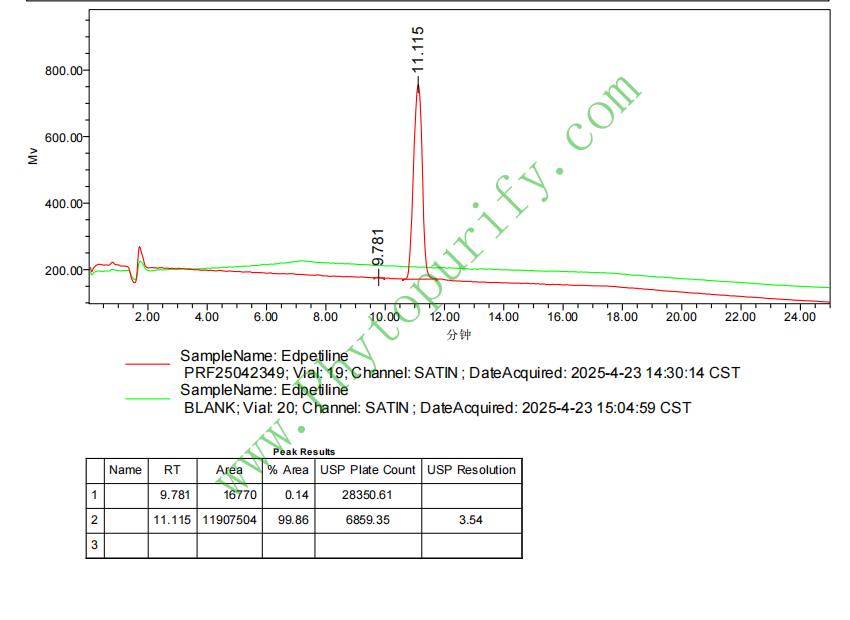
HPLC of Edpetiline
Storage conditions:Short-term storage at 2~8℃, long-term storage at -20 ~ -80℃
139.9200
1.9069
1.1349
.3047
.6973
.8040
Low
56.5027
5.4575
No
No
No
No
No
No
0.0
Yes
No
No
No
Inflammation is a complex and highly regulated defense response that occurs in the body in response to infection, injury, or stimulation. However, when the inflammatory reaction is out of control or becomes chronic, it will become the common pathological basis of many diseases, such as rheumatoid arthritis, atherosclerosis, neurodegenerative diseases and a variety of cancers. Therefore, finding efficient and low toxicity inflammation regulators has always been one of the core areas of drug development. Natural products have become an important source of innovative drug lead compounds due to their structural diversity and rich biological activity. Edpetrine (CAS number: 32685-93-1), as a steroid alkaloid glycoside isolated from traditional medicinal plants, has attracted much attention in recent years due to its significant anti-inflammatory and antioxidant stress activation properties. Research has shown that berberine glycoside can effectively inhibit key inflammatory signaling pathways such as nuclear factor kappa B (NF - κ B) and mitogen activated protein kinase (MAPK) through multi-target and multi pathway synergistic effects, downregulate the expression of pro-inflammatory mediators, and alleviate oxidative damage. This article aims to systematically review the chemical structure, plant origin, pharmacological activity, molecular mechanism of action, pharmacological characteristics, and clinical application potential of berberine glycoside, in order to provide comprehensive scientific references for the in-depth research and development of this compound.
Xibeimu alkaloid glycoside is a steroid alkaloid glycoside compound. Its molecular formula is C33H53NO8 and its molecular weight is 591.7860. Structurally, it is composed of a complex electropetiline aglycone and a glycosidic ligand (usually glucose) linked by glycosidic bonds. This glycosidic structure has a significant impact on its water solubility and biological activity. Its parent nucleus structure contains multiple chiral centers and characteristic nitrogen-containing heterocycles (such as the Severn ring system), which are the source of its alkaloid properties and determine its specific spatial conformation and interaction mode with target proteins.
In terms of physicochemical properties, the theoretical lipid water partition coefficient (LogP) of Xibeimu alkaloid glycoside is 1.9069, indicating that it has a certain lipophilicity, but not highly hydrophobic, which is beneficial for its permeation and distribution in biofilms. Its topological polar surface area (TPSA) is 139.9200 Å ², reflecting the high proportion of polar atoms (such as hydroxyl groups in glycosides) in the molecule. The predicted water solubility value is 0.3047 mg/mL, which belongs to the category of slightly soluble to poorly soluble, indicating that solubilization strategies may need to be considered in formulation development. Based on its molecular weight, LogP, and TPSA, Xibeimu alkaloid glycoside basically conforms to the Rule of Five and has the preliminary structural basis for developing into an oral drug. Its blood-brain barrier permeability is predicted to be "low", indicating that it may not easily enter the central nervous system, which may reduce potential central side effects for drugs that mainly act on peripheral inflammation.
Xibeimu alkaline glycoside mainly comes from the Liliaceae family and the Fritillaria genus(Fritillaria)Plants. This genus of plants, such as Hibiscus(Fritillaria pallidiflora)Zhejiang Fritillaria(Fritillaria thunbergii)In the clinical practice of traditional Chinese medicine, it has a long history and is commonly used for relieving cough and phlegm, clearing heat and dispersing nodules. Modern plant chemistry research has confirmed that the main active ingredients of Fritillaria plants are steroidal alkaloids and their glycosides, with berberine glycoside being one of the important active ingredients.
Its extraction and separation usually follow the conventional process of natural product chemistry. Firstly, the dried Fritillaria bulb is crushed and subjected to reflux extraction or ultrasound assisted extraction using a suitable polar solvent (such as methanol, ethanol, or ethanol water mixture) to maximize the extraction of total alkaloids. The extract is concentrated under reduced pressure to obtain a paste. Subsequently, alkaloids are dissolved in acidic water (such as dilute hydrochloric acid) to convert them into salts, while lipid soluble impurities are separated. After alkalization (such as ammonia water), the free alkaloid components are extracted by organic solvents (such as chloroform, ethyl acetate) to obtain the total alkaloid fraction. Further purification relies on various chromatographic techniques, including silica gel column chromatography, reverse phase C18 column chromatography, and high-performance liquid chromatography (HPLC). By comparing thin layer chromatography (TLC) spots or HPLC spectra with standard samples, and combining with spectroscopic methods such as nuclear magnetic resonance (NMR) and mass spectrometry (MS) for structural identification, high-purity berberine glycoside monomers can ultimately be obtained. Optimizing the extraction process, such as using macroporous adsorption resin enrichment and high-speed countercurrent chromatography, can help improve its extraction efficiency and purity.
A large number of in vitro and in vivo pharmacological experiments have confirmed that berberine glycoside has a wide range of anti-inflammatory and antioxidant stress activators, which is its core pharmacological effect.
1. Anti inflammatory activity:
In various inflammatory cell models, such as lipopolysaccharide (LPS) - stimulated macrophage RAW264.7 and microglial BV2, sibelium glycoside can dose dependently inhibit the production of key pro-inflammatory cytokines and mediators. Research has shown that it can significantly reduce the levels of tumor necrosis factor - α (TNF - α), interleukin-6 (IL-6), nitric oxide (NO), and prostaglandin E2 (PGE2). The mechanism by which it inhibits the production of NO and PGE2 is closely related to the downregulation of protein and mRNA expression of inducible nitric oxide synthase (iNOS/NOS2) and cyclooxygenase-2 (COX-2/PTGS2). It is worth noting that berberine glycoside not only inhibits pro-inflammatory factors, but also promotes the expression of anti-inflammatory cytokine interleukin-4 (IL-4), demonstrating its potential to regulate immune balance. In animal models, berberine glycoside has shown good improvement effects on acute and chronic inflammation models such as ear swelling and paw swelling in mice (induced by carrageenan or Freund's complete adjuvant), and can reduce tissue edema and inflammatory cell infiltration.
2. Antioxidant activation:
Oxidative stress and inflammatory processes mutually promote each other, forming a vicious cycle. Xibeimu alkaline glycoside has been proven to have the ability to scavenge free radicals and enhance cellular antioxidant defense. In the cell damage model induced by hydrogen peroxide (H ₂ O ₂) or other oxidants, pretreatment with berberine glycoside can effectively reduce the excessive accumulation of reactive oxygen species (ROS) in cells, alleviate lipid peroxidation and DNA oxidative damage, and increase the activity of endogenous antioxidant enzymes such as superoxide dismutase (SOD) and glutathione peroxidase (GPx). This antioxidant effect and its anti-inflammatory effect complement each other, together forming the protective basis for inflammation related diseases.
3. Other potential activities:
Based on its anti-inflammatory and antioxidant core effects, Xibeimu alkaloid glycoside has shown broader therapeutic potential in related disease models. For example, in neuroinflammation related Parkinson's or Alzheimer's disease cell models, it may exert neuroprotective effects by inhibiting excessive activation of microglia. In the cardiovascular system, its anti-inflammatory properties may help to alleviate the progression of atherosclerosis. In addition, as chronic inflammation is one of the key factors in the occurrence and development of tumors, the anti-inflammatory mechanism of berberine glycoside also provides clues for its potential anti-tumor adjuvant research.
The anti-inflammatory effect of Xibeimu alkaline glycoside is not achieved through a single target, but through the synergistic inhibition of the two core inflammatory signaling pathways NF - κ B and MAPK, and affects other related targets, forming a multi-target regulatory network.
1. Inhibition of NF - κ B signaling pathway:
NF - κ B is a key transcription factor that regulates the expression of inflammatory genes. In the resting state, NF - κ B (usually a p65/p50 heterodimer) binds to the inhibitory protein I κ B and remains in the cytoplasm. When stimulated by LPS, TNF - α, etc., the I κ B kinase complex (IKK, where IKK β/IKBKB is a key catalytic subunit) is activated, leading to phosphorylation and ubiquitination degradation of I κ B, thereby releasing NF - κ B. NF - κ B immediately enters the nucleus and initiates transcription of genes such as TNF - α, IL-6, iNOS, COX-2, etc. Research has shown that berberine glycoside can effectively inhibit the phosphorylation and degradation of I κ B α, block the nuclear translocation of NF - κ B p65 subunit and its binding activity with DNA. This is directly attributed to its inhibition of IKK complex activity, thereby blocking the activation of the NF - κ B pathway at the source.
2. Inhibition of MAPK signaling pathway:
The MAPK family (mainly including p38 MAPK, ERK, and JNK) is another important class of inflammatory signaling molecules involved in regulating cytokine synthesis and cellular stress response. Xibeimu alkaline glycoside has been shown to inhibit LPS induced phosphorylation (activation) of p38 MAPK and extracellular signal regulated kinase (ERK), but its effect on c-Jun N-terminal kinase (JNK) phosphorylation may be relatively small. The inhibition of p38 and ERK pathways is directly related to the decreased expression of downstream inflammatory mediators such as COX-2 and TNF - α.
3. Regulating other related targets:
* STAT3 Signal transducer and activator of transcription factor 3 (STAT3) is an important bridge connecting inflammation and tumors. Continuous activation of STAT3 in a chronic inflammatory environment promotes cell proliferation and survival. Xibeimu alkaline glycoside may indirectly affect the activation of STAT3 by inhibiting upstream inflammatory signals.
* CASP1 Caspase-1 (CASP1) is a key effector protein for inflammasome activation, responsible for cleaving the precursors of IL-1 β and IL-18, allowing them to mature and secrete. Inhibiting CASP1 can alleviate the excessive inflammatory response mediated by inflammasomes.
* Ion channel (TRPV1/TRPA1)Transient receptor potential vanillic acid subtype 1 (TRPV1) and anchored protein subtype 1 (TRPA1) are ion channels that sense nociceptive stimuli such as heat and chemicals, and their activation can trigger neurogenic inflammation. Xibeimu alkaline glycoside may participate in relieving pain and neuroinflammation by regulating the activity of these channels.
* direct action Its antioxidant effect may partially stem from direct clearance of ROS and upregulation of the intracellular antioxidant enzyme system.
In summary, Xibeimu alkaloid glycoside targets IKK β (IKBKB), inhibits I κ B phosphorylation, and thereby blocks the activation and nuclear translocation of NF - κ B p65 (RELA); Simultaneously inhibit the phosphorylation of p38 and ERK MAPK; And it may also affect targets such as STAT3, CASP1, TRPV1, TRPA1, forming a multi-level and multi-target anti-inflammatory network, synergistically downregulating the expression of effector molecules such as TNF, IL-6, NOS2, PTGS2, and ultimately exerting strong anti-inflammatory and antioxidant effects.
Based on computational predictions and preliminary in vitro experimental data, a preliminary evaluation of the pharmacological properties of berberine glycoside can be conducted.
1. Prediction of physicochemical and ADMET properties:
As mentioned earlier, its molecular weight (591.8) is slightly higher than the ideal value of 500, but LogP (~1.9) and TPSA (~140 Å ²) are within an acceptable range, indicating moderate membrane permeability. The poor water solubility predicted is a key issue that needs to be addressed in the development of formulations. The low permeability of the blood-brain barrier limits its direct effects on central nervous system diseases, but may be beneficial in reducing the risk of central neurotoxicity. It is crucial that the predicted data shows no inhibition of hERG potassium channels (hERG inhibition: No), which preliminarily indicates a low risk of causing QT interval prolongation in the heart. In addition, its Ames test predicted value of 0.0, indicating that it may not be mutagenic and has a good genetic toxicity safety prospect. These predicted results provide positive guidance for subsequent experiments.
2. Pharmacokinetic (PK) considerations:
At present, there are relatively limited research reports on the pharmacokinetics of the berberine glycoside system, which is a gap that must be filled for its development. Based on its glycoside structure, it can be inferred that its process in vivo may involve the following steps:
* absorb A moderate LogP value suggests that it may have some potential for oral absorption, but poor water solubility may limit its dissolution rate and degree in the gastrointestinal tract, becoming the main bottleneck for oral bioavailability. The use of preparation technologies such as nanocrystals, solid dispersions, or phospholipid complexes is expected to improve their dissolution and absorption.
* distribution The predicted low blood-brain barrier permeability indicates that it is mainly distributed in peripheral tissues and organs. The binding rate with plasma proteins and tissue distribution specificity need to be experimentally clarified.
* Metabolism As a glycoside compound, berberine glycoside may undergo hydrolysis (deglycosylation) metabolism in the intestine and liver to generate aglycones. The physicochemical properties and activities of aglycones may differ from those of the prototype drug, and it is necessary to study their metabolite profiles and activities. The cytochrome P450 enzyme system may be involved in its further metabolism.
* excretion The prototype drug and its metabolites may be mainly excreted through bile and kidneys.
A comprehensive in vivo pharmacokinetic study, including absolute bioavailability, half-life, clearance rate, tissue distribution, and metabolite identification, is a necessary step in evaluating its feasibility for development.
Xibeimu alkaline glycoside, as a multi-target anti-inflammatory natural product, has shown broad application prospects in the treatment of inflammation and oxidative stress-related diseases.
1. Potential therapeutic areas:
* Chronic inflammatory diseases Such as rheumatoid arthritis, inflammatory bowel disease (Crohn's disease, ulcerative colitis), chronic obstructive pulmonary disease, etc. Its ability to inhibit multiple pro-inflammatory cytokines and mediators may have a comprehensive regulatory advantage over single target drugs.
* Neurodegenerative diseases Although BBB permeability is low, it may indirectly benefit from inhibiting peripheral immune cell activation in diseases accompanied by significant peripheral inflammation or blood-brain barrier disruption (such as advanced multiple sclerosis and some Alzheimer's disease models). Structural modifications can also be explored to enhance brain entry ability.
* cardiovascular disease Atherosclerosis is essentially a chronic inflammatory disease. The anti-inflammatory and antioxidant effects of berberine glycoside may help stabilize plaques and delay disease progression.
* pain management By inhibiting targets such as COX-2 and TRPV1/TRPA1, it may have a relieving effect on inflammatory pain and neuropathic pain.
* Assisted anti-tumor therapy By inhibiting inflammation in the tumor microenvironment (such as NF - κ B and STAT3 pathways), the efficacy of chemotherapy or immunotherapy may be enhanced.
2. Development challenges and prospects:
Despite the promising prospects, the conversion and development of berberine glycosides still face a series of challenges:
* Validation of drug efficacy and safety More high-quality preclinical studies are needed, especially to validate its efficacy and long-term safety in disease-related animal models.
* Pharmacokinetic optimization Its water solubility and bioavailability are the primary challenges. Future research should focus on formulation strategies (such as novel drug delivery systems) or rational structural modifications (improving PK properties while retaining pharmacophores), such as preparing prodrugs or analogues.
* Deep analysis of the mechanism of action Further clarification is needed on its direct interaction mode (such as eutectic structure) with key targets (such as IKK β), and the contribution weights of each target in the overall efficacy need to be verified using techniques such as gene knockout.
* Multi component collaborative research Xibeimu alkaloid glycoside does not exist in isolation in Beimu medicinal materials. Studying its interactions with other alkaloids in Fritillaria may reveal the scientific connotation of the synergistic effect of traditional Chinese medicine formulas with multiple components and targets, providing ideas for the development of new compound drugs based on natural products.
* Clinical conversion pathway After completing the preclinical research of the system, it can be explored to develop it into a new chemical drug or declared as a plant medicine with clear active ingredients.
Xibeimu alkaloid glycoside is an active steroid alkaloid glycoside isolated from the traditional Chinese medicine Beimu. It exhibits significant anti-inflammatory and cell protective effects by synergistically inhibiting the key inflammatory signaling pathways of NF - κ B and MAPK, downregulating the expression of pro-inflammatory mediators at multiple targets, and possessing antioxidant capacity. Preliminary pharmacological predictions indicate that it has good potential for drug likeness and safety, but poor water solubility and lack of systematic pharmacokinetic information are the main bottlenecks restricting its development. Future research needs to deepen the explanation of its mechanism of action while focusing on addressing its bioavailability issues, and verify its therapeutic value in chronic inflammatory diseases and other fields through standardized preclinical and clinical studies. The study of berberine glycoside not only provides promising lead compounds for the development of new anti-inflammatory drugs, but also provides important scientific basis for interpreting the modern scientific connotation of the traditional Chinese medicine Fritillaria baicalensis's "clearing heat and dispersing lumps" effect, reflecting the enormous potential of exploring modern drugs from the treasure trove of natural products.
