


Synonym name: Sipeimine; Kashmirine
Catalogue No.: BP0762
Cas No.: 61825-98-7
Formula: C27H43NO3
Mol Weight: 429.645
Botanical Source: Alkaloid from Fritillaria ussuriensis, Fritillaria meleagris, Fritillaria imperialis, Fritillaria raddeana, Petilium eduardii, Petilium raddeana, the Chinese drug Si-pei-mu (Fritillaria roylei) and from Rhinopetalum bucharicum (Liliaceae)
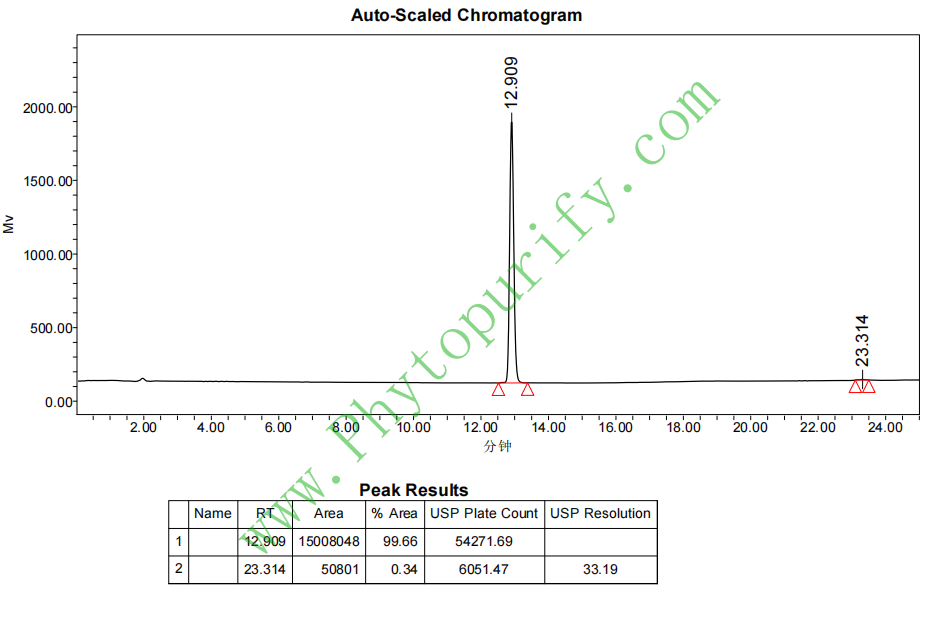
Purity: 95%~99%
Analysis Method: HPLC-DAD or/and HPLC-ELSD
Identification Method: Mass, NMR
Packing: Brown vial or HDPE plastic bottle
Can be supplied from milligrams to grams.
For Reference Standard and R&D, Not for Human Use Directly.
Inquire for bulk scale.
HPLC of Imperialine
Storage conditions:Short-term storage at 2~8℃, long-term storage at -20 ~ -80℃
Imperialine, CAS number 61825-98-7, is an important natural alkaloid mainly found in the Liliaceae plant Fritillaria imperialis. As one of the main active ingredients in traditional Chinese medicine, berberine is widely used in the field of traditional Chinese medicine for pain relief, phlegm removal, anti-inflammatory and other purposes. In recent years, with the development of modern pharmacology and molecular biology techniques, the pharmacological activity and mechanism of action of berberine have gradually been revealed, especially in the field of analgesia, showing significant potential. This article will systematically review the chemical structure, physicochemical properties, plant sources, and extraction methods of berberine, with a focus on its pharmacological activity and mechanism of action, exploring its pharmacological properties and pharmacokinetic characteristics, and finally looking forward to its clinical application prospects.
Xibeimu alkaloid belongs to the class of steroid alkaloids, with a molecular formula of C27H43NO3 and a molecular weight of 429.6450. Its structural feature is a typical steroid skeleton, containing multiple chiral centers and nitrogen-containing groups, with high structural complexity. The LogP value of Xibeimu alkaloid is 3.3149, indicating that it has moderate lipid solubility and is conducive to passive diffusion through the cell membrane. Its topological polar surface area (TPSA) is 60.77 Å ², indicating that the molecule has moderate polarity that facilitates binding to biological targets. Low water solubility (0.0811 mg/mL) may limit its oral bioavailability, but its blood-brain barrier permeability is high, suggesting that it can act on the central nervous system. The hERG channel inhibition test result was negative, indicating a low risk of cardiac toxicity from sibetamine. The Ames test showed 0.0, indicating no significant mutagenicity and good safety.
The chemical structural formula of Xibeimu alkaloid is as follows (schematic): The steroid skeleton contains hydroxyl and nitrogen atoms, forming a unique alkaloid structure that endows it with unique biological activity.
The main source of Fritillaria alkaloids comes from the Liliaceae plant Fritillaria imperialis and its related species. Xibeimu is a perennial herbaceous plant widely distributed in northwest China and Central Asia. In traditional Chinese medicine, the tubers of Platycodon grandiflorus have been used as medicinal parts to treat cough, asthma, lung abscess, and various pain symptoms.
The common methods for extracting berberine include organic solvent extraction, acid-base extraction, and column chromatography separation. The specific steps are generally as follows:
In recent years, the application of new technologies such as ultrasound assisted extraction and microwave-assisted extraction has improved the extraction efficiency and purity, laying the foundation for the industrial production of berberine.
The pharmacological activities of berberine mainly focus on pain relief, anti-inflammatory, and central nervous system regulation. A large number of in vitro and in vivo experimental studies have shown that berberine has significant analgesic effects and good safety.
Xibeimu alkaloid has shown good analgesic activity in various animal pain models, such as hot plate test, tail soaking test, and inflammatory pain model. Its analgesic effect is manifested as prolonging pain response time and reducing pain behavior. Compared to traditional opioid analgesics, sibetamine has lower addiction and tolerance risks.
Xibeimu alkaloids can significantly inhibit the release of inflammatory mediators, such as prostaglandins (PGE2), tumor necrosis factor - α (TNF - α), and interleukin-1 β (IL-1 β), and alleviate inflammatory responses. Its anti-inflammatory mechanism is closely related to the inhibition of cyclooxygenase (COX-1, COX-2) activity, which helps alleviate inflammatory pain.
Xibeimu alkaloid has a high blood-brain barrier permeability and can act on the central nervous system. Research has found that it can regulate various neurotransmitter systems, such as dopamine receptors (DRD2) and opioid receptors (OPRM1, OPRD1, OPRK1), and participate in pain and emotion regulation. In addition, the regulation of serotonin transporter 4 (SLC6A4) by berberine may be related to its antidepressant and anti anxiety effects.
The analgesic and anti-inflammatory effects of Xibeimu alkaloid involve multiple molecular targets and signaling pathways, reflecting its pharmacological characteristics of multi-target and multi mechanism.
TRPV1 (transient receptor potential vanillic acid receptor 1) and TRPA1 are important ion channels for sensing pain and inflammation. Xibeimu alkaloid can regulate the activity of these two channels, inhibit their excessive activation, and reduce the transmission of pain signals. By blocking TRPV1 and TRPA1, sibetamine reduced inflammatory and neuropathic pain.
Xibeimu alkaloids have affinity for μ - type (OPRM1), δ - type (OPRD1), and κ - type (OPRK1) opioid receptors, and can activate or regulate these receptors to exert opioid analgesic effects. Compared to traditional opioid drugs, the effect of sibetamine is milder and has fewer side effects.
Xibeimu alkaloids inhibit the activity of COX-1 (PTGS1) and COX-2 (PTGS2), reduce the synthesis of prostaglandins, alleviate inflammatory reactions and related pain. Its selective inhibitory effect on COX-2 helps to reduce gastrointestinal adverse reactions.
Xibeimu alkaloids regulate the function of dopamine D2 receptors (DRD2), participate in pain regulation and emotion regulation of the central nervous system, and may have an adjuvant therapeutic effect on emotional disorders in chronic pain patients.
Xibeimu alkaloids may improve pain related emotional disorders such as depression and anxiety and enhance analgesic effects by affecting SLC6A4 activity and regulating serotonin reuptake.
In summary, the synergistic effect of Xibeimu alkaloid on multiple targets regulates pain perception and inflammatory response, demonstrating its potential value as a multi mechanism analgesic drug.
The pharmacological parameters of Xibeimu alkaloid show that it has good potential for drug development. The molecular weight is 429.6450, which meets the basic requirements of Lipinski's rule. The LogP value of 3.3149 indicates moderate lipid solubility, which is beneficial for oral absorption. The TPSA is 60.77 Å ², indicating good cell membrane permeability. Low water solubility (0.0811 mg/mL) may limit the dissolution rate and bioavailability, which needs to be improved through formulation technology.
The high permeability of the blood-brain barrier supports its development as a central acting drug. HERG channel inhibition is negative, reducing the risk of cardiac toxicity. The Ames test has no mutagenicity and good safety.
In terms of pharmacokinetics, existing studies have shown that sibetamine is absorbed quickly orally, with a moderate plasma half-life, mainly metabolized by the liver, and excreted mainly through bile and urine. Further research is needed on the activity and toxicity of its metabolites. Due to water solubility limitations, improving bioavailability is a future research focus.
Xibeimu alkaloid, as a natural steroid alkaloid, has significant analgesic and anti-inflammatory activities, good safety, and broad clinical application potential. Its multi-target mechanism of action provides a theoretical basis for the development of new analgesics, especially suitable for adjuvant therapy of chronic pain, neuropathic pain, and inflammatory diseases.
Future research should focus on the following aspects:
In addition, the potential application of sibetamine in central nervous system diseases such as depression, anxiety, and neurodegenerative diseases is also worth further exploration.
Xibeimu alkaloid, as a natural steroid alkaloid with multiple targets and mechanisms, exhibits excellent analgesic and anti-inflammatory activities, with excellent pharmacological parameters and high safety. The application foundation of it in traditional Chinese medicine and the research results of modern pharmacology jointly support its potential as a new type of analgesic drug. In the future, through dosage form optimization, metabolic research, and clinical validation, sibetamine is expected to become an important drug for treating pain and related diseases, providing new treatment options for clinical practice. The continuous development of natural product pharmacology will further promote the scientific research and clinical translation of berberine, and facilitate its widespread application in modern medicine.
