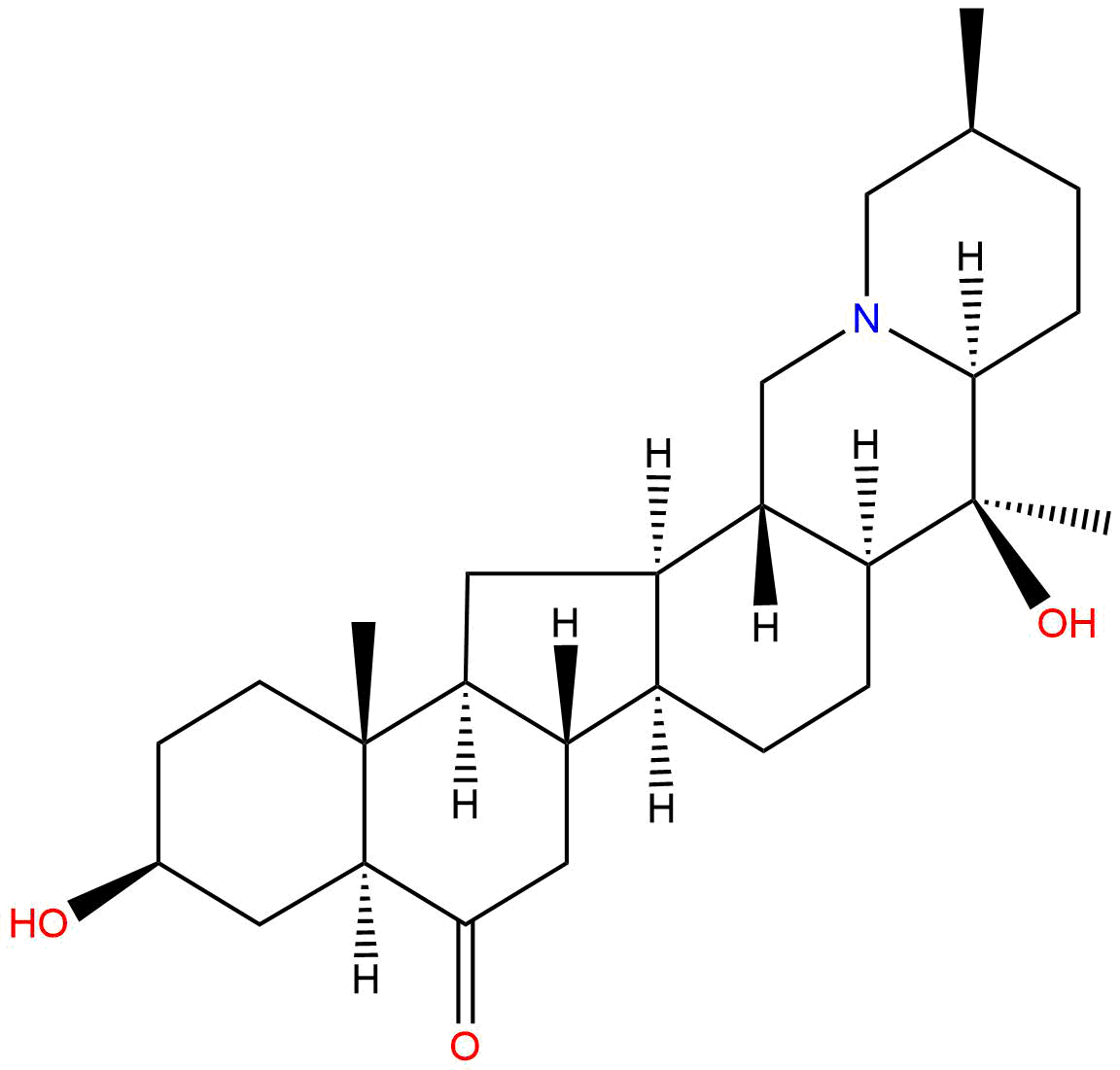


Synonym name: Verticinone; Fritillarine; Raddeanine
Catalogue No.: BP1073
Cas No.: 18059-10-4
Formula: C27H43NO3
Mol Weight: 429.645
Botanical Source: Alkaloid from bulbs of Fritillaria thunbergii and from Fritillaria verticillata, Fritillaria ebeiensis and Fritillaria roylei (Liliaceae)
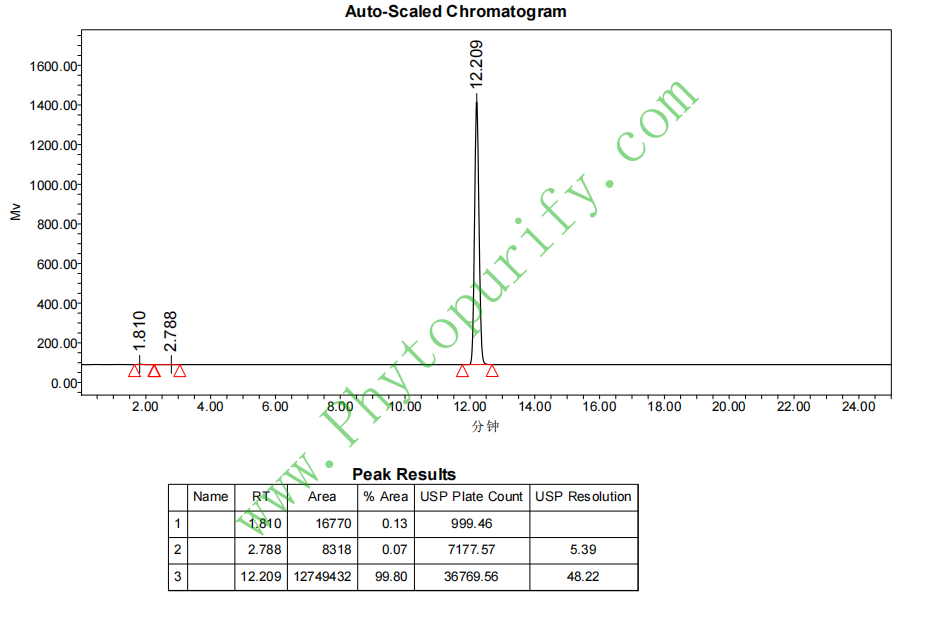
Purity: 95%~99%
Analysis Method: HPLC-DAD or/and HPLC-ELSD
Identification Method: Mass, NMR
Packing: Brown vial or HDPE plastic bottle
Can be supplied from milligrams to grams.
For Reference Standard and R&D, Not for Human Use Directly.
Inquire for bulk scale.
HPLC of Peiminine
Storage conditions:Short-term storage at 2~8℃, long-term storage at -20 ~ -80℃
60.7700
3.3136
2.3201
.0812
3.2683
10.2278
High
68.9902
5.0115
No
No
No
No
No
No
0.0
No
No
No
No
Natural products, as an important source of drug discovery, play an irreplaceable role in the history of human disease prevention and treatment. Among them, steroid alkaloids have always been a hot topic in medicinal chemistry and pharmacology research due to their structural diversity and wide range of biological activities. Peiminne, as a nonsteroidal alkaloid isolated from traditional medicinal plants, has attracted much attention in recent years due to its significant pharmacological activities in anti-tumor, anti-inflammatory, anti osteoporosis, and cardiovascular protection. Its CAS number is 18059-10-4, mainly derived from the gourd family plant Fritillaria thunbergii(Bolbostemma paniculatum The bulb of Maxim Franquet. Traditionally, Fritillaria thunbergii has been used to treat diseases such as mastitis, lymph node tuberculosis, and tumors, providing important traditional medical evidence for the modern pharmacological research of Fritillaria thunbergii. Modern pharmacological research has shown that berberine B can effectively inhibit the proliferation of various tumor cells, such as liver cancer HepG2 cells, by inducing cell apoptosis and other pathways, demonstrating broad prospects for tumor treatment. In addition, it has shown clear protective effects in animal models of inflammation, osteoporosis, and myocardial ischemia-reperfusion injury. This article aims to systematically review the chemical structure, plant origin, pharmacological activity, mechanism of action, pharmacological evaluation, and clinical application prospects of berberine B, in order to provide comprehensive scientific references for the in-depth research and development of this compound.
The molecular formula of berberine B is C27H43NO3, with a molecular weight of 429.6450 Da. Its chemical structure belongs to the class of nonsteroidal alkaloids, with a core of cyclopentane and a fully hydrogenated phenanthrene skeleton, similar to classical steroid parent nuclei, but with a nitrogen-containing hexagonal ring (piperidine ring) attached at the C-3 position, forming a unique characteristic structure of nonsteroidal alkaloids. This structure combines the rigid skeleton of steroids with the alkaline characteristics of alkaloids, serving as the material basis for its various biological activities.
From the analysis of physical and chemical properties, the lipid water partition coefficient (LogP) of berberine B is 3.3136, indicating that the compound has good lipophilicity, which is beneficial for its penetration of cell membranes and interaction with intracellular targets. Its topological polar surface area (TPSA) is 60.7700 Å ², which is relatively small and further supports its good membrane permeability. The water solubility data shows that its solubility is relatively low (about 0.0812 mg/mL), which may pose challenges in formulation development and need to be improved through appropriate drug delivery systems such as nano formulations, cyclodextrin inclusion complexes, etc. It is worth noting that its blood-brain barrier (BBB) permeability is predicted to be "high", indicating that berberine B has the potential to act on central nervous system related diseases. The preliminary safety evaluation shows that the risk of hERG inhibition is "no", indicating a low potential risk of arrhythmogenic cardiac toxicity; The Ames test result is 0.0, indicating that it has no direct genetic toxicity. These pharmacological parameters provide important theoretical basis for the subsequent development of berberine B.
Fritillaria B is mainly derived from the gourd family plant Fritillaria thunbergii(Bolbostemma paniculatum)Dry tubers. Tu Beimu is a traditional Chinese medicinal herb, also known as "fake Beimu", mainly produced in North China, Northwest China and other regions. In addition to Platycodon grandiflorus, Platycodon grandiflorus and its structural analogues (such as Platycodon grandiflorus) also exist in the genus Platycodon in the family Liliaceae(Fritillaria)Among various plants, such as Fritillaria thunbergii(F. thunbergii)Chuan Beimu(F. cirrhosa)Wait, but the content and proportion may vary. This suggests that different plant sources may be important resource libraries for obtaining berberine B and its derivatives.
The extraction of berberine B from plant materials is usually carried out using organic solvent extraction combined with modern chromatographic separation techniques. The conventional process is as follows: first, the dried Fritillaria tubers are crushed and subjected to reflux extraction or ultrasound assisted extraction using a suitable polar organic solvent (such as methanol, ethanol, or chloroform methanol mixture). The crude extract was obtained by vacuum concentration of the extraction solution. Subsequently, preliminary separation was performed using silica gel column chromatography, with gradient elution using chloroform methanol or petroleum ether ethyl acetate systems in different ratios. The fraction containing berberine B is further purified by preparative high-performance liquid chromatography (HPLC) or repeated silica gel column chromatography to obtain high-purity monomeric compounds. Structural identification involves the comprehensive use of techniques such as nuclear magnetic resonance (NMR, including 1H-NMR, 13C-NMR, 2D-NMR), mass spectrometry (MS), and X-ray single crystal diffraction. In recent years, efficient separation techniques such as high-speed countercurrent chromatography (HSCCC) have also been applied to the separation and purification of berberine B to improve yield and efficiency. Optimizing extraction processes, such as enzyme assisted extraction and supercritical fluid extraction, is a research direction for increasing production and achieving large-scale preparation in the future.
A large number of in vitro and in vivo studies have shown that berberine B has various pharmacological activities, and its research has expanded from its initial anti-tumor effects to multiple disease fields.
1. Antitumor activity:
This is the most in-depth field of research on beta carotene. In vitro experiments have confirmed that berberine B has significant inhibitory effects on proliferation and induces apoptosis in various human tumor cell lines, especially in liver cancer HepG2 cells. Research has shown that treatment with berberine B can significantly reduce the viability of HepG2 cells and exhibit dose - and time-dependent effects. In addition to liver cancer, it also shows birth growth inhibition on lung cancer (such as A549), breast cancer (such as MCF-7), colon cancer (such as HT-29) and cervical cancer (HeLa). Animal model studies further support its anti-tumor potential. For example, in a mouse model of liver cancer transplantation, administration of berberine B can effectively inhibit tumor growth and exhibit lower systemic toxicity compared to certain chemotherapy drugs.
2. Anti inflammatory activity:
Beimu Su Yi has shown good anti-inflammatory effects in various animal models of acute and chronic inflammation. For example, in mouse ear swelling models and paw swelling models, pretreatment with berberine B can significantly inhibit inflammatory responses caused by xylene or carrageenan. Its function is related to the inhibition of pro-inflammatory mediators (such as tumor necrosis factor - α, interleukin-6, nitric oxide) and the activation of related inflammatory signaling pathways. This provides experimental evidence for its use in the treatment of inflammatory diseases such as rheumatoid arthritis and inflammatory bowel disease.
3. Anti osteoporosis activity:
Research has shown that berberine B has a protective effect on a rat model of osteoporosis induced by ovariectomy. It can partially reverse the decrease in bone density and improve the microstructure of bone trabeculae. The mechanism may be related to inhibiting the differentiation and activity of osteoclasts, while promoting the osteogenic function of osteoblasts, thereby regulating bone metabolism balance and slowing down bone loss.
4. Myocardial protective activity:
In animal models such as myocardial ischemia-reperfusion injury and doxorubicin induced cardiomyopathy, berberine B exhibits clear myocardial protective effects. It can reduce the size of myocardial infarction, improve heart function, and inhibit myocardial cell apoptosis. Its mechanism involves multiple pathways such as antioxidant stress, inhibition of inflammatory response, and regulation of apoptosis related protein expression.
5. Other activities:
Preliminary studies also suggest that berberine B may have potential activities such as cough suppressant, expectorant (consistent with traditional Fritillaria), and neuroprotective effects, but further systematic research is needed to confirm them.
The multiple pharmacological activities of berberine B stem from its regulation of multiple key signaling pathways and molecular targets within cells, particularly in anti-tumor applications, and its mechanism of action network has been extensively revealed.
1. Inducing cell apoptosis:
This is one of the core mechanisms by which berberine B exerts anti-tumor effects. Research has shown that it can activate both endogenous and exogenous apoptotic pathways simultaneously.
* Endogenous (mitochondrial) pathway: Beimu Su can downregulate the expression of anti apoptotic proteins Bcl-2 and Mcl-1, while possibly upregulating the expression of pro apoptotic proteins such as Bax, leading to a decrease in mitochondrial membrane potential, release of cytochrome C, and activation of caspase-9 and effector caspase-3, ultimately triggering cell apoptosis.
* Exogenous (death receptor) pathway: Betamethasone B may activate caspase-8 by upregulating the expression or ligand levels of death receptors such as Fas, thereby cleaving and activating downstream caspase-3.
2. Inhibit cell proliferation and metastasis:
* Regulating the cell cycle: Berberine B can block tumor cells at specific stages of the cell cycle (such as G0/G1 or G2/M) by regulating the expression of cyclins and cyclin dependent kinases (CDKs).
* Inhibition of transfer related proteins: Beimu Su can downregulate the expression of matrix metalloproteinase-2 and -9 (MMP-2, MMP-9), which are key molecules for degrading extracellular matrix and promoting tumor invasion and metastasis, thereby inhibiting the migration and invasion ability of tumor cells.
* Inhibition of Signal Transduction and Transcription Activation Factor 3 (STAT3): STAT3 is an important oncogenic transcription factor, and the continuously activated STAT3 signaling pathway promotes tumor cell proliferation, survival, angiogenesis, and immune escape. Beimu Su Yi has been proven to inhibit the phosphorylation (activated form) of STAT3, block the transcription of its downstream target genes (such as Bcl-2, Mcl-1, Cyclin D1), and thus exert various anti-tumor effects.
3. Regulating hormone and enzyme related targets:
* Affects estrogen signaling: The potential effect of Fritillarin B on estrogen receptor α (ESR1) and aromatase (CYP19A1) may be related to its intervention in the growth of hormone dependent tumors (such as some breast cancer).
* Inhibition of Topoisomerase: As key enzymes involved in DNA replication and transcription, topoisomerases I and II (TOP1, TOP2A) are targets of many chemotherapy drugs. Beimu Su Yi may inhibit tumor cell proliferation by interfering with the function of these enzymes, leading to DNA damage.
4. Intervention for hypoxia and stress response:
* Inhibition of hypoxia inducible factor-1 alpha (HIF-1 alpha): In the hypoxic microenvironment of tumors, the stability and activation of HIF-1 α promote angiogenesis and tumor adaptation. Berberine B may interfere with tumor hypoxia adaptation and angiogenesis by inhibiting the accumulation or activity of HIF-1 α.
* Regulating the mitogen activated protein kinase (MAPK) pathway: The MAPK pathway (such as ERK/MAPK1) is involved in cell proliferation, differentiation, and stress response. The regulation of this pathway by berberine B may be one of the mechanisms by which it exerts anti-inflammatory and anti-tumor effects.
In summary, berberine B forms a synergistic network of multiple targets and pathways by acting on multiple targets such as MCL1, BCL2, STAT3, MMP2, TOP1, HIF1A, TOP2A, MAPK1, ESR1, CYP19A1, etc. This may be an important basis for its high efficiency and low toxicity potential.
Although berberine B has significant pharmacological activity, its successful development as a drug depends on systematic pharmacological evaluation and pharmacokinetic studies.
Drug Evaluation:
Based on its physicochemical parameters, berberine B belongs to the Biopharmaceutical Classification System (BCS) Class II or IV compounds (low solubility, high or low permeability). Its high LogP value and low TPSA indicate good membrane permeability and oral absorption potential, but low water solubility is the main bottleneck limiting its oral bioavailability. Therefore, it is crucial to develop solubilization technologies such as self microemulsifying drug delivery systems, solid dispersions, phospholipid complexes, or nanocrystals. In terms of safety, the preliminary negative results of hERG and Ames are positive signals, but a comprehensive preclinical safety evaluation is still needed, including acute toxicity, long-term toxicity, reproductive toxicity, etc., to clarify its safety window.
Pharmacokinetic studies:
At present, there are relatively limited reports on the pharmacokinetic studies of the berberine B system, but some studies have revealed its characteristics. Animal experiments (such as rats) have shown that berberine B is absorbed quickly after oral administration, but its absolute bioavailability may be limited due to first pass effects and solubility issues. It is widely distributed in the body, and due to its high lipid solubility and predicted high blood-brain barrier permeability, it may be distributed in multiple tissues including the brain. In terms of metabolism, as an alkaloid, berberine B is likely to undergo oxidative metabolism in the liver through cytochrome P450 enzyme systems (such as CYP3A4), producing products such as hydroxylation or demethylation. Its prototype and metabolites are mainly excreted through bile and kidneys. In the future, more sensitive analytical methods (such as LC-MS/MS) are needed to systematically study the absorption, distribution, metabolism, and excretion (ADME) processes in more species of animals and even humans, clarify their main metabolites, eliminate half-life, and potential drug drug interaction risks, and provide a basis for the design of clinical dosing regimens.
The multi-target and multifunctional properties of berberine B have depicted broad prospects for its clinical application in various diseases, but it also faces many challenges.
Potential application directions:
1. Antitumor adjuvant therapy or combination therapy: Given that it induces apoptosis through non classical chemotherapy mechanisms such as regulating STAT3 and Bcl-2 family, the combination of berberine B with existing chemotherapy drugs (such as topoisomerase inhibitors, paclitaxel) or targeted drugs may produce synergistic effects, reduce drug resistance, and decrease the dosage and toxic side effects of a single drug. Especially in the treatment of solid tumors such as liver cancer and lung cancer, it has development value.
2. Inflammatory disease treatment: Its clear anti-inflammatory activity supports its potential as a therapeutic drug or lead compound for diseases such as rheumatoid arthritis, osteoarthritis, and chronic colitis.
3. Prevention and treatment of osteoporosis: Its bidirectional regulation of bone metabolism (inhibiting bone resorption and promoting bone formation) has the potential to be developed as a novel anti osteoporosis drug, especially for hormone related osteoporosis.
4. Cardiovascular protectants: In cardiovascular events such as myocardial ischemia and cardiomyopathy, it can be used as a candidate adjuvant therapy to protect the myocardium and improve prognosis.
Challenges and Prospects Faced:
1. Solubility and delivery system: The primary challenge is to address its poor water solubility. Future research needs to focus on the development of innovative formulation technologies to improve their oral bioavailability or develop injectable formulations.
2. In depth pharmacological and toxicological research of the system: More rigorously designed preclinical studies are needed to validate its efficacy in animal models closer to human diseases, such as human tumor xenograft models and genetically engineered animal models, and to complete comprehensive GLP toxicology evaluations.
3. Refinement of mechanism of action and validation of targets: Although multiple potential targets are known, the direct interactions between berberine B and these targets (such as whether they are direct inhibitors or modulators) have not yet been confirmed at the molecular level. Using chemical biology methods such as affinity fishing, molecular docking and kinetic simulations, CRISPR screening, etc., to clarify its direct target of action will help understand its specificity and potentially discover new mechanisms of action.
4. Structural optimization and derivative development: By using it as the parent nucleus for structural modification, a series of derivatives can be synthesized, which are expected to improve their solubility, metabolic stability or targeting while maintaining their activity, and obtain candidate compounds with better drug properties.
5. Exploring clinical translation pathways: Ultimately, it is necessary to evaluate its safety, efficacy, and optimal medication regimen in humans through standardized clinical trials (phases I-III). Consider exploring its value in adjuvant therapy or combination therapy first.
Beimu Su Yi, as a type of nonsteroidal alkaloid derived from traditional Chinese medicine, has become a star molecule in natural product drug research due to its unique chemical structure and extensive pharmacological activity. Its significant effects in anti-tumor, anti-inflammatory, anti osteoporosis, and myocardial protection highlight its multi-target and multi pathway characteristics. Despite facing challenges such as water solubility in drug development, its excellent membrane permeability, preliminary safety prediction, and clear mechanism of action network have laid a solid foundation for its further development. In the future, through innovative formulation technology, in-depth analysis of the mechanism of action, systematic pharmacokinetic and toxicological evaluation, and reasonable clinical translation strategies, berberine B is expected to move from the laboratory to clinical practice, providing new drug choices or treatment ideas for the prevention and treatment of major diseases such as tumors, inflammatory and metabolic bone diseases, and cardiovascular diseases, fully reflecting the value of transforming traditional medical wisdom into modern innovative drugs.
