


Synonym name: Verticine
Catalogue No.: BP1072
Cas No.: 23496-41-5
Formula: C27H45NO3
Mol Weight: 431.661
Botanical Source: Alkaloid from Fritillaria roylei; main alkaloid of Fritillaria verticillata var. thunbergii (Liliaceae)
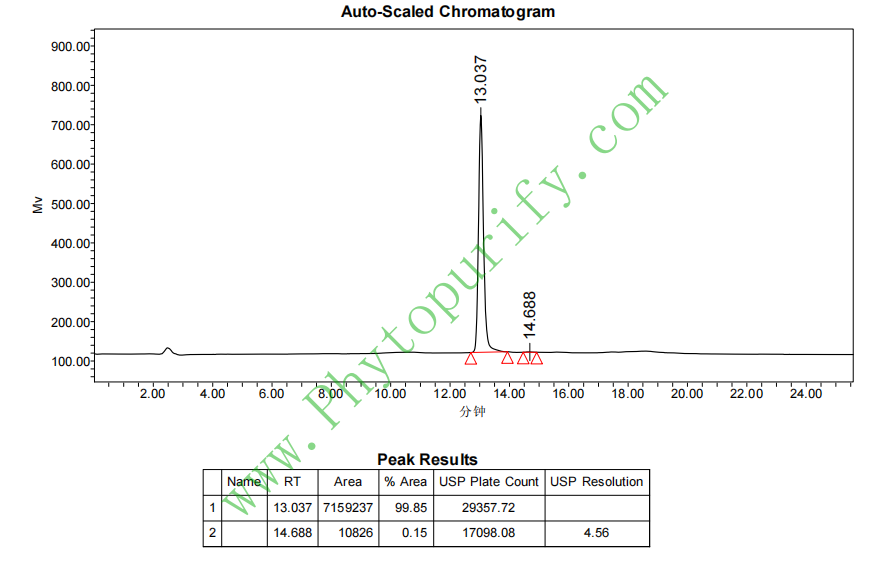
Purity: 95%~99%
Analysis Method: HPLC-DAD or/and HPLC-ELSD
Identification Method: Mass, NMR
Packing: Brown vial or HDPE plastic bottle
Can be supplied from milligrams to grams.
For Reference Standard and R&D, Not for Human Use Directly.
Inquire for bulk scale.
HPLC of Peimine
Storage conditions:Short-term storage at 2~8℃, long-term storage at -20 ~ -80℃
63.9300
3.4852
2.3613
.0702
2.9555
7.4177
High
72.6265
5.0441
No
No
No
No
No
No
0.0
No
No
No
No
Cough is one of the most common symptoms of respiratory diseases, and its pathogenesis is complex, involving multiple links such as peripheral receptors, afferent nerves, cough center, and efferent nerves. Although there are various types of cough suppressants in clinical practice, side effects such as opioid addiction, central inhibition, or limited efficacy of other drugs have prompted researchers to continuously explore safer and more effective candidate molecules from natural products. Peimine A, also known as Zhe Bei Yi Su, dehydro Zhe Bei Mu alkaline, or Verticine, is a traditional Chinese medicine derived from Zhe Bei Mu, which is used to relieve cough and phlegm(Fritillaria thunbergii Miq. is a type of steroid alkaloid isolated from Fritillaria thunbergii, which is one of the main active ingredients exerting pharmacological effects. Modern pharmacological research has confirmed that berberine A not only has good cough suppressant, expectorant, and anti-inflammatory activities, but also shows potential in anti-tumor, neuroprotective, and other fields. Of particular note is that its antitussive effect involves the regulation of multiple targets such as transient receptor potential vanillic acid subtype 1 (TRPV1), transient receptor potential anchor protein subtype 1 (TRPA1), and μ - opioid receptor (OPRM1), providing unique scientific basis for its development as a novel multi-target antitussive drug. This article aims to systematically review the chemical structure, plant origin, pharmacological activity, mechanism of action, medicinal properties, and clinical application prospects of berberine A, in order to provide comprehensive references for the in-depth research and development of this natural product.
The chemical name of berberine A is (3 β, 5 α, 6 β) -6,27-Epoxyvan-3-ol, and its CAS number is 23496-41-5. From a chemical structure perspective, berberine A belongs to the class of C-nor-D-homo steroid alkaloids. Its parent nucleus structure is different from the classical steroid skeleton, with the C ring being a five membered ring and the D ring being a six membered ring, forming a unique C-nor-D-homo characteristic. The molecule contains a tetrahydrofuran ring (6,27 epoxy bridge), a tertiary hydroxyl group (located at C-3 position), and multiple chiral centers, making its stereochemical structure complex. Its molecular formula is C27H45NO3 and its molecular weight is 431.6610.
Based on its chemical structure, berberine A exhibits typical lipid soluble alkaloid properties. The calculated lipid water partition coefficient (LogP) is 3.4852, indicating that it has good lipid solubility and is easy to penetrate cell membranes. The topological polar surface area (TPSA) is 63.93 Å ², which is relatively moderate. The water solubility measured in the experiment is relatively low, about 0.0702 mg/mL, which suggests that in the development of formulations, it may be necessary to improve their solubility and bioavailability through techniques such as salt formation, cyclodextrin inclusion, or nanoformulation. The preliminary drug risk assessment shows that its blood-brain barrier permeability is predicted to be "high", which is consistent with its possible central cough suppression mechanism. Importantly, in early safety screening, berberine A did not show significant hERG potassium channel inhibitory activity (low risk of arrhythmia) and Ames test mutagenicity (result 0.0), providing preliminary evidence for its relatively good safety.
Fritillaria A is mainly derived from various plants in the Liliaceae family, including Fritillaria thunbergii(Fritillaria thunbergii Miq. is the main commercial source. In addition, in Chuan Beimu(F. cirrhosa)Pingbeimu(F. ussuriensis)It has also been detected in other varieties. In the plant body, Beimu A often coexists with its isomer Beimu B (Peimini ne), which are the most abundant alkaloids in Zhejiang Beimu and are also iconic components for its quality control.
The traditional extraction method mainly relies on solvent extraction. The common process is to crush the dried bulbs of Fritillaria, wet them with alkaline solutions such as ammonia water to free the alkaloids, and then use organic solvents such as chloroform, dichloromethane, or ethanol for reflux extraction or percolation extraction. After concentration, the extract is back extracted with acidic water (such as dilute hydrochloric acid) to dissolve the alkaloids into salts in the aqueous phase; After alkalizing the aqueous phase, total alkaloids were extracted using organic solvents, and finally separated and purified using methods such as silica gel column chromatography and preparative high-performance liquid chromatography (HPLC) to obtain high-purity berberine A.
With the development of technology, some modern extraction and separation techniques have also been applied to the preparation of berberine A in order to improve efficiency and yield. For example, ultrasound assisted extraction and microwave-assisted extraction can accelerate solvent penetration and component dissolution; Supercritical CO2 fluid extraction technology has the advantages of being green and solvent-free, but it requires optimizing the entrainer to improve the extraction rate of polar alkaloids. Macroporous adsorption resin technology is also commonly used for the enrichment and purification of total alkaloids in Fritillaria. The comprehensive application of these methods provides a guarantee for the large-scale preparation and quality controllability of berberine A.
A large number of pharmacological studies both in vitro and in vivo have confirmed that berberine A has a wide range of biological activities, among which its cough suppressant, anti-inflammatory, and anti-tumor effects are the most prominent.
Coughing and expectorant effects This is the earliest recognized core pharmacological activity of berberine A. Multiple animal models, such as mouse or guinea pig cough models induced by ammonia, citric acid, and capsaicin, have shown that oral or intraperitoneal administration of berberine A can significantly prolong the cough latency period and reduce the number of coughs. Its cough suppressing intensity is comparable to or slightly weaker than codeine, but no significant addictive or central inhibitory side effects have been observed. At the same time, berberine A can promote the secretion of phenol red in the trachea of mice, increase the ciliary movement of the trachea in rats, and demonstrate a clear expectorant effect, achieving the dual effects of "stopping cough" and "resolving phlegm".
Anti inflammatory and immune regulatory effects Beimu Su A exhibits inhibitory effects on both acute and chronic inflammation models. In acute inflammation models such as carrageenan induced rat foot swelling and xylene induced mouse ear swelling, berberine A can significantly reduce tissue edema. In the macrophage inflammation model induced by lipopolysaccharide (LPS), it can effectively inhibit the production of nitric oxide (NO), prostaglandin E2 (PGE2), as well as pro-inflammatory factors such as tumor necrosis factor - α (TNF - α) and interleukin-6 (IL-6). Its anti-inflammatory mechanism is closely related to the inhibition of nuclear factor kappa B (NF - κ B) and mitogen activated protein kinase (MAPK) signaling pathway activation. In addition, berberine A can regulate the proportion of T lymphocyte subsets and has certain immune regulatory functions.
Antitumor activity In recent years, the anti-tumor potential of berberine A has received widespread attention. Studies have shown that it can inhibit the proliferation and induce apoptosis of lung cancer, liver cancer, stomach cancer, colon cancer, breast cancer and other tumor cell lines. Its anti-tumor mechanisms are diverse, including inducing cell cycle arrest (such as G1 phase), activating caspase cascade reactions, regulating Bcl-2/Bax ratio, inducing mitochondrial membrane potential decline, increasing reactive oxygen species (ROS) levels, and inhibiting survival promoting signaling pathways such as PI3K/Akt and STAT3. It is worth noting that berberine A can also inhibit the migration and invasion of tumor cells, suggesting its potential for anti metastasis.
Other activities In addition, studies have found that berberine A has pharmacological effects such as pain relief, anti fibrosis (such as pulmonary fibrosis and liver fibrosis), and neuroprotection (such as improving cognitive function in Alzheimer's disease model mice), demonstrating its multifaceted application prospects.
The various pharmacological effects of berberine A, especially its core cough suppressing activity, stem from its interactions with multiple molecular targets, reflecting the characteristics of multi-target regulation.
In Cough suppression In terms of mechanism, it involves multiple links in the peripheral and central nervous systems:
* Acting on peripheral transient receptor potential (TRP) channels The induction of cough is closely related to the activation of TRP channels, especially TRPV1 and TRPA1, on the sensory nerve endings of the airway. Research has shown that berberine A is an effective antagonist of TRPV1 and TRPA1 channels. It can inhibit cough response and calcium influx caused by capsaicin (TRPV1 agonist) and acrolein (TRPA1 agonist), thereby reducing the sensitivity of airway sensory nerves and decreasing the incoming signals of cough reflex.
* Regulating neuropeptide release When the sensory nerves in the airway are stimulated, they release tachykinins such as substance P (encoded by the TAC1 gene) and calcitonin gene-related peptide (CGRP, encoded by the CalcA gene), which can exacerbate neurogenic inflammation and cough reflex. Berberine A indirectly reduces the release of these neuropeptides by inhibiting TRP channels.
* Affects central cough regulation Beimu Su A can penetrate the blood-brain barrier. Research has found that it has an excitatory effect on the central μ - opioid receptor 1 (OPRM1), which may be one of the mechanisms by which it exerts a central cough suppressing effect. In addition, it can also antagonize the gastrin releasing peptide receptor (GRPR) and the neuromodulatory peptide U receptor 1 (NMUR1), which are expressed in the brainstem cough center and are associated with the facilitation of cough reflex. Antagonising them can produce an anti cough effect.
* Regulating sodium ion channels The voltage-gated sodium channel Nav1.7 (encoded by the SCN9A gene) is involved in the transmission of pain and sensory signals. There are studies suggesting that regulating such channels may also affect the transmission of cough signals, and whether berberine A acts on this target deserves further exploration.
In Anti inflammatory and anti-tumor effects In terms of aspect, its core mechanism focuses on regulating key intracellular signaling pathways:
* Inhibition of NF - κ B pathway Beimu Su Jia can inhibit the phosphorylation and degradation of I κ B α, prevent the nuclear translocation of NF - κ B p65 subunit, and thus downregulate the expression of downstream inflammatory factors and survival promoting genes.
* Inhibition of MAPK pathway It can inhibit the phosphorylation activation of ERK, JNK, and p38 MAPK in inflammation and tumor cells.
* Regulating the PI3K/Akt/mTOR pathway In tumor cells, berberine A induces apoptosis and autophagy by inhibiting this pathway.
* Inducing endoplasmic reticulum stress and apoptosis Berberine A can disrupt the calcium homeostasis in tumor cells, activate the unfolded protein response (UPR), upregulate pro apoptotic proteins such as CHOP, and trigger caspase-12-dependent apoptotic pathways.
Although the pharmacological activity of berberine A is clear, its pharmacological properties still require systematic evaluation. As mentioned earlier, its low solubility and oral bioavailability are the main challenges faced in development.
Pharmacokinetic studies have shown that berberine A is absorbed quickly after oral administration, but its absolute bioavailability is not high, which may be related to its strong lipid solubility and first pass effect. The pharmacokinetic behavior in rats conforms to a two compartment model, with a wide distribution that can quickly spread to tissues such as lungs, liver, and kidneys, which is consistent with its pharmacological action sites. Its blood-brain barrier permeability is good, supporting its pivotal role. Beimu A is mainly metabolized in the body through the liver cytochrome P450 enzyme system (such as CYP3A4), and the main metabolic pathways include hydroxylation, demethylation, etc. The prototype drug and its metabolites are mainly excreted through bile and kidneys. At present, research on its drug interactions, especially as a CYP enzyme substrate or inhibitor, is not sufficient and needs to be further explored in the future.
In terms of safety, both traditional Chinese medicine applications and modern toxicology studies have shown that berberine A is relatively safe at therapeutic doses. The acute toxicity test showed a high LD50 value. In long-term toxicity tests, no significant organ specific damage was observed. The absence of hERG inhibition and negative Ames mutagenicity results provide favorable evidence for its safety. However, as a class of alkaloids, it is still necessary to pay attention to their potential cardiac toxicity (other ion channel effects) and neurological side effects, especially when used at high doses or for long periods of time.
Beimu Su Jia, as an active molecule derived from traditional Chinese medicine, has broad clinical application prospects, but also faces many challenges.
prospect:
1. Development of novel multi-target cough suppressants Currently, there is an urgent need for non anesthetic, highly effective, and low toxicity cough suppressants in clinical practice. Beimu Su Jia simultaneously acts on multiple targets such as TRPV1/TRPA1 (peripheral) and OPRM1/GRPR (central), and has good preliminary safety. It is expected to be developed as a new drug for the treatment of post cold cough and chronic cough (such as cough variant asthma and gastroesophageal reflux cough). Compared with single target inhibitors, multi-target strategies may have better therapeutic effects and are less likely to develop drug resistance.
2. Antitumor adjuvant therapy drugs Its broad-spectrum anti-tumor activity and synergistic effect with chemotherapy drugs make it a promising adjuvant therapy for tumors, used to enhance efficacy, reduce chemotherapy side effects, or reverse drug resistance. Especially its effect on lung cancer, which is consistent with the traditional efficacy of "resolving phlegm and dispersing nodules" of Fritillaria, is worth exploring in depth.
3. Application of anti-inflammatory and immune regulation Beimu A also has potential application value in chronic inflammatory diseases such as chronic obstructive pulmonary disease (COPD), asthma, arthritis, and other fields.
Challenges and Prospects:
1. Breakthrough in Pharmaceutical Science The primary task is to address the issues of low water solubility and oral bioavailability. Future research should focus on novel drug delivery systems, such as nanocrystals, liposomes, solid dispersions, phospholipid complexes, etc., to improve their dissolution, absorption, and targeted delivery.
2. Deep analysis of the mechanism of action Chemical biological methods such as photoaffinity labeling and proteomics need to be used to more accurately identify its direct target protein network. At the same time, the synergistic relationship between multiple targets for cough suppression and the cross dialogue between anti-inflammatory and anti-tumor core pathways need further clarification.
3. Deepening preclinical and clinical research It is necessary to conduct GLP toxicology evaluations that comply with international standards, conduct more detailed pharmacokinetic/pharmacodynamic (PK/PD) model studies, and ultimately advance to the clinical trial stage to confirm its human efficacy and safety.
4. Structural optimization and derivative development Based on the parent nucleus structure of berberine A, reasonable chemical modification is expected to obtain derivatives with stronger activity, higher selectivity, and better pharmacokinetic properties, which is an important direction for new drug development.
Beimu Su Jia, as an active nonsteroidal alkaloid of Zhejiang Beimu, is a model that connects traditional Chinese medicine wisdom with modern pharmacological research. Its outstanding multiple pharmacological activities such as cough suppression, anti-inflammatory, and anti-tumor effects, as well as its unique mechanism of targeting TRP channels, opioid receptors, and intracellular NF - κ B/MAPK signaling pathways, endow it with enormous potential for drug development. Despite challenges in solubility, bioavailability, and other aspects, with the continuous development of modern pharmaceutical, pharmacological, and medicinal chemistry technologies, these challenges are expected to be overcome one by one. In the future, through interdisciplinary collaboration and systematic research, it is highly likely that berberine A will transform from an ancient plant component into a modern innovative drug for treating cough, inflammation, and even tumors, making important contributions to human health. Continuous and in-depth research on it will not only help to reveal the scientific connotation of traditional Chinese medicine such as Fritillaria, but also provide valuable ideas and experience for the development of new drugs for natural products.
